Understanding H-1B Sponsorship for Residency on the Pacific Coast
For international medical graduates (IMGs), the Pacific Coast of the United States—especially California, Washington, and Oregon—is a highly desirable place to train. Competitive California residency programs, strong academic centers, and desirable cities make this region very attractive. Yet, when it comes to immigration, the question of H-1B sponsorship programs versus J-1 visas can be confusing and high-stakes.
This guide focuses specifically on H-1B sponsorship programs for residency programs on the Pacific Coast (primarily the West Coast residency hubs in California, Washington, and Oregon). You’ll learn:
- How H-1B works for residency (and how it differs from J-1)
- Which Pacific Coast institutions are commonly IMG-friendly for H-1B
- How to interpret an H-1B sponsor list and identify H-1B cap exempt programs
- Strategy tips for IMGs who want H-1B in this region
- Practical steps to strengthen your application and avoid common pitfalls
Throughout, we’ll naturally touch on California residency programs, H-1B residency programs, and how H-1B cap exempt policies can work in your favor.
Important note: Specific policies and visa sponsorship options change frequently. Always confirm directly with each program’s GME office or official website before applying.
1. H-1B Sponsorship Basics for Residency Applicants
1.1 H-1B vs J-1: Why It Matters
Most IMGs in U.S. residency train on either a J-1 or H-1B visa:
J-1 (ECFMG-sponsored)
- Most common for residency
- Easier for programs administratively
- Requires two-year home-country physical presence after training (unless you get a waiver)
- Often preferred by institutions that do not want to manage complex visa paperwork
H-1B (employer-sponsored)
- Dual-intent visa (more compatible with a long-term green card plan)
- No 2-year home-country return requirement
- Typically allows higher levels of moonlighting/salary flexibility (subject to institutional rules)
- More complex rules about timing, exams, and degree equivalency
- More expensive and administratively involved for programs
Why many IMGs seek H-1B residency programs:
- Avoid J-1 home return requirement
- More straightforward pathway to long-term U.S. practice and permanent residency
- Better continuity if you plan to do fellowship and then work in the U.S.
On the Pacific Coast, especially in California residency programs, competition for H-1B sponsorship is intense because these are high-demand locations.
1.2 Core Requirements for H-1B Residency
Most West Coast residency programs that sponsor H-1B visas expect the following:
- USMLE Exams
- Step 1: Passed
- Step 2 CK: Passed
- Many H-1B-friendly programs require Step 3 passed before they file the H-1B petition
- ECFMG Certification
- Must be fully certified by ECFMG at the time they file the petition
- Medical Degree Equivalency
- Foreign medical degree must be considered equivalent to a U.S. MD/DO
- State Licensing Requirements
- Need eligibility for a training license in that specific state (e.g., California Postgraduate Training License)
Timing is critical: For H-1B, your Step 3 and ECFMG certification are often needed early, sometimes even before rank list certification, depending on the program.

2. Cap-Exempt H-1B: The Key Advantage for Residency Programs
2.1 What “H-1B Cap Exempt” Means
H-1B visas in the U.S. are divided into cap-subject and cap-exempt categories:
Cap-subject H-1B
- Limited annual quota
- Requires entry into the H-1B lottery each spring
- Common for private employers (e.g., private clinics, tech companies)
H-1B cap exempt
- Not subject to the annual lottery
- Can be filed at any time of year
- Most university-based residency programs and major teaching hospitals are cap exempt
Programs that qualify as H-1B cap exempt usually fall into these categories:
- Institutions of higher education (universities)
- Hospitals which are nonprofit and affiliated with a university
- Certain nonprofit or governmental research organizations
Most major West Coast residency institutions — especially the big academic centers — fall into the H-1B cap exempt category.
2.2 Why Cap-Exempt Matters for Residency
For you as an IMG, a cap-exempt H-1B residency program means:
- No lottery risk delaying or preventing your start date
- More flexibility in filing (petitions can be filed whenever readiness is achieved)
- More predictability if you plan to match into a California residency program with H-1B sponsorship
However, note the important limitation:
When you finish residency and move to a private practice or non-affiliated hospital, that employer will likely need to file a cap-subject H-1B, unless they are also cap-exempt.
This is why some physicians eventually transition to a J-1 waiver + cap-subject H-1B or pursue permanent residency before leaving the cap-exempt environment.
3. Pacific Coast Landscape: Where H-1B-Friendly Programs Are Found
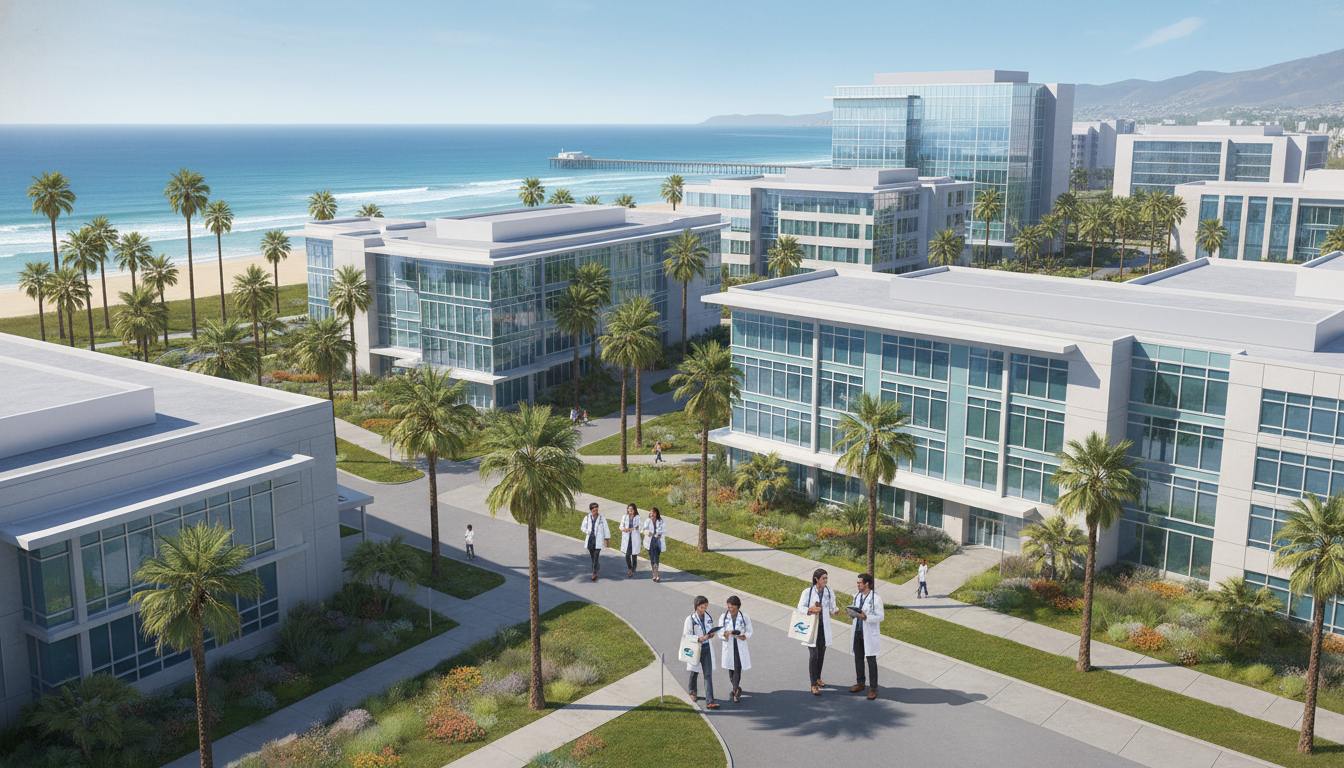
The Pacific Coast region includes California, Oregon, Washington, and Alaska, but the primary hubs for H-1B sponsorship programs in residency are California, Washington, and Oregon.
Below is an overview of the typical landscape by state. Always verify details directly with each program.
3.1 California Residency Programs and H-1B Sponsorship
California residency programs are among the most competitive in the country. Many major academic centers in California are H-1B cap exempt and have historically sponsored H-1B for selected IMGs, particularly in:
- Internal Medicine
- Pediatrics
- Psychiatry
- Neurology
- Pathology
- Select surgical subspecialties
Common types of H-1B-friendly California institutions include:
University-affiliated academic medical centers
- Often have an established H-1B sponsor list internally
- Typically sponsor H-1B for fellows more often than for residents, but many do both
- Examples (without claiming current sponsorship status, which you must verify):
- Large University of California–affiliated hospitals
- Major private academic systems in Los Angeles, San Diego, San Francisco Bay Area
Large community-based teaching hospitals
- Some California community hospitals with strong educational infrastructure sponsor H-1B for IMGs in selected specialties
- These hospitals may be more flexible but can also be subject to rapid policy changes
Patterns to expect in California:
- More likely to consider H-1B if:
- You have USMLE Step 3 passed early
- You’re a strong candidate academically and clinically
- The specialty program has long-standing relationships with IMGs
- Less likely to sponsor H-1B in:
- Highly competitive specialties (Dermatology, Plastic Surgery, Ophthalmology, etc.)
- Programs with large applicant pools and no shortage of U.S. citizen/green card applicants
Because of intense demand for West Coast residency positions, many California residency programs default to J-1 and will only consider H-1B in exceptional cases.
3.2 Washington State: Seattle and Beyond
Washington hosts several substantial academic and community-based training environments. Many are H-1B cap exempt and have a track record of sponsorship, especially in:
- Internal Medicine and its subspecialties
- Family Medicine
- Psychiatry
- Pediatrics
- Anesthesiology and some surgical subspecialties
What you may see in Washington:
- Explicit visa policies on program websites (often: “J-1 only” or “H-1B considered for exceptional candidates”)
- Some systems that actively advertise H-1B residency programs or show an H-1B sponsor list of recent residents
Washington programs might be slightly less saturated than California, but top locations (e.g., Seattle) are still very competitive.
3.3 Oregon: Growing but Selective
Oregon has fewer residency programs overall but offers:
- A major academic center with multiple residency and fellowship programs
- Several community-based teaching hospitals
In Oregon, H-1B sponsorship often depends on:
- Academic department policy
- Institutional comfort with visa processing
- Specialty-specific needs (e.g., shortages in primary care or psychiatry)
Some Oregon programs may prefer J-1 due to administrative simplicity, but others will consider H-1B for strong IMGs, especially those who can demonstrate a long-term commitment to serving the region.
3.4 Alaska: Limited Options
Alaska has very limited graduate medical education. While a few residency programs exist (often in Family Medicine or community-oriented specialties), the H-1B sponsorship environment is more variable and may lean heavily toward J-1.
If you’re strongly committed to Alaska, confirm visa policy directly from each program’s GME office before applying.
4. How to Use an H-1B Sponsor List and Identify IMG-Friendly Programs
4.1 What Is an H-1B Sponsor List?
In the context of residency and fellowship, an H-1B sponsor list can mean two things:
Internal GME list at an institution
- Tracks which departments and programs have previously sponsored H-1B residents/fellows
- Usually not public, but GME offices may reference it to decide new cases
Public lists compiled by students/IMG communities
- Forums, spreadsheets, websites that track which programs have ever sponsored H-1B
- Useful but must be treated with caution; policies can change yearly
When evaluating a list you find online, ask:
- How recent is the data?
- Is it specific to residency (PGY-1 to PGY-3/4) or mixed with fellowship (which often has more H-1B sponsorship)?
- Does it specify the specialty and institution?
4.2 Practical Steps to Verify H-1B Residency Programs
Here’s how to systematically approach H-1B sponsorship programs on the Pacific Coast:
Start with official program websites
- Look for a “Visa Policy” or “International Medical Graduates” section
- Common statements:
- “We sponsor J-1 visas only”
- “We sponsor J-1 and H-1B visas”
- “H-1B visas considered on a case-by-case basis”
Cross-check with institutional GME pages
- Some universities have institutional-level statements about which visas are supported for trainees
- Look for language like “Our institution is H-1B cap exempt and may sponsor H-1B for qualified residents and fellows”
Contact the program coordinator or GME office
- Email is best; ask direct, concise questions, such as:
- “Do you sponsor H-1B visas for categorical residents in [specialty]?”
- “If yes, do you require Step 3 passed before ranking or before contract signing?”
- Ask before spending energy tailoring your application, especially with limited time and money.
- Email is best; ask direct, concise questions, such as:
Confirm policy for your exact specialty and track
- Some institutions sponsor H-1B for fellowships but not residencies
- Some sponsor for advanced positions (PGY-2+) but not categorical PGY-1
Use community-maintained lists only as a starting point
- Treat them as leads, not as definitive truth
- Policies in California and other West Coast residency programs can change quickly, especially after institutional leadership or GME leadership changes
4.3 Red Flags and Good Signs
Red flags that H-1B may be difficult:
- Website states “J-1 only”
- No mention of H-1B anywhere, despite academic affiliation
- Program coordinator replies vaguely or avoids a clear answer
- Short or highly competitive specialty with abundant U.S. graduates
Good signs for H-1B:
- Website explicitly states “H-1B sponsorship is available”
- Previous residents in that program (check alumni pages or LinkedIn) appear to have trained on H-1B
- Program is at a large university or major teaching hospital that is clearly H-1B cap exempt
5. Strategy for IMGs Targeting H-1B on the Pacific Coast
5.1 Plan Backward from H-1B Requirements
To maximize your chances of matching into an H-1B residency program on the Pacific Coast:
Pass USMLE Step 3 as early as feasible
- Many California and West Coast programs will not consider H-1B unless Step 3 is passed before ranking or contract issuance.
- Example timeline:
- Step 1 & Step 2 CK done early
- Apply for Step 3 as soon as ECFMG-eligible
- Aim to complete Step 3 before ERAS application or at least before interviews
Obtain ECFMG certification as early as possible
- Avoid delays in diploma verification
- Make sure all documents are submitted to ECFMG well ahead of time
Research state-specific licensing rules
- For California residency programs, read about the California Postgraduate Training License (PTL) requirements
- Ensure your foreign medical school is recognized and meets all necessary criteria
5.2 Balancing Location Preference vs. Visa Flexibility
Many IMGs want West Coast residency positions due to lifestyle and prestige, but you must balance:
- Location preference (Pacific Coast)
vs. - Probability of any H-1B sponsorship
A practical approach:
- Apply broadly nationwide to H-1B-friendly institutions, including:
- East Coast and Midwest programs with strong IMG histories
- Pacific Coast programs you are truly competitive for
- Create tiers in your application plan:
- Tier 1: Pacific Coast H-1B residency programs that clearly sponsor H-1B
- Tier 2: Other regions with robust H-1B sponsorship histories
- Tier 3: Strong J-1 programs you would accept if H-1B is not possible
5.3 Highlighting Your Value as an H-1B Candidate
Programs incur extra cost and administration when sponsoring H-1B. You can increase your attractiveness by:
- Strong academic and exam performance
- High Step scores, publications, strong clinical references
- Clear alignment with program needs
- If you’re applying to primary care, psychiatry, or underserved-focused programs, emphasize your long-term commitment to those populations
- Evidence of long-term commitment to the region
- West Coast residency directors may value applicants who express genuine commitment to remain in their community or state
Example talking points during interviews:
- “I’ve passed Step 3 and am fully prepared for H-1B requirements.”
- “I’m committed to working long-term in [California/Washington/Oregon], especially in underserved communities.”
- “I understand the administrative effort involved in H-1B sponsorship and am appreciative of institutions that support this pathway for IMGs.”
5.4 Avoiding Common Pitfalls
Common mistakes IMGs make when pursuing H-1B sponsorship programs:
- Assuming all academic institutions sponsor H-1B
- Many are J-1 only by policy despite being cap exempt.
- Taking old sponsor lists at face value
- A program might have sponsored H-1B 5 years ago but changed its policy.
- Waiting too late for Step 3
- If you take Step 3 after rank lists are due, you may miss opportunities at H-1B-friendly programs.
- Applying almost exclusively to West Coast programs
- Overconcentration in one highly competitive region can lead to no match, even for strong applicants.
6. Practical Application Roadmap for the Pacific Coast
To bring everything together, here’s a step‑by‑step roadmap tailored for IMGs seeking H-1B residency programs on the Pacific Coast:
6.1 12–18 Months Before ERAS Submission
- Finish USMLE Step 1 and Step 2 CK
- Start investigating:
- California residency programs
- Washington and Oregon institutional policies
- Past H-1B sponsorship patterns (forums, alumni contacts, LinkedIn)
- Begin preparing for Step 3
6.2 9–12 Months Before ERAS Submission
- Take Step 3 (if eligible) or schedule it as early as possible
- Request letters of recommendation from U.S. clinical experiences, especially from:
- Academic institutions on the Pacific Coast (if possible)
- Build a shortlist of:
- West Coast residency programs that sponsor H-1B
- Additional H-1B-friendly programs across the U.S.
6.3 6–9 Months Before ERAS Submission
- Reach out to program coordinators of key Pacific Coast programs to clarify:
- Visa sponsorship policy
- Whether Step 3 is required before ranking
- Finalize your application strategy:
- Ensure you’re not overly dependent on a few California residency programs
- Include a mix of states and visa policies to maintain your overall match probability
6.4 ERAS Season and Interviews
- Tailor your personal statement for West Coast programs to highlight:
- Long-term commitment to the region
- Interest in serving local communities
- During interviews:
- Discuss visa topics briefly and professionally near the end, only if not already addressed
- Emphasize that you’ve prepared for H-1B (Step 3, ECFMG certification, understanding of requirements)
6.5 After Match: H-1B Processing
If you match into a program willing to sponsor H-1B:
- Respond quickly to requests for documents
- Provide:
- Exam scores and ECFMG certificate
- Medical diploma and translations
- CV and previous work/education documentation
- Understand the timeline:
- Many cap-exempt institutions can file H-1B petitions year-round
- Processing may be done with regular or premium processing depending on program preference
FAQs: H-1B Sponsorship for Pacific Coast Residency Programs
1. Are most California residency programs willing to sponsor H-1B for IMGs?
No. While many California institutions are H-1B cap exempt, a significant number of California residency programs prefer J-1 only for administrative simplicity. Some programs will consider H-1B for outstanding candidates or certain specialties, but you should not assume sponsorship without explicit confirmation. Always check each program directly.
2. Do I need USMLE Step 3 before applying to H-1B residency programs on the West Coast?
You can apply without Step 3, but many H-1B-friendly Pacific Coast programs either:
- Require Step 3 before interviews
- Or require Step 3 before ranking or contract issuance
To maximize your chances, aim to complete Step 3 before or early in interview season, especially for California residency programs.
3. Are H-1B cap exempt residency positions better for long-term immigration than J-1?
They are often better aligned with long-term U.S. immigration goals because:
- H-1B is dual-intent and does not require the J-1 two-year home-country return
- It’s easier to transition to a green card while on H-1B
However, J-1 + waiver + H-1B is also a viable path. The “better” option depends on your specialty, career goals, and where you plan to practice after training.
4. How can I find an up-to-date H-1B sponsor list for Pacific Coast residencies?
There is no single official, complete, and public list. Your best approach is:
- Check each program’s website for visa policies
- Contact program coordinators and GME offices directly
- Use online forums and shared spreadsheets as starting points only, not definitive evidence
Remember that policies can change with each academic year, especially in competitive regions like the Pacific Coast.
By understanding the H-1B cap exempt landscape, verifying each program’s policies, and strategically planning your exams and applications, you can significantly improve your chances of matching into an H-1B residency program along the Pacific Coast.