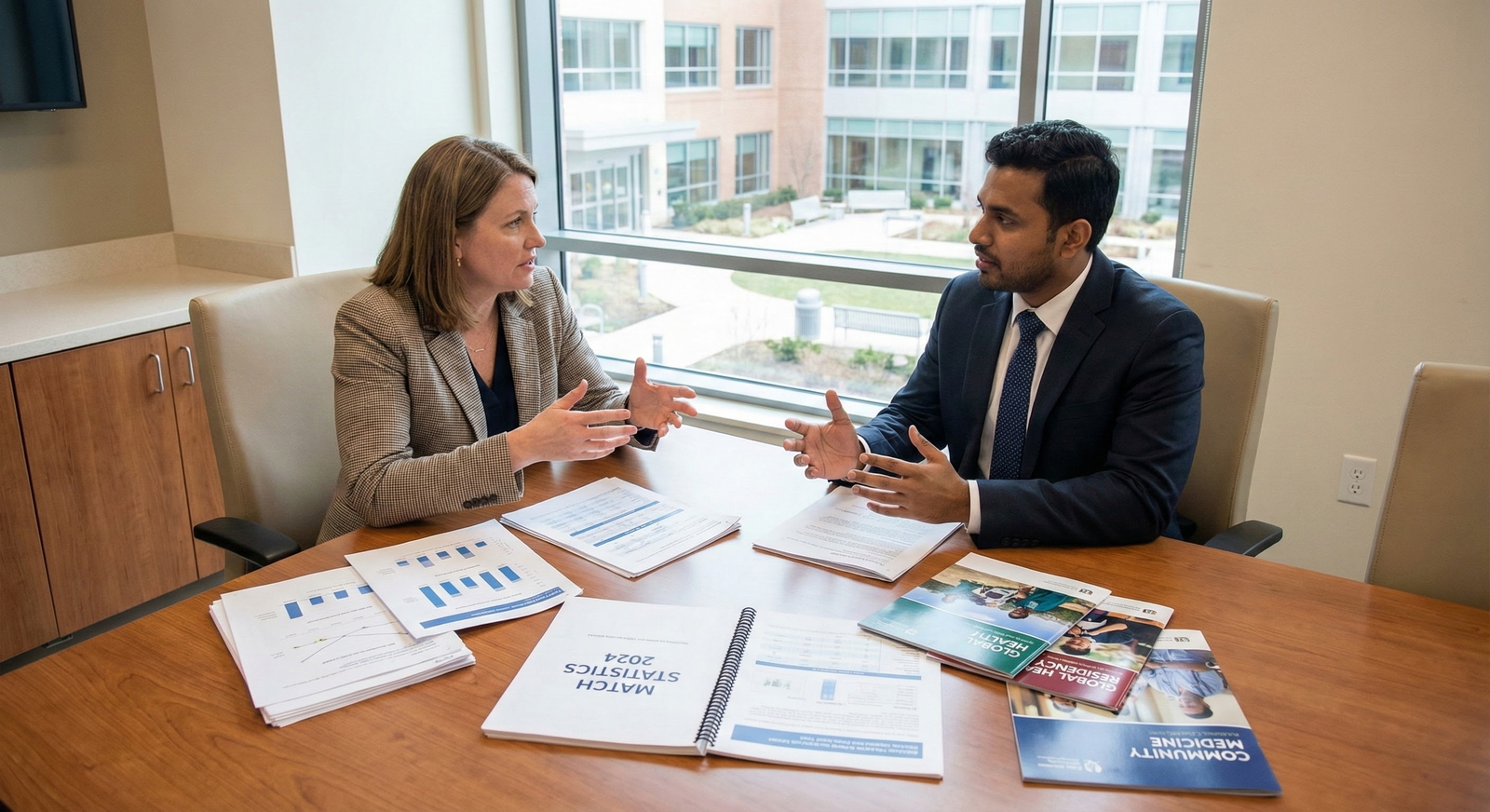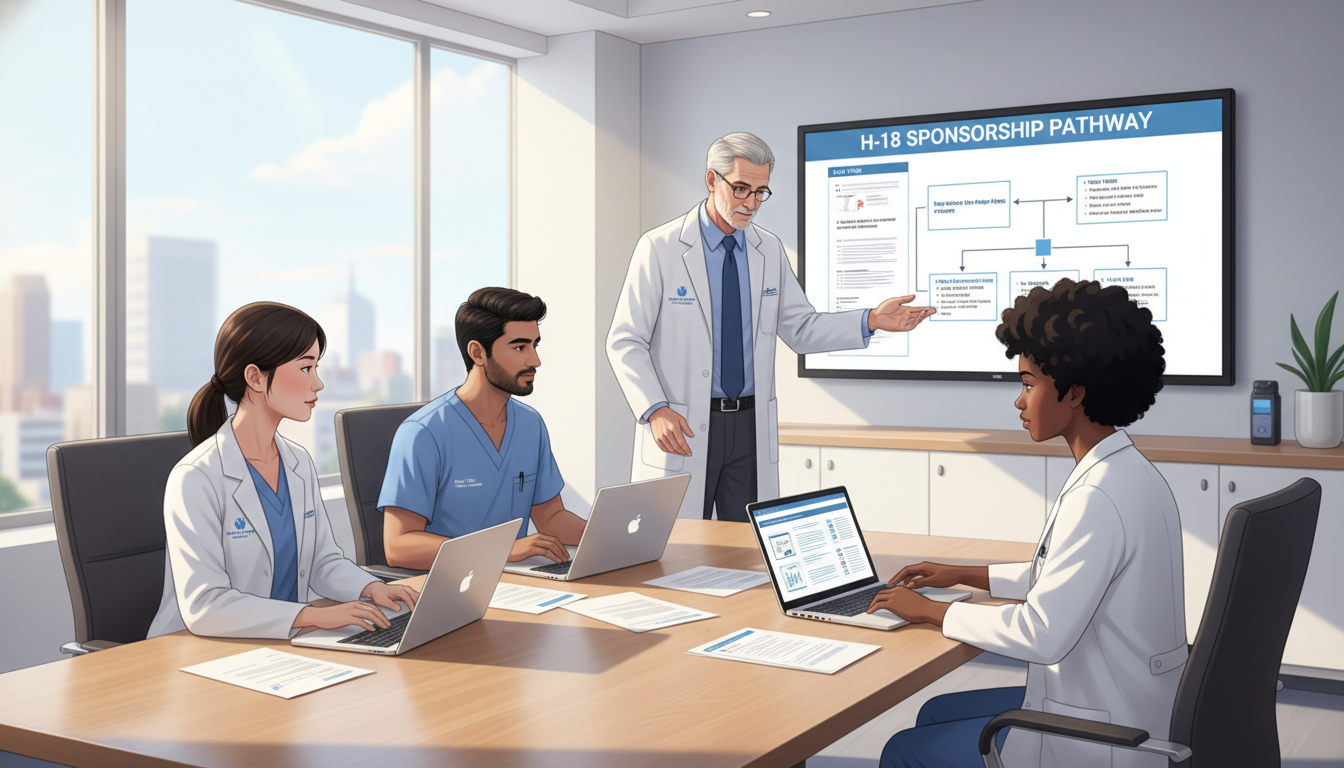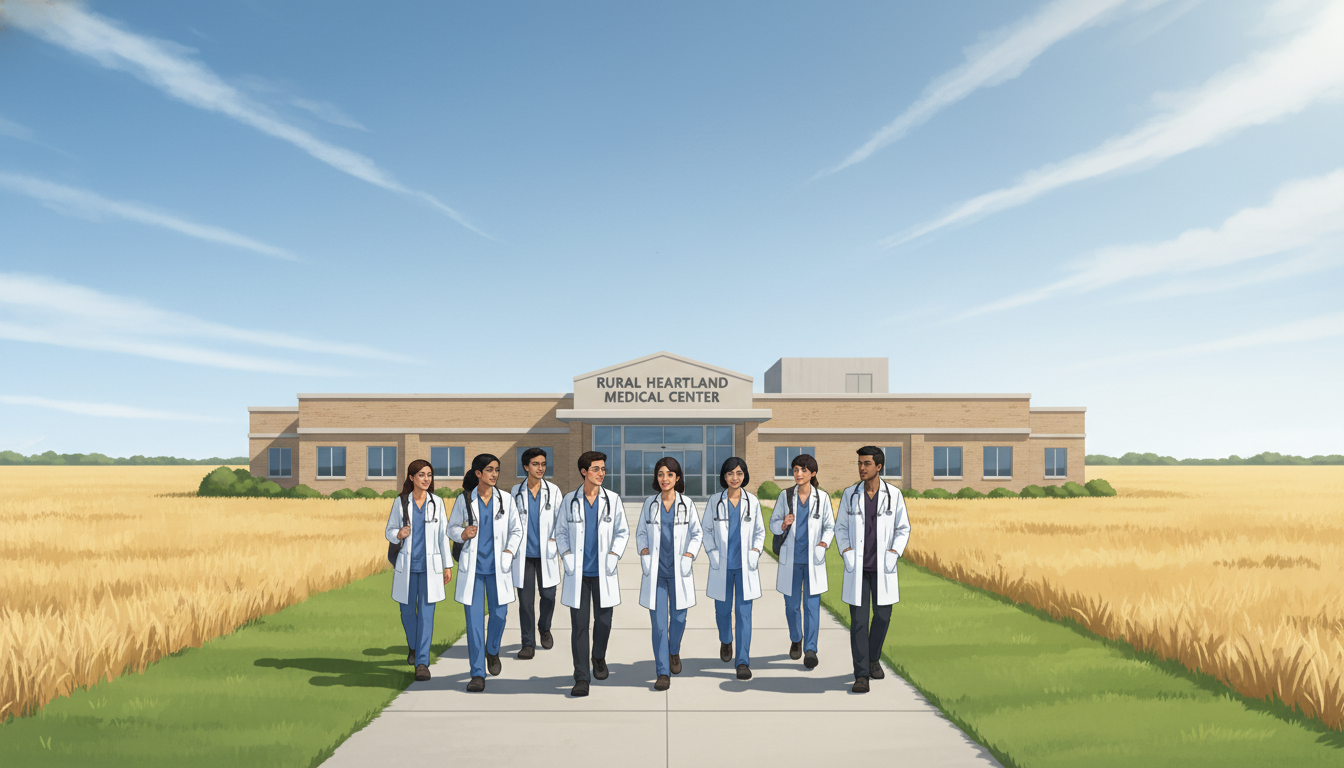
The rural Midwest has become an increasingly important region for international medical graduates (IMGs) seeking H-1B sponsorship for residency. States like Iowa, Nebraska, Kansas, Missouri, and the Dakotas rely heavily on IMGs to staff primary care, internal medicine, psychiatry, and other core specialties in smaller towns. For many applicants, a rural Midwest residency is both a pathway to a U.S. medical career and a chance to practice meaningful, community-focused medicine.
This article explains how H-1B sponsorship works in U.S. residency programs—with a particular emphasis on rural Midwest residency opportunities—so you can identify realistic options, plan your strategy, and avoid common immigration pitfalls.
Understanding H-1B Sponsorship in Residency Programs
Before diving into specific rural Midwest residency opportunities, you need a solid understanding of how H-1B visas function in graduate medical education (GME).
What is an H-1B for Residency?
The H-1B is a temporary work visa for “specialty occupations.” In residency, your hospital or sponsoring institution petitions for you so you can train as a resident physician. Key points:
- Employer-sponsored: You cannot apply by yourself. The residency program or its parent institution (often a university or health system) must sponsor you.
- Job-specific: The H-1B is tied to a specific program, specialty, and location.
- Time-limited: Typically granted in up to 3-year increments, with a 6-year maximum (including any prior H-1B time in the U.S.).
For residency, H-1B is common in:
- Internal Medicine, Family Medicine, Pediatrics
- Psychiatry, Neurology
- Some surgical and subspecialty residencies/fellowships (though less common in small rural centers)
H-1B vs J-1 for Residency
Most IMGs in U.S. residency are on J-1 visas sponsored through ECFMG. So why do some pursue H-1B instead?
Advantages of H-1B for residency:
- No J-1 two-year home-country physical presence requirement
- Easier transition to fellowships or attending jobs that also offer H-1B or permanent residency
- Compatible with dual intent (you can pursue a green card while in H-1B status)
Disadvantages and limitations:
- Not all programs sponsor H-1B; many are J-1–only
- Requires passing USMLE Step 3 before H-1B filing in most states
- Legal and filing fees are higher for the institution
- More administrative burden for smaller hospitals, which can be a barrier in rural regions
For IMGs targeting the rural Midwest residency market, understanding which institutions are willing and structurally able to sponsor H-1Bs is crucial.
Why Rural Midwest Programs Sponsor More IMGs (Including on H-1B)
The rural Midwest (Iowa, Nebraska, Kansas, North/South Dakota, rural Illinois/Missouri/Minnesota/Wisconsin) has chronic physician workforce shortages, especially in primary care and psychiatry. This has several implications for IMGs.
Workforce Shortages and IMG Opportunities
Rural hospitals and community health systems often struggle to recruit U.S. graduates who tend to prefer urban, academic centers. As a result:
- IMGs often fill a higher percentage of residency positions in rural internal medicine and family medicine programs.
- Some rural programs have historically been more flexible and open to considering both J-1 and H-1B applicants to remain competitive.
In a typical Iowa Nebraska residency environment (think smaller university-affiliated community programs or critical-access hospitals with GME), you may see:
- More willingness to interview and rank well-qualified IMGs
- A track record of graduates staying in-state and working in underserved rural communities
- Institutional awareness of immigration pathways like the Conrad 30 waiver and H-1B options for post-residency employment
Rural Practice Needs and Visa Strategy
Many rural Midwest states use IMGs as a key strategy to address underserved populations. This influences H-1B sponsorship for residency in two ways:
- Pipeline thinking: Programs know that IMGs who train in rural Iowa or Nebraska are more likely to stay in the region later, often in H-1B jobs that may be H-1B cap exempt if tied to certain institutions or underserved areas.
- Institutional experience with IMGs: Systems that have long relied on IMGs usually have:
- In-house immigration counsel or experienced HR/legal teams
- Established policies and a semi-stable H-1B sponsor list of programs that accept H-1B candidates
- Clear communication on their websites about visa sponsorship
That said, not every rural program is H-1B-friendly; many remain J-1–only. Your strategy needs to be targeted and informed.

Key Features of H-1B Sponsorship in Rural Midwest Residencies
Understanding how H-1B sponsorship is structured will help you select programs realistically and prepare your documents on time.
1. University vs Community-Based Sponsorship
In the rural Midwest, you’ll encounter two common models:
1. University-based programs with rural tracks or satellite sites
- Example: A university in a large city (e.g., Omaha, Des Moines, Kansas City, Sioux Falls) runs a community-based or rural track residency in smaller towns.
- Pros for H-1B:
- University systems are often H-1B cap exempt if they qualify as higher education institutions or are affiliated nonprofit entities.
- Larger legal/HR departments with established immigration processes.
- Previous experience maintaining an H-1B sponsor list internally.
- Cons:
- University-level policies can be rigid; some may be J-1–only despite being cap-exempt.
- Competition for positions can be stronger.
2. Standalone community hospitals and critical access hospitals
- Located in small towns across Iowa, Nebraska, Kansas, and neighboring states.
- Pros:
- Potentially more motivated to recruit IMGs due to local shortages.
- Sometimes more flexible if they’ve successfully sponsored H-1B in the past.
- Cons:
- May be subject to the H-1B cap if not affiliated with a cap-exempt entity.
- Limited legal support; some are unfamiliar or uncomfortable with H-1B sponsorship.
- Policies may change quickly with administrative leadership turnover.
When researching a rural Midwest residency, always confirm:
- Whether the institution is H-1B cap exempt
- Whether they have sponsored H-1B for residents in the last 2–3 years
- Whether they require Step 3 and by what date
2. H-1B Cap and Cap-Exempt Institutions
One of the most confusing aspects is the H-1B cap:
- Regular H-1B cap: Annual limit (currently 65,000 regular + 20,000 for U.S. master’s graduates) selected via a lottery in March.
- Cap-exempt H-1B: Certain employers can file H-1Bs any time of year, not subject to the numerical cap.
Many teaching hospitals and academic centers involved in residency training are H-1B cap exempt because they are:
- Nonprofit entities related to or affiliated with higher education institutions
- Directly part of a university medical center
From a residency perspective, cap-exempt status is extremely helpful:
- Programs can file your H-1B once you match and meet requirements, regardless of the annual H-1B cap.
- Rural tracks administered through a cap-exempt university may still qualify even if training occurs at community hospitals.
Important nuance for rural Midwest residency planning:
- Some hospitals in small towns are not cap-exempt on their own but become cap-exempt by formal affiliation agreements with a university partner.
- This is not always obvious from the outside; you may need to ask program coordinators directly.
3. Typical H-1B Requirements for Residency
While specifics vary by program and state, most rural Midwest H-1B residency programs will require:
- USMLE Step 3 passed before they can file H-1B (some require before ranking; others by a set date after match)
- Valid ECFMG certification at the time of rank order list certification
- Eligibility for an unrestricted training license in that state
- Proof of medical school graduation and official transcripts
Be especially cautious with Step 3 timing. In many states:
- Step 3 must be passed by spring of the match year (often by March–April) for the institution to file H-1B in time for a July 1 start.
- For cap-exempt employers, filing windows are more flexible; but document delays can still endanger your start date.
4. Common Specialties for H-1B in the Rural Midwest
While every program is different, you’ll see more H-1B sponsorship in:
- Internal Medicine (community-based and university-affiliated)
- Family Medicine (particularly in Iowa and Nebraska residency programs focused on rural care)
- Pediatrics (usually in larger regional centers)
- Psychiatry (an acute shortage specialty in many rural regions)
- Some Transitional Year or Preliminary Medicine programs (though these may be less ideal for long-term planning)
Surgical and highly competitive specialties are less common in smaller rural centers and less likely to sponsor H-1B, though exceptions exist in large regional academic hubs.

Building Your Personal H-1B Sponsor List for the Rural Midwest
There is no single official, up-to-date national list of H-1B residency sponsors for IMGs. Instead, you need to create your own practical H-1B sponsor list targeting the rural Midwest.
Step 1: Identify Rural Midwest States and Core Markets
Start by defining your geographic priority:
- Core “rural Midwest” states:
- Iowa, Nebraska, Kansas, North Dakota, South Dakota
- Often included in broader region-focused strategies:
- Missouri (outside St. Louis/Kansas City), rural Illinois, Wisconsin, Minnesota, Indiana
Decide how flexible you are. For example, you might prioritize:
- Iowa Nebraska residency programs first
- Then add Kansas and the Dakotas
- Then consider rural sites in Wisconsin/Minnesota/Missouri
Step 2: Use Official Databases
Use these tools methodically:
FREIDA (AMA Residency & Fellowship Database)
- Filter by specialty, state, and “accepts IMGs.”
- Go through each program’s website to confirm visa types:
- Look for phrases like “We sponsor J-1 and H-1B visas.”
- Or explicitly “H-1B not sponsored.”
Program websites
- Go to the “Prospective Residents,” “Application,” or “FAQ” sections.
- Many rural Midwest residency programs now state visa policies clearly due to large IMG applicant pools.
NRMP and individual program FAQs
- Some programs publicize detailed IMG policies, including Step 3 requirements and visa type.
Step 3: Verify H-1B Sponsorship Directly
When information is unclear or outdated:
- Email the program coordinator or program director:
- Keep it short and professional.
- Ask directly:
- “Do you sponsor H-1B visas for residency?”
- “Have you sponsored H-1B visas for current or recent residents?”
- “Is USMLE Step 3 required prior to ranking?”
If they answer “yes, we sponsor H-1B” and confirm recent examples, add them to your personal H-1B sponsor list under your desired region.
Step 4: Prioritize Cap-Exempt Institutions
In your list, mark which programs are likely or confirmed to be H-1B cap exempt:
- University-owned hospitals and academic medical centers
- Community hospitals clearly affiliated with universities for GME
- Nonprofit institutions designated as H-1B cap-exempt employers
Why this matters:
- More reliable timelines: They don’t depend on the March H-1B lottery.
- Flexible transition to fellowship: You may remain in cap-exempt roles longer while building a pathway to permanent residency.
- Better continuity: Cap-exempt employers are usually more experienced with physician immigration issues.
Step 5: Leverage Alumni and Resident Networks
Current and recent residents are often your best source of truth:
- Search LinkedIn for IMGs in:
- “Internal Medicine Resident – [Hospital Name] – Iowa/Nebraska/Kansas”
- Look for:
- Country of origin matching typical IMG backgrounds
- Residency within the last 5–7 years
- Many list “H-1B” or “J-1” in their profiles or describe immigration journeys in posts.
Reach out with a brief, respectful message:
- Introduce yourself
- Express interest in the program and in H-1B sponsorship
- Ask if the program has supported H-1B residents and how they handled Step 3, etc.
Strategic Advice for IMGs Targeting H-1B in Rural Midwest Residency
The combination of geographic preference (rural Midwest) and visa type (H-1B) makes your strategy more specific—and slightly narrower—than many peers. You need to optimize both your application profile and your immigration planning.
1. Prioritize Step 3 as Early as Possible
For H-1B residency, USMLE Step 3 is your gatekeeper. Practical advice:
- Aim to pass Step 3 before or early in the application season (ideally by December of the application year).
- If that isn’t possible, at least schedule Step 3 and mention your test date in your ERAS application and in communications with programs.
- Some programs in the rural Midwest will only rank H-1B applicants who already passed Step 3.
If you cannot reasonably complete Step 3 in time, consider:
- Applying more broadly to J-1–sponsoring programs in your first cycle
- Using J-1 with a clear plan for a Conrad 30 waiver in a rural Midwest state after residency
- Transitioning to H-1B for your waiver job instead of during residency
2. Align Your Story with Rural and Underserved Care
Programs in the rural Midwest want residents who:
- Are genuinely interested in rural, small-town, or underserved practice
- Understand the challenges: limited subspecialty access, broad scope of practice, resource constraints
- Plan to stay in similar communities long term
Demonstrate this through:
- Personal statement:
- Mention interest in continuity of care, community engagement, and working with underserved or agricultural communities.
- Experiences:
- Rotations or electives in small hospitals or community clinics
- Volunteer work with rural populations, migrant workers, or underserved groups
- Interviews:
- Speak genuinely about what excites you about practicing in a smaller community.
This authentic alignment increases your chances not just to match, but to be a top choice for H-1B sponsorship in a rural Midwest residency.
3. Balance H-1B vs J-1 in Your Application List
While your focus is H-1B, relying only on H-1B programs can be too risky, especially as an IMG. A reasonable strategy might be:
- Apply to:
- 20–40 programs that clearly sponsor H-1B in your preferred region (Iowa/Nebraska/Kansas/Dakotas)
- Additional J-1–sponsoring programs in the same region, keeping an eye on future Conrad 30 waiver opportunities
- Rank list:
- Place your H-1B preference programs higher if all else is equal.
- Include strong J-1 options near the bottom to maximize your match chances if H-1B options don’t work out.
Remember: Matching into a good training environment is more important than the initial visa type. Many IMGs successfully convert J-1 into long-term practice through waiver programs in the same rural Midwest where they trained.
4. Understand the Long-Term Immigration Pathway
For H-1B-focused IMGs in the rural Midwest, plan ahead:
Residency on H-1B in a cap-exempt institution
- Can be followed by fellowship also in a cap-exempt environment.
- Later, you may need a cap-subject H-1B for a private practice or non-affiliated hospital job unless that employer is also cap-exempt.
Alternative path: J-1 → Conrad 30 waiver → H-1B
- Complete residency on J-1.
- Obtain a Conrad 30 waiver job in a rural Midwest underserved area (many programs in Iowa, Nebraska, Kansas, and the Dakotas depend on this pipeline).
- Switch to H-1B for that job (often cap-exempt or with special flex considerations).
- Start permanent residency (green card) through your employer while working.
Both paths can lead to stable, long-term practice and a green card; your choice depends on your risk tolerance, Step 3 feasibility, and program options.
Frequently Asked Questions (FAQ)
1. Are there many H-1B residency programs in the rural Midwest?
The number is limited but meaningful. Larger academic centers in cities like Omaha, Des Moines, Iowa City, Kansas City (Kansas side), and Sioux Falls often sponsor H-1B and have rural tracks or community-based sites. True small-town standalone hospitals are more variable—some sponsor H-1B, many do not. You need to verify program by program and build your own H-1B sponsor list focused on the rural Midwest.
2. Do all Iowa and Nebraska residency programs accept H-1B visas?
No. Some Iowa Nebraska residency programs are J-1 only, while others accept both J-1 and H-1B, and a few may not sponsor any visas. You must confirm via program websites or directly with coordinators. Even within the same health system, different specialties may have different policies (for example, Internal Medicine allowing H-1B while Surgery is J-1 only).
3. How can I know if a residency program is H-1B cap exempt?
You can look for clues:
- The program is directly part of a university medical center or is clearly described as “university-affiliated teaching hospital.”
- The institution is a nonprofit and explicitly mentions H-1B cap-exempt status on job postings for physicians.
- The GME office or legal department confirms cap-exempt status in writing.
If in doubt, ask the program: “Is your institution considered H-1B cap exempt for residency sponsorship?” They may not always phrase it this way publicly but should be able to clarify.
4. Is it better to insist on H-1B or accept a J-1 if that’s the only offer?
It depends on your situation. H-1B during residency is more convenient for long-term immigration but also more competitive and logistically difficult (especially due to Step 3 and limited sponsoring programs). J-1 combined with a Conrad 30 waiver job in the rural Midwest is a very common and successful pathway, particularly in states that actively recruit IMGs for underserved areas. If your only realistic match options are J-1 programs, it’s usually better to match and then manage your immigration path through waivers and later H-1B, rather than going unmatched while waiting for the perfect H-1B offer.
By understanding how H-1B sponsorship works, targeting cap-exempt and IMG-friendly programs, and aligning your interests with rural and underserved care, you can build a realistic and effective strategy for matching into a rural Midwest residency program that supports your long-term career and immigration goals.