
Understanding H‑1B Sponsorship Pathways for Caribbean IMGs
For many Caribbean international medical graduates (IMGs), H‑1B sponsorship is one of the most valuable levers in securing long‑term training and employment in the United States. Compared to J‑1 visas, the H‑1B can offer more flexibility, fewer post‑training restrictions, and a more direct path to permanent residency. However, the process is complex—and very different from the path taken by many U.S. graduates.
This guide is designed specifically for Caribbean IMGs (including graduates of schools like SGU, AUC, Ross, Saba, and others) who are planning their residency strategy with H‑1B sponsorship in mind. You’ll learn how H‑1B residency programs work, how to integrate visa strategy into your application plan, and how to position yourself competitively—even as a non–US citizen or non–green card holder.
Along the way, you’ll see how this planning intersects with topics like Caribbean medical school residency outcomes, SGU residency match trends, and the special advantages of H‑1B cap‑exempt programs.
H‑1B vs J‑1 for Caribbean IMGs: Why It Matters
Before you can build an effective residency strategy, you must understand how the major visa options differ and how they affect your career as a Caribbean IMG.
Key Visa Options for Residency
1. J‑1 Visa (ECFMG‑sponsored)
- Most common for international residents and fellows.
- Requires ECFMG sponsorship and compliance with specific training rules.
- Typically includes a 2‑year home country physical presence requirement after training, unless you obtain a waiver.
- Waiver options depend on state and federal programs, usually requiring service in underserved areas.
2. H‑1B Visa (Employer‑sponsored)
- Dual‑intent: allows you to pursue permanent residency (green card) while on the visa.
- No inherent requirement to return home after training.
- Can be used for residency, fellowship, and many attending positions.
- Requires passing USMLE Step 3 before the petition is filed (many programs want it before rank lists).
- Typically valid for up to 6 years (three‑year periods; extensions possible in certain green card processes).
Why Many Caribbean IMGs Prefer H‑1B
For a Caribbean medical school graduate, the H‑1B offers several critical advantages:
No 2‑Year Home Return Rule
Unlike J‑1, H‑1B doesn’t force you to leave the U.S. after training or seek a waiver. This is particularly important if your home country has limited physician opportunities or if your long‑term plan is to build a career in the United States.Smooth Transition to Fellowship or Attending Roles
Going from residency to fellowship or to an attending role on H‑1B is often more straightforward than transitioning from a J‑1 that requires a waiver.Clearer Path to Green Card
Because H‑1B is a dual‑intent visa, your employer can start the green card process (e.g., PERM, I‑140) while you are in training or soon after. This is often more complex if you are on a J‑1 and still bound by the two‑year requirement.Less Dependency on Waiver Programs
J‑1 waiver positions can be excellent opportunities, but they restrict your geographic options early in your career. H‑1B allows more flexibility in where and how you practice after training.
Drawbacks and Challenges of H‑1B for IMGs
The benefits come with important challenges:
Fewer H‑1B Residency Programs
Many residency programs only sponsor J‑1 visas. Your universe of options shrinks significantly when you filter for H‑1B residency programs.Earlier USMLE Step 3 Requirement
You must pass USMLE Step 3 before H‑1B filing and often before rank lists. For Caribbean IMGs, balancing Step 3 study with clinical rotations and ERAS preparation can be demanding.Cap vs Cap‑Exempt Complexity
Not all H‑1Bs are equal. Understanding the difference between cap‑subject and H‑1B cap‑exempt positions is crucial (more on this below).
Strategic takeaway: If H‑1B is your preferred path, you must plan earlier, test earlier, and target programs more selectively than you might if you were J‑1 flexible.
Types of H‑1B Residency Programs: Cap‑Subject vs Cap‑Exempt
Not every H‑1B is subject to the same rules. The structure of the employer determines whether the position falls under the annual H‑1B lottery or can bypass it entirely.
Cap‑Subject H‑1B Positions
These are typical for private hospitals, community hospitals, and private practice groups that aren’t affiliated with a qualifying educational or research institution.
- Subject to the H‑1B annual cap (65,000 regular + 20,000 U.S. master’s cap).
- Must be selected in the USCIS lottery before the petition can be adjudicated.
- Registration period usually occurs in March; selections in late March/early April; start dates October 1 at the earliest.
- Logistics can be difficult for residency start dates (usually July 1), so many GME offices avoid this route for PGY‑1.
For Caribbean IMGs, relying on a cap‑subject H‑1B for residency is usually high‑risk and uncommon.
H‑1B Cap‑Exempt Positions: Your Main Target
H‑1B cap‑exempt positions are not subject to the annual numerical limit or lottery. Many residency programs fall into this category because they are:
- Nonprofit entities related to or affiliated with a university, or
- Institutions of higher education, or
- Nonprofit or governmental research organizations.
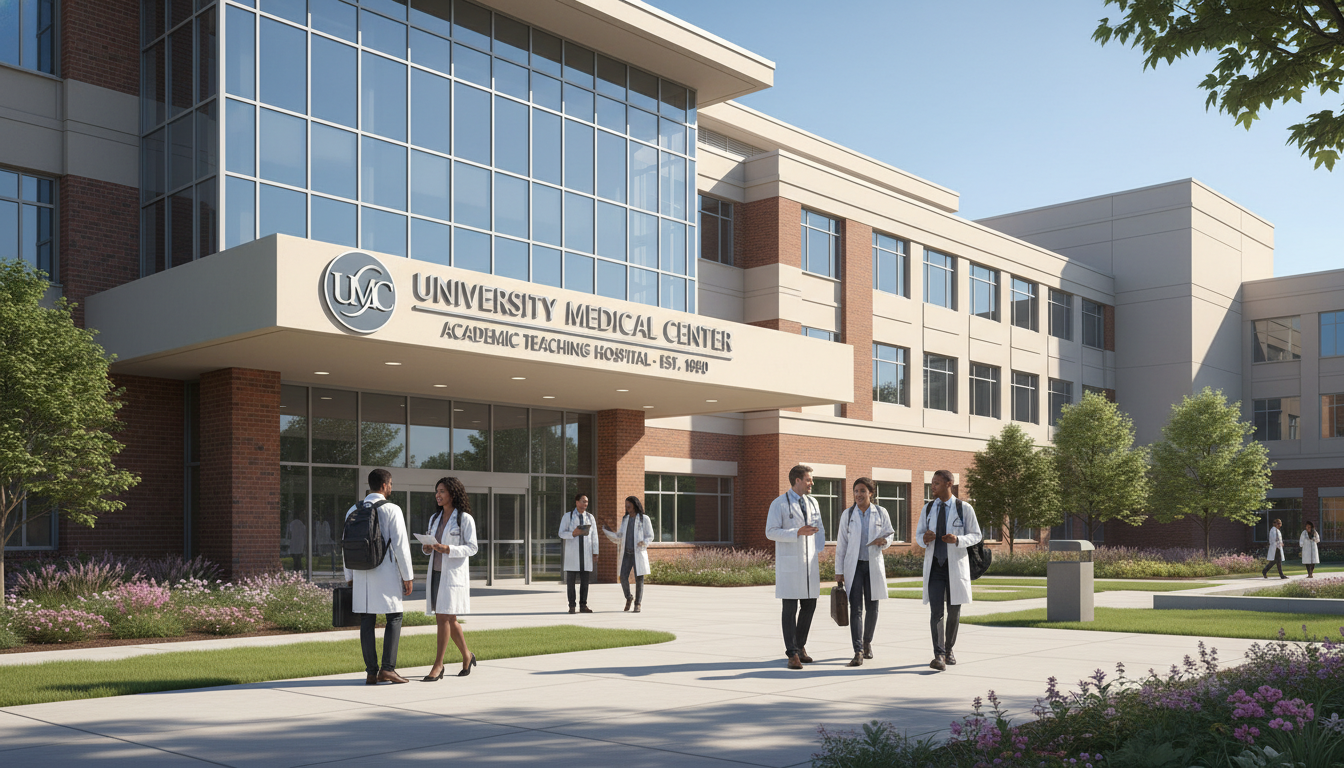
Most large academic medical centers and many university‑affiliated programs qualify as cap‑exempt. For IMGs, this is critical because:
- They can file H‑1B petitions at any time of year.
- No competition for limited visa numbers.
- Start dates align better with standard GME cycles.
Examples of likely cap‑exempt settings (varies by institution/legal structure):
- University hospitals (e.g., those clearly branded as part of a university system).
- Major academic centers that explicitly list visa sponsorship in their GME pages.
- Some county or public hospitals affiliated with medical schools.
When researching H‑1B residency programs, you are essentially looking for:
- Programs that explicitly sponsor H‑1B for residents, and
- Institutions that are cap‑exempt for H‑1B purposes.
Researching and Building an H‑1B Sponsor List
To effectively target H‑1B‑friendly programs, you need a structured research strategy. As a Caribbean IMG, this list becomes one of your most important planning tools.
Step 1: Clarify Your Personal Constraints
Before building your H‑1B sponsor list, define your boundaries:
Citizenship and visa history
- Do you currently hold F‑1, J‑1, or another visa?
- Are you a U.S. citizen or green card holder? (If yes, H‑1B is irrelevant for residency.)
Timeline
- When do you plan to apply for the Match?
- When can you realistically take and pass USMLE Step 3?
Geographic and specialty preferences
- Are you open to moving anywhere in the U.S. if the program offers H‑1B?
- Are you focused on certain regions (e.g., Northeast where many Caribbean medical school residency placements cluster)?
Setting these parameters will guide how broad or narrow your H‑1B sponsor search can be.
Step 2: Use Public Resources to Identify H‑1B Residency Programs
You can’t simply Google “H‑1B residency programs” and get an accurate, updated list. Instead, combine several strategies:
A. NRMP and FREIDA Program Descriptions
FREIDA (AMA Residency & Fellowship Database)
- Many programs list whether they sponsor visas and which types (J‑1 and/or H‑1B).
- Filter by specialty and state, then open each program’s details.
- Look for phrases such as: “We sponsor J‑1 and H‑1B visas” or “H‑1B sponsorship considered for exceptional candidates.”
Program Websites
- Navigate to the “Eligibility and Visa Sponsorship” or “International Medical Graduates” section.
- Some explicitly state:
- “We sponsor J‑1 and H‑1B visas”
- “We do not sponsor H‑1B visas”
- “H‑1B sponsorship is possible for candidates who have passed USMLE Step 3”
Action tip: Create a master spreadsheet with columns for:
Program name, location, specialty, visa types offered, Step 3 requirement, IMG friendliness, number of residents, contact email.
B. SGU Residency Match and Other Caribbean School Outcomes
Caribbean schools often publish detailed match lists, such as:
- SGU residency match outcomes by specialty and hospital.
- Similar match lists from other Caribbean medical schools.
When you see that a particular academic center or community hospital repeatedly matches Caribbean IMGs, that institution is more likely to:
- Be familiar with ECFMG and IMG credentialing.
- Have a structured process for visa sponsorship (even if they primarily use J‑1).
- Be worth contacting to clarify H‑1B policies.
Use these match lists to focus your initial research on programs already proven to accept Caribbean IMG graduates.
C. USCIS H‑1B Disclosure Data
The U.S. Department of Labor publishes LCA (Labor Condition Application) data and USCIS sometimes provides employer H‑1B statistics. While not residency‑specific, they can show whether a hospital system:
- Routinely files H‑1B petitions (for physicians, researchers, etc.).
- Has experience with immigration processes—making them more likely to support H‑1B for residents.
Search by hospital or health system name. Frequent H‑1B use is a good sign.
Step 3: Verify and Expand Your H‑1B Sponsor List
Once you have a draft list:
Check for Recent Policy Changes
Visa policies can change year to year. A program that sponsored H‑1B three years ago might now limit to J‑1 only.Email Programs Directly (Politely and Professionally)
Send short, clear emails to the program coordinator or GME office such as:Dear [Name],
I am a Caribbean international medical graduate planning to apply to your [Specialty] residency program. I am currently on [your current status or abroad] and interested in training under an H‑1B visa.
Could you please confirm whether your program sponsors H‑1B visas for categorical residents, and if so, whether there are any specific USMLE Step 3 or timing requirements?
Thank you very much for your time.
Sincerely,
[Your Name], MD (expected year of graduation / graduation year)Keep responses organized in your spreadsheet.
Network with Current Residents and Alumni
- Use LinkedIn, alumni groups, and Facebook/WhatsApp groups of your Caribbean school.
- Ask matched residents:
- Does your program sponsor H‑1B?
- Any special conditions for Caribbean IMGs?
- Would they consider an H‑1B transfer if you are already in the U.S. on another status?
Goal: Produce a personalized H‑1B sponsor list of 20–60 programs per specialty (depending on competitiveness) that you can realistically target for ERAS.
Building a Competitiveness Strategy as a Caribbean IMG Seeking H‑1B
Because H‑1B sponsorship is more resource‑intensive for programs, they often impose higher bars for candidates—especially IMGs. You need to be more than “good enough.” You need to be easy to sponsor and clearly worth the investment.
1. Prioritize USMLE Step 3 Timing
For most H‑1B residency programs, USMLE Step 3 is non‑negotiable.
- Many require Step 3 passed by the time rank lists are certified.
- Others require Step 3 before starting residency (for H‑1B filing).
- A few will interview you without Step 3, but will not rank you unless you pass.
Planning Step 3 as a Caribbean IMG
If you are in your final year of a Caribbean medical school:
- Take Step 3 as soon as you are eligible (usually after obtaining ECFMG certification and appropriate state eligibility requirements).
- Use your elective rotations in the U.S. to help prepare and understand real‑world practice patterns.
If you are a graduate in a gap year:
- Dedicate serious time to Step 3 and aim to complete it before ERAS submission.
- A solid Step 3 score helps offset older Step 1/2 scores and demonstrates capability.
If you already have J‑1 or another status in the U.S.:
- Passing Step 3 strengthens your ability to switch to H‑1B for subsequent training or work.
Actionable tip: When contacting programs, ask explicitly:
“Do you require USMLE Step 3 for H‑1B sponsorship, and by what date should it be passed?”
2. Strengthen Your Overall Application Profile
Because the pool of H‑1B‑friendly programs is smaller, competition is intense. Focus on:
Consistent USMLE performance
- Aim for strong Step 2 CK (especially now that Step 1 is pass/fail for many).
- Avoid failures; if you have one, mitigate with higher subsequent scores and strong clinical evaluations.
Robust U.S. Clinical Experience (USCE)
- Prioritize inpatient, hands‑on electives in academic or teaching hospitals.
- Seek letters of recommendation from U.S. attending physicians who know your work well.
- If possible, target electives in institutions that appear on your H‑1B sponsor list.
Clear Specialty Commitment
- Research projects, audits, QI initiatives, or presentations in your chosen specialty.
- Strong personal statement that explains your path as a Caribbean IMG and your long‑term goals in U.S. healthcare.
Professionalism and Communication Skills
- H‑1B sponsorship increases the stakes; programs need residents who are reliable, adaptable, and low‑risk from a professionalism standpoint.
- Practice interviews with mentors; refine how you explain your visa needs confidently but not anxiously.
3. Use a Tiered Application Strategy
Consider applying across tiers:
Tier 1: Clearly H‑1B‑Friendly Academic Programs
- University‑based, cap‑exempt institutions that explicitly sponsor H‑1B.
- Your core H‑1B sponsor list targets.
Tier 2: J‑1‑Dominant but Historically IMG‑Friendly Programs
- Apply in case your H‑1B options are too limited or you later decide J‑1 is acceptable.
- Keeps your overall Match chances reasonable.
Tier 3: Backup Specialties or Prelim Positions
- If targeting a very competitive specialty (e.g., dermatology, radiology), consider prelim/transitional year programs with H‑1B potential, then reapply for advanced positions later.
Risk management principle: Don’t bet your entire Match on a narrow set of H‑1B‑only programs; balance ambition with realism.

Practical Application Timeline and Strategy for Caribbean IMGs
To translate all this into actionable steps, here’s how a Caribbean IMG might plan across 18–24 months.
12–24 Months Before Match
- Finalize your specialty choice.
- Complete core rotations; aim for strong clinical evaluations.
- Start researching Caribbean medical school residency trends and where alumni match in your desired specialty.
- Build the first draft of your H‑1B sponsor list across several states.
9–12 Months Before ERAS Opens
- Sit for (or schedule) USMLE Step 3, especially if you’re in your graduation year or a gap year.
- Deepen your U.S. clinical experience at potential H‑1B sites where possible.
- Begin emailing program coordinators about H‑1B policies; refine and verify your H‑1B sponsor list.
- Identify letter of recommendation writers who understand your goals as a Caribbean IMG and can speak to your readiness for U.S. training.
3–6 Months Before ERAS Submission
- Finalize Step 3 (ideally with score in hand).
- Polish your CV and personal statement with the H‑1B narrative in mind (emphasize long‑term U.S. practice goals, stability, and commitment).
- Rank your H‑1B sponsor list by priority (geography, training quality, IMG friendliness).
ERAS and Interview Season
Apply broadly to programs on your H‑1B sponsor list plus additional J‑1‑friendly programs as backups.
During interviews, inquire tactfully about visa policies if not already clear:
- “I am an international graduate and would need visa sponsorship. Could you share how your program typically sponsors residents (J‑1 vs H‑1B)?”
- If they mention H‑1B: “Do you have any specific requirements regarding USMLE Step 3 or timing of visa processing?”
Take detailed notes to avoid confusion when ranking.
Ranking and Post‑Match Planning
Prioritize programs that:
- Are confirmed H‑1B cap‑exempt sponsors, and
- Have clear IMG support systems.
If you match to an H‑1B program:
- Respond quickly to any documentation requests from GME and immigration attorneys.
- Clarify state medical board requirements for limited/graduate licensure and how they affect H‑1B filing.
If you match to a J‑1 program:
- Begin planning early for J‑1 waiver options or later transitions to H‑1B (e.g., academic positions, underserved areas).
Frequently Asked Questions (FAQ)
1. As a Caribbean IMG, is it realistic to secure H‑1B sponsorship for residency?
Yes, but it’s more challenging than obtaining J‑1 sponsorship. Many Caribbean IMG alumni have successfully matched into H‑1B residency programs—especially at large academic centers and certain IMG‑friendly institutions. Realism depends on:
- Your specialty choice (easier in primary care and some internal medicine programs, harder in highly competitive specialties).
- Your exam scores and clinical performance.
- Whether you can pass USMLE Step 3 early.
- How strategically you build and apply to your H‑1B sponsor list.
Your odds improve significantly if you remain flexible on location and apply broadly to H‑1B cap‑exempt institutions.
2. Do all academic hospitals automatically sponsor H‑1B for residents?
No. Being an academic or university‑affiliated hospital often means the institution is eligible to file H‑1B cap‑exempt petitions, but it does not guarantee:
- That the residency program uses H‑1B at all, or
- That it will use H‑1B specifically for Caribbean IMGs.
Each program sets its own GME visa policies. Always check the program’s website, FREIDA entry, and (if needed) confirm by email. Some academic centers sponsor only J‑1, some both J‑1 and H‑1B, and a few only H‑1B.
3. If I start residency on a J‑1, can I later switch to H‑1B during training?
In most cases, switching from J‑1 to H‑1B during the same training program is difficult or impossible due to ECFMG and immigration rules. You are usually expected to complete your residency on the same J‑1 category, and the 2‑year home‑country requirement can attach once you finish J‑1‑sponsored training.
A more common pathway is:
- Complete J‑1 residency.
- Obtain a J‑1 waiver job (often in an underserved area) that sponsors an H‑1B.
- Transition from J‑1 to H‑1B for your early attending years.
If your highest priority is avoiding the J‑1 two‑year rule, you should aim for H‑1B from the beginning of residency rather than hoping to switch mid‑training.
4. How does the H‑1B cap‑exempt status affect my future career?
If you train in a cap‑exempt residency program (e.g., a university hospital), your residency H‑1B is cap‑exempt. Later, your options are:
- Continue in cap‑exempt positions (e.g., academic hospitals, university‑affiliated jobs) without going through the lottery.
- Transfer to a cap‑subject job (e.g., many private practices or community hospitals), which would require:
- Selection in the H‑1B cap lottery, or
- Another legal strategy (e.g., O‑1 visa, concurrent H‑1B in specific scenarios).
In practice, many physicians begin in cap‑exempt roles and later transition while on a green card or via careful immigration planning. Working with an experienced immigration attorney becomes crucial as you near the end of training.
By integrating visa strategy early into your planning, using SGU residency match and other Caribbean medical school residency outcomes as a guide, and building a rigorous H‑1B sponsor list centered on cap‑exempt institutions, you can substantially improve your odds of crafting a stable, long‑term career in U.S. medicine as a Caribbean IMG.