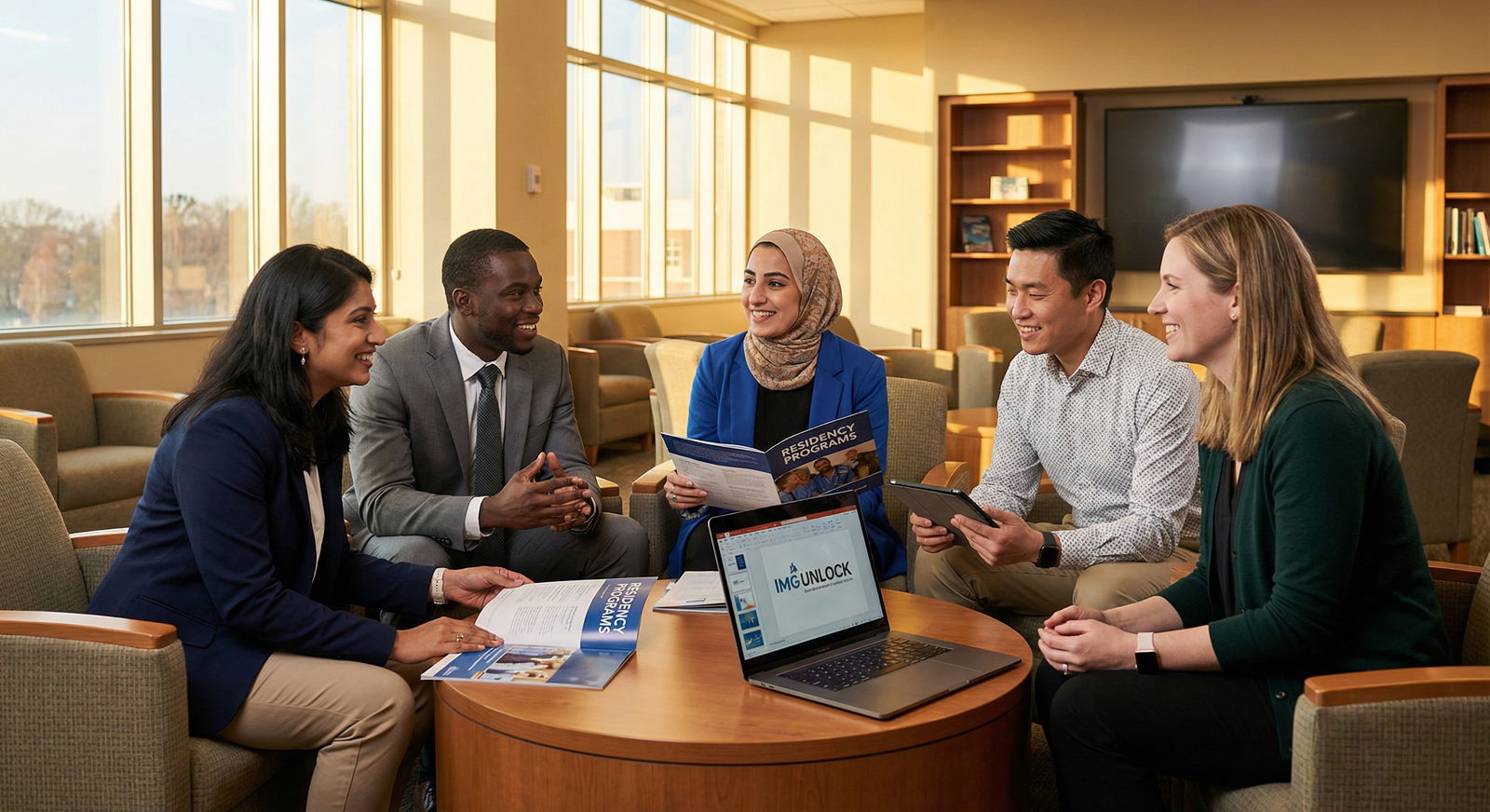
Introduction: Rethinking the Path to U.S. Residency for IMGs
For many International Medical Graduates (IMGs), the journey into the U.S. healthcare system feels like aiming for a moving target—high competition, complex requirements, and an overwhelming focus on only the most famous institutions. Yet, beyond the well-known academic powerhouses lies a rich landscape of lesser-known, highly IMG-friendly residency programs that can offer outstanding medical training and a solid launchpad for your medical career.
These “hidden gems” may not dominate online rankings, but they often provide:
- Robust clinical exposure
- Strong mentorship and supportive culture
- Clear pathways for visas and ECFMG-certified IMGs
- Opportunities for leadership, research, and community impact
This guide highlights several such IMG-friendly residency programs, explains what makes them special, and offers practical strategies for international medical graduates to successfully target and match into these opportunities.
The Appeal of IMG-Friendly Residency Programs
Understanding What “IMG-Friendly” Really Means
An IMG-friendly residency program is more than just a place that occasionally accepts international graduates. Truly IMG-friendly residency programs tend to share several characteristics:
Experience with IMGs:
They consistently rank and match IMGs each year, which means:- Faculty and staff are familiar with ECFMG certification timelines
- Program coordinators understand visa categories (J-1, H-1B) and the associated processes
- Evaluation methods and teaching styles are adapted to support residents from diverse educational systems
Flexible but Clear Eligibility Requirements:
While standards remain high, these programs may be more flexible on:- Graduation year cutoffs
- Number of attempts on USMLE/COMLEX (within reason)
- Prior clinical experience outside the U.S., especially if well-documented
Structured Mentorship for IMGs:
Many IMG-friendly programs:- Pair new IMGs with senior residents or faculty mentors
- Offer orientation tailored to U.S. healthcare systems, EMR use, and communication styles
- Provide early feedback to help you adapt quickly
Culturally Competent, Inclusive Training:
Because they host residents from around the world, these programs tend to:- Value multilingual skills and global medical perspectives
- Encourage open discussion about cultural differences in patient care
- Foster a sense of community among residents and faculty
These characteristics can significantly reduce the stress and uncertainty of your first years of U.S. medical training.
Why Consider Lesser-Known Programs?
Many IMGs focus heavily on only the most recognized university hospitals or big-name institutions. While those are excellent programs, they are not the only path to a strong medical career in the U.S.
Lesser-known, IMG-friendly residency programs can offer several strategic advantages:
Reduced Competition, Strong Match Potential
- “Brand name” programs can receive thousands of applications for a small number of positions, often from top U.S. graduates.
- Smaller or lesser-known programs may:
- Receive fewer applications
- Review a higher percentage of IMG applications in depth
- Be more open to unique backgrounds and nontraditional pathways
This can translate into more interview invitations and a higher likelihood of matching.
High-Quality, Hands-On Clinical Experience
Hidden gems often:- Serve broad, diverse patient populations in community, rural, or regional settings
- Provide substantial responsibility to residents early on
- Offer meaningful continuity clinics and procedural experience
The result: you graduate highly competent and confident, with skills that transfer well to any practice setting.
Stronger Work–Life Balance and Cost of Living Benefits
Many IMG-friendly programs are in:- Smaller cities or mid-sized towns
- Areas with lower living costs and less traffic
This can mean: - Better housing options on a resident salary
- Shorter commutes
- More time and energy to study, research, or enjoy life outside the hospital
More Opportunities for Leadership and Growth
In a smaller program, it may be easier to:- Take on leadership roles (chief resident, committee membership)
- Propose and lead quality improvement or research projects
- Develop closer relationships with faculty who can write strong, personalized letters of recommendation
Lesser-Known IMG-Friendly Residency Programs Worth Exploring
Below are examples of residency programs that have historically been receptive to IMGs and can provide excellent medical training. Always verify current requirements and match data on each program’s website and through ERAS/NRMP, as policies may evolve.
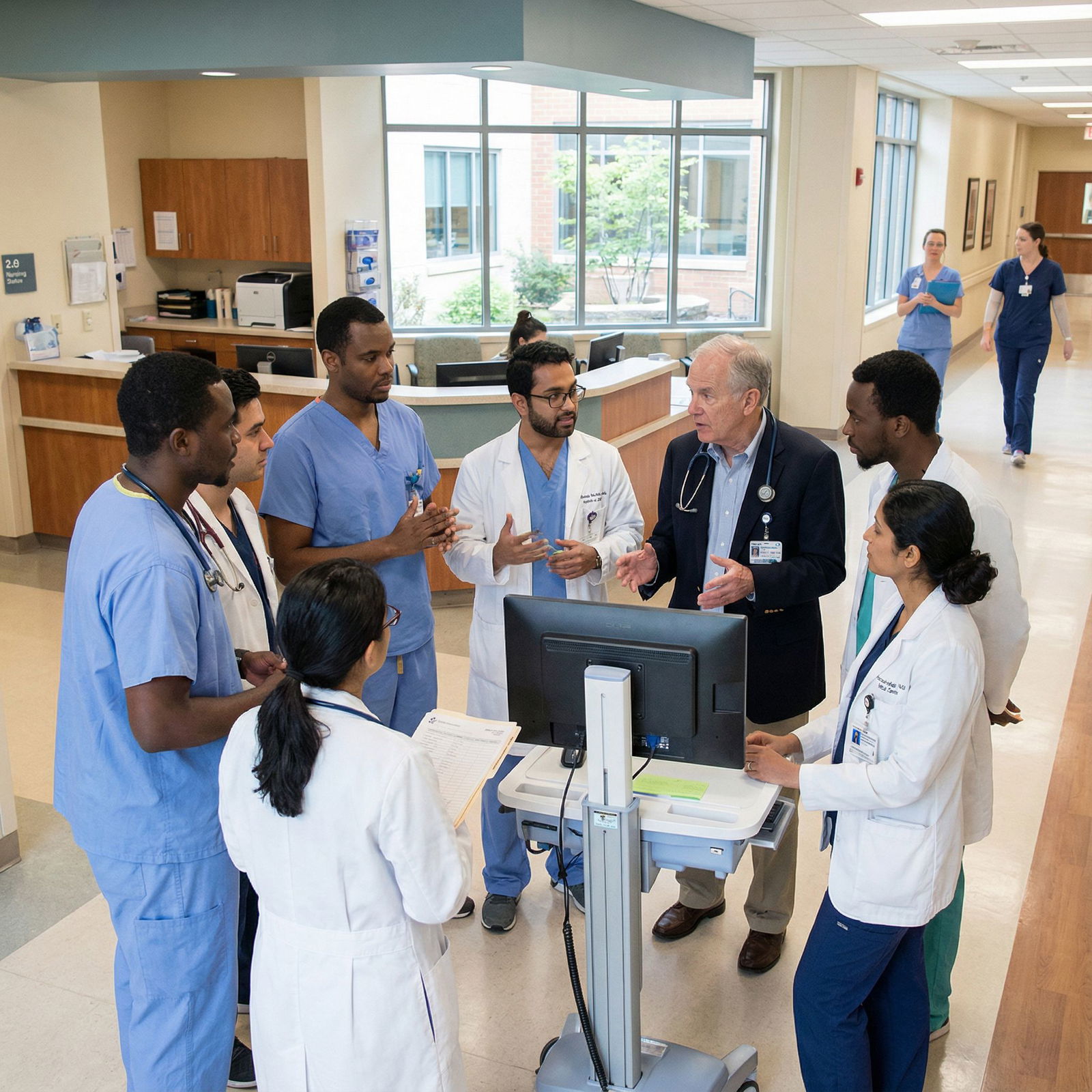
1. University of South Dakota, Sanford School of Medicine – Family Medicine
Location: Sioux Falls and other affiliated sites in South Dakota
Specialty: Family Medicine
Why It’s a Hidden Gem for IMGs
Located in the heart of the Midwest, the University of South Dakota’s family medicine residency programs focus on rural medicine and community health—areas of tremendous need in the U.S. healthcare system and excellent arenas for hands-on learning.
Key Advantages for IMGs:
Supportive, Close-Knit Environment:
- Residents often describe the culture as “family-like.”
- IMGs are paired with faculty mentors who can help with:
- Clinical adaptation
- Career planning (including fellowship or job search)
- Visa and immigration-related questions (in collaboration with institutional offices)
Broad Clinical Exposure:
- Training spans inpatient medicine, outpatient continuity clinic, obstetrics, geriatrics, and emergency care.
- Rural rotations offer:
- Wide scope of practice
- Greater autonomy under supervision
- Exposure to underserved populations and complex social determinants of health
Strong Fit for Long-Term U.S. Practice:
If you envision a clinical career in primary care, rural medicine, or outpatient practice, this setting prepares you for real-world demands and opportunities.
2. Norton Healthcare, Louisville, Kentucky – Internal Medicine
Location: Louisville, Kentucky
Specialty: Internal Medicine
Norton Healthcare is one of the largest health systems in Kentucky, with a strong emphasis on comprehensive, patient-centered care.
Features That Benefit International Medical Graduates
IMG-Accessible Internal Medicine Training:
Norton’s internal medicine residency has historically been welcoming to IMGs, with:- A diverse housestaff
- Faculty experienced in teaching trainees from varied backgrounds
Balanced, Modern Curriculum:
- Integration of technology and evidence-based practice, including:
- Electronic health records
- Point-of-care ultrasound (in some rotations)
- Quality improvement initiatives
- Strong inpatient and outpatient exposure, with subspecialty electives that may support future fellowship aspirations.
- Integration of technology and evidence-based practice, including:
Diverse Patient Population:
- Louisville’s population includes:
- Urban and suburban communities
- Underserved groups with complex medical and psychosocial needs
- This variety strengthens diagnostic acumen and management skills across disease spectrums.
- Louisville’s population includes:
Supportive Culture for Transitioning IMGs: Residents often highlight:
- Program leadership that values diversity
- A mentorship culture that helps IMGs adjust to:
- Documentation expectations
- U.S. communication norms
- Residency workload and wellness strategies
3. University of Arkansas for Medical Sciences (UAMS) – Dermatology
Location: Little Rock, Arkansas
Specialty: Dermatology
Dermatology is traditionally considered a highly competitive field, especially for IMGs. The University of Arkansas for Medical Sciences stands out as a program that has shown openness to international graduates.
Why UAMS Dermatology Is Noteworthy
IMG-Friendly History (But Still Competitive):
- While still selective, UAMS has a track record of:
- Considering strong IMG applicants with robust USMLE scores
- Valuing previous research, publications, or strong letters in dermatology
- While still selective, UAMS has a track record of:
Strong Emphasis on Community and Preventive Dermatology:
- Residents learn to manage:
- Common skin diseases
- Complex dermatologic conditions
- Skin cancer prevention and screening in varied populations
- Community outreach and patient education initiatives help residents develop communication and counseling skills.
- Residents learn to manage:
Rich Research Environment:
- Opportunities to participate in clinical research, case reports, and quality improvement projects.
- For IMGs aiming for an academic medical career, this environment is particularly valuable.
4. Loma Linda University – Anesthesiology
Location: Loma Linda, California
Specialty: Anesthesiology
Loma Linda University, a Seventh-day Adventist institution, is known for its whole-person care philosophy and a notably diverse resident body in several specialties.
What Makes Loma Linda Attractive for IMGs
Holistic, Mission-Driven Culture:
- The program emphasizes:
- Compassionate patient care
- Spiritual and emotional aspects of healthcare (irrespective of religious background)
- Professional growth and resilience
- IMGs who value a humanistic approach to medicine often find this environment very supportive.
- The program emphasizes:
Robust Clinical Volume and Case Variety:
- High surgical volume across multiple subspecialties:
- Cardiothoracic
- Neuroanesthesia
- Obstetric anesthesia
- Regional anesthesia
- Exposure to both complex tertiary cases and routine procedures equips residents with confidence and technical skill.
- High surgical volume across multiple subspecialties:
Education and Exam Preparation:
- Protected didactic time
- Simulation labs and workshops
- Structured board-review strategies
These features are especially helpful if you trained outside the U.S. and want clear, systematic preparation for ABA exams.
5. Alabama College of Osteopathic Medicine (ACOM) – Family Medicine
Location: Dothan, Alabama
Specialty: Family Medicine
ACOM, a relatively newer medical school, partners with local hospitals and clinics to offer residency training with a strong community and primary care orientation.
Key Benefits for International Medical Graduates
Emphasis on Community Engagement:
- Residents routinely participate in:
- Community health fairs
- Preventive screening events
- Outreach for underserved rural populations
- This can be especially rewarding if you are drawn to public health and population-based care.
- Residents routinely participate in:
Diverse Clinical Experiences in a Community Setting:
- Residents manage:
- Chronic diseases (e.g., diabetes, hypertension, heart failure)
- Pediatric and adult preventive care
- Common acute conditions seen in primary care
- Affiliation with community hospitals allows exposure to both inpatient and outpatient care, often with a broad scope of practice.
- Residents manage:
Supportive Learning Environment:
- Smaller resident cohorts foster close relationships with:
- Faculty mentors
- Nursing staff
- Allied health professionals
- This can ease the transition for IMGs adjusting to the U.S. medical system and interprofessional teamwork.
- Smaller resident cohorts foster close relationships with:
Real IMG Success Stories from Lesser-Known Programs
Hearing how other IMGs have navigated this path can be motivating and instructive.
Case Study: Dr. Samira – Building a Career in Family Medicine
Background:
Dr. Samira, an IMG from India, initially focused on large, urban academic centers. However, after one unsuccessful match cycle, she broadened her strategy to include more IMG-friendly, community-oriented programs.
Her Path:
- She identified the University of South Dakota’s family medicine residency as a strong fit due to:
- Its rural medicine focus
- Consistent acceptance of IMGs
- Clear mentorship structure
- After matching, she:
- Was paired early with a faculty mentor who helped her:
- Improve her clinical documentation
- Understand U.S. insurance and referral systems
- Plan elective rotations aligned with her career goals
- Developed strong relationships in the community through outreach clinics
- Was paired early with a faculty mentor who helped her:
Outcome:
By graduation, Dr. Samira had:
- Strong letters of recommendation
- A reputation for compassionate, thorough care
- Multiple job offers in both rural and suburban settings
She reflects:
“I had always dreamed of becoming a family physician in the U.S., but I thought it was only possible through big-name programs. The mentorship and breadth of experience at South Dakota gave me exactly what I needed—maybe more than I would have received in a huge program where I might have been just another resident.”
Case Study: Dr. Rahman – Thriving in Internal Medicine
Background:
Dr. Rahman, an IMG from Bangladesh, was unsure how well he would adapt to a new culture and work environment. He looked deliberately for IMG-friendly residency programs with a track record of supporting international graduates.
His Path:
- He matched into the Norton Healthcare internal medicine residency in Louisville.
- Initially concerned about:
- Accent and communication differences
- Learning U.S.-style documentation
- Fitting into the team culture
Program Support:
- The program:
- Paired him with a senior resident mentor
- Provided early feedback on patient presentations and note-writing
- Encouraged him to discuss his cultural background openly during team-building sessions
Outcome:
Dr. Rahman recalls:
“I felt more than just a resident; I felt like part of a family. My attendings respected my previous experience and helped me adapt rather than trying to change who I was.”
He later secured a hospitalist position in a major U.S. city, crediting the comprehensive internal medicine training and supportive environment at Norton for his success.
Strategic Tips for Applying to IMG-Friendly Hidden Gem Programs
The presence of IMG-friendly residency programs is only helpful if your application strategy is well thought out. Consider the following steps:
1. Research Beyond the Usual Lists
Use Multiple Sources:
- FREIDA (AMA)
- Program websites
- NRMP “Charting Outcomes” and specialty-specific data
- Residency Explorer (when accessible)
Look for Indicators of IMG-Friendliness:
- Percentage of current or recent residents who are IMGs
- Visa sponsorship policies clearly stated on their website
- Alumni success stories highlighting IMGs
Search Intelligently:
- Combine terms like “international medical graduates,” “J-1 visa,” “H-1B,” and “IMG-friendly residency” with specific specialties or locations.
- Use LinkedIn and institutional pages to see the backgrounds of current residents.
2. Highlight Your International Background as a Strength
Your global medical experience can be a major asset if you frame it correctly:
In Your Personal Statement:
- Link your training abroad to:
- Resilience and adaptability
- Cross-cultural communication skills
- Commitment to underserved populations or public health
- Show how your background aligns with the program’s mission (e.g., community care, rural health, holistic medicine).
- Link your training abroad to:
On Your CV:
- Clearly list:
- Rotations and responsibilities in your home country
- Any U.S. clinical experience (USCE) such as observerships, externships, or research
- Volunteer work and leadership roles that show initiative and teamwork
- Clearly list:
3. Network Strategically with Current Residents and Alumni
Find Contacts:
- Search LinkedIn or hospital websites for current residents from your country or region.
- Join professional and IMG-focused groups on social platforms.
How to Approach:
- Send concise, respectful messages:
- Introduce yourself briefly
- Express genuine interest in their program
- Ask 2–3 specific questions (e.g., about the learning culture, support for IMGs, or visa policies)
- Avoid asking for favors immediately; focus on learning and building relationships.
- Send concise, respectful messages:
Leverage Professional Organizations:
- Specialty-specific societies often have:
- Student/trainee sections
- Mentorship programs
- Webinars targeted to IMGs
- Specialty-specific societies often have:
4. Tailor Each Application to the Program
Programs can quickly identify generic applications. Stand out by:
Customizing Your Personal Statement and Experiences Section:
- Mention the program’s:
- Focus areas (e.g., rural medicine, holistic care, research)
- Community partnerships
- Educational philosophy
- Connect specific experiences from your background to their mission.
- Mention the program’s:
Aligning Letters of Recommendation (LoRs):
- Ideally, secure:
- At least 2–3 strong clinical letters from U.S. or North American attendings, if possible.
- Letters that highlight:
- Clinical judgment
- Communication skills
- Professionalism and teamwork
- If you cannot obtain U.S. LoRs, ensure international letters are detailed and specific.
- Ideally, secure:
5. Be Realistic but Ambitious in Your Program List
Balance Your Choices:
- Include:
- A core of IMG-friendly community programs and hidden gems
- A few more competitive programs that align strongly with your strengths
- Consider the number of applications typically recommended for IMGs in your specialty (often more than for U.S. grads).
- Include:
Monitor and Adjust:
- If applying in a second cycle, analyze:
- Where you received interviews previously
- Programs that did not respond and why (e.g., score cutoffs, graduation year limits)
- Weaknesses you can address (e.g., more USCE, research, or improved communication skills)
- If applying in a second cycle, analyze:

FAQ: Navigating Lesser-Known IMG-Friendly Residency Programs
1. What makes a residency program truly IMG-friendly?
A truly IMG-friendly residency program:
- Consistently accepts international medical graduates, not just occasionally.
- Clearly states visa sponsorship policies (J-1 and/or H-1B) and has experience processing them.
- Offers structured mentorship and orientation tailored to IMGs.
- Includes current or recent residents who are IMGs and thriving in the program.
- Provides a supportive environment for learning U.S. clinical documentation, communication norms, and healthcare systems.
Looking at current resident profiles and program websites is often the best way to assess this.
2. Are lesser-known IMG-friendly programs of lower quality?
Not necessarily. Many lesser-known programs:
- Serve large catchment areas and see high patient volumes.
- Provide substantial hands-on responsibility, which can be more limited at some larger academic centers.
- Offer strong board pass rates and excellent employment or fellowship outcomes for their graduates.
“Lesser-known” usually refers to brand recognition and online visibility, not the quality of medical training. Focus on program outcomes, resident satisfaction, and alignment with your goals rather than name prestige alone.
3. How can I identify hidden IMG-friendly programs beyond common online lists?
To uncover hidden gems:
- Review program websites for:
- International graduates among current residents
- Explicit mention of visa sponsorship
- Diversity and inclusion statements
- Use residency databases and tools (FREIDA, Residency Explorer, NRMP reports).
- Network with:
- IMGs currently in the U.S. system
- Alumni from your medical school who matched in the U.S.
- Attend online webinars and virtual open houses, where programs often discuss their culture and openness to IMGs.
4. What should I emphasize in my application to stand out as an IMG?
To strengthen your application:
- Highlight your unique international perspective, including:
- Global health exposure
- Work with diverse or underserved populations
- Emphasize adaptability and resilience, supported by real examples.
- Show evidence of U.S. clinical experience or meaningful observer/research roles, if possible.
- Align your personal statement with the mission and strengths of each specific program (e.g., rural medicine, holistic care, community outreach).
- Ensure your USMLE/COMLEX scores and ECFMG certification are clearly documented and up to date.
5. Do I need U.S. clinical experience (USCE) to match into these hidden gem programs?
While requirements vary:
- Many IMG-friendly programs prefer or strongly value some form of USCE, such as:
- Observerships
- Externships
- Sub-internships
- Research with clinical exposure
- If you lack USCE, focus on:
- Obtaining strong, detailed letters from your home institution
- Demonstrating familiarity with U.S. healthcare through courses, certifications (e.g., BLS/ACLS), or telehealth/research collaborations
- Some community-based programs may be more flexible but will still value evidence that you understand U.S. systems and expectations.
By widening your perspective beyond only the most famous institutions, you open the door to a broader range of IMG-friendly residency programs that can provide excellent medical training, rich mentorship, and realistic match opportunities. These hidden gems may not dominate rankings, but they can offer exactly what you need: a supportive, high-quality environment to build a successful and fulfilling medical career in the United States.