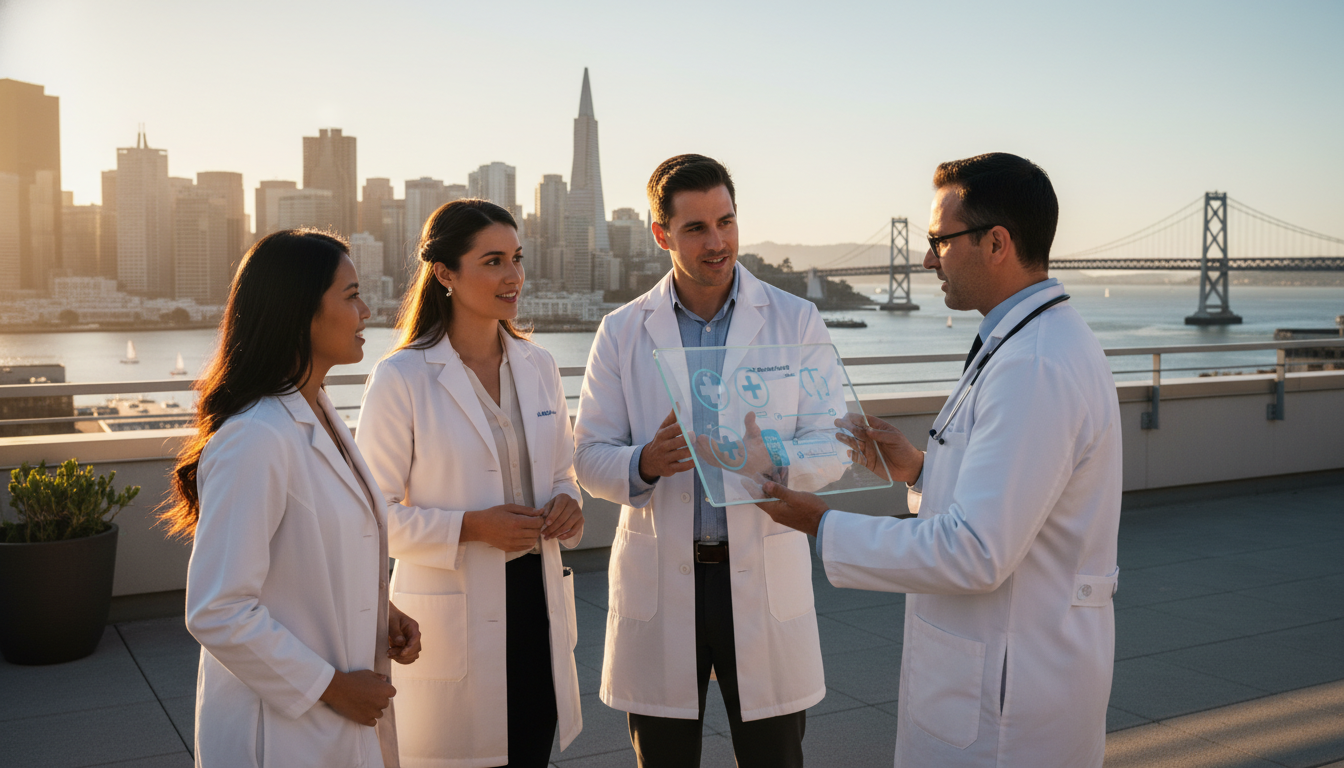
San Francisco and the broader Bay Area are among the most competitive—and rewarding—regions in the United States for residency training. For an international medical graduate (IMG), the combination of world-class hospitals, rich academic environments, and large immigrant communities makes the Bay Area especially appealing. At the same time, navigating H‑1B sponsorship adds a layer of complexity to the residency journey.
This IMG residency guide focuses specifically on H‑1B sponsorship programs in the San Francisco Bay Area, helping you understand which institutions are more IMG‑friendly, how H‑1B policies typically work, and what you can do to strengthen your chances.
Understanding H‑1B Sponsorship for Residency in the Bay Area
Before looking at specific San Francisco residency programs and hospitals, it’s essential to understand the basics of H‑1B visas in the residency context.
H‑1B vs J‑1: Why Many IMGs Prefer H‑1B
Most IMG residents in the U.S. train on a J‑1 visa sponsored by the Educational Commission for Foreign Medical Graduates (ECFMG). However, many IMGs actively seek H‑1B residency programs because:
No two‑year home country rule
J‑1 visas usually require you to return to your home country for two years after training (unless you obtain a waiver). H‑1B has no automatic home residency requirement.Easier long‑term immigration planning
H‑1B status aligns more directly with pathways to permanent residency (green card). This is crucial if you hope to stay in the U.S. long-term for fellowship, academic positions, or practice.Dual intent
H‑1B allows “dual intent,” meaning it’s acceptable to both train and eventually immigrate.
However, these advantages come with trade‑offs:
- H‑1B involves higher legal and filing costs for programs.
- There are strict exam and licensing requirements (usually passing USMLE Step 3 before starting).
- Some institutions have institutional policies that favor J‑1 over H‑1B due to cost and administrative burden.
H‑1B Cap, Cap‑Exempt, and Why Teaching Hospitals Help
The standard H‑1B category is subject to an annual cap (65,000 general + 20,000 U.S. masters/PhD cap). But most major residency programs in the San Francisco Bay Area are cap‑exempt, which is a huge benefit.
Cap‑exempt H‑1B positions are generally available when you are employed by:
- A nonprofit hospital affiliated with a university
- An institution of higher education
- A nonprofit research organization or governmental research organization
Most large academic centers in the Bay Area fall into these groups, so they can file H‑1B petitions at any time of the year and are not limited by the lottery. In practical terms:
- You don’t have to risk your residency position on the national H‑1B lottery.
- Timelines can be tailored to residency start dates (e.g., July 1).
When researching programs, pay attention to whether a hospital is a teaching affiliate of a university, which is a strong signal that it may be H‑1B cap‑exempt.
Major Bay Area Institutions: H‑1B Sponsorship Landscape
This section provides a high‑level orientation to the major institutions in the San Francisco Bay Area that are commonly on the radar of IMGs seeking H‑1B residency programs. Policies change frequently, so always confirm details with the program’s GME office or website, but this IMG residency guide will help you focus your search.

1. University of California, San Francisco (UCSF)
Key features:
- Major academic center with multiple hospitals and campuses (Parnassus, Mission Bay, Zuckerberg San Francisco General Hospital, VA).
- Highly competitive and research‑intense.
- Training programs in Internal Medicine, Neurology, Pediatrics, Psychiatry, Surgery, Anesthesiology, and many subspecialties.
H‑1B Prospects:
- As a leading university‑affiliated system, UCSF is H‑1B cap‑exempt.
- Historically, UCSF has sponsored both J‑1 and H‑1B visas in various departments, especially for fellowship trainees and highly competitive candidates.
- Some residency programs may prefer J‑1 for first‑time postgraduate trainees but consider H‑1B for exceptional candidates who already meet all Step 3 and licensing criteria.
Strategic tips for UCSF as an IMG:
- Demonstrate a strong research portfolio or unique expertise; UCSF heavily values academic potential.
- If you’re targeting H‑1B, pass USMLE Step 3 early (ideally before applying or by rank deadline).
- During interviews or Q&A sessions, ask specific, concise questions about H‑1B policies:
“Could you share whether your program has sponsored H‑1B visas for categorical residents in the last few years?”
2. Stanford Health Care / Stanford University
While not in San Francisco proper, Stanford University Medical Center (Palo Alto) is squarely within the broader Bay Area and is on most IMG radar lists.
Key features:
- Top‑tier academic medical center with strong emphasis on innovation and research.
- Multiple residency programs: Internal Medicine, Surgery, Anesthesia, Neurology, Radiology, etc.
- Often considered one of the most competitive programs for any applicant, especially IMGs.
H‑1B Prospects:
- Stanford, like UCSF, is H‑1B cap‑exempt.
- Sponsorship patterns vary by department and change over time.
- Some programs may state that they primarily sponsor J‑1 visas but consider H‑1B for senior residents, advanced standing, or those already in the U.S. on H‑1B.
Strategic tips for Stanford as an IMG:
- A strong academic CV with publications, conference presentations, and U.S. clinical experience is often essential.
- If you’re already in the U.S. on an H‑1B visa (e.g., research position), emphasize smooth transfer possibilities.
- Clarify your visa needs in the ERAS application and in communications with the program coordinator.
3. Kaiser Permanente – Northern California (Bay Area Sites)
Kaiser Permanente operates several major hospitals and residency programs in the Bay Area, including San Francisco, Oakland, Santa Clara, San Jose, and others.
Key features:
- Community‑based but academically affiliated training.
- Strong focus on integrated care and outpatient medicine.
- Programs in Internal Medicine, Family Medicine, Psychiatry, Pediatrics, and more.
H‑1B Prospects:
- Many Kaiser hospitals collaborate with universities or are structured in ways that allow cap‑exempt H‑1B filings, but policies differ by location and program.
- Some Kaiser programs are more J‑1 focused but have historically sponsored H‑1B for a smaller subset of residents or fellows.
Strategic tips for Kaiser as an IMG:
- Read each Kaiser residency website carefully; some will clearly state:
- “We sponsor J‑1 and H‑1B visas,” or
- “We sponsor J‑1 visas only.”
- Prioritize sites that have previously matched IMGs, which may signal a more IMG‑friendly culture.
- Demonstrate interest in population health, primary care, and long‑term service—key values in the Kaiser system.
4. Safety‑Net and County‑Affiliated Hospitals
Hospitals such as Zuckerberg San Francisco General Hospital (ZSFG) and Santa Clara Valley Medical Center play a crucial role in serving vulnerable populations and often have affiliations with UCSF or Stanford.
H‑1B Prospects:
- If administratively linked to UCSF or Stanford, these hospitals may fall under the H‑1B cap‑exempt umbrella.
- Many IMGs are drawn to these centers for their mission‑driven care environments and diverse patient populations.
Strategic tips:
- Highlight prior experience with underserved communities, language skills, and cultural competence.
- Clarify whether the employing entity (university vs. county) is H‑1B cap‑exempt and whether they have a history of H‑1B sponsorship.
How to Identify Bay Area H‑1B‑Friendly Residency Programs
Because program policies evolve, you’ll need a systematic approach to building your own H‑1B sponsor list for San Francisco residency and Bay Area programs.

1. Use Official Program Websites and GME Pages
Most ACGME‑accredited programs in the Bay Area now publish at least some visa information online. Look specifically for:
- A section called “International Medical Graduates,” “Eligibility & Requirements,” or “Visa Sponsorship.”
- Clear statements such as:
- “We sponsor J‑1 visas only.”
- “We sponsor J‑1 and H‑1B visas.”
- “H‑1B visas may be considered on a case‑by‑case basis.”
If the wording is vague (e.g., “We support visa sponsorship for qualified candidates”), note the program on your follow‑up list and plan to ask directly.
2. Cross‑Check with Institution‑Level GME Offices
Large hospitals and universities often have a centralized Graduate Medical Education office. Their websites sometimes include:
- General policies about which visa types are permitted institution‑wide.
- Statements like: “For GME programs, the institution will sponsor J‑1 or H‑1B visas depending on program policy.”
This can help you:
- Filter out institutions that never sponsor H‑1B.
- Confirm that H‑1B is institutionally possible, even if a specific residency program hasn’t advertised it clearly yet.
3. Use Alumni and Resident Lists as Clues
Some residency websites publish lists of current residents and alumni, often with their previous schools. If you see many graduates from:
- Non‑U.S. medical schools
- Well‑known international medical colleges
Then the program is likely open to IMGs in general. It doesn’t guarantee H‑1B sponsorship, but it suggests a higher baseline IMG‑friendliness. You can then:
- Look up some alumni on LinkedIn.
- See what visa types they held or what they transitioned to later (e.g., H‑1B fellowship positions).
4. Contact Program Coordinators Professionally
If you can’t find clear information, a concise and respectful email can be effective. For example:
Subject: Visa Sponsorship Question – [Your Name], IMG Applicant for [Specialty]
Dear [Coordinator’s Name],
I am an international medical graduate planning to apply to your [Specialty] Residency Program this year. Could you please let me know whether your program sponsors H‑1B visas for incoming PGY‑1 residents?
Thank you very much for your time.
Sincerely,
[Your Name], MD
[Medical School]
Key points:
- Keep it short and specific.
- Don’t send multiple follow‑ups if there’s no response.
- Save all replies to help build your personal H‑1B sponsor list for Bay Area programs.
5. Use NRMP and Third‑Party Resources Carefully
Several websites and forums collect information about IMG‑friendly and H‑1B residency programs. These can be useful starting points, but:
- Treat them as unofficial sources—policies can change from year to year.
- Always verify with the program directly before relying on that information for a major decision.
H‑1B Requirements and Timelines for Bay Area Residency
Understanding what is required for H‑1B sponsorship—and when—is crucial for planning your exams and application timing.
1. USMLE Step 3: Non‑Negotiable for Most H‑1B Programs
For an H‑1B residency, most institutions in the Bay Area require:
- USMLE Step 1: Passed (may be reported as Pass/Fail)
- USMLE Step 2 CK: Competitive score
- USMLE Step 3: Passed before H‑1B petition filing or before the start date (often by spring prior to July 1 start)
Because H‑1B petitions are position‑specific and employer‑driven, programs need to demonstrate that you are fully license‑eligible in the state. Step 3 is part of that.
Actionable advice:
- Plan to take Step 3 as early as possible—ideally during or immediately after your first clinical or research experience in the U.S.
- If you intend to list H‑1B as your visa preference in ERAS, try to have Step 3 passed before applications open.
2. California Medical Board and Training License
California has its own licensing rules. For residents:
- You’ll typically need a Postgraduate Training License (PTL) for your initial training period.
- The program’s GME office will guide you, but they must be confident you’ll meet all licensing requirements in time for the residency start.
Make sure you:
- Understand whether your medical school is recognized/approved by the California Medical Board.
- Have all needed documents (transcripts, diploma, translations, dean’s letters) well organized to avoid delays.
3. H‑1B Filing Timeline
For cap‑exempt H‑1B residency programs in the Bay Area, typical timelines are:
- Match Day (March): Program confirms your visa type and begins paperwork.
- Spring (March–May):
- You submit supporting documents (passport, CV, exam scores, diploma, experience letters).
- The hospital and its immigration counsel prepare the petition (Form I‑129 and supporting evidence).
- Late Spring / Early Summer:
- H‑1B petition is filed with USCIS, often with premium processing to ensure swift approval.
- Once approved, if you are outside the U.S., you attend a visa interview at a U.S. consulate.
- July 1: Residency start date.
Critical point: Any delay in Step 3 or document preparation can derail the timeline. Aim to be proactive and fast once you match.
Practical Strategies to Improve Your H‑1B Chances in the Bay Area
Even when programs are theoretically open to H‑1B sponsorship, they may only choose a few candidates each year. You’ll want to position yourself as a low‑risk, high‑value IMG applicant.
1. Signal Flexibility without Undermining H‑1B Priority
In ERAS, many IMGs indicate:
- J‑1 acceptable
- H‑1B preferred
This approach signals:
- You are realistic and flexible, willing to train on J‑1 if needed.
- But you have a clear preference for H‑1B, giving programs a reason to discuss it if they are open.
However, if H‑1B is absolutely essential for your long‑term plans (e.g., you cannot return home for personal or political reasons), clearly mention your situation:
- In your personal statement (briefly, not as the main focus)
- During interviews, when asked about your visa needs
2. Build a Strong, U.S.‑Relevant Profile
Bay Area programs, especially UCSF, Stanford, and Kaiser, heavily favor residents who can:
- Contribute academically: publications, QI projects, teaching experience
- Thrive in diverse, high‑complexity clinical settings
- Navigate multidisciplinary teams and communicate clearly
For an IMG, concrete steps include:
- Obtain U.S. clinical experience (hands‑on observerships, externships, or research with clinical exposure).
- Work on at least one research, QI, or case report project ideally affiliated with a U.S. institution.
- Polish your English communication skills, especially for patient interaction and presentations.
3. Reduce Visa‑Related Barriers for the Program
From a program’s point of view, sponsoring an H‑1B is easier when:
- The candidate has Step 3 done.
- The candidate has clear documentation and timely communication.
- The candidate is already in the U.S. on a status that can be smoothly converted or extended (e.g., F‑1 OPT, J‑1 research, or H‑1B research).
Action points:
- Keep your documents digitized, scanned, and verified (passport, diplomas, transcripts, ECFMG certificate, USMLE scores).
- Respond quickly to any email from the program or their immigration attorney.
- If you are already on an H‑1B with a cap‑exempt employer (e.g., research at a university), highlight that your transfer will not be subject to the H‑1B lottery.
4. Network Strategically in the Bay Area
Networking matters, especially in a competitive environment like San Francisco residency programs.
Ideas:
- Attend Bay Area medical conferences, grand rounds, or online events organized by UCSF, Stanford, or Kaiser.
- Join IMG or specialty‑specific groups on LinkedIn or professional societies, particularly those based in California.
- If possible, perform research or observerships at Bay Area hospitals and build relationships with mentors who can advocate for you.
A single strong letter from a well‑known faculty member in the Bay Area can significantly improve your credibility and may make a program more willing to consider H‑1B sponsorship.
Frequently Asked Questions (FAQ)
1. Are most San Francisco Bay Area residency programs willing to sponsor H‑1B for IMGs?
Many large academic and teaching‑affiliated hospitals in the Bay Area are structurally able to sponsor H‑1B (due to cap‑exempt status), but willingness varies by program and year. Some programs have a strong preference for J‑1 visa sponsorship but may still sponsor H‑1B for a select number of highly competitive candidates who already meet Step 3 and licensing requirements. Always verify directly with each program’s website or coordinator.
2. Do I need to pass USMLE Step 3 before applying to H‑1B‑friendly programs in the Bay Area?
You do not always need Step 3 before applying through ERAS, but you usually must have passed Step 3 before the program files your H‑1B petition or, in some cases, before the program submits its rank list. Because timelines are tight, many Bay Area programs strongly prefer, or practically require, Step 3 to be completed by late winter of the Match year. To maximize your options, plan to take and pass Step 3 as early as possible.
3. How can I find an accurate H‑1B sponsor list for San Francisco residency programs?
There is no official, comprehensive H‑1B sponsor list specifically for San Francisco residency programs. Instead, you should:
- Check each program’s official website for visa policies.
- Review GME office pages for institution‑wide rules.
- Email program coordinators to ask directly about H‑1B sponsorship.
- Use alumni profiles and professional platforms to see if previous residents held H‑1B visas.
Build and update your personal list each season, since policies can change quickly.
4. Are community hospitals in the Bay Area also H‑1B cap‑exempt?
Not always. H‑1B cap‑exempt status depends on the nature of the employer (e.g., non‑profit, university‑affiliated, or research organization), not simply its location or size. Many large academic hospitals (like UCSF and Stanford‑affiliated centers) are cap‑exempt, but some community hospitals may be cap‑subject, meaning they must go through the annual H‑1B lottery. When considering a community‑based program, specifically ask whether they are cap‑exempt and how that affects their willingness to sponsor H‑1B visas for residents.
For an international medical graduate aiming for an H‑1B residency in the San Francisco Bay Area, success lies in early planning, strategic program selection, and meticulous attention to visa and licensing requirements. By understanding which institutions are cap‑exempt, confirming their current sponsorship policies, and presenting yourself as a well‑prepared, low‑risk candidate, you significantly increase your chances of training in one of the most dynamic medical regions in the world.