Understanding H-1B Sponsorship in Addiction Medicine for IMGs
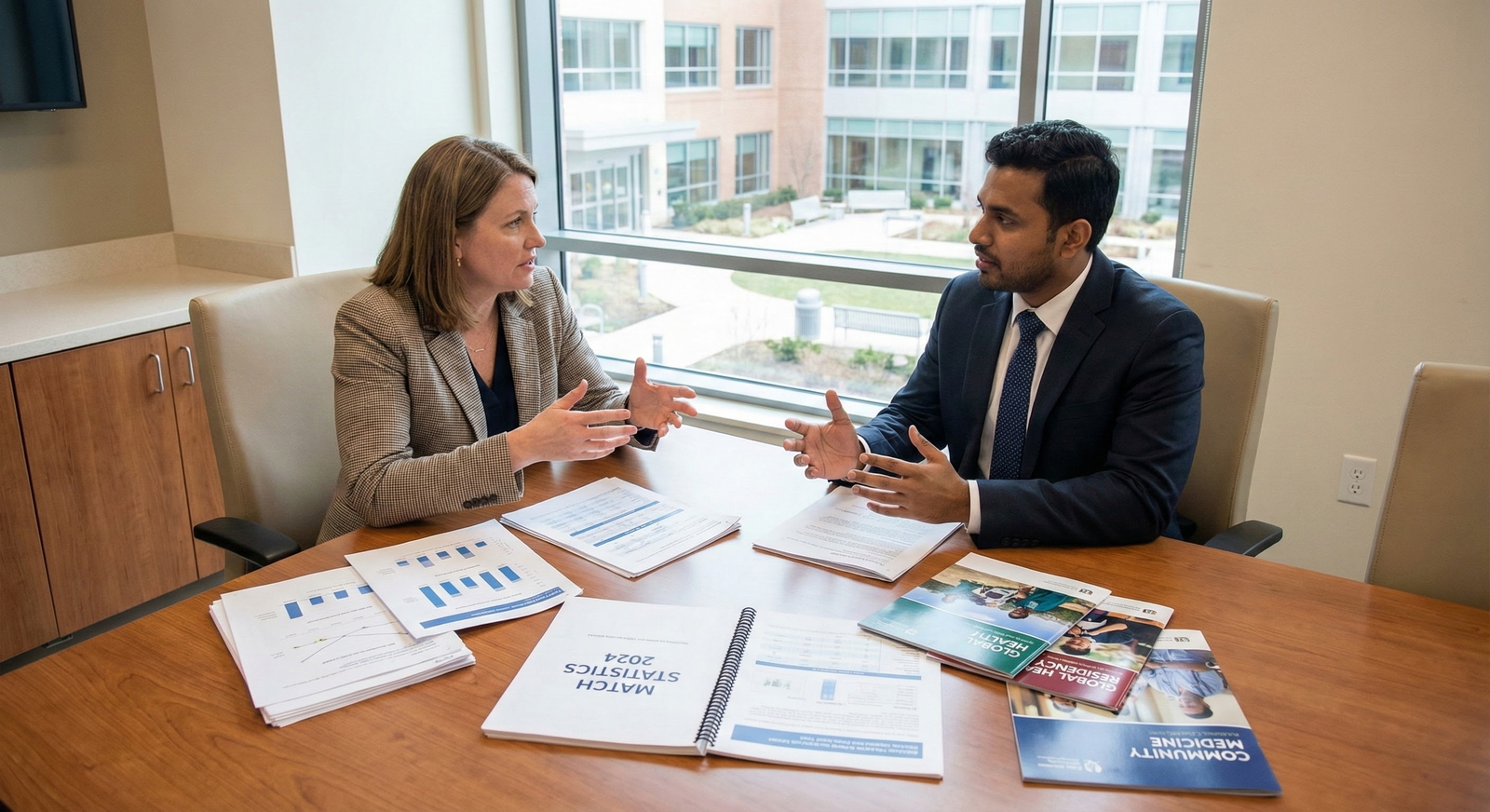
For an international medical graduate interested in addiction medicine, H-1B–friendly training programs can be the bridge between your career goals and the U.S. residency and fellowship system. This IMG residency guide focuses specifically on how H-1B residency programs and addiction medicine fellowship opportunities fit together, what is realistically possible, and how to strategically plan your path.
As an IMG, you must navigate three overlapping issues:
- Visa category (H-1B vs J-1, including H-1B cap exempt options)
- Level of training (residency vs fellowship)
- Subspecialty focus (addiction medicine vs other internal medicine, psychiatry, or family medicine tracks)
This article explains each of these clearly and gives you a stepwise strategy to target programs that offer H-1B sponsorship while still allowing you to build a strong profile in addiction medicine.
Step 1: Know Your Pathways into Addiction Medicine as an IMG
The Training Structure: Residency First, Then Fellowship
In the U.S., addiction medicine is a subspecialty, not a stand‑alone core residency. You must first complete a primary residency and then apply for a substance abuse training or addiction medicine fellowship.
Common core residency pathways leading to addiction medicine fellowship include:
- Internal Medicine
- Family Medicine
- Psychiatry
- Pediatrics
- Emergency Medicine
- Obstetrics & Gynecology (less common, but possible in some programs)
- Preventive Medicine or Anesthesiology (in selected fellowships)
For IMGs, the most common are:
- Internal Medicine → Addiction Medicine Fellowship
- Psychiatry → Addiction Psychiatry or Addiction Medicine Fellowship
- Family Medicine → Addiction Medicine Fellowship
Your H-1B strategy must therefore address two stages:
- Residency: Where most visa flexibility is needed and where H-1B is often harder to obtain but still possible.
- Addiction Medicine Fellowship: Typically easier for H-1B, especially at large academic or H-1B cap exempt institutions.
H-1B vs J-1 for Aspiring Addiction Specialists
Most IMGs in residency are sponsored on a J-1 visa by ECFMG. However, some prefer H-1B for reasons such as:
- Avoiding the J-1 two-year home residency requirement
- Greater flexibility in post-residency job options
- Ability for spouse to work (if spouse later gains H-4 EAD in some circumstances)
For addiction medicine–focused IMGs, the choice matters because:
- If you choose J-1 for residency, you will likely need a J-1 waiver job after training, often in an underserved area. Addiction treatment positions that are waiver‑friendly do exist, but options can be limited.
- If you choose H-1B for residency and fellowship, you have more direct pathways to long-term jobs in addiction treatment organizations, academic centers, or integrated behavioral health systems.
However, H-1B is more complex to secure and requires early planning and strong application credentials.
Step 2: Core Concepts of H-1B for Medical Training
What Is H-1B and How Does It Apply to Physicians?
The H-1B is a temporary work visa for specialty occupations that require at least a bachelor’s degree (physicians clearly qualify). In graduate medical education, it can be used for:
- ACGME-accredited residencies (e.g., internal medicine, psychiatry, family medicine)
- ACGME-accredited or recognized fellowships (e.g., addiction medicine, addiction psychiatry, behavioral medicine sub-specialties)
To be eligible for H-1B in a residency or addiction medicine fellowship, IMGs generally must:
- Have ECFMG certification
- Have passed USMLE Step 1 and Step 2 CK (and often Step 3; many H-1B residency programs require Step 3 before filing)
- Have a valid state medical training license or eligibility for one
- Be hired by a U.S. sponsoring institution willing to file the H-1B petition
H-1B Cap and Cap-Exempt Programs
One of the most important distinctions is between:
- H-1B cap-subject employers: usually private hospitals, clinics, or health systems
- H-1B cap exempt employers: including
- Nonprofit hospitals affiliated with universities
- University-based academic medical centers
- Certain research organizations
Most large teaching hospitals and academic addiction medicine programs are H-1B cap exempt, meaning:
- They can file H-1B petitions anytime during the year
- Physicians are not limited by the annual H-1B lottery
- You are not counted against the regular H-1B cap
For an IMG targeting addiction medicine, this is incredibly advantageous. Many addiction medicine fellowships sit inside large academic health systems that are cap exempt. If you choose residency and fellowship at such institutions, your H-1B pathway is typically smoother.
Step 3: Identifying H-1B-Friendly Residencies with Addiction Focus
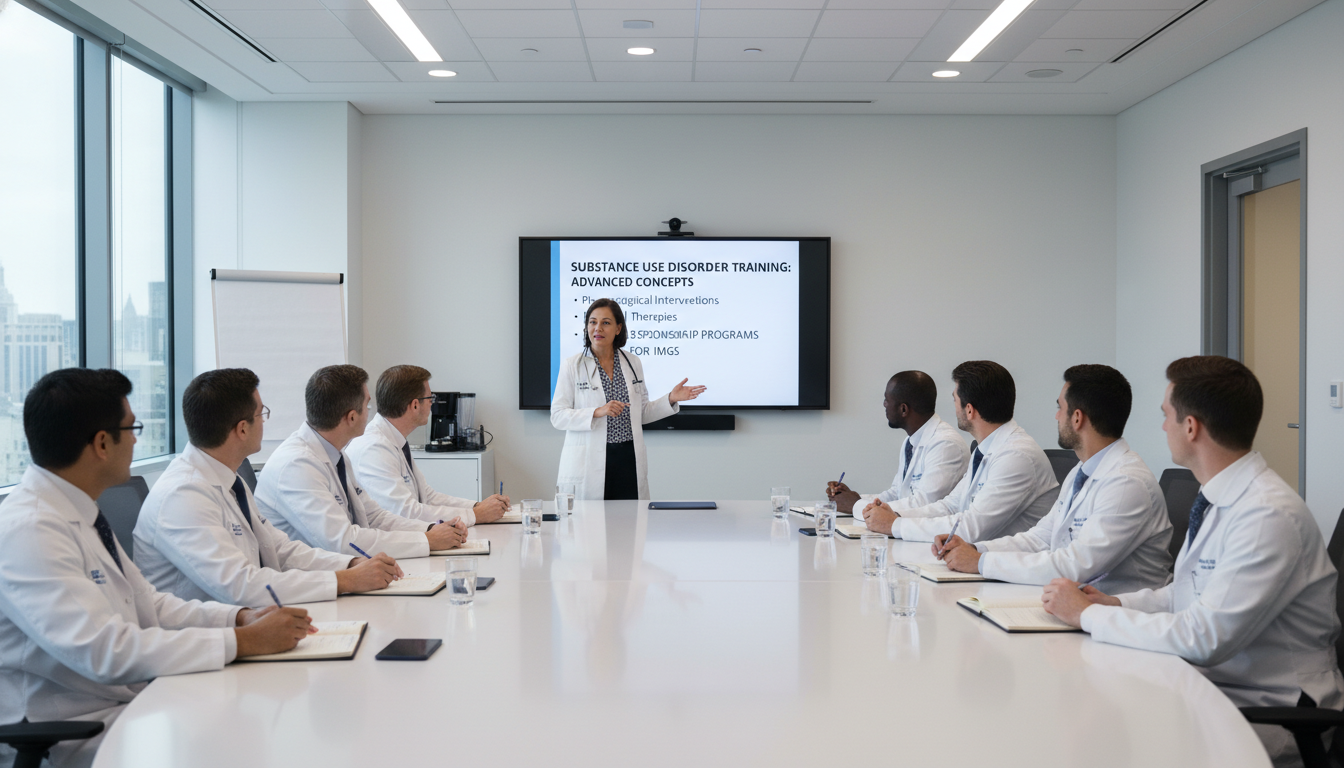
While there is no single official H-1B sponsor list for residency programs, you can build your own targeted list using several strategies and tools.
Best Primary Specialties for Addiction-Focused IMGs
If you aim to practice in addiction medicine long-term, prioritize these specialties when searching for H-1B residency programs:
Psychiatry
- Strong alignment with addiction psychiatry and co-occurring mental health conditions
- Many addiction fellowships recruit primarily from psychiatry
- Look for programs with integrated addiction services, dual diagnosis clinics, and emphasis on substance use disorders
Internal Medicine
- Good for hospital-based addiction consultation services, primary care–addiction integrated clinics, and academic roles
- Addiction medicine fellowships commonly accept internal medicine graduates
- Seek programs with consult-liaison psychiatry collaborations and inpatient addiction consult teams
Family Medicine
- Ideal for outpatient addiction treatment, rural programs, and community health centers with MAT (medication-assisted treatment)
- Look for programs with robust substance abuse training, buprenorphine prescribing exposure, and continuity clinics in underserved communities
Practical Steps to Build Your Program Target List
Start with well-known H-1B-friendly specialties
- Historically, internal medicine and psychiatry have larger numbers of H-1B positions for IMGs.
- Use residency review platforms (e.g., FREIDA, program websites, alumni profiles) to identify programs that explicitly mention H-1B sponsorship.
Narrow down using addiction-related features
On each program website, look for:- Addiction medicine or addiction psychiatry faculty
- Dedicated addiction clinics, inpatient detox units, or consult services
- Affiliation with a formal addiction medicine fellowship
- Descriptions of substance abuse training in the curriculum
Confirm current visa policy directly
Website information may be outdated. Email the program coordinator or GME office and ask very specific questions:- “Does your program sponsor H-1B visas for residents?”
- “How many current or recent residents are on H-1B?”
- “Is Step 3 required before ranking applicants for H-1B sponsorship?”
- “Do you sponsor H-1B for all PGY levels or only for fellowship?”
Pay attention to H-1B cap exempt affiliations
Programs affiliated with:- A medical school
- A large university hospital
- Nonprofit academic health centers
are more likely to be H-1B cap exempt and have experience with physician H-1B petitions.
Example: Targeting a Psychiatry Program with Addiction Focus
Suppose you are an IMG who has:
- Strong psychiatry rotations, research on substance use disorders, and publications about opioid use disorder
- Passed USMLE Steps 1 and 2 CK; preparing for Step 3
You might:
- Filter ERAS psychiatry programs to those at large academic centers.
- Check each site for:
- An addiction psychiatry or addiction medicine fellowship
- Mentions of integrated substance abuse training
- H-1B sponsorship statements
- Email to confirm:
- H-1B policy
- Whether Step 3 is required before interview ranking
- Prioritize programs that:
- Are H-1B cap exempt
- Have structured addiction rotations in PGY-2 or PGY-3
- Offer research or quality-improvement projects in addiction medicine
Step 4: Addiction Medicine Fellowships and H-1B Sponsorship
Once you are in or completing a primary residency, your next step is the addiction medicine fellowship. This is where your subspecialty credentials are formalized and where H-1B sponsorship is often more accessible.
How Addiction Medicine Fellowships Use H-1B
Many addiction medicine fellowships:
- Are part of university-based medical centers (often H-1B cap exempt)
- Have fewer fellows than residency programs, making visa sponsorship more manageable
- Already sponsor J-1 and H-1B visas for subspecialty fellows in other departments (cardiology, GI, etc.), so the GME office is familiar with the process
To secure H-1B at the fellowship level, you will typically need:
- Completion (or near completion) of an ACGME-accredited residency
- Valid license or training license for the fellowship’s state
- USMLE Step 3 completed (if not already)
If you were on H-1B during residency, transitioning to H-1B for fellowship at the same or another cap-exempt institution is usually straightforward, provided the total H-1B time limitations are respected (generally 6 years in total, with specific exceptions).
Evaluating Fellowship Programs for Visa Friendliness
When researching addiction medicine fellowship options, focus on:
- Institution type: University or academic center = more likely H-1B cap exempt
- Current or former IMG fellows: Check websites or LinkedIn for international graduates and see what visas they held
- Formal visa statements: Many addiction medicine fellowship sites now list “J-1 and H-1B visas are accepted” or similar wording
- Scope of training: Make sure the fellowship’s emphasis (inpatient vs outpatient, research vs clinical) matches your long-term goals
Sample email to a fellowship coordinator:
“I am an international medical graduate currently completing a psychiatry residency on H-1B status at [Institution]. I am very interested in your addiction medicine fellowship. Could you please confirm whether your program sponsors H-1B visas for fellows and whether there are any specific requirements (e.g., Step 3 timing, prior U.S. training) for IMG applicants?”
This approach shows you are informed, serious, and visa-aware.

Step 5: Building a Competitive IMG Profile for H-1B-Favorable Programs
H-1B sponsorship is resource-intensive for institutions. Programs that do sponsor H-1B for IMGs tend to reserve those slots for especially strong candidates. To stand out, you need both:
- Excellent general residency metrics, and
- A clear, credible commitment to addiction medicine.
Academic and Exam Preparation
- USMLE Scores: Higher scores make it easier for a program to justify sponsoring H-1B. For competitive academic centers, aim to be at or above recent matched IMG averages.
- USMLE Step 3: For H-1B residency programs, Step 3 is a major differentiator.
- Try to pass Step 3 before ERAS application submission or by the time rank lists are due.
- If Step 3 is not completed, clearly state realistic timing and plan in your personal statement or communications.
Clinical Experience and Letters of Recommendation
- Obtain U.S. clinical experience (USCE) with exposure to addiction care if possible:
- Addiction consult services
- Community clinics offering buprenorphine, methadone, or naltrexone
- Inpatient detox or dual diagnosis units
- Seek letters from U.S. attendings who can:
- Comment on your clinical ability, communication, and reliability
- Highlight your specific interest or performance in addiction-related cases
Example letter theme:
“Dr. X showed exceptional skill managing patients with co-occurring opioid use disorder and depression, taking extra initiative to learn evidence-based treatment protocols and motivational interviewing techniques.”
This shows both clinical quality and specialty focus.
Demonstrating Genuine Commitment to Addiction Medicine
Residency and fellowship directors want to see that your interest is not superficial. Possible ways to demonstrate this:
- Research or QI projects:
- Projects on outcomes of medication-assisted treatment
- Screening and brief intervention in primary care
- Hospital-based addiction consult services, readmission rates, or linkage to outpatient care
- Publications or presentations:
- Posters at addiction or psychiatry conferences
- Case reports about complex substance use disorder cases
- Non-clinical involvement:
- Work with harm reduction organizations or community programs (needle exchange, peer recovery programs)
- Educational activities around stigma reduction or appropriate opioid prescribing
Clearly connecting this track record to your future goals in your personal statement strengthens your case for both addiction medicine fellowship and H-1B sponsorship.
Step 6: Strategic Visa Planning from Medical School to Fellowship
Because your choices early in training influence your long-term options, you need a coordinated strategy.
Scenario 1: IMG on J-1 for Residency, Planning Addiction Medicine Fellowship
- Complete an ACGME-accredited residency on J-1
- Apply for addiction medicine fellowship (usually also on J-1)
- After training, you face the two-year home requirement unless you obtain a J-1 waiver job first
- Addiction-related J-1 waiver jobs:
- Some states and Conrad 30 programs prioritize addiction services in underserved areas
- Federally Qualified Health Centers (FQHCs) and community mental health centers often need addiction physicians
- This pathway is very feasible but requires:
- Flexibility in location
- Careful exploration of waiver options that include addiction services
Scenario 2: IMG on H-1B from Residency Through Fellowship
- Secure H-1B sponsorship for initial residency
- Continue H-1B into addiction medicine fellowship at an H-1B cap exempt academic center
- After fellowship, seek permanent jobs that either:
- Are at cap-exempt institutions (extending cap-exempt H-1B status), or
- Are private but willing to undergo the H-1B cap process (lottery) or hire you after you achieve cap-exempt status
Advantages:
- No J-1 home residency requirement
- More flexible job options, including addiction medicine roles in both academic and some community settings
Challenges:
- Fewer residency programs are willing to start H-1B at PGY-1 compared to J-1
- Higher expectations for exams and credentials
- Need to track total H-1B time (usually 6-year limit, though academic/research roles can sometimes offer alternatives)
Scenario 3: Transition from J-1 to H-1B After Waiver Job
You might:
- Stay on J-1 for residency and possibly fellowship
- Obtain a J-1 waiver job in an underserved area with strong addiction services
- Work in that job on H-1B for at least 3 years (to fulfill the waiver)
- Transition to another H-1B or possibly permanent residency (green card) position in addiction medicine after fulfilling waiver obligations
This is a common pathway for many IMGs in public health–oriented specialties like addiction medicine, especially if they are open to working in rural or underserved urban areas.
Action Plan for IMGs Targeting H-1B Sponsorship in Addiction Medicine
To convert all of this information into a practical roadmap, use the following checklist.
During Medical School / Pre-Residency Stage
- Clarify that your long-term goal is addiction medicine (clinical, academic, or both).
- Build credentials:
- Research and electives in substance use disorders
- Community work with addiction treatment or harm reduction organizations
- Prepare for high USMLE performance; schedule Step 3 strategically.
- Start your IMG residency guide notebook or spreadsheet:
- List of internal medicine, psychiatry, and family medicine programs
- Columns for H-1B sponsorship status, addiction exposure, and H-1B cap exempt status
During Residency Application (ERAS) Cycle
- Identify 30–60 residency programs that are:
- H-1B friendly or at least open to it
- Strong in addiction-related training
- Preferably at cap-exempt academic centers
- Email programs to clarify:
- H-1B policy and Step 3 requirement
- Opportunities for addiction rotations and scholarly activity
- Craft a personal statement that:
- Clearly explains your interest in addiction medicine
- States your visa needs concisely and professionally (without making visa the central theme)
During Residency
- Secure rotations in:
- Addiction consult services
- Dual diagnosis inpatient units
- Community addiction clinics
- Join or initiate addiction-focused QI or research projects.
- Network with addiction medicine faculty and express your interest early.
- Prepare early for addiction medicine fellowship applications:
- Identify fellowships with known H-1B sponsorship
- Confirm they are H-1B cap exempt
- Ask about prior IMG fellows and their visa types
During Fellowship and Beyond
- Continue building a recognizable addiction medicine profile: teaching, research, leadership.
- For long-term employment:
- Explore both academic positions and high-need addiction treatment centers
- Consider whether to remain in H-1B cap exempt settings or pursue cap-subject positions with a long-term green card strategy
By following this phased approach, you can systematically align your visa status, training level, and addiction medicine specialization to maximize your chances of long-term success in the U.S.
FAQ: H-1B Sponsorship and Addiction Medicine for IMGs
1. Can I get H-1B sponsorship directly for an addiction medicine fellowship if my residency was on J-1?
Yes, some addiction medicine fellowships will sponsor H-1B even if you were previously on J-1 for residency. However, the two-year home residency requirement associated with J-1 may still apply. You would either need a J-1 waiver or to fulfill the requirement before changing status in the U.S. Discuss your situation with both your fellowship and an immigration attorney.
2. Do most addiction medicine fellowships sponsor H-1B or only J-1?
Policies vary by institution. Many academic addiction medicine fellowships that are part of university hospitals or large teaching centers are H-1B cap exempt and may support both J-1 and H-1B. You must check each program individually; there is no universal H-1B sponsor list for addiction medicine fellowships.
3. Is it easier to get H-1B for residency in psychiatry, internal medicine, or family medicine if I want to do addiction medicine later?
Historically, internal medicine and psychiatry have more established H-1B pathways for IMGs at large academic centers. Family medicine can also be H-1B friendly, especially in programs tied to universities. Your decision should combine:
- Where you are most competitive
- Where you can realistically obtain H-1B support
- Which environment offers stronger substance abuse training for your future addiction medicine fellowship.
4. Should I prioritize H-1B sponsorship or program quality in addiction medicine training?
Ideally, aim for both. However, if forced to choose, most experts recommend prioritizing overall training quality and addiction exposure, then working with the best available visa options (J-1 or H-1B). Strong clinical training, research, and mentorship in addiction medicine will open more long-term doors—both for future fellowships and for jobs that may later sponsor H-1B or permanent residency.
This IMG residency guide cannot replace individualized legal advice, but it provides a structured framework to think about H-1B residency programs, addiction medicine fellowships, and the broader visa landscape, especially around H-1B cap exempt institutions. With early planning, targeted applications, and a clear record of commitment to addiction medicine, an international medical graduate can build a successful, visa-supported career in this critically important field.