Understanding H-1B Sponsorship in Community Hospital Residency Programs
For many international medical graduates, an H-1B–sponsored residency is not just a preference—it is a necessity. Whether you are ineligible for a J-1 visa, concerned about the two‑year home residency requirement, or planning a specific career path that requires H-1B continuity, understanding how H-1B sponsorship works in community hospital residency programs is critical.
This IMG residency guide focuses specifically on H-1B sponsorship programs for IMGs in community-based residency settings—how they work, who offers them, and how you can strategically target them in your residency application and Match planning.
We will cover:
- Core differences between H-1B and J-1 for residency
- How H-1B works in community hospital residency programs
- What makes a program more likely to sponsor H-1B
- How to build a target list (including an H-1B sponsor list strategy)
- Application strategies and red flags
- Frequently asked questions for IMGs navigating H-1B–based training
H-1B vs. J-1 for IMGs: What You Must Understand First
Before focusing on community hospital residency programs, clarify the visa landscape. Your overall plan should inform which programs you apply to, how you communicate with program coordinators, and what documentation you prepare.
J-1 vs. H-1B in Residency: Key Differences
J-1 (Exchange Visitor Visa) for clinical training is sponsored by ECFMG:
- Most common pathway for IMGs in US residency
- Requires a two-year home-country physical presence after training (unless you obtain a J-1 waiver)
- Typically more flexible for programs (less cost and administrative burden)
- No USMLE Step 3 requirement at the start of residency
- Tied to training only (residency/fellowship), not long-term employment
H-1B (Specialty Occupation Visa) in residency:
- Employer-sponsored: each hospital/health system files a petition
- No automatic two-year home return requirement
- Requires USMLE Step 3 passed before H-1B filing
- Allows dual intent (no issue having immigrant intent, can pursue a green card later)
- Can often transfer to another H-1B employer after training (subject to rules)
- More expensive and administratively complex for the program
Why Some IMGs Strongly Prefer H-1B
You may be better suited for H-1B if:
- You are not eligible for J-1 (e.g., prior J-1 status, certain funding sources, or citizenship complications).
- You wish to avoid the J-1 two-year home requirement and are unsure about obtaining a waiver later.
- Your long-term plan involves:
- Early pursuit of permanent residency (green card).
- Working in locations or specialties where J-1 waivers are difficult.
- Minimizing visa transitions (e.g., J-1 → waiver job → H-1B).
In community-based residency settings, H-1B can be especially useful when the hospital is located in a medically underserved region where you may eventually pursue permanent practice.
How H-1B Sponsorship Works in Community Hospital Residency Programs
Community hospitals differ from large academic centers in both structure and resources. Understanding how this affects H-1B sponsorship will help you set realistic expectations and select programs wisely.
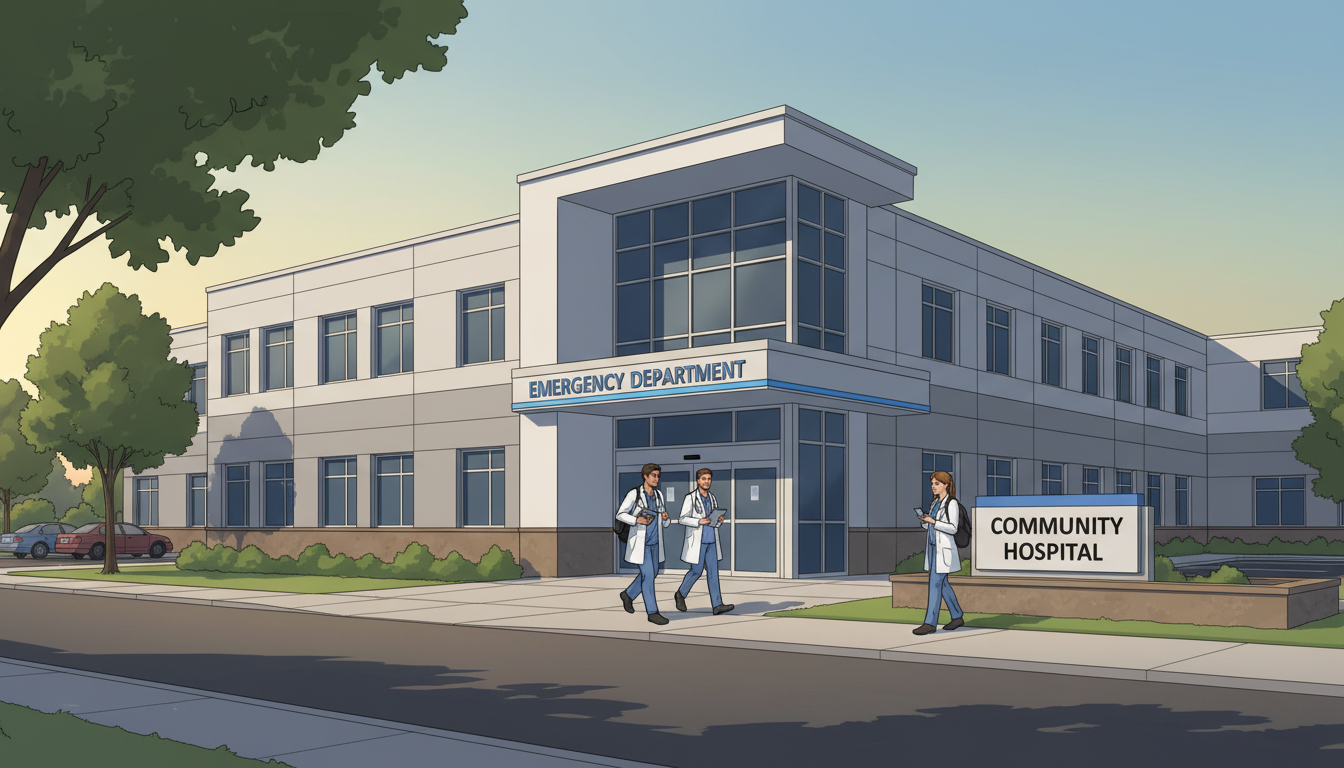
Community Hospital vs. Academic Center: Visa Sponsorship Culture
Academic medical centers:
- Often have established immigration offices and legal support.
- May have clear policies on J-1 vs. H-1B sponsorship for residents and fellows.
- Sometimes sponsor H-1B only for:
- Fellows but not residents, or
- Certain high-need specialties.
Community hospital residency programs:
- Usually smaller GME offices, less administrative infrastructure.
- More variability—some are very IMG friendly and proactive, others are conservative.
- Many are part of health systems that also employ attending physicians on H-1B (this can be a positive sign).
- Policies may depend heavily on:
- The DIO (Designated Institutional Official)
- Hospital leadership
- Prior experience sponsoring H-1B residents
In the IMG residency guide context, community-based residency programs can be excellent options, but you must identify which ones are open to H-1B sponsorship from the outset.
Standard Requirements for H-1B Residency Sponsorship
Most community-based residency programs that sponsor H-1B require you to meet all of the following:
USMLE Step 3 Passed
- Must be completed before H-1B petition filing, which usually means:
- Passed by the time rank lists are certified, or
- At least by April–May prior to the residency start date.
- Some programs will rank you conditionally (e.g., “we will sponsor H-1B if Step 3 is passed by X date”).
- Must be completed before H-1B petition filing, which usually means:
ECFMG Certification
- Required for participation in residency and for ECFMG to issue supporting documentation.
- Ideally completed before you apply, certainly before Match.
State Medical Board Requirements
- Some states require passing Step 3 prior to issuing a training license for H-1B.
- Others permit H-1B residents with a training license and Step 3 in progress.
- Always cross-check state-specific rules (e.g., New York vs. Texas vs. California).
Hospital’s Wage Level Within H-1B Rules
- H-1B regulations require a “specialty occupation” with prevailing wage compliance.
- Residency salaries usually meet this due to recognized GME wage levels, but the hospital’s HR team must handle the paperwork correctly.
H-1B Cap, Cap-Exempt, and Community Hospitals
For IMGs, the H-1B cap is a central concern.
- Regular H-1B category is capped at 65,000 + 20,000 master’s exemption per fiscal year.
- Most residency positions in teaching hospitals (even community-based) are H-1B cap exempt, if:
- The hospital is a non-profit or governmental institution affiliated with an academic institution; or
- It qualifies under H-1B cap exempt provisions as a research or higher education related entity.
Many community hospitals are:
- Non-profit, and/or
- Formally affiliated with a medical school,
which allows them to file H-1B cap exempt petitions. This is a major advantage, as:
- You are not subject to the annual lottery.
- Your H-1B can be filed and approved on the residency’s timeline.
However, not all community hospitals are cap exempt. Some are for-profit or lack formal qualifying affiliations. This affects:
- Whether they can hire you on H-1B for residency.
- Whether future employment transitions keep you within cap-exempt status.
When exploring H-1B residency programs, ask explicitly whether the institution is H-1B cap exempt and how they handle H-1B filings for residents.
Identifying Community Hospital Programs That Sponsor H-1B: A Practical Strategy
There is no single official, complete H-1B sponsor list specifically for residency programs. Instead, successful IMGs use a combination of tools and tactics to build their own targeted lists of H-1B sponsorship programs, especially in the community-hospital space.
Step 1: Use Public Databases and Past Visa Filings
You can gain substantial intelligence from:
FREIDA (AMA Residency & Fellowship Database)
- Many programs list:
- “Accepts IMGs” / “Sponsorship: J-1, H-1B, or both”
- Filter by:
- Community-based programs
- Visa sponsorship type
- Always verify by directly contacting the program, as FREIDA entries can be outdated.
- Many programs list:
Program Websites
- GME or residency program pages sometimes state:
- “We sponsor J-1 only.”
- “We sponsor J-1 and H-1B visas.”
- “We do not sponsor visas.”
- Note differences across specialties within the same hospital (e.g., Internal Medicine may sponsor H-1B, but Surgery may not).
- GME or residency program pages sometimes state:
USCIS H-1B Disclosure Data
- Public records show H-1B petitions filed by employers.
- Search for hospital or health system names where you’re considering applying.
- If you see past H-1B filings for residents or physicians, that’s a strong sign they are familiar with the process.
State GME Directories
- Some state GMEC or GME consortia websites note visa policies.
- These can be particularly valuable for smaller community hospital programs.
Step 2: Prioritize Truly IMG-Friendly, Community-Based Programs
Among community hospital residency options, some are genuinely IMG friendly and comfortable sponsoring H-1B. Indicators include:
- High proportion of IMGs in prior or current classes.
- Explicit mention of H-1B sponsorship on the website or FREIDA page.
- Alumni who are IMGs now working on H-1B or green cards within the same health system.
- Program location in:
- Medically underserved areas
- Rural or semi-rural communities
- Regions actively recruiting international physicians
Programs based at a community hospital but affiliated with a university may also offer:
- Strong training environment plus
- H-1B cap exemption benefits.
Step 3: Build Your Personalized H-1B Sponsor List
As you research, create a spreadsheet with:
- Program name and ACGME code
- Specialty (e.g., Internal Medicine, Family Medicine, Pediatrics)
- Type: community hospital residency / university-based / hybrid
- Visa policies:
- J-1 only
- J-1 + H-1B
- Case-by-case H-1B
- No visa sponsorship
- Requirements for H-1B:
- Step 3 deadline
- Specific state license prerequisites
- Notes from email correspondence or virtual open houses
This becomes your personalized H-1B sponsor list, more accurate and strategic than any generic list circulating online.
Communicating With Programs About H-1B Sponsorship
Even if you see that a community-based residency program has previously sponsored H-1B, you must clarify their current policy during the application season you are targeting.

When and How to Ask About H-1B
Before applying:
- Use email to the program coordinator or GME office.
- Keep it concise and professional.
Example template:
Subject: Visa Sponsorship Policy for IMGs – [Program Name, Specialty]
Dear [Program Coordinator’s Name],
I am an international medical graduate interested in applying to your [Specialty] residency program. I am ECFMG certified and plan to complete USMLE Step 3 before the Match.
Could you please confirm whether your program currently sponsors H-1B visas for incoming residents, in addition to J-1? If so, are there any specific requirements (such as Step 3 deadline) that applicants should be aware of?
Thank you very much for your time and assistance.
Sincerely,
[Your Name], MD (ECFMG Certified)
[AAMC ID or ERAS ID if applicable]
During interviews:
- It is acceptable and important to ask directly, but tactfully.
- Suggested phrasing:
“As an international medical graduate, my visa status is an important factor in my planning. Could you please explain how your program handles H-1B sponsorship for residents, including any requirements regarding Step 3 or timelines?”
Avoid sounding demanding. You are looking for clarity, not negotiating terms.
Common Program Responses and How to Interpret Them
“We sponsor both J-1 and H-1B.”
- Clarify:
- Step 3 deadline
- Whether they have a track record of actually using H-1B for categorical residents.
- This is ideal; prioritize these programs.
- Clarify:
“We prefer J-1 but may consider H-1B on a case-by-case basis.”
- Realistically, H-1B may be reserved for:
- Special candidates
- Specific situations (e.g., J-1 ineligibility)
- If you have strong scores, good US clinical experience, and early Step 3, you can still be competitive.
- Realistically, H-1B may be reserved for:
“We sponsor J-1 only.”
- Respect this boundary.
- Unless your circumstances change, this program is not a good fit for H-1B goals.
“We have sponsored H-1B in the past but our current policy is under review.”
- Risky—policies might tighten.
- If you apply, be prepared with backup options.
Application Strategy for IMGs Targeting H-1B in Community Programs
To successfully match into a community hospital residency that sponsors H-1B, your strategy must combine strong application components with visa-specific planning.
1. Plan USMLE Step 3 Timing Early
For H-1B–friendly programs, Step 3 is your entry ticket.
- Aim to complete Step 3 by December–January of the application year if possible.
- Many programs want a passed Step 3 before ranking you for an H-1B position.
- Taking Step 3 during interview season is challenging but often necessary for IMGs targeting H-1B.
If you anticipate difficulty fitting in Step 3:
- Opt for early application years.
- Consider postponing a season if it significantly improves your visa options.
2. Tailor Your Application Toward Community-Based Training
Community hospital programs value:
- Adaptability and teamwork in smaller teams.
- Commitment to underserved populations.
- Evidence you will fit and stay in their setting.
Highlight in your personal statement and interviews:
- Clinical experiences in community hospitals or outpatient clinics.
- Volunteer work or rotations reflecting:
- Underserved care
- Primary care exposure
- Rural or community health
- Realistic long-term goals that align with community practice.
Connecting these themes with your H-1B preference can strengthen your narrative:
“I hope to train in a community-based residency where I can build continuity with patients in underserved areas and ultimately continue practicing in similar settings after residency, ideally on an H-1B pathway that supports long-term service.”
3. Balance Your Program List: H-1B vs. J-1 Options
Even if you strongly prefer H-1B, building a flexible match strategy is wise.
- Include:
- A core list of community-based programs that actively sponsor H-1B.
- Several J-1 friendly community hospital residencies as safety options, especially if your profile has weaknesses (old graduation year, gaps, lower scores).
- If your absolute requirement is “H-1B only,” understand:
- You will be applying to a smaller pool.
- You may need stronger academic and clinical credentials to match.
4. Be Transparent and Consistent
In your ERAS application and interviews:
- Clearly indicate your need or preference for H-1B.
- Avoid giving mixed messages (e.g., telling some programs you are open to J-1 but others you demand H-1B).
- Programs appreciate honesty and will avoid surprises later in the contract process.
Post-Match Considerations: After You Match Into an H-1B Sponsorship Program
Matching is only the beginning. Once you match into a community hospital residency that sponsors H-1B, several steps follow quickly.
Working With the GME Office and Immigration Counsel
- Document Collection
- Passport, ECFMG certificate, USMLE scores (including Step 3), medical degree, transcripts, prior visas (if any).
- H-1B Petition Preparation
- Program or hospital HR coordinates with immigration attorneys.
- You provide supporting documents, CV, forms, and pay any required personal fees (if applicable in your case; many programs cover institutional fees).
- Timing
- Cap-exempt H-1B petitions can be filed at almost any time.
- Ensure approval before residency start date; premium processing may be used for time-sensitive cases.
Transition Between Statuses (If You Are Already in the US)
If you are:
- On F-1 OPT
- On another H-1B (non-medical)
- On J-2 or another dependent status
the hospital’s lawyer will advise whether to pursue:
- Change of status within the US, or
- Consular processing (obtaining H-1B stamp abroad)
For IMGs coming directly from abroad, embassy processing times and interview availability must be planned carefully.
Future Planning: From Residency to Fellowship or Practice
H-1B in residency can impact your long-term path:
- If your residency is in a cap-exempt institution, and your later employer (fellowship or job) is:
- Also cap-exempt → you can continue directly on H-1B cap exempt.
- Cap-subject (e.g., private practice group) → you might need to enter the H-1B lottery later.
- Some IMGs pursue:
- Fellowship in another cap-exempt institution.
- Permanent residency (green card) during or after training (especially if joining long-term with the same health system).
Community-based residencies often belong to large hospital systems that may employ you as an attending after training. If that employer remains H-1B cap exempt, your path to stability is smoother.
FAQs: H-1B Sponsorship in Community Hospital Residency Programs for IMGs
1. Are most community hospital residency programs willing to sponsor H-1B for IMGs?
No. Many community hospitals sponsor J-1 only, mainly due to cost, administrative burden, or institutional policy. However, a meaningful subset—especially those that are IMG friendly and part of larger non-profit systems—do sponsor H-1B. Your task is to identify these programs in advance using FREIDA, program websites, USCIS data, and direct communication.
2. Do I absolutely need to pass USMLE Step 3 before applying to H-1B–sponsoring programs?
You can apply without Step 3, but for most H-1B residency programs, you must pass Step 3 before they file the H-1B petition, and many prefer it before they finalize rank lists. If you are serious about H-1B in community-based residency programs, schedule Step 3 early enough (often by December–January) to have your result ready during ranking.
3. How can I know if a program is H-1B cap exempt?
Ask directly. Typically, if a hospital is:
- A non-profit or public institution, and
- Affiliated with a university or medical school involved in your training,
it is often H-1B cap exempt. However, cap-exemption can be legally nuanced, so program HR or legal counsel is the best authority. You do not need to become an immigration law expert, but confirming cap-exempt status helps you understand how flexible your H-1B start date and future transitions may be.
4. Is an H-1B residency better than a J-1 residency for long-term career prospects?
“Better” depends on your situation. H-1B avoids the J-1 two-year home requirement and is often more compatible with pursuing a green card directly. However:
- J-1 is more widely available.
- Many IMGs use J-1 → J-1 waiver job (often in underserved areas) → H-1B → green card.
- H-1B in residency may be ideal if you are ineligible for J-1, wish to minimize forced home return, or anticipate a straightforward H-1B/green-card track with your employer.
The optimal choice depends on your home country, long-term location preferences, family situation, and job market.
By understanding how H-1B sponsorship programs work within community hospital residency settings, and by proactively constructing your own H-1B sponsor list, you can align your visa strategy with your training and career goals as an international medical graduate. Careful planning—especially around Step 3 timing, program selection, and transparent communication—will significantly improve your chances of matching into the right community-based residency on the visa pathway that fits your future.