Understanding H‑1B Sponsorship in HBCU‑Affiliated Residency Programs
For an international medical graduate (IMG), securing the right visa is as critical as securing the right residency. HBCU‑affiliated residency programs—such as those connected to Meharry Medical College, Howard University, Morehouse School of Medicine, and their partner hospitals—can be particularly important pathways for IMGs seeking H‑1B sponsorship.
This IMG residency guide will walk you through how H‑1B works in the context of HBCU residency programs, which institutions are typically H‑1B cap exempt, how to identify H‑1B residency programs and build your own H‑1B sponsor list, and how to strategically position yourself as a strong H‑1B candidate.
1. H‑1B Basics for IMGs: What You Must Know
Before looking at specific HBCU‑affiliated programs, it’s essential to understand the H‑1B framework as it applies to residency and fellowship.
1.1 What Is the H‑1B for Physicians?
The H‑1B is a temporary, employer‑sponsored work visa for specialty occupations. For physicians in graduate medical education, this usually means:
- You are sponsored by a specific hospital or institution
- You must have a contract/offer for a residency or fellowship position
- You must be fully licensed or otherwise authorized to practice medicine in that state under supervision (often requiring USMLE Steps and state-specific requirements)
- Your employer must pay at least the prevailing wage for that level of training
For IMGs, the H‑1B is considered a “dual intent” status, meaning you can legally intend to immigrate permanently in the future (for example, via a green card), unlike J‑1.
1.2 H‑1B vs J‑1: Why HBCU‑Affiliated Programs Matter
Many U.S. residency programs sponsor only J‑1 visas (via ECFMG). J‑1:
- Typically requires a 2‑year home country physical presence after training
- Is not “dual intent”
- Limits certain long‑term career paths unless you secure a waiver
By contrast, H‑1B:
- Does not inherently require a home‑country return (no J‑1 waiver issue)
- Allows immigrant intent and smoother transition to permanent residency
- Is often preferred by IMGs planning a long‑term U.S. career
However, not all residency programs sponsor H‑1B. HBCU‑affiliated programs can be particularly important because many are located within universities, safety-net hospitals, or non-profit academic systems that may qualify as H‑1B cap exempt.
1.3 Cap Subject vs H‑1B Cap Exempt
This is a critical concept:
Cap‑subject H‑1B:
- Total national limit ~85,000 new H‑1Bs per year (including master’s cap)
- Selection through a lottery
- Application window usually March; start date October 1
- Very unpredictable for residency timelines
H‑1B cap exempt:
- Not subject to the annual cap or lottery
- Can file year‑round and start at any time allowed by the program
- Typical for:
- Institutions of higher education (universities)
- Non‑profit entities related to or affiliated with universities
- Non‑profit or governmental research organizations
Many HBCU‑affiliated teaching hospitals and medical schools are H‑1B cap exempt, making them particularly attractive to IMGs. This means a Meharry residency or Howard‑affiliated hospital, for example, may be able to sponsor an H‑1B directly without lottery uncertainty, provided all other requirements are met.
2. The Landscape of HBCU‑Affiliated Residency Programs for IMGs
Historically Black Colleges and Universities (HBCUs) play a significant role in training physicians dedicated to underserved communities. For IMGs, these institutions and their partner hospitals can be strong allies in training, mentorship, and immigration sponsorship.
2.1 Key HBCU Medical Schools and Their Clinical Partners
While this guide cannot provide a definitive list of every H‑1B‑friendly HBCU‑affiliated program (policies change frequently), knowing the key institutions helps you start targeted research.
Major HBCU‑affiliated medical schools include:
Meharry Medical College (Nashville, TN)
- Affiliated partners historically include Nashville General Hospital at Meharry and other regional systems
- Certain Meharry residency programs have a track record of engaging with IMGs and may be H‑1B cap exempt via their university or hospital’s non‑profit structure
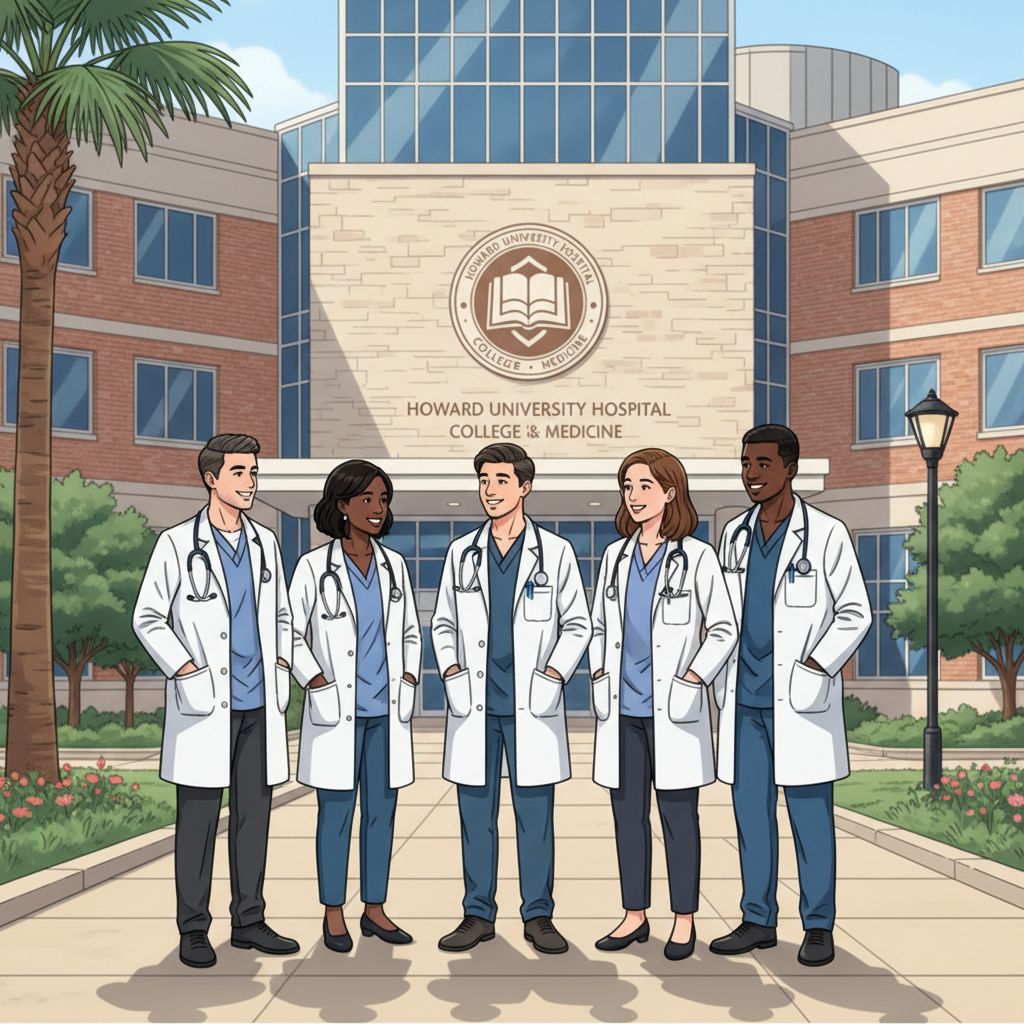
Howard University College of Medicine (Washington, DC)
- Howard University Hospital and affiliated sites
- As a university‑based academic center, Howard‑affiliated programs often fall under H‑1B cap exempt criteria, though specific IMG policies vary by department
Morehouse School of Medicine (Atlanta, GA)
- Affiliated with Grady Health System and other regional hospitals
- Morehouse is an academic center with a deep mission focus on underserved communities, sometimes aligning with IMG workforce needs
In addition, there are other HBCUs with strong health sciences and affiliations (e.g., Charles R. Drew University of Medicine and Science in partnership with other academic systems, though not all are LCME‑accredited medical schools themselves). These affiliations can contribute to an H‑1B cap exempt environment.
2.2 Why HBCU‑Affiliated Programs May Be H‑1B Friendly
HBCU‑affiliated programs often:
- Are embedded in non‑profit academic medical centers
- Serve medically underserved urban or rural populations
- Emphasize health equity, diversity, and inclusion, aligning with the mission‑driven profiles of many IMGs
- Rely on a diverse workforce, including IMGs, to meet patient-care demands
These characteristics can support institutional motivation to sponsor H‑1B visas, especially in specialties or locations where recruiting U.S. graduates alone is difficult.
2.3 Mission Fit: Why Your Story Matters
HBCU‑affiliated programs typically value:
- Commitment to underserved communities
- Interest in health disparities research or advocacy
- Cultural humility and experience working with marginalized populations
As an IMG, you have a natural opportunity to:
- Highlight work with vulnerable or low‑resource populations
- Emphasize multilingual skills that support diverse communities
- Show long‑term interest in primary care or shortage specialties if that aligns with your goals
When you combine mission fit with a clear immigration plan (H‑1B) and strong credentials, you become a particularly compelling applicant for HBCU‑affiliated residencies.

3. Building Your H‑1B Sponsor List: How to Identify H‑1B Residency Programs
An IMG residency guide must be practical. To target H‑1B residency programs—especially within the HBCU and HBCU‑affiliated ecosystem—you need a structured method.
3.1 Step 1: Use Official Databases and Filters
Start from recognized sources:
FREIDA (AMA Residency & Fellowship Database)
- Look up programs under Meharry Medical College, Howard University, Morehouse School of Medicine, and their known partner institutions
- Check “Visa” or “IMG” sections; many programs specify whether they sponsor J‑1, H‑1B, or both
NRMP and ERAS Program Listings
- Review individual program websites linked from ERAS
- Many list visa policies in their “Eligibility” or “FAQ” sections
For each program, create a spreadsheet with:
- Program name and specialty
- Institution type (university, non‑profit hospital, community hospital)
- Visa policies (H‑1B, J‑1 only, unspecified)
- Notes on IMG friendliness (percentage IMGs, resident profiles, alumni status, etc.)
3.2 Step 2: Target Likely H‑1B Cap Exempt Institutions
When evaluating HBCU‑affiliated programs, pay attention to institutional type:
- University‑owned teaching hospitals (e.g., Howard University Hospital)
- Non‑profit academic medical centers affiliated with an HBCU
- Non‑profit safety‑net hospitals formally associated with academic institutions
These are often H‑1B cap exempt. For each, ask or verify:
- “Is your institution H‑1B cap exempt?”
- “Do you sponsor H‑1B visas for incoming residents?”
Programs that are H‑1B cap exempt have more flexibility to sponsor residents directly without worrying about the national lottery.
3.3 Step 3: Confirm Policies with Program Coordinators
Online information can be outdated. Always verify directly:
Sample email you can adapt:
Subject: Visa Sponsorship Inquiry – [Specialty] Residency
Dear [Program Coordinator/Program Director],
I am an international medical graduate planning to apply to the [20XX] Match and I am very interested in the [Specialty] residency at [Institution/Hospital].
Could you please let me know:
- Which types of visas your program sponsors for incoming residents (e.g., J‑1, H‑1B)?
- If your institution is able to sponsor cap‑exempt H‑1B visas for residency training?
- Whether there are any additional eligibility criteria for IMGs seeking H‑1B sponsorship (e.g., USMLE Step 3 before ranking)?
Thank you very much for your time and assistance.
Sincerely,
[Your Full Name], MD (or MBBS)
Add the responses to your spreadsheet. Over time, you will develop your own H‑1B sponsor list focused on HBCU and HBCU‑affiliated opportunities.
3.4 Step 4: Learn from Current and Former Residents
For HBCU residency programs, alumni networks are powerful. Use:
- LinkedIn to find IMGs at Howard, Meharry, or Morehouse‑affiliated programs
- Alumni of your own medical school who matched at HBCU‑affiliated residencies
- Social media (X/Twitter, Instagram) and residency interest groups
Ask targeted questions:
- “Were you sponsored on J‑1 or H‑1B?”
- “Did the program require Step 3 before ranking?”
- “Were there any special institutional limits on the number of H‑1B residents?”
Even if you can’t compile a perfect list, you will gain patterns and insights:
- Some HBCU‑affiliated internal medicine programs may sponsor a few H‑1Bs each year
- Other programs may officially say “H‑1B possible,” but use it only in rare cases
4. Preparing Your Profile for H‑1B Sponsorship at HBCU‑Affiliated Programs
Even when a program is willing to sponsor H‑1B, they often reserve it for highly competitive candidates or those who align particularly strongly with the program mission.
4.1 Understanding Typical Requirements for H‑1B Residency
Most programs that sponsor H‑1B for IMGs will require:
- USMLE Step 1 and Step 2 CK – passed with strong scores
- USMLE Step 3 – often required before ranking you (or at least before filing the H‑1B petition)
- ECFMG Certification – mandatory for IMGs starting residency
- State-specific licensing eligibility – some states require Step 3 or specific training hours
Check the policies for states where major HBCU‑affiliated hospitals are located:
- Tennessee (Meharry‑affiliated programs)
- District of Columbia (Howard University programs)
- Georgia (Morehouse‑affiliated programs)
4.2 Step 3 Strategy for H‑1B Applicants
Because many H‑1B residency programs insist on Step 3, you should:
- Aim to complete Step 3 before or early in application season if you are targeting H‑1B
- Schedule strategically:
- Take Step 3 after you have strong Step 1/2 CK foundations
- Allow enough time for score reporting before rank list deadlines
You can mention in your application:
- “USMLE Step 3 scheduled for [month, year]”
- Update programs once you pass, especially those known to sponsor H‑1B
4.3 Highlighting Mission Fit for HBCU Residency Programs
For HBCU residency settings, your personal statement and interviews should emphasize:
- Experience working with underserved, low‑income, or minority communities
- Understanding of health inequities (e.g., disparities in hypertension, diabetes, maternal mortality)
- Prior research or QI projects related to health disparities or global health
- Long‑term career goals that support primary care or service in medically underserved areas (if genuine)
Example in a personal statement:
“Growing up in [your country], I witnessed how marginalized communities had limited access to consistent primary care. During my clinical rotations in [country or U.S. city], I volunteered at a free clinic serving predominantly minority and uninsured populations. This experience shaped my commitment to train in a program, such as those at HBCU‑affiliated institutions, that prioritizes health equity and prepares physicians to serve diverse, underserved communities.”
4.4 Addressing H‑1B in Your Application Without Overemphasis
You should be transparent but not one‑dimensional about your visa needs:
- ERAS “Additional Information” section:
- Clarify that you are seeking H‑1B sponsorship and already have, or plan to have, Step 3 completed
- Interviews:
- Be prepared to explain:
- Why H‑1B is important for your long‑term career
- That you understand the cost and administrative burden for the program
- That you are committed to completing training and contributing fully to the institution
- Be prepared to explain:
However, do not let the visa issue dominate your entire narrative. HBCU‑affiliated programs want passionate, mission‑driven physicians—not just candidates who see them as “visa sponsors.”

5. Practical Steps to Navigate H‑1B in HBCU‑Affiliated Programs
Putting everything together, here is a step‑by‑step strategy focused on HBCU‑affiliated, H‑1B‑friendly residency programs.
5.1 Year‑by‑Year Planning for IMGs
1–2 years before application:
- Complete USMLE Step 1 and Step 2 CK with competitive scores
- Start exploring HBCU‑affiliated programs:
- Meharry residency tracks (IM, FM, OB‑GYN, etc.)
- Howard University residencies (IM, Surgery, Pediatrics, Psychiatry, etc.)
- Morehouse School of Medicine programs and their hospital partners
- Engage in experiences aligned with health equity and underserved populations
12–18 months before application:
- Begin preparation for Step 3 if you plan to request H‑1B sponsorship
- Research each program’s visa policies and record in your spreadsheet
- Reach out to current residents or alumni at HBCU‑affiliated programs
6–12 months before application:
- Take Step 3 if possible, especially if your target programs frequently sponsor H‑1B
- Draft a personal statement that explicitly reflects mission fit with HBCU‑affiliated training environments
- Ask for recommendation letters that highlight:
- Clinical competence
- Communication skills with diverse patient populations
- Professionalism and teamwork
Application season:
- Apply broadly, balancing:
- HBCU‑affiliated programs likely to be H‑1B cap exempt
- Other academic centers known for H‑1B sponsorship
- Use ERAS to flag your visa status clearly
- Update programs when you receive your Step 3 results
5.2 During Interviews and Ranking
At interviews:
Ask about:
- Historical patterns of IMG recruitment
- Visa types sponsored and any cap‑exempt benefits
- Whether H‑1B is considered and what requirements they impose (Step 3, timing, etc.)
Demonstrate your understanding:
- “I know that as a non‑profit, university‑affiliated program, you may be H‑1B cap exempt. I have already passed Step 3 and am fully prepared to complete any additional licensing steps required for H‑1B filing.”
For your Rank Order List:
- Consider ranking higher:
- Programs that explicitly confirmed H‑1B sponsorship
- HBCU‑affiliated programs where you felt a strong mission and culture fit
- Keep in mind that:
- Some programs may rank you on J‑1 even if they sometimes sponsor H‑1B
- Clarify after interviews if your goal is H‑1B, but remain flexible if necessary
5.3 Once You Match: Coordinating the H‑1B Petition
If you match at a Meharry residency, Howard‑affiliated, or other HBCU‑connected program that agrees to sponsor H‑1B:
Communicate early with:
- GME office
- Program coordinator
- Institutional immigration attorney
Provide documentation quickly:
- ECFMG certificate
- USMLE transcripts (including Step 3)
- Medical school diploma and transcripts
- Passport identity page
- Any prior U.S. visa records
Understand timelines:
- H‑1B cap exempt petitions can be filed year‑round, but processing still takes time
- Ask if they will use premium processing to ensure start‑date security
6. Common Challenges and How to Address Them
Even with well‑planned strategies, IMGs targeting H‑1B residency in HBCU‑affiliated programs face recurrent issues.
6.1 Programs That Claim to Sponsor H‑1B “Case by Case”
You may encounter programs that say:
- “We sponsor H‑1B only in exceptional circumstances.”
- “We prefer J‑1, but H‑1B is possible.”
In such cases:
- Strengthen every part of your profile: scores, U.S. clinical experience, LORs, research, and fit with the program’s underserved mission
- Emphasize that you have already reduced their administrative burden by having Step 3 and documentation ready
- Still apply, but don’t rely solely on these programs; diversify your list
6.2 Balancing J‑1 vs H‑1B Flexibility
Sometimes, your only match offer may be J‑1:
- Consider your long‑term goals:
- Are you prepared to pursue a J‑1 waiver afterward (e.g., through a medically underserved area position)?
- Would a J‑1 at a strong HBCU‑affiliated program still advance your career and improve later H‑1B and green-card options?
There is no universal answer; some IMGs intentionally accept J‑1 in a mission‑oriented program, then later move into H‑1B roles as attendings in shortage areas.
6.3 Specialty Differences
H‑1B sponsorship patterns may vary by specialty within HBCU‑affiliated and broader programs:
- Internal Medicine and Pediatrics:
- Often have multiple IMG residents; some departments more open to H‑1B
- Family Medicine and Psychiatry:
- High demand specialties, sometimes more open to visa sponsorship
- Competitive specialties (Dermatology, Plastic Surgery, Ophthalmology):
- Fewer IMG positions overall; H‑1B sponsorship may be rare
Focus on specialties where you are competitive and where the institutional mission (serving underserved communities) is strong; this alignment often increases willingness to sponsor H‑1B.
FAQs: H‑1B Sponsorship for IMGs in HBCU‑Affiliated Programs
Q1. Are Meharry, Howard, and Morehouse residency programs always H‑1B cap exempt?
Not always, but many of their core hospitals and university‑based sites qualify as H‑1B cap exempt because they are non‑profit, university‑affiliated institutions. However, each residency program may have its own policies, and some affiliated community hospitals may still be cap‑subject. Always verify with the specific program or GME office.
Q2. Do all HBCU‑affiliated residency programs sponsor H‑1B for IMGs?
No. Some sponsor only J‑1, some are open to both J‑1 and H‑1B, and a minority may not sponsor visas at all. Use program websites, FREIDA, and direct communication with coordinators to clarify policies. Treat every residency, even within the same institution, as a separate entity with its own rules.
Q3. Is USMLE Step 3 absolutely required for H‑1B residency sponsorship?
In practice, yes for most programs. Many state medical boards and institutional policies require Step 3 before an H‑1B petition can be filed for residency. Some programs will not even rank an IMG for H‑1B sponsorship without a Step 3 pass in hand. Plan to take Step 3 before or early in the application cycle if your primary goal is an H‑1B‑sponsored residency.
Q4. How many H‑1B positions do HBCU‑affiliated programs typically offer?
Numbers vary widely and are rarely published. Some programs may sponsor a few H‑1B residents per year; others may only do so in exceptional circumstances. There is no fixed “H‑1B quota” across HBCU programs. The best approach is to ask directly, build a personal H‑1B sponsor list, and combine that information with your assessment of program culture, mission fit, and IMG track record.
Focusing your strategy on H‑1B residency programs within HBCU‑affiliated systems—including Meharry residency options, Howard University‑based training, and Morehouse School of Medicine affiliates—can significantly increase your chances of both matching and building a long‑term U.S. career. With early planning, clear visa goals, strong academic performance, and an authentic commitment to health equity, you can position yourself as a highly competitive IMG applicant in these mission‑driven environments.