Understanding H‑1B Sponsorship in Medical Genetics for IMGs
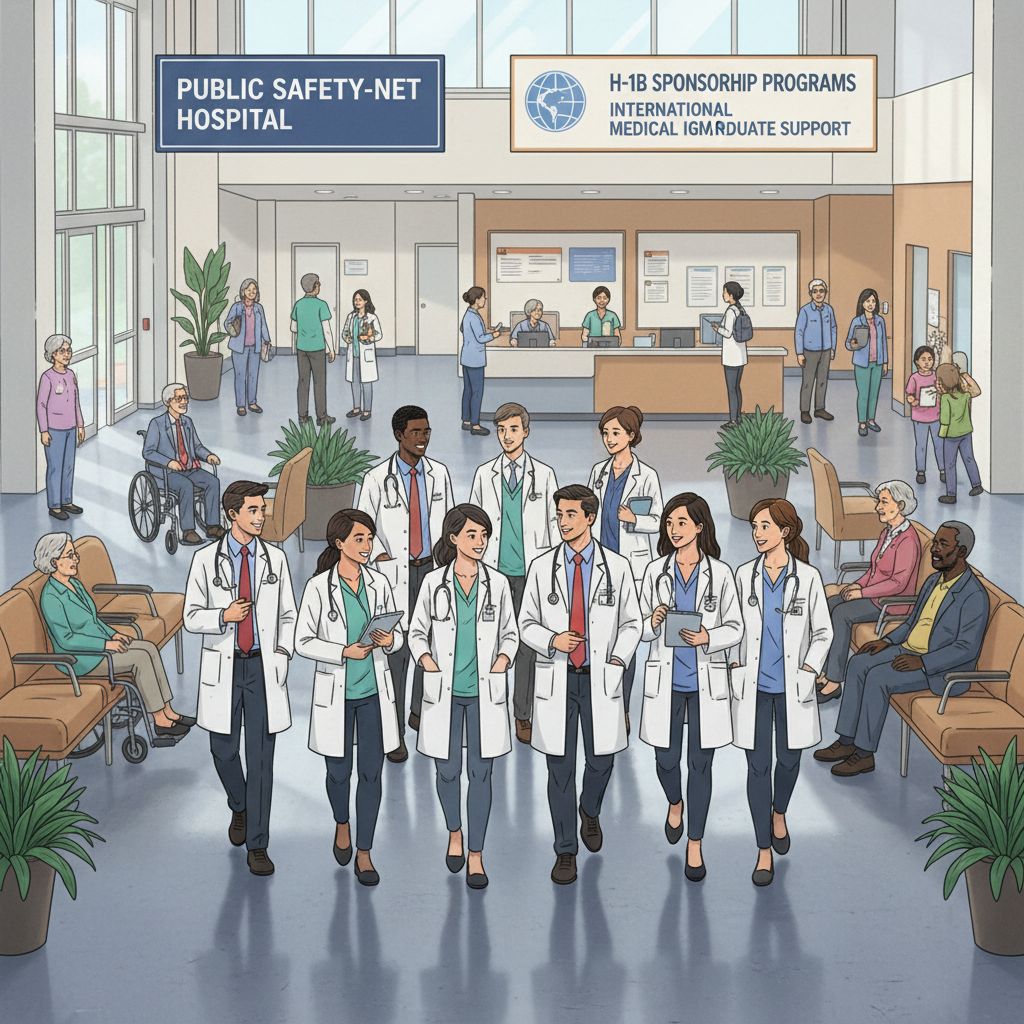
For an international medical graduate (IMG) interested in medical genetics residency or combined programs (such as pediatrics–medical genetics or internal medicine–medical genetics), H‑1B sponsorship can be a strategic pathway to training in the United States. This IMG residency guide focuses specifically on H‑1B residency programs in medical genetics, how they differ from J‑1 pathways, and how to identify genetics programs that may sponsor an H‑1B visa.
Medical genetics is a relatively small but rapidly evolving specialty, closely connected with genomics, precision medicine, and complex diagnostic care. Because of its academic focus and strong ties to research institutions, it can be more receptive to H‑1B sponsorship than some other specialties—especially at large university centers and H‑1B cap exempt institutions.
This article will help you:
- Understand the basics of H‑1B for residency and fellowship in medical genetics
- Compare H‑1B and J‑1 options and decide which path fits your career goals
- Identify characteristics of genetics residency programs that are H‑1B friendly
- Build a targeted application strategy for the genetics match
- Plan ahead for USMLE, ECFMG, licensing, and timing considerations unique to H‑1B
1. H‑1B Basics for IMGs in Medical Genetics
1.1 What is the H‑1B for physicians?
The H‑1B is a temporary, employment‑based visa for specialty occupations that typically require at least a bachelor’s degree or higher. For physicians in graduate medical education (GME), the H‑1B is used when:
- The applicant has passed all required licensing exams, and
- The residency or fellowship program is willing and able to sponsor the visa.
For an international medical graduate, the H‑1B is not a “self‑petitioned” visa. The residency program (your future employer) must file and sponsor the H‑1B petition with USCIS. This is one reason why identifying H‑1B sponsor list patterns and institutional policies early is essential.
Key points for IMGs pursuing H‑1B in medical genetics:
- Full USMLE requirements: Most H‑1B residency programs require USMLE Step 1, Step 2 CK, and often Step 3 completed before start date (and sometimes before filing).
- ECFMG certification: You must hold a valid ECFMG certificate to be eligible for most state licenses and for H‑1B sponsorship in GME.
- Temporary status: H‑1B is typically granted in increments of up to three years, with a total maximum of six years (extensions possible in certain green‑card pending situations).
1.2 H‑1B Cap vs H‑1B Cap Exempt
For residency training, the H‑1B cap is crucial to understand because it determines whether your H‑1B is subject to an annual lottery.
- Cap‑subject H‑1B: Limited number of new H‑1Bs each fiscal year across all professions. Selection is via lottery.
- H‑1B cap exempt: Universities, non‑profit research organizations, and certain affiliated teaching hospitals can sponsor H‑1Bs without being limited by the cap. Many large academic medical centers offering medical genetics training fall into this category.
For IMGs targeting a genetics match, H‑1B cap exempt programs are especially attractive because:
- They can file H‑1B petitions year‑round (not restricted to April filings)
- They avoid the lottery risk that could delay or prevent your start date
- They often have dedicated international office staff experienced with physician H‑1Bs
Many university‑based medical genetics programs and large children’s hospitals are H‑1B cap exempt due to their nonprofit, university‑affiliated status. While there is no official H‑1B sponsor list published specifically for medical genetics, identifying academic institutions with H‑1B cap exempt status is a strong indicator of potential sponsorship.
1.3 H‑1B Eligibility Requirements Specific to Residents
Although regulations don’t vary by specialty, some eligibility aspects matter more in medical genetics:
- Degree: Completion of a medical degree equivalent to a US MD or DO (evaluated through ECFMG).
- Exams: USMLE Step 1 and Step 2 CK are universally expected; Step 3 is almost always required for H‑1B sponsorship at residency start.
- State license/permit: Many states require at least a training license or limited license; programs typically help you meet these requirements.
- English proficiency: Not usually a separate H‑1B requirement, but often essential for licensing and institutional credentialing.
Because medical genetics often integrates with pediatrics, internal medicine, and maternal–fetal medicine, some combined programs have more complex licensing or institutional requirements. You should verify those early when considering H‑1B sponsorship.
2. H‑1B vs J‑1 for Medical Genetics: Strategic Considerations
2.1 Core Differences
Both J‑1 and H‑1B are common pathways to residency for IMGs, but they have very different long‑term implications.
J‑1 (ECFMG‑sponsored):
- Most common visa for IMGs in residency/fellowship
- Easier for programs administratively (ECFMG handles much of the sponsorship work)
- Two‑year home residency requirement at completion, unless a waiver is obtained
- Waivers in medical genetics may be less straightforward than in primary care specialties due to service‑area and shortage designation criteria
H‑1B (employer‑sponsored):
- More complex process and cost for the program
- No automatic two‑year home return requirement
- Often leads more directly to H‑1B employment after training and, eventually, green card
- More stringent exam and licensing prerequisites (Step 3 particularly)
2.2 Why Many Genetics IMGs Prefer H‑1B
Medical genetics is highly subspecialized and academic. For an international medical graduate, post‑training careers often involve:
- Academic faculty positions
- Research and clinical roles in tertiary centers
- Industry roles in genomics, biotech, or precision medicine
Because these career tracks typically depend on sustained work authorization in the US, avoiding the J‑1 two‑year home requirement is a major advantage. H‑1B sponsorship during residency or fellowship can streamline the path to:
- H‑1B transfer to faculty or attending roles after graduation
- Employer‑sponsored permanent residency (green card) without J‑1 waiver complications
2.3 When a J‑1 May Still Be Reasonable
Despite the advantages of H‑1B, some IMGs still choose (or accept) the J‑1 route:
- Late USMLE Step 3 completion: If you cannot complete Step 3 in time, J‑1 may be your only viable option that year.
- Program policies: Some strong genetics programs sponsor only J‑1 visas for residents and fellows.
- Short‑term training plans: If you plan to return to your home country after training and are not seeking US employment, J‑1 may be acceptable.
For many career‑focused IMGs intending to remain in the US, however, the H‑1B path is preferable if you can meet the requirements.

3. Structure of Medical Genetics Training and Its Impact on H‑1B
3.1 Types of Medical Genetics Residency Pathways
Medical genetics offers several ACGME‑accredited training routes relevant to IMG residency guide planning:
Medical Genetics and Genomics (Categorical or Categorical‑style)
- Usually for applicants who have completed at least two years of accredited residency (commonly pediatrics, internal medicine, or OB/GYN).
- Duration: typically 2 years of medical genetics after prior training.
Combined Programs (Integrated Pathways)
Examples include:- Pediatrics–Medical Genetics (5‑year integrated)
- Internal Medicine–Medical Genetics
- Maternal–Fetal Medicine–Medical Genetics (fellowship level)
Fellowships in Subspecialties
- Clinical biochemical genetics
- Laboratory genetics and genomics
- Clinical cytogenetics or molecular genetics (now largely under Laboratory Genetics and Genomics)
Each structure interacts slightly differently with H‑1B planning because of length of training and prior residency status.
3.2 Entry Points for IMGs
As an IMG, you might enter medical genetics training in three main ways:
- Directly into a combined pediatrics–genetics or internal medicine–genetics program through the main residency match
- After completing a categorical residency (e.g., pediatrics or internal medicine) in the US, then matching into 2‑year medical genetics
- Via fellowship after primary specialty and genetics residency (less common initial route for new IMGs)
Your visa strategy should align with your entry point:
- If you enter combined programs from the start, your H‑1B needs to cover the entire integrated period or be extended appropriately.
- If you complete a primary residency under one visa (e.g., J‑1) and then apply to genetics, switching to H‑1B for genetics may be complicated by the J‑1 two‑year home requirement unless waived.
3.3 H‑1B Duration and Training Length
H‑1B is typically limited to a total of six years. Consider how that relates to genetics training:
- 5‑year combined pediatrics–genetics or internal medicine–genetics programs: Usually compatible within one H‑1B cycle, allowing 1 extra year for transition to early attending roles or additional fellowship before reaching six years.
- 2‑year genetics programs after a 3‑year pediatric or internal medicine residency:
- If you are on H‑1B for both primary residency and genetics, you need to carefully track the total time to avoid hitting the six‑year limit before finishing training or early employment.
Planning early with program coordinators and immigration counsel is critical; some institutions will sequence J‑1 for primary residency and H‑1B only for genetics fellowship if there are time‑limit concerns.
4. Identifying H‑1B Friendly Medical Genetics Programs
4.1 Practical Steps to Find H‑1B Residency Programs in Genetics
There is no single, official H‑1B sponsor list dedicated to medical genetics, but you can build a targeted strategy:
Start with ACGME‑accredited genetics programs
- Use the ACGME directory and the American College of Medical Genetics and Genomics (ACMG) website to list all residency and combined programs in medical genetics and genomics.
Prioritize large academic and children’s hospitals
- University hospitals and major children’s hospitals are often H‑1B cap exempt and have institutional experience sponsoring physician H‑1Bs.
Review each program’s website and FAQ
Look for explicit statements such as:- “We sponsor J‑1 and H‑1B visas”
- “We accept only J‑1 visas”
- Or a generic “We consider eligible visa categories” (in which case you must inquire directly).
Email the program coordinator and GME office
- Introduce yourself as an international medical graduate interested in medical genetics residency.
- Ask precisely whether they sponsor H‑1B visas for residents and, if yes, what exam and licensing requirements must be completed before match or start date.
Ask about historical patterns
- Have they sponsored H‑1B for residents or fellows in genetics before?
- Do they have IMGs currently in the program on H‑1B status?
Past behavior is a strong predictor of future willingness.
4.2 Red Flags and Green Flags
Red Flags (less likely to sponsor H‑1B):
- Small community‑based or non‑university affiliated programs
- Program websites stating “J‑1 only”
- GME office unfamiliar with H‑1B physician questions or giving vague answers
- Institutions that have never had IMGs in genetics
Green Flags (more likely to sponsor H‑1B):
- Large academic centers with several accredited residency programs
- Children’s hospitals with multiple subspecialty fellowships
- Institutional immigration or international affairs offices that maintain H‑1B cap exempt status
- Clear policy statements that they have sponsored H‑1B for physicians previously
By focusing on green‑flag institutions, you improve your odds of successfully identifying H‑1B residency programs in medical genetics.
4.3 Using Alumni and Networking
Because medical genetics is a small community, word‑of‑mouth is invaluable:
- Reach out to current residents and recent graduates (via program social media pages, LinkedIn, or ACMG networking events).
- Ask:
- “Were any of your co‑residents on an H‑1B?”
- “Does the program seem comfortable sponsoring H‑1B for IMGs?”
Academic advisors, mentors at your home institution, and faculty with genetics connections can sometimes provide unlisted information about H‑1B policies.

5. Application Strategy for the Genetics Match as an H‑1B‑Seeking IMG
5.1 Timing Your USMLE and Step 3
For an IMG targeting the genetics match with H‑1B sponsorship, timing of exams is critical:
USMLE Step 1 and Step 2 CK
- Should be completed before ERAS application for most competitive programs.
- High scores and strong clinical performance can compensate for being an IMG in a relatively small specialty.
USMLE Step 3
- Aim to pass Step 3 before ranking programs if you intend to request H‑1B sponsorship for PGY‑1 or entry into a combined program.
- Some programs will consider sponsoring H‑1B conditional on Step 3 being passed before the start date, but many prefer it to be completed before filing the petition.
If you are applying to genetics after a primary residency, consider taking Step 3 early in your primary program to maintain flexibility for H‑1B sponsorship during genetics training.
5.2 Tailoring Your Application to Genetics and H‑1B Considerations
When applying to genetics programs with an eye on H‑1B:
Show clear commitment to genetics:
- Electives in genetics, genomics, dysmorphology, or rare disease clinics
- Research in molecular genetics, bioinformatics, or precision medicine
- Attendance at genetics conferences, publications or presentations
Address continuity and long‑term goals:
Program directors may be more willing to invest in H‑1B sponsorship for candidates who demonstrate a strong likelihood of continuing in academic genetics or related fields.Be transparent but strategic about visa needs:
- In your ERAS application and during interviews, honestly state you will require visa sponsorship.
- Phrase it constructively: “I am eligible for either J‑1 or H‑1B sponsorship, but I am especially interested in H‑1B if your institution supports it, as my long‑term goal is an academic career in medical genetics in the US.”
5.3 Interview Conversations About H‑1B
It is appropriate—and often necessary—to ask about visa policies during interviews or second looks. Practical advice:
Ask the program coordinator before or after interview day:
“Can you confirm whether your program and institution sponsor H‑1B visas for residents? Do you currently have anyone on H‑1B status in GME?”Clarify exam and licensing requirements:
“If you sponsor H‑1B, by what date do you require Step 3 to be completed?”During faculty interviews:
Focus mainly on training quality, but you may mention:
“I am committed to a long‑term academic career in medical genetics, and an H‑1B pathway would align best with that. Does your institution typically support H‑1B for committed IMGs?”
Programs that are comfortable with H‑1B sponsorship will generally answer confidently and may even outline their internal process and timing.
5.4 Ranking Strategy in the Genetics Match
When forming your rank list:
- Place program fit and training quality first—but if two programs are similar, favor the one with a clear history of H‑1B sponsorship.
- Carefully evaluate any program that is vague or non‑committal about visa support; matching there without clarity could significantly limit your options later.
- Consider having a mix of programs: a few with confirmed H‑1B sponsorship plus some where you would accept J‑1 as a backup, depending on your risk tolerance.
6. Post‑Match and Long‑Term Planning on H‑1B
6.1 Steps After Matching Into an H‑1B‑Sponsoring Genetics Program
Once you match:
Confirm visa category and deadlines immediately.
- Clarify whether the program will support H‑1B for you, and what paperwork is needed.
Coordinate Step 3 (if not yet passed).
- Schedule and pass Step 3 as early as possible if sponsorship is contingent on it.
Work with the GME and international office.
- Provide all documents quickly (ECFMG certificate, exam scores, medical diploma, passport copies, etc.).
- Respond promptly to any requests for additional evidence.
Monitor petition status.
- Track when the H‑1B petition is filed and approved.
- If applicable, check whether your institution is H‑1B cap exempt to avoid lottery concerns.
6.2 Transitioning From Training to Post‑Residency Roles
For an international medical graduate who completes medical genetics residency on H‑1B:
H‑1B transfer:
You can transfer your H‑1B to a new employer (e.g., faculty position, clinical role in another academic center) without being subject to a new cap lottery, as long as your initial petition was counted or cap exempt and your new employer qualifies.Permanent residency considerations:
Many academic institutions sponsoring medical genetics specialists will also support employment‑based green card applications. This is easier without the complications of the J‑1 two‑year home requirement.Additional fellowships:
If you pursue further genetics subspecialty training (e.g., biochemical genetics, laboratory genetics and genomics), ensure you have enough H‑1B time left within the six‑year limit, or explore early green‑card strategies that may allow extensions.
6.3 Common Pitfalls to Avoid
Delaying Step 3 too long:
This is one of the most frequent barriers for IMGs hoping for H‑1B in the genetics match. Schedule it early.Assuming all university programs sponsor H‑1B:
Many do, but not all. Always verify directly.Switching visas mid‑training without planning:
Moving from J‑1 to H‑1B after residency may trigger the two‑year home requirement unless you have a waiver. Consult immigration counsel before making decisions.Ignoring state licensing timelines:
Training licenses can take months in some states. Programs usually handle the process, but late document submission from your side can delay H‑1B filing.
FAQ: H‑1B Sponsorship for IMGs in Medical Genetics
1. Do most medical genetics residency programs sponsor H‑1B visas for IMGs?
No. While a significant number of large academic programs and children’s hospitals are open to H‑1B, many genetics programs sponsor only J‑1 visas. Because the specialty is small, overall numbers of H‑1B sponsorships are modest. Your best approach is to proactively identify university‑based, H‑1B cap exempt institutions with prior history of sponsoring H‑1B for residents or fellows.
2. Is USMLE Step 3 mandatory for H‑1B in medical genetics?
In practice, yes for nearly all programs. For an H‑1B petition related to clinical medical training, state licensing boards and hospital policies often require Step 3 to obtain at least a training license. Some institutions may technically allow H‑1B filing while Step 3 is pending, but this is increasingly rare. To maximize your chances in the genetics match for H‑1B residency programs, plan to complete Step 3 before ranking or at least several months before the planned start date.
3. Can I switch from J‑1 to H‑1B during or after medical genetics training?
Switching from J‑1 to H‑1B is possible, but the J‑1 home residency requirement complicates it. Unless you obtain a J‑1 waiver (which is less straightforward for genetics than for primary care fields), you are typically required to return to your home country for two years before being eligible for an H‑1B. Some IMGs obtain a waiver through research or hardship routes, but these are individualized and often complex. If your long‑term plan is to remain in the US, trying to begin training on H‑1B, if feasible, is usually more straightforward.
4. How can I tell if an institution is H‑1B cap exempt and what does that mean for me?
An institution is usually H‑1B cap exempt if it is:
- A non‑profit institution of higher education (e.g., a university),
- A non‑profit research organization, or
- A hospital or clinic formally affiliated with such an institution.
You can often find this on the university or hospital international office website or by asking the GME office directly. Being H‑1B cap exempt means the program can file your H‑1B at any time of year and is not restricted by the annual H‑1B lottery. For an IMG in medical genetics, this significantly reduces risk and makes start dates more predictable.
By understanding how H‑1B sponsorship works, identifying genetics programs with IMG‑friendly policies, and carefully planning your exams and application strategy, you can markedly improve your chances of securing an H‑1B‑supported position in medical genetics and building a long‑term career in genomics and precision medicine in the United States.