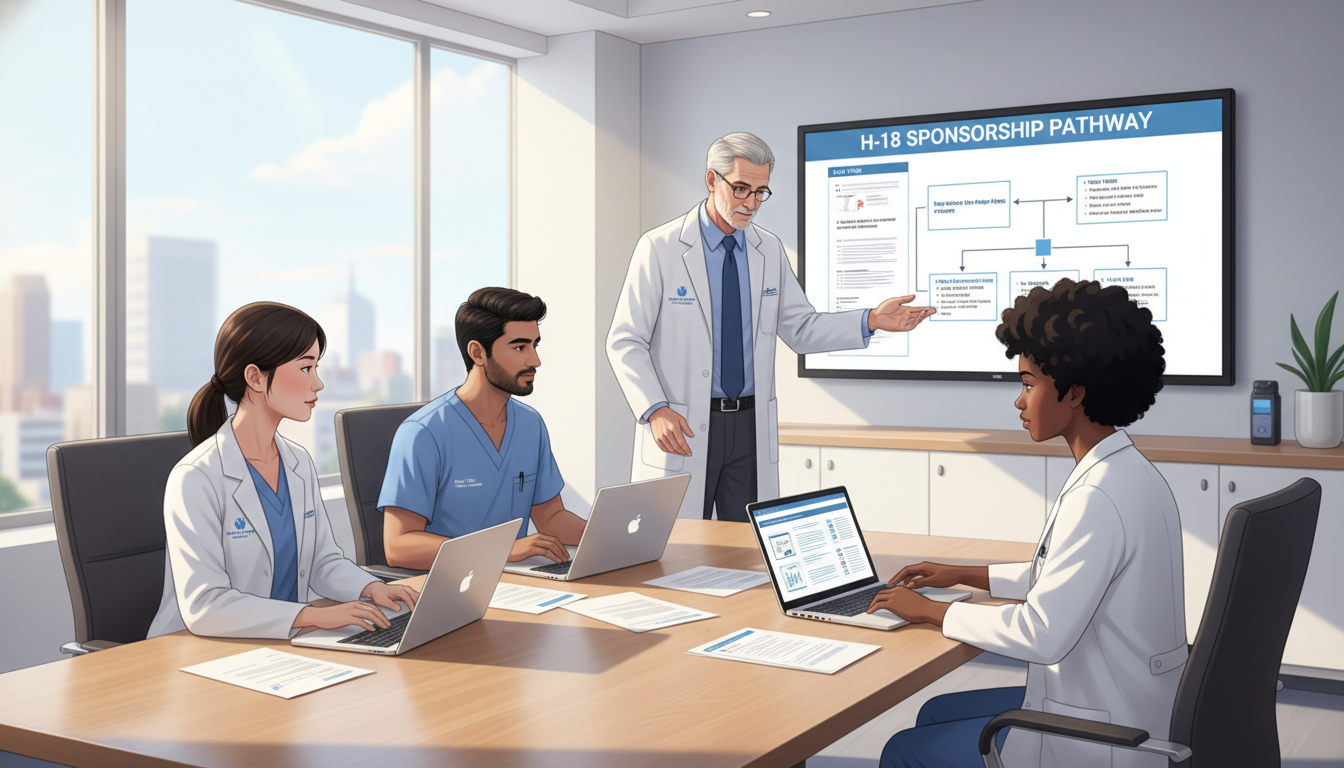
Understanding H‑1B Sponsorship for IMGs in Miami
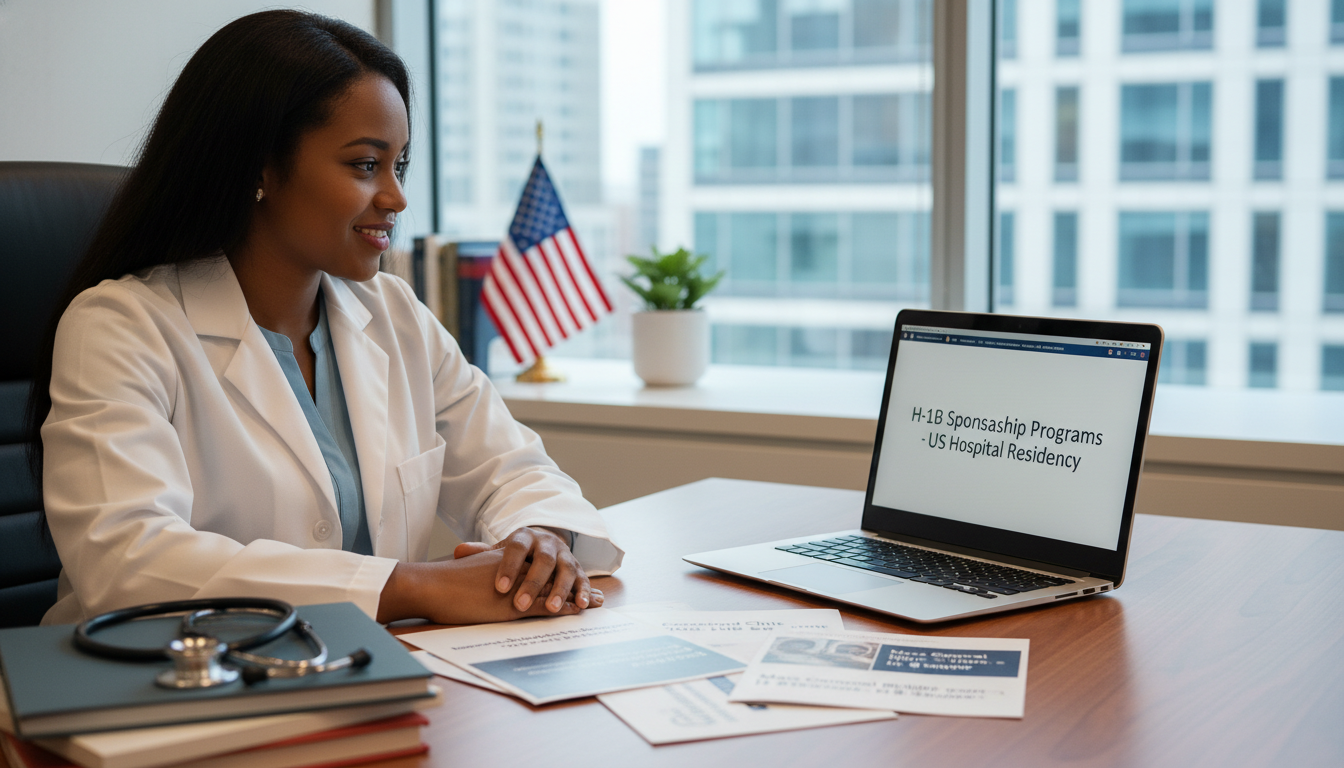
H‑1B sponsorship is one of the most sought‑after pathways for international medical graduates (IMGs) who want to train and eventually practice in the United States. For those drawn to South Florida’s unique mix of academic medicine, diverse patient populations, and vibrant lifestyle, Miami stands out as a strategic location to pursue H‑1B residency programs.
This IMG residency guide focuses on H‑1B sponsorship programs in Miami and the broader South Florida area, breaking down how H‑1B works for physicians, how it differs from J‑1, what makes some Miami residency programs more IMG‑friendly, and how to strategically plan your applications.
H‑1B vs J‑1: What IMGs in Miami Need to Know
Before you can effectively target H‑1B residency programs in Miami, you need a clear understanding of the visa landscape for graduate medical education.
Core differences between J‑1 and H‑1B for residents
J‑1 (ECFMG-sponsored exchange visitor visa)
- Most common for IMGs in residency
- Sponsored by ECFMG, not the hospital
- Typically requires return to the home country for at least 2 years after training (the “2‑year home residency requirement”), unless you obtain a waiver
- Generally more straightforward to obtain than H‑1B for residency training
- Limited flexibility if you want to stay in the U.S. immediately after training without a waiver
H‑1B (specialty occupation work visa)
- Employer-sponsored (your residency program is the petitioner)
- No automatic 2‑year home residence requirement
- Allows “dual intent” (you can pursue permanent residency while on H‑1B)
- Higher documentation burden and cost for institutions, which is why not all residency programs sponsor it
- Requires you to pass all parts of USMLE/COMLEX licensing exams required for ECFMG and state licensure at the time of petition (usually including Step 3 for physicians)
Why IMGs in Miami often prefer H‑1B
Miami and South Florida are home to a large number of IMGs who want to build long‑term lives and careers in the United States. H‑1B sponsorship is attractive because it:
- Avoids the J‑1 2‑year home residency requirement that can complicate long‑term plans
- Provides a clearer pathway to U.S. permanent residency, especially when combined with later employment at H‑1B cap exempt hospitals or academic centers
- Supports continuity in the region—after finishing training in Miami, you may find non‑cap H‑1B jobs at university‑affiliated or non‑profit hospitals in South Florida
For a motivated international medical graduate, targeting H‑1B residency programs in Miami can be a strategic way to align personal, professional, and immigration goals.
How H‑1B Works for Residency Programs in Miami
Visa basics for physician trainees
Unlike many standard H‑1B positions in tech or business, residency and fellowship roles at teaching hospitals and universities are typically H‑1B cap exempt. That means:
- They are not limited by the annual H‑1B lottery system
- They can file and start H‑1B petitions year‑round
- You don’t have to “win the lottery” to obtain a training position
Miami is rich in large academic medical centers and nonprofit hospital systems, which often fall into the cap exempt category. This makes South Florida residency training a particularly valuable opportunity if your long‑term plan is to remain on H‑1B and eventually transition to a permanent role.
Cap subject vs H‑1B cap exempt positions
For physicians, you must distinguish between:
- H‑1B cap exempt:
- Universities and their affiliated teaching hospitals
- Non‑profit research organizations with certain designations
- Non‑profit hospitals associated with institutions of higher education
- Cap subject:
- Most private practice groups
- Community hospitals not affiliated as cap‑exempt entities
- Many outpatient employers
Most large academic Miami residency programs fall under the H‑1B cap exempt category, which is a critical advantage for IMGs. During residency and often fellowship, you can be on H‑1B without facing the lottery.
Where this really matters: once you complete training and look for attending jobs, you will need to consider whether:
- You remain in an H‑1B cap exempt role (e.g., academic hospital in Miami or elsewhere)
- You “transfer” to a cap subject role and navigate the H‑1B lottery or another immigration category
Typical H‑1B eligibility for Miami residency programs
Most Miami‑area programs that sponsor H‑1B for residents have similar eligibility requirements:
- ECFMG certification: fully obtained by the time of employment
- USMLE Step 1 and Step 2 CK: passed with valid scores; some will also want strong scores due to competitiveness
- USMLE Step 3:
- Many programs insist Step 3 must be passed before they file the H‑1B petition
- Practically, this means you should aim to complete Step 3 before ranking such programs
- State licensure eligibility:
- Florida Board of Medicine requirements must be met for a training license (which may include primary source verification timelines and sometimes Step 3)
- No need for J‑1 waiver: since you enter on H‑1B, you avoid the J‑1 home residence obligation
Each institution’s graduate medical education (GME) office will set more precise policies, but the combination above represents the general pattern in H‑1B residency programs across South Florida.

Miami and South Florida Programs: Where to Look for H‑1B Sponsorship
While this article cannot provide a guaranteed or exhaustive H‑1B sponsor list, it can help you understand how to identify H‑1B‑friendly Miami residency programs and what patterns exist in the region.
Academic centers and large teaching hospitals in Miami
Miami is anchored by several major academic and teaching institutions that frequently work with IMGs:
- University‑affiliated hospitals in Miami commonly fall under H‑1B cap exempt categories, making them more structurally capable of sponsoring H‑1B residents.
- Non‑profit health systems with robust GME infrastructures in South Florida are also more familiar with international physician hiring and visa processes.
To determine whether a particular program in Miami offers H‑1B sponsorship, systematically:
Check the program’s GME website
- Look for sections titled “Visa Sponsorship,” “International Medical Graduates,” or “Eligibility & Requirements.”
- Many will explicitly state: “We sponsor J‑1 and H‑1B visas” or “We sponsor only J‑1 visas through ECFMG.”
Email the program coordinator or GME office
Use a concise, professional message. For example:
Dear [Coordinator Name],
I am an international medical graduate interested in applying to your [Specialty] Residency Program. Could you please confirm whether your institution sponsors H‑1B visas for residency trainees, and if so, whether USMLE Step 3 is required before ranking?
Thank you for your time and assistance,
[Your Name, Credentials]
Ask specifically about historical sponsorship
- “Have you sponsored H‑1B visas for residents in the last 3–5 years?”
- Some programs may technically be able to sponsor but rarely or never choose to do so.
Patterns among Miami residency programs with friendly policies for IMGs
Programs that are more welcoming to IMGs—and more likely to sponsor H‑1B—often share these characteristics:
- High proportion of current residents who are IMGs
- Established visa policies clearly described on websites or in applicant information packets
- Dedicated international services or GME visa teams
- Longstanding academic affiliations with universities and teaching institutions in South Florida
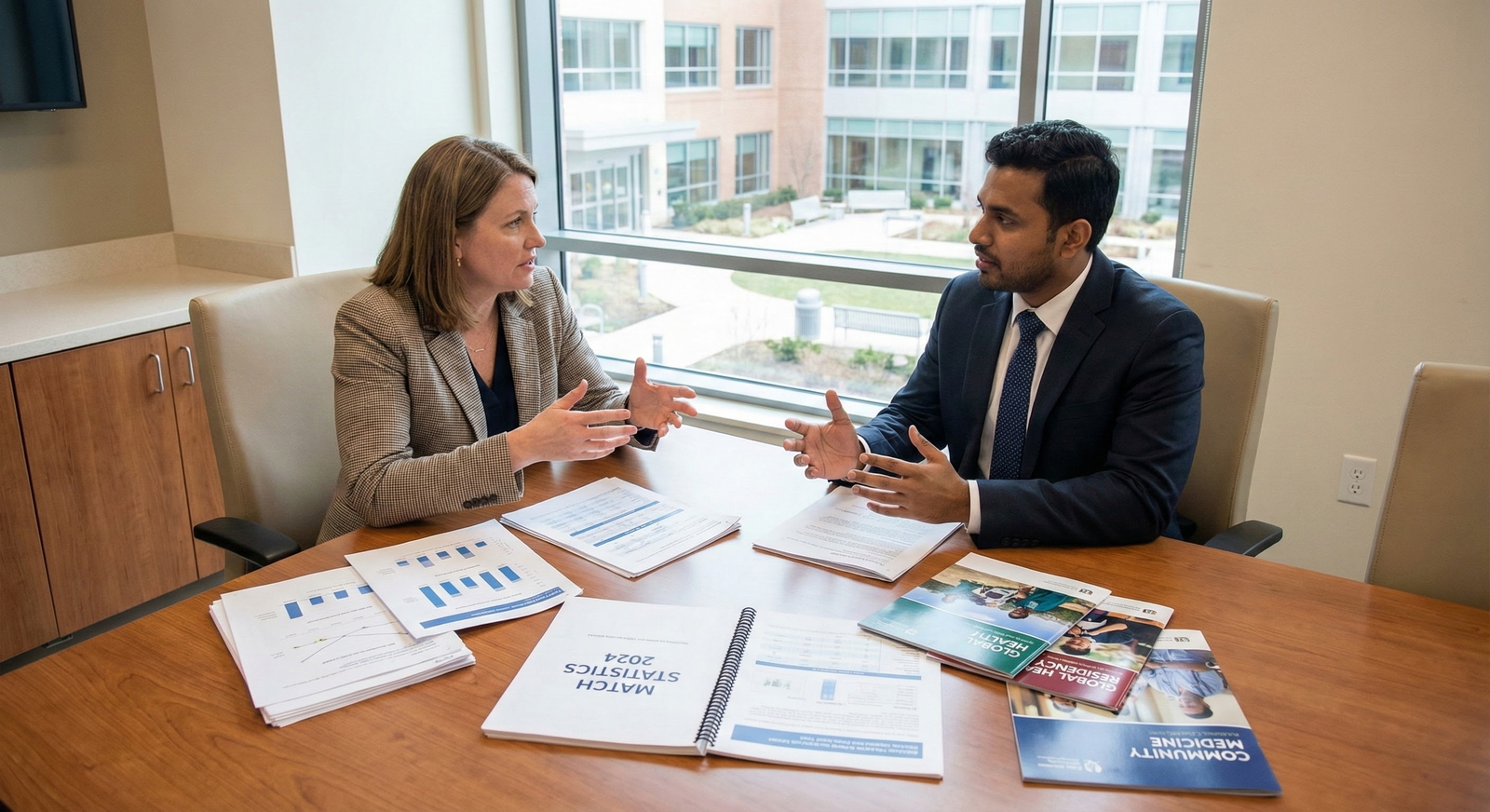
Residency programs in specialties like internal medicine, family medicine, pediatrics, and psychiatry in the Miami area tend to have more IMGs overall, which may correlate with a greater willingness to sponsor H‑1B in selected cases.
How South Florida geographic context helps IMGs
Beyond Miami itself, the broader South Florida region (including Fort Lauderdale, Palm Beach County, and other nearby communities) offers:
- Multiple training hospitals and community‑academic hybrid programs
- Large, multilingual patient populations (Spanish, Haitian Creole, Portuguese, and more), which can make IMGs with corresponding language skills especially valuable
- Health systems spanning multiple cities, which may ease later job mobility within the same employer on H‑1B or after permanent residency
When considering Miami residency programs, expand your view to South Florida residency opportunities as a whole. Many IMGs find a strong fit at nearby institutions while still benefiting from the unique clinical environment of the region.
Step‑by‑Step Strategy: Securing an H‑1B Residency in Miami as an IMG
To maximize your chances, you need both a strong application and a laser‑focused strategy on visa‑friendly programs.
1. Plan your exam timeline around H‑1B requirements
Because most H‑1B residency programs require USMLE Step 3 at the time of visa filing, your exam plan should be intentional:
- Complete Step 1 and Step 2 CK early enough to obtain ECFMG certification before Match deadlines.
- Schedule Step 3 strategically:
- Ideally, take it before or during the main ERAS application cycle for the year you apply.
- If your Step 3 result is pending, clearly mention your planned timeline in your personal statement or in supplementary information for H‑1B‑friendly programs.
- Aim to have Step 3 passed no later than early spring of the Match cycle so that programs can confidently file H‑1B paperwork.
If you are already in another visa status (e.g., F‑1 with Optional Practical Training, or J‑1 in a non‑clinical capacity), discuss with an immigration attorney how timing your Step 3 and applications can best support a transition to H‑1B residency.
2. Build a targeted Miami IMG residency guide list
Instead of applying indiscriminately, create a focused list of programs:
- Identify all Miami and South Florida residency programs in your specialty.
- Classify them by visa policy:
- H‑1B & J‑1 supported
- J‑1 only
- No visas supported
- Prioritize H‑1B programs but consider also applying to J‑1 programs if:
- Your profile is still developing,
- You may later pursue a J‑1 waiver in an underserved area (of which there are many in Florida).
Maintain a spreadsheet with columns for:
- Program name and city
- Affiliated institution (academic vs community)
- Visa types sponsored
- Step 3 requirement
- IMG percentage among current residents
- Your personal notes after any communications or interviews
This will become your own custom H‑1B sponsor list for Miami and the surrounding South Florida region.
3. Tailor your ERAS application to highlight H‑1B readiness
When programs see that you are already “H‑1B‑ready,” they are more likely to consider sponsorship. Emphasize:
- USMLE performance: Passes on first attempt, solid Step 2 CK scores, and a passed Step 3 if available
- Clinical experience in the U.S.:
- Strong letters from U.S. physicians familiar with ACGME standards
- Rotations in high‑volume, underserved, or diverse settings (especially helpful for Miami)
- Language skills relevant to Miami (Spanish, Haitian Creole, Portuguese, or others)
- Long‑term commitment to practicing in underserved or diverse communities, aligning with many South Florida institutions’ missions
Mention Step 3 status explicitly in your CV and personal statement, for example:
USMLE: Step 1 (XX), Step 2 CK (XX), Step 3 (Passed, [Month Year])
or
USMLE: Step 1 (XX), Step 2 CK (XX), Step 3 scheduled [Month Year]; required for H‑1B sponsorship.
4. Communicate clearly about your visa preferences
It is important to be honest but strategic:
- In your ERAS application, you can indicate that you will “require visa sponsorship.”
- In emails or interviews, you can clarify:
- That you are open to both J‑1 and H‑1B if that’s true, or
- That your strong preference is H‑1B due to long‑term career and family planning (particularly if you have clear reasons like spouse’s career, prior U.S. training, etc.).
Programs may appreciate your transparency, but remember:
- Do not sound demanding or entitled.
- Frame it as: “I would be enormously grateful for the opportunity to train at your program and, if possible, I would strongly prefer H‑1B sponsorship due to [brief reason].”
5. Prepare early for institutional and immigration paperwork
Once you match into an H‑1B residency program in Miami:
- Respond quickly to all requests for documentation from the GME and international services offices.
- Gather early:
- Passport and prior visa copies
- USMLE score reports and ECFMG certificate
- Medical school diploma and transcripts
- Any prior U.S. immigration documents (I‑20s, DS‑2019s, I‑94s, etc.)
Working efficiently with your sponsoring institution ensures that your H‑1B petition can be filed and approved in time for your July 1 start date.

Long‑Term Planning: From Miami Residency to H‑1B Career
H‑1B for residency is only one step. You should also think about your long‑term strategy from the beginning.
Using cap exempt roles to your advantage
As noted earlier, many Miami residency programs are H‑1B cap exempt, which allows you to train without going through the lottery. After residency or fellowship, you have options:
Stay in cap exempt employment
- Join an academic or non‑profit hospital in Miami or another city that is also cap exempt.
- Your H‑1B can be extended (generally up to 6 years total, sometimes more with pending green card cases).
Transition to cap subject employment
- Apply for private practice or non‑cap exempt hospitals in South Florida or elsewhere.
- Your new employer must file for an H‑1B in the lottery, unless you are moving between two exempt institutions.
For many IMGs who start in Miami, the strategy is:
- Residency/fellowship on H‑1B at a cap exempt teaching hospital
- Early start on permanent residency (green card) through employer sponsorship
- Later freedom to work in a wider variety of settings once permanent residency is granted
Considering green card timing and pathways
Common routes include:
- EB‑2 or EB‑3 employment‑based sponsorship by a hospital or academic institution in Miami or elsewhere
- For some specialties and roles in underserved areas, National Interest Waiver (NIW) pathways may be explored with an experienced immigration attorney
Starting this conversation during late residency or early fellowship, especially if you plan to remain in South Florida, gives you time to navigate any complexities.
Lifestyle and career advantages of training in Miami on H‑1B
From a career perspective, Miami offers:
- Exposure to complex medical cases in major tertiary centers
- Experience with tropical and infectious diseases, HIV care, and other conditions prevalent in South Florida and Latin America
- Opportunities to develop bilingual or multilingual clinical skills, which are highly valued by employers across the country
From a personal standpoint:
- A large international community, including many physicians who have walked a similar H‑1B path
- Proximity to Latin America and the Caribbean, which is particularly meaningful for many IMGs from those regions
- Year‑round warm climate and vibrant cultural life
These factors make Miami a compelling base for building not only a career in medicine but also a long‑term life in the United States as an IMG on H‑1B.
Practical Tips and Common Pitfalls for IMGs Seeking H‑1B in Miami
Do’s
- Do start Step 3 early. It is one of the strongest predictors of whether a program will see you as H‑1B‑ready.
- Do verify visa policies directly. Websites change; coordinators know the latest.
- Do maintain excellent communication with program staff and respond promptly to all visa‑related requests.
- Do consider backup plans, including applying to some strong J‑1 programs if your profile is still developing.
Don’ts
- Don’t assume all Miami programs sponsor H‑1B just because they are in a large city. Many sponsor only J‑1.
- Don’t delay Step 3 if H‑1B is your goal. Waiting too long can close doors.
- Don’t overstate your visa preferences in a way that appears inflexible; some programs may have limited ability to choose H‑1B over J‑1.
- Don’t neglect immigration counsel if your situation is complex (prior J‑1, change of status issues, family considerations).
Example: A realistic IMG pathway in Miami
- Year 0: IMG completes medical school abroad; passes USMLE Step 1 and Step 2 CK.
- Year 1: Obtains hands‑on clinical experience in the U.S., ideally including South Florida; passes Step 3 by early fall.
- ERAS Cycle: Applies to a range of Miami and broader South Florida residency programs, prioritizing those explicitly sponsoring H‑1B.
- Match: Receives an offer from a Miami program that confirms H‑1B sponsorship; files H‑1B cap exempt petition with their GME and legal team.
- PGY‑1 to PGY‑3: Completes internal medicine residency on H‑1B; begins networking with South Florida H‑1B cap exempt hospitals and potential fellowship programs.
- PGY‑3+: Applies for fellowship or attending roles; employer begins employment‑based green card process while continuing H‑1B sponsorship.
This kind of trajectory is increasingly common and feasible for well‑prepared, strategic IMGs in Miami.
FAQ: H‑1B Sponsorship Programs for IMGs in Miami
1. Are most Miami residency programs willing to sponsor H‑1B visas for IMGs?
No. While Miami has many IMG‑friendly programs, not all are willing or able to sponsor H‑1B. Some institutions sponsor only J‑1 visas through ECFMG. You must verify each program’s policy; your own customized H‑1B sponsor list, built through direct communication, is essential.
2. Is USMLE Step 3 absolutely required for H‑1B residency sponsorship in Miami?
In practice, yes for most programs. Many Miami and South Florida residency programs require Step 3 to file an H‑1B petition due to Florida licensure requirements and institutional policies. A few rare exceptions may exist, but you should plan your timeline assuming Step 3 is required.
3. Are H‑1B residency positions in Miami subject to the H‑1B cap and lottery?
Generally no. Most residency positions at university‑affiliated or nonprofit teaching hospitals in Miami are H‑1B cap exempt, meaning they do not go through the annual lottery. However, later private practice jobs in South Florida may be cap subject, which is why long‑term planning is important.
4. Can I transition from J‑1 to H‑1B later if I start my residency on a J‑1 visa in Miami?
It is possible but more complex. If you enter on J‑1, you usually incur the 2‑year home residence requirement. To move to H‑1B inside the U.S., you typically need a J‑1 waiver (such as a Conrad 30 or other waiver program) or to fulfill the 2‑year requirement abroad. If H‑1B is your priority and you have the opportunity to start residency on H‑1B in Miami, that is often a more straightforward route.
By understanding how H‑1B works in the context of Miami residency programs, and by planning your exams, applications, and communication carefully, you can position yourself as a highly competitive international medical graduate for H‑1B sponsorship in one of the most dynamic medical regions in the United States.