Understanding H‑1B Sponsorship for IMGs in State University Residency Programs
For many international medical graduates (IMGs), obtaining an H‑1B–sponsored residency at a U.S. state university program is the most direct path toward long‑term medical practice in the United States. Compared with the J‑1 visa, the H‑1B offers more flexibility, no mandatory home‑return requirement, and a clearer route to permanent residency—making it highly attractive, but also more competitive and complex.
This IMG residency guide focuses specifically on H‑1B sponsorship programs within state university residency and fellowship programs. You will learn how these programs work, how to identify H‑1B residency programs that sponsor IMGs, and how to strategically position yourself to secure a spot.
1. H‑1B Basics for IMGs: What Makes It Different?
1.1 What is the H‑1B for physicians?
The H‑1B is a temporary, employment‑based visa for “specialty occupations” that require at least a bachelor’s degree (in medicine, typically an MD/MBBS or equivalent plus USMLEs). For residency and fellowship, the hospital or university is your employer and visa sponsor.
Key high‑yield points for IMGs:
- Dual intent: You can pursue permanent residency (green card) without jeopardizing your visa.
- No 2‑year home residency requirement: Unlike J‑1 visas, H‑1B does not require you to return to your home country for 2 years before applying for certain visas or permanent residence.
- Renewable: Typically granted in up to 3‑year increments, usually enough to cover most residencies and many fellowships.
1.2 Why IMGs favor H‑1B over J‑1
Many IMGs exclusively target public medical school residency and state university residency programs that offer H‑1B sponsorship. Reasons include:
- Avoiding J‑1 waiver obligation: J‑1 holders often must complete a waiver job in underserved areas before transitioning to other roles or locations.
- Earlier path to green card: H‑1B allows starting a green card process during residency or fellowship (depending on employer policy).
- Geographic and career flexibility: After training, H‑1B physicians have more options outside of designated shortage areas compared with J‑1 waiver positions.
However, these advantages come with stricter eligibility and documentation requirements and fewer available positions.
1.3 General H‑1B eligibility requirements for IMGs
Most H‑1B residency programs in state university hospitals require:
- ECFMG certification at the time of visa filing
- Passing scores in USMLE Step 1, Step 2 CK, and often Step 3 (many H‑1B programs require Step 3 before ranking or before contract issuance)
- A valid state medical training license or eligibility for one
- Proof that your foreign medical degree is equivalent to a U.S. MD (ECFMG helps establish this)
- No significant gaps or visa violations in U.S. immigration history
2. Why State University Programs Are Often Ideal for H‑1B‑Seeking IMGs
State university–affiliated teaching hospitals and academic medical centers are central players in the IMG residency guide landscape. Many of them fall into the category of H‑1B cap exempt sponsors, which brings major advantages.
2.1 What does “H‑1B cap exempt” mean?
General H‑1B visas are limited by an annual numerical cap. However, certain employers are considered H‑1B cap exempt, meaning they can file H‑1B petitions year‑round without being subject to the lottery.
Most state university residency programs are cap exempt if:
- The employer is a public university or public medical school, or
- The hospital is affiliated with a higher education institution, and the employment is directly related to the university’s educational or research mission.
For IMGs, this means:
- No lottery risk: Your residency H‑1B is not dependent on the random H‑1B cap lottery.
- Flexible filing timelines: The program can file closer to your intended start date.
- Less uncertainty: As long as the petition is correctly filed and you meet eligibility criteria, chances of approval are significantly higher than in cap‑subject corporate roles.
2.2 Benefits of state university and public medical school residency programs for H‑1B
Many state university residency and public medical school residency programs offer:
- Established immigration offices: Universities typically have in‑house international services familiar with physician H‑1B cases.
- Institutional policies supporting visa sponsorship for residents and fellows.
- Experience with IMGs: High‑volume IMG‑friendly residency programs are often located in public or state university systems.
- Access to academic opportunities: Research, teaching, and leadership experience that can later strengthen a green card application.
2.3 Typical specialties at state universities that may offer H‑1B
While each institution is unique, some specialties at public medical school residency programs are more commonly open to H‑1B sponsorship for IMGs:
- Internal Medicine
- Family Medicine
- Pediatrics
- Psychiatry
- Neurology
- Pathology
- Anesthesiology
- Selected subspecialty fellowships (e.g., Cardiology, GI, Hematology‑Oncology, Nephrology, Critical Care, Endocrinology)
Competitive specialties (Dermatology, Plastic Surgery, Neurosurgery, etc.) rarely sponsor H‑1B for IMGs at the residency level, though exceptions exist, usually for exceptional profiles with robust U.S. research or prior training.
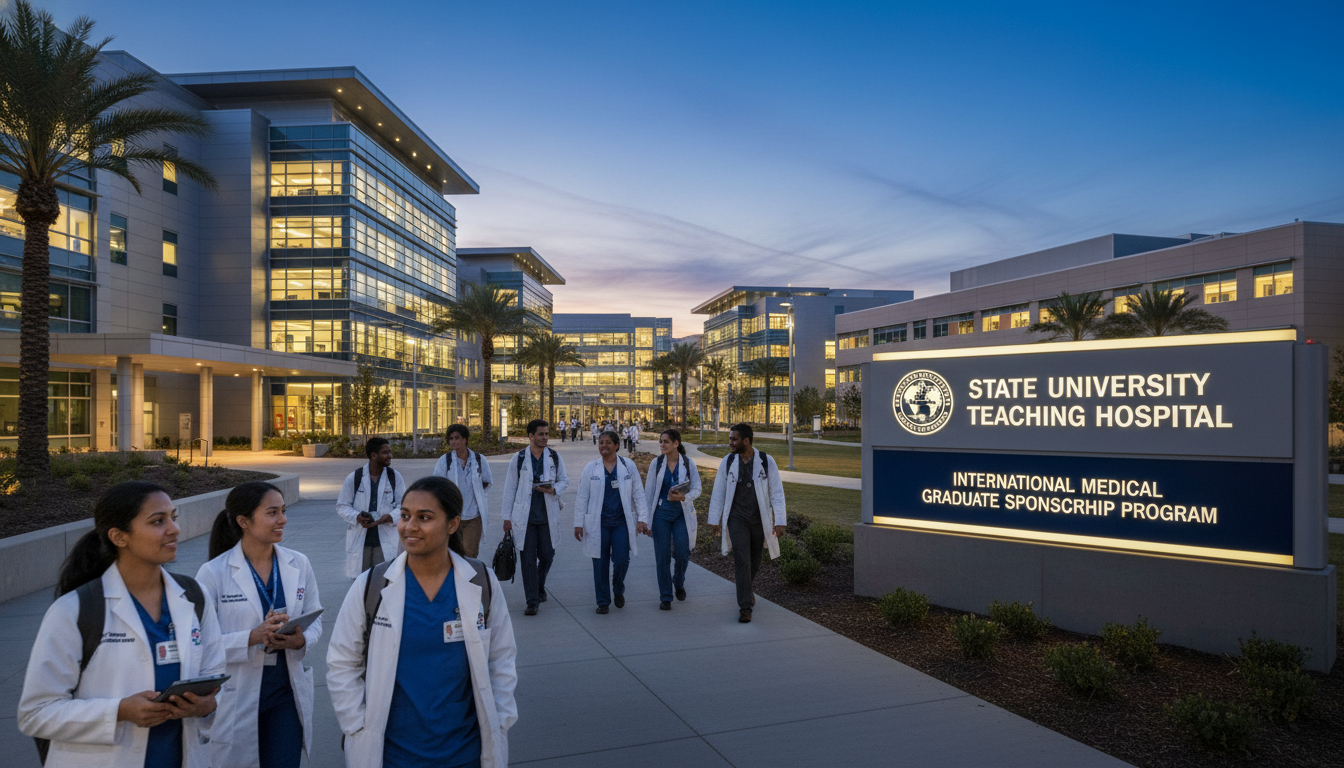
3. Finding H‑1B‑Friendly State University Residency Programs
Many IMGs struggle with one basic problem: how to build a reliable H‑1B sponsor list of residency programs at state universities and public medical schools.
3.1 Start with official program information
Use these sources to identify potential H‑1B residency programs:
Program websites (GME or department pages)
Look for statements like:- “We sponsor J‑1 and H‑1B visas.”
- “H‑1B sponsorship may be considered for highly qualified candidates who have passed USMLE Step 3.”
- “Due to institutional policies, we sponsor only J‑1 visas.”
FREIDA (AMA Residency & Fellowship Database)
- Filter for “Accepts international medical graduates” and review the “Visa” section.
- Note: FREIDA data can be outdated; always confirm via email or website.
Institutional Graduate Medical Education (GME) office
Some state universities maintain a central GME visa policy page. Search:- “[University Name] GME visa policy”
- “[State University] H‑1B sponsorship residents”
3.2 How to verify H‑1B sponsorship when it’s not clearly stated
Not all programs clearly list their visa policy. To clarify:
- Email the program coordinator or program director:
- Introduce yourself briefly.
- Ask specifically: “Do you sponsor H‑1B visas for international medical graduates in your residency program?”
- Check the institution’s H‑1B cap exempt status:
- Many state universities are automatically cap exempt as public institutions of higher education.
If you hear: “We currently sponsor only J‑1 visas,” that program should be removed from your H‑1B sponsor list unless you are open to J‑1.
3.3 Building an effective H‑1B sponsor list spreadsheet
Create a structured spreadsheet to track state university residency opportunities:
Columns to include:
- Institution name (e.g., “State University Medical Center”)
- Program (Internal Medicine, Pediatrics, etc.)
- H‑1B policy:
- “H‑1B and J‑1”
- “J‑1 only”
- “Case‑by‑case H‑1B”
- Step 3 requirement (before ranking, before start date, or not required for J‑1)
- IMG friendliness (based on proportion of IMGs on current residents page)
- Contact (coordinator email)
- Notes (e.g., “Prefers U.S. clinical experience,” “No out‑of‑match H‑1B positions,” “Prior residents on H‑1B from India/Pakistan/etc.”)
Aim to identify:
- A core list of ~20–30 solid H‑1B‑friendly, IMG‑welcoming programs.
- An extended list of another 20–30 programs where sponsorship is “case‑by‑case” or limited.
4. Eligibility and Documentation for H‑1B in State University Programs
Once you’ve targeted appropriate programs, you need to make sure you meet their usual expectations for H‑1B sponsorship.
4.1 Common institutional requirements for H‑1B sponsorship
While each program differs, many state university/public medical school residency programs require:
USMLE Step 3 passed
- Some require Step 3 before they rank you in the Match.
- Others allow you to match but require Step 3 before contract signing or visa filing.
- Step 3 is often a strict requirement only for H‑1B candidates, not for J‑1.
ECFMG certification
- Must be completed before visa petition filing.
- Ensure your medical school is recognized and your credentials are verified early.
Valid immigration status or ability to obtain a visa stamp
- If in the U.S. (F‑1, J‑1 research, etc.), they may request details of your current status.
- If abroad, they will expect you to attend a U.S. consulate for visa stamping after H‑1B approval.
State training license or permit
- Requirements vary by state; some allow training with institutional permits; others require limited licenses.
- Start application early (often 4–6 months before residency).
4.2 The H‑1B petition timeline for a matched IMG
Typical sequence after matching to a state university or public medical school residency:
- Match Day: You receive your position.
- Program confirms visa type (H‑1B vs J‑1) and your eligibility (Step 3, ECFMG, etc.).
- GME/International Services office sends you a H‑1B data form and checklist.
- You submit:
- Passport, CV, diplomas, ECFMG certificate, USMLE transcripts
- Previous I‑20s, DS‑2019s, I‑94 records if applicable
- Employer files Labor Condition Application (LCA) with the Department of Labor.
- After LCA approval, they file the I‑129 H‑1B petition.
- Once approved, you either:
- Change status in the U.S. (if already in legal nonimmigrant status), or
- Go for H‑1B visa stamping at a U.S. consulate abroad.
4.3 Costs: who pays what?
Legally, certain H‑1B fees must be paid by the employer. In academic settings:
- Most state university residency programs cover:
- Filing fees (base fee, ACWIA fee, fraud prevention fee)
- Attorney fees (if using outside counsel)
- Residents sometimes cover:
- Premium processing (if needed urgently or if program policy requires resident contribution)
- Dependent (H‑4) fees and travel costs
Never offer to pay employer‑mandated fees; this can create compliance issues for the program.
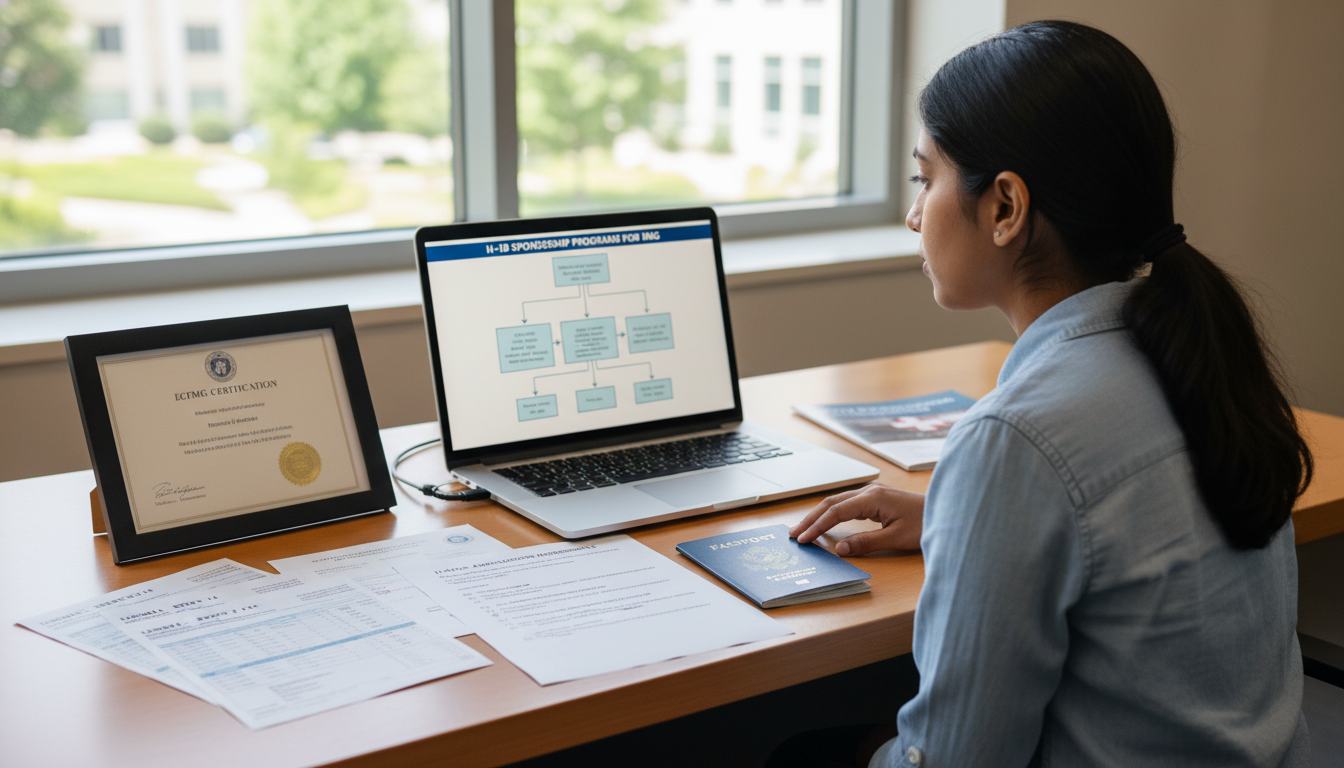
5. Application Strategy: Maximizing Your Chances at H‑1B‑Sponsoring State Universities
Securing a spot in H‑1B residency programs at state universities is highly competitive for IMGs. Strategic preparation is critical.
5.1 Academics and test scores
For H‑1B‑friendly academic programs, your USMLE scores typically need to be stronger than the minimum threshold they accept for J‑1 applicants.
Action points:
- Aim for solid Step 1 and Step 2 CK scores above the program’s historic average for IMGs.
- Take Step 3 early—ideally before application season (September) or at least before interviews for programs that require it:
- If you cannot complete Step 3 before application, clarify in your personal statement and ERAS CV that you are scheduled to sit for it soon.
- Consistent performance across steps is reassuring to academic programs.
5.2 U.S. clinical experience and letters
IMGs aiming for state university residency positions with H‑1B sponsorship should prioritize:
- Hands‑on U.S. clinical rotations (sub‑internships, clerkships, observerships with direct patient exposure if allowed) in:
- Teaching hospitals
- Public medical school residency programs
- Strong letters of recommendation (LoRs) from:
- Academic faculty at U.S. institutions
- Program or clerkship directors in your chosen specialty
Letters that explicitly mention your readiness to function in a U.S. residency and your understanding of the healthcare system can significantly help.
5.3 Tailoring your ERAS application for H‑1B‑friendly institutions
Emphasize elements that matter to academic, research‑oriented, or public institutions:
- Commitment to underserved or diverse populations:
- Many state universities are safety‑net hospitals serving complex patient populations.
- Research or quality‑improvement projects:
- Publications, abstracts, QI initiatives, especially at academic centers, show alignment with university missions.
- Continuity of clinical experience:
- Minimize unexplained gaps; if present, explain them clearly in the application.
Be transparent but concise about your visa needs in your personal statement or during interviews; state that you are seeking H‑1B sponsorship and have or will complete Step 3 within the required timeframe.
5.4 Interview performance: addressing the visa topic
During interviews at state university or public medical school residency programs, the visa question often arises.
Tips:
- Be clear but not demanding:
- “I am eligible for H‑1B sponsorship and have already passed Step 3.”
- Or: “I am scheduled to take Step 3 in [month/year] and understand that H‑1B sponsorship depends on passing before [date].”
- Emphasize long‑term commitment:
- Programs are more likely to sponsor H‑1B if they see you as a future fellow, faculty member, or long‑term contributor.
- Demonstrate understanding of academic culture:
- Mention interest in teaching, research, quality improvement, or leadership roles.
6. Advanced Considerations: H‑1B Cap Exempt, Transitions, and Long‑Term Planning
6.1 H‑1B cap exempt status during residency and fellowship
While you are in a state university residency or other cap‑exempt institution:
- You remain H‑1B cap exempt throughout residency/fellowship.
- You can often:
- Extend your H‑1B for multiple training periods.
- Take on part‑time academic roles (e.g., moonlighting at affiliated sites) if properly authorized and filed.
However, if you later move to a private practice or non‑university hospital, you may need:
- A cap‑subject H‑1B (entering the lottery),
or - To remain within the cap‑exempt sector (another university/safety‑net hospital) until you secure permanent residency.
6.2 H‑1B to green card pathways for IMGs
Many H‑1B physicians in state university programs later transition to:
- Academic faculty positions (still cap exempt), or
- Hospital‑employed specialist roles with cap‑exempt or cap‑subject employers.
Common green card routes:
- EB‑2 (employment‑based, advanced degree): Typically employer‑sponsored for faculty or hospitalists.
- EB‑2 NIW (National Interest Waiver): For physicians serving in shortage areas or in roles that benefit U.S. healthcare; academic research can also support NIW.
- EB‑1 (extraordinary ability, outstanding researcher): For highly accomplished academic physicians.
Early in residency, focus on building:
- Solid research portfolio (for academic and NIW/EB‑1 routes).
- Consistent clinical excellence and leadership roles.
- Networks with faculty who may later sponsor or support your green card process.
6.3 When J‑1 might still be a reasonable choice
Even if you prefer H‑1B, there are cases where a J‑1 visa might make sense:
- You match at an outstanding IMG‑friendly academic program that only sponsors J‑1.
- You plan to work in an underserved area and are open to J‑1 waiver jobs, which can also lead to permanent residency.
- Your Step 3 timeline is incompatible with H‑1B requirements for that application cycle.
In such scenarios, you can still pursue a strong career path; H‑1B is advantageous, but not the only route to success.
Frequently Asked Questions (FAQ)
1. How can I tell if a state university residency program is H‑1B cap exempt?
Most state university and public medical school residency programs are H‑1B cap exempt if:
- They are part of a public university designated as an institution of higher education, or
- The hospital is formally affiliated with such an institution and your role supports its educational/research mission.
You can usually confirm via:
- GME or international office websites
- The program coordinator or HR
- Institutional immigration services documentation
Ask directly: “Is your residency program’s H‑1B sponsorship cap exempt?”
2. Do all H‑1B residency programs require USMLE Step 3 before the Match?
No, policies vary:
- Some require Step 3 before ranking applicants for H‑1B.
- Others permit you to match and then require Step 3 before contract signing or before visa filing.
- A minority may sponsor H‑1B with Step 3 after the start date, but this is increasingly rare.
For safety, if you are targeting H‑1B in state university programs, plan to complete Step 3 before or very early in interview season.
3. Can an IMG on H‑1B in residency transfer to a private hospital job after graduation?
Yes, but the details matter:
- If the private hospital is cap subject, you will generally need to:
- Enter and be selected in the H‑1B lottery, and
- Have your new employer file a cap‑subject H‑1B petition.
- If the new employer is also H‑1B cap exempt (another university, research hospital, or eligible nonprofit), then transfer is usually possible without the lottery.
Many IMGs use their cap‑exempt training years to work toward permanent residency so that they can eventually move freely between employers.
4. How many programs should I apply to if I only want H‑1B sponsorship?
If you are strictly H‑1B only, plan to:
- Apply broadly to all known H‑1B‑friendly state university and public medical school residency programs in your specialty.
- Include some programs marked “H‑1B considered on a case‑by‑case basis.”
- Realistically, this may mean:
- Internal Medicine: 60–100 applications
- Family Medicine/Pediatrics/Psychiatry: 40–80 applications
- Competitive specialties: Often not realistic for H‑1B only unless you are exceptionally strong.
The more flexible you are regarding geography and program prestige, the better your chances of matching at an H‑1B‑sponsoring institution.
By understanding how H‑1B residency programs function within state university and public medical school residency systems, and by systematically building your personal H‑1B sponsor list, you can dramatically improve your odds of securing a visa path that aligns with your long‑term goals in the United States. For IMGs committed to a stable, academic‑oriented career with the possibility of early permanent residency, strategically targeting these institutions is often the most powerful approach.