
The way most people talk about “red flags” and “yellow flags” for Step scores is lazy. Program directors do not sit around with color-coded posters of 230 vs 240. They sit with a spreadsheet, a pile of applications, an overbooked clinic, and a mental list of numbers that quietly decide your fate before anyone reads your personal statement.
Let me tell you what actually happens behind those closed doors.
How PDs Really Look at Step Scores Now
Forget the fantasy that everyone “holistically reviews” every file. Some do. Most do not. They can’t. They don’t have the time.
Here’s the backstage version:
A coordinator exports the ERAS spreadsheet. Step 1, Step 2 CK (or COMLEX equivalents), med school, visa status, home/away rotations. The PD or associate PD sits down and says something like, “Alright, let’s start by cutting below X.”
That “X” is what quietly determines what is red vs yellow vs green.
Even with Step 1 pass/fail now, the same logic applies. Step 2 and COMLEX 2 just took on more weight. And yes, a low Step 1 pass still smells like a yellow flag if they know the score (and many do from MSPE or internal info).
To understand where your low score sits, you have to understand two layers:
- Screening phase – Where numbers matter brutally and context is barely considered.
- File review phase – Where numbers become a story point instead of a hard filter.
Red flag in screening = you never even get read.
Red flag in review = you get read, but your score is a serious problem that must be “explained” or outweighed.
Those aren’t the same thing.
The Real Thresholds: When a Score Becomes a Problem
I’ve sat in enough rooms where PDs say out loud what they’ll never put on a website:
“Below this score, we’re not looking unless there’s a clear reason.”
Let’s anchor with some typical internal cut lines for Step 2 CK in moderately competitive academic programs.
| Program Type | Green Zone | Yellow Zone | Red Zone (Auto Screen-Out) |
|---|---|---|---|
| Very competitive academic (top 20) | ≥ 245–250 | 235–244 | < 235 |
| Mid-tier university program | ≥ 235–240 | 225–234 | < 225 |
| Community with strong reputation | ≥ 230–235 | 220–229 | < 220 |
| Less competitive community/safety | ≥ 220–225 | 210–219 | < 210 |
Are these universal? No. Are they eerily close to what people actually say in selection meetings? Yes.
And here’s the nuance nobody explains to you:
- Green zone – Nobody is sweating your score. It will not help you much, but it won’t hurt you. You live or die on letters, school reputation, rotations, and fit.
- Yellow zone – You are not dead, but you're in “justify this” territory. Your file can move forward, but someone has to feel okay about that number.
- Red zone – For many programs, you never get opened unless something else screams “look at this one.”
PDs rarely phrase it as “red vs yellow” in the room. What they say is more like:
- “I don’t want to go below 225 unless they’re a URiM or we know them.”
- “Under 220? Only if they rotated here and we loved them.”
- “We’ll keep a small stack for < 230, but only if they have something really strong.”
Let’s break down what actually pushes a score into each bucket.
What Is a “Red Flag” vs “Yellow Flag” for Step Scores?
Red flag and yellow flag are not about feelings. They’re about workflow.
Yellow flag = reviewer pauses, looks for context, and might still comfortably interview you.
Red flag = reviewer or PD feels risk, risk = possible failure/remediation/low board pass stats.
Here’s how that splits in real life.
Red Flag Step Situations
These are the ones that reliably trigger “no” or “only with a very strong reason.”
US MD/DO with Step 2 CK < ~220 applying to IM/FM/Peds/Neuro
At many university programs, this never gets opened unless:- They rotated there and were excellent, or
- They’re from the home institution with known strong feedback.
US MD/DO with Step 2 CK < ~230 applying to categorical surgery, anesthesia, EM, rads, derm, ortho, etc.
Even some community programs will quietly say, “We just can’t risk it.”Multiple Step/COMLEX failures
One fail can be survivable in the right context. Multiple failures are nearly always considered a significant red flag. People start talking about board pass rates, remediation history, professionalism concerns.Taking Step 2 CK late with a known low Step 1 or failure
When Step 2 is missing and Step 1 was weak/barely pass, the assumption in the selection meeting is, “They’re hiding the score” until proven otherwise.Huge downward trend
Example: Step 1 (old scoring era) 235 → Step 2 215. Or COMLEX 1 strong, COMLEX 2 way lower. That trend makes PDs nervous: “They did worse when the material got closer to residency.”IMG with Step 2 < ~230 for most competitive or even mid-tier IM programs
The quiet rule at a lot of academic IM departments: “IMG < 235? Only if they have extraordinary research or came with a strong recommendation from someone we know.”
Red flag doesn’t always mean zero chance. But it means there must be a counterweight that’s very strong: home rotation, PD phone call, known faculty sponsor, URiM priority, or a niche skill set.
Yellow Flag Step Situations
Yellow flags are what most applicants with “low” scores actually have. Annoying, but not fatal.
US MD/DO Step 2 CK roughly 220–235 for core specialties
Programs will say things like, “Not ideal, but fine if the rest is strong.” This is classic yellow territory.Single Step 1 failure with improved Step 2 CK (e.g., 235–245)
This is exactly the kind of “Explain in PS/MSPE, show growth” profile. A PD will still consider you if your letters are solid and the story makes sense.Step 1 pass/fail era with ‘at risk’ narrative in MSPE
Example: borderline passes in preclinical, required some remediation. PDs don’t love it, but if Step 2 CK is decent, they’ll move past it.Step 2 CK slightly below their usual “comfort” line
If a program usually sits at 240+ and you’re 232 with great letters from strong institutions—yellow, not red.Mild downward trend but still passing and not catastrophic
Step 1 240 → Step 2 232. Not ideal, but not a deal-breaker in most places.
Yellow flags live in the world of, “Let’s see the rest.” Red flags live in, “Why would we take this risk unless there’s a compelling reason?”
How Specialty and Program Type Shift the Colors
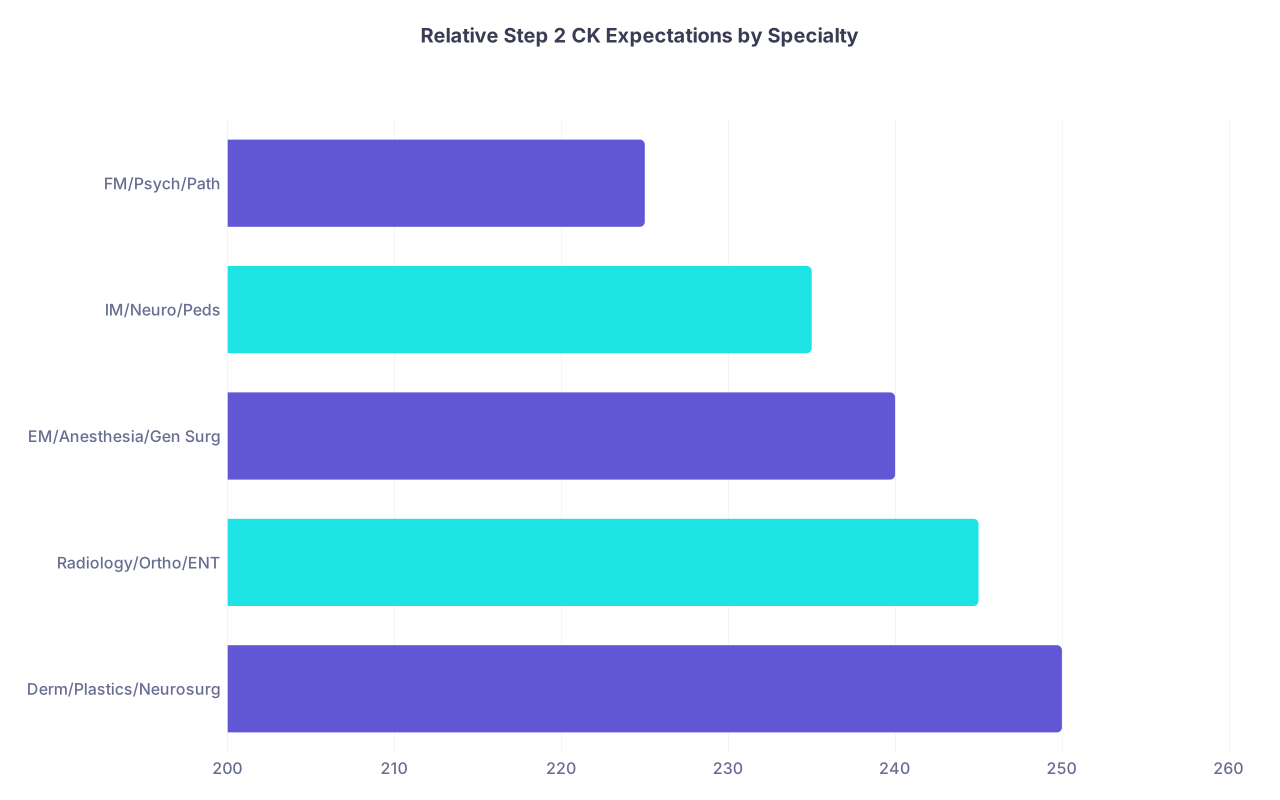
A 225 is not the same everywhere. The same number is a problem in one room and a non-issue in another.
| Category | Value |
|---|---|
| Derm/Plastics/Neurosurg | 250 |
| Radiology/Ortho/ENT | 245 |
| EM/Anesthesia/Gen Surg | 240 |
| IM/Neuro/Peds | 235 |
| FM/Psych/Path | 225 |
That chart isn’t official. It’s how discussions feel when PDs compare piles.
Hyper-Competitive Fields
Derm, plastics, ortho, ENT, neurosurg, radiology.
Here’s the ugly truth:
In these specialties, a “yellow” score by general standards is often a de facto red at many programs. Derm PDs aren’t saying, “Well, 230 is fine if they’re nice.” They’re triaging 260s.
- Below 240 often = soft red flag at many academic-heavy programs.
- 230s can be yellow only if you bring big guns: strong home department support, multiple publications, known mentors vouching for you.
Moderately Competitive: EM, Anesthesia, Some Surgery, Neurology
These programs still care a lot about Step scores, but they will bend for fit and performance.
- Low 220s might be a red at their top programs, yellow at lower tiers.
- A 230 with strong SLOEs (for EM) or great OR comments can be entirely fine.
I’ve heard an EM PD say, mid-cycle:
“We said 235, but if they have a great SLOE from a place we trust, I’ll go down a bit.”
Core Fields: Internal Medicine, Pediatrics, Family Med, Psych
This is where nuance really matters.
- IM (academic) – 235+ feels comfortable. 225–234 is pure yellow. Under 220 is edging toward red unless offset.
- IM (community) – 220–230 is common and accepted, especially for US grads.
- Peds, FM, Psych – Many programs will consider applicants well into the low 220s, even teens, especially if they like the rest of the file. For some FM and psych programs, 210+ with a clean record is entirely green.
The mistake low scorers make is assuming “good specialty choice” alone fixes a red score. It doesn’t. But it can move a borderline red into strong yellow, which is a completely different world.
Program Type: Academic vs Community
Academic departments protect their board pass rate statistics like their lives depend on it. Because in some ways, they do—ACGME scrutiny, reputation, future applicants.
Community programs often have more flexibility. Not because they don’t care, but because they:
- Have more hands-on exposure to residents, so they rely a bit less on tests.
- May have slightly lower pressure on Step averages.
- Sometimes value work ethic, local ties, and clinical performance more heavily.
I’ve literally watched this happen:
- Academic IM: “Below 225? No, we can’t.”
- Community IM 20 minutes away: “They’re from around here, Step 2 218, strong letter from a doc we know—yeah, bring them.”
How PDs Actually Triage: A Realistic Flow
To make this painfully clear, here’s what your application fate often looks like, behind the curtain.

| Step | Description |
|---|---|
| Step 1 | ERAS Spreadsheet |
| Step 2 | Hold - Risky |
| Step 3 | Auto Screen Out or Rare Exception |
| Step 4 | Secondary Review Only |
| Step 5 | Full File Review |
| Step 6 | Offer Interview |
| Step 7 | Reject After Review |
| Step 8 | Step 2 CK Available |
| Step 9 | Score Above Filter? |
| Step 10 | Any Major Red Flags? |
| Step 11 | Good Letters Fit? |
| Step 12 | Strong Home/Rotation Ties? |
Where do low scores color this?
- Below filter → red by process, not emotion. You don’t get opened.
- Above filter but lower than average → yellow. You get opened, but people are looking for reassurance.
When a Low Score Stays Yellow Instead of Turning Red
Here’s where you still have leverage. Because not all low scores are equal.
Protectors That Keep a Low Score Yellow
These factors quietly move you from “No way” to “Let’s at least talk about them.”
Known, trusted letter writers
The single strongest antidote to a borderline score. When a PD reads, “I would take this student into our residency any year,” from a nationally known faculty member they respect, they’ll soften on the cutoff.Home or away rotation performance
I’ve heard versions of this more than once:
“Their score is low, but they worked here for a month, showed up early, never complained, handled high volume, and the team loved them. That matters more.”Clear upward academic trend
Shelf exams improving, Step 2 better than Step 1 (or much better than expected after a fail). PDs love a “comeback” story—as long as it looks real and stable.Genuinely compelling personal explanation
I’m not talking about vague “test anxiety.” I mean real, verifiable life events or structural obstacles, handled professionally, with documented improvement afterward.URiM status and commitment to equity/underserved populations
Many programs—especially academic and urban—are actively trying to build a more diverse class. They will go lower on cutoffs for someone they believe fits that mission and has proven resilience.Strong institutional or regional fit
Local candidate. Grew up in that city. Did multiple rotations there. PDs think, “If we train this person, they’ll stay.”
When several of those combine, what would’ve been a red flag by score alone turns into manageable yellow.
When PDs Quietly Turn Your Score into a Red Flag
On the flip side, a borderline number becomes poison if you stack other concerns on top.
I’ve watched a PD put it bluntly:
“Low-ish score, weak letter, and vague explanation of a fail? No. Too much risk. We have enough applications.”
Here’s what pushes you toward red:
Low score + weak or generic letters
If your letters say, “Pleasant to work with, did all assigned tasks,” with no superlatives, PDs assume average performance. Combine that with a low score and the question is: “Why should we believe they will pass boards?”Low score + concerns in MSPE
Words like “professionalism concerns,” “required coaching,” “needed additional supervision” are lethal when next to a 215 Step 2.Low score + late exam + no meaningful explanation
If Step 2 is delayed without rationale, plus the number is bad, PDs suspect procrastination or ongoing difficulty.Low score + no evidence of self-awareness
No explanation in PS, no context in MSPE, nothing in advisor letters. It reads as: this person either doesn’t understand or doesn’t own their weaknesses.
Low Step + No Story = Red.
Low Step + Honest Story + Proof of Growth = Yellow.
Strategy: If You’re Sitting in the “Yellow” Range
You can’t change the score. So you change everything around it.
1. Convert Yourself from Random Applicant to Known Quantity
If you’re still early enough:
Rotate—strategically.
Even one away rotation where you crush it can give you an advocate strong enough to pull you up from the “maybe” pile.Get your best letter writers from places PDs respect.
Not just “I like them.” Someone whose name moves the needle.
2. Own the Score Before They Weaponize It
If you had a failure, massive dip, or borderline performance, you need to get ahead of it.
One thing I’ve seen work:
- Brief, honest explanation in the personal statement or an addendum.
- Emphasis on what changed: new study methods, addressing health/family issues, proof from later performance (shelves, Step 2, clinical evals).
Program directors hate vague hand-waving. They respond much better to, “Yes, that was a problem; here is why it is less likely to recur now.”
3. Signal Properly With Your Application List
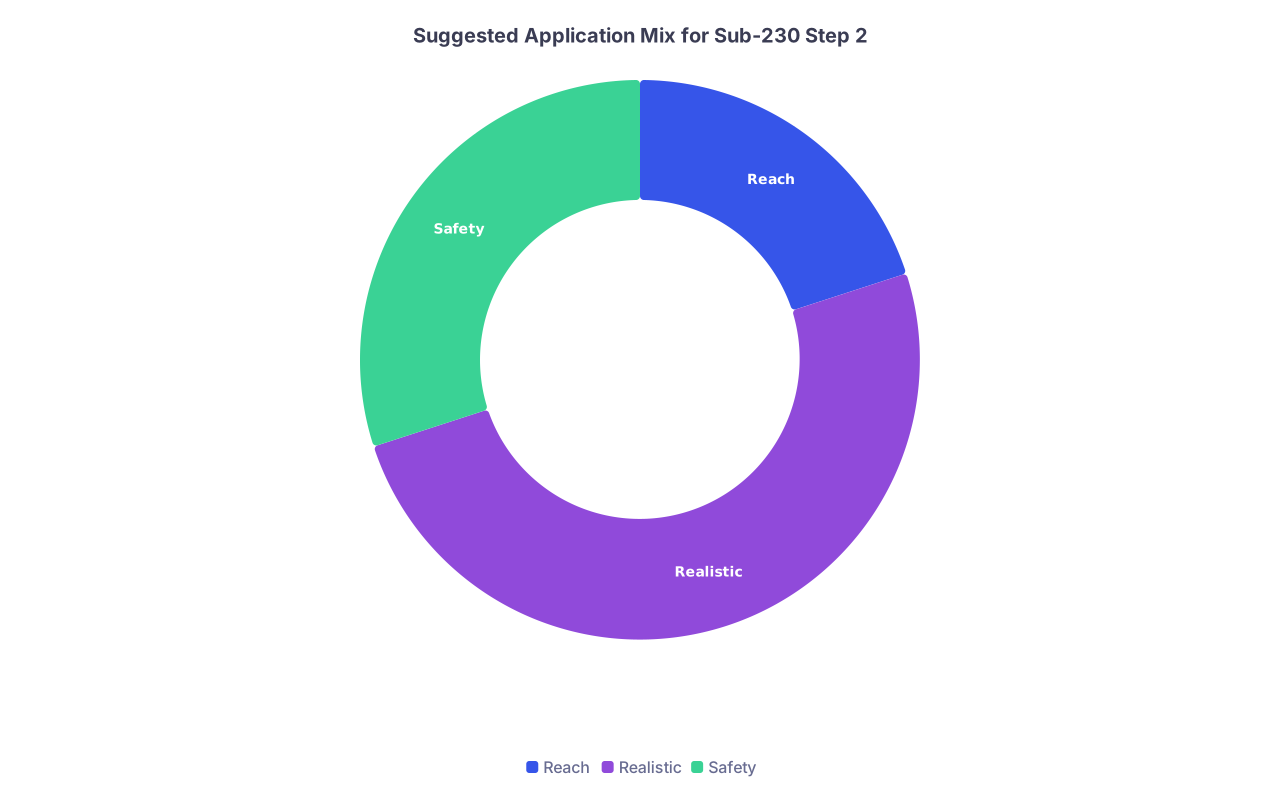
A lot of low-score candidates kill themselves by aiming as if their scores were average.
You need to front-load programs where your score is yellow or even green.
| Category | Value |
|---|---|
| Reach | 20 |
| Realistic | 50 |
| Safety | 30 |
Reach programs are fine. They should not be 70% of your list.
If you’re sub-230 Step 2 in IM, and your list is 80% big-name academic centers, your issue isn’t red flags. It’s denial.
4. Make the Rest of the File Boringly Clean
For low scores, PDs look for one thing:
“Is this going to be a problem again?”
You counter that by:
- Clean professionalism record.
- No unexplained gaps.
- Timely, early completion of Step 2.
- Organized, typo-free application.
If your score is yellow, the last thing you want is a sloppy ERAS or a late transcript making you look chaotic.
Hard Truths: Where Low Really Means Low
Let me answer the question everyone dances around: “How low is too low?”
Approximate reality for US MD/DO, applying to non-ultra-competitive specialties:
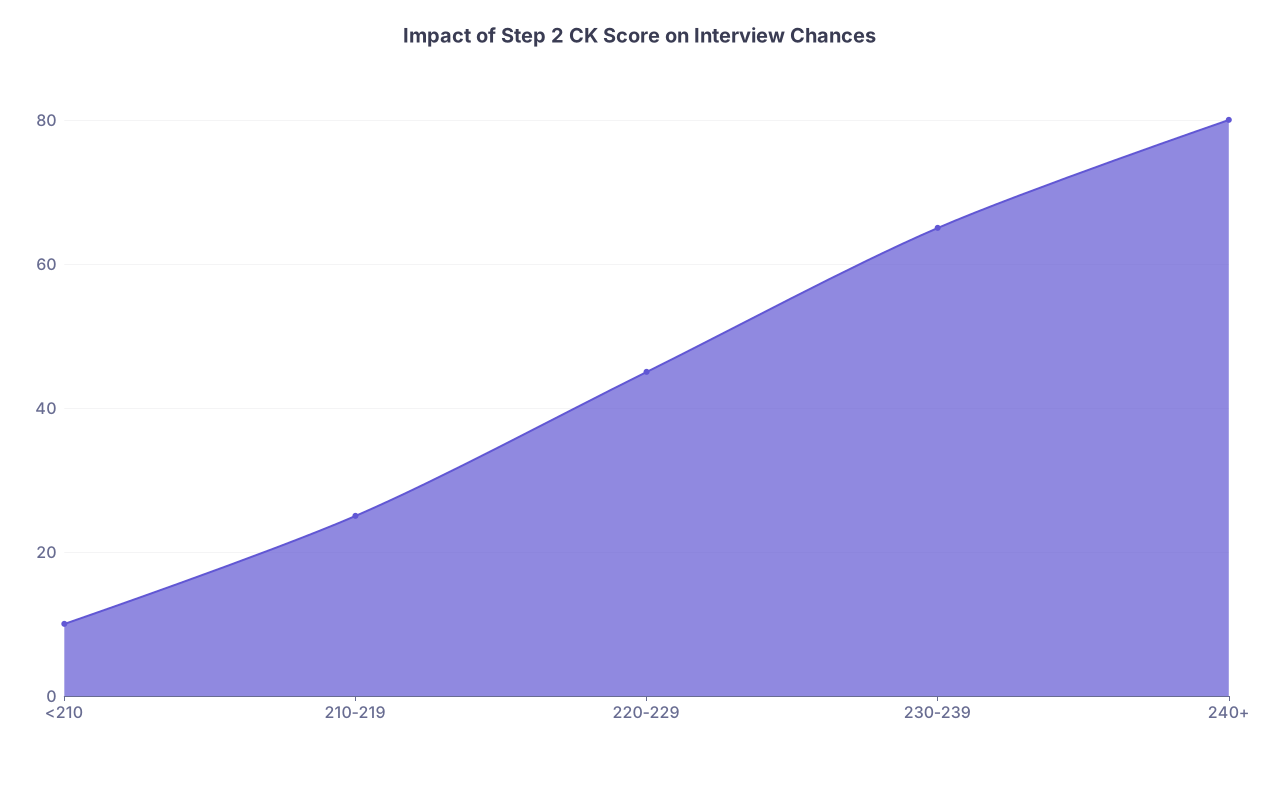
Step 2 < 210 – For most programs, this is a red flag bordering on hard stop, unless there is an extraordinary story, URiM priority, or huge institutional support.
Step 2 210–219 – Red at a lot of academic programs, yellow/red mix at community programs. Survivable if you are otherwise stellar and target the right places.
Step 2 220–229 – Yellow at many places, slightly red-tinged in more competitive or academic-heavy sites, especially without strong letters.
Step 2 230–239 – Barely yellow for most core fields; more yellow for competitive programs and specialties.
If you’re an IMG, shift each of those buckets upward by roughly 5–10 points in practice.
| Category | Value |
|---|---|
| <210 | 10 |
| 210-219 | 25 |
| 220-229 | 45 |
| 230-239 | 65 |
| 240+ | 80 |
Again, not official data. It’s the gradient PDs behave like they believe.
The Bottom Line: Where Your Low Score Actually Sits
So, where do low Step scores really fall for PDs?
Below their internal cutoff? You’re red by process, even if you’re a great person. You need an exception: home program, strong sponsor, or a very mission-aligned profile.
Above the cutoff but below their comfort average? You’re yellow. You live or die by letters, story, clinical performance, and how intelligently you built your list.
Huge failure pattern, late exams, or no insight into your weaknesses? You turn a manageable yellow into a glowing red.
If you remember nothing else:
- Step scores are not judged in isolation. They’re read against internal filters, specialty norms, and the rest of your file.
- Yellow can be managed. With smart program selection, strong letters, honest narrative, and solid clinical work, a “low” score stays a speed bump, not a wall.
- Red is about risk, not morality. Your job now is to either find the programs willing to take that risk—or to pile on so much evidence of growth and support that what used to be red starts looking a lot more like yellow.