Elevate Your Med School Application with a Post-Baccalaureate Program
The journey to medical school is rarely linear. Many future physicians discover their passion for medicine late, struggle in early college semesters, or realize their academic record or clinical exposure is not yet competitive. Post-baccalaureate programs (commonly called post-bacc programs) exist precisely for these situations.
For the right applicant, a well-chosen post-bacc can transform a borderline profile into a strong, compelling application. It can provide Academic Improvement, structured MCAT Preparation, meaningful Clinical Experience, and a clear narrative that resonates with admissions committees.
This guide breaks down what Post-baccalaureate Programs are, who they’re for, how they help your Medical School Applications, and how to choose and leverage a program strategically.
Understanding Post-Baccalaureate Programs in the Premed Pathway
Post-baccalaureate programs are formal academic programs designed for students who have already completed a bachelor’s degree and want to further prepare for medical or other health professional schools. They are part of the broader PREMED_AND_MEDICAL_SCHOOL_PREPARATION phase and fall under the category of POSTBAC_PROGRAMS.
Types of Post-Baccalaureate Programs
Not all post-bacc programs look the same. Understanding the main categories helps you choose one that matches your goals and starting point.
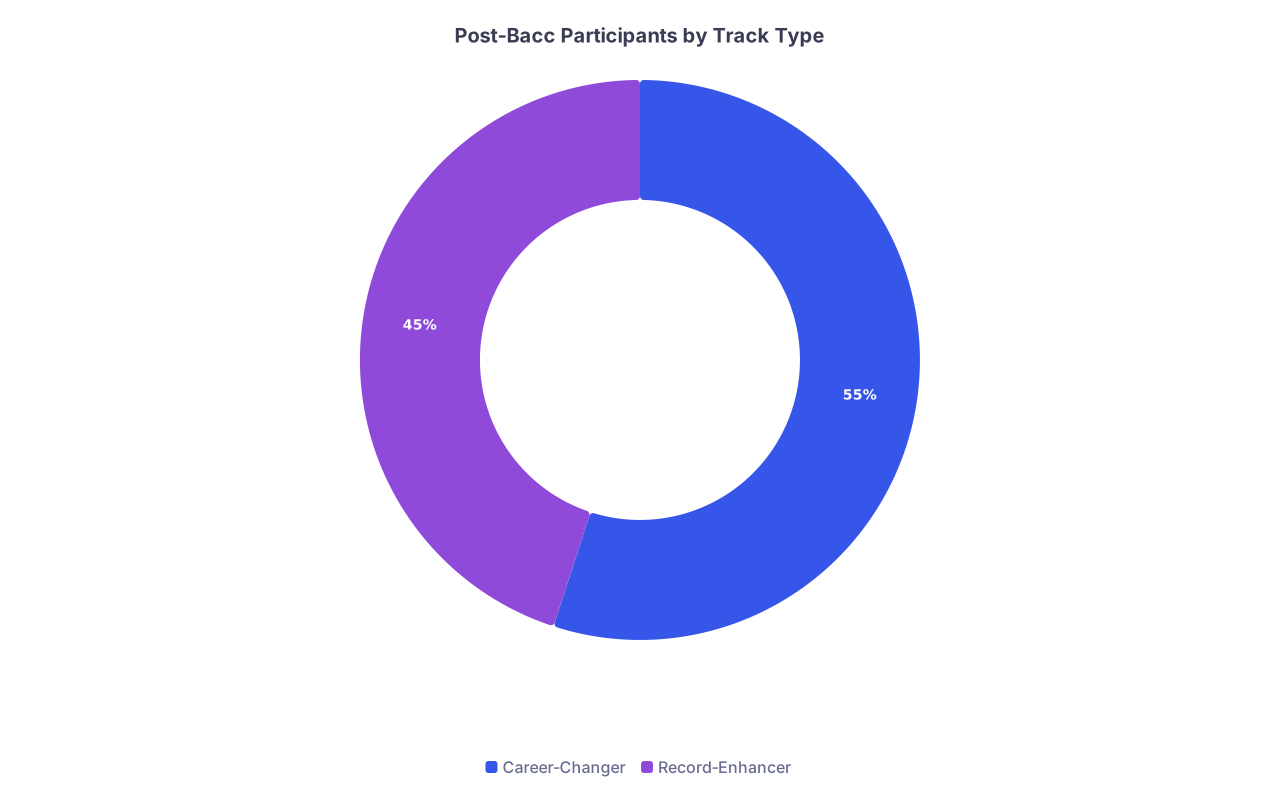
1. Career-Changer Post-Bacc Programs
Designed for students who:
- Did not complete pre-med prerequisites in undergrad
- Often majored in non-science fields (e.g., English, economics, history, arts)
- Are deciding to pursue medicine later in their academic or professional journey
Key features:
- Comprehensive sequence of core pre-med science courses (general chemistry, organic chemistry, biology, physics, often biochemistry)
- Structured schedules to complete prerequisites in 1–2 years
- Advising focused on building a first-time premed profile and preparing for the MCAT
Ideal if you’re starting from scratch on the science side.
2. Academic Enhancer Post-Bacc Programs
Designed for students who:
- Completed pre-med requirements but have a modest GPA (especially science GPA)
- Need Academic Improvement to meet competitive thresholds
- Want to show recent, strong performance in rigorous science coursework
Key features:
- Upper-division science courses (e.g., physiology, immunology, microbiology, advanced biochemistry)
- Often graded alongside undergraduates to demonstrate competitiveness
- May include linkage or relationships with specific medical schools
Ideal if your prerequisites are done, but your academic record doesn’t reflect your true capability.
3. Special Master’s Programs (SMPs)
Technically graduate-level programs, often:
- One-year, intensive, medically-oriented master’s degrees
- Sometimes share coursework with first-year medical students
- Designed as a strong signal of readiness for rigorous medical school curricula
SMPs are best suited for applicants who:
- Have already completed undergraduate science coursework
- Need substantial evidence of academic readiness, especially if prior GPAs are low
- Are prepared for a very demanding year and graduate-level tuition
Perk #1: Strengthening and Reframing Your Academic Record
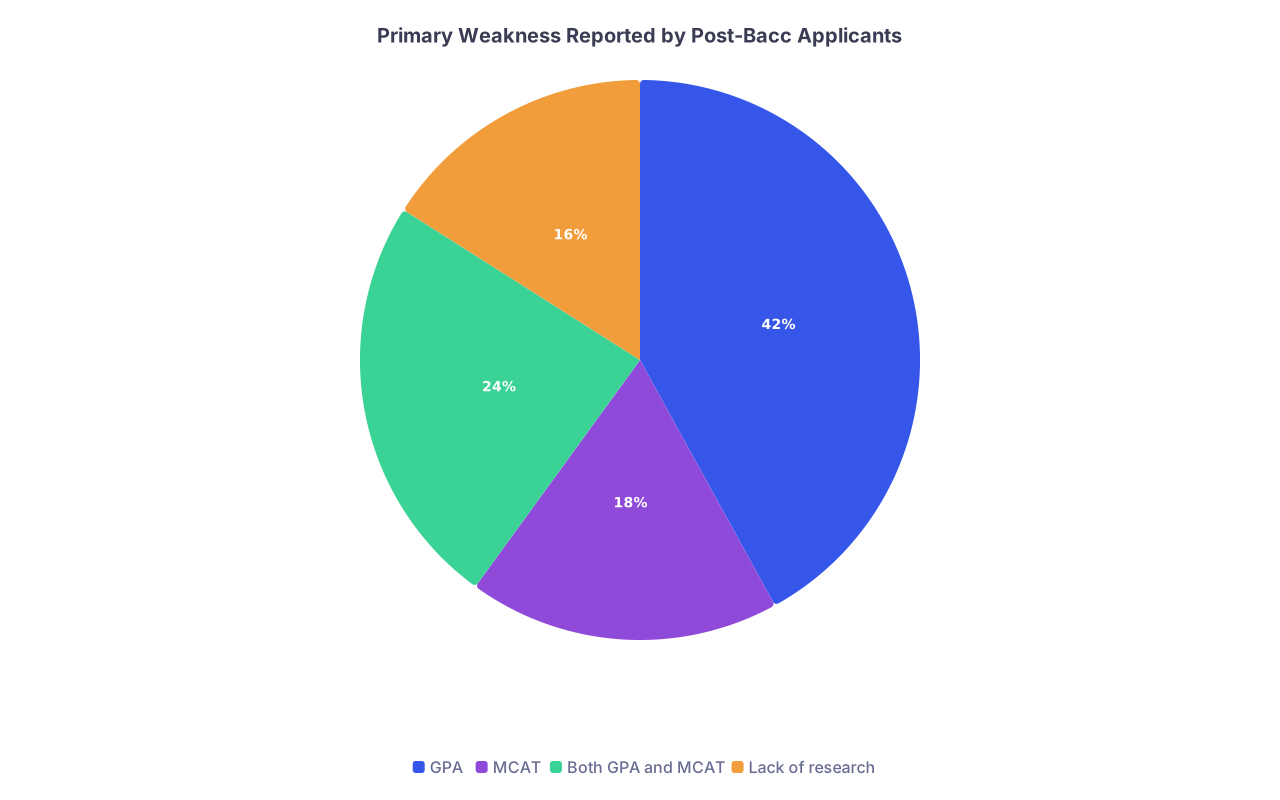
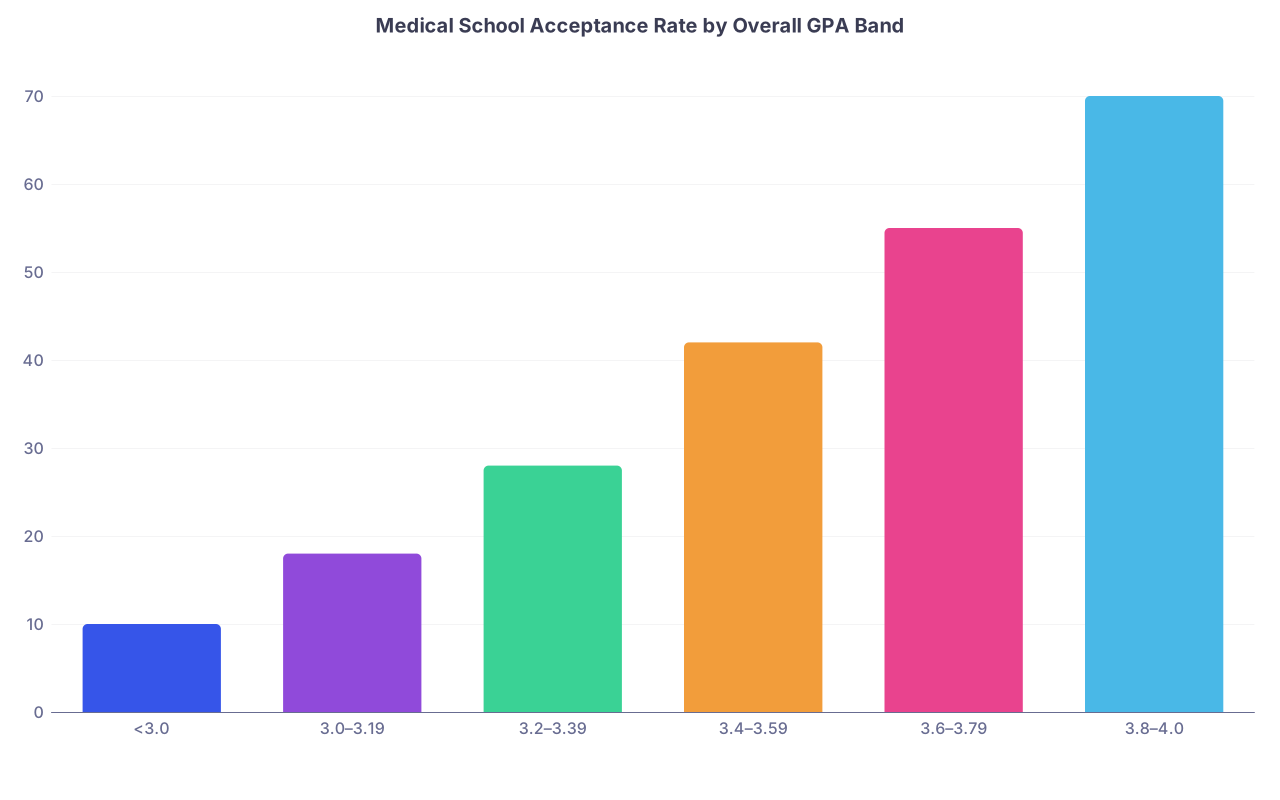
For most applicants, the primary motivation for a post-bacc is Academic Improvement. Medical schools look closely at your overall GPA, science GPA, and academic trends. A thoughtful post-bacc can significantly alter how committees see your file.
Improving Your Cumulative and Science GPA
If your undergraduate GPA is below the typical range for your target schools, a strong post-bacc can:
- Provide additional credit hours of A-level work to raise your cumulative GPA
- Demonstrate that your earlier grades are not reflective of your current capabilities
- Show a clear upward trend, which admissions committees actively value
Example:
- Student A graduates with a 2.9 cumulative GPA and a 2.7 science GPA over 120 credits.
- They complete a two-year post-bacc (40 credits) with a 3.8 GPA.
- Their cumulative GPA may move into the low-3s, but more importantly, they have a clear pattern of recent excellence in challenging science courses.
Many schools will weigh your recent academic performance heavily, particularly in structured, medically-relevant coursework.
Creating a New Academic Narrative
For reapplicants or students with earlier struggles (illness, family responsibilities, adjustment to college), a post-bacc helps you:
- Show maturity and improved study strategies
- Provide evidence of consistency over several consecutive semesters
- Offer a clear “before and after” academic story you can describe in your personal statement and interviews
Stronger performance in a post-bacc can also:
- Expand the range of schools where you’re realistically competitive
- Help you qualify for certain scholarships or merit-based aid at the medical school level
The key is not just the GPA bump, but the message: “Given another chance, under conditions similar to medical school, I performed at a high level.”
Perk #2: Completing and Optimizing Medical School Prerequisites
Post-bacc programs provide structured, intentional coverage of the prerequisite and recommended courses for medical school.
Focused, Premed-Oriented Curriculum
Most programs offer:
- Core prerequisites: General Chemistry I & II, Organic Chemistry I & II, General Biology I & II, Physics I & II, often with labs
- Recommended courses: Biochemistry, Genetics, Cell Biology, Statistics, Psychology, Sociology
Benefits of this structured approach:
- Ensures you don’t miss essential prerequisites for specific schools
- Aligns your coursework with current Medical School Applications requirements
- Reduces the risk of having to delay your application because a required course was overlooked
Access to Advanced and Enriching Science Courses
Beyond basics, many post-baccs allow or encourage:
- Advanced physiology
- Neuroscience
- Immunology
- Microbiology
- Pharmacology
Strategic advantages:
- Deepens your scientific foundation for both MCAT Preparation and medical school
- Signals readiness for a rigorous medical curriculum
- Provides content you can reference in secondaries and interviews (“My neurology seminar reinforced my interest in neuro-oncology…”)
Perk #3: Building High-Impact Connections and Professional Support
Beyond grades and coursework, Post-baccalaureate Programs are powerful networking environments that plug you into the medical education ecosystem.
Faculty Relationships and Letters of Recommendation
Small class sizes and close faculty interaction give you:
- Multiple potential letter writers who know you well
- Opportunities to demonstrate professionalism, work ethic, and intellectual curiosity
- Access to faculty-led research, teaching assistant roles, or tutoring positions
Medical schools consistently emphasize quality over quantity in letters. A detailed, specific letter from a post-bacc professor who has seen you excel in advanced science courses can be a major asset.
Dedicated Pre-Health Advising and Committee Letters
Many formal post-baccs offer:
- One-on-one advising for school selection, application timing, and gap year planning
- Personal statement and activity description review
- Interview preparation (mock interviews, MMI practice, communication skills workshops)
- Committee letters summarizing your performance, professionalism, and readiness
Advisors familiar with your trajectory can also help you:
- Decide between MD and DO programs
- Time your application cycle to coincide optimally with your MCAT and course completion
- Identify pipeline or linkage programs aligned with your background and goals
Peer Community and Support
You’ll be surrounded by:
- Other career changers making bold transitions
- Students rebuilding after academic setbacks
- Highly motivated peers all working toward health professions
Benefits of this community:
- Study groups for rigorous science classes and MCAT
- Emotional support during challenging periods
- Connections that often carry through medical school and residency
These relationships are invaluable for accountability, shared resources, and a sense of “not doing this alone.”
Perk #4: Gaining Credible and Meaningful Clinical Experience
Clinical Experience is a core requirement for Medical School Applications, not just a bonus. Many post-bacc programs integrate structured clinical exposure into the curriculum.
Direct Patient Interaction
Depending on the program and location, you may access:
- Hospital volunteering roles in emergency departments, inpatient floors, or outpatient clinics
- Scribing positions, which provide intense exposure to patient encounters, documentation, and clinical reasoning
- Certified roles (for some students): EMT, medical assistant, phlebotomist, CNA
These experiences help you:
- Confirm that you truly want to work in patient care
- Develop bedside manner, communication, and empathy
- Gather real stories and insights that enrich your personal statement and interview answers
Admissions readers are looking for evidence that you understand the realities of medicine beyond classroom theory.
Exposure to Different Specialties and Care Settings
Post-bacc-linked opportunities can include:
- Shadowing across fields (internal medicine, pediatrics, surgery, psychiatry, primary care)
- Working in community clinics, free clinics, or underserved areas
- Participating in health fairs, vaccination drives, or public health outreach
This breadth supports:
- More informed career interests (“I’m specifically interested in primary care in underserved urban communities…”)
- Stronger program fit statements in secondary essays (“Your school’s emphasis on community engagement aligns with my work in…”)
Perk #5: Integrated, Structured MCAT Preparation
The MCAT is a gatekeeper exam. A post-bacc can help you both learn the content and structure your preparation.
Curriculum Aligned with MCAT Content
When your post-bacc is planned correctly:
- Key MCAT topics (biochemistry, psychology, sociology, statistics) are taken before you test
- Content is fresh, and you’re not relearning material years after taking it
- Certain programs even sequence courses intentionally around your targeted MCAT date
This reduces the cognitive load of “rebuilding” your science foundation on your own.
Built-In Study Support and Resources
Many programs provide:
- Access to commercial MCAT prep materials or institutional discounts
- Diagnostic testing and progress exams
- MCAT strategy workshops and office hours with faculty or test-prep specialists
- Peer-led study groups and accountability structures
In a well-structured post-bacc, you’re not just told “go study for the MCAT”; you’re given a plan, resources, and ongoing support.
Timing Your MCAT Wisely
A key strategic decision is when to test. Advisors can help you align:
- Completion of core science coursework
- Adequate dedicated MCAT study time (often 3–6 months, depending on circumstances)
- Your target application cycle and gap year plans
The goal is to sit for the MCAT only when you’re truly ready, with both content knowledge and strategy intact.
Perk #6: Empowering Your Personal Statement and Interview Story
Your application is more than stats; it’s a narrative. A post-bacc can give you rich material and a coherent storyline.
Crafting a Clear, Authentic Narrative
Experiences during a post-bacc can help you explain:
- Why you chose medicine—supported by clinical, volunteer, and shadowing experiences
- How you responded to earlier academic or personal setbacks
- What you learned about resilience, time management, and self-awareness
Example narrative threads:
- “Early in undergrad, I struggled with time management and balancing work and school. In my post-bacc, I implemented structured study strategies, sought tutoring proactively, and maintained a 3.9 GPA while volunteering in a community clinic.”
- “As a career changer from engineering, my post-bacc allowed me to translate my problem-solving background into a biomedical context, confirming my interest in neurology through shadowing and advanced neuroscience coursework.”
Standing Out in Secondary Essays and Interviews
Your post-bacc gives you:
- Specific examples of difficult courses you mastered
- Stories of patient interactions that shaped your perspective
- Reflections on collaborating with diverse classmates and care teams
In interviews, you’ll be able to:
- Discuss how recent coursework has prepared you for the basic science years
- Describe your growth with concrete metrics (GPA trend, leadership roles, research output)
- Show readiness, maturity, and insight rather than apologizing for your past record
Adcoms want to see that you’ve done the work—intellectually, emotionally, and practically—to step into medical training.
Perk #7: Improved Acceptance Outcomes and Linkage Opportunities
Because Post-baccalaureate Programs are explicitly designed to prepare students for health professions, they often come with structural advantages.
Higher Acceptance Rates for Program Graduates
Many established post-baccs track:
- Acceptance rates to MD and DO schools
- Average MCAT scores of their graduates
- Outcomes stratified by academic starting point
While results vary by program and applicant, committed students often see:
- Significantly higher interview and acceptance rates than they would have with their original credentials alone
- Expanded geographic and ranking options for medical schools
- More confidence in targeting a range of schools appropriate to their profile
Linkage Programs and Affiliated Medical Schools
Some post-baccs offer formal “linkage” or affiliation agreements with specific medical schools. These can provide:
- Conditional acceptance or guaranteed interviews for students who meet defined GPA and MCAT thresholds
- Potential to skip a “glide year” and transition directly from post-bacc to medical school
- A clearer roadmap from day one of the post-bacc
However:
- Linkage programs are often competitive, with strict GPA/MCAT benchmarks
- They may require you to commit to applying only to that partner school in that cycle
- They work best for students who are confident in their target region and fit
Even without formal linkage, some programs are well-known to regional medical schools, giving their graduates a reputational boost.
Choosing the Right Post-Baccalaureate Program for You
With many options, it’s essential to choose strategically rather than just enroll in the first available program.
Clarify Your Primary Goal
Ask yourself:
- Do I mainly need Academic Improvement (GPA trend, stronger science foundation)?
- Do I need to complete prerequisites as a career changer?
- Do I want access to clinical and research opportunities I haven’t had before?
- Am I ready for a graduate-level SMP, or is an undergraduate-level post-bacc more appropriate?
Your primary goal should drive your program type and structure.
Key Factors to Compare Across Programs
When researching Post-baccalaureate Programs, look at:
- Program type: Career-changer vs. academic enhancer vs. SMP
- Location and clinical access: Are there hospitals and clinics nearby?
- Class size and advising: Will you get individualized guidance?
- Cost and financial aid: Tuition, fees, living expenses, and funding options
- Outcomes data: Acceptance rates, average MCAT scores, types of schools matriculated to
- Format: Full-time vs. part-time, in-person vs. hybrid/online (note: in-person is often preferred by medical schools for lab sciences)
Practical Application Timeline Example
A common, effective timeline might look like:
- Year 1: Start post-bacc, complete foundational science courses, begin low-intensity clinical volunteering
- Year 2: Finish remaining prerequisites or advanced sciences, ramp up clinical exposure, begin MCAT Preparation
- End of Year 2 / Gap Year: Take the MCAT, apply to medical schools with a strong final GPA trend, robust experiences, and solid letters
This structure balances academic rigor with enough time for extracurricular and test prep depth.

Frequently Asked Questions (FAQs) About Post-Bacc Programs
1. What exactly is a post-baccalaureate program, and how is it different from just taking extra classes?
A post-baccalaureate program is a structured, formal program specifically designed for students who already hold a bachelor’s degree and are preparing for medical or other health professional schools. Unlike casually enrolling in a few extra classes as a non-degree student, formal Post-baccalaureate Programs typically offer:
- Cohort-based courses and sequence planning
- Dedicated pre-health advising and committee letters
- Access to clinical, research, and volunteer networks
- Documented outcomes and, sometimes, linkage agreements
Medical schools often view success in a recognized post-bacc more favorably than a scattered collection of post-degree courses because it shows you can thrive in a purposeful, rigorous environment similar to professional school.
2. Are post-bacc programs only for students with low GPAs?
No. While many Academic Improvement–focused programs cater to students with less competitive GPAs, post-baccs also serve:
- Career changers with strong GPAs but no science background
- Students who completed prerequisites years ago and want to refresh content before the MCAT and medical school
- Applicants aiming for particularly competitive schools who want to enhance their academic profile with advanced sciences
The right program depends on your previous coursework, GPA, and long-term goals—not solely on whether you have a “low” GPA.
3. Can I apply to medical school while I’m still in a post-bacc program?
Yes, many students do. Common approaches include:
- Applying at the end of your post-bacc after you’ve completed most or all of your science coursework and taken the MCAT
- Applying early in your final year while your post-bacc grades and experiences are still in progress, with updates sent later
Advisors can help you decide if your profile (GPA trend, MCAT timing, clinical exposure) is strong enough to apply during the program or if waiting a cycle (and possibly using a glide year) will give you a better outcome.
4. How long do post-bacc programs usually last, and can I do one part-time?
Most formal post-bacc programs last:
- 1 year for intensive, full-time programs (often career-changer or SMPs)
- 1.5–2 years for more flexible or part-time options, especially for students working or managing other responsibilities
Part-time options do exist and can be appropriate if you need to maintain employment. However, keep in mind:
- Medical schools will evaluate how you balanced your commitments
- A very light course load may not fully demonstrate that you can handle medical school–level rigor
5. How do I know if a post-bacc program is “worth it” for my situation?
Consider a post-bacc if:
- Your science GPA or overall GPA is below the typical range for your target schools, and you haven’t shown a strong upward trend
- You lack required prerequisites or completed them so long ago that you need to refresh
- Your application would benefit from structured MCAT Preparation, Clinical Experience, and advising
- You’re willing to invest the time, effort, and finances into improving your candidacy before applying
If your GPA is already strong, your prerequisites are current, and you have solid MCAT and clinical experiences, a post-bacc might not add much value; in that case, targeted experiences or research may be more beneficial.
A well-chosen, well-executed post-baccalaureate program can be a powerful pivot point in your path to medicine. It can provide the Academic Improvement, MCAT Preparation, Clinical Experience, and professional mentorship you need to transform your Medical School Applications from uncertain to compelling—and help you enter medical school with the skills, resilience, and clarity of purpose to thrive.