Linkage programs are not a secret back door to medical school. They’re a rigid, high‑stakes contract that helps a few highly prepared postbacs avoid a glide year—if they already look like strong applicants.
Most people hear “linkage” and immediately translate it into “shortcut.” That’s where the trouble starts.
Let’s take the fantasy apart and replace it with what the actual policies say, what directors actually do, and how this really plays out for postbac premeds.
The Myth: Linkage = Guarantee + Shortcut
The romantic version of linkage goes something like this:
- You join a “top” postbac program
- You work hard for a year
- You get “linked” to a solid MD school
- You skip the gap year
- You’re in.
That narrative leaves out almost everything that matters.
Real linkage policies (Penn, Bryn Mawr, Goucher, Columbia, Scripps, etc.) have some common themes:
- No guarantee of admission
- You still need MCAT
- You usually can’t apply broadly at the same time
- You’re bound by rigid timelines and GPA/MCAT thresholds
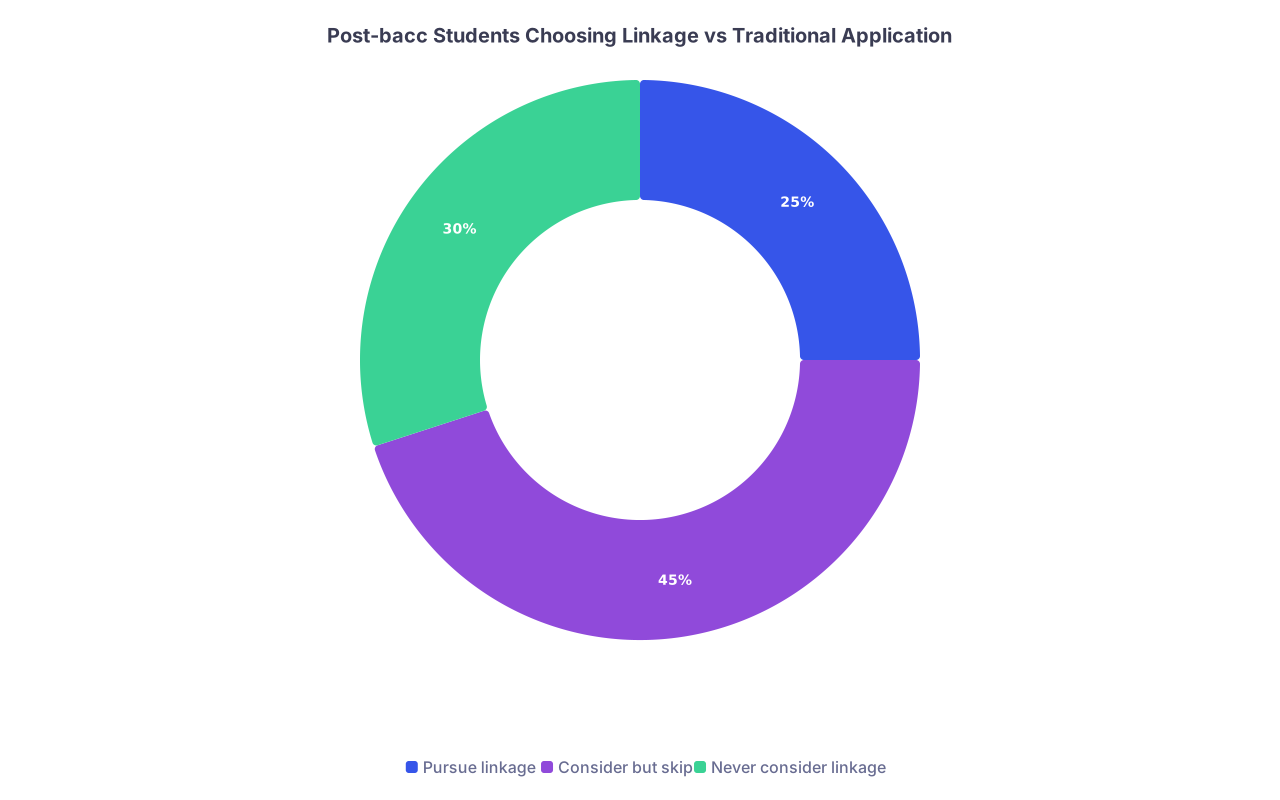
- Only a minority of students even attempt linkage
Linkage is less “easy express lane” and more “single‑lane bridge you can only cross if you meet exact weight, height, and timing requirements, and if one thing is off, you swim.”
How Linkage Actually Works (Not How Forums Describe It)
Forget the marketing blurbs. Look at the actual structures.
1. You Don’t “Join a Postbac, Then Decide to Link Freely”
In most serious career‑changer postbacs with linkage options, here’s the pattern:
- You typically declare linkage interest early
- You’re limited to one linkage target (occasionally two, rarely more)
- Faculty/advisors screen whether you’re allowed to pursue it at all
Example pattern from structured postbacs:
- You start in June
- By late fall or winter, you meet with a committee to “nominate” or clear you for linkage
- If approved, you apply to one partner med school during the spring/summer
- If that fails, you’re often applying the next year in the normal pool anyway
You aren’t casually picking a linkage in April once your grades look good. Programs guard their relationships with med schools; they don’t want to send weak candidates.
2. “No Glide Year” Comes with Real Trade‑offs
The main advertised advantage: you skip the glide year. Reality:
- You compress everything: MCAT, coursework, clinical, letters, personal statement, interviews into ~12–18 months
- You often have to take the MCAT earlier than ideal for maximal performance
- Your clinical/volunteering portfolio is much thinner than that of traditional applicants
So you’re attempting to look med‑school‑ready on a resume with:
- ~1 year of fresh science
- Limited clinical exposure
- Limited longitudinal service
Some people can credibly do this. Many cannot, regardless of how much they want to.

The Fine Print: Policies That Kill the Fantasy
A lot of the mythology disappears if you just read the actual policy PDFs. Let’s walk through what they usually say, in real terms.
1. Minimum GPA: “Just Do Well” Is Not Enough
Most linkage partners set explicit or de facto cutoffs. Examples typical of many programs:
- Postbac GPA: Often require 3.6–3.7+ in postbac science, sometimes higher
- Cumulative GPA (including undergrad): Often expected 3.3–3.5+ minimum; competitive applicants higher
- No grade lower than B (sometimes B+) in science for linked consideration
So if you:
- Have a 3.0 undergrad with a rough trend, and
- Then earn a 3.5 in your postbac
You’re clearly improving, which is excellent. But for linkage, that often still doesn’t clear the bar. You might be competitive in the regular cycle after more coursework and an upward trend, but not for an early, compressed, “trust us” acceptance.
Linkage schools are not being cruel; they’re protecting their yield and Step/board statistics. They want evidence of sustained excellence, not just “strong rebound.”
2. MCAT: You Don’t Escape It, You Front‑Load It
The fantasy: “Maybe I can skip MCAT, or it won’t matter as much.”
Reality across nearly all modern MD linkages:
- MCAT is required
- Minimum score thresholds are often explicit (e.g., 510+, sometimes 512+)
- Section minimums sometimes specified (e.g., no section below 127/128)
- The exam deadline is early (like March–May of your program year)
If you started your postbac in June, that means you’re often taking the MCAT with:
- Only Gen Chem, maybe Bio, and partial Org/Physics under your belt
- Heavy concurrent coursework
- Limited time for dedicated MCAT prep
You’re essentially being asked: “Can you hit a 510–515+ earlier and more compressed than most traditional applicants?” For a small subset, yes. For many career changers, that’s a serious ask.
3. You Usually Can’t Apply Everywhere While Linking
Another dream: “I’ll link to one school and also apply broadly; whichever works.”
Many linkage programs and med school partners explicitly restrict this:
- While your linkage application is pending, you generally cannot have active applications to other MD schools
- If you apply broadly, you may forfeit the linkage arrangement
- You sometimes must sign forms attesting you won’t apply elsewhere that cycle
Why? Med schools do not want to be your backup plan; they want committed applicants. Linkage is a relationship, not speed dating.
This means:
- If you attempt linkage and get rejected late in the cycle, you might miss the window for a timely regular application that same year
- You’re potentially adding a full extra year if linkage fails
The supposedly “shorter path” can, paradoxically, become longer if misused.
4. Rigid Timelines and Behavior Expectations
Linkage agreements often include responses and behavior rules:
- Attend interview when scheduled (little flexibility)
- Immediate acceptance decision: you often must accept/decline quickly
- Once accepted through linkage, you withdraw any thoughts of applying elsewhere
If you’re someone who wants to compare financial aid packages, locations, or curriculum styles, linkage kills that optionality.
Who Actually Benefits from Linkage (And Who Doesn’t)
Let’s separate the ideal case from the common hope.
Strong Fit for Linkage
Linkage makes sense when:
- You already have:
- Strong academic history (e.g., 3.5+ undergrad from a solid institution), and
- Near‑perfect early postbac performance
- You can realistically hit the MCAT target early (based on practice tests and study bandwidth)
- You’re certain about medicine and largely certain about the target school’s environment (urban vs rural, research‑heavy vs primary care‑focused)
- You’re comfortable sacrificing choice for speed
Classic strong case:
A former consultant with a 3.7 in economics from a top‑tier college, crushed quantitative courses, two years of meaningful healthcare nonprofit experience, and strong writing skills. Enters a structured postbac, earns 3.9+ in the first two terms, shows 510+ MCAT practice tests by winter. Loves a linkage school’s mission and geographic area. Here, linkage can be rational and relatively low‑risk.
Poor Fit for Linkage
Linkage works poorly when:
- You need academic rehabilitation, not just prerequisites
- Your undergrad GPA is <3.3 with no upward trend
- You’re unsure you can hit a high MCAT quickly
- You want to keep geographic or school‑type options open
- You don’t yet have robust clinical or service experiences
Example weak fit:
A career changer with a 2.9 in engineering from 10 years ago, hard worker, but rusty with academics. They join a postbac to both prove academic readiness and explore medicine. For them, trying to leap into linkage after one intense year risks a weak MCAT, thin experiences, and a single shot at a school that may not be a good fit. The “shortcut” may turn into a detour.

Common Misconceptions About Linkage Programs
Let’s tackle a few persistent myths head‑on.
Myth 1: “Linkage Means Lower Standards”
Reality: linkage applicants are often held to higher, not lower, standards.
Why? Because the med school is accepting you much earlier, with less longitudinal data and smaller experience volume. To compensate, they want:
- Stronger academic metrics
- Clearer professionalism signals
- Solid backing from the postbac committee
You’re a higher‑risk admit for them, so they minimize that risk with higher bars.
Myth 2: “If I Get into a Linkage Program, I’m Basically Into Med School”
No.
A “linkage‑capable” postbac program is not the same as an “early assurance” guarantee. What you typically get is:
- Access to apply early to certain partner schools
- Advising and committee support if they believe you meet criteria
- Preferential review relative to complete strangers off the street
What you don’t get is a contract saying “complete the program and maintain a B average and you’re guaranteed admission.” Those few truly guaranteed early assurance arrangements are rare, highly selective, and nearly never targeted at classic career‑changer postbacs.
Myth 3: “The Big Brand Postbacs Place Most Students by Linkage”
Look at the numbers on program websites and in AAMC data when available.
Pattern in many reputable postbacs:
- Only a subset of students even attempt linkage (often <50%)
- Of those, only a fraction secure a spot via linkage
- Many successful alumni got in during the subsequent regular cycle, not through linkage
Programs often market “high acceptance rates to medical school” without distinguishing how many of those were via linkage vs regular application.
You might be picturing a cohort where everyone steps seamlessly onto a linkage escalator. Reality looks more like:
- Some: no linkage attempt, apply broadly later
- Some: attempt linkage but end up in regular cycle
- A smaller group: actually matriculate through linkage
How to Think Rationally About Linkage as a Premed
If you strip away the marketing, linkage becomes a high‑precision tool, not a universal strategy.
Here’s how to evaluate it like an adult, not like a message‑board optimist:
Start with your stats, not your hopes
Look at your undergrad trend, your performance in early postbac science, and realistic MCAT prospects. If you barely meet the minimums on paper, you’re not a strong linkage candidate yet.Be honest about your timeline tolerance
Is your main fear “being old” or “wasting time”? Medical training already stretches a decade. One extra year used intelligently (strengthening experiences, improving MCAT, raising GPA) is often more protective than a rushed shortcut.Weigh optionality vs speed
Linkage trades choice for speed. If being in a specific city or school type matters, locking yourself into one school might age poorly as your preferences evolve.Use the program’s data, not anecdotes
Ask postbac advisors specific, non‑fluffy questions:- In the last 3–5 years, what % of students linked vs went regular route?
- What are typical GPA/MCAT numbers among successful linkage candidates?
- How often do you advise strong students not to link? Why?
If they cannot or will not answer, that tells you something.
- Plan for regular admission as the default; treat linkage as a bonus
Your core goal: build a profile that would be competitive even without linkage. If, in the process, you become an excellent match for a specific partner med school, then you consider linkage from a position of strength, not desperation.
The Real Role of Linkage in Postbac Strategy
Linkage isn’t a myth. It exists, and it can serve you well in specific circumstances.
But it’s not:
- A bandage for low stats
- A workaround to avoid MCAT
- A broadly guaranteed pipeline from any “good” postbac to an MD campus
It is:
- A targeted, often high‑bar channel
- Built for applicants who already look strong early
- Best used by those willing to accept a narrower set of options for a slightly shorter timeline
If you’re eyeing postbac programs, focus first on training quality, advising strength, cost, and fit. Treat linkage options as a secondary advantage, not the main attraction.
Key points to remember:
- Linkage is usually harder, not easier, than the regular path: higher GPA/MCAT bars, less time, less flexibility.
- You give up choice for speed: one school, restricted applications, rigid commitments.
- The smartest strategy is to build a profile that stands on its own in the regular cycle, then use linkage only if you genuinely surpass the bar and truly want that one specific school.