Introduction: Why Post-Baccalaureate Programs Matter for Future Physicians
The path to medical school is more competitive and complex than ever. Strong grades, a high MCAT score, meaningful clinical exposure, research, and compelling letters of recommendation are now baseline expectations rather than “extras.” Many talented future physicians reach the end of their undergraduate years realizing that some pieces of their application are missing or not yet competitive.
Post-Baccalaureate Programs (Post-Bacc programs) have become a vital bridge between college and medical school. Whether you need to complete prerequisite science courses, recover from a low GPA, change careers into medicine, or secure structured MCAT preparation and advising, a well-chosen post-bacc can transform your application and clarify your path.
This guide expands on the key benefits of post-baccalaureate programs for aspiring physicians, explains different program types, and offers practical tips to help you decide whether a post-bacc fits your medical school preparation strategy.
What Are Post-Baccalaureate Programs?
Post-Baccalaureate Programs are formal academic programs designed for students who have already completed a bachelor’s degree and want additional preparation for medical school or related health professions. They generally fall under the umbrella of premedical enhancement or career change programs and are typically one to two years in length.
These programs serve several types of students:
- College graduates who have not yet completed medical school prerequisites
- Graduates whose academic record does not yet reflect their true potential
- Career change professionals entering medicine from non-science fields
- Applicants seeking additional structure for MCAT preparation and application support
Unlike traditional graduate programs, most post-baccs focus less on earning a terminal degree and more on strengthening your candidacy for medical school.
Major Types of Post-Baccalaureate Programs
Understanding the main categories will help you target programs aligned with your goals.
1. Career Changer Post-Bacc Programs
Who they serve:
Students who completed non-science majors or have minimal premed coursework but now want to pursue medicine or another health profession.
Typical features:
- Core science prerequisites: General Biology, General and Organic Chemistry, Physics, Biochemistry, sometimes Calculus/Statistics
- Cohort-based sequences designed specifically for post-bacc students (not mixed with large undergraduate lecture courses)
- Built-in advising focused on medical school preparation and timelines
- Often discourage prior completion of more than a few science courses
Example scenario:
A 28-year-old teacher with a degree in English decides to pursue medicine after several years working with underserved youth. They enroll in a career change post-bacc to complete all science prerequisites in 18–24 months, while gaining clinical and volunteer experience.
2. Academic Enhancement Post-Bacc Programs
Who they serve:
Students who completed premed prerequisites but whose GPA or science GPA is below the average of matriculants at most medical schools.
Typical features:
- Upper-level biology and related sciences (e.g., physiology, immunology, neuroscience, molecular biology)
- Often includes intensive coursework mirroring first-year medical curriculum
- Some programs are formal “record-enhancer” programs with strong ties to specific medical schools
- May include linkage agreements that allow direct or expedited admission if you meet certain performance benchmarks
Example scenario:
A student with a 2.9 overall GPA and 3.0 science GPA, who struggled early in college but improved later, uses an academic enhancement post-bacc to demonstrate recent sustained high performance in rigorous science coursework.
3. Research-Oriented and Special Focus Programs
Who they serve:
Students interested in bolstering their academic profile with research experience, especially those considering MD/PhD, academic medicine, or highly research-oriented schools.
Typical features:
- Lab placements with faculty mentors
- Potential for posters, presentations, or publications
- May be embedded in master’s programs (e.g., MS in Biomedical Sciences)
- Emphasis on scientific thinking, critical appraisal of literature, and sometimes thesis work
4. Combined Master’s/Post-Bacc Programs
Who they serve:
Applicants who want to simultaneously strengthen their medical school profile and earn an advanced degree.
Typical features:
- A formal master’s degree (e.g., MA in Medical Sciences, MS in Physiology)
- Courses parallel to or slightly below first-year MD/DO curricula
- May include MCAT preparation and advising
- Sometimes have linkage or guaranteed interview agreements with affiliated medical schools
Key point:
Whether you are making a career change, focusing on academic enhancement, or building a research portfolio, there is likely a post-bacc model that fits your situation.
Core Benefits of Post-Baccalaureate Programs for Future Physicians
Post-bacc programs provide more than just additional coursework. When chosen and used intentionally, they can reshape your candidacy and your confidence.
1. Targeted Academic Improvement and GPA Repair
For many applicants, undergraduate performance doesn’t fully reflect their potential. Life circumstances, late discovery of medicine, or weak early study habits can all drag down GPA.
Post-bacc programs offer a structured second chance to demonstrate academic excellence—particularly in science.
How Post-Bacc Work Improves Your Academic Record
- Recent performance matters: Admissions committees often weigh your recent trend heavily. A strong post-bacc transcript of A and B+ grades in rigorous science courses shows your current capacity for medical school–level work, even if your cumulative GPA can only improve modestly.
- Science GPA boost: Many post-baccs emphasize biology, chemistry, physics, and math (BCPM courses), which directly affect your science GPA—a key metric in medical school admissions.
- Concrete narrative of growth: A clear upward trend with a strong post-bacc performance supports a personal statement narrative of maturity, resilience, and academic growth.
Example in practice:
A student with:
- Cumulative Undergrad GPA: 2.8
- Science GPA: 2.6
Completes 30–36 credits of post-bacc work in upper-level biology and related courses with a 3.7–3.9 GPA. While the cumulative GPA may not dramatically exceed 3.2–3.3, admissions committees see that in a comparable environment, the student can now perform at a high level. For some DO schools and select MD schools, this difference is decisive.
Actionable tips:
- Choose courses that both strengthen your GPA and prepare you for MCAT content (e.g., Biochemistry, Physiology, Genetics).
- Avoid overload. It’s usually better to excel in a slightly lighter but rigorous schedule than to take on too much and risk B– or C grades.
- Track how your post-bacc grades affect your AMCAS/AACOMAS GPAs using available GPA calculators.
2. Structured, Medical-School-Like Learning Environment
Medical school requires a level of organization, time management, and resilience that is often quite different from undergraduate education. Post-bacc programs serve as a rehearsal for that environment.
How Structure Supports Medical School Preparation
- Cohort-based schedules: Many post-baccs group students into cohorts with planned course sequences, which simulates the community and pacing of medical school.
- Rigorous testing formats: Frequent exams, cumulative finals, and sometimes clinical-style questions accustom you to high-stakes exams—good preparation for both medical school and the MCAT.
- Built-in accountability: Regular advising, required check-ins, and progress benchmarks push you to maintain consistent study habits.
Students who previously studied “the night before” learn to:
- Use spaced repetition, active recall, and practice questions
- Build weekly schedules balancing lectures, labs, MCAT prep, and volunteering
- Develop resilience when facing heavy exam clusters
In effect, the program allows you to build and test the systems you will need as a medical student—before your GPA and progression in an MD/DO program are on the line.
3. Meaningful Clinical and Volunteer Experience
Clinical exposure is essential for confirming your commitment to medicine and demonstrating readiness to admissions committees. Many post-bacc programs intentionally integrate clinical and service experiences into their curriculum.
Common Types of Experiences
- Shadowing physicians across specialties (primary care, surgery, emergency medicine, etc.)
- Hospital or clinic volunteering, including patient intake, patient transport, or scribing
- Community health outreach (free clinics, mobile health units, health education events)
- Hospice or long-term care volunteering, which often deepens understanding of patient-centered care and empathy
These experiences help you:
- Understand day-to-day realities of clinical practice
- Clarify your motivations for medicine
- Gather specific stories and insights for your personal statement and interviews
- Build relationships with physicians who may later write strong letters of recommendation
Real-world application example:
A career-change student spends one year in a post-bacc while volunteering 4–6 hours weekly at a free clinic, shadowing a family physician and a pediatrician. They gain insight into managing chronic disease in underserved populations and witness interprofessional teamwork. These experiences later become the backbone of their personal statement and secondary essays on health equity.
Actionable tips:
- Start clinical exposure early in your program; don’t wait until your final semester.
- Track your hours and roles carefully for future applications.
- Be proactive about asking physicians and supervisors if you can shadow or take on additional responsibilities over time.
4. Robust Networking and Mentorship Opportunities
One of the less obvious but powerful benefits of post-bacc programs is access to a ready-made professional network.
Who You May Connect With
- Faculty members who teach your courses and can speak to your academic growth
- Physicians and residents involved in teaching, shadowing, or mentoring components
- Advisors and program directors with insight into admissions expectations
- Peers and alumni who are a step ahead of you in the application process or already in medical school
These connections can lead to:
- Strong, detailed letters of recommendation
- Research positions or clinical projects
- Insight about which schools might be a good fit for your profile
- Interview preparation tips from those recently accepted
Networking tip:
Treat every interaction as part of your professional development. Attend seminars, lunchtime talks, and panel discussions. After a guest lecture, introduce yourself briefly and follow up with a concise email if you hope to shadow or collaborate with that physician.
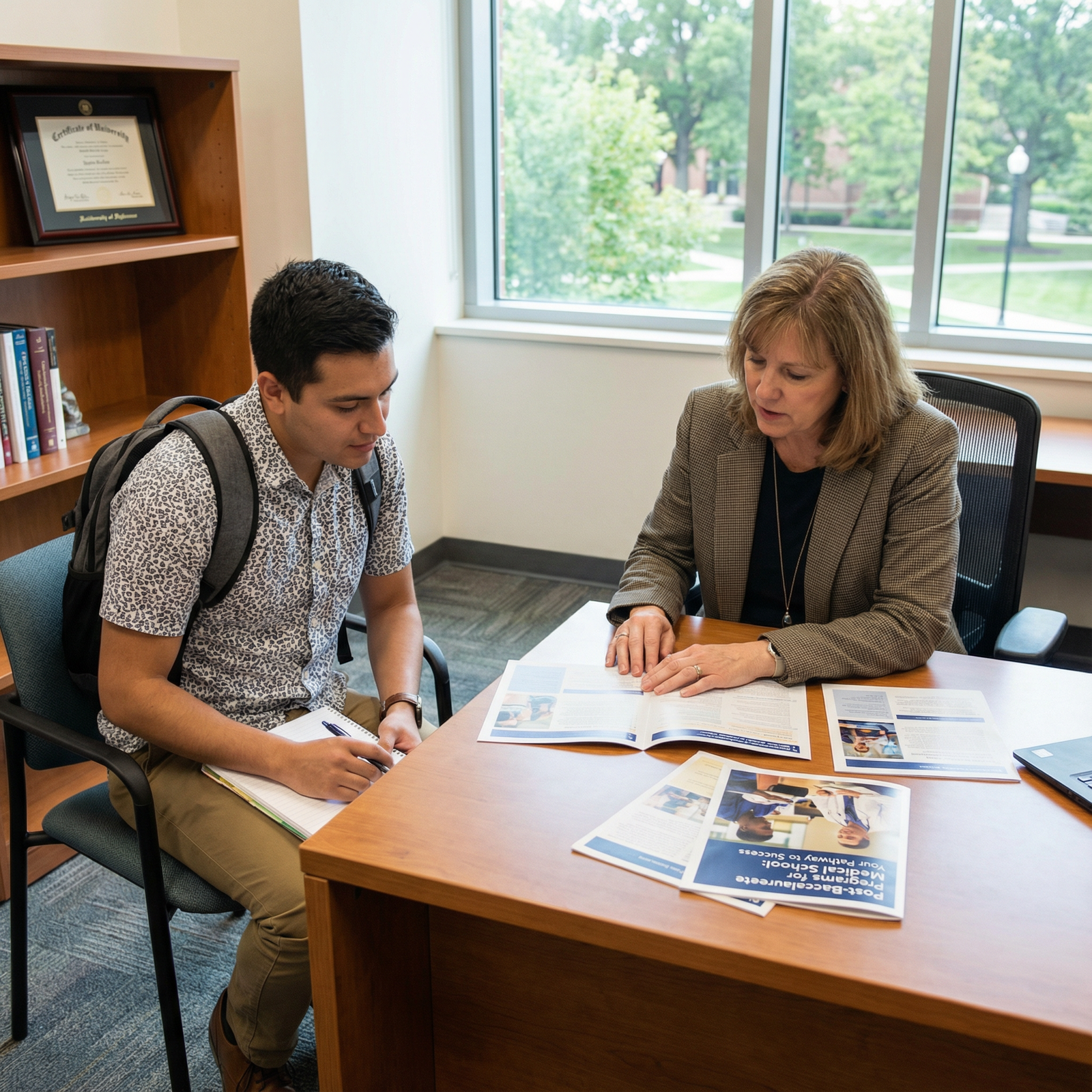
5. Personalized Advising and Strategy for Medical School Applications
Many post-bacc programs include specialized advising tailored to premedical students. This can make a major difference in how strategically you approach your application cycle.
What Advising Usually Covers
- Course selection to meet prerequisite and recommended coursework for MD and DO schools
- Medical school list building, focusing on mission fit, GPA/MCAT ranges, and geography
- Timeline planning: When to take the MCAT, when to apply, and whether to consider a glide year
- Application coaching: Personal statement review, activity descriptions, secondary essay strategy
- Interview preparation: Mock interviews, feedback on communication skills and professionalism
Good advising can prevent costly errors such as:
- Applying too early with incomplete preparation
- Choosing schools that are not realistically within your academic range
- Neglecting DO schools or linkage opportunities that might significantly expand your options
Pro tip:
Come to advising sessions prepared—with questions, updated transcripts, and a draft of your multi-year plan. The more specific you are, the more strategic your advisor can be.
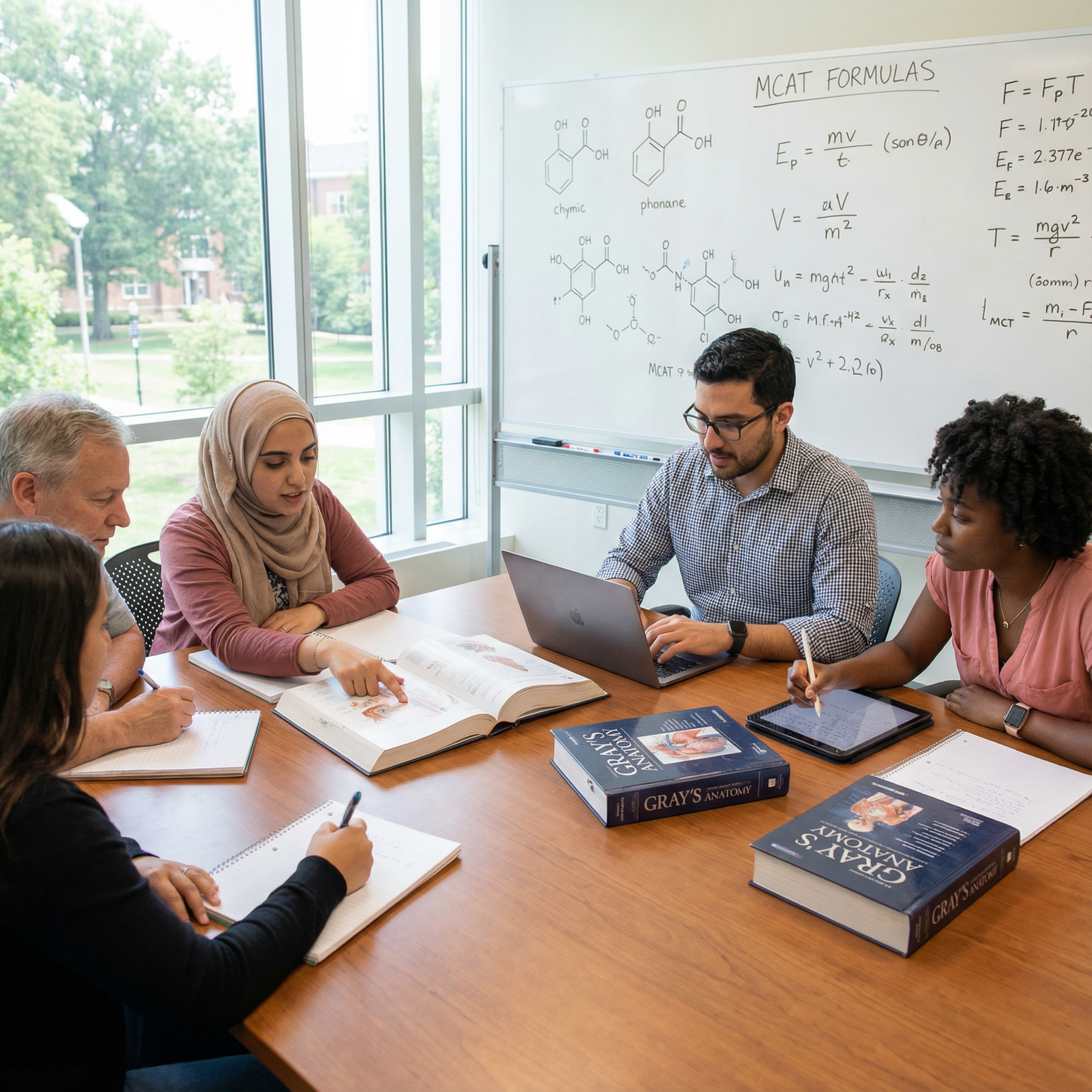
6. Integrated and Effective MCAT Preparation
The MCAT is a major gatekeeper for U.S. and Canadian medical schools. Many post-bacc programs incorporate MCAT preparation directly into the curriculum, which can be invaluable for busy students.
Ways Post-Bacc Programs Support MCAT Preparation
- Required or optional MCAT prep courses taught by experienced instructors
- Built-in study schedules aligned with your course load
- Access to practice exams, question banks, and review sessions
- Content review integrated with your coursework (e.g., linking biochemistry lectures to MCAT passage styles)
Example in practice:
A student plans to take the MCAT in April of their second post-bacc year. Their program schedules a formal MCAT course starting in January with weekly full-lengths in March. Because they have already taken rigorous courses in Biochemistry, Psychology, and Sociology, the prep course can focus more on test strategy and integration rather than relearning content from scratch.
Actionable MCAT preparation advice in a post-bacc:
- Start content review 6–9 months before your test date, even if lightly.
- Use your post-bacc coursework to deepen understanding rather than memorizing just for exams.
- Reserve the last 8–12 weeks before the MCAT for intensive practice exams and review.
- Discuss MCAT timing with your advisor to ensure you test when you’re truly ready—not just “on schedule.”
7. Improved Odds of Admission and Linkage Opportunities
While no program can guarantee admission, data and experience suggest that students who complete structured post-baccalaureate programs often have higher medical school acceptance rates than comparable applicants who do not.
Several reasons explain this:
- Stronger recent academic performance
- Better MCAT preparation and timing
- More robust clinical, research, and volunteer experiences
- Professionalized application materials and strategy
Linkages and Formal Partnerships
Some post-baccs offer linkage programs with specific medical schools, which may provide:
- Conditional acceptance or guaranteed interview if you meet defined GPA and MCAT thresholds
- Waived glide year (you transition directly into medical school after finishing the post-bacc)
- Clear expectations about what performance level you need for serious consideration
However, these programs are often highly structured and demanding—minimal flexibility, strict grade requirements, and defined timelines.
Key reminder:
Even without a formal linkage, completing a reputable post-bacc program—especially at a university with its own MD/DO school—can improve your visibility and credibility with that institution’s admissions committee.
Real-World Challenges and How to Navigate Them
Post-Baccalaureate Programs offer substantial benefits, but they also require realistic planning. Understanding the challenges helps you make an informed decision.
1. Financial Cost and Limited Aid
Many post-baccs are not covered by traditional undergraduate financial aid. Costs can include:
- Tuition and fees (often per-credit and higher than standard undergraduate rates)
- Living expenses, especially if you relocate
- MCAT preparation resources
- Application fees for medical schools
Strategies to manage cost:
- Compare tuition across universities, including local state options and extension programs.
- Ask specifically about federal loan eligibility, scholarships, and work-study roles.
- Consider less expensive but reputable programs if finances are a major constraint.
- Plan a realistic budget that includes exam and application-related costs.
2. Academic Intensity and Time Management
The workload in post-bacc programs can rival that of the first year of medical school. Balancing heavy science coursework with clinical exposure and MCAT preparation is demanding.
Mitigation strategies:
- Before starting, reflect honestly on your past study habits. What worked? What didn’t?
- Use the initial weeks to establish a weekly schedule with fixed study blocks.
- Limit outside work hours if possible—many students find it difficult to work full-time and succeed in a rigorous full-time post-bacc.
- Seek help early (office hours, tutoring, study groups) if you begin to struggle.
3. Time Commitment and Delayed Entry into Medical School
Most Post-Baccalaureate Programs add 1–2 years before you can even apply, plus an additional “glide year” in some cases between application and matriculation.
However, for many future physicians, this investment is essential:
- Without strengthening your academic record or test scores, you might face repeated rejections or limited options.
- A well-designed post-bacc year can actually save time by making your first application cycle more effective.
Perspective:
Physicians practice for decades. Taking an extra one to three years to prepare properly is often a wise long-term investment in both career satisfaction and training options.

Choosing the Right Post-Baccalaureate Program
With dozens of options—from formal university programs to informal course collections—you need a framework to decide what fits your situation.
Key Factors to Consider
Your Primary Goal
- Career change (need basic prerequisites)?
- Academic enhancement (need stronger science record)?
- MCAT preparation and structured application guidance?
- Research experience?
Linkage or No Linkage
- Are you interested in a tight linkage track that may get you directly into a specific school?
- Or would you prefer flexibility to apply broadly?
Program Reputation and Outcomes
- What percentage of graduates are accepted to MD/DO programs?
- Which schools do they typically attend?
- Are there advisors dedicated specifically to premedical students?
Curriculum and Support Services
- Are the courses appropriately rigorous and relevant?
- Is there built-in MCAT preparation?
- What kind of advising and mentoring is available?
Location and Lifestyle Fit
- Can you live affordably near the campus?
- Are there nearby hospitals and clinics for volunteering and shadowing?
Financial Feasibility
- Total estimated cost (tuition + living + application expenses)?
- Access to loans, scholarships, or assistantships?
Action step:
Create a comparison spreadsheet listing 5–10 programs of interest, including costs, duration, goals served, linkage options, and outcome statistics. This will make the decision more objective and aligned with your circumstances.
FAQs About Post-Baccalaureate Programs for Aspiring Physicians
Q1: How do I know if I truly need a post-baccalaureate program for medical school preparation?
A: You should seriously consider a post-bacc if any of the following apply:
- You lack essential prereq courses (e.g., Biology, Chemistry, Physics, Organic Chemistry, Biochemistry).
- Your overall or science GPA is below ~3.3–3.4 and does not show a strong recent upward trend.
- You have limited or no clinical exposure and need structured opportunities.
- You are changing careers into medicine and need guidance on the full preparation process.
An experienced prehealth advisor (at your college or through a reputable post-bacc) can help assess your readiness for direct application vs. the value of a structured post-bacc.
Q2: Is it better to do a formal post-bacc program or just take individual classes as a non-degree student?
A: It depends on your needs and resources:
- Formal post-bacc programs offer structured advising, cohorts, MCAT prep, and often better access to clinical experiences and letters. They’re ideal if you need comprehensive support.
- Informal/non-degree coursework at a local college may be more affordable and flexible, especially for students working full-time. However, you’ll need to self-direct your advising, MCAT planning, and experience building.
Admissions committees accept both paths; what matters is the quality of grades, rigor of coursework, and the story you can tell about your preparation.
Q3: Can I work while enrolled in a post-baccalaureate program?
A: Many students do work part-time, but it depends on program intensity and your own capacity:
- Full-time, rigorous post-bacc programs often discourage full-time employment due to the workload.
- If finances require work, look for programs that explicitly allow part-time enrollment or have evening/weekend classes.
- Be realistic: your top priority is strong academic performance. It’s better to reduce your course load slightly than to overload with work and school and end up with mediocre grades.
Q4: Does completing a post-bacc program guarantee medical school admission?
A: No program can guarantee admission. However, a well-chosen and successfully completed post-bacc significantly improves your competitiveness—especially if you:
- Earn strong grades in rigorous science coursework
- Achieve a competitive MCAT score
- Gain meaningful clinical and volunteer experiences
- Use advising resources to submit a polished and well-timed application
Some programs with linkage agreements may offer conditional acceptances, but even then, you must meet strict academic and testing thresholds.
Q5: How long do post-baccalaureate programs typically last, and when should I apply?
A: Most structured post-bacc programs last 12–24 months, depending on whether you’re doing full prerequisites or primarily academic enhancement. Many operate on an academic year schedule and admit new cohorts for the fall, with some offering spring or rolling admissions.
You should aim to apply:
- 9–12 months before you plan to start, especially for competitive programs
- With an updated transcript, a clear statement of purpose, and, when required, letters of recommendation
Planning ahead ensures you can align your post-bacc timeline with your target medical school application year and MCAT timeline.
Post-Baccalaureate Programs can be a powerful turning point for future physicians. By carefully evaluating your academic history, goals, and resources—and by choosing a program that aligns with those needs—you can transform your candidacy, build confidence, and take a more strategic, prepared step toward medical school and a career in medicine.