The Secret Weapon for Aspiring Doctors: Why Post-Baccalaureate Programs Matter
Introduction: When the Traditional Premed Path Isn’t Your Path
Becoming a physician is rarely a straight line. Many aspiring doctors reach graduation or early career life and realize something isn’t lining up: a low GPA, missing prerequisites, an unsatisfying job, or a late-blooming passion for medicine. The dream is there—but the traditional premed pathway is behind you.
This is exactly where Post-Baccalaureate Programs come in.
Post-Baccalaureate (Post-Bacc) Programs are structured opportunities for students who already hold a bachelor’s degree but need additional medical school preparation—whether that means completing prerequisites, repairing an academic record, preparing for the MCAT, or pivoting from a completely different career.
For aspiring doctors, especially non-traditional applicants and career changers, a well-chosen Post-Bacc can be a powerful “second chance” and a strategic secret weapon that transforms a borderline application into a compelling one.
In this guide, we’ll break down what Post-Bacc programs are, who they’re for, how they differ, and how to choose one that fits your goals and your story. You’ll find specific, actionable advice, realistic examples, and key factors to consider before committing time and money to this important step.
What Is a Post-Baccalaureate Program?
At its core, a Post-Baccalaureate Program is any structured academic path you pursue after earning a bachelor’s degree to become better prepared and more competitive for medical school admission.
These programs exist at universities, colleges, and medical schools across the U.S., and they can vary tremendously in structure, intensity, and purpose. However, most Post-Bacc programs serve four major functions in medical school preparation:
1. Strengthening Academic Performance
If your undergraduate GPA isn’t competitive for medical school—or your science grades are weak—an academic-focused Post-Bacc allows you to:
- Retake or take additional science courses (biology, general chemistry, organic chemistry, physics, biochemistry)
- Demonstrate an upward trend in academic performance
- Show you can handle a rigorous, science-heavy course load similar to medical school
Doing well in a Post-Bacc (often aiming for a 3.7+ GPA in your new coursework) can significantly change how admissions committees interpret a weaker undergraduate record.
2. Supporting Career Changers
Many aspiring doctors discover medicine after majoring in something unrelated (e.g., English, business, art, engineering) or after working in another field for years. These students often:
- Lack core science prerequisites
- Have little to no clinical exposure
- Need structured guidance and advising
Career changer Post-Bacc programs are built specifically for this group. They usually start from the ground up with foundational premed coursework and exposure to clinical and research environments.
3. Integrated MCAT Preparation
The MCAT is a major gatekeeper for medical school admissions. Many Post-Bacc programs include:
- Built-in MCAT preparation courses
- Structured study schedules
- Access to practice exams and question banks
- Faculty or advisor support specifically targeting MCAT strategy
Because your Post-Bacc coursework closely mirrors MCAT content (especially biology, biochemistry, chemistry, and physics), the program’s structure can naturally support systematic MCAT preparation.
4. Professional Development and Networking
Beyond academics and test prep, strong Post-Bacc programs provide:
- Advising on school selection, timelines, and application strategy
- Letters of recommendation from faculty who know you well
- Shadowing, clinical volunteering, or scribing opportunities
- Connections to local hospitals, clinics, and sometimes medical schools directly
This “hidden curriculum” of mentoring, networking, and professional exposure can be just as critical as grades in shaping a successful application.
Types of Post-Baccalaureate Programs: Which Path Fits You?
Not all Post-Baccs are created equal. Understanding the main types will help you match your needs and background to the appropriate program.
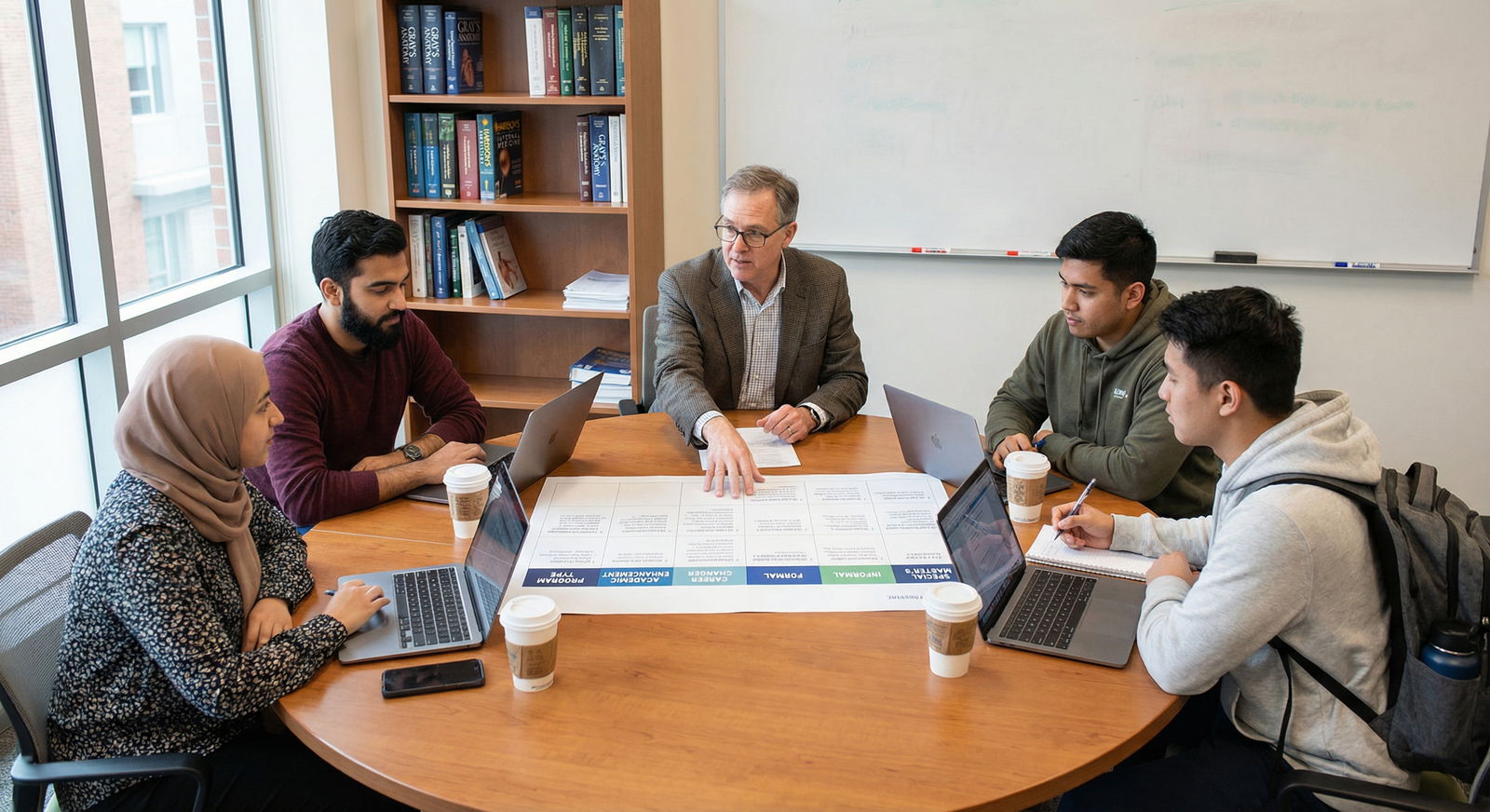
1. Academic Enhancement Programs
Who they’re for:
Students who completed premed prerequisites but have:
- A lower overall GPA or science GPA
- Inconsistent academic performance
- A non-competitive transcript for medical school
Core features:
- Upper-division or advanced sciences (e.g., physiology, immunology, microbiology, anatomy, advanced biochemistry)
- Sometimes graduate-level coursework alongside or within medical schools
- Emphasis on demonstrating academic improvement and readiness
These programs communicate to admissions committees that you:
- Can handle intense, medical-school–like workloads
- Have matured academically
- Are serious enough about medicine to invest the time and resources to improve
2. Career Changer Post-Bacc Programs
Who they’re for:
- Non-science majors (e.g., philosophy, history, business, music)
- Professionals transitioning from industries like finance, teaching, IT, or the arts
- Students who never took core premed sciences
Core features:
- Traditional premed sequence: general biology, general chemistry, organic chemistry, physics, and often biochemistry
- Structured progression (e.g., 12–24 months)
- Heavy academic and career advising tailored to career change applicants
- Often include shadowing and clinical exposure to confirm your interest in medicine
These programs are built around the idea that medicine can be a second (or third) career and provide the scaffolding to pivot successfully.
3. Formal vs. Informal Post-Bacc Programs
Formal Post-Baccalaureate Programs
Formal Post-Bacc Programs are structured, institution-sponsored programs with:
- A defined curriculum
- A dedicated advising team
- Cohort-based learning (you enter and often move through the program with a group)
- Often special arrangements with affiliated medical schools, sometimes including:
- Linkage agreements (direct application to partner med schools with reduced gap time)
- Guaranteed interviews for top-performing students
These are often more expensive but offer strong support systems, name recognition, and streamlined advising.
Informal Post-Bacc Programs
Informal Post-Baccs are more flexible. They typically involve:
- Enrolling as a non-degree or second-degree student at a university or community college
- Building your own course schedule based on your needs
- Often less institutional advising and structure
This route can be:
- More affordable
- Highly flexible (ideal if you’re working or have family obligations)
- Best suited for self-directed, highly organized students comfortable managing their own medical school preparation plan
4. Special Master’s Programs (SMPs) – A Brief Note
While not always classified strictly as “Post-Bacc,” Special Master’s Programs are graduate-level programs designed for students who:
- Have completed prerequisites
- Have significantly weaker GPAs or academic histories, and
- Want to demonstrate success in medical-school–level coursework
Some SMPs are directly affiliated with medical schools and allow you to take classes alongside first-year medical students. These are higher-stakes, higher-cost options and should be considered carefully with advising.
Why Post-Baccalaureate Programs Matter for Aspiring Doctors
Post-Bacc programs are not just “extra classes.” For many aspiring doctors, they are the turning point of their application story.
1. Improving Academic Credentials and GPA
In a competitive admissions landscape, your academic record sends a strong signal. A Post-Bacc allows you to:
- Create a clear upward trend after a rocky start
- Replace older, weaker grades with more current, stronger performance (even though original grades still count, committees weigh recent trends heavily)
- Build a robust academic narrative: “I struggled early, but I changed my study strategies, sought help, and can now succeed in rigorous science courses.”
Actionable advice:
- Aim for A-level performance in your Post-Bacc science courses.
- Limit course withdrawals or repeats unless absolutely necessary.
- Be ready to explain what changed: study habits, time management, health, or personal circumstances.
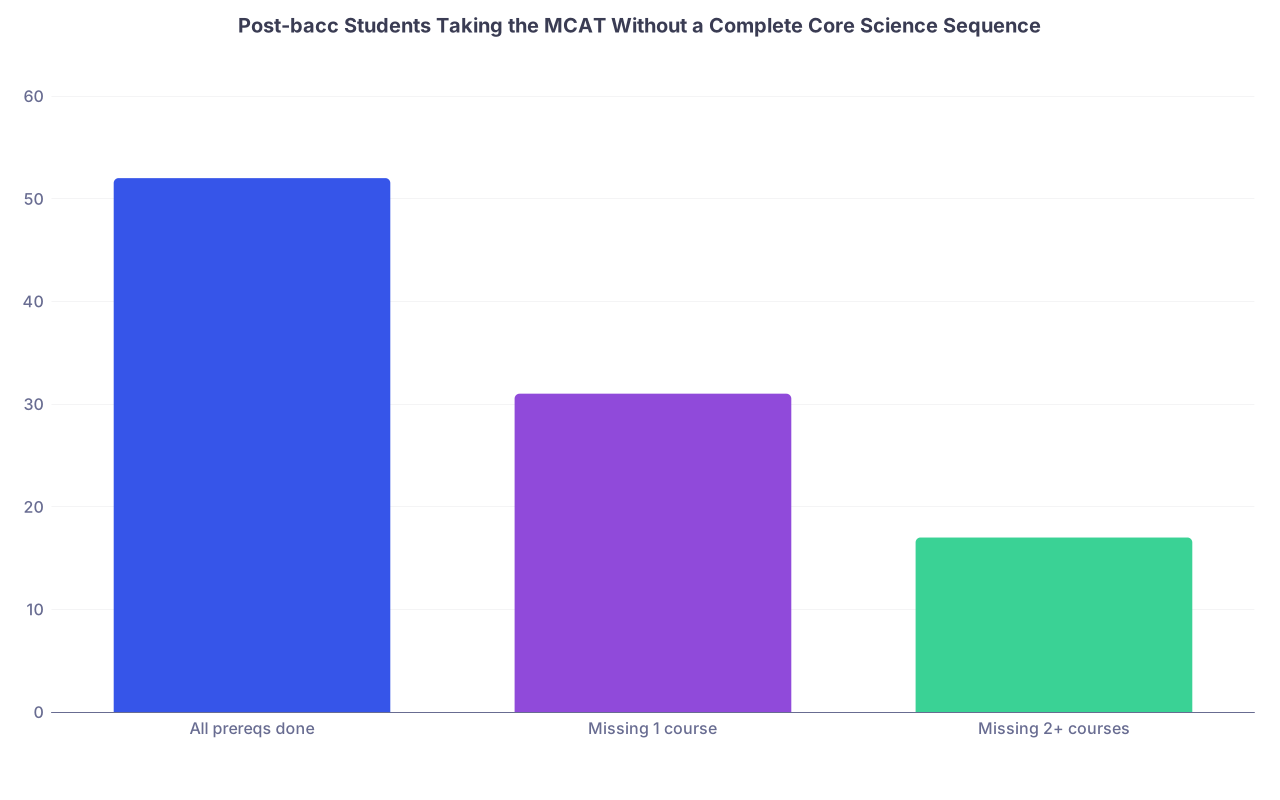
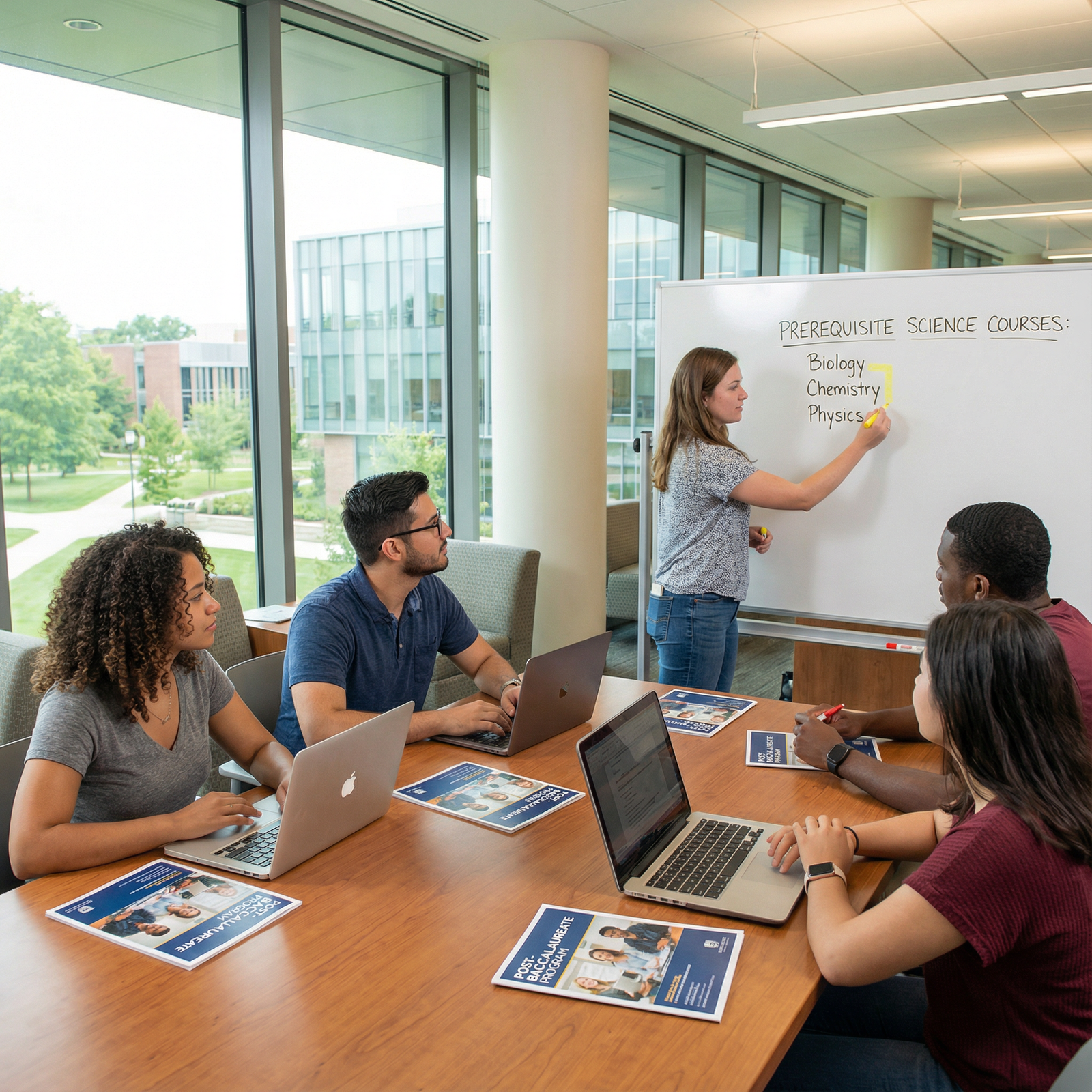
2. Completing or Repairing Prerequisite Requirements
Medical schools typically require (with some variation):
- 1 year of Biology with lab
- 1 year of General Chemistry with lab
- 1 year of Organic Chemistry with lab (some schools now accept biochemistry in place of part of this)
- 1 year of Physics with lab
- Courses in Biochemistry, Psychology, Sociology, Statistics/Math, and English/Composition
If your undergraduate degree didn’t include these—or included them but with low grades—a Post-Bacc is the most straightforward way to:
- Complete missing prerequisites in a coordinated fashion
- Retake critical courses where your performance doesn’t reflect your current capabilities
- Learn this content in a way that aligns well with MCAT preparation
3. Gaining Clinical Experience and Confirming Your Commitment
Medical schools expect applicants to understand, at least at a basic level, what life in healthcare looks like. Many Post-Bacc programs embed or strongly encourage:
- Shadowing primary care physicians and specialists
- Volunteering at hospitals, free clinics, or hospices
- Paid work as medical scribes, EMTs, CNAs, or medical assistants
- Community health outreach or public health projects
These experiences help you:
- Confirm whether medicine truly fits your values and interests
- Develop meaningful stories and reflections for your personal statement and interviews
- Build early professional habits and communication skills valued in healthcare
4. Structured MCAT Preparation Integrated with Coursework
Because Post-Baccs are designed around premed sciences, they naturally:
- Reinforce MCAT content domains in a logical order
- Provide a schedule around which you can time your MCAT preparation
- Offer peer support—study groups, accountability partners, and sometimes formal MCAT prep workshops
Practical strategy:
- Plan to take the MCAT near the end or shortly after completing your core science coursework.
- Use your Post-Bacc syllabi as a backbone for your MCAT study plan.
- Ask advisors how previous cohorts have timed the MCAT relative to the program.
5. Building a Professional Network and Support System
Strong Post-Bacc programs connect you with:
- Dedicated pre-health advisors who understand current trends in admissions
- Faculty who can write detailed, supportive letters of recommendation
- Peers who are also navigating career change or GPA repair
These networks can yield:
- Research opportunities
- Insight into specific medical schools and programs
- Emotional and academic support during a demanding period
How to Choose the Right Post-Baccalaureate Program
Choosing a Post-Bacc is a strategic decision that should align with your academic history, financial situation, learning style, and long-term goals.
1. Clarify Your Primary Goal
Ask yourself:
- Am I mainly trying to raise my GPA and show academic improvement?
- Am I a career changer starting prerequisites from scratch?
- Do I need integrated MCAT preparation and strong advising?
- Am I seeking a structured environment, or do I prefer flexible, self-paced learning?
Your main goal will often dictate whether you should pursue:
- An academic enhancement vs career changer program
- A formal vs informal Post-Bacc
- An undergraduate-level Post-Bacc vs a more intense Special Master’s Program
2. Research Program Outcomes and Reputation
When comparing options, investigate:
- Medical school acceptance rates for program graduates
- Where alumni are accepted (MD vs DO programs, location, competitiveness)
- Student reviews and word-of-mouth from forums, advising offices, or social media
- Whether there are linkage programs or preferential considerations with specific medical schools
Reach out to admissions or advising offices and ask:
- “What percentage of your Post-Bacc students apply to medical school?”
- “What percentage ultimately matriculate?”
- “Do you track outcomes for non-traditional or career-change students?”
3. Consider Learning Style and Program Structure
Think honestly about how you learn best:
Do you need tight structure, cohort support, and frequent advisor check-ins?
→ A formal Post-Bacc may suit you.Are you independent, working full-time, or balancing family responsibilities?
→ An informal Post-Bacc or online/hybrid program may be a better fit.
Look at:
- Class sizes and access to professors
- Availability of tutoring, office hours, and advising
- Whether courses are daytime, evening, or online
4. Evaluate Location and Clinical Access
Program location can influence:
- Availability of hospitals, clinics, and research centers
- Types of patient populations you’ll encounter
- Cost of living and commute times
Programs in large urban centers often provide:
- More diverse clinical opportunities
- More networking with medical schools and teaching hospitals
However, smaller or less urban programs can offer:
- Closer relationships with faculty
- A more intimate learning environment
5. Analyze the Financial Investment
Post-Baccs can be expensive—often without the same level of financial aid as undergraduate degrees.
Consider:
- Tuition and fees (per credit vs flat rate)
- Cost of living (housing, transportation, food)
- Availability of:
- Federal or private loans
- Institutional scholarships
- Part-time job options compatible with the course load
Treat this as an investment:
- Calculate how many semesters you truly need.
- Avoid unnecessary coursework that adds cost without strengthening your application.
- Plan ahead for the cost of the MCAT, application fees, and interview travel or virtual interview costs.
6. Talk to Current Students and Alumni
Nothing replaces hearing from people who have already walked the path. Ask them:
- “What surprised you about this program?”
- “How supportive were the advisors and faculty?”
- “Did you feel prepared for the MCAT and application process?”
- “If you could do it again, would you choose this program?”
Their insights can help you distinguish marketing language from lived reality.
Real-World Stories: How Post-Bacc Programs Change Trajectories
Jamie – From Sociology Major to Future Pediatrician
Jamie graduated with a degree in sociology, working in community outreach. Over time, she realized the moments that energized her the most were those interacting with healthcare providers and underserved patients. She decided on a career change but had almost no science background.
She enrolled in a career changer Post-Bacc at a university with strong ties to a local medical school:
- Completed general chemistry, biology, organic chemistry, and physics over two years
- Volunteered weekly at a free pediatric clinic
- Participated in a structured MCAT preparation course tied to the program
- Built strong relationships with faculty who later wrote recommendations
Jamie scored well on the MCAT, had a compelling narrative of service plus career change, and ultimately gained admission to a respected MD program, where she is now pursuing pediatrics.
Brian – Overcoming a Rocky Academic Start
Brian started college as a biology major but struggled with time management and motivation, resulting in a low science GPA. After a few years working as a lab tech, he realized he still wanted to become a physician but worried his transcript made that unrealistic.
He chose an academic enhancement Post-Bacc offering upper-level science courses:
- Took advanced physiology, microbiology, and biochemistry
- Met regularly with learning specialists to improve his study methods
- Earned mostly A’s, demonstrating a clear academic turnaround
- Shadowed internists and hospitalists to deepen his clinical understanding
His Post-Bacc GPA, combined with a well-structured explanation of his early struggles and later growth, helped him gain acceptance to a DO program, where he continues to excel.
Conclusion: Is a Post-Bacc the Secret Weapon You Need?
For many aspiring doctors, especially non-traditional applicants, Post-Baccalaureate Programs offer:
- A way to rewrite an academic story
- A structured entry point for a career change into medicine
- Focused MCAT preparation integrated with core science learning
- Essential clinical exposure, mentorship, and professional connections
They are not magic shortcuts—there are no guarantees of admission to medical school. But used strategically, a Post-Bacc can transform you from a doubtful candidate into a credible, competitive, and confident applicant.
If you’re standing at the crossroads—unsure whether your GPA, major, or age disqualifies you from medicine—know that many physicians have stood exactly where you are now. The right Post-Bacc program may not only reopen the door to medical school, it may help you walk through it with more maturity, clarity, and purpose than if you had taken the “straight” route.
Your journey doesn’t have to look like everyone else’s. Medicine needs people who bring different life experiences, skills, and perspectives—and Post-Bacc programs exist to help you get there.
Frequently Asked Questions About Post-Baccalaureate Programs
1. How long do most Post-Baccalaureate Programs take to complete?
Most Post-Baccalaureate Programs last 12 to 24 months, depending on:
- Whether you’re doing a full-time or part-time schedule
- If you’re a career changer starting prerequisites from scratch (often closer to 2 years)
- Whether you’re primarily doing academic enhancement with upper-level sciences (sometimes 1 year is sufficient)
If you plan to work while in a Post-Bacc, expect your timeline to be on the longer side to avoid sacrificing performance.
2. Are Post-Bacc Programs only for students with low GPAs?
No. While many students use Post-Bacc Programs to repair or strengthen a weaker academic record, they are equally important for:
- Career changers who lack science coursework
- Students who completed some science but still need more structured medical school preparation
- Applicants who want built-in MCAT preparation, advising, and networking opportunities
Even students with solid GPAs may pursue a Post-Bacc to add clinical exposure, advanced science, or to pivot from another field.
3. Are there online or hybrid Post-Bacc options for working professionals?
Yes. A growing number of institutions offer online or hybrid Post-Baccalaureate Programs. These can be especially useful if:
- You’re working full-time
- You have family responsibilities
- You live far from a major university
However, keep in mind:
- Some medical schools prefer or require in-person lab coursework, especially for core sciences.
- You’ll still need in-person clinical experience, shadowing, or volunteering to build a competitive application.
Always check the policies of the medical schools you’re targeting regarding online coursework.
4. How competitive is admission to Post-Baccalaureate Programs?
Competitiveness varies widely:
- Some formal Post-Baccs at prestigious universities or with strong linkage agreements can be selective, requiring solid GPAs, strong essays, and sometimes interviews.
- Other programs, particularly informal or open-enrollment options, may have more flexible admission criteria.
Applications usually include:
- Official transcripts
- Letters of recommendation
- A personal statement explaining your motivation and goals
- Occasionally standardized test scores and an interview
Treat the application seriously; admissions committees want to see clear intent and readiness for the rigor ahead.
5. Does completing a Post-Bacc guarantee admission to medical school?
No. No Post-Baccalaureate Program can guarantee admission to medical school. Acceptance depends on multiple factors, including:
- Undergraduate and Post-Bacc GPA (and trends)
- MCAT score
- Quality of personal statement and secondary essays
- Strength of letters of recommendation
- Clinical experience, service, and extracurriculars
- Interview performance and overall fit
However, a well-executed Post-Bacc can dramatically improve your competitiveness, especially if you:
- Excel academically
- Use the time to gain meaningful clinical and service experiences
- Work closely with advisors to craft a thoughtful, well-timed application
If you’re considering a Post-Bacc as your next step, reflect honestly on your academic history, your motivations, and your long-term goals. Then choose the program that best supports the physician you’re working to become.