
Only 27% of incoming medical students can correctly interpret a basic p‑value when shown a clinical trial abstract.
That one number explains why your choice of statistics and data science courses as a premed is not a trivial checkbox. It is one of the few levers that directly affects your future clinical reasoning, your ability to read research, and your credibility on rounds.
Let me break this down specifically: “Stats requirement” on a premed checklist is misleading. What actually matters is which courses you choose, how deeply you engage, and how deliberately you link them to clinical work.
Why Statistics Matters Far More Clinically Than Most Premeds Realize
Most premeds assume:
- “Stats is for researchers, not clinicians.”
- “I only need enough to get through Step-style questions.”
- “Med school will reteach all of this.”
All three are wrong in important ways.
In real clinical practice, you will:
- Decide whether a new screening test is worth using based on sensitivity, specificity, likelihood ratios, and predictive values.
- Judge if an RCT in NEJM should change your prescribing habits tomorrow.
- Explain risk reduction to a patient in language that is numerate yet understandable.
When internal medicine residents are tested on basic evidence interpretation (odds ratio meaning, confidence interval crossing 1, etc.), failure rates in some programs exceed 40%. Those gaps start in the premed years, where statistics is often treated as a hurdle rather than a foundational language.
So the question is not “Do I take a stats course?”
The questions are:
- Which statistics and data science courses build skills that translate to the wards?
- How do I use those courses to position myself for research, stronger applications, and better clinical reasoning?
Core Statistical Concepts That Directly Map To Clinical Decisions
You do not need to become a mathematician. You do need to become functionally bilingual in “data to decision.”
When choosing or approaching courses, prioritize those that build the following clinically relevant concepts.
1. Descriptive Statistics: The Clinical Baseline
Clinically relevant pieces:
- Mean/median/mode: Understanding skewed data, such as income distribution or lab values.
- Standard deviation and variance: Interpreting “normal ranges”.
- Percentiles: Growth charts, pediatric head circumference, weight-for-age.
Example:
A 6‑year‑old boy is at the 5th percentile for weight but 50th for height. You must understand what percentiles really mean to explain this to parents, and to assess whether it is a red flag or constitutional thinness.
Courses that help:
- Introductory statistics
- “Statistics for the Life Sciences” type courses
Focus while taking them:
- Connect every new concept to a health, physiology, or public health example.
- When you learn about histograms and boxplots, ask: “How would this help me see outliers in lab results?”
2. Probability: Risk, Screening, and Uncertainty
Clinicians live in the land of conditional probability, often poorly.
Key ideas to master:
- Conditional probability (P(A|B)): “Given a positive test, what is the chance the patient has the disease?”
- Bayes’ theorem: Pretest probability → Posttest probability.
- Independent vs dependent events: Understanding repeated tests, serial vs parallel testing.
Clinical translation:
- Screening tests: Mammography, PSA, HIV screening.
- “False positive” and “false negative” conversations with patients.
- Deciding when to repeat a test in low vs high pretest probability scenarios.
Example board-style scenario:
A test has 95% sensitivity, 90% specificity. Disease prevalence is 1%. A patient tests positive. What is the chance they truly have the disease?
Students who have been through even one well-taught probability module with explicit clinical tie-ins will not panic when they see this—they will see Bayes’ theorem, not a math trick.
Good course signals:
- Any stats course with explicit “conditional probability,” “Bayesian reasoning,” or “diagnostic testing” modules.
- Courses using examples from biology, psychology, or epidemiology rather than gambling or cards exclusively.
3. Inference: P‑Values, Confidence Intervals, and Clinical Meaning
This is where most premeds get shaky, and where physicians get themselves into trouble reading literature.
Foundational clinical skills:
- Hypothesis testing: Null vs alternative hypotheses.
- P‑value: Probability of observing data as extreme as what you saw, assuming the null is true (not “probability the hypothesis is true”).
- Type I and II errors: False positives and false negatives in trials.
- Confidence intervals (CI): Range of plausible values for the effect size.
Example:
A trial of a new antihypertensive reports:
- Mean BP reduction: 4 mmHg vs control.
- p = 0.04
- 95% CI: 0.3 to 7.7 mmHg.
A clinically literate physician will ask:
- Is a mean reduction of 4 mmHg clinically meaningful?
- Does the CI include very small benefits near 0?
- How does this compare to existing therapies?
A student who has only memorized “p < 0.05 is significant” will misinterpret this trial.
When evaluating courses:
- Look for explicit coverage of “confidence intervals” and “effect sizes”.
- Avoid courses that only emphasize circumstantial “reject/accept the null” checkbox thinking.
4. Regression and Correlation: From Association to Prediction
You will read regression results regularly as a clinician, especially in high-impact journals.
You want exposure to:
- Correlation vs causation (very explicitly).
- Linear regression: Adjusting for covariates, understanding regression coefficients.
- Logistic regression: Odds ratios, risk factors, case–control studies.
- Basic model diagnostics (even at a conceptual level): Overfitting, multicollinearity.
Clinical scenarios:
- Is smoking an independent risk factor for disease X after adjusting for age and BMI?
- Does a new risk score (using several variables) better predict stroke compared with an older one?
Example:
A paper on MI risk reports: “Adjusted odds ratio for current smokers: 1.8 (95% CI 1.2–2.6).”
Your job is to decode:
- There is an 80% higher odds of MI in current smokers, after adjustment.
- The CI does not cross 1, so this is “statistically significant”.
- But more important—how big and clinically meaningful is that 80% increase?
Courses to seek:
- Biostatistics
- “Applied regression” with health or social science data
- Data science courses that explicitly teach model interpretation, not just model fitting
5. Diagnostic Test Interpretation: The Most Direct Clinical Link
If there is one stats-related topic every future clinician should master, it is diagnostic test performance.
Key metrics:
- Sensitivity and specificity
- Positive predictive value (PPV)
- Negative predictive value (NPV)
- Likelihood ratios (LR+ and LR–)
- ROC curves and AUC (even conceptually)
Example:
You are evaluating D‑dimer tests in low vs high pretest probability patients. A strong statistical foundation helps you avoid:
- Overordering tests that generate false positives and unnecessary CT scans.
- Over-reassuring patients with “negative” results when pretest probability was high.
When reviewing syllabi:
- Look for “ROC curves,” “diagnostic accuracy,” “screening tests,” “predictive values”.
- Prioritize health science oriented statistics courses which often emphasize these.

Which Statistics and Data Science Courses Should Premeds Actually Take?
The mistake many premeds make is going either too shallow (“easy stats to get the A”) or too abstract (“measure-theoretic probability with no applied examples”). The sweet spot is applied, moderately rigorous, and clinically translatable.
Tier 1: Core Courses Every Future Clinician Benefits From
Introductory Biostatistics or “Statistics for the Life Sciences”
Ideal course characteristics:
- Uses real biological, public health, or clinical data.
- Covers descriptive stats, probability basics, hypothesis testing, CIs, simple regression.
- Includes interpretation of journal article excerpts.
Course examples:
- “Biostatistics for Health Sciences” (typical at state universities).
- Harvard Extension: STAT E-104 “Intro to Quantitative Methods for Economics and Social Sciences” with a strong applied flavor.
Pay attention to:
- Labs or homework that require you to interpret results in words, not just compute p‑values.
- Exams with short‑answer interpretation questions, not just plug-and-chug.
Epidemiology (Introductory)
This is not always marketed as a “stats” course, but it is the most clinically flavored quantitative course you can take.
You will learn:
- Study designs: RCTs, cohort, case–control, cross-sectional.
- Measures of association: risk ratios, odds ratios, hazard ratios.
- Confounding, bias, effect modification.
- Screening test evaluation.
Why this matters:
Every RCT or guideline you encounter as a physician is built on these concepts. You will not be guessing how strong a study is; you will have a framework to classify it.Good signs:
- Required reading of real journal articles.
- Assignments asking whether a study should change clinical practice.
Tier 2: Data Science Courses That Pay Off Clinically and Academically
Here is where many premeds underestimate what is possible. A careful selection of one or two data science or computing courses can reshape both your application and your future work.
Introductory Programming with Data (Python or R)
Goals:
- Become comfortable importing, cleaning, and summarizing datasets.
- Practice generating basic plots and summary statistics programmatically.
- Understand real-world data “messiness” that is hidden in textbook problems.
How this translates to medicine:
- You become the student or resident who can pull, clean, and analyze data for a quality improvement project instead of waiting for a biostatistician for every step.
- You are more credible when talking about “real-world evidence,” registry data, or EHR‑derived metrics.
Course labels to look for:
- “Data Science 101”
- “Computing for Data Science”
- “Introduction to R for Biologists”
- “Python for Data Analysis”
Applied Data Science / Machine Learning (with emphasis on interpretation)
This is where you must be careful. Many ML courses lean toward algorithmic detail without focusing on interpretation. As a future clinician, you want the opposite balance.
Look for coverage of:
- Train/test splits, cross-validation.
- Overfitting vs generalization.
- Logistic regression as a classifier.
- Decision trees, random forests as examples.
- Basic model performance metrics (accuracy, precision, recall, F1, AUC).
- Fairness, bias, and limitations of predictive models.
Clinical angle:
- Understanding risk calculators (e.g., ASCVD score, CHADS₂‑VASc) as essentially simple predictive models.
- Sensible skepticism about black-box AI diagnostics—recognizing when performance is inflated by data leakage or unrepresentative training sets.
Ideal deliverable:
- A small project using a health‑related dataset (e.g., predicting diabetes status from behavioral risk factor data).
Tier 3: Optional but Powerful Add‑Ons
These are not necessary for every premed but can be differentiating for those interested in academic, computational, or population health medicine.
Advanced Biostatistics or Regression Modeling
Key content:
- Multiple regression, interaction terms.
- Logistic regression in more depth.
- Cox proportional hazards models (even conceptually).
- Longitudinal data basics.
Outcome:
- You can read the methods section of NEJM/JAMA papers without mentally checking out.
- You can collaborate more effectively with statisticians during research.
Health Analytics / Public Health Data Courses
Often cross‑listed in public health or informatics departments.
Topics may include:
- EHR data extraction concepts.
- Population health metrics.
- Health disparities analytics.
- Data visualization for health decision‑makers.
Direct clinical link:
- These courses mirror what hospital quality departments actually do: reduce readmissions, monitor infection rates, assess outcomes across populations.

How To Evaluate A Stats/Data Science Course Before You Enroll
Do not just trust course titles. “Introduction to Statistics” can be anything from “deep and clinically useful” to “memorize formulas and forget them by finals week.”
Here is a concrete checklist.
1. Read the Syllabus for Applied Focus
Scan for:
- Words like “interpretation,” “case studies,” “research articles.”
- Health or biology examples in the schedule.
- Lab components involving software (R, Python, SPSS, Stata).
Red flags:
- Syllabus dominated by hand‑calculation of formulas with no mention of interpretation.
- No mention of real data or published research.
2. Check the Textbook
Preferred styles:
- “Biostatistics for the Biological and Health Sciences” (Triola)
- “Intuitive Biostatistics” (Motulsky)
- “Statistics for the Life Sciences” (Samuels, Witmer, Schaffner)
These types of textbooks foreground interpretation and health examples rather than only derivations.
Textbooks that are hyper-theoretical with measure theory, heavy proofs, and little application can be interesting but usually are not the most efficient use of time for clinically focused premeds.
3. Ask About Assessments
You want:
- Short‑answer or essay questions requiring explanation of results.
- Projects analyzing real or simulated health datasets.
- Reading and critiquing actual empirical papers.
You do not want a course where:
- 90% of the grade is from multiple‑choice formula plugging with no context.
- There is no requirement to produce written interpretations.
Turning Course Work Into Clinical Thinking Practice
Taking good courses is step one. Extracting maximum future clinical value is step two. That is where most premeds underperform.
Here are specific strategies.
1. Anchor Every New Concept to a Clinical Question
When you learn:
- Confidence intervals → Think: “Would I change my blood pressure medication choice based on this trial’s CI?”
- Logistic regression → Think: “Which factors independently predict ICU mortality here?”
- P‑values → Think: “Is this difference likely real, and is it big enough to matter for a patient?”
Keep a one‑page “clinical mapping” sheet where you jot:
- Term (e.g., “Type II error”)
- Clinical translation (e.g., “missing a true benefit when study underpowered—could discard a treatment that actually works”)
This sheet can later serve as a pre‑Step 1 evidence-based medicine refresher.
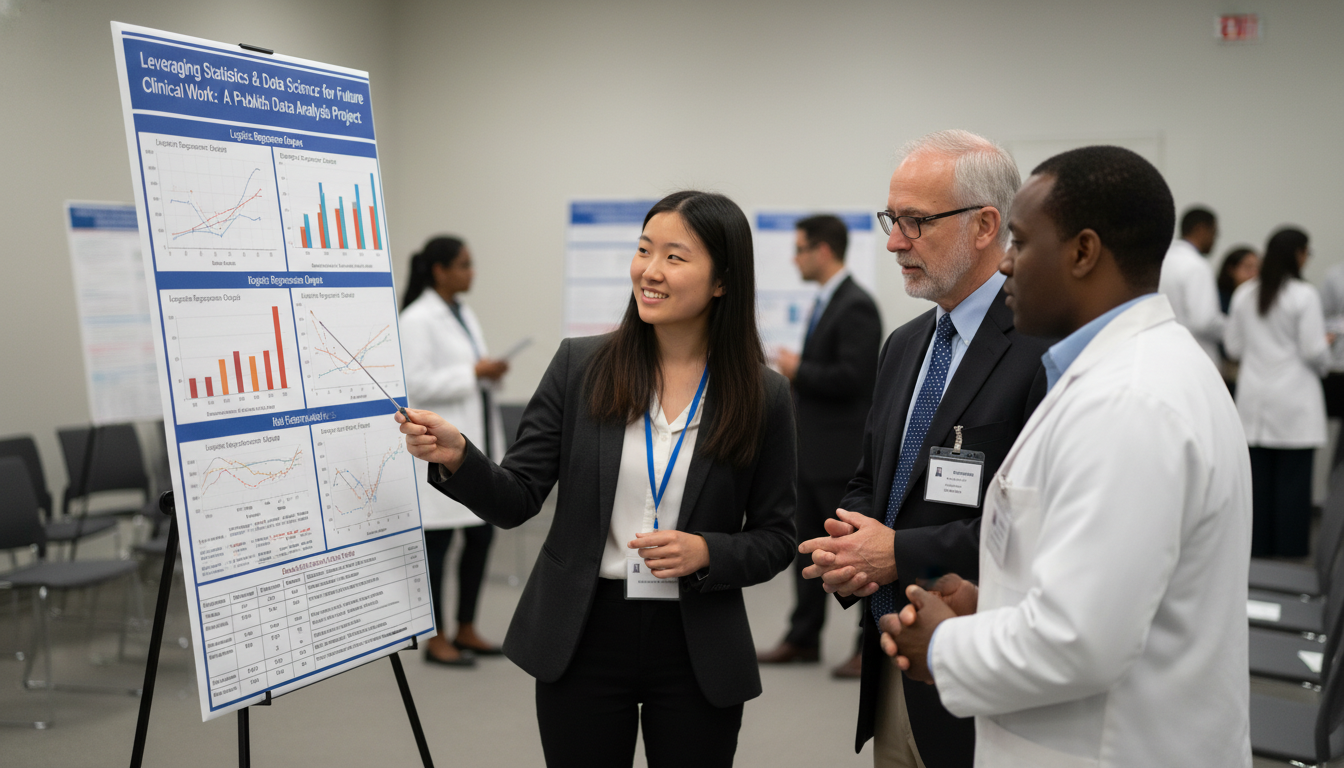
2. Use Projects To Build a Clinical/Health Portfolio
Most data science and stats courses now allow open-topic final projects. Do not choose random datasets.
Instead:
- Pick a publicly available health-related dataset:
- CDC BRFSS (Behavioral Risk Factor Surveillance System)
- NHANES (National Health and Nutrition Examination Survey)
- Open clinical trial datasets (e.g., from clinicaltrials.gov links, or select smaller teaching datasets)
- Ask a clinically flavored question:
- Does physical activity independently predict lower BMI when controlling for diet variables?
- What factors predict flu vaccination uptake?
Deliverables such as:
- A PDF report with graphs and clear narrative interpretation.
- A simple GitHub repository with code and README.
These immediately become talking points in interviews and concrete evidence of your analytical ability.
How Admissions Committees View Statistics and Data Science Coursework
Medical schools are increasingly explicit about valuing quantitative literacy. That trend will only intensify as AI and data-driven care expand.
Here is how this plays out concretely.
1. On Your Transcript
Strong impressions:
- A‑level performance in:
- Biostatistics
- Epidemiology
- Data science / R or Python with health applications
These signal:
- Readiness to understand literature in preclinical and clinical years.
- Higher potential to contribute to research.
Risk patterns:
- Skipping statistics entirely when there was an accessible course available.
- Choosing only the absolute easiest non-quantitative math options when you clearly had room and capability for more rigor.
2. In Your Activities and Personal Statement
You can weave your quant background into:
- Research experiences:
- “I designed and implemented the statistical analysis plan using logistic regression to evaluate predictors of postoperative infection rates.”
- Clinical shadowing reflections:
- “I realized how test sensitivity and pretest probability shaped every decision in the emergency department.”
Key is to narrate specific instances, not generic “I love data” claims.
3. During Interviews
You may be asked:
- “Tell me about a time you used data to solve a problem.”
- “How do you think your background in statistics will affect you as a clinician?”
Prepared answers might include:
- A project where your analysis changed how your lab interpreted results.
- A moment when understanding false positives changed your view of a screening test discussion.
Programs with a strong research or informatics focus (e.g., Stanford, UCSF, Mayo, Vanderbilt) will especially appreciate applicants who can straddle clinical and quantitative thinking.
Positioning Yourself For Future Roles: Beyond Admission
Your statistics and data science choices do not just get you into medical school. They shape the kind of physician you can become.
1. Evidence-Literate Clinician
You will:
- Read RCTs, cohort studies, and systematic reviews with genuine comprehension.
- Lead journal clubs with clarity about effect sizes, bias, and applicability.
- Push back against weak evidence driving guideline changes.
This is not optional in 2025+ medicine. Patients and systems are awash in information; someone has to know what is signal vs noise.
2. Resident or Fellow With Real Research Value
When you arrive to residency:
- Attendings notice quickly which trainees can actually handle data.
- Residents who can clean datasets, run basic analyses, and interpret them become first‑choice collaborators.
This translates to:
- More first‑author opportunities.
- Stronger letters highlighting your analytic maturity.
- A smoother path into competitive fellowships or academic tracks, if desired.
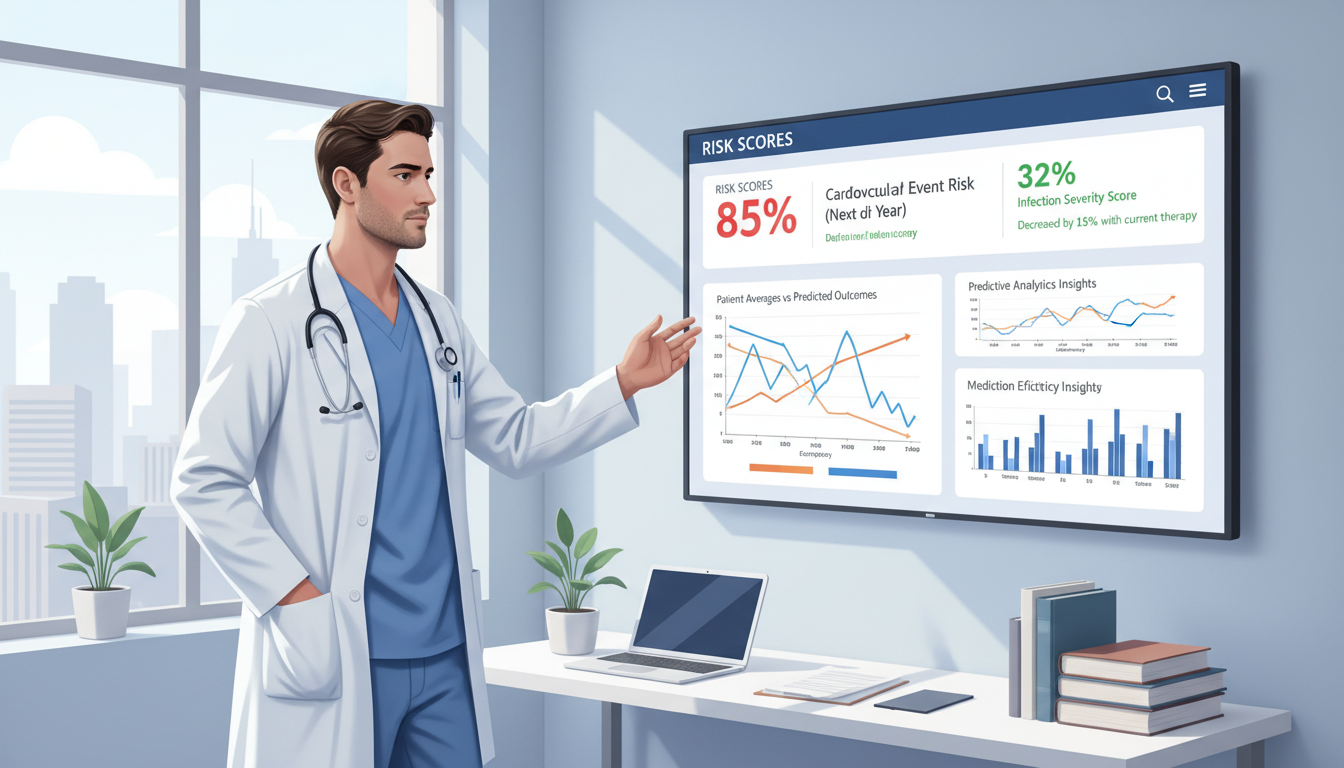
3. Clinician Comfortable With AI and Clinical Decision Support
As predictive models get integrated into EHRs:
- Physicians with quantitative grounding will better judge when to trust or override AI.
- You will ask informed questions: “What was your validation cohort? What is the PPV at our population’s disease prevalence?”
That is not abstract. It is the difference between safely using sepsis prediction alerts vs drowning in false positives.
A Sample Four-Year Premed Plan Integrating Statistics and Data Science
To make this concrete, here is a sample pathway at a typical university. Adjust for your own context, but note the sequencing logic.
Year 1
- Fall:
- Calculus I (if needed for other requirements)
- Spring:
- Intro Statistics for Life Sciences
Goals: Build baseline quantitative comfort before diving into more complex tools.
Year 2
- Fall:
- Intro Programming in Python or R
- Spring:
- Introductory Epidemiology
Goals: Learn to manipulate data; then see how it is used in real health research contexts.
Year 3
- Fall:
- Applied Regression / Biostatistics II (if available)
- Spring:
- Data Science / Machine Learning with a health-related final project
Goals: Move from understanding single-variable stats to multivariable models and predictive thinking.
Year 4
- Integrate these skills into:
- A senior thesis
- Ongoing lab work
- A public health or quality improvement project at a hospital
Even if you adjust this heavily, the structure—basic stats → epi → programming → applied data science—is robust.
Common Mistakes Premeds Make With Stats and Data Science
Two extremes tend to hurt applicants:
Treating Stats As a “One‑and‑Done” Checkbox
- Taking the easiest qualitative “statistics” course and never touching data again.
- Result: struggle with MCAT passages, later with medical school evidence‑based medicine sessions.
Overloading On Abstract Math With No Applied Bridge
- Real analysis, abstract algebra, and measure-theoretic probability can be intellectually rewarding.
- But without applied biostat/epi courses, students cannot translate these skills into medicine.
Balance is key. One or two rigorous, applied courses plus one or two computational courses typically provide a strong and clinically relevant foundation.
Final Thought
Roughly 70% of what you will read as a physician regarding new treatments, guidelines, and technologies is data‑driven. Yet most physicians never received systematic training in how to interpret that data beyond memorized rules.
By choosing your statistics and data science courses with clinical work in mind, you are not “padding” a premed résumé. You are building the infrastructure of your future clinical judgment.
With these foundations in place, you are ready to connect them to real research and early clinical exposure—skills you will refine in medical school and beyond. How you translate them into specific projects, mentorships, and niche expertise will be the next stage of your journey.
FAQ
1. Do I need formal statistics or data science courses if I already learn some stats for the MCAT?
MCAT-level statistics are minimal and often shallow. Formal courses give you deeper understanding of confidence intervals, regression, study design, and real data issues. Those skills are necessary to read clinical literature, not just to answer test questions.
2. Is taking an advanced, math-heavy statistics course better than a basic biostatistics course for medical school admissions?
For most premeds, a well‑taught biostatistics or applied statistics course is more valuable than a highly theoretical course. Admissions committees care more about your ability to interpret medical research than to prove theorems.
3. Will data science courses using large, complex datasets be too time-consuming compared with traditional premed science classes?
Data science courses can be time‑intensive, but they also produce tangible outputs (projects, code, posters) that strengthen your application. With reasonable course load planning, one data science course per year is usually manageable.
4. If my school does not offer biostatistics, what is the next best option?
Choose an applied introductory statistics course that uses real-world data, then pair it with an epidemiology or research methods course if possible. You can supplement clinical context independently by reading and practicing with medical journal articles while you take the course.