
The most common mistake applicants make with their NRMP rank list is trying to build it in one sitting. That is how people talk themselves out of good fits and into bad ones.
You will do this well only if you treat it as a structured, three‑phase process over several weeks. Not a single frantic Sunday night before the deadline.
Below is a practical, time‑based guide: from raw notes → working draft → locked final list.
Phase 1 (Immediately After Interviews): Capture and Sort the Chaos
Timeline: From each interview day through the end of your last interview
Goal at this point: Preserve your real reactions before they fade or get contaminated by other people’s opinions.
Day‑of‑Interview: The 30‑Minute Debrief
Within 24 hours of each interview. Same day is best, even if you are exhausted.
Sit down and capture:
Gut reaction (first 2–3 sentences)
- “Would I come here if it were my only option?”
- “If I matched here, would I feel relieved, disappointed, or thrilled?”
Quick score in key domains (1–5 scale) Use the same categories for every program:
- Training quality (case volume, acuity, fellowship match)
- Resident culture (do they like each other, burnout vibe)
- Location/life (family, partner job, cost of living)
- Program leadership (PD honesty, GME support)
- Schedule/benefits (call, nights, parental leave)
Red flags (non‑negotiables) Be blunt. Examples I have seen in applicants’ notes:
- “PGY‑2 said ‘we are the cheap labor for the hospital.’”
- “PD mocked another program in front of us.”
- “Only one resident of color; awkward silence when I asked about DEI.”
Green flags (unique positives)
- “Chair knows all residents by name.”
- “They arranged second‑look OR time without me asking.”
- “Spouse support group; multiple dual‑career couples.”
Do not polish this. Write what you actually felt, not what you think you are supposed to feel.
End of Each Week During Interview Season: Mini‑Ranking
Once a week, usually Sunday night, you should:
- Lay out all the programs you interviewed that week plus prior weeks.
- Force yourself to create a provisional rank order.
- Do not overthink. Go with your gut plus your structured notes.
By the end of interview season, you should already have a rough, living list that has been updated several times. This makes Phase 2 much easier.
End of Interview Season (Last Interview ± 3 Days): First Hard Sort
At this point you should:
Mark programs you will NOT rank If you saw serious red flags or would be miserable there, do not put them on your list. The NRMP is clear: do not rank a program you are unwilling to attend.
Create 3–4 broad tiers Example for Internal Medicine:
- Tier 1: “I would be actively excited to match here.”
- Tier 2: “Solid fit; I would be content.”
- Tier 3: “Acceptable safety options.”
- Tier 4: “Do not rank.”
Stop asking everyone else’s opinion At this point, outside input mostly introduces anxiety. You can ask for targeted advice:
- “Between Program A and B, which has better cardiology fellowship placement?” But no more open‑ended “What do you think of X?” for every program.
By the end of Phase 1, you should have:
- One document or spreadsheet with every program
- Your raw notes
- A preliminary tier assignment for each
Phase 2 (2–3 Weeks Before Deadline): From Tiers to Working Rank List
Timeline: From roughly 2–3 weeks before the NRMP Rank List Certification Deadline until about 5 days before
Goal at this point: Turn messy impressions into a rational, ranked order that reflects your priorities, not someone else’s.
Step 1: Define Your Priority Weights (One Evening)
Pick one evening, 1–2 hours, totally focused.
Identify your top 4–6 decision domains and how much each truly matters to you. Be honest.
Examples:
- Training quality and case volume – 30%
- Location/proximity to family or partner – 25%
- Resident happiness/culture – 20%
- Fellowship prospects – 15%
- Schedule/benefits – 10%
Now map those percentages to a weight (out of 10). Something like:
- 30% → weight 3
- 25% → weight 2.5
- 20% → weight 2
- 15% → weight 1.5
- 10% → weight 1
Step 2: Score Each Program (2–3 Evenings)
Use your Phase 1 notes. For each program, assign 1–5 scores in each domain, then multiply by the weight.
Example for Program X (Internal Medicine):
| Domain | Weight | Score (1–5) | Weighted Score |
|---|---|---|---|
| Training quality | 3.0 | 4 | 12.0 |
| Location | 2.5 | 5 | 12.5 |
| Resident culture | 2.0 | 3 | 6.0 |
| Fellowship prospects | 1.5 | 4 | 6.0 |
| Schedule/benefits | 1.0 | 3 | 3.0 |
Total: 39.5
You can do this quickly once your categories are fixed. It is not “objective,” but it forces you to be consistent.
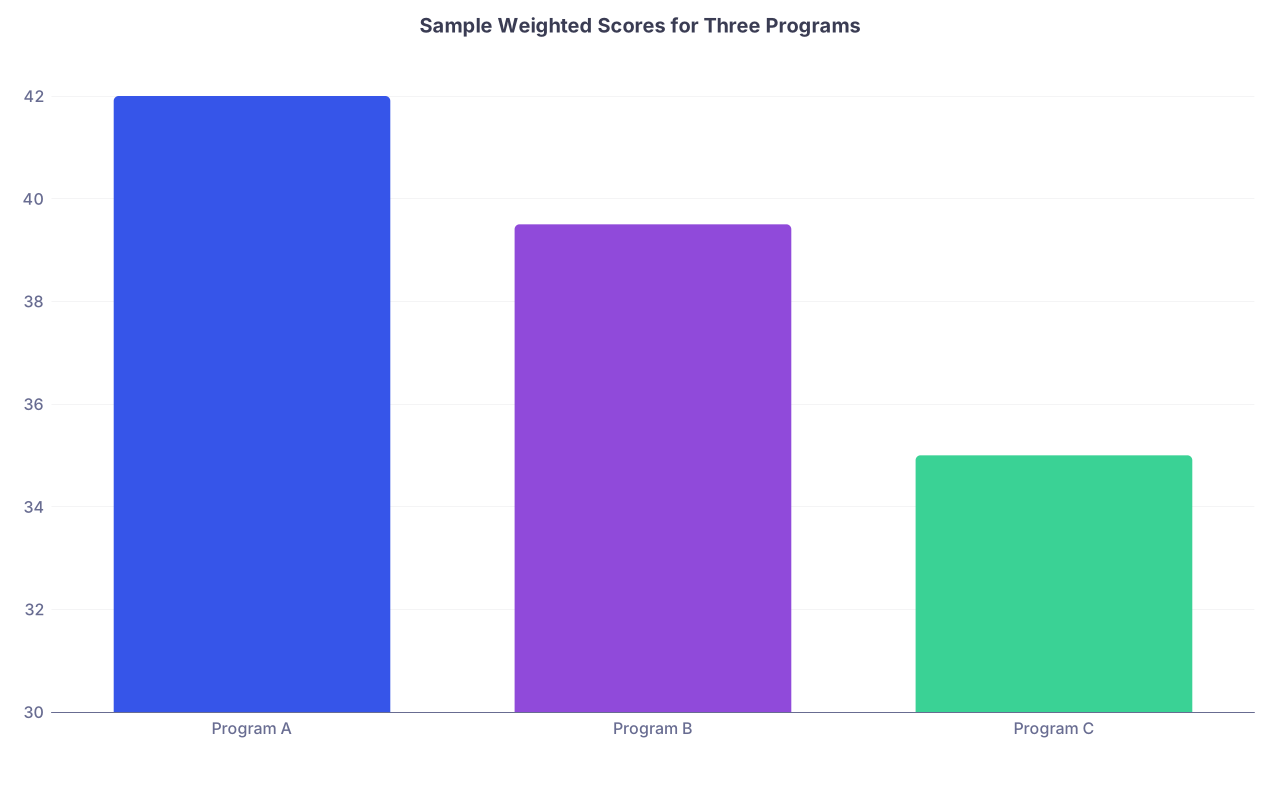
| Category | Value |
|---|---|
| Program A | 42 |
| Program B | 39.5 |
| Program C | 35 |
Step 3: Generate Your First True Draft Rank List
Sort programs by total weighted score, within reason.
At this point you should:
- Accept the top 3–5 as serious contenders.
- Look at any obvious outliers.
Example: A program with a slightly lower score but an unbeatable geographic advantage for your partner’s job. You are allowed to bump it up.
But here is the rule:
If you move a program more than 2–3 spots away from where the scoring says it belongs, write the reason next to it. If you cannot articulate why, do not move it.
Step 4: Reality Check Against Match Strategy
Now cross‑check your draft with match reality:
Your application competitiveness vs programs’ usual profile
- Did you interview at mostly reach programs?
- Do you have enough true safety programs?
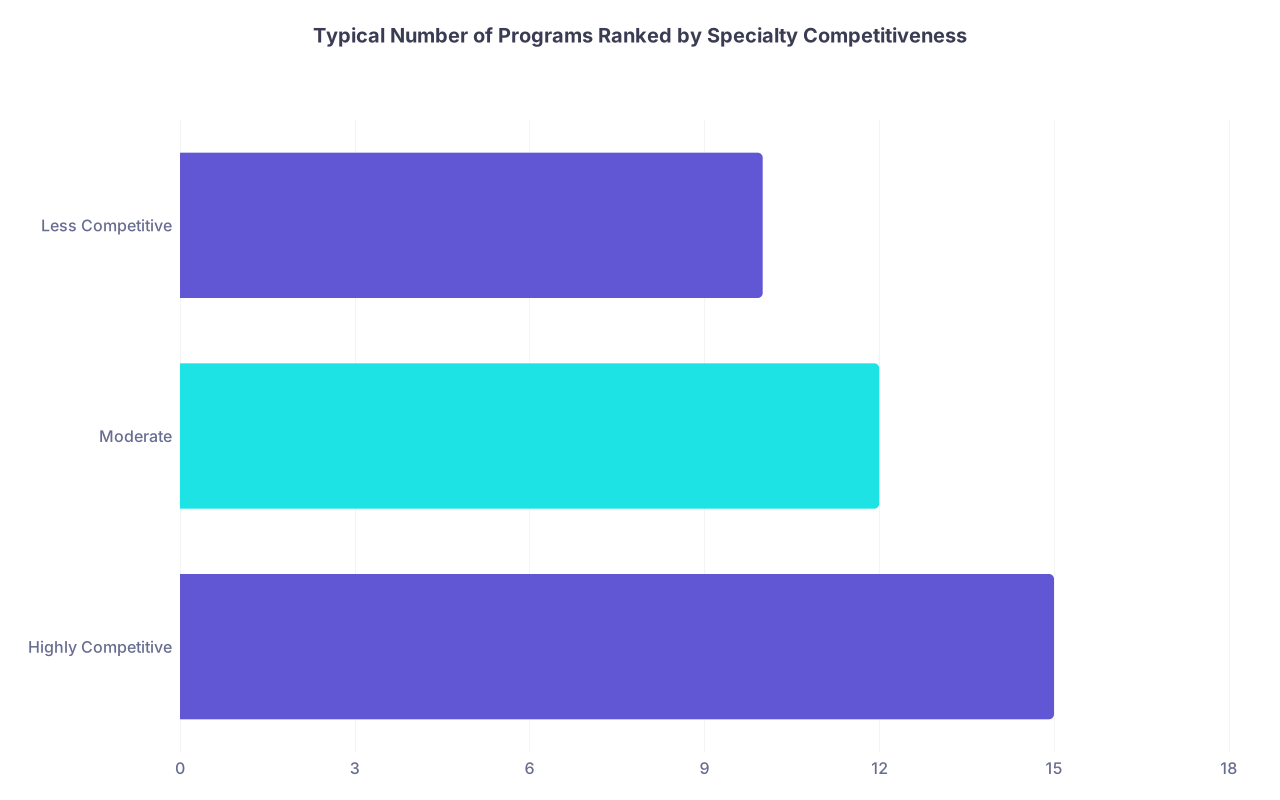
Count total programs
- For competitive specialties (Derm, Ortho, ENT, Plastics, etc.) I want to see 12–15+ programs ranked if you have them.
- For less competitive (Peds, FM, Psych) 10–12 is usually comfortable, though more is safer.
- Couples matching often need more.
| Category | Value |
|---|---|
| Highly Competitive | 15 |
| Moderate | 12 |
| Less Competitive | 10 |
- Remove fantasy thinking If you had a “courtesy” interview at an elite program with no signal of real interest, it can stay high on your list, but it should not displace several strong mid‑tier programs that genuinely want you. The algorithm favors your true preferences, but you should still build a list with depth.
By the end of Phase 2 (about 5–7 days before the certification deadline), you should have:
- A full, ordered list in NRMP (uncertified)
- Written rationales for any unusual ordering
- At least one overnight “cooling off” between revisions
Phase 3 (Final Week): Refine, Reality‑Test, and Certify
Timeline: Final 5–7 days before the NRMP Rank List Certification Deadline
Goal at this point: Resolve edge cases, check logistics, and then stop tinkering.
5–7 Days Before Deadline: Stress‑Test the Top and Bottom
Focus almost entirely on:
- Top 5–7 programs
- Bottom 3–5 programs you are still ranking
For each adjacent pair in your top group (e.g., #1 vs #2, #2 vs #3):
Ask yourself three questions:
- If I matched at Program B instead of Program A, would I feel regret? Or just mild surprise?
- In a bad week on service, where would I rather be? (This one cuts through prestige illusions.)
- What does my future self in 5 years thank me for? Training or location or support?
If your answers keep pointing one way, adjust. If you stay torn, stick with your structured ranking from Phase 2. Do not pivot based on a single emotional phone call with a friend.
At the bottom of your list:
- Verify every program is truly acceptable. If you picture opening an email that says you matched there and feel dread, take it off.
- Rank all acceptable programs, even if they feel “low.” The algorithm does not punish you for long lists.
3–4 Days Before Deadline: Logistics and Life Check
Now, the non‑academic reality test. At this point you should quietly evaluate:
- Partner / family constraints
- Can your partner realistically get a job there?
- Are there schools / childcare for people who need them?
- Financial picture
- Any cities where cost of living will make you miserable on a PGY‑1 salary?
- Parking, childcare stipends, moonlighting opportunities (if relevant in upper years).
This is when it sometimes makes sense to shift a mid‑tier program above another. Example: Moving a slightly “less prestigious” program in a midwest city where you and your partner can buy a house above a coastal program with tiny apartments and no family nearby.
Do not blow up your entire list here. Adjust a few positions where life realities clearly matter.
48 Hours Before Deadline: Finalize Your Order
At this point you should:
Do a line‑by‑line read of the entire list
- Check program names, tracks (categorical vs preliminary), and NRMP codes.
- Confirm you did not accidentally rank a prelim year above your desired categorical if that is not your intention.
Resolve tiebreakers with a simple rule When you feel stuck between two nearly identical programs, use a pre‑set tiebreaker:
- Slightly better training → edge
- Slightly better location → edge
- Slightly happier residents → edge
Pick one rule and apply it consistently to all ties.
Sync with couples match partner (if relevant)
- Check that your lists are coordinated and that your combined strategy makes sense in the NRMP couples algorithm.
- Do at least one dry run with a faculty advisor who understands couples matching if you are nervous.

24 Hours Before Deadline: Certify and Walk Away
The worst decisions happen under the pressure of the countdown clock.
The day before the deadline:
- Log in to NRMP.
- Confirm the exact order again.
- Hit “Certify List.”
- Take a screenshot or print confirmation for your records.
The moment you certify 24 hours early, you are doing this correctly.
After that:
- Do not keep logging in “just to check.”
- Do not let post‑interview emails (“We are ranking you highly!”) change your list at the last second. They are mostly meaningless.
- Do not move a program based on gossip from Reddit or GroupMe.
Your work is done.
Practical Tools and Templates
You do not need a complicated system, but a little structure goes a long way. Here is what I recommend you set up early:
1. Simple Ranking Spreadsheet Columns
At this point you should have a single spreadsheet with columns like:
| Column | Purpose |
|---|---|
| Program Name | Core identifier |
| City / State | Quick geography check |
| Tier (1–3) | Early global impression |
| Training Quality (1–5) | Scored domain |
| Resident Culture (1–5) | Scored domain |
| Location Fit (1–5) | Scored domain |
| Fellowship / Career (1–5) | Scored domain |
| Schedule / Benefits (1–5) | Scored domain |
| Total Weighted Score | Auto‑calculated |
| Red Flags (Y/N + note) | Deal‑breakers at a glance |
| Final Rank Position | Manual entry once decided |
2. Visualizing Your Top Choices
If you are a visual thinker, a simple bar chart of your top 5–8 total scores can help expose illusions. For instance, you might see that your emotional favorite actually scores much lower on resident happiness than you wanted to admit.
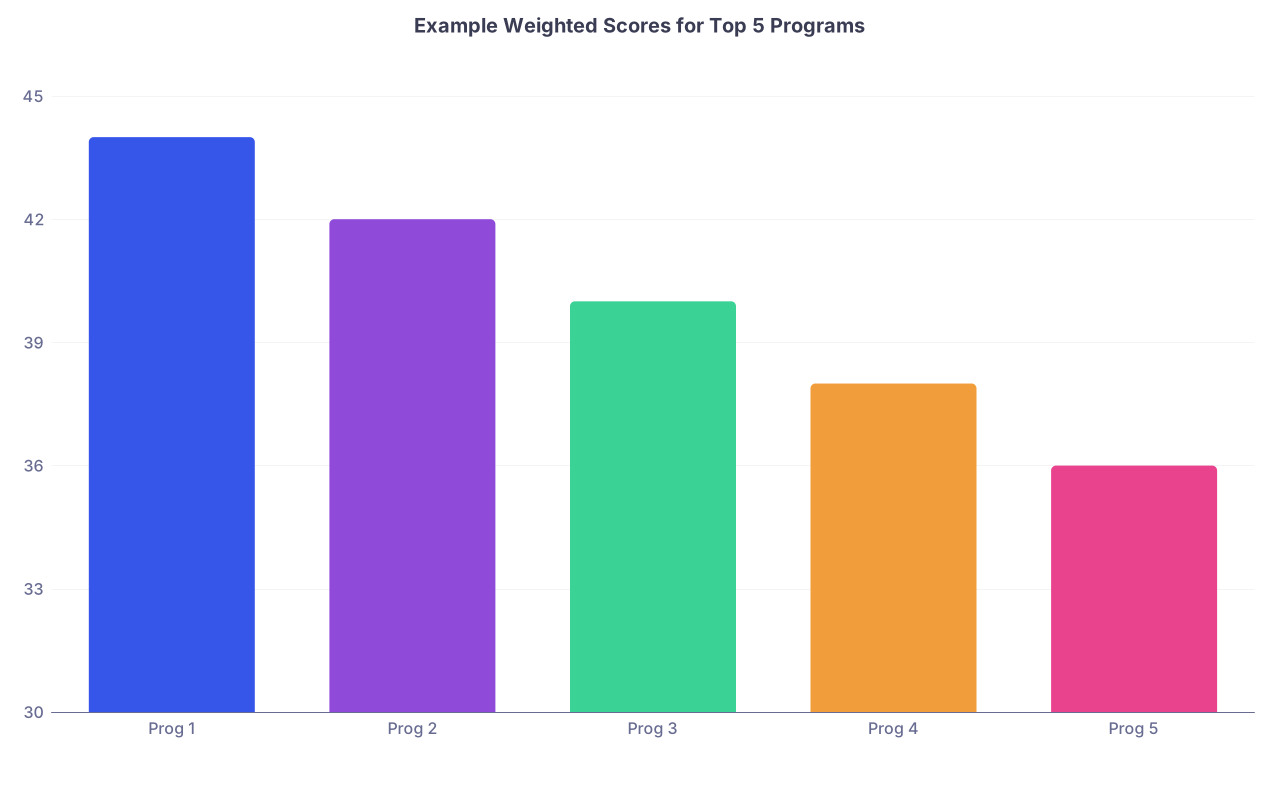
| Category | Value |
|---|---|
| Prog 1 | 44 |
| Prog 2 | 42 |
| Prog 3 | 40 |
| Prog 4 | 38 |
| Prog 5 | 36 |
Do not worship the numbers, but do look at them.
3. Quick Red‑Flag Tracker
Make a separate small list of programs where:
- Multiple residents independently warned you about something.
- You saw unprofessional behavior from leadership.
- Call schedule or safety issues genuinely worried you.
That document exists for one purpose: to remind you why these places may belong at the bottom or off the list entirely when you feel tempted by their name value.

What To Do After You Certify
You are going to be tempted to keep thinking about it. Obsessing does not change the list.
Once your list is certified:
- Shift your focus to finishing strong on rotations.
- Handle logistics that are independent of match outcome: licensing paperwork, saving money for moving, staying clinically sharp.
- If you must talk about your list, do it briefly, with people who are calm, not anxious amplifiers.

Key Takeaways
- Build your NRMP rank list in three phases over weeks, not one panicked night: capture raw impressions, construct a rational draft, then refine and certify.
- Use consistent scoring and clear tiers to keep yourself honest, and only deviate from the numbers when you can explain why in writing.
- Once you certify your list at least 24 hours before the deadline, stop editing and stop reading the noise. Your best thinking is already on the page.