
Most applicants blow thousands on residency interviews they never needed to attend. You do not have that luxury. Good. You will actually be forced to be strategic—if you do this right, you can match without bankrupting yourself or your family.
This is not another “maybe try to save on flights” article. You need a hard, actionable framework that tells you:
- Which interviews to accept
- Which to decline or cancel
- How to build a rank list that protects you
- How to do all that under a tight dollar cap
I am going to give you exactly that. Step by step. No fluff.
Step 1: Know Your True Budget (Not the Fantasy Version)
You cannot prioritize anything until you know your ceiling in dollars, not vibes.
1. Do a real cost estimate per interview
Virtual interviews are cheaper. Obviously. But most people still underestimate “cheap”:
Make 2 quick estimates:
Virtual interview (per program):
- Incremental cost: Often $0–$50 (better internet, webcam, shirt, etc.)
- Hidden cost: Time away from clinicals, potential lost moonlighting shifts if applicable
In-person interview (per program):
- Typical breakdown:
- Flight/train: $200–$500
- Lodging (1–2 nights): $100–$300
- Ground transport / Uber: $30–$80
- Food + misc: $30–$60
Total: $360–$940 per program
- Typical breakdown:
Now assume some worst-case numbers. Not optimistic ones.
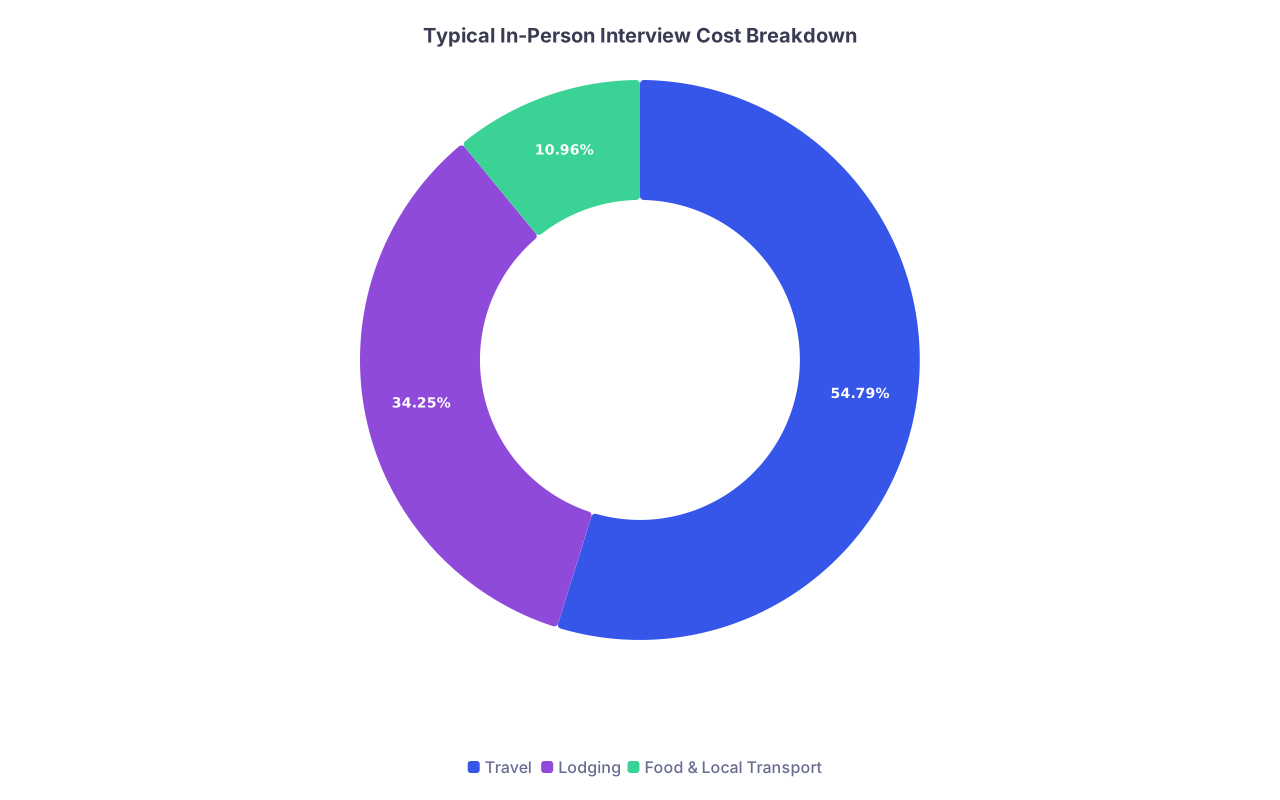
| Category | Value |
|---|---|
| Travel | 400 |
| Lodging | 250 |
| Food & Local Transport | 80 |
2. Set a hard interview budget
Take:
- Cash you personally can spend
- Any help from family (real, not hypothetical)
- Credit you are truly willing to use (many should choose zero here)
Example:
- Savings: $1,000
- Family support: $1,000
- Credit you are willing to charge: $1,000
Total hard cap: $3,000
No going over. If this makes you uncomfortable, good—that means you will actually make trade-offs.
3. Convert budget into max in-person interviews
Use your conservative per-interview cost estimate. Suppose you estimate $500 per in-person interview:
- $3,000 / $500 = 6 in-person interviews total
If everything is in-person, you have 6. If some are virtual, you can stretch further. But you cannot magically attend 15 in-person interviews. Stop thinking you will “figure it out later.”
Write this down:
“Maximum in-person interviews I can attend: ___”
That number governs everything that follows.
Step 2: Triage Programs Using a Score, Not Your Feelings
Feelings are expensive. You will overvalue “big name” and undervalue “will actually rank me.” So we replace your gut with a Program Priority Score (PPS).
1. Build a simple scoring system
You score every program that invites you with the same rubric. Keep it simple; you are not writing a thesis.
Use 5 domains, each 0–2 points:
Match Probability Fit (0–2)
- 2 = You are very competitive for this program (based on: Step scores, school type, visa status, research, alumni matches, interview track record)
- 1 = Reasonable chance, solid middle fit
- 0 = Extreme reach or major mismatch (e.g., no IMGs ever, Step cutoff above yours, heavy research you do not have)
Location / Life Fit (0–2)
- 2 = You would be genuinely happy living there; partners/family/job prospects align
- 1 = Neutral/acceptable
- 0 = Actively bad for your life (relationship, kids, health, visa, etc.)
Program Quality for Your Goals (0–2)
- 2 = Strong in your desired path (fellowship pipeline, procedure volume, academic vs community preferences)
- 1 = Adequate but not perfect
- 0 = Weak or misaligned with your career goals
Interview Format Advantage (0–2)
- 2 = Virtual or cheap to get to (drive/train same day)
- 1 = In-person but moderate cost
- 0 = In-person and expensive (airfare + hotel + Uber circus)
Signal / Relationship Advantage (0–2)
- 2 = You signaled them, rotated there, have strong insider advocates, or home program
- 1 = Mild connection (shared med school, faculty known)
- 0 = No signal, no rotation, no prior relationship
Total PPS range: 0–10
Higher is better. That simple.
2. Decide what PPS means for you
You can then decide cutoffs:
- PPS 8–10 = Top tier: High priority interviews
- PPS 5–7 = Middle tier: Consider depending on your numbers
- PPS 0–4 = Low tier: Only if you are very under-invited
And yes, you will have to pass on some “big names” that score low because they are expensive long-shots in cities you hate. That is how you avoid debt.
Step 3: Categorize Yourself Honestly (Risk Tier)
Your risk of not matching determines how aggressive you must be with number of interviews accepted.
1. Use a realistic risk category
This is a blunt but workable framework:
Low Risk
- US MD, no significant red flags
- Applying IM, Peds, FM, Psych with average or above Step scores
- 1–2 geographic ties and a reasonable application strategy
Target total interviews: 10–12 in your specialty is usually enough for IM/Peds/FM/Psych. More competitive specialties differ.
Moderate Risk
- US MD with slightly below average scores or one soft red flag
- US DO applying to moderately competitive fields
- Strong IMG with high Step scores but limited U.S. experience
Target: 12–15+ interviews in main specialty if possible.
High Risk
- Multiple red flags, big Step failures, weak clinical evaluations
- Non-US IMG with low scores or minimal U.S. clinical work
- Switching specialties late without strong support
Target: 15–20+ interviews if you can get them, including prelim/transitional years and backup specialties.
You probably already know your risk tier. Do not sugarcoat it.
Step 4: Build a Tiered Interview Acceptance Strategy
Now combine:
- Your budget-defined max in-person interviews
- Your risk category
- Your Program Priority Scores
This is where the framework gets real.
1. Lock in a minimum safe number of interviews
For your main specialty, set a must-hit number:
- Low risk: aim to accept 10 solid interviews
- Moderate risk: aim for 12–15
- High risk: everything you can reasonably afford, plus backup specialty / prelim
Example:
- You are a US MD, average scores, applying Internal Medicine. Low–moderate risk.
- You decide:
“I need at least 12 interviews in IM to feel reasonably safe.”
2. Assign every invite to a PPS bucket
Create a basic spreadsheet or paper table.
| Program | PPS Score | City Cost Rating | Format | Tier |
|---|---|---|---|---|
| A | 9 | Low | Virtual | Top |
| B | 8 | Medium | In-person | Top |
| C | 6 | High | In-person | Middle |
| D | 4 | High | In-person | Low |
| E | 7 | Low | Virtual | Middle |
City Cost Rating you can approximate from flight search and hotel prices.
Now sort by PPS descending. That is your raw preference list for interviews.
Step 5: Decide in Real Time: Accept, Waitlist, or Decline
Most people click “accept” instantly out of fear. Then panic later. You are going to use a 3-bucket decision system for each invitation:
- Yes
- Conditional / Waitlist
- No
1. “Yes” bucket (automatic accept)
You auto-accept:
- Top-tier programs (PPS 8–10)
- Programs that are:
- Cheap (virtual or low travel cost), and
- Safe from a match perspective (they take plenty of people like you)
You keep an eye on your budget, but these are your priority slots.
2. “Conditional / Waitlist” bucket
These are programs you tell yourself:
“I will only attend if I still need interviews later.”
Who goes here?
- Middle-tier PPS (5–7) when:
- Travel is expensive, or
- You already have multiple similar or better programs in the same region / type, or
- They are clear reaches without other advantages
You do not accept right away. You:
- Politely request later dates if possible
- Hold off while watching how many other invitations come in
Warning: Some specialties / programs will fill all dates quickly; you might lose the chance. That is the trade-off.
3. “No” bucket (proactive decline)
These are the ones people are scared to decline. You are not, because you have a system.
You decline:
- PPS ≤ 4 and high cost
- Locations you genuinely could not see yourself living in (do not lie to yourself)
- Programs that have deal-breakers: malignant reputation, no visa support if you need it, no exposure to what you care about (e.g., zero ICU time for an aspiring intensivist)
Sample email (short and non-dramatic):
Dear [Coordinator Name],
Thank you very much for the opportunity to interview at [Program Name]. After careful consideration of my interview schedule and personal constraints, I will need to respectfully withdraw my application at this time.
I appreciate your consideration and wish your residents and faculty continued success.
Sincerely,
[Your Name, AAMC ID]
Send it. Move on.
Step 6: Cluster Travel to Cut Costs (If In-Person)
If you have any in-person interviews, you can destroy your budget if you treat each one as an isolated trip.
You need regional clustering.
1. Map your interviews
Literally:
- Pull up Google Maps
- Pin every city where you have a potential in-person interview
- Look for natural clusters (Northeast corridor, Midwest cities, West Coast, etc.)
2. Build interview “pods”
A pod = 2–4 interviews in the same geographical region within 5–10 days.
Goal: One flight in, one flight out, cheap local transport between cities, maybe one rail pass or car rental.
Example pod:
- Fly into Chicago
- Interview at:
- Program 1: Chicago
- Program 2: Milwaukee (Amtrak or short drive)
- Program 3: Madison (bus or car)
- 5–7 days total, one airfare
This can turn 3 expensive trips into 1 moderately expensive one.
3. Ask to move dates—strategically
Coordinators move interview dates constantly. You are not special for asking. Keep it short and professional:
Dear [Coordinator Name],
Thank you for the interview invitation to [Program]. I am very interested in the program. I was hoping to ask if there is any flexibility to move my interview from [current date] to [alternative date range], as I will be in the region for other interviews around that time.
If not possible, I completely understand and will do my best to accommodate the current date.
Best regards,
[Your Name]
Do this early. Do not wait until slots are gone.
Step 7: Use Data, Not Panic, to Adjust Mid-Season
Interview season is dynamic. You will not know how many offers you get on day one. So you need a way to course-correct in real time.

| Step | Description |
|---|---|
| Step 1 | Receive New Invite |
| Step 2 | Calculate PPS |
| Step 3 | Decline Politely |
| Step 4 | Accept if PPS>=5 |
| Step 5 | Accept or Swap with Lower PPS |
| Step 6 | Place in Conditional / Waitlist or Decline |
| Step 7 | Within Budget? |
| Step 8 | Hit Minimum Safe # Yet? |
| Step 9 | PPS>=8? |
1. Weekly reality check
Once a week, do a 10-minute review:
- Total interview offers received
- Number accepted
- Number declined
- Remaining budget
- Risk tier
Then ask: “Am I on track to hit my minimum safe count?”
Example:
- Target minimum = 12
- Week 3 of season:
- You have 8 accepted
- 3 in the conditional bucket
- Budget still okay
- Several unfilled weeks on your calendar
You are slightly behind; you might loosen your PPS cutoff for accepting new invites (e.g., start accepting PPS 5–6 in cheaper locations).
2. Swap low-value for high-value later
If you accepted several early invites before you had this system, you are not stuck.
Do this:
- Rank all already-accepted interviews by PPS and cost.
- If a new, higher-PPS, cheaper invite arrives and you are over budget:
- Cancel one lower-PPS, high-cost interview.
- Reclaim those dollars and time.
Yes, cancelling feels bad. Not matching feels worse.
Give programs a reasonable heads-up (ideally ≥2 weeks).
Step 8: Protect Your Rank List With Strategic Diversity
Your prioritization is not only about cost; it is about building a rank list that gives you safe and realistic options.
1. You need a mix of program types
You want a portfolio, not 12 copies of the same hyper-academic reach program.
Think in terms of:
- Safety / Match-likely programs
- Mid-range / good fit programs
- Reach programs
For most non-ultra-competitive specialties:
- Safety: 3–5+
- Mid-range: 4–8
- Reach: 2–4
If your invites are heavily skewed toward “reach,” you need to be more aggressive about attending any reasonable safety / mid-range invites, even if the location is not glamorous.
2. Respect geography and ties
Programs love geographic ties. If you grew up or studied in a region, those programs merit higher PPS for match probability, even if location feels “meh.”
If you want to be in a certain region long-term (family, partner, immigration plans), you should overweight those programs even if they are not famous names.
Step 9: Squeeze Every Dollar Without Acting Desperate
You are on a budget; that does not mean you need to look broke.
1. Financial triage tactics
- Use credit card points / miles deliberately
- Save them for the most expensive routes, not short hops
- Housing hacks
- Stay with friends / alumni / extended family when possible
- Split hotel rooms with trusted classmates when appropriate
- Transportation
- Prioritize direct flights where possible to avoid missed connections (one missed flight can nuke your savings)
- Use trains / buses for regional hops
2. Avoid expensive “flexibility”
Flexible airfare, refundable hotels, last-minute bookings—these destroy budgets.
Instead:
- Commit earlier to your most important pod trips
- Keep a small “flexible” portion of budget for last-minute high-PPS offers
3. Know where to say no
You do not need:
- New designer suit
- $300 professional photo session for ERAS (too late anyway)
- Fancy meals on the road
You do need:
- Reliable internet and decent camera for virtual interviews
- Clothes that fit and do not look like they were stuffed in a duffel since M2
- Enough sleep to function and interview like an actual human
Step 10: Mental Game – Guilt-Free Declines and Cancellations
The emotional trap is what kills people: fear of missing out, guilt, comparison to classmates.
You will see classmates posting 25 interviews on Instagram. Some of them will still not match. Interview count alone is not protection.
Here is the reality:
- Programs routinely over-invite because they know people cancel.
- Coordinators expect cancellations.
- You are not obligated to attend every single interview offer like it is a sacred duty.
Your obligation is to:
- Protect your financial solvency
- Build a smart, balanced rank list
- Show up prepared to the interviews you do attend
That is it.
Quick Example: Putting It All Together
Let me walk through a concrete scenario.
Profile:
- US DO, applying Internal Medicine
- Step 2: 232
- Average clinical grades
- No major red flags
- Budget: $2,000 total
- Per in-person estimate: $450 → Max ~4 in-person interviews
Risk Tier: Moderate
Minimum safe target: 12 IM interviews
You receive 16 total interview invitations:
- 8 virtual
- 8 in-person scattered around the country
You score all 16 with PPS (0–10). You discover:
- 6 are PPS 8–10
- 6 are PPS 5–7
- 4 are PPS ≤ 4
You:
Auto-accept all 8 virtual interviews with PPS ≥ 5
- Cost minimal
- You are now at 8 accepted, 0 travel spend.
From the 8 in-person:
- 2 are PPS 9, in regions you like, reasonably cheap cities
- 3 are PPS 6–7, but expensive / far
- 3 are PPS ≤ 4, expensive
You:
- Accept the 2 high-PPS in-person (spending roughly $900 of your $2,000)
- Put 2 of the 6–7 PPS in-person into conditional/waitlist, ask for later date windows, cluster by geography
- Decline all PPS ≤ 4 in-person
You sit at:
- 10 accepted (8 virtual + 2 in-person) within budget.
- 2–3 more “conditional” invites you can activate later if needed.
If no more invites arrive:
- You evaluate if 10 is enough as DO in IM with your risk factors. Maybe you activate 1–2 of the conditional ones if budget permits and PPS justifies.
If more better invites (PPS 8–10) appear:
- You:
- Accept them if virtual or cheap
- If over budget, cancel one of the lower-PPS in-person interviews and reallocate funds
You end season with:
- 12–14 interviews
- Inside your $2,000 cap
- A mix of safety/mid/reach programs
- A rank list that is not built around financial mistakes
That is how this framework works in the real world.
Two Non-Negotiables
Let me be blunt about two things many applicants get wrong:
If you would never rank a program, do not attend the interview.
Showing up “just in case” at a place you would never work is a waste of money and time. And sometimes, you will end up matching there. Then what?Do not finance your interviews on the assumption of future attending money.
You are not an attending. You are a student or resident, with limited income and uncertain future. Going $5,000–$10,000 into credit card debt for travel is not “investing in your future.” It is gambling with bad odds.
You can match with a limited number of well-chosen interviews. Plenty of people do every year.
What they do differently is exactly what you are building here: a clear budget, a scoring system, and a willingness to say no.
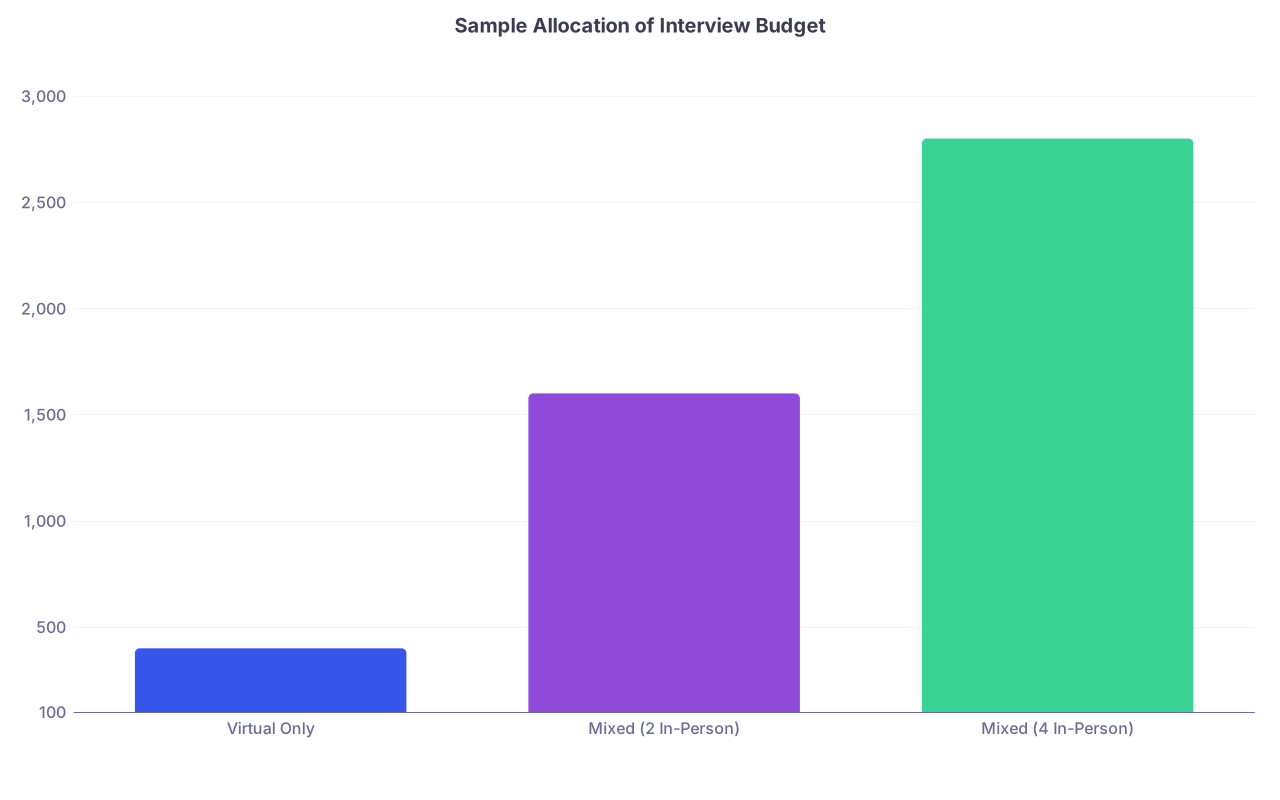
| Category | Value |
|---|---|
| Virtual Only | 400 |
| Mixed (2 In-Person) | 1600 |
| Mixed (4 In-Person) | 2800 |
The chart above is the point: once you start adding in-person interviews, your budget disappears fast. A controlled mix is usually ideal when you are constrained.
Summary: The Core Framework
Three key points to walk away with:
- Set a hard dollar cap and translate it into a max number of in-person interviews. No exceptions. Your finances are not theoretical.
- Score every program with a simple Program Priority Score and use that to drive accept/decline decisions. Feelings come second.
- Adjust mid-season using your risk level and ongoing invite count, and be ruthless about cancelling low-value, high-cost interviews when better ones appear.
If you follow this, you will not attend every possible interview. You will attend the right ones—and still be able to pay your rent in March.