
The biggest post‑interview mistake residency applicants make is timing their communication wrong—not content, not tone. Timing.
You send a heartfelt update in late February. Programs have already certified their rank lists. Your “update” is effectively a diary entry.
Let us not do that.
Below is a concrete, time‑anchored timeline for when to send residency updates and letters after interviews. Month by month, then week by week as you get closer to Rank Order List (ROL) certification. I will assume a typical NRMP Main Match schedule (mid‑September ERAS, October–January interviews, ROL due late February / early March). Adjust dates by 1–2 weeks if your specific year shifts slightly.
Big Picture: What You Should Send, and When
Before we drill into the calendar, you need the categories straight:
- Thank‑you notes – Short, polite, no drama. Within 24–72 hours of interview.
- Update letters – New, substantive information: new publication, AOA, major award, Step 2 score, changed visa status, etc.
- Letter of interest – “I am very interested, you are among my top choices.” Non‑committal but warm.
- Letter of intent – “You are my clear first choice, and I will rank you #1.” You send this to one program only.
| Type | Main Purpose | Typical Timing |
|---|---|---|
| Thank-you note | Courtesy, brief impression | 1–3 days post-interview |
| Update letter | New, objective info | Nov–early Feb |
| Letter of interest | Signal strong enthusiasm | Dec–Feb |
| Letter of intent | Commit to clear #1 program | Late Jan–mid Feb |
Remember: programs are drowning in emails. Volume is high, attention is low. Your advantage is well‑timed, necessary, minimal communication.
Immediately After Your Interview Day (Day 0–3)
At this point you should focus on documentation and quick follow‑up.
Within 12 hours: Capture details for later letters
Right after you get home or back to the hotel:
- Write down:
- Names (and titles) of everyone you met.
- 1–2 specific things each interviewer said.
- Any resident you connected with (by name).
- Unique program features that matter to you: “4+2 schedule,” “big refugee population,” “strong cardiology research with Dr. X.”
- Rank your gut feeling about the program (1–10). Not your final rank. Just how you felt walking out.
This notebook becomes gold in January when all interviews blur together.
Within 24–72 hours: Send thank‑you emails
At this point you should:
- Send brief thank‑you notes to:
- Program director
- Key faculty you interviewed with
- Chief resident or coordinator if they were especially helpful
Timing rules:
- Day 1: Ideal.
- Day 2–3: Fine.
- After 1 week: Still better than nothing, but impact is lower.
Content rules:
- 3–7 sentences.
- One specific thing you appreciated from that conversation or the day.
- No ranking promises yet. No “you are my #1” in a thank‑you note.
If you had 5+ interviews per week, batch them:
- Schedule 30 minutes every Sunday to send remaining thank‑yous for that week’s programs.
Late Interview Season Overview (November–February)
Here is the skeleton timeline you are working with. Assume:
- Interviews: Oct–Jan
- ROL opens: mid‑January
- ROL deadline: late February
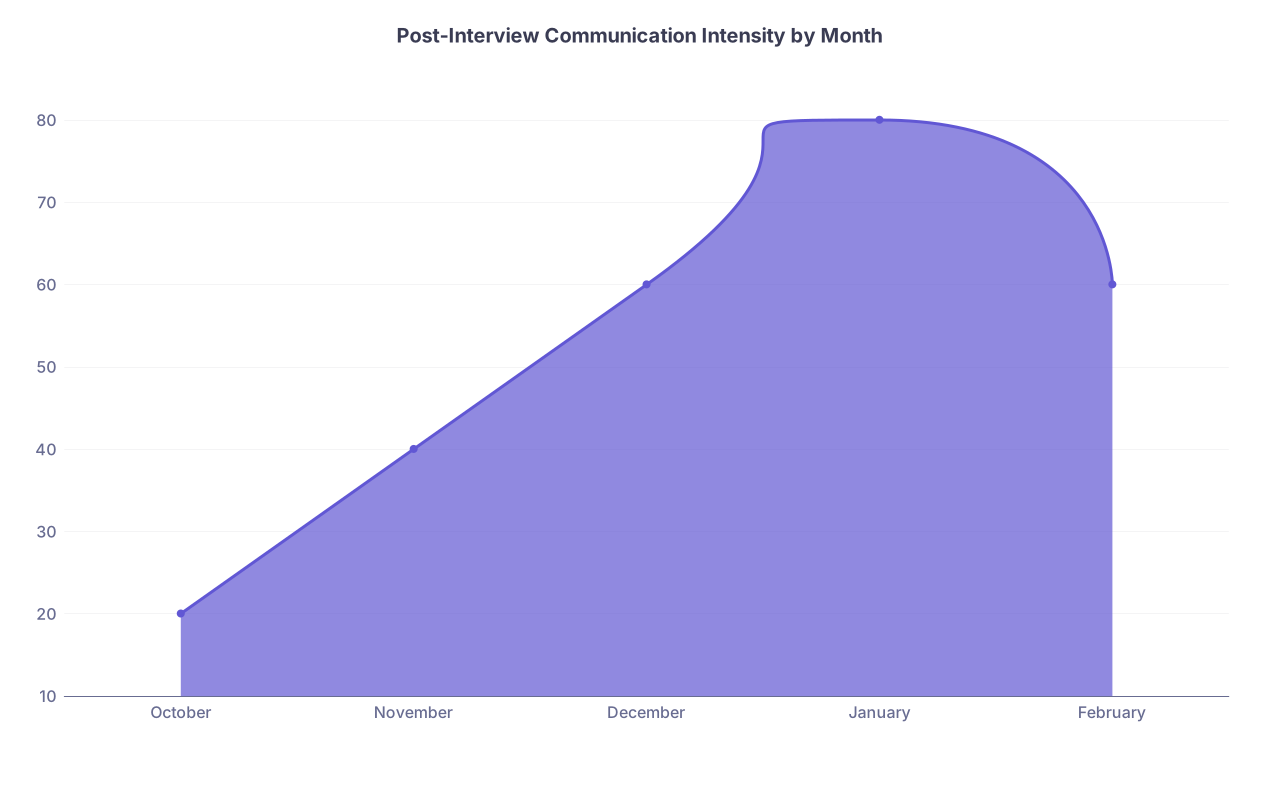
| Category | Value |
|---|---|
| October | 20 |
| November | 40 |
| December | 60 |
| January | 80 |
| February | 60 |
Intensity = how critical your letters are in that month (not number of emails).
Now let us go month by month.
October–November: Early Interview Season
At this point you should not be blasting programs with extra letters. You are still collecting data.
Week-by-week focus
Week 1–4 after your first interviews:
Systematize:
- Create a spreadsheet: program, city, PD email, coordinator email, interviewers, vibe score, notes.
- Add a column “Needs update?” and keep it initially set to “No” for all programs.
Thank‑you letters go out within 72 hours of each interview. That is it.
When to send updates this early
Send an update letter only if there is a major new development:
- New first‑author pub accepted (or at least formally accepted, not just “submitted”).
- Step 2 CK score released and significantly improves your application.
- Major award or honor (AOA, Gold Humanism, high‑impact grant, national leadership).
If that happens in October–November:
- Wait until at least 1–2 weeks after your interview at that specific program.
- Send a single concise update email:
- Subject: “Application Update – [Your Name], [Specialty]”
- 1–2 lines reminding them who you are (school, interview date).
- 2–3 lines describing the new development and why it is relevant.
Do not send a “letter of interest” yet. It is premature. You do not know your true preferences.
December: Consolidation and Targeted Updates
By December, you have likely done half or more of your interviews. You are starting to see patterns.
At this point you should:
- Begin narrowing to a top 5–8 list in your head.
- Decide which programs, if any, genuinely deserve an update letter.
Early December (Dec 1–15)
Focus:
- Keep sending normal thank‑you notes for new interviews.
- For October/early November interviews where you now have new information, send updates.
Good December updates:
- Step 2 CK score showing strong improvement over Step 1.
- A paper accepted or published with clear relevance to the specialty.
- A new rotation, leadership role, or quality improvement project that demonstrates a fit with that program’s strengths.
Bad December updates:
- “I just wanted to reiterate my interest.” (Empty.)
- “I continue to be very impressed…” with no new information.
- Weekly “checking in” emails.
Frequency rule: No more than one substantive update per program unless something truly massive happens (e.g., first‑author NEJM paper, major visa change).
Late December (Dec 16–31)
The system slows down. Faculties are on vacation. Many PDs are off email or only checking urgently.
At this point you should:
- Avoid sending high‑stakes letters (especially letters of intent) during the last 2 weeks of December. They will bury under holiday overload.
- Instead:
- Polish a master template for January letters of interest.
- Finalize which program is likely to be your true #1 by mid‑January.
- Keep updating your rank impressions after each interview.
If you must send a December update (e.g., Step 2 CK just released and programs need it):
- Aim for mid‑week mornings.
- Keep it brief and very clear in the subject line.
January: The Critical Month for Signaling
January is where timing actually influences rank lists. Interview season is wrapping up. ROL opens. PDs start talking to their teams.
At this point you should be executing a staged communication plan.
Early January (Jan 1–15): Finish Interviews + Set Your Board
Tasks:
Finish remaining interviews and standard thank‑you notes.
By January 10–15, create three buckets:
- Bucket A (Top 3–5 programs) – Places you would be thrilled to match.
- Bucket B (Realistic middle group) – Places you like and can realistically match.
- Bucket C (Safety / geographic must‑have) – Places that cover your floor.
Identify:
- 1 program for a potential letter of intent (#1 spot).
- 3–6 programs for possible letters of interest (“among my top choices”).
Do not send anything major before you know your true top tier. Knee‑jerk “you are my favorite program” emails in early January often age badly.
Mid-January (Jan 16–23): First Wave of Signaling
Now programs are refining rank lists but not locking them yet.
At this point you should:
1. Send letters of interest to selected programs
Ideal timing: Jan 16–23.
Who gets them:
- Programs in your Bucket A or strong Bucket B that:
- You genuinely might rank in your top group.
- Have shown some reciprocal interest, or you felt a strong fit.
Content:
- Subject: “Letter of Interest – [Your Name], [Specialty]”
- 1–2 sentences: Thank them for the interview; remind them of your interview date/role/school.
- 1–2 paragraphs:
- Specific reasons their program aligns with your goals (clinical mix, research focus, culture, geography).
- Specific things you talked about on interview day to show this is not a copy‑paste blast.
- A clear but honest statement. For example:
- “Your program is among my top choices, and I would be very excited to train there.”
- Do not say “I will rank you #1” to more than one program. Ever.
2. Send any final necessary updates
Combine with interest letters when possible:
- “Since we last spoke, my Step 2 CK score has been released…”
- “Our manuscript on [topic] has been accepted to [journal]…”
Again: consolidate to avoid multiple small emails.
Late January – Mid February: Letters of Intent and Final Nudges
Now you are entering the narrow window where a well‑timed letter of intent may actually sway a borderline position on a rank list.
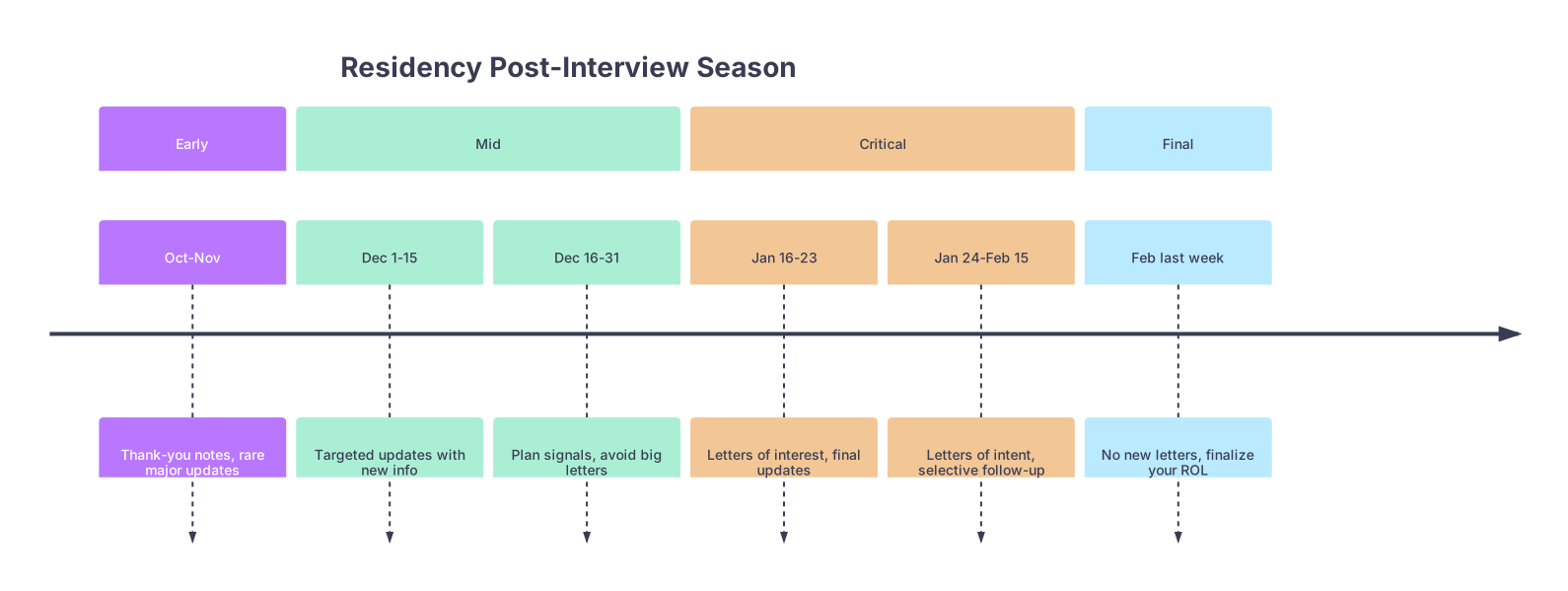
| Period | Event |
|---|---|
| Early - Oct-Nov | Thank-you notes, rare major updates |
| Mid - Dec 1-15 | Targeted updates with new info |
| Mid - Dec 16-31 | Plan signals, avoid big letters |
| Critical - Jan 16-23 | Letters of interest, final updates |
| Critical - Jan 24-Feb 15 | Letters of intent, selective follow-up |
| Final - Feb last week | No new letters, finalize your ROL |
Late January (Jan 24–31): Decide Your #1 and Commit
By now you should have:
- Completed almost all interviews.
- Reviewed your spreadsheet, notes, and personal priorities.
At this point you should:
- Choose your true #1 program.
- Not your parents’ #1. Not Reddit’s #1. Yours.
- Prepare a single letter of intent.
Anatomy of a proper letter of intent
Timing: Jan 24 – Feb 7 is ideal. After that, some programs are already finalizing lists.
Content structure:
- Subject:
- “Letter of Intent – [Your Name], [Specialty]”
- First paragraph (make it explicit early):
- “I am writing to let you know that [Program Name] is my clear first choice, and I will be ranking your program #1 on my rank order list.”
- Middle: 1–3 paragraphs with:
- Specific, concrete reasons: curriculum, specific faculty, patient population, track structure.
- A reminder of your strengths and how they fit (research match, teaching focus, procedural interest).
- Closing:
- Reiterate your commitment.
- Thank them for their time and consideration.
Only send this to one program. Programs talk. Faculty move. Getting caught double‑promising is an instant credibility hit.
Early–Mid February (Feb 1–15): Gentle Follow‑Up Only
By early February, many programs are locking their lists or close to it.
At this point you should:
- Avoid new “I am very interested” letters unless:
- You did not previously send anything, and this program is important for geographic or visa reasons.
- There has been a major new development.
Appropriate actions:
- If you sent a letter of intent and have a genuinely close relationship with the PD or a faculty mentor there, a very brief follow‑up around Feb 7–12 is sometimes reasonable:
- “I just wanted to briefly reiterate that your program remains my clear first choice. Thank you again for your consideration.”
- Otherwise, let your previous correspondence stand.
Inappropriate in February:
- Fishing emails asking “Where am I on your rank list?”
- Weekly check‑ins.
- Copy‑pasted “you’re near my top” emails to 15 programs.
Final Week Before Rank List Deadline (Late February)
The NRMP ROL certification deadline hits in late February.
By the last 7 days before that date, here is the blunt reality:
- Many programs have already certified their lists.
- Last‑minute emails rarely move you from Rank #24 to Rank #3.
- Most of the “movement” happens before the final week.
At this point you should:
- Stop sending new letters unless:
- A truly exceptional circumstance occurs (medical leave, catastrophic error in application, critical visa update).
- Focus on your own rank list:
- Double‑check order and certification.
- Make sure it reflects your true preferences, not speculation about how programs feel about you. The Match algorithm favors applicant preference.
Specialty and Program Variations (What Actually Changes)
Some specialties are more sensitive to post‑interview signals than others.
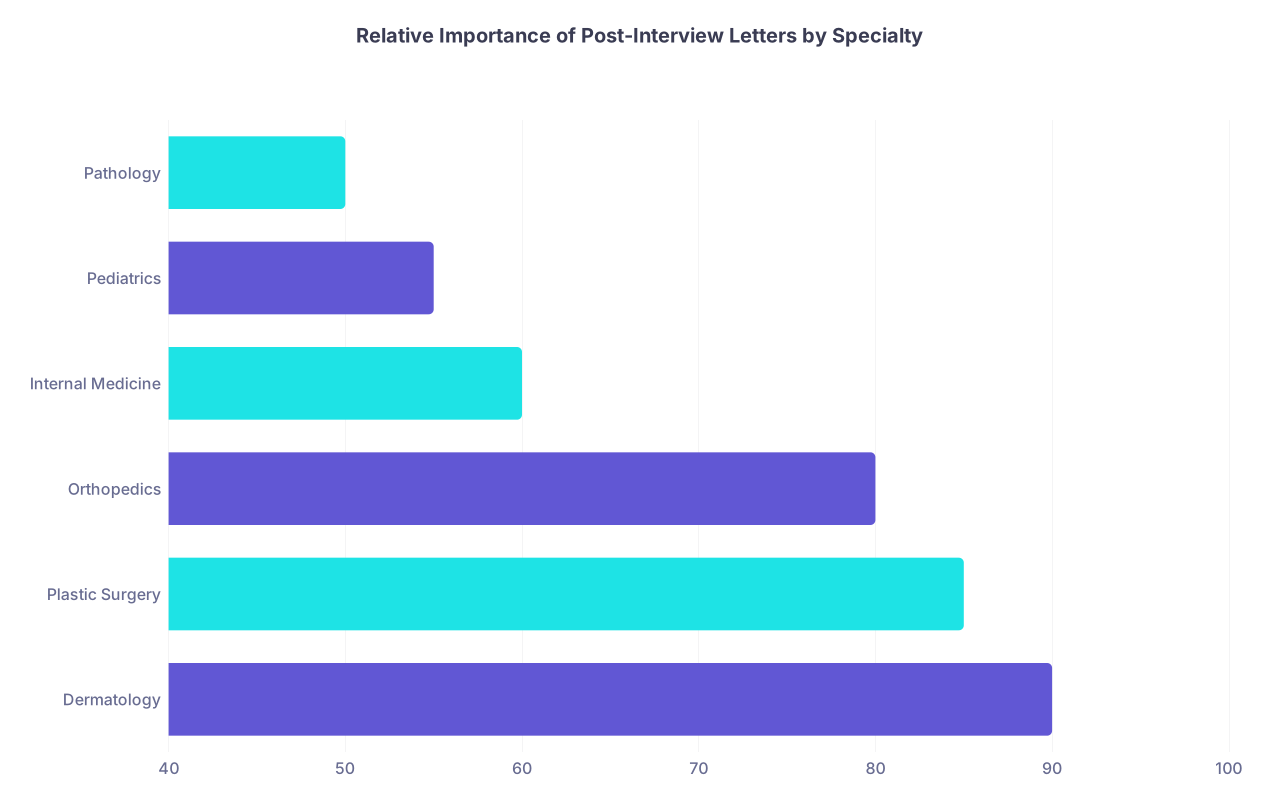
| Category | Value |
|---|---|
| Dermatology | 90 |
| Plastic Surgery | 85 |
| Orthopedics | 80 |
| Internal Medicine | 60 |
| Pediatrics | 55 |
| Pathology | 50 |
Rough rule:
- Highly competitive, small‑class specialties (Derm, Ortho, ENT, Plastics, Rad Onc):
- Signals and letters may carry a bit more weight.
- PDs sometimes keep informal “interest lists.”
- Large categorical programs (IM, Peds, FM):
- Letters matter more at the margins and for clarifying geography/fit.
But the timing logic above stays roughly the same.
Common Timing Mistakes You Should Avoid
To save you pain, here are errors I see every year:
Sending a letter of intent in November.
- You have no idea yet. It comes off as naïve or manipulative.
Firing off interest letters to 12+ programs the same week in February.
- PDs sense mass emails. They talk.
Sending 3–4 tiny updates over 3 months instead of one consolidated letter.
- You become the “constant emailer.” Not in a good way.
Trying to resurrect a program you never heard from post‑interview with a February epic.
- If they have been silent for months, a long last‑minute essay will not fix it.
Ignoring time zones and holidays.
- Sending a key letter on Dec 24 or at 11:59 PM local time for the program is not strategic.
Quick Reference: What To Send When
Here is your stripped‑down playbook by phase:
0–3 days after each interview
- Short thank‑you emails.
October–November
- Only major updates if something substantial changes.
December 1–15
- Targeted update letters with real new information for select programs.
December 16–31
- No big new signals. Plan January communication and choose likely top tier.
January 16–23
- Letters of interest to selected programs (top group).
- Combine with any final updates.
January 24–February 7
- One letter of intent to your true #1 program.
- Optional brief interest nudges for a couple of other top choices if not already done.
February 8–Rank List Deadline
- Minimal, only if absolutely necessary.
- Focus on finalizing and certifying your ROL.
Today, before you do anything else, open a blank spreadsheet and list every program you have interviewed at with three extra columns: “Needs update?”, “Interest letter?”, “Intent (Y/N).” Fill those in honestly. That grid will drive every email you send from now until the rank list deadline.