
The biggest mistake rising MS4s make is thinking ERAS prep starts when the application opens. It doesn’t. By then, you’re already behind.
You’re about to see what on-time actually looks like—month-by-month, from MS3 spring through ERAS opening. I’ll walk you from “vague ideas” to “application locked and loaded,” with clear checkpoints so you know if you’re on track or late.
We’ll start in March of MS3 and run through ERAS opening in June.
Big-Picture Timeline: MS3 Spring → ERAS Opening
At this point you should anchor yourself with the overall arc:
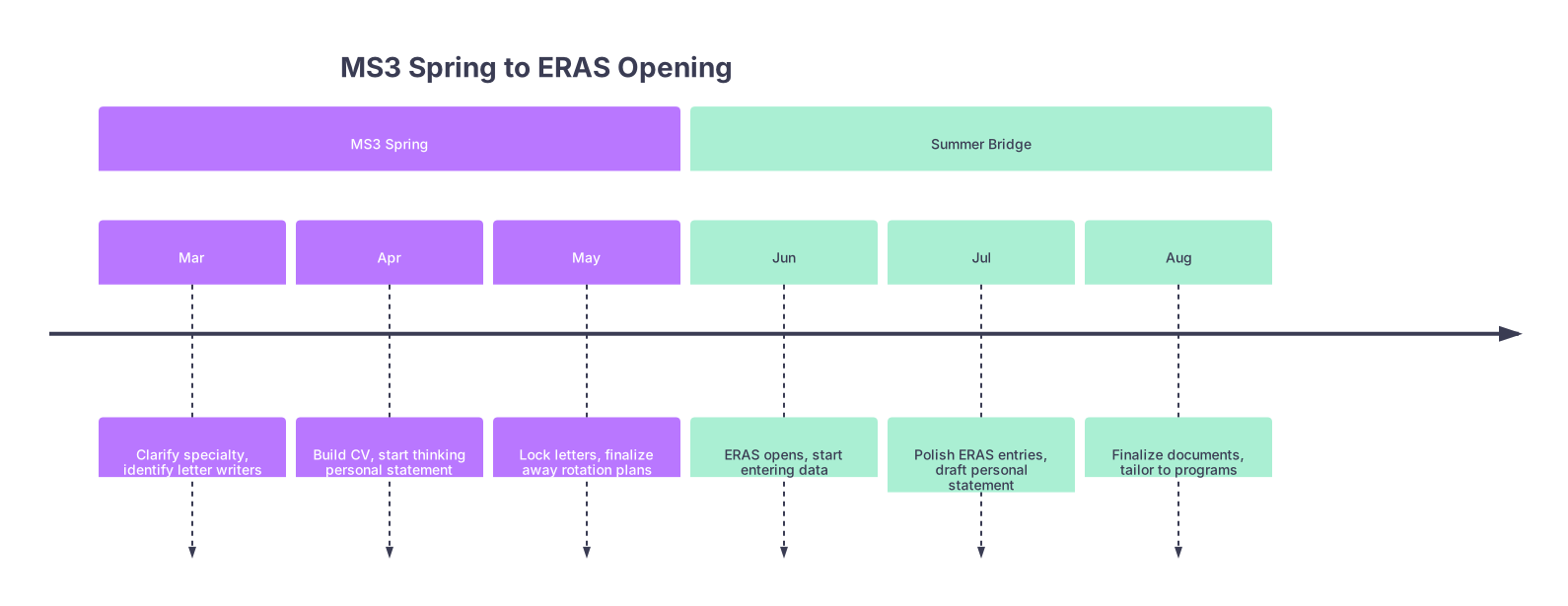
| Period | Event |
|---|---|
| MS3 Spring - Mar | Clarify specialty, identify letter writers |
| MS3 Spring - Apr | Build CV, start thinking personal statement |
| MS3 Spring - May | Lock letters, finalize away rotation plans |
| Summer Bridge - Jun | ERAS opens, start entering data |
| Summer Bridge - Jul | Polish ERAS entries, draft personal statement |
| Summer Bridge - Aug | Finalize documents, tailor to programs |
Now let’s go month-by-month and then, as we get closer, week-by-week.
March (MS3 Spring): Commit to a Direction and Build the Foundation
By March, the fantasy phase is over. You don’t need every detail figured out, but you do need a working plan.
At this point you should…
Narrow to 1 (maybe 2) specialties
- If you’re still juggling 3–4, it’s time to cut.
- Use:
- Your evals and feedback (are you actually good at this specialty?)
- Step scores (a 205 applying ortho is a different reality than a 255)
- Lifestyle tolerance (call-heavy vs clinic-heavy)
- If you’re truly split between two, pick a primary and a “backup with overlap” (e.g., IM + Neuro, Peds + FM). Avoid pairing two highly competitive fields as “backup.”
Audit your competitiveness Pull everything into one place and look at yourself the way a PD will:
Residency Competitiveness Snapshot Template Category Your Data Target for Specialty Step 1 Step 2 CK (goal) Class rank/MSPE Research Home program? Yes/No Leadership If you’re coming up short:
- Flag what can still be improved before September (Step 2, research abstracts, strong letters, sub-I performance).
- Accept what can’t be changed. You live with the Step 1 you have.
Identify letter writers
This is where a lot of people sleepwalk.You want:
- 2–3 attendings in your chosen field who:
- Actually know you
- Have seen you work over time (not just 2 days on consults)
- 1 non-specialty letter if helpful:
- IM for EM applicant
- Surgery for anesthesia, etc.
At this point:
- Make a list of 5–7 potential letter writers.
- Note:
- What rotation you worked with them on
- Whether they supervised you directly
- How you performed (be honest)
- 2–3 attendings in your chosen field who:
Start your CV (and stop pretending the school-uploaded one is enough)
Use a simple structure:- Education
- Exams
- Honors/Awards
- Research
- Teaching
- Leadership
- Volunteer
- Work experience
The point isn’t perfection. The point is to capture every activity with:
- Start/end dates
- Location
- Supervisor name/contact
- 1–3 bullet descriptions
You’ll mine this later for ERAS entries.
Set your Step 2 CK timeline If you haven’t taken CK:
- Target by late July if possible.
- Ultra-competitive specialties: earlier is better; June/early July scores hit before many invites.
Block out:
- 4–6 dedicated weeks, or
- Integrated study plan if you can’t fully carve out time.
April: Lock Your Narrative and Research Plan
By April, decisions become commitments. No more “seeing how it goes.”
At this point you should…
Confirm your specialty choice (or primary + secondary)
By mid–late April, you should:- Tell your advisor your tentative specialty.
- Get honest feedback:
- “Given my scores and evals, what tier of programs should I aim for?”
- Adjust expectations early, not in August.
Set up/expand research (but smartly)
If you need more research:- Aim for small, fast-moving projects:
- Case reports
- Retrospective chart reviews
- QI projects
- Ask: “What can realistically be submitted or presented by August/September?”
Don’t:
- Start a huge basic science project now hoping for a Nature paper. It won’t save this cycle.
- Aim for small, fast-moving projects:
Map your MS4 schedule with applications in mind Prioritize:
- Sub-I in your specialty: ideally June–August.
- If your specialty cares about away rotations:
- Schedule one or two between July–September.
- Keep a light month around your CK date if you can.
Your MS4 schedule is part of your application whether you like it or not. A stacked July–August with sub-I + away + CK usually ends badly.
Draft your “story skeleton” Not the full personal statement yet. Just the spine:
- Why this specialty?
- What 2–3 defining experiences moved you toward it?
- What kind of resident do you want to be?
- Any big context (non-traditional path, career before med school, etc.)?
Write 1–2 messy pages. This becomes raw material for June/July writing.
Start your program strategy list Rough categories:
- Dream / reach
- Realistic
- Safety
Use:
- Specialty NRMP data (Charting Outcomes)
- Word-of-mouth from residents
- Where your school historically matches
Don’t obsess over exact numbers yet. Just get 20–30 programs on a spreadsheet and note:
- Location
- Type (academic/community)
- Reputation/tier
May: Letters, Logistics, and Away Rotation Reality
May is when things get very real very fast. The people who are calm in August did May correctly.
At this point you should…
Formally ask for letters of recommendation Timeline:
- By early/mid May, you should:
- Verbally ask your top 3–4 attendings.
- Use language like:
“I really enjoyed working with you on [service] and I’m applying to [specialty] this fall. Would you feel comfortable writing me a strong letter of recommendation?”
If they hesitate or say “sure, but I don’t know you that well,” that’s a no. Move on.
When they say yes:
- Provide:
- Updated CV
- Short paragraph about your specialty interests
- Any points you’d be grateful for them to mention (specific cases, skills, growth)
- By early/mid May, you should:
Lock in away rotations (if applicable)
VSLO / away chaos usually hits earlier, but May is when you:- Confirm dates
- Complete paperwork
- Ensure immunizations, titers, background checks are done
If you didn’t get the fancy “name” away you wanted:
- Do not panic.
- Strong performance at a solid mid-tier program often yields a better letter and real interest than being anonymous at a big-name shop.
Tighten your CV and master list By the end of May, you should:
- Have every activity you plan to list on ERAS captured with:
- Dates
- Approx hours/week
- Supervisor
- 1–3 bullets
- Have every activity you plan to list on ERAS captured with:
Plan your ERAS work blocks You can’t “squeeze” ERAS in between random tasks. It eats time.
Sketch your summer:
- Which weeks are for:
- ERAS data entry
- Personal statement drafting
- Program research
- CK dedicated (if applicable)
This is where people either build a realistic plan or enter the “August panic” pathway.
- Which weeks are for:
June: ERAS Opens – Data Entry and Structure
ERAS typically opens in early June. Submissions usually start in September, but by then, your structure should already be in place.
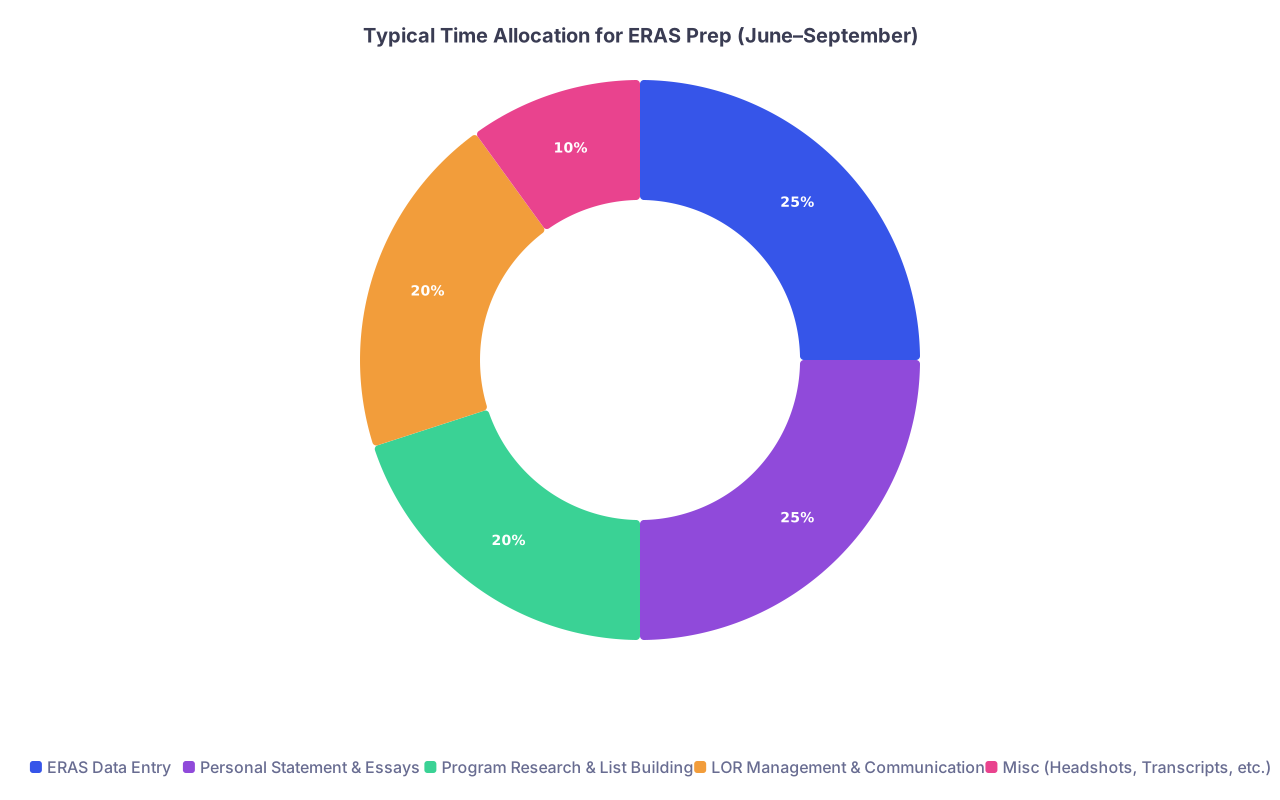
| Category | Value |
|---|---|
| ERAS Data Entry | 25 |
| Personal Statement & Essays | 25 |
| Program Research & List Building | 20 |
| LOR Management & Communication | 20 |
| Misc (Headshots, Transcripts, etc.) | 10 |
First Half of June: Set Up and Dump Everything In
At this point you should…
Log in to ERAS the day it opens Not to finish it. To:
- See every section
- Understand character limits
- Note what data you’re missing (exact dates, addresses, etc.)
Upload basic demographics and education Easy wins:
- Personal info
- Schools attended
- Graduation dates
- Licensure exams (Step 1, Step 2 if done)
Begin Activities section – rough first pass Use your CV to:
- Dump all activities into ERAS
- Don’t worry about polished wording yet
- Aim for completeness
Prioritize:
- Clinical/research experiences
- Teaching
- Leadership
- Significant volunteer/work
Flag your “most meaningful” experiences You’ll refine this later, but it helps to identify now:
- Which 3–5 experiences actually define you
- Where you want to spend more characters and story
Track letters in ERAS
- Add letter writers’ names and positions in the LOR section.
- Generate and send them ERAS letter request forms if your school uses them.
- Confirm:
- Deadline expectations (many letter writers move slow in summer)
- Which specialty the letter is for if you’re dual applying
Second Half of June: Start Polishing and Drafting
Now the structure is in. You turn to quality.
At this point you should…
Clean up Activities descriptions (round 1) For each activity, aim for:
- 2–3 concise bullets
- Focus on:
- What you did
- Skills you built
- Impact (on patients, team, system)
Bad:
“Responsible for patient care, presenting on rounds, reading about conditions.”
Better:
“Independently followed 4–6 patients daily, presenting concise assessments and plans on rounds.”
“Led teaching for 2 MS2 students on the rotation, providing feedback on presentations.”
“Created a patient education handout for [condition], now used in clinic.”Draft your first real personal statement Use that story skeleton from April.
Structure:
- Opening vignette or hook (not cliché)
- 2–3 paragraphs: experiences → why this specialty
- 1 paragraph: what you bring / what you want in training
- Clean, non-dramatic close
You’re not aiming for final form. You’re aiming for something you can send to:
- A trusted attending
- A resident in your specialty
- Your advisor
Collect headshot requirements
- Check:
- ERAS photo requirements
- Your school’s photographer or a local option
- Schedule the shoot for July at the latest.
- Check:
Check on letters – gently If you asked in May:
- A short email:
“I just wanted to share that ERAS has opened and applications can be submitted in September. I’m very grateful you agreed to write a letter on my behalf; please let me know if there’s anything else I can provide to make that easier.”
- A short email:
July: Deep Polish, Targeting, and Final Narrative Work
By July, the people who look “relaxed” in August are doing the heavy lift now. This month is for refinement and alignment.
Week 1–2 of July: Tighten ERAS and Personal Statement
At this point you should…
Rewrite Activities with rigor (round 2) Go through each entry asking:
- Does this sound like a human or a buzzword generator?
- Could another student copy-paste this and it’d still be true for them? If yes, make it more specific.
Focus your energy on:
- Top 10–12 activities
- “Most meaningful” ones
Refine personal statement Integrate feedback from:
- Faculty in your specialty
- Someone who can flag clichés and vague language
Watch for:
- Trauma-dump without reflection
- “I’ve always wanted to be a doctor since I was 5”
- Over-the-top hero narratives
Start building a serious program list Use a basic breakdown like:
Program List Tiering Example Tier Approx % of List Example Count (60 total) Reach 15–20% 10–12 Target 50–60% 30–35 Safety 20–30% 12–18 Factors:
- Geographic ties
- Step score alignment with program averages
- Your school’s historical match footprint
- Program size (smaller programs ⇒ fewer interview slots)
Get your headshot done This is not a selfie job.
- Professional or at least semi-professional
- Solid background
- Business casual or suit
- Neutral expression, approachable
Week 3–4 of July: Specialty-Specific Documents and Letters
At this point you should…
Create specialty-specific personal statements if needed If you’re dual applying:
- One PS per specialty
- Do not send a generic “I love patient care and learning” essay to both
Check letter status more directly By late July:
- You should have most letters uploaded or at least confirmed in progress.
- If a key letter writer hasn’t uploaded:
- Send a polite reminder with:
- Your ERAS ID
- Deadline reminder (mention applications open in September and some programs review early)
- Send a polite reminder with:
Align your ERAS with your story Read:
- Your personal statement
- Your Activities
- Your program list
Ask:
- Do they match?
- If you’re selling yourself as “research-heavy future academic,” does your ERAS back that up?
- If you’re emphasizing teaching and underserved work, is that obvious in your entries?
August: Final Integration, Targeting, and Error-Proofing
August is not when you “start” ERAS. It’s when you finish it.
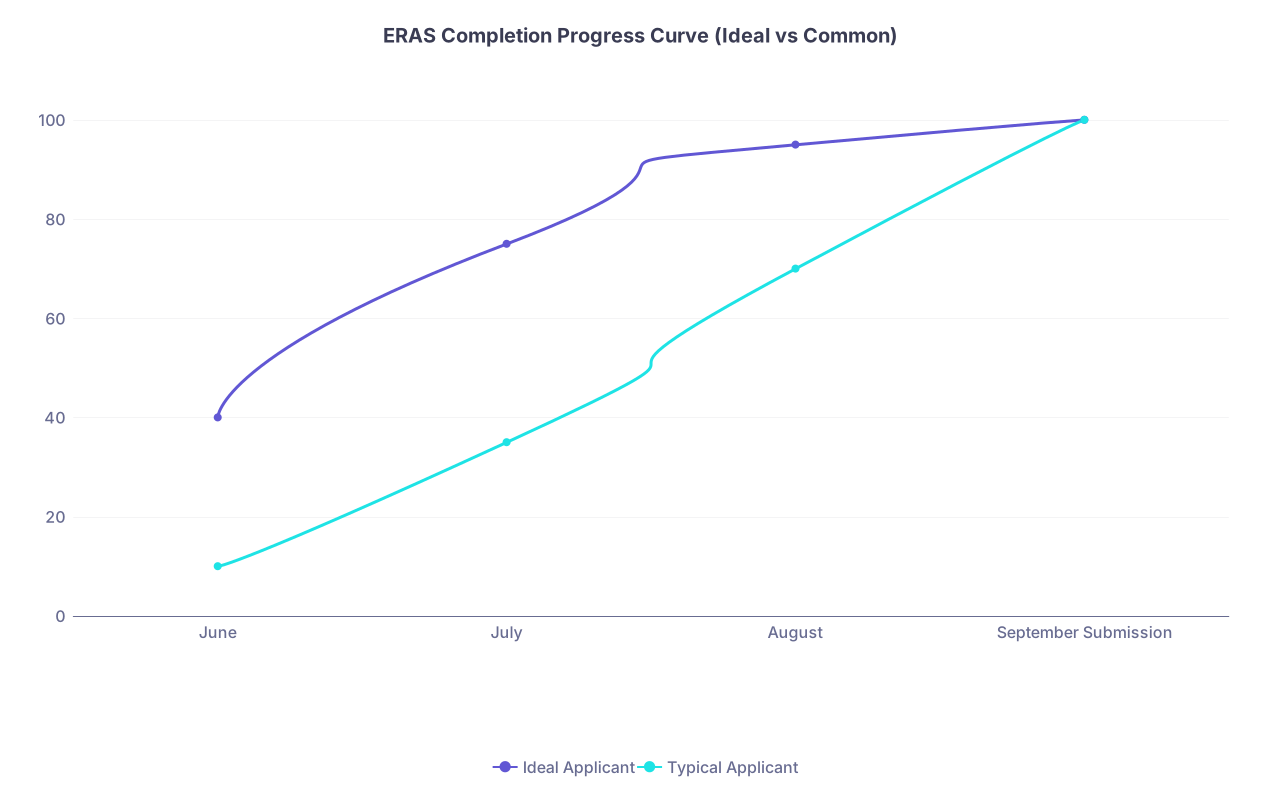
| Category | Ideal Applicant | Typical Applicant |
|---|---|---|
| June | 40 | 10 |
| July | 75 | 35 |
| August | 95 | 70 |
| September Submission | 100 | 100 |
You want to be the top line, not the bottom.
Early August: Near-Final Versions
At this point you should…
Have a nearly complete ERAS draft
- All Activities entered and polished
- Education, exams, experiences done
- Personal statement(s) uploaded as draft
- Photo uploaded
Program list in near-final form
- 80–90% of programs selected
- You know:
- Which get which personal statement
- Which get which letter combinations (if your specialty uses different sets)
Do a precision edit pass Look for:
- Typos
- Inconsistent dates
- Overlapping or impossible timelines
- Duplicate activities listed in slightly different ways
Reality-check with a mentor or advisor Share:
- Your CV or ERAS printout
- Program list
- Personal statement
Ask for:
- Brutal feedback on competitiveness and targeting
- Suggestion of overlooked programs at your level
Late August: Lockdown Phase
This is when you take ERAS from “almost done” to “ready the day applications open.”
At this point you should…
Finalize your program list
- Add or subtract based on:
- New intel from residents/faculty
- Your actual CK score if it’s back
- Confirm:
- Backup programs are truly safer
- You’re not wasting half your list on pie-in-the-sky long shots
- Add or subtract based on:
Assign documents to programs For each program:
- Confirm:
- Correct personal statement
- Correct letter set
- Double-check dual-application setups:
- No EM PS going to an IM program
- No surgical letter as your only letter to pediatrics, etc.
- Confirm:
Do a full ERAS walkthrough like you’re a PD Step through:
- Demographics
- Education
- Exams
- Activities
- Experiences
- PS
- Photo
Ask a friend or co-student to read for:
- Overall impression
- Red flags
- Repetitive wording
Early September (ERAS Opening for Submission): Execution Week
By the time ERAS actually allows submission, this should be mostly anticlimactic.

| Step | Description |
|---|---|
| Step 1 | Open ERAS |
| Step 2 | Review All Sections |
| Step 3 | Confirm Program List |
| Step 4 | Assign PS and LORs |
| Step 5 | Final Spell Check |
| Step 6 | Save PDF Copy |
| Step 7 | Submit Applications |
At this point you should…
Freeze major changes 48–72 hours before submission Last-minute edits create last-minute errors.
Download or print a PDF of your application
- ERAS usually allows a “print/preview” version.
- Save this. This is what PDs will see.
Submit to all core programs on opening day or very shortly after
- Early submission isn’t about gaming some magical algorithm; it’s about being on the table when invitations first go out.
- Don’t sit on a “nearly done” app for a week because you’re tweaking adjectives.
Track confirmations
- Ensure:
- Programs show as applied
- Fees are processed
- Letters are assigned and visible
- Ensure:
Quick Visual: What You Should Have Done By Each Month
| Month | Key Milestones Completed |
|---|---|
| March (MS3) | Specialty narrowed, potential letter writers listed |
| April | Specialty confirmed, research plan and MS4 schedule |
| May | Letters requested, away rotations and CV solid |
| June | ERAS opened, data entered, PS drafted |
| July | ERAS polished, PS refined, headshot done |
| August | Program list finalized, app in near-final form |
| Early Sept | ERAS submitted, confirmations checked |
One More Thing: Emotional Timeline
People underestimate the emotional swing of this phase.
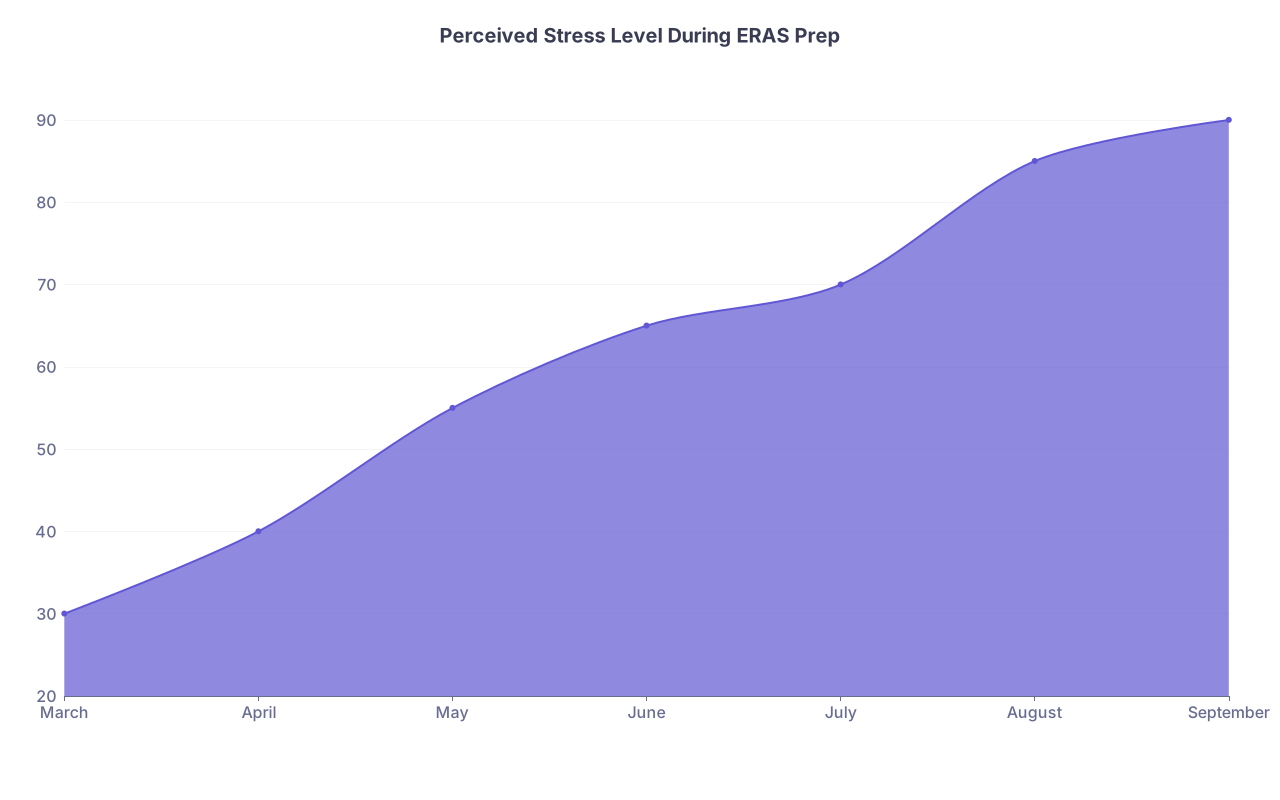
| Category | Value |
|---|---|
| March | 30 |
| April | 40 |
| May | 55 |
| June | 65 |
| July | 70 |
| August | 85 |
| September | 90 |
You don’t eliminate stress. You decide when you feel it.
If you follow this timeline, the real panic stays moderate, even in August–September. If you don’t, all the stress you avoided in March–June gets compounded into a single ugly month.
Final Takeaways
- ERAS prep starts in MS3 spring, not when the application opens. By June, you’re entering data, not choosing a specialty.
- Each month has a job. March–May = direction and letters. June–July = structure and narrative. August = precision and proofing.
- On-time feels early. If you feel “a bit ahead” in June and July, you’re probably right on schedule.