
The biggest mistake ERAS applicants make between June and September is thinking they “have time.” You do not. By the time programs open applications in September, anything not already polished is usually done poorly—or not at all.
Below is exactly what to finalize each week from June through the September ERAS opening. Read it straight through once, then go back and map this onto your own calendar.
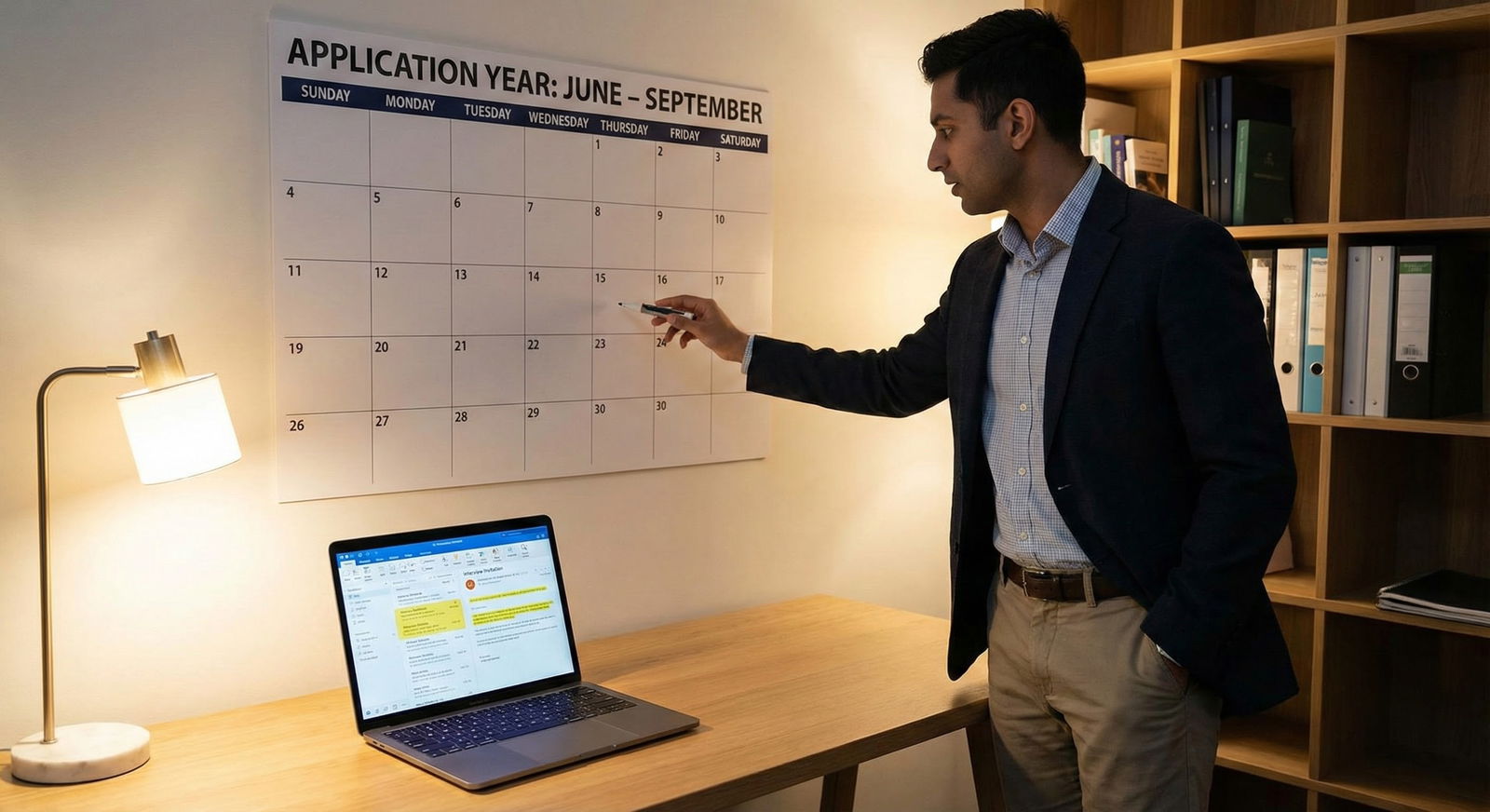
Big‑Picture Timeline: June–September
At this point you should think in phases, not vibes. There are four.
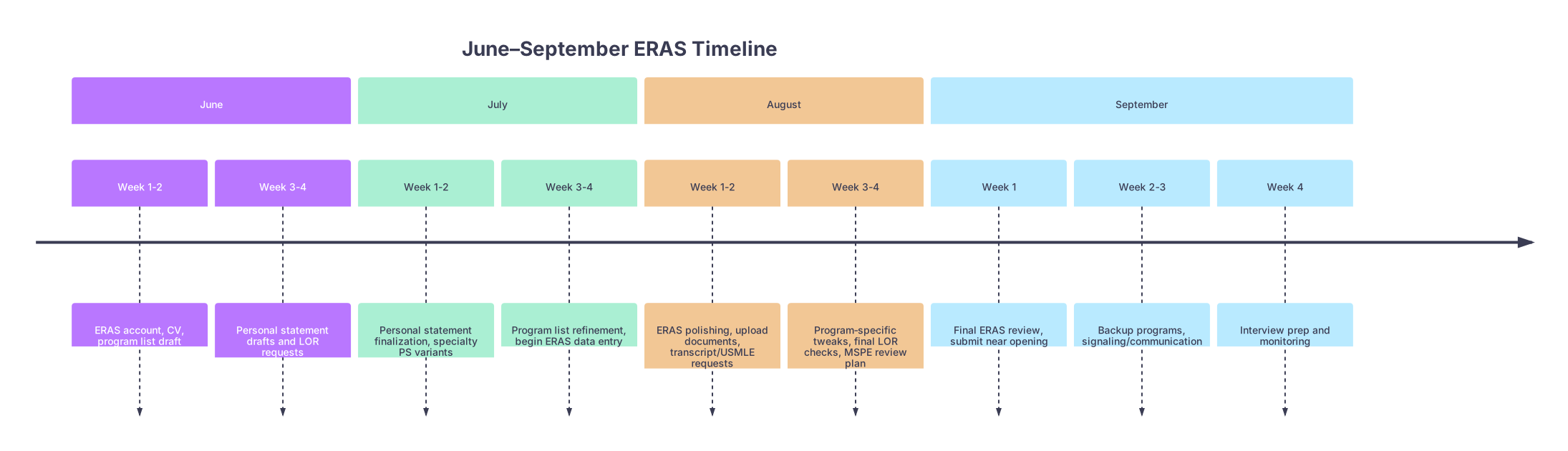
| Period | Event |
|---|---|
| June - Week 1-2 | ERAS account, CV, program list draft |
| June - Week 3-4 | Personal statement drafts and LOR requests |
| July - Week 1-2 | Personal statement finalization, specialty PS variants |
| July - Week 3-4 | Program list refinement, begin ERAS data entry |
| August - Week 1-2 | ERAS polishing, upload documents, transcript/USMLE requests |
| August - Week 3-4 | Program‑specific tweaks, final LOR checks, MSPE review plan |
| September - Week 1 | Final ERAS review, submit near opening |
| September - Week 2-3 | Backup programs, signaling/communication |
| September - Week 4 | Interview prep and monitoring |
If your school’s calendar is slightly off (earlier MSPE meeting, different vacation blocks), adjust by a week—but do not slide tasks “later.” Slide them earlier.
June: Foundation Month (No, It Is Not “Early”)
By June you should already know:
- Your specialty (and whether you need a backup)
- A rough competitiveness estimate: Step scores, class rank, research
If you do not, you fix that in the first 7–10 days of June. Then you start building.
Week 1 (Early June): Set Up, Scope, and Reality Check
At this point you should:
Create/activate your ERAS account
- Log in, click through every section once.
- Identify what you do NOT understand and list questions for your dean’s office.
Build or clean your master CV
- One document with:
- Education
- Work experience
- Research (with PMIDs, presentation dates)
- Leadership, volunteering
- Honors/awards
- This becomes your ERAS entries. If you try to build from memory in August, you will miss things.
- One document with:
Assess competitiveness and target program tier
- Talk to:
- A specialty advisor in your field.
- One resident if possible (alumni from your school).
- Ask blunt questions:
- “With 235/246 and 1 pub, where should my floor/ceiling be?”
- “How many programs should I apply to for [your profile]?”
- Talk to:
Draft a rough program list by categories
- Buckets:
- Reach
- Realistic
- Safety / backup specialty (if applicable)
- Buckets:
If IMGs or DO applying to MD‑heavy specialty
- At this point you should:
- Confirm which programs actually take your background.
- Start a spreadsheet with:
- Program name
- IMG/DO friendliness
- Visa status (if relevant)
- Contact emails
- At this point you should:
You are laying tracks. No polishing yet.
Week 2 (Mid‑June): Letters of Recommendation Strategy
Letters are usually the slowest piece. That is why you front‑load them.
At this point you should:
Decide how many LORs and from whom
- Standard:
- 3–4 clinical letters for your main specialty
- 1 additional letter if applying to backup specialty
- Prioritize:
- Faculty who know your work well over famous names who barely remember you.
- Standard:
Request letters—formally and in writing
- In person or Zoom ask first.
- Follow with an email:
- CV
- Draft personal statement (even rough)
- Bullet list of things you hope they highlight
Upload to ERAS Letter of Recommendation Portal
- Generate LOR slots in ERAS.
- Send each faculty their personalized LOR request with:
- ERAS Letter ID
- Clear deadline (I recommend: “by August 1 for on‑time upload”)
Track LORs in a simple table
| Letter Writer | Specialty | Type | ERAS ID Sent | Confirmed | Uploaded | Target Programs |
|---|---|---|---|---|---|---|
| Dr. Smith (IM) | IM | Dept Chair | Jun 12 | Yes | No | All IM |
| Dr. Lee (Cardiology) | IM | Subspecialty | Jun 12 | Yes | No | Academic IM |
| Dr. Patel (Surgery) | Gen Surg | Core Faculty | Jun 13 | Yes | No | All Surg |
| Dr. Nguyen (FM) | FM | Community | Jun 14 | Pending | No | Backup FM |
If you are asking in late July, you are already behind. Faculty disappear in August.
Week 3 (Late June): Personal Statement – First Drafts Only
Do not obsess over commas in June. You need structure and story.
At this point you should:
Outline your main specialty personal statement
- Basic structure:
- Why this specialty (with one concrete patient or rotation story)
- Evidence you fit (clinical, research, leadership)
- What you want in training
- Write the ugly first draft. 600–750 words.
- Basic structure:
Decide if you need multiple PS versions
- Examples:
- One for academic IM, one for community‑heavy IM
- One for general surgery, one slightly tweaked for prelim/TY
- Separate statement for backup specialty
- Examples:
Get one trusted reader—not a committee
- Someone who knows:
- The specialty
- Your actual personality
- Ask for global feedback only:
- “Does this sound like me?”
- “Any red flags or clichés?”
- Someone who knows:
Create a document naming system
- Example:
PS_IM_Main_v1PS_IM_Academic_v1PS_FM_Backup_v1
- Example:
The goal by end of June: 1–2 solid drafts, not perfection.
Week 4 (End of June): Experience Inventory & Gaps
At this point you should:
List every ERAS‑type experience
- Clinical (including away rotations)
- Research
- Volunteering
- Teaching
- Leadership
Mark what is actually worth including
- Generally:
- Keep: meaningful, longitudinal, or with responsibility.
- Drop: random one‑off 2‑hour events, unless uniquely relevant.
- Generally:
Identify obvious holes
- For example:
- Zero longitudinal service? Consider continuing an existing activity visibly through fall.
- No leadership? Emphasize initiative within roles you already held rather than inventing new titles.
- For example:
Start 1–2 “Most Meaningful” description drafts
- 3–4 experiences you know will be your anchors.
- Think in STAR format (Situation, Task, Action, Result), but shorter.
- Target: 700–800 characters each draft.
You enter July with:
- LORs requested
- PS drafts started
- Experiences mapped
That is a strong position.
July: Build, Refine, and Lock Core Content
July is content month. You should be turning rough material into ERAS‑ready text.
Week 1 (Early July): Personal Statement – Second Draft and Variants
At this point you should:
Revise main specialty personal statement
- Tighten:
- Cut generic lines (“I am passionate about helping others.”)
- Replace with specifics:
- A patient interaction
- A project you actually led
- Aim for ~650 words, clean and readable.
- Tighten:
Draft variant statements if needed
- You do not fully rewrite; you customize:
- Last paragraph to match academic vs community focus.
- Emphasis on research vs service, depending on program types.
- You do not fully rewrite; you customize:
Get 1–2 more targeted reviews
- One person for content.
- One person for language/clarity.
- Not ten people. Too many cooks will flatten your voice.
Finalize near‑final versions
- Name files clearly:
PS_IM_Main_FINALPS_IM_Community_FINAL
- Name files clearly:
You are not uploading yet. But you could if you had to.
Week 2 (Mid‑July): ERAS Data Entry – Skeleton
Now you start clicking into ERAS seriously.
At this point you should:
Complete the “easy” sections fully
- Personal information
- Contact info
- Education history
- Exam scores (or planned dates)
- Licensure (usually N/A, but confirm)
Create placeholders for all experiences
- Enter:
- Organization
- Role
- Dates
- Leave descriptions draft‑level if needed. The point is to see structure.
- Enter:
Decide which experiences will be “most meaningful”
- Usually:
- 1–2 clinical / service
- 1 research (if real)
- 1 leadership / teaching
- Tag them in your own notes so you can focus on polishing these.
- Usually:
Begin listing research output exactly
- Titles
- Co‑authors
- Journal / conference names
- Dates
- Status (submitted/accepted/published)
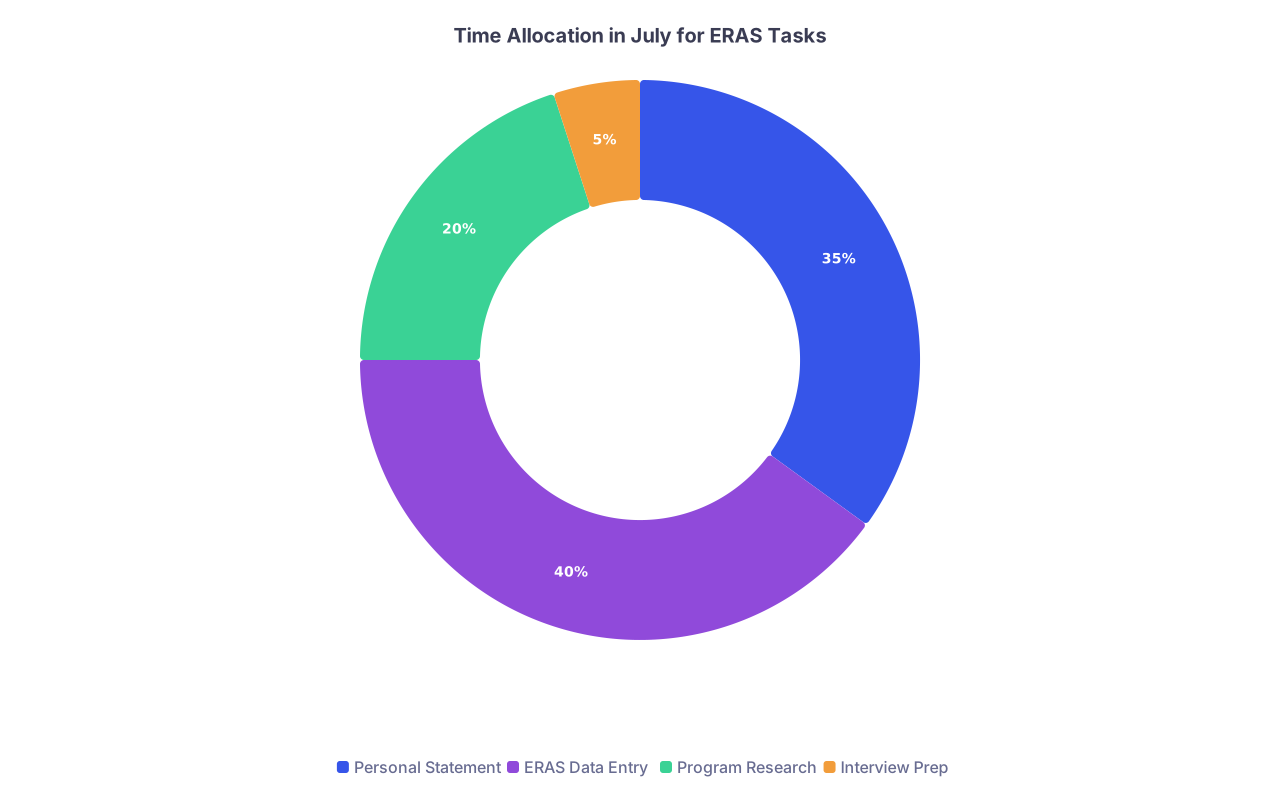
| Category | Value |
|---|---|
| Personal Statement | 35 |
| ERAS Data Entry | 40 |
| Program Research | 20 |
| Interview Prep | 5 |
If you are waiting until August to even open ERAS, you are creating your own emergency.
Week 3 (Late July): Program List – Deep Dive
Your program list decides your interview season more than your Step score at this point.
At this point you should:
Refine program list count based on data
- Use:
- NRMP Charting Outcomes
- Program websites
- Decide:
- Total number of programs
- Distribution across reach / realistic / safety
- Use:
Research individual programs
- For each:
- Minimum score cutoffs
- Visa policy
- DO/IMG comments
- Required materials (extra PS? supplemental questions?)
- Keep notes in a spreadsheet you actually use.
- For each:
Tag priority programs
- Tier 1: “Must apply”
- Tier 2: “Apply if budget allows”
- Tier 3: “Only if desperate”
Map personal statements and LOR combos to program types
- Decide:
- Which PS version goes to which program category
- Which LORs are assigned where (academic vs community letters, etc.)
- Decide:
Week 4 (End of July): Experience Descriptions – First True Polish
At this point you should:
Write and polish all “most meaningful” descriptions
- Concrete details > buzzwords.
- Show progression:
- “Started as volunteer… later trained new students…”
- For each:
- 1 sentence = what it is
- 1–2 sentences = what you did
- 1 sentence = impact on you/others
Draft remaining experience descriptions
- Do not leave any blank.
- Short is fine if it was minor, but still professional.
Check for redundancy
- If your PS already covers Project X in detail, your ERAS entry focuses more on outcomes, not re‑telling the story.
By August 1, core content should exist:
- PS near final
- Experiences entered with at least workable text
- Program list mostly built
- LORs requested long ago
August: Lock, Verify, and Prepare to Submit
August is not the time to be “starting.” It is review, finalize, and contingency planning.
Week 1 (Early August): Documents and LOR Verification
At this point you should:
Confirm LOR status
- Check ERAS at least once weekly.
- If something is missing:
- Send a polite reminder email.
- If non‑responsive, identify a backup letter writer now.
Request transcript and MSPE handling confirmation
- Your med school usually manages:
- Official transcript upload
- MSPE upload (in October)
- Verify:
- They know you are applying.
- You have no missing requirements.
- Your med school usually manages:
Upload USMLE/COMLEX score reports
- Authorize release through NBME/NBOME.
- Confirm the linkage in ERAS.
Upload final personal statements to ERAS (still editable)
- Double‑check:
- Correct version named clearly.
- No weird formatting from copy‑paste.
- Double‑check:
Week 2 (Mid‑August): ERAS Application – Fine Polish
Now you treat ERAS like a finished document.
At this point you should:
Do a full read‑through of the entire application
- Print to PDF if it helps.
- Look for:
- Typos
- Date inconsistencies
- Overused words (“passionate,” “privileged,” “I learned that…”)
Standardize formatting
- Use consistent:
- Tense (usually past tense for past roles)
- Punctuation
- Abbreviations (spell out once, then use abbreviation)
- Use consistent:
Get one “cold reader” review
- Someone who:
- Has not seen your drafts
- Can read like a PD scanning quickly
- Ask: “What impression do you get in 5 minutes?”
- Someone who:
Confirm program list budgets with reality
- Revisit the financial side:
- ERAS fees
- Travel (if any in‑person)
- Make any last adjustments to lower‑yield reach programs.
- Revisit the financial side:
Week 3 (Late August): Program‑Specific Preparation
At this point you should:
Assign PS and LOR configurations to each program
- Inside ERAS:
- Link the correct PS to each program.
- Choose which letters go where, according to their strengths.
- Inside ERAS:
Prepare any known supplemental questions or essays
- Some specialties/programs:
- Ask pre‑application questions.
- Want diversity / hardship statements.
- Draft these now, not after invitations start.
- Some specialties/programs:
Build a simple tracking system for communications
- Spreadsheet columns:
- Program
- Date applied
- Any email contacts
- Interview invite date
- Thank‑you sent (yes/no)
- Spreadsheet columns:
Begin light interview prep
- Outline 10–15 talking points:
- 3 patient stories
- 3 strengths, 3 weaknesses
- 3 things you want in a program
- Do not wait until October to realize you cannot answer “Tell me about yourself” smoothly.
- Outline 10–15 talking points:

Week 4 (End of August): Final Checks and Contingency
At this point you should:
-
- Gaps:
- Any unexplained time without activity?
- Failures:
- USMLE/COMLEX failures addressed in PS or separate note?
- Specialty switch:
- If you changed interests late, is the story coherent?
- Gaps:
Meet with advisor or dean (if available)
- Ask specifically:
- “Is my program list reasonable for my metrics?”
- “Any obvious holes in my application content?”
- Ask specifically:
Set a personal submission window
- Aim:
- Submit within 24–48 hours of ERAS opening for applications.
- Do not wait “to tweak one more sentence” for a week.
- Aim:
September: Submission and Early Positioning
September is about execution, not rewriting your life story.
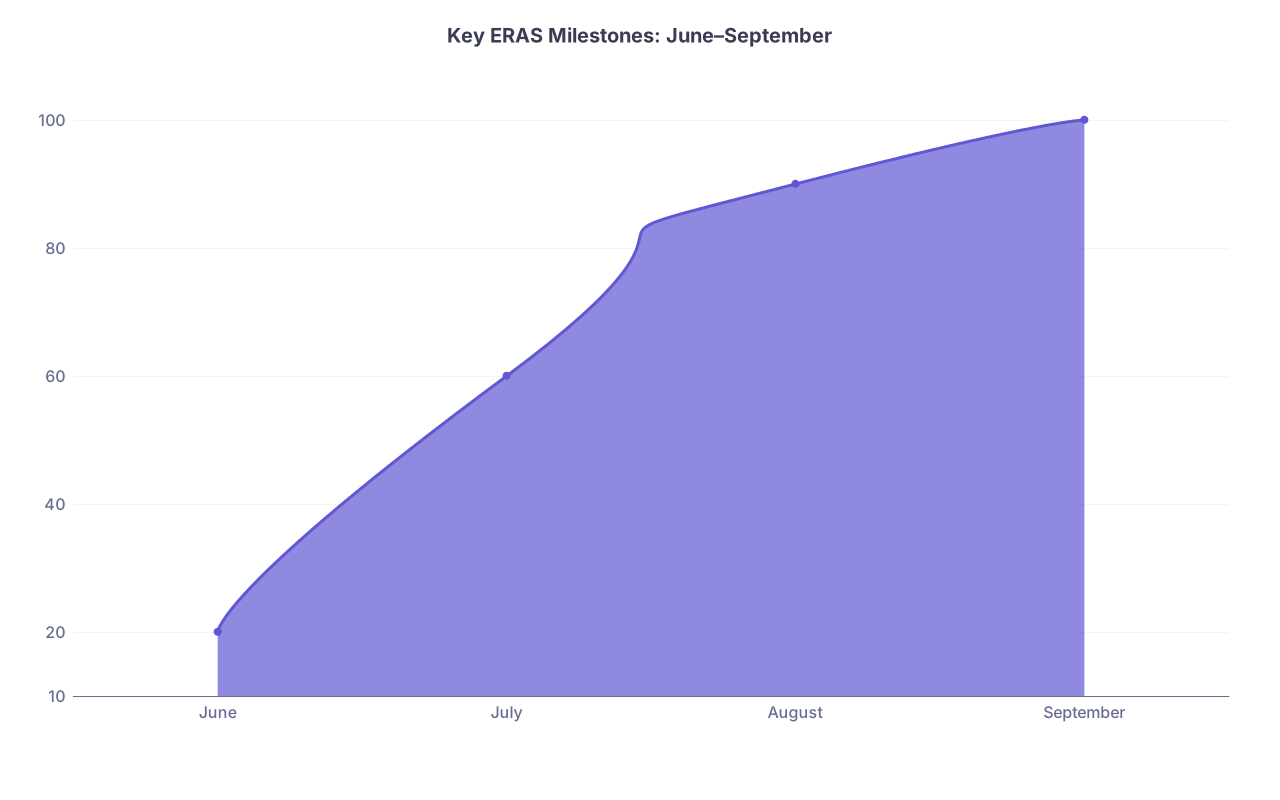
| Category | Value |
|---|---|
| June | 20 |
| July | 60 |
| August | 90 |
| September | 100 |
(Think of this as percent of application completeness. You should be at 90% by the start of September.)
Week 1 (ERAS Opening Week): Submit
At this point you should:
Do a final 30–45 minute review
- No major edits. Only:
- Typos
- Broken capitalization
- Missing assignments (LOR/PS to programs)
- No major edits. Only:
Submit your ERAS application
- Do it once you are satisfied within that first 1–2 days.
- There is no prize for clicking at 8:01 a.m., but there are lost opportunities for submitting significantly late.
Download and save a copy of what you submitted
- For:
- Interview prep
- Future reference
- Avoiding contradictions
- For:
Week 2–3 (Mid‑September): Backup and Signals
At this point you should:
Reassess your list based on new information
- If early rumors about programs closing spots or changing requirements appear (yes, this happens):
- Adjust backup programs if necessary.
- If early rumors about programs closing spots or changing requirements appear (yes, this happens):
Use any specialty signaling systems wisely
- If your specialty uses signaling (tokens, preference signals):
- Allocate to genuinely top‑choice programs where you are at least borderline competitive.
- Do not waste signals on obvious long‑shots just to “try.”
- If your specialty uses signaling (tokens, preference signals):
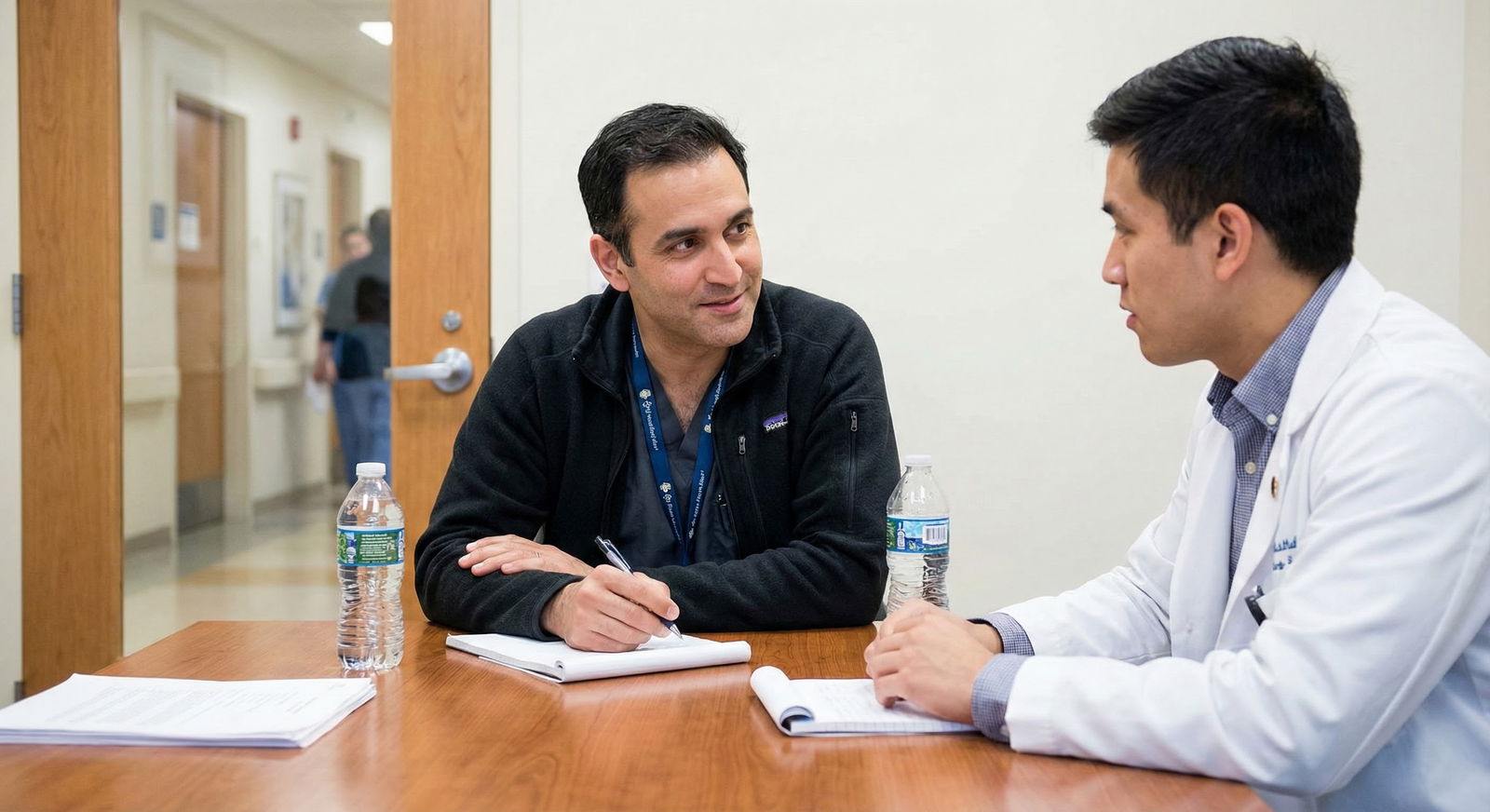
Begin structured interview practice
- Two mock interviews:
- One with a mentor / senior resident.
- One with a peer who will push with follow‑up questions.
- Focus on:
- Explaining your application narrative.
- Handling tough questions (failures, leaves, score dips).
- Two mock interviews:
Week 4 (Late September): Monitoring and Maintenance
At this point you should:
Check ERAS and email once daily—no more
- Constant refreshing does not create interviews.
- Once per day is enough to catch invites promptly.
Keep a clean, updated interview tracker
- Add:
- Dates offered
- Dates scheduled
- Conflicts
- Avoid double‑booking. It happens more than you think.
- Add:
Do not panic if you have no invites yet
- Many programs take time.
- What you can do:
- Tighten your interview answers.
- Prepare a short, professional interest email for later use (not now, not to 80 programs at once).
Final Takeaways
By the end of July, your ERAS should be structurally complete: experiences entered, PS drafted, LORs requested, program list mostly built. August is for polishing, not building from scratch.
Treat August as finalization month: verify every document, refine every description, link PS and LORs strategically, and decide on a clear submission window.
In September, your job is simple: submit early, respond professionally, and shift energy to interview preparation instead of re‑editing the same sentences.
Follow the timeline, week by week. Future‑you in October—sitting in interviews instead of scrambling with ERAS errors—will be very grateful.