
The residency application that dies on reference calls usually looked fine on paper. That is what makes this mistake so dangerous.
You worry about your ERAS, your personal statement, your interview. Good. You should. But the real landmines often detonate later—when program directors pick up the phone and start asking, “So, would you rehire this resident?” or “Anything I should know?”
That is where reference call disasters live. Hidden. Off the record. And by the time they surface, you have no chance to fix them.
I have seen applicants go from “likely to be ranked top 3” to “do not rank” after a single five‑minute phone call with a letter writer or unofficial reference. Same file. Same interview performance. One bad conversation.
Let us walk through the preventable mistakes that make that happen—and how you keep your name out of those whispered cautionary tales.
1. Assuming a “Good” LOR on Paper Means a Good Reference Call
The most basic, costly error: you think because someone wrote you a letter, they will automatically give you a strong reference on the phone.
No. That is not how this game works.
A few harsh truths:
- Some faculty write letters as a courtesy but do not think you are top-tier.
- Many letters are bland but acceptable; reference calls force specific, unfiltered opinions.
- PDs and chairs often speak more bluntly on the phone than they ever would in writing.
I have seen this sequence more than once:
- Applicant gets a “happy to write” email from an attending.
- Letter looks fine. No obvious red flags.
- Program director calls that attending.
- Attending says, “He was…fine. Not one of our best. I had some concerns about reliability.”
- Applicant slides down the rank list or off it entirely.
Here is the trap: you confuse willingness to write with enthusiasm to advocate.
If you are not sure a writer will go to bat for you verbally, you are playing with fire. The worst part? You never hear the bad call. The feedback route is closed. You just do not match where you thought you would.
How to avoid this:
Ask the hard question up front, before you list someone in ERAS or on any supplemental forms:
“Do you feel you know me well enough to write and speak on my behalf with a strong, supportive recommendation for residency?”
Not “a letter.” Not “a good letter.” A strong and supportive recommendation.
If they hesitate. If they say something vague like “Sure, I can write something” or “I do not usually compare students.” Back off. Thank them and choose someone else.
You want letter writers who say things like:
- “Absolutely, I would be happy to.”
- “Yes, you did an excellent job on my service.”
- “Definitely. I can speak very positively about you.”
Anything less is a yellow flag. On the phone, that yellow turns red very quickly.
2. Ignoring the “Hidden” References You Did Not List
You are making a second mistake if you think only the people you listed in ERAS are the ones who matter.
Program directors do not play by that rule.
They call:
- Your core clerkship director from medicine or surgery.
- Your home program PD.
- The sub‑I attending who clearly did not like you.
- Their friend at another institution who saw your name on an away rotation roster.
- Even chief residents who remember “that one student who…”
Here is what applicants forget: academic medicine is a small, tightly connected village. People talk. A quick text: “Hey, you had this student, right? Any issues?” can sink you faster than a negative line in a formal LOR.
The ugliest disasters often come from unlisted references:
- The neurology attending you clashed with calls your chosen letter writer’s colleague and vents.
- The ED director remembers your professionalism incident that did not end up on your MSPE.
- A chief tells the PD, “Honestly, we would not take them in our program.”
You never gave these people permission. They never wrote a letter. They still shape your fate.
How to avoid this:
You cannot control every voice, but you can:
Identify likely “shadow references.”
Ask yourself: if I were a PD in this specialty, whom would I call to confirm this applicant is safe to train?Likely names:
- Home program PD in your chosen specialty.
- Clerkship director in the core rotation of that specialty.
- Sub‑I attending in that field.
- Program director of your transitional year or prelim year (if applicable).
Do not burn bridges with people in those roles.
Too many students think, “I just need one strong LOR; I do not care if this other attending dislikes me.” Dangerous thinking. That other attending may be the one who gets the informal call.Clean up misunderstandings early.
If you had a tense rotation or miscommunication:- Ask for feedback explicitly at the end.
- Acknowledge any mistakes directly.
- Demonstrate growth: “I know I struggled with time management early, but I implemented X and Y. I appreciate your guidance.”
No guarantee. But people are much less likely to bury you on a phone call if they have seen you take responsibility and improve.
3. Letting Inconsistent Narratives Fester
Program directors are pattern‑seekers. They listen for consistency.
When the written materials, interviews, and reference calls do not line up, it screams: “Something is off here.”
I have seen this exact scenario:
- Your personal statement: “I am deeply committed to academic medicine and research.”
- Interview: you gush about becoming a triple-boarded subspecialist.
- Reference call: “Honestly, they seemed more interested in shift work and lifestyle. Not very academically driven.”
Result? The PD does not trust you. Or your story. And once doubt shows up, it does not leave.
Another classic mismatch:
- LOR: “One of the top students I have worked with. Always early, thorough, and well‑prepared.”
- Reference call to a different attending: “She was often late to rounds and did not always know her patients well.”
You think you are fine because at least one letter is glowing. But the discrepancy is the killer. PDs are not naive; they know some attendings inflate language. When they hear two different realities, they start to discount the positive and anchor on the negative.
How to avoid this:
You want alignment across four channels:
- Your personal statement.
- Your interviews.
- Your written LORs.
- The unguarded, off‑paper comments people will make about you.
You cannot script other people, but you can control your side:
Before asking for a letter, remind the writer what you are aiming for.
“I am applying to internal medicine with the goal of a career in academic hospital medicine. I really valued [concrete thing you did on their service].”Make your story stable.
Do not tell one interviewer you are bound for community practice and another you are hardcore research if your actual record does not back it up. Mixed messaging invites suspicion.Avoid obvious exaggerations.
If your research record is one poster and a case report, do not act like you are the next R01 superstar. Someone will ask around. The truth will leak.
4. Using “Soft” or Ambivalent Letter Writers in Key Slots
There is a quiet red flag PDs learn to hear: restraint.
I am not talking about the clearly bad comments. Those are obvious. I mean the lukewarm phrases that sound acceptable in a letter but, when a PD hears the tone over the phone, are code for: “I would not stake my reputation on this person.”
Examples I have heard:
- “He is perfectly adequate clinically.”
- “She did what was expected.”
- “He will be fine with the right supervision.”
- “I would rank them in the middle of our recent students.”
On paper, these might not look catastrophic. Over the phone, with the right pause and vocal inflection, they are damning.
The mistake: you ask for letters from people who:
- Barely remember you.
- Only saw you on your worst days.
- Have a “grade inflation” problem (they call everyone “good” and no one “exceptional”).
- Are known to be stingy with praise.
Meanwhile, you skip the attending or chief who actually saw you work your hardest, because you assume a “big name” will matter more.
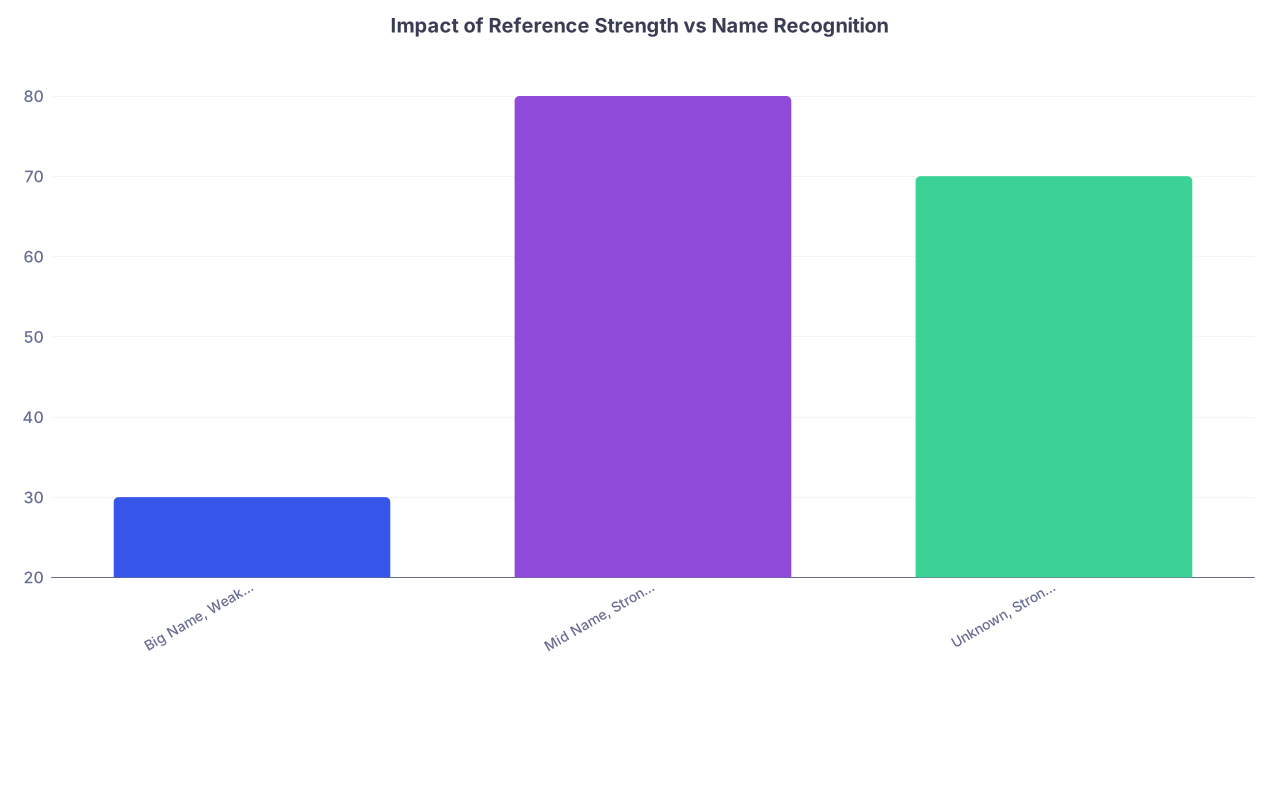
| Category | Value |
|---|---|
| Big Name, Weak Ref | 30 |
| Mid Name, Strong Ref | 80 |
| Unknown, Strong Ref | 70 |
Program directors consistently prefer strong, credible advocacy over a famous signature with faint praise. A big‑name letter that turns tepid in a phone call is a liability, not an asset.
How to avoid this:
Ask yourself two questions for each potential letter writer:
Did this person see me at my best, consistently?
Not just the one day you nailed a presentation. The whole rotation.Does this person have a reputation for being fair but supportive?
Ask senior residents quietly: “Whose letters actually help here?” Residents always know.
If the answer to either is “no” or “not sure,” that is a risk. And reference calls amplify risk.
When you request a letter, you can also gently set expectations:
“I am applying to anesthesia and hoping to match at a strong academic program. I would really appreciate an honest, supportive letter if you feel you can write one.”
If they cannot say “yes” to that comfortably, walk away.
5. Letting Unprofessional Behavior Leak into the Grapevine
You probably assume reference calls are about clinical skills, knowledge, and work ethic. They are. But do you know what dominates the conversation?
Professionalism. Reliability. Safety.
The ugliest reference call disasters I have seen did not center on medical knowledge. They centered on:
- Being repeatedly late to rounds.
- Disappearing during shifts.
- Talking poorly about nurses or other residents.
- Ignoring pages or blowing off consult tasks.
- Social media posts that made a clerkship director nervous.
And the worst: incidents that never made it officially into the MSPE but everyone in the department heard about.
Here is the reality: if you have even one notable professionalism incident, that story will be waiting for the right phone call to be told. Often with more drama than nuance.
PDs are obsessed with avoiding the nightmare resident. They will forgive “needs to read more” ten times before they forgive “may not show up” once.
How to avoid this:
From the moment you start clinical rotations:
- Do not be the student who is chronically 5–10 minutes late. It sounds minor. It sticks.
- Do not vent about faculty or program policies in public spaces or group chats. Those screenshots travel.
- Do not ignore feedback about communication or teamwork. That “difficult to work with” label is nearly impossible to erase.
If you already had a professionalism issue:
Own it early and directly with your home PD or dean.
“This happened. Here is what I learned. Here is how I have changed my behavior.”Ask what will be said if someone calls.
You might not get precise quotes, but you can get a sense of tone. That matters.Accumulate clean, boringly solid rotations afterwards.
One bad episode followed by a year of strong feedback is survivable. A bad episode followed by “okay, I guess” is not.
6. Failing to Brief Your Letter Writers Before Interview Season
Another subtle but serious error: you never update your letter writers or potential phone references after they submit the letter. So when a PD calls them in January, they are operating off half‑remembered impressions from May.
What happens then? Vague, noncommittal answers:
- “I think they were planning on fellowship, but I am not sure.”
- “I do not recall the specifics of their research.”
- “They were a good student, I believe. It has been a while.”
That kind of haziness, especially when other applicants have letter writers who sound sharp and specific, can push you down the rank list.
Again, the story is consistency. If your personal statement says, “I am committed to primary care in underserved communities,” and your letter writer says, “I think he was interested in cardiology maybe?”—your credibility vanishes.
How to avoid this:
Once interview season starts:
- Send a concise update email to each letter writer and likely reference:
- Your final specialty choice.
- Where you applied.
- Any new achievements (poster, publication, leadership role).
- A sentence or two about your career goals.
Example:
“I wanted to update you that I applied broadly in internal medicine, with a focus on programs that prioritize resident education and inpatient care. I am particularly interested in academic hospitalist work with some teaching responsibilities. Since our rotation, I presented our case report as a poster at ACP regionals and will be submitting it for publication. Thank you again for your support.”
No long essays. No begging. Just enough so, if someone calls them, they can sound informed and aligned with your narrative.
7. Underestimating How Late These Problems Can Surface
The timing of reference call disasters is brutal. They often do not show up until:
- After most interviews are done.
- After you have mentally sorted which programs are “safe.”
- Sometimes even after rank lists are put together and only being tweaked.
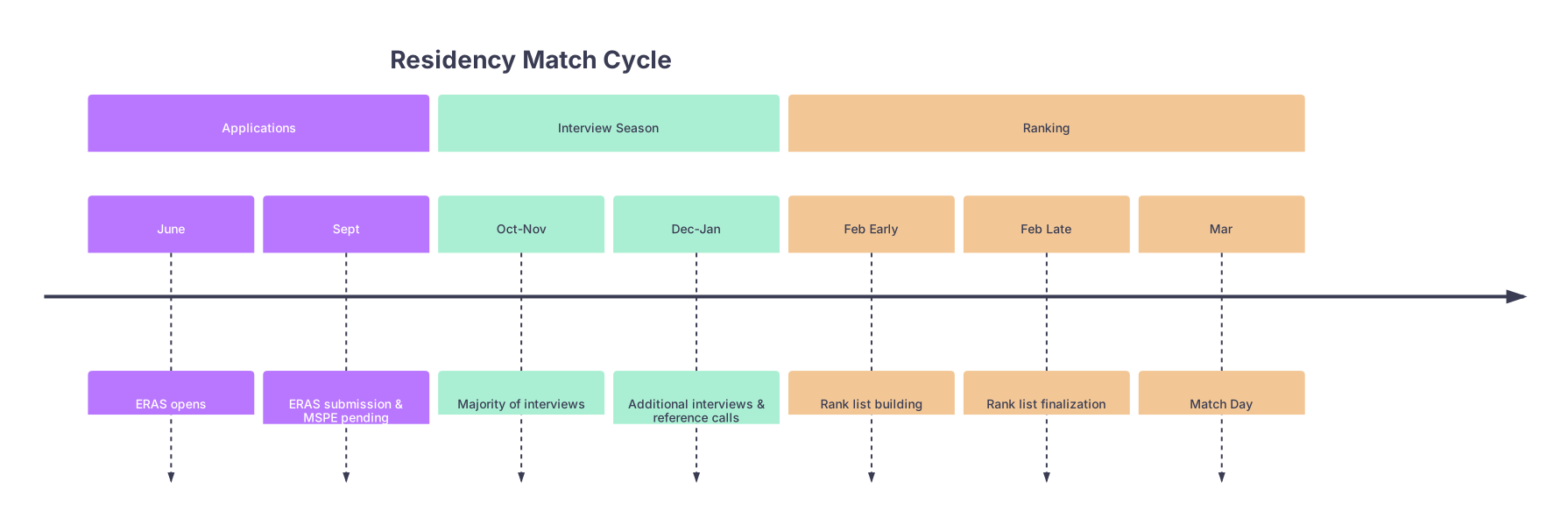
| Period | Event |
|---|---|
| Applications - June | ERAS opens |
| Applications - Sept | ERAS submission & MSPE pending |
| Interview Season - Oct-Nov | Majority of interviews |
| Interview Season - Dec-Jan | Additional interviews & reference calls |
| Ranking - Feb Early | Rank list building |
| Ranking - Feb Late | Rank list finalization |
| Ranking - Mar | Match Day |
I have watched programs drop an applicant from “rank to match” to “do not rank” the week before rank lists were due because of a late reference call revealing:
- A serious professionalism concern.
- A pattern of poor performance on another rotation.
- A hidden conflict or behavioral issue.
Your mistake, if you are not careful, is assuming that once the interview day is over and you did well, you are safe. You relax. You stop thinking about how your behavior now could still influence what people say about you later.
How to avoid this:
Maintain “audition mode” professionalism until Match Day:
- Your sub‑I in January still counts. Those attendings and residents still talk.
- If you are doing a late away rotation, those people can absolutely kill or save an application with one phone call.
- Do not assume “it is late in the season; nobody cares anymore.” The opposite is true. PDs care even more about late, concerning data.
Also: if you sense that a serious, late‑breaking concern may pop up (e.g., an ongoing investigation, a failed Step 2 you have not yet disclosed), you are better off having a proactive, honest conversation with your dean or home PD than hoping nobody calls the wrong person.
8. Not Understanding What PDs Actually Ask on Reference Calls
PDs are not just asking, “Is this a good student?” They are asking thinly disguised risk‑screening questions.
Common ones:
- “Would you be comfortable having this person as your resident?”
- “Would you rehire this person in your program?”
- “Any concerns about professionalism or reliability?”
- “How does this applicant compare to others you have worked with in the last few years?”
- “Is there anything you would want us to know that may not be in the letters?”
Your disaster comes when someone answers one of these with:
- A long pause.
- A hedged answer (“With the right structure, I think they will do fine…”).
- A lukewarm comparison (“Probably in the bottom third of students I have worked with recently.”).
Again, the language may sound polite. The message is not.

How to avoid this:
You cannot script calls. But you can influence the honest answers by:
- Being reliably prepared and professional on rotations.
- Asking for real-time feedback and acting on it, so your growth narrative is believable.
- Choosing reference writers who have seen you handle complexity, pressure, and teamwork—not just someone you charmed in clinic for two half‑days.
If you suspect someone might place you “bottom third,” you do not want them anywhere near your file, formally or informally.
9. Letting Your Online and Off‑Duty Life Contradict Your Application
PDs are increasingly hearing about applicants through back‑channel sources that start with “Did you see their Instagram/Twitter/TikTok?” or “We saw some concerning things in group chats.”
Then, during reference calls, those whispers turn into pointed questions:
- “Have you ever had any concerns about their judgment outside of work?”
- “Any issues with professionalism on social media?”
If a clerkship director once saw your public post mocking patients, or drunk‑on‑call jokes, or explicit political rants tied to your real name, do you think they will stay quiet when asked about “judgment and professionalism”?
I have seen an otherwise strong application torpedoed because a PD found screenshots of a student complaining about specific nurses and attendings—by name—in a “private” group that was not as private as they thought.

How to avoid this:
- Clean your public online presence before applications go out. Then keep it clean.
- Do not assume group chats are safe. They are not. Screenshots break confidentiality in seconds.
- Do not post about specific clinical experiences where any patient, hospital, or staff member could be identified.
If you already have questionable content out there, scrub what you can and, more importantly, stop adding more. If it comes up on a call, your only hope is that your recent real‑world conduct contradicts the worst interpretation.
10. Not Doing a “Reference Risk Audit” Before You Submit
Most applicants pour hours into personal statements and none into thinking: “Where are my reference vulnerabilities?”
That is a mistake.
You should be doing a structured review of who might reasonably be contacted about you and what they might say.
| Area | Risk Level | Action Needed |
|---|---|---|
| Home PD | Low/Med/High | Meeting? Clarify story |
| Core Clerkship Director | Low/Med/High | Address old feedback |
| Sub-I Attending | Low/Med/High | Request letter or repair |
| Research Mentor | Low/Med/High | Update on projects |
| Recent Rotation Faculty | Low/Med/High | Maintain professionalism |
If you already know someone has serious concerns about you, pretending it will not come up is delusional. It will. On the phone. With someone who decides whether you train there.
How to avoid this:
Before ERAS submission:
- List every faculty member and leader who has significant knowledge of your performance.
- Rank each as:
- Strongly supportive
- Neutral/unknown
- Concerned/negative
- For the last two groups:
- Decide whether any repair conversations are possible.
- Decide whether to keep them as far away from your application as possible.
- Ensure that the people you do list are solid enough to counterbalance any existing bias.
You cannot erase your past, but you can stop walking blindfolded into preventable reference call disasters.
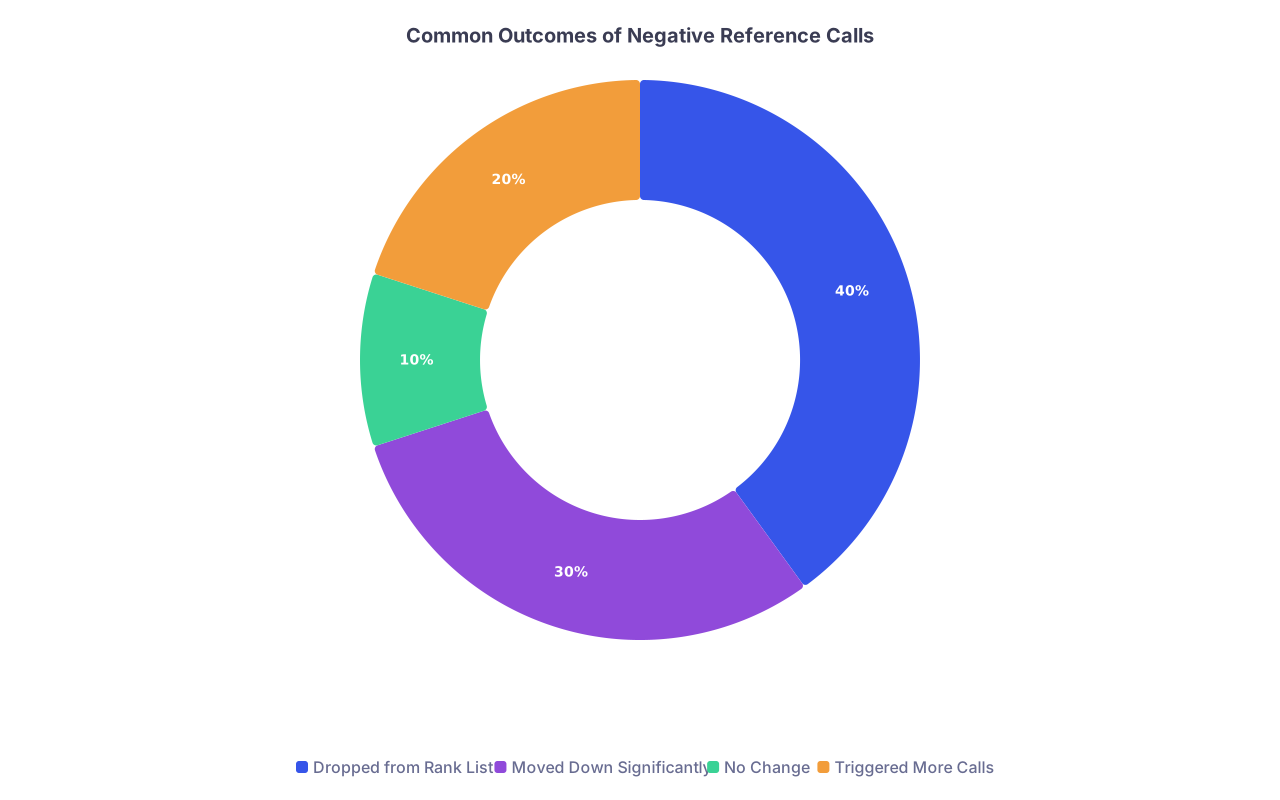
| Category | Value |
|---|---|
| Dropped from Rank List | 40 |
| Moved Down Significantly | 30 |
| No Change | 10 |
| Triggered More Calls | 20 |
FAQ: Reference Call Disasters and LOR Pitfalls
1. Can I ask my letter writers directly what they would say on a reference call?
You can ask about the tone, not verbatim content. A reasonable approach: “If program directors call you about me, do you feel comfortable strongly supporting my application?” Their reaction tells you almost everything you need. If they look uneasy or give a hedged answer, that is not someone you want as a key advocate.
2. What if my home program PD does not like me and I am applying to that specialty?
You have a problem, but you are not the first. Meet with them directly and respectfully: ask how they see your strengths and weaknesses and whether they can support your application. Do not argue. Listen. Sometimes they will soften if they see genuine insight and effort. Then work to secure very strong letters from away rotations and other respected faculty. PDs elsewhere know not every home relationship is perfect…but a clearly hostile home PD is hard to fully overcome.
3. Do programs always make reference calls, or only for borderline applicants?
Patterns vary. Some programs routinely call home PDs or key writers for most ranked applicants. Others reserve calls for red‑flags, unusual applications, or their top tier they are especially interested in. You should assume that if you are likely to be ranked anywhere meaningful, someone could call someone who knows you.
4. Should I avoid asking for a letter from someone who once gave me constructive criticism?
Not necessarily. Some of the best letters come from attendings who watched you struggle early and then improve. The danger is not critique; it is unresolved critique. If you took their feedback seriously, changed your behavior, and they saw that change, they can be powerful advocates—on paper and on the phone. If you ignored their feedback, steer clear.
5. What is one concrete step I can take this week to reduce my reference risk?
Make a list of your likely reference voices: home PD, core clerkship directors, key attendings, research mentor. Then schedule one short meeting or send one thoughtful update email to the person on that list whose opinion worries you the most. Clarify your goals, acknowledge any past issues without defensiveness, and demonstrate how you have grown. That single conversation can blunt the edge of a bad reference call more than any last‑minute personal statement edit.
Open a blank page right now and write down every person who has real influence over how you are described behind closed doors. Ask yourself, honestly, who on that list might sink you in a five‑minute phone call—and what you are going to do about it this month.