
The myth that programs “decide on you during the interview” is only half true. The more uncomfortable truth is this: after a mediocre interview day, your application usually doesn’t get killed immediately. It gets something worse. It gets forgotten.
Let me walk you through what really happens to your file once you log off Zoom or walk out of that hospital lobby, replaying every awkward answer in your head.
First: How They Label You In Their Heads
Inside every program, whether they admit it or not, interviewers are mentally sorting you into three buckets before the day is even over:
- “Hell yes”
- “Probably”
- “Only if we have to”
A mediocre interview lands you in bucket 2 or 3. And no, those categories are not written anywhere. They show up as little things in the evaluation forms: a “3” instead of a “4,” comments like “pleasant, not outstanding,” “fine, quiet,” “would be OK,” or the dreaded “no major concerns.”
Let me decode that for you:
- “No major concerns” = nobody is going to fight for you.
- “Pleasant, quiet” = you did not differentiate yourself at all.
- “Fine, but…” = you’re dependent on your paper application to save you.
Most places use some flavor of scoring system. They’ll rate you on:
- Interview performance
- Academic record
- LORs
- Fit/professionalism
- “Would I want to work with this person?” (they'll call it “global assessment” or “overall impression”)
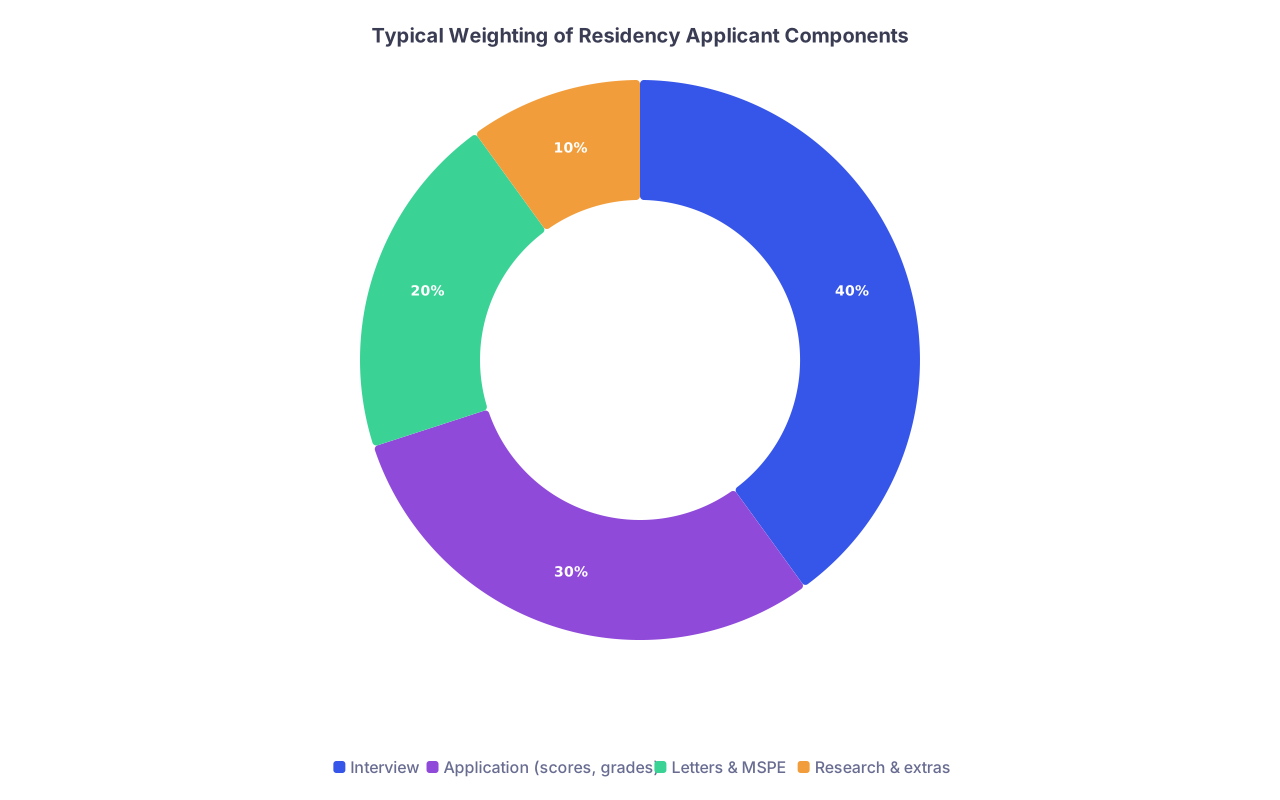
| Category | Value |
|---|---|
| Interview | 40 |
| Application (scores, grades) | 30 |
| Letters & MSPE | 20 |
| Research & extras | 10 |
The dirty secret: even in programs that swear “we take a holistic approach,” the interview carries a huge, sometimes dominant, weight. But that doesn’t mean a mediocre interview kills you. It means you stop being carried by it. Now your file has to do the heavy lifting.
What Actually Happens The Night Of Your Interview (And Right After)
Here’s the process most applicants never see.
1. Immediate scoring while you’re still in the parking lot
Interviewers usually submit their evaluations while the day is still happening or right after it ends. Why? Because if they wait, they forget who you were. And that’s bad news for “mediocre.”
What they remember hours later:
- The star who crushed it
- The problem child with red flags
- Anyone who was extreme (brilliant, hilarious, awkward, arrogant, bizarre)
What they forget:
- The person who was “nice, normal, kind of generic”
You know who gets written down as “3/5 – no concerns”? That person.
2. The comments that haunt you later
You will never see these comments, but I have. Variations of:
- “Seems fine, a bit reserved.”
- “Didn’t ask many questions.”
- “Pleasant but didn’t stand out.”
- “Good on paper, average in person.”
- “Would be OK to work with.”
Those phrases matter more than you think. On ranking day, nobody is rewatching your Zoom recording. They’re scrolling a spreadsheet with one or two lines of comments. If those lines don’t make someone stop and say, “Oh yeah, I liked this one,” you slide.
3. Group debrief (sometimes)
Some programs do a quick debrief at the end of an interview day. It’s not some long, thoughtful debate. It sounds like this:
“Anyone we loved today?” “Anyone we should not rank?”
You do not want to show up in the second question.
A mediocre interviewee usually doesn’t show up in either. And that’s the core problem. You’re not rejected. You’re just not memorable.

| Step | Description |
|---|---|
| Step 1 | Interview Day Ends |
| Step 2 | Interviewers Submit Scores |
| Step 3 | Discuss for Possible NR |
| Step 4 | Added to Interviewed List |
| Step 5 | Later: Rank Meeting |
| Step 6 | Rank List Finalized |
| Step 7 | Any Red Flags? |
Where a “Mediocre” Interview Actually Puts You On The Board
Everyone wants to know: “After a so-so interview, am I ranked? Am I in the middle? At the bottom?”
The answer: it depends entirely on what your paper file looks like compared to the other “mediocre interview” people.
Here’s the truth from the committee room:
You’re competing in a separate lane
Programs don’t consciously say this, but it’s how their brains work. There are several informal tiers:
- Tier 1: Strong on paper, strong interview
- Tier 2: Solid on paper, strong interview
- Tier 3: Strong on paper, mediocre interview
- Tier 4: Mediocre paper, strong interview
- Tier 5: Mediocre on paper, mediocre interview
- Tier 6: Any red flag
You, after a mediocre interview, land somewhere between Tier 3 and Tier 5.
If you’re a Tier 3 type (great scores, honors, strong letters, research):
They’ll still rank you. Just not as high as if you’d nailed the interview.
If you’re Tier 5 (average stats, no distinct hook, interview just OK):
You’re vulnerable. You’re rankable, but you’re extremely easy to slide down when spots tighten.

What Happens At The Rank Meeting (The Real Bloodbath)
Applicants love to imagine that committees sit down and carefully discuss each candidate. That’s cute. It might be true for the top and the bottom. The middle? Not really.
Step 1: The obvious yes’s and no’s
When programs build their rank list, they usually start with:
- Obvious top candidates (everyone liked them, or they’re rockstars on paper and not weird in person)
- Obvious “do not rank” (bad attitude, clear professionalism concern, weird behavior, something off in the story)
You, with your mediocre interview, are almost never in either category. Which sounds safe, but it’s actually precarious.
Step 2: The middle blob
Here’s what it looks like on the screen during a rank meeting:
A long spreadsheet with:
- Your name
- School
- Scores / pass
- Honors count
- Maybe a flag for AOA or GHHS
- Aggregate interview score
- 1–2 short comments
Nobody is re-reading your personal statement.
Nobody is reading your full letters again.
They’re deciding your future off that tiny blurb and a few numbers.
You end up in the “we need to sort these 80 people into 30–40 realistic positions” cluster. And in that cluster, the following things push people above or below you when your interview day was just OK:
- Higher Step 2 or stronger exam history
- Prestigious or familiar med school
- Known letter writers
- Niche interest the program values (rural, underserved, research, specific track)
- Someone in the room saying, “I remember this one – I liked them”
Mediocre interview = nobody in the room fights for you. No one says, “Wait, move them up.”
Step 3: The “sort by score” phenomenon
Every program says they’re more nuanced than this.
Many of them lie.
A lot of rank lists start as some version of “sort by composite score descending.” Interview is part of that score. If your interview wasn’t great, your composite number is a bit lower. You’re starting behind.
Do some programs manually adjust the list? Yes. Do they fix every slight? No chance.
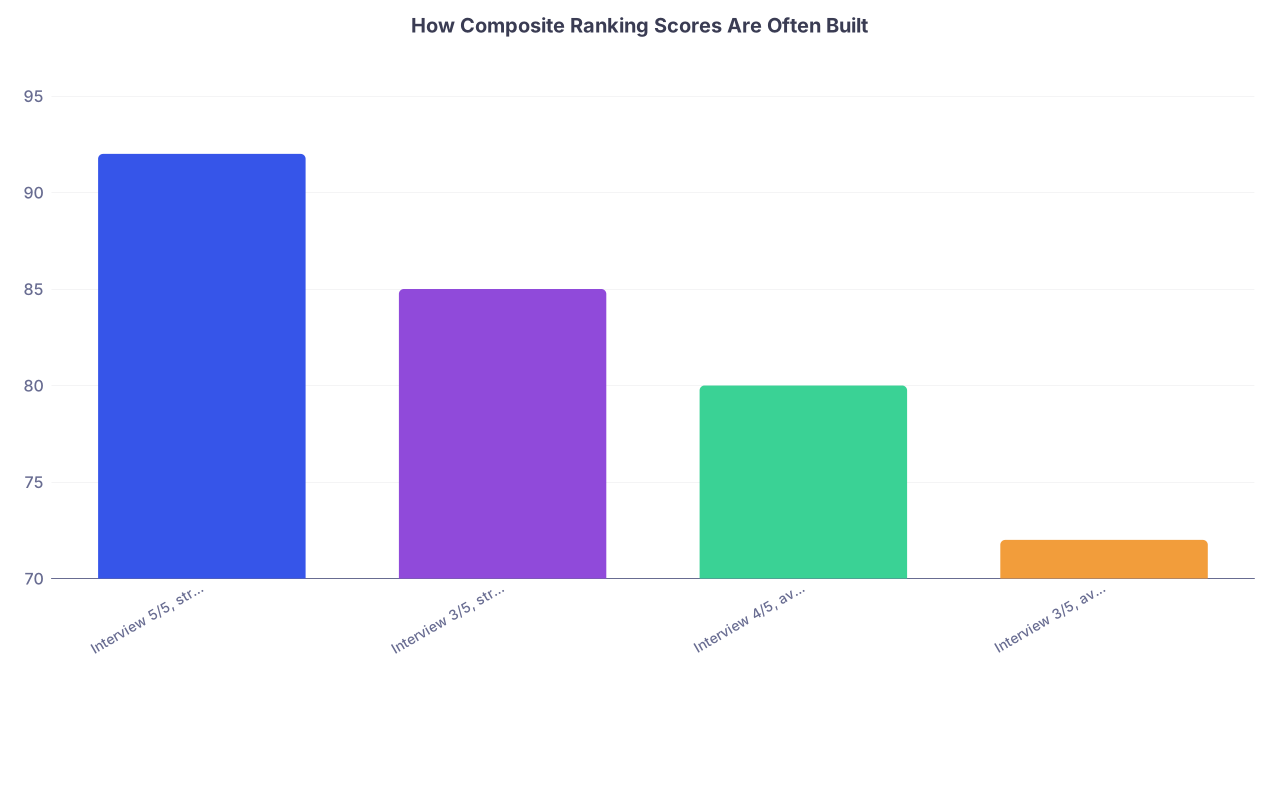
| Category | Value |
|---|---|
| Interview 5/5, strong file | 92 |
| Interview 3/5, strong file | 85 |
| Interview 4/5, average file | 80 |
| Interview 3/5, average file | 72 |
Look at that last comparison carefully. That’s your problem.
The Difference Between “Mediocre” And “Bad” Is Huge
You need to understand this distinction very clearly because it changes everything about your chances.
A bad interview means:
- Someone writes “Would not want to work with”
- Or “Condescending,” “rigid,” “argumentative,” “talked over others”
- Or “odd affect – concerns about fit”
- Or “could not explain red flags / inconsistencies”
- Or “unprofessional (late, phone usage, inappropriate joke)”
That person gets:
- Discussed by name
- Flagged
- Sometimes voted as “do not rank”
A mediocre interview means:
- You were a little stiff
- Not super articulate under pressure
- Generic answers
- Not very memorable
- Didn’t crash and burn
That person is absolutely rankable. They’re not blacklisted. They’re just in the anonymous middle.
Programs don’t run out of candidates they can rank. They run out of spots to rank them high enough to matter.
How Much A Mediocre Interview Hurts You In Different Situations
Let’s be blunt. Here’s how this plays out for different applicant profiles.
| Applicant Type | Likely Outcome After Mediocre Interview |
|---|---|
| Superstar file + big-name school | Still ranked high or upper-middle |
| Strong regional candidate | Ranked solidly, often still matchable |
| Average stats, no hook | Ranked low or not at all if list is short |
| Red flag on file, weak explanation | May slide to bottom or be NR |
| Non-traditional / IMG with good but not stellar file | Very vulnerable to a low rank or no rank |
Top-of-the-pile applicant, mediocre interview
The committee says things like:
- “Yeah, interview wasn’t amazing but the file is very strong.”
- “I’d still be happy with them.”
You still end up decently high. Maybe not top 5, but top 10–15 at many places. You still match there if you rank them high.
Average file, mediocre interview
Now you’re in trouble.
The commentary sounds like this:
- “Solid, but we have a lot of solid people.”
- “I don’t strongly remember them.”
- “We’ve got similarly qualified people who interviewed better.”
You get pushed downward. Maybe you’re in the bottom third or bottom quarter of their rank list. Sometimes you fall off the list if they must cut it somewhere.
IMG or DO at a competitive categorical spot, mediocre interview
Here’s the truth most people will not tell you: for these groups, the interview is often the differentiator. Especially at university or competitive community programs.
If you come in with:
- Passable scores
- Decent letters
- No obvious red flags
But your interview lands as “fine but nothing special,” you’re usually floating in a pile of 50–100 applicants who look just like you on paper.
The one who crushed the interview? They’re the one they remember. You’re the one who gets “3/5 – OK.”
What If You Think You Did “Meh” But You Actually Didn’t?
Your internal postmortem of your performance is often wrong. I’ve watched people walk out furious with themselves and then they were marked as “great conversationalist, thoughtful answers.”
On the flip side, the overly confident ramblers? Often scored as “dominating, didn’t listen, borderline arrogant.”
What really matters:
- Did you connect with anyone? One interviewer who loved you is enough to bump you up at the rank meeting when they say, “Oh, this one was great, keep them higher.”
- Did you avoid obvious red flags? No weird comments, no defensiveness, no signs of poor insight.
- Did you show some self-awareness and warmth?
If yes, then what you call “mediocre” might just be “non-disastrous,” which is all you need at some programs.
Does Thank-You Email or Post-Interview Update Save A Mediocre Day?
Short answer: not usually. But let me give you the real story.
Here's what actually happens with:
Thank-you emails
Most faculty:
- Skim
- Reply with “Great to meet you”
- Close the tab
- Never open your file again until rank time
Do they help? Marginally. Once in a while, a very personal, thoughtful note jogs a memory and bumps someone from “who?” to “oh yeah, that was the one who…”
But if your goal is: “Can I fix a flat interview with a thank-you note?” No.
Updates and love letters
If a program explicitly allows post-interview communication, and you send a sincere, specific “you are my top choice” type message near rank time, that can help you at the margins. What it does is justify nudging you slightly upward when they’re sorting their middle group.
It does not turn you from forgettable to top-5 at a place that doesn’t already like your file.

The Programs That Will Still Rank You High Despite a “Meh” Day
Not every program cares equally about charismatic interviews.
Places that are more forgiving of a mediocre interview:
- Strongly academic programs that are obsessed with research output and prestige
- Programs where faculty hate interviewing and trust the paper file more
- Programs that interview huge numbers and know they can’t perfectly remember everyone
- Programs that are desperate for people with a specific interest (rural, underserved, niche specialty focus)
You know those residents who seem a bit quiet or awkward but are brilliant and solid teammates? Many of them had “mediocre” interviews but stellar files. The committee put faith in the metrics.
On the other hand, smaller community programs that emphasize “family feel” often weigh the interview heavily. If they’re saying “we’re like a family here” every 20 minutes during your day, understand: your vibe that day mattered more than your Step score.
What You Can Still Control After A Mediocre Interview
You cannot go back and redo the interview. But you’re not powerless.
Here’s what actually moves the needle, realistically:
Your rank list strategy.
If you suspect you had multiple “meh” interviews at stretch programs, don’t stack your list with long shots. Put a broad range of places you’d actually go to, including safer programs where you felt at least neutral.Post-interview communication where appropriate.
If a program is truly your top choice and allows it, send:- One clear, honest message
- Specific reasons you fit there
- Tie it to themes you actually discussed that day
That sometimes is enough to make someone say in the meeting, “They told us we’re their top.” That can break a tie between you and a similar applicant.
Don’t compound the damage.
Do not send neurotic follow-ups, repeated emails, or “corrections” to your interview answers. That’s how you turn mediocre into weird.Perspective.
Every year I watch people match at programs where they swear they interviewed terribly. And I see people not match at places they felt they bonded with everyone. Your self-assessment is not the committee’s assessment.
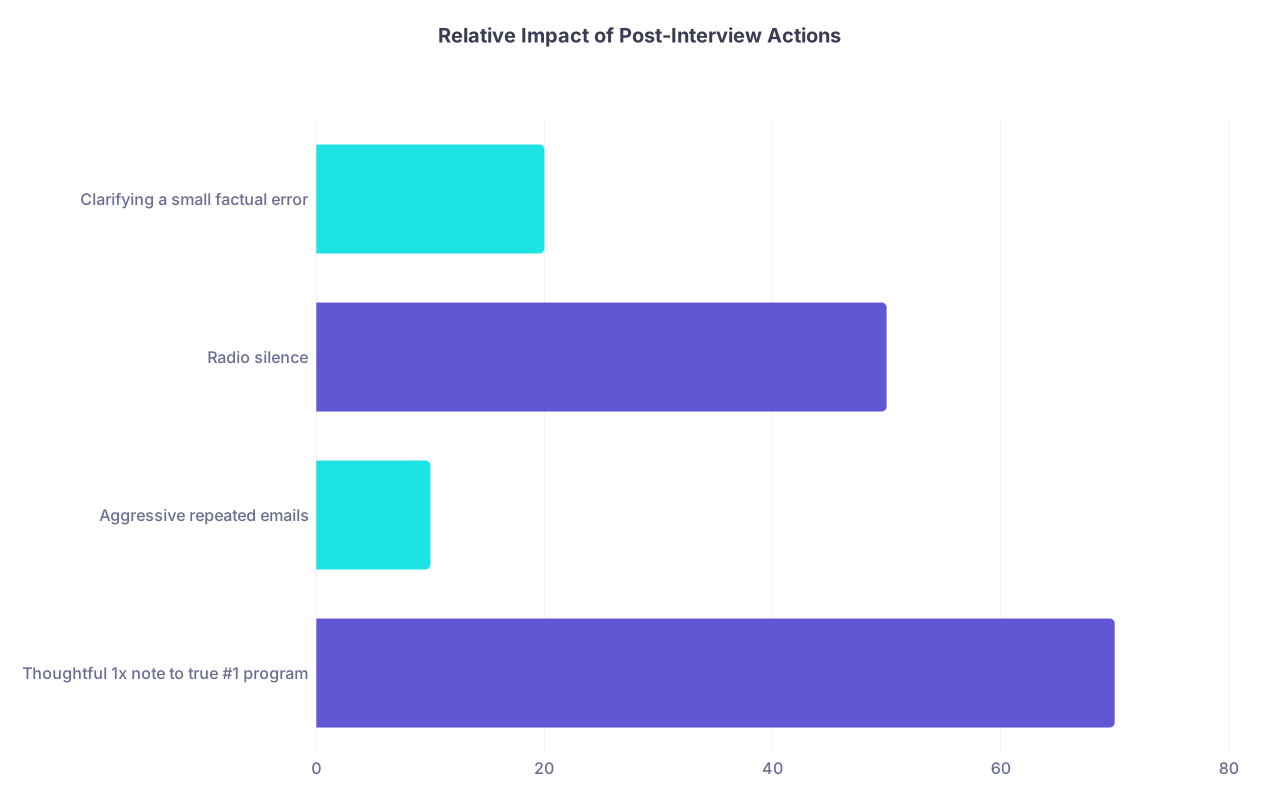
| Category | Value |
|---|---|
| Thoughtful 1x note to true #1 program | 70 |
| Aggressive repeated emails | 10 |
| Radio silence | 50 |
| Clarifying a small factual error | 20 |
The Uncomfortable Truth: The Middle Is Where Randomness Lives
You think this process is ultra-precise. It is not. Especially not in the middle of the rank list.
Real factors that shift you a handful of spots up or down when your interview was “fine”:
- Someone in the room happens to know your school well and trusts it
- A faculty member recognizes your research mentor’s name
- Your regional ties line up with their worries about people leaving
- They already have too many people like you (same school, same background, same interest)
- Fatigue. Yes, actual fatigue in the rank meeting. Once they’ve been at it for hours, the last 20–30 spots are often sorted faster and with less debate
This is why a mediocre interview doesn’t doom you. But also why it doesn’t protect you.
You live or die in that gray zone of randomness and small nudges.