
What happens if your MSPE/Dean’s Letter doesn’t just talk about your grades… but quietly drops a line about a leave of absence, “personal challenges,” or “professionalism concerns”? Is that it? Match over?
Let me say the scary part out loud: this is one of the things applicants fear most because you can’t control it and you don’t fully see it until it’s already in programs’ hands. And it feels incredibly unfair that something from your worst semester, your worst month, or your worst day can follow you into residency.
Let’s walk through this like someone who’s already catastrophized every scenario. Because I have. And a lot of them are survivable.
First: What Does “Mentions Personal Issues” Actually Mean?
The phrase itself is vague and terrifying. “Personal issues.” Could be anything from a catastrophic family loss to “was late a few times.”
The MSPE tends to mention personal things in a few typical ways:

-
- “The student took a personal leave of absence from January 2023 to June 2023.”
- Sometimes zero context. Just dates.
- Occasionally: “for health reasons” or “for family reasons.”
Step/Exam or Course Failure
- “The student required remediation for Internal Medicine clerkship due to concerns about professionalism and time management.”
- “The student did not pass Step 1 on the first attempt, but subsequently passed.”
Professionalism or Behavioral Concerns
- The nightmare line: “There were professionalism concerns during the surgery clerkship related to punctuality and communication, which improved over time.”
- Or some version of “required a professionalism remediation plan.”
Health/Mental Health (usually vague but present)
- Schools are getting more careful here, but sometimes:
- “The student took time away from school to address personal health matters and returned in good standing.”
None of those sound fun, I know. But notice something: most of them include either neutrality (“this happened”) or improvement (“resolved,” “improved over time,” “returned in good standing”). That “trajectory” part matters more than people think.
Is My Application Destroyed? (Blunt Answer: Usually No, But It Changes the Game)
Let me answer the question you’re half-afraid to ask: “Can I still match if my Dean’s Letter mentions personal issues?”
Yes. People match every year with:
- documented professionalism incidents
- LOAs for mental health
- failed Step attempts
- repeated clerkships or courses
But it changes three things:
How many programs you need to apply to.
You probably need to cast a wider net than your classmates with spotless files.How you present the story.
If you pretend it doesn’t exist, programs will define the narrative for you in their heads. Not good.Which specialties and tiers of programs are realistic.
Some ultra-competitive or brand-obsessed programs will screen you out. Not because you’re doomed, but because their filter is brutal and impersonal.
Here’s a rough, brutally honest comparison:
| Situation in MSPE | Typical Impact on Competitiveness |
|---|---|
| Short neutral LOA mention, no concerns | Mild, often negligible |
| LOA + explicitly stated health issues | Mild–moderate, depends on trajectory |
| Single professionalism concern, “improved” | Moderate, but very salvageable |
| Repeated professionalism concerns | Significant, needs strong damage control |
| Failed board/clerkship + remediation | Moderate–significant, but many still match |
You’re not applying in a vacuum. Programs see this stuff every year. Residents aren’t robots; they’re humans who also had life explode during med school.
Step 1: Figure Out Exactly What’s Written – Not What You’re Imagining
Your anxiety will write a much worse MSPE than your dean usually does.
You need facts, not projections.
Request a meeting with your dean or student affairs.
Ask directly: “What exactly is in my MSPE concerning my leave / professionalism / personal issues?”Ask if there’s any room for phrasing adjustments.
Some schools are rigid. Some are surprisingly willing to adjust wording from “struggled” to “required additional support but ultimately met expectations.” That matters.Look for three key things:
- Is the issue mentioned at all?
- Is it framed as isolated vs. pattern?
- Is there a phrase showing resolution, improvement, or success afterward?
A line like:
“During third year, the student faced personal challenges that impacted attendance on the internal medicine rotation. After feedback and remediation, their performance improved and they successfully completed all requirements.”
Is worlds better than:
“The student had recurring professionalism issues and required multiple remediation plans.”
If your letter sounds more like the first than the second, your brain is probably catastrophizing beyond reality.
Step 2: Decide If and How You’ll Address It in Your Application
Here’s the part nobody gives a straight answer about: do you bring it up in your personal statement? In interviews? Or do you pray no one mentions it?
You have three main options:
Option A: Brief, Direct, Mature Acknowledgment
This is usually the best option for most situations that are:
- mentioned clearly in the MSPE, and
- not so minor that you can plausibly ignore them.
For example, in a secondary essay, additional comments box, or sometimes PS:
“During my third year, I took a personal leave following a close family member’s illness and my own difficulty coping. I returned after receiving support, completed all remaining clerkships on time, and have since consistently met expectations in clinical performance. That experience forced me to learn early how to ask for help, set limits, and care for myself while still showing up for patients.”
Short. Direct. No self-pity. Shows growth.
Programs hate:
- blaming everyone else
- sounding fragile with no insight
- over-explaining with graphic life stories
They respect:
- accountability
- reflection
- clear evidence you’re now stable and functioning
Option B: Only Address It If Asked
If the MSPE wording is vague and not damning, you might wait and see if anyone brings it up. Then have a rehearsed, calm 2–3 sentence answer.
Example for mental health LOA:
“I took a leave for health reasons related to burnout and depression. I got treatment, worked with a therapist, and built better support systems. Since returning, I’ve completed all rotations on schedule with strong clinical evaluations and feel stable and ready for residency.”
You do not owe graphic detail. You do owe clarity and reassurance you’re safe to train.
Option C: Full Narrative When It’s Major
If you’ve got:
- multiple professionalism write-ups
- repeated remediation
- or a very obvious disruption in your timeline
…you may need a short but more explicit narrative somewhere. Not sob story. Clear story.
This is where you might ask a trusted advisor to help you phrase it so it sounds accountable but not like self-destruction.
Step 3: Use the Other Parts of Your Application to Fight for You
If your MSPE mentions personal issues, the rest of your application has one job: prove the story is “struggle then recovery,” not “ongoing trainwreck.”
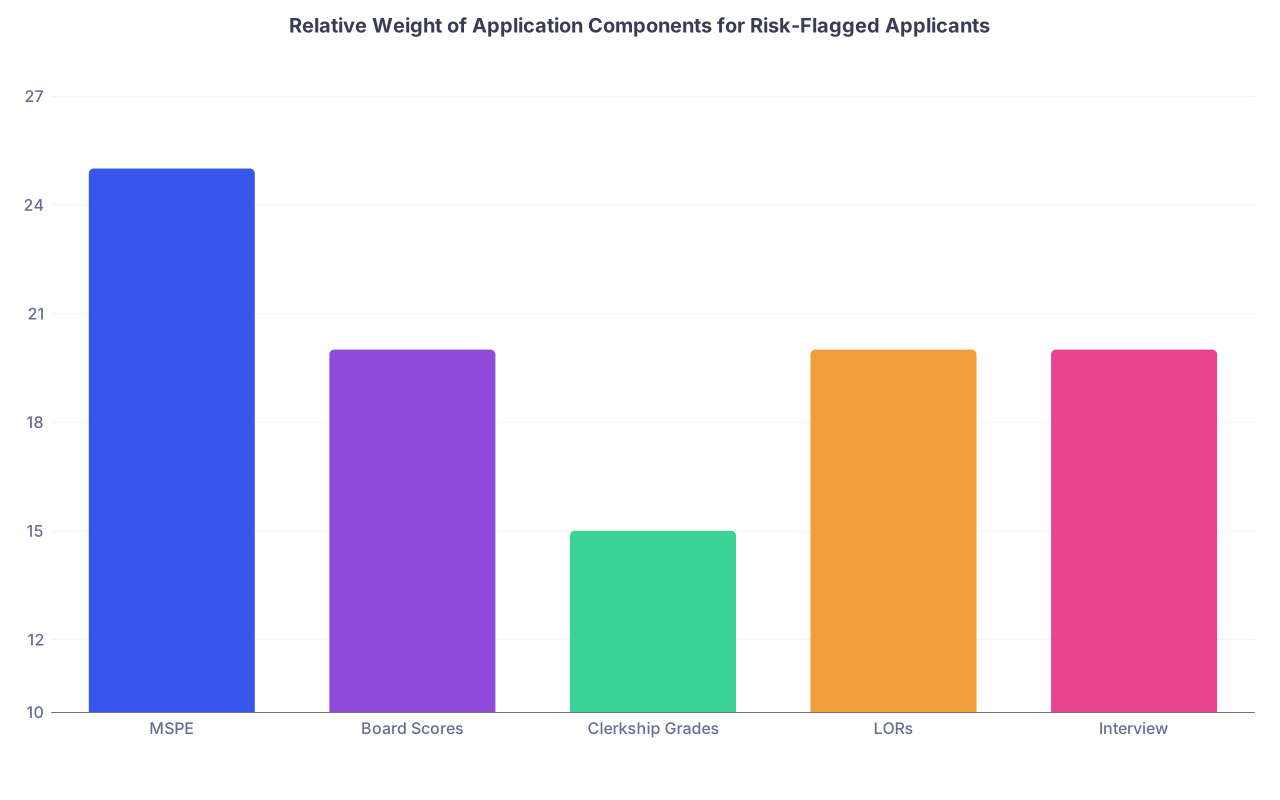
| Category | Value |
|---|---|
| MSPE | 25 |
| Board Scores | 20 |
| Clerkship Grades | 15 |
| LORs | 20 |
| Interview | 20 |
You can’t rewrite the MSPE. But you can stack everything else in your favor.
Letters of Recommendation (LORs)
Your best weapon. A strong letter that says, “This student is reliable, professional, and a pleasure to work with” directly counters whatever doubt the MSPE creates.If your “incident” was on one rotation, try to get glowing letters from:
- another core clerkship
- a sub-I
- someone who’s seen you after the issue happened
Quiet subtext you want: “Whatever that was, it’s not who they are now.”
Recent Clinical Performance
Programs care a lot about “what have you done lately.”If your problem was:
- early third year → crush late third year and fourth year rotations
- preclinical → strong clerkship comments mean more
Step Scores / Exams (if applicable)
- Failed Step 1 but passed Step 2 strong? That’s a visible comeback.
- Failed a clerkship exam but honored the retake? Shows learning, not stagnation.
Consistency After the Event If there’s a clear “line” where you took leave or had an issue, then came back and everything is stable, that pattern is reassuring. Programs are terrified of unpredictability. Consistency is your friend.
Step 4: Be Strategic Where You Apply (This Isn’t the Year to Be Cute)
You’re not banned from applying broadly, but realism isn’t defeatism. It’s survival.

If your MSPE has a personal issue flagged:
Be generous with the number of programs.
Don’t do the “I’m only applying to 15 academic IM programs in big coastal cities” thing.Include:
- your home program
- your state programs
- a healthy mix of community and mid-tier academic places
If your red flag is serious (multiple professionalism incidents, prolonged LOA without clear resolution), you may need to:
- apply to more programs than average
- consider slightly less competitive specialties
- throw in more community-based programs that care more about, “Can you show up, work hard, and not cause chaos?” than about a single line in your MSPE
This isn’t giving up. It’s buying yourself the highest chance to get in the door and prove you’re not your worst year.
Step 5: Coping With the Mental Side (The Part That Actually Hurts)
Honestly? The worst part isn’t always the match risk. It’s the shame. The idea that every program director is sitting there reading one line about your “personal issues” and rolling their eyes.
Here’s the messed-up truth: most program directors have their own academic scars. Failed exams. Burnout. Divorces. Illness. They may not say it out loud, but they’ve seen life blow people up.

| Step | Description |
|---|---|
| Step 1 | Read MSPE and panic |
| Step 2 | Catastrophic thinking |
| Step 3 | Seek info from dean/advisor |
| Step 4 | Clarify what is actually written |
| Step 5 | Plan narrative and strategy |
| Step 6 | Apply broadly with backup options |
| Step 7 | Interviews and explaining story |
| Step 8 | Match outcome and moving forward |
You’re allowed to be angry. And embarrassed. And afraid.
But don’t let that push you into self-sabotage, like:
- not applying at all
- under-applying because “it’s pointless”
- refusing to talk about it when asked and sounding defensive or vague
It’s okay to practice your explanation with someone you trust until it stops making your throat close up. You’re not being dramatic; this stuff hits deep.
Also: protect your mental health during this process. If your personal issue was related to burnout, depression, anxiety, or trauma, this application cycle is going to poke at every old bruise. Get support now, not when you’re already spiraling.
Therapist. Trusted faculty. Resident you connected with. Someone who can reality-check your catastrophic thinking.
Step 6: What If I Don’t Match Because of This?
This is the nuclear fear behind all of it: “What if this ruined my future and I never become a doctor?”
Is it possible that your MSPE red flag contributes to not matching? Yes. I’m not going to pretend otherwise.
Is that the end of the story? No.
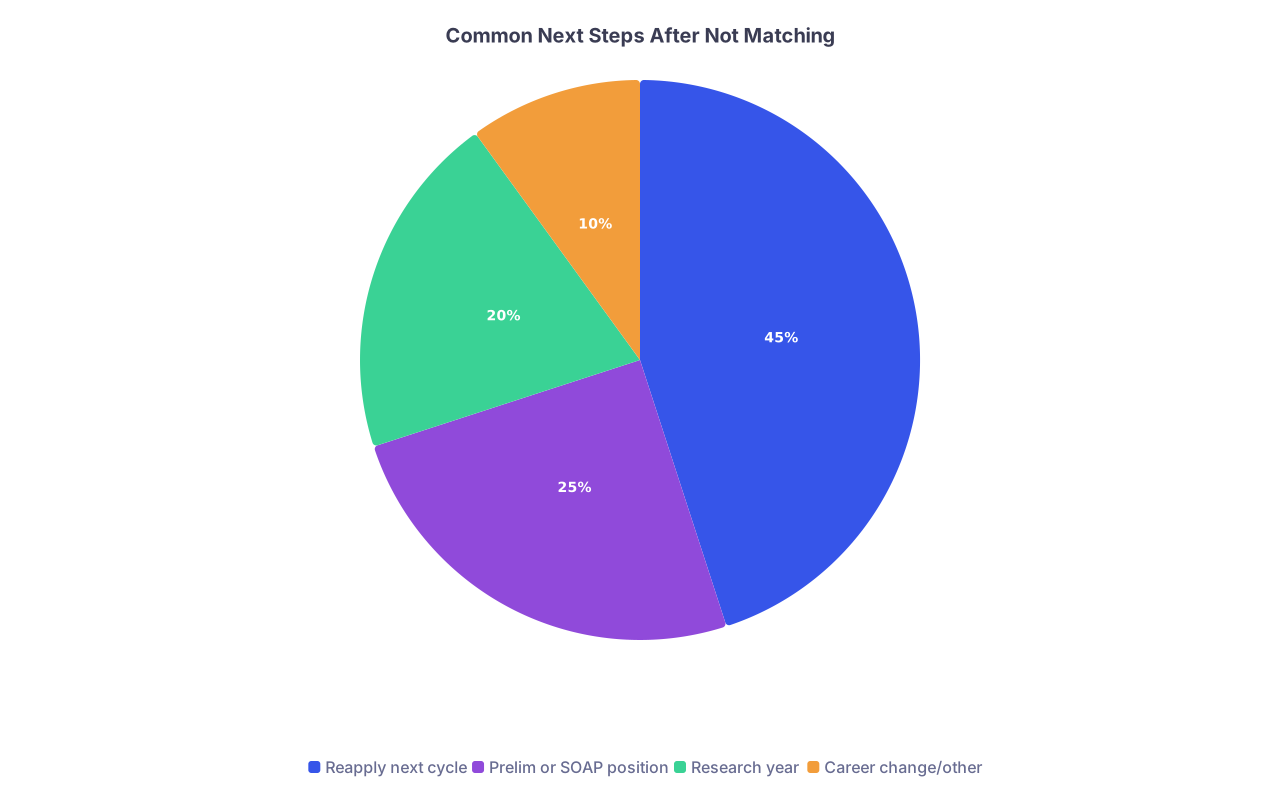
| Category | Value |
|---|---|
| Reapply next cycle | 45 |
| Prelim or SOAP position | 25 |
| Research year | 20 |
| Career change/other | 10 |
People with red flags who don’t match the first time have options:
Reapply with:
- stronger letters
- more programs
- updated experience (research, prelim year, etc.)
SOAP into:
- prelim medicine
- transitional years
- less competitive programs
Spend a year:
- doing research
- working as a research coordinator
- doing a teaching or clinical job
then reapply with new supervisors advocating for you
Program directors are much more convinced by a recent attending saying, “They are reliable and I’d take them in my program,” than by a 2-year-old professionalism note in an MSPE.
Is it unfair you have to work this hard to prove you’re not your worst moment? Yes.
Is it doable? Also yes.
Key Things I Want You to Walk Away With
A line about “personal issues” in your Dean’s Letter makes things harder, not impossible. Lots of residents walking hospital halls right now have MSPEs that would make you nervous.
Your job isn’t to erase the red flag. It’s to own it briefly, show growth, and drown it out with recent, consistent, solid performance and strong letters.
Apply strategically, get support, and don’t let shame talk you into giving up before you even test how the world actually responds to your file.
FAQ (Exactly 5 Questions)
1. Should I preemptively bring up my personal issues in every interview, or only if they ask?
Only bring it up automatically if it’s a major, obvious red flag (e.g., multiple professionalism concerns, big LOA). Otherwise, have a prepared, honest, calm explanation ready and use it when they ask. Over-sharing can actually create more concern than the MSPE itself.
2. Will programs see mental health–related LOAs as a reason not to rank me?
Some will be cautious, yes. Others genuinely respect people who took time to get help and are now stable. Your task is to make it clear you’re functional, supported, and have done well since returning. Strong recent evaluations and letters matter more than the label “mental health.”
3. Can I ask my school to change or soften the wording of my MSPE?
You can absolutely ask. Some schools won’t change substantive content but will adjust tone or add clarifying language like “the issue was resolved” or “no further concerns arose.” It’s worth a respectful, specific request: “Could we include that I successfully completed all subsequent rotations without incident?”
4. Should I switch specialties because of the red flag in my Dean’s Letter?
Not automatically. But if your record has serious concerns and you’re aiming for something extremely competitive (like derm, ortho, plastics), you should have a hard, honest conversation with an advisor. Sometimes adjusting to a somewhat less competitive specialty dramatically improves your chances and lowers your stress.
5. How do I keep this from completely wrecking my confidence during interview season?
Prepare your narrative ahead of time, rehearse it until you can say it without panic, and then mentally box it up: it’s one line in your story, not your whole identity. Focus on what you bring now—how you work on the team, how you care for patients, how you’ve grown. And remember: most people interviewing you have screwed up or struggled at some point too. They just don’t have it immortalized in an MSPE sentence like you do.