
Last October, I watched two MS4s standing outside a workroom at 6:45 a.m. One had already booked 12 interviews. The other? Zero. Same school, similar scores, both solid people. One was fielding early invites from big-name programs; the other was refreshing Gmail like it was a full-time job.
You’ve been told it’s all about “holistic review” and “fit.” Let me tell you what actually happens in those first brutal weeks when interviews go out—and why some people get emails in the first wave while others quietly slide onto “hold” lists that nobody officially admits exist.
How Programs Actually Build Their Interview List
Programs do not sit down and holistically review 4,000 files one by one. That’s the fairy tale version.
Here’s the reality: most places use a tiered system. Often built on spreadsheets and crude filters, sometimes dressed up in an expensive “application management platform,” but the logic is the same.
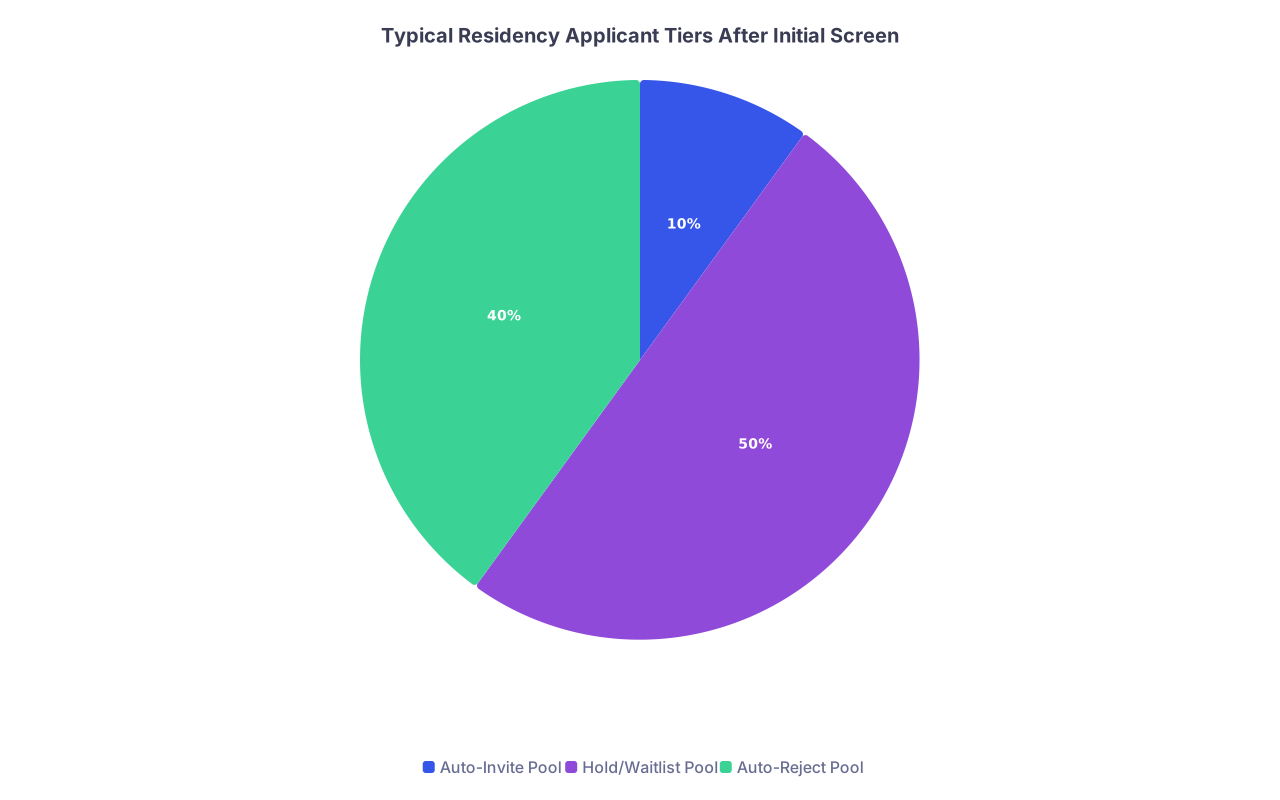
| Category | Value |
|---|---|
| Auto-Invite Pool | 10 |
| Hold/Waitlist Pool | 50 |
| Auto-Reject Pool | 40 |
I’ve seen this breakdown at multiple programs (IM, EM, Anesthesia, not just hyper-competitive fields):
- A small “auto-invite” tier. Maybe 5–15% of applicants.
- A massive “hold/possible” tier. 40–60%.
- An “unlikely” or soft-reject tier. 30–40%, often never explicitly rejected until late.
The auto-invite tier is where early invites come from. If you’re in there, your email goes out in the first or second batch. If you’re not, you’re fighting for cancellations, yield-management leftovers, and faculty whims.
And how do you get into that tier? Not with a “strong passion for the specialty” paragraph. With numbers and flags.
The First Gate: Scores, Filters, and Hidden Thresholds
Programs will never post their actual cutoffs. But behind closed doors, I’ve literally watched PDs say:
“Okay, Step 2 below 225, we’re not reading unless they’re from X school or with Y connection.”
Even with Step 1 being pass/fail, the behavior hasn’t changed. They just shifted their obsession to Step 2, class rank, and school reputation.
| Filter Type | Typical Hidden Cutoff |
|---|---|
| Step 2 CK | 230–240 for mid-tier IM |
| Class Rank | Top 1/2 or top 1/3 only |
| Fails/Remediations | 0, or 1 with explanation |
| IMG Status | US-IMG only at some sites |
| YOG | Within 1–3 years |
Does every program use every filter? No. But enough do that you can feel the pattern across your invites.
Early invite candidates tend to hit multiple filters cleanly:
- Step 2 comfortably above the program’s mental line.
- No red flags in the MSPR.
- Reasonable class percentile (or AOA, or honors in key rotations).
- US grad or institution the PD recognizes and trusts.
If you’re a 250+ Step 2 applicant in IM applying to mid-tier academics, you’re probably in someone’s “auto-review” or “auto-invite” pool before they even open your personal statement. That doesn’t mean you’ll match where you want—but it means your email lights up early.
The brutal flip side: if you’re borderline on their main metric—say 225–230 CK at a program that “prefers” 235+—you might not be rejected. You’re just quietly placed on hold. Which is why your invites dribble in months later, if at all.
The Second Gate: School Name, Letters, and Invisible Trust
Here’s what students never hear: PDs are in constant back-channel communication with each other and with your deans. They remember which schools consistently oversell their students and which ones understate.
When a PD sees “University of Michigan” or “UCSF” or “WashU” on an application, the baseline trust is higher. They assume you’ve been reasonably vetted, your clinical training is solid, and your narrative isn’t wildly off from reality. That alone can move you up a tier if your scores are mid-range.
Then there are letters.
Everyone tells you “strong letters are important.” Nobody tells you what that actually means from the other side.
I’ve sat in ranking meetings where someone pulls up a letter and says, “This is a [Big Name] letter, we know his scale,” and the entire room shifts how they feel about a candidate. Not because of what’s written—but because they know how this specific attending writes in real life.
A letter from a famous name in the field, at a program the PD trusts, with specific comparative language (“top 5% of students I’ve worked with in 10 years”) can push you out of the waitlist mush and into that first wave of invites.
A generic “hard-working, pleasant to work with” letter from a no-name community doc? That will not get you cut. But it will not rescue you from being average on paper either. And average is where waitlists live.
Why Some People Get Emails on Day 1
Let’s be blunt. Early invites usually go to one or more of these categories:
Obvious top-tier metrics
The easy ones. 250+ Step 2 CK, strong honors, top quartile, home or similar-caliber school. They’re “safe bets” to interview, especially early, when the calendar is wide open.
Strong home or visiting rotation performance
If you rotated there and the residents loved you, you’re getting an early look unless you did something bizarre on paper. Programs protect their own, and they pay attention to visiting students who made an impression.
Dean’s or faculty nudge
The email you never see: “Hey, can you take a look at this student? They’d be a great fit for your program.” That pushes your file from the “we’ll see later” pile into the “review now” stack. I’ve watched an applicant with mid-tier scores jump half the line because a PD they trusted sent that one-line email.
Program-fit outliers
You match something the program is explicitly trying to build: Spanish-speaking, rural background, strong QI interest, med-ed experience, research perfectly aligned with a faculty member. When a PD is building a “balanced class,” these people get preemptively grabbed before slots fill.
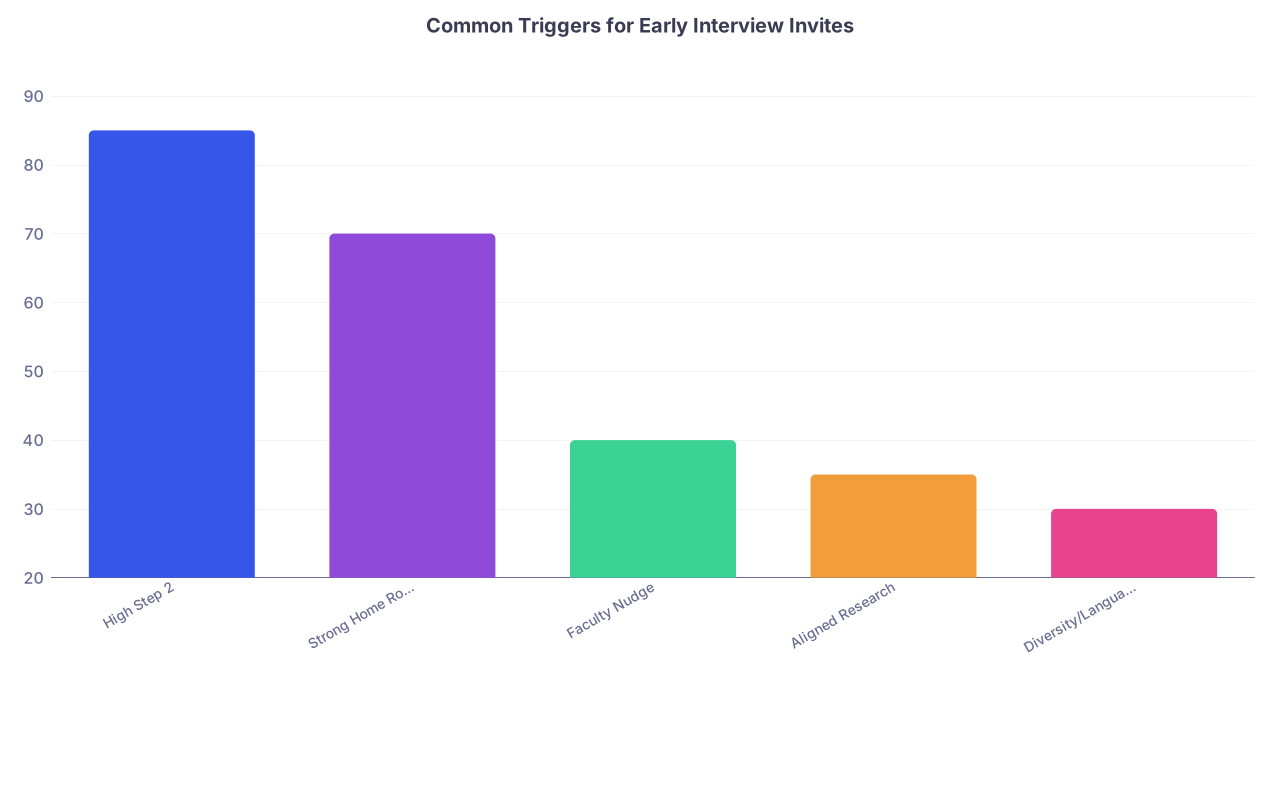
| Category | Value |
|---|---|
| High Step 2 | 85 |
| Strong Home Rotation | 70 |
| Faculty Nudge | 40 |
| Aligned Research | 35 |
| Diversity/Language Asset | 30 |
None of this is “fair” in the classroom sense. But it’s exactly how the invite list gets shaped in October.
The Giant Middle: How You End Up in Waitlist Limbo
Here’s the part students underestimate: the hold/waitlist group is huge. At many programs, over half of all applicants end up in this gray zone.
You’re not rejected. They’re just not ready to commit to you yet.
Why? Because programs are terrified of over-inviting early and then getting crushed by a high acceptance rate. Interview spots are limited. Faculty time is finite. Rooms and Zoom links are finite.
So, they run the season like an airline runs seats.
They start with their projected “high-yield” invites. People they think are both good and likely to actually interview. Then they watch:
- Who accepts quickly.
- Who declines (often those with many offers).
- How many open spots they have on certain dates.
- Whether they’re getting enough diversity—academic, geographic, demographic, interest-wise.
You? If you’re in that big middle—solid but not spectacular, no huge connection to the program—you get parked. Sometimes actually labeled “HOLD” in the system. They tell themselves: “We’ll come back to these once we see how our first wave shakes out.”
This is why you see weird, late invites in December or even January from programs you assumed had ghosted you. They did. Then someone canceled, and your name was still hovering in that “reasonable candidate” column.
Hidden Signals That Push You Off the Waitlist (Or Keep You There)
Here’s what programs look for when they go fishing back into that massive hold pool:
Geographic plausibility
If you’re from New York, went to medical school in New York, have no apparent ties to the Midwest, and you applied to a community program in rural Iowa, guess what they assume? That you’re throwing a wide net and will cancel if you get something closer to home.
Meanwhile, a similar applicant with “Grew up in Iowa / went to undergrad nearby” in their personal statement or ERAS geographic preferences gets a second look off the waitlist, because they’re more likely to show.
-
In specialties with signaling (like EM, some surgical subspecialties), the presence or absence of a signal changes whether you ever get plucked out of that hold group. No signal = you’re plan B. Or C.
Perceived competitiveness vs program tier
Programs assume the super-glittery applicants won’t rank them highly. If you look “overqualified” for a mid-tier community program, they might hold your file and prioritize people whose profile matches their historic match list. That’s not paranoia; it’s something PDs talk about openly when the doors are closed.
Communication (done right and wrong)
A short, specific, well-timed email in late October or November can be the difference between staying buried and being re-reviewed.
Example of what has actually worked:
- Reaching out after you’ve rotated there.
- Referencing a very specific aspect of the program (“Your QI curriculum and the way residents get real project time is exactly what I’m hoping for, especially after working on X at my home program”).
- Coming from someone with a letter in your file who can nudge on your behalf.
What does not work:
- “Just checking if my application is complete.”
- Vague “this is my top choice” sent to ten programs with copy-paste errors.
- Weekly “updates” that scream desperation.
Programs don’t want to be harassed. But they also don’t ignore thoughtful, targeted interest—especially if they’re trying to fill a few last slots and want people who will actually show up.
How Timing and Application Strategy Feed Into Early vs Waitlist
Most applicants underestimate timing. They act like submitting in late September is “fine” because the deadline isn’t until much later.
Internally, many programs have already skimmed, filtered, and semi-ranked hundreds of apps before you even get marked as “complete.” Even if they’re not “done,” their first-pass auto-invite list is forming.

| Step | Description |
|---|---|
| Step 1 | Applications Released |
| Step 2 | Score/Filter Screen |
| Step 3 | Auto-Invite Tier |
| Step 4 | Hold/Waitlist Tier |
| Step 5 | Soft Reject Tier |
| Step 6 | Wave 1 Invites Sent |
| Step 7 | Track Accept/Decline Rates |
| Step 8 | Open Spots Remain? |
| Step 9 | Review Hold Tier |
| Step 10 | Minimal Additional Invites |
| Step 11 | Late Invites to Hold Applicants |
If your letters or MSPE were late, or you didn’t have a Step 2 CK posted early in the season, you often get pushed right out of that early-look window. When they came through their filters, your file was incomplete. By the time it’s updated, their early wave is already gone.
Two other strategic mistakes push people onto waitlists they never escape:
Applying purely “up” to reach programs, with too few realistic anchors. Your stats might have put you in the hold group at big-name places, but those spots often never open. Meanwhile, you didn’t give enough love to safety and mid-tier programs that would have auto-invited you if you’d signaled interest or had geographic ties.
Ignoring less popular programs until late. Some people apply to a second wave of places in November when early invites are dry. The problem: by then, many program invite lists are 70–80% set. You’re walking into a room where almost every seat already has a name.
The Truth About “Waitlists” That Nobody Admits
Programs rarely email “You’re on a waitlist.” They just say nothing. On their side, though, the categorization is very real.
In one EM program I worked with, the spreadsheet literally had:
- “Priority Invite” – these got the first batch.
- “If spots remain” – reviewed after accept/decline pattern stabilized.
- “Holds” – only reviewed if there were significant declines, especially from high-tier applicants.
- “Unlikely” – kept on file, but essentially written off barring catastrophe.
You don’t see those labels. You just experience them as silence.
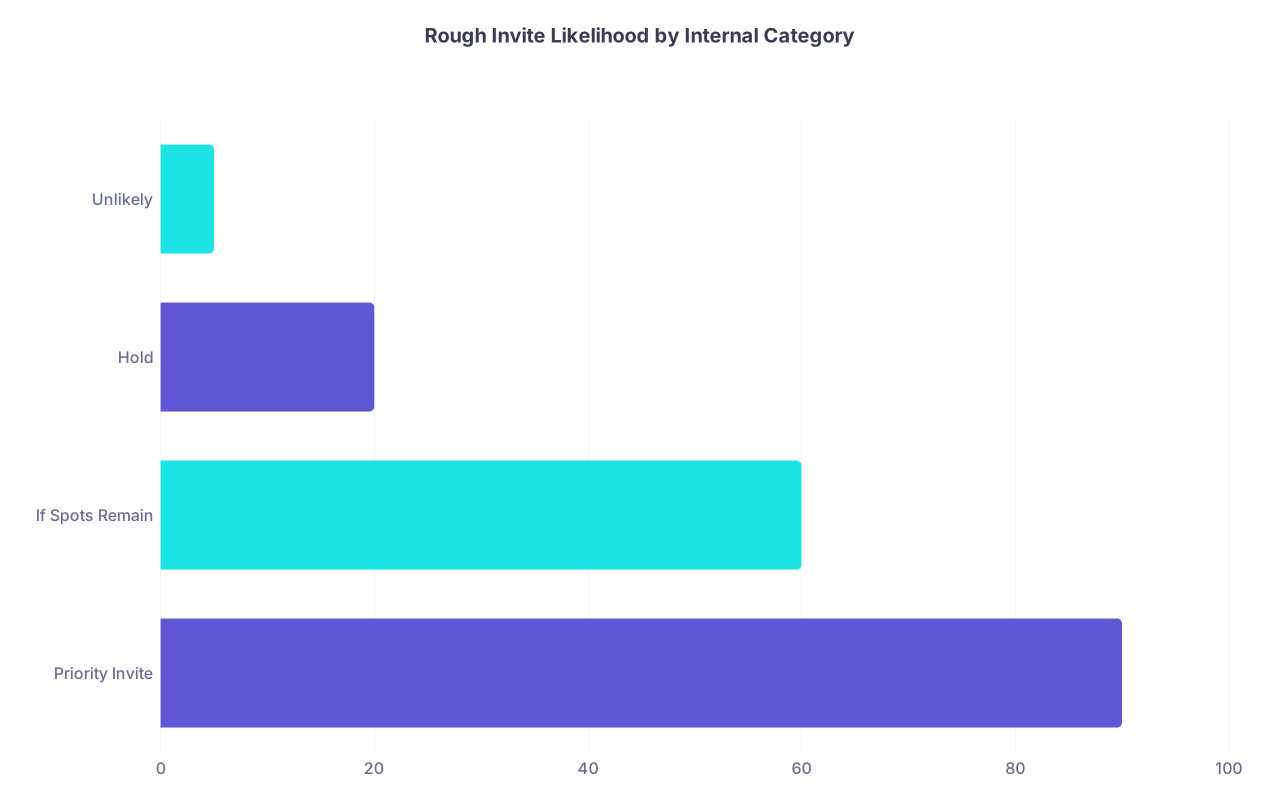
| Category | Value |
|---|---|
| Priority Invite | 90 |
| If Spots Remain | 60 |
| Hold | 20 |
| Unlikely | 5 |
So yes, people do get pulled off holds and onto interview rosters, but the odds drop sharply the further from October you get. Especially as holidays approach; many programs want their calendars mostly locked by mid-December, even if they keep a few “contingency” names in their back pocket.
How to Tilt Yourself Toward Early Invites (Even If You’re Not a Unicorn)
You can’t rewrite your Step 2 score in October. You can’t magically become AOA. But you’re not powerless.
If I were sitting with you as a rising M4 months before ERAS, here’s what I’d tell you very directly.
Target your letters like your life depends on it. Because it does.
Get at least one from someone who:
- Is known in the specialty.
- Has written you into strong positions of responsibility (not just “showed up”).
- Has a track record of writing concrete, comparative, enthusiastic letters.
Do rotations strategically. Not eight aways; that’s masochism. One or two at places where:
- You’d actually rank them high if they liked you.
- Your home program name doesn’t automatically open all doors.
- You can realistically be seen and remembered by the PD.
Be early and complete. Step 2 score ready. MSPE fine. Letters uploaded. Programs actually see “complete” early on their end. Do not assume “before deadline” is sufficient.
Make your application easy to trust. Clear, clean CV without fluff. No bloated “research interest” section full of poster titles you can’t explain. No “passion for everything” in your personal statement. Programs smell desperation and incoherence from a mile away.
And—this matters more than you think—lean into geographic and program fit where it’s real. If you have any plausible tie to where you’re applying, don’t bury it in the third paragraph of your personal statement. Use it clearly. Programs are actively trying to guess who will actually come.

Behind Closed Doors: What PDs Actually Say
You want the real language? Here’s what I’ve actually heard behind those doors, about early and late invites:
- “Let’s invite the ones we know we’ll be fighting for first.”
- “She’s strong but I don’t think we’re breaking into her top five. Put her on hold and see if we have extra spots.”
- “His scores are okay, but I trust [Dr. X] completely. If they say he’s great, bring him in.”
- “These four are from [our med school]. Just invite them. We know the deans calibrated their evals.”
- “She emailed me about our global health track and actually read about it. That’s more effort than half this list. Toss her into the next invite batch.”
You’re not just a PDF to them, but they’re also not reading every sentence with rapt attention. They’re triaging. Fast.
Your job is to make yourself look like an easy yes in those first five seconds of scanning. Scores in range. Letters that shout, not whisper. A story that actually aligns with their strengths. Some believable reason you’d show up if they rank you.
The Bottom Line: Why They Get Early Emails and You Don’t
Strip away the euphemisms and PR language, and it comes down to this:
- Early invites are mostly about risk management and efficiency, not pure “best applicant wins.”
- Programs front-load their calendars with candidates they see as both strong and likely to come.
- Everyone else gets sorted into internal bins that feel a lot like waitlists—even if they never call them that publicly.
- You can’t fully control which bin you land in, but you can absolutely change the odds by where you rotate, who writes for you, how early and complete your app is, and whether you look like someone who will actually say yes.
You are not crazy if this feels opaque and unfair. The process is messy. But it’s not random.