
Finding the Right Mentor: How to Network Effectively During Your Shadowing Experience
Shadowing is often your first real window into the day-to-day life of medicine. You see how physicians and other healthcare professionals think, communicate, and make decisions in real time. But beyond simply observing, shadowing is one of the best opportunities to begin building a professional network and finding mentors who can support your long-term career development.
Used well, a shadowing experience can become the foundation for mentorship, letters of recommendation, research opportunities, and long-term guidance throughout medical school and residency. Used passively, it becomes just a line on your CV.
This guide will help you intentionally use your medical shadowing experience to:
- Understand how mentorship fits into healthcare education and your career
- Identify and approach potential mentors
- Use practical networking strategies before, during, and after shadowing
- Build genuine, long-term professional relationships
- Leverage your shadowing experiences for applications and career decisions
Why Mentorship Matters in Medicine and Healthcare Education
Mentorship is woven into the fabric of medical training. From premed to residency and beyond, physicians and other healthcare professionals grow through apprenticeship, feedback, and example. For students and trainees, a strong mentor can be transformative.
What an Effective Mentor Can Offer
A good mentor in medicine doesn’t just answer questions—they help shape the way you think and plan your career. Key benefits include:
Guidance through complex decisions
- Choosing a major or post-baccalaureate route
- Deciding when and where to apply to medical school
- Exploring specialty interests early (e.g., surgery vs. pediatrics vs. psychiatry)
- Navigating gap years, research, or clinical work
Academic and professional support
- Study tips for premed science courses
- Insight into USMLE/COMLEX expectations and preparation later on
- Advice on building a competitive application profile
- Honest feedback on strengths, weaknesses, and areas for growth
Exposure and opportunities
- Introductions to colleagues in other specialties or at other institutions
- Invitations to sit in on research meetings or journal clubs
- Potential involvement in quality improvement projects, audits, or research
- Insight into internships, scribing, or clinical assistant roles
Role modeling and emotional support
- Examples of how to manage high-stress situations and difficult cases
- Age- and career-stage-appropriate advice on work–life balance
- Support during setbacks (e.g., a disappointing MCAT score, rejections, or academic difficulties)
The most impactful mentors help you clarify what matters to you, then support you in building a realistic plan to get there.
Shadowing as a Starting Point for Mentorship
Your shadowing experience is often your earliest sustained contact with practicing clinicians. This makes it a powerful setting to:
- Observe different practice styles and personalities
- Notice what kind of physician–patient interactions resonate with you
- Identify physicians and other healthcare professionals who naturally teach, explain, and engage with students
- Begin building a relationship that can later evolve into a more formal mentorship
Think of shadowing not just as “watching a doctor work,” but as your first immersion in a professional network you’re starting to build for the rest of your career.
Preparing Intentionally: Laying the Groundwork Before You Shadow
You can dramatically improve your networking success by preparing before you ever set foot in the clinic or hospital.
Clarify Your Goals for the Shadowing Experience
Before your first day, spend time reflecting on what you hope to gain:
- Are you trying to confirm your interest in medicine in general?
- Are you exploring a specific specialty (e.g., emergency medicine, OB/GYN, psychiatry)?
- Do you want to understand physician lifestyle and workload?
- Are you looking for someone who might later write a letter of recommendation?
- Are you curious about research or academic medicine?
Having clear goals helps you:
- Ask more focused questions
- Recognize who might be the “right” mentor for your needs
- Use your time more effectively
Write your goals down. You can even share a brief version with the physician you’re shadowing (“One of my goals is to understand how you decided on this specialty”).
Research Potential Mentors and Clinical Sites
When possible, don’t go into a shadowing experience blind. Use basic networking strategies and online research to identify promising mentors:
Review hospital or clinic websites
- Read physician profiles, including clinical interests and educational roles
- Look for titles like “Program Director,” “Clerkship Director,” “Medical Education Lead,” or “Student Advisor”—these individuals often enjoy mentoring
Use LinkedIn and professional profiles
- Search for physicians or advanced practice providers (NPs, PAs) in your interest areas
- Note any involvement in research, teaching, or community outreach
Ask your premed advisor or professors
- Many have established relationships with clinicians who enjoy taking students
- They may match you with someone known to be an excellent teacher and mentor
Understand the institution’s culture
- Academic medical centers often have a stronger focus on teaching and mentorship
- Community hospitals may provide closer patient contact and smaller, tight-knit teams
You don’t have to find the “perfect” mentor at this stage, but you should enter the experience with a sense of who you’ll be working with and what they care about.

Networking During Shadowing: Building Genuine Professional Relationships
Once your shadowing experience begins, your focus shifts from preparation to interaction. Your goal is to be professional, engaged, and curious—without being intrusive or demanding.
Show Up as a Professional, Not “Just a Student”
First impressions matter. Residents and attendings are more likely to invest in students who show professionalism from the start.
Be reliable and punctual
- Arrive 10–15 minutes early
- Confirm time and location the day before if not clearly stated
Dress appropriately
- Follow any dress code; if uncertain, business casual with a white coat (if allowed) is typically safe
- Wear closed-toe shoes and bring a notepad and pen
Respect patient privacy and team workflow
- Follow all HIPAA and institutional rules
- Step out when asked and never engage with patient information outside the clinical setting
Professionalism is often the first filter mentors use to decide whether to invest further energy in a student.
Ask Thoughtful, Context-Aware Questions
Questions are your primary networking tools during shadowing, but they should be relevant and well-timed.
When to ask questions:
- During natural lulls (e.g., walking between rooms, after clinic sessions)
- At the end of the day, asking, “Is now a good time to ask a few questions about your path and career?”
What to ask:
About their pathway:
- “How did you decide on this specialty?”
- “What were some unexpected challenges in medical school or residency?”
About the work:
- “What do you find most rewarding and most challenging about your typical day?”
- “How do you approach difficult conversations with patients?”
About career development:
- “If you were in my position now, what would you focus on in the next 1–2 years?”
- “Are there experiences you consider especially valuable before applying to medical school?”
Avoid very personal questions early on (e.g., detailed salary, personal finances) and questions easily answered by a quick Google search.
Read the Room and Respect Their Time
Effective networking in a clinical setting requires situational awareness:
- If your mentor is obviously rushed, handling a difficult case, or pressed for time, hold questions for later.
- If a patient encounter becomes emotionally charged, focus on observing how the clinician responds, rather than inserting yourself.
- Watch how your mentor interacts with the team—this will tell you a lot about their leadership and communication style.
Your ability to recognize and adapt to clinical pressures signals maturity and professionalism.
Connect with the Whole Healthcare Team
One of the biggest networking mistakes is focusing only on physicians. Healthcare is team-based, and mentorship can come from many roles:
- Nurses: Can teach you bedside communication, workflow, and practical patient care
- Physician Assistants and Nurse Practitioners: Can share perspectives on different training and career paths
- Pharmacists, social workers, and therapists: Provide insight into multidisciplinary care and systemic challenges
- Office staff and coordinators: Often understand how systems work (scheduling, referrals, clinic flow) and can help you navigate future opportunities
A respectful, curious attitude toward the entire team will be noticed and appreciated by potential mentors.
Turning a Shadowing Experience into a Mentorship
Not every physician you shadow will become a mentor, and that’s okay. The goal is to identify one or two people with whom there is genuine rapport—and then nurture that relationship over time.
Recognizing a Potential Mentor
Signs that someone might be a good mentor for you include:
- They explain their thinking during cases or invite your questions
- They ask about your background, interests, and career goals
- They give you specific, constructive feedback (even brief: “You asked that question well”)
- You feel comfortable around them and respect how they practice medicine
- They seem to enjoy teaching and supporting learners
If you sense this connection, treat the relationship with intention.
How to Express Interest in Ongoing Mentorship
Toward the end of your shadowing period—or even in a follow-up email—you can gently explore an ongoing connection. For example:
“I’ve really appreciated learning from you these past few weeks. Your approach to patient care and your path into [specialty] have given me a lot to think about. If you’d be open to it, I’d value staying in touch as I continue my premed journey and eventually apply to medical school.”
This type of message:
- Shows genuine appreciation
- Highlights specific aspects you found helpful
- Clearly but respectfully signals your interest in ongoing mentorship
They may agree to periodic check-ins, offer to review your CV in the future, or simply say they’re happy to answer questions by email—any of these can be the start of a long-term professional relationship.
Following Up: The Critical Step Most Students Skip
Your post-shadowing follow-up is where networking strategies turn into actual relationships.
1. Send a personalized thank-you note or email
Within 24–72 hours:
- Thank them for their time and teaching
- Mention 1–2 specific things you learned or moments that stood out
- Briefly restate your goals and next steps
Example:
“Thank you again for allowing me to shadow you in clinic last week. Watching how you handled the discussion with the patient who was hesitant about starting insulin showed me how complex and meaningful these conversations can be. Our conversation about your path into endocrinology also helped me better understand what residency training might look like. I’m planning to continue exploring internal medicine–related fields and would be grateful to stay in touch as I move closer to applying to medical school.”
2. Connect professionally
- Ask if they would be comfortable connecting on LinkedIn or via institutional email
- Keep your profile professional and up to date
- Periodically engage with any public content they share (e.g., like or comment thoughtfully on articles or talks)
3. Provide occasional updates
Every few months (or when major milestones occur):
- Share a short update: MCAT progress, new shadowing experiences, research, or leadership roles
- Thank them again for earlier advice and note how it informed your decisions
- Keep messages concise and relevant
This transforms a one-time interaction into an evolving mentorship.
Expanding Your Network: Group Opportunities and Beyond
Shadowing is often a one-on-one experience, but you can amplify its value by combining it with broader networking efforts.
Use Institutional and Community Resources
Look for structured opportunities that complement your individual shadowing:
Premed clubs and interest groups
- Invite physicians you’ve shadowed to speak or participate in Q&A sessions
- Ask group leaders about additional shadowing or volunteering connections
Workshops, grand rounds, and lectures
- Attend talks at affiliated hospitals or medical schools
- Introduce yourself briefly to speakers afterward, mentioning your shadowing experiences and interests
Professional organizations
- Join national groups such as:
- American Medical Student Association (AMSA)
- Student National Medical Association (SNMA)
- Latino Medical Student Association (LMSA)
- Specialty-specific student interest groups
- Many offer mentoring programs, conference discounts, and virtual networking events
- Join national groups such as:
These settings let you practice professional conversation, broaden your exposure to various career paths, and discover additional mentors.
Be Open to Unexpected Mentors and Nonlinear Paths
While you may start shadowing a physician with a specific goal in mind, remain open to other opportunities:
- A nurse may invite you to observe patient education sessions
- A resident may offer to talk about how they navigated board exams or specialty selection
- A clinic manager might mention a paid scribe or assistant position
- A research coordinator might flag a student-friendly study looking for volunteers
Career development in healthcare rarely follows a perfectly linear path. Some of your most meaningful mentors may not have “MD” after their names—but they can still deeply influence your professional values, understanding of the system, and future choices.
Cultivating Long-Term Mentor–Mentee Relationships
Once a mentoring relationship begins, your role is to nurture it respectfully and thoughtfully.
Be an Active, Prepared Mentee
When you meet or email a mentor:
- Come with a purpose: specific questions, decisions you’re weighing, or materials for feedback (e.g., draft personal statement)
- Do your homework: if they suggested an article, book, or resource, review it before your next conversation
- Respect boundaries: mentors have demanding clinical and personal lives—be mindful of time and avoid excessive communication
You don’t need constant contact; periodic, purposeful interactions are usually more valuable.
Discuss Opportunities for Deeper Engagement
If the relationship is going well, you can explore other ways to work together:
Ask about research or quality improvement projects
- “If any projects come up where a student could help with data collection or literature review, I’d be very interested.”
Inquire about further clinical exposure
- “Are there additional clinics or rotations where students are allowed to observe that you’d recommend?”
Seek guidance on applications and letters
- When the time is right and you’ve developed a solid relationship, you can ask if they’d feel comfortable writing a letter of recommendation
- Provide plenty of lead time and share your CV and personal statement draft
Mentorship is a long-term investment on both sides. Showing responsibility, follow-through, and gratitude makes mentors more willing to go the extra mile for you.
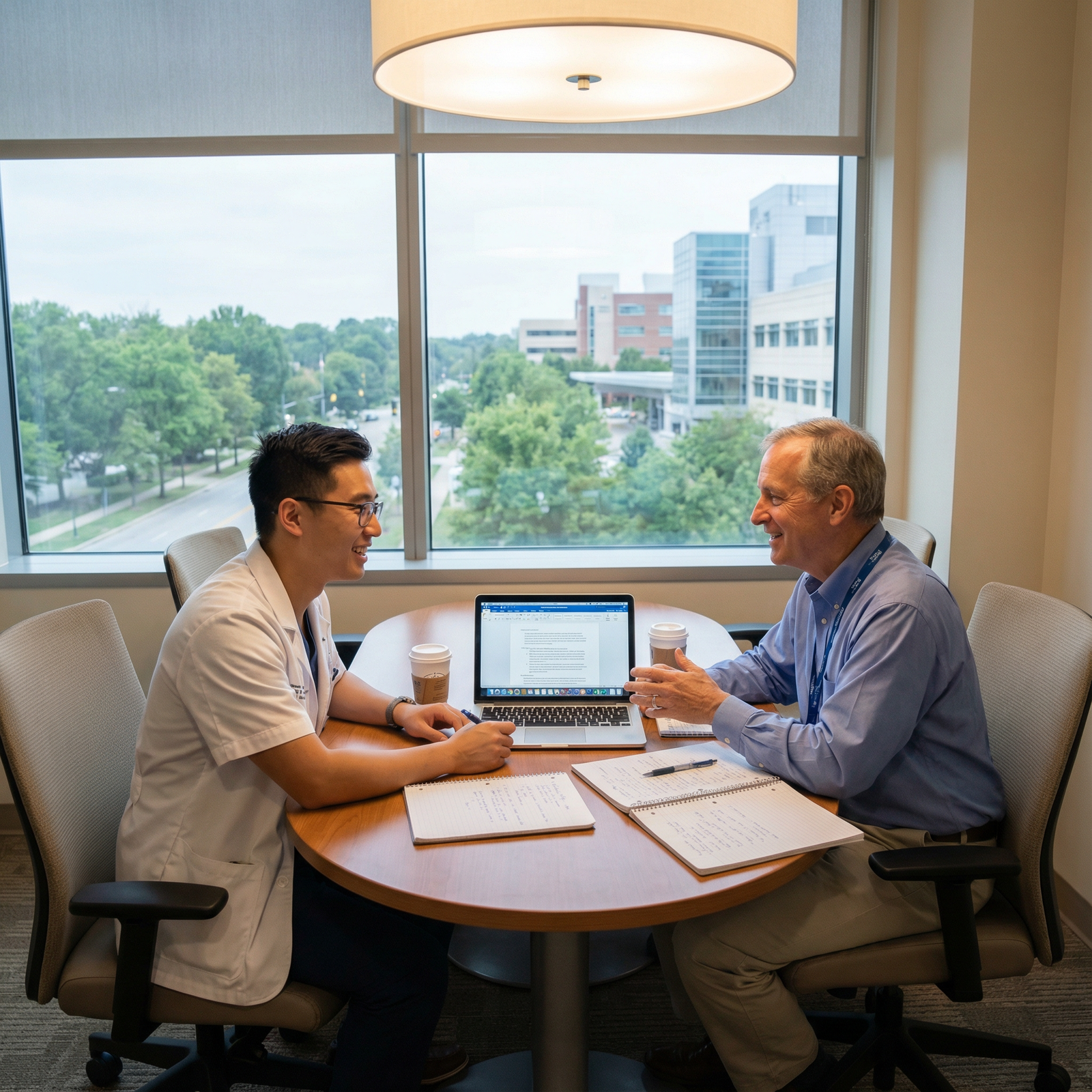
Real-World Example: How Shadowing Mentorship Shapes a Career
Consider a student who begins shadowing a family medicine physician purely to “see what doctors do.” Over several weeks:
- The physician consistently explains their reasoning and invites questions
- The student notices how much they enjoy the longitudinal, relationship-based care
- The physician asks about the student’s background and goals, sharing stories from their own journey
- The student later emails a thank-you note, mentioning a particularly meaningful patient encounter they observed
Impressed by the student’s professionalism and reflection, the physician:
- Invites them to attend a community health outreach event
- Introduces them to a colleague involved in a primary care research project
- Later helps review the student’s personal statement and writes a strong letter of recommendation
What began as a simple shadowing experience evolves into multi-year mentorship—shaping specialty interest, strengthening a medical school application, and providing a trusted advisor during transitions into medical school and residency.
Your story will be different, but the process is similar: show up prepared, connect authentically, follow up, and nurture the relationship.
FAQs: Networking, Mentorship, and Shadowing in Medicine
1. How do I ask a physician if I can shadow them?
- Start with a brief, professional email or in-person request that includes:
- Who you are (year in school, major if relevant)
- How you found them (referral, website, event)
- Why you’re interested in their specialty or practice
- A simple ask: “Would you be open to having a student shadow for [X] half-days?”
- Example:
“My name is [Name], and I’m a junior at [University] interested in exploring internal medicine. I was very inspired by your talk on managing chronic disease in underserved populations. If your schedule allows, I would be grateful for the opportunity to shadow you for a few clinic sessions to learn more about your work and the specialty.”
If they decline, thank them and ask if they know any colleagues who might be open to shadowing.
2. How can I make a strong impression during my shadowing experience?
- Be punctual, professional, and respectful at all times
- Show active engagement: take notes, observe carefully, and ask appropriate questions
- Follow all confidentiality and institutional rules strictly
- Be courteous to all staff and patients
- Express appreciation verbally and in writing at the end of the experience
Most mentors remember students who are curious, thoughtful, reliable, and easy to work with.
3. What if I don’t “click” with the first person I shadow?
That’s normal. Not every clinician will be the right mentor for you.
View each shadowing experience as data:
- What did you like or dislike about their practice style or specialty?
- What kind of mentor personality do you respond to best?
Continue exploring:
- Shadow different specialties and practice settings
- Ask premed advisors or peers for recommendations
- Remain open to mentorship from residents, fellows, or other healthcare professionals
You’re not failing if one experience doesn’t lead to mentorship—you’re learning what does and doesn’t fit.
4. How can I leverage my shadowing experience in applications and interviews?
Use your shadowing to demonstrate insight, reflection, and growth:
In personal statements and secondary essays:
- Describe specific cases or interactions (de-identified) that shaped your understanding of medicine
- Highlight what you learned about patient care, communication, or ethical challenges
- Explain how mentorship influenced your goals or values
In interviews:
- Share concrete examples of what you observed and how it impacted you
- Discuss how you built relationships with mentors and what you learned from them
- Show that you understand both the rewards and difficulties of a medical career
Admissions committees value applicants who have thoughtfully engaged with clinical environments—not just accumulated hours.
5. How many shadowing hours do I need, and does more time with one mentor matter?
There’s no universal “magic number,” but:
- Many successful applicants have anywhere from 40–150+ hours of shadowing across different settings
- Depth often matters more than sheer quantity:
- A longer, more immersive experience with one or two mentors can give you richer stories, insight, and stronger letters
- Complement this with brief exposures to different specialties to show breadth
Prioritize both variety (to explore options) and continuity (to build genuine mentorship and understanding of daily practice).
By treating your shadowing experience as more than mere observation—an opportunity for mentorship, networking, and intentional career development—you lay a stronger foundation for your journey from premed to medical school and eventually residency. Every clinic hallway, patient encounter, and conversation is a chance to learn not just what medicine is, but what kind of physician and professional you want to become.