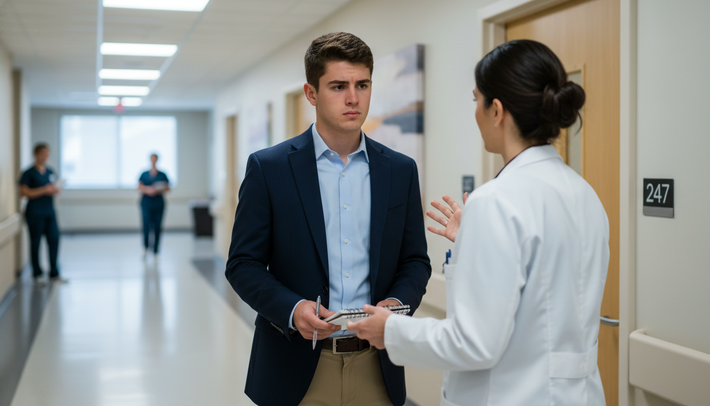
Too many premeds ignore red flags in shadowing programs—and end up exploited, unsafe, or worse: complicit in unethical care.
If you think “shadowing is always a good thing,” you’re already at risk.
You absolutely can find safe, legitimate, educational shadowing. But you can just as easily walk into:
- a HIPAA nightmare
- a billing scam
- a fake “experience-building” program that empties your wallet and poisons your application
This isn’t fear‑mongering. It’s pattern recognition. The same types of sketchy offices and “opportunities” trap premeds and early medical students every application cycle.
Let’s go through the red‑flag shadowing programs and offices you should steer clear of—and how to protect both your future and your patients.
1. The Pay‑to‑Shadow and “Guaranteed Hours” Trap
If you remember nothing else, remember this: you should not be paying large fees just to stand in a clinic hallway.
Some common setups:
- “Guaranteed 100 clinical hours in 2 weeks – Only $3,999!”
- “International physician shadowing experience – tuition $5,000 (travel not included)”
- “Exclusive premed access to surgeons – program fee $1,500”
Why this is a red flag
Commodifying patient access
When a program sells you “x hours of clinical exposure,” they’re directly monetizing patient encounters and privacy. That’s ethically dangerous territory.Schools know these programs
Admissions committees at MD/DO schools recognize the big-name pay‑to‑shadow brands and overpriced “global health experiences.” They often categorize them as:- predatory
- ethically questionable
- low‑value compared to local, free experiences
You risk spending thousands for something that doesn’t impress—and sometimes actively hurts—your application.
No real integration with the care team
Many fee‑based shadowing programs:- park you in a corner
- rotate you rapidly through clinics for volume, not quality
- give you minimal supervision
- provide no meaningful educational feedback
You’re another “paid observer,” not a trainee the team feels responsible for teaching.
Dubious legality and compliance
Especially with “guaranteed procedures” or “daily surgical viewing,” ask yourself:- Are patients truly consented for this?
- Does the hospital/clinic officially recognize the program?
- Is there documented HIPAA training and institutional approval?
If not, you’re being pushed into non‑compliant territory.
How to protect yourself
Before you even consider a paid program:
Ask: What exactly am I paying for?
- housing / logistics / lectures / supervision?
- or literally just the privilege of being near patients?
Check school policies
Some medical schools explicitly state they will not count certain types of international or fee‑based experiences as clinical or shadowing hours.Look for these signs of trouble:
- Website copy focused on “boosting your application” more than “learning”
- No clear institutional partners named (e.g., specific hospitals or clinics)
- “Spots are going fast—secure your seat with a non‑refundable deposit”
- No detailed supervision plan or training described
If you’re paying, it should be for structured education and support, not access to patients’ lives. If the main product is “hours,” walk away.
2. Offices That Ignore HIPAA and Patient Consent
One of the fastest ways to sabotage your professional reputation before it even begins is to shadow in a place that treats HIPAA as optional.
Watch carefully during your first few hours. If you see this pattern, that’s a major red flag.
Dangerous behaviors to watch for
No consent, ever
The physician walks into the exam room, vaguely waves at you, and starts the visit without saying:- who you are
- why you’re there
- giving the patient the option to decline
Patients are a captive audience. They’re allowed to say no. If the doctor never gives them that option, you’re participating in an ethical breach.
You can see charts and screens clearly
If you can read full names, diagnoses, or lab results just because screens are left open in front of you—no effort to shield or obscure—that’s sloppy at best, dangerous at worst.Casual hallway gossip
Listening to:- staff laughing about “the crazy bipolar guy in room 3”
- the physician loudly discussing a patient’s STI results at the nurses’ station
indicates a culture that treats confidentiality like a joke. You don’t want your name tied to that office.
No HIPAA or confidentiality training for you
If you’re observing in the United States and:- no one ever asks you to sign a confidentiality agreement
- no one gives you even a basic HIPAA handout or talk
that’s a sign they’re not taking your legal/ethical role seriously.
How to respond without blowing up the relationship
You do not need to call them out in front of the team. But you also shouldn’t stay silent and complicit.
Options:
- Ask privately after clinic:
“I want to make sure I’m following HIPAA correctly—how do you usually handle patient consent for having a student observer in the room?” - If you feel unsafe or clearly see patterns of violation:
- finish the scheduled day
- politely thank them
- do not return
- do not list that experience prominently or describe questionable behaviors in applications
You’re training your ethical muscle now. If you tolerate clear violations during shadowing, you’re more likely to rationalize them later as a student or resident.
3. Shadowing That Quietly Turns into Free Clinical Labor
Another huge category of red‑flag shadowing: when “just observing” slowly becomes unpaid, unsupervised clinical work.
This can start innocently:
- “Can you help room patients?”
- “Grab vitals while you’re waiting?”
- “Answer those calls; just tell them we’ll call back”
Then, weeks later, you’re:
- triaging symptoms
- giving advice that sounds a lot like orders
- handling PHI without training
- being pressured to show up like an employee—with zero pay or protections
Why this is a problem (for you and the patients)
You’re practicing beyond your training
You’re not licensed. You don’t carry malpractice insurance. You’re not legally covered for direct patient care.Scope creep is slippery
Offices that use premeds as free staff usually blur other boundaries, too:- pushing you to stay hours later than agreed
- hinting they’ll “write you a great letter” if you keep helping
- asking you to perform tasks you’re not comfortable with
Poor supervision culture
If a physician is comfortable letting an untrained premed do “a little bit” of clinical work, what does that say about their oversight of MAs, nurses, or even residents?You can be blamed if something goes wrong
Even if they “told you what to say,” you’re the one who said it. Under stress, people forget what was delegated and what was improvised.
How to draw a hard line
You don’t need to martyr yourself to be “helpful.” You do need to be clear.
If asked to do clinical tasks:
- “I’m happy to help with non‑clinical tasks like organizing charts or cleaning rooms, but I’m not trained or covered to take vitals or give medical advice.”
If they keep pushing:
- “I really value observing here, but I’m not comfortable going beyond observation and basic non‑clinical support. If that’s a requirement, I may not be the right fit for this office.”
Shadowing = observing and learning.
Not “acting like a quasi‑MA / scribe / nurse for free.”
4. Toxic, Exploitative, or Disrespectful Offices
Plenty of excellent physicians are gruff, busy, or blunt. That’s not what you’re avoiding.
You’re looking for places where the entire culture is corrosive—and being attached to that environment can:
- normalize humiliation as “teaching”
- model terrible patient interactions
- sour you on medicine before you start
Key red flags inside the office
Routinely disrespecting patients
Watch especially:- mocking accents or body size
- dismissing pain or concerns without explanation
- making fun of “noncompliant” patients in front of staff and you
You’re learning as much about how to be a doctor as what to diagnose. If what you’re learning feels wrong, trust that.
Bullying or humiliation as standard teaching
If the doctor:- shouts at nurses
- belittles front staff
- calls other physicians “idiots” constantly
that’s not “high standards.” It’s abuse. You don’t need to marinate in that.
Unrealistic expectations for your time
Warning signs:- expecting you to be there full workdays, multiple times per week, with minimal notice
- guilt‑tripping you when you mention classes, MCAT, or family obligations
- saying things like “If you really want to do medicine, you’ll find a way to be here more”
Boundary violations toward you
These can be subtle:- asking intrusive, personal questions unrelated to medicine
- pressuring you to talk about dating, religion, or politics
- making you the punchline for “student jokes”
Or they can be bluntly inappropriate: sexual comments, unwanted physical contact, texts outside professional boundaries.
Why staying “for the letter” is dangerous
Some students think: “I’ll just endure it; I need this LOR.”
Three problems:
- That letter may be as toxic as the environment. Residents and faculty can smell a chaotic, unprofessional practice from how it’s described.
- You normalize bad treatment and learn to tolerate abuse from superiors—this can haunt you in residency.
- There are almost always better options with physicians who actually enjoy teaching.
If your gut consistently says, “This feels wrong,” you’re probably right.
5. International and “Global Health” Shadowing Red Flags
International experiences can be powerful, ethical, and life‑changing.
They can also be:
- unregulated medical tourism
- exploitative of local communities
- a breeding ground for premeds doing procedures they’d never be allowed to touch in the U.S.
Dangerous signs in overseas “shadowing” programs
You’re allowed to do far more than your training supports
Red‑flag phrases:- “You’ll get to do actual procedures!”
- “Even premeds can suture and assist in surgery here!”
- “You’ll be like a real doctor for two weeks!”
If you’d never be allowed to do it legally at home, ask why it’s “okay” to do it on vulnerable patients abroad.
No local oversight or long‑term partnership
Strong programs:- work with local hospitals and universities
- have long‑standing, mutually beneficial relationships
- are run by or in close collaboration with local clinicians
Sketchy ones:
- drop in for a few weeks
- prioritize tourist experiences
- cause chaos for local staff taking care of real patients
Marketing focused on your résumé, not local needs
Be cautious if the website screams:- “Stand out for med school!”
- “Looks great on applications!”
far more than: - “Here’s how we support this community year‑round,”
- “Here’s our local leadership,”
- “Here’s our ethical framework.”
No real pre‑departure training
Legitimate global health programs require:- education on ethics and cultural humility
- clear training on what you’ll not be allowed to do
- sometimes language basics
If it’s: “Just show up; you’ll learn as you go,” that’s reckless.
How adcoms actually view these experiences
Many admissions committees are weary of:
- short, high‑priced “medical Brigadoons”
- photos of premeds in white coats holding babies in foreign clinics
They’re watching for:
- humility vs. savior complex
- respect for scope of practice
- awareness of power and privilege dynamics
You don’t want to be the applicant describing how you “delivered a baby” as a premed in another country. That’s a huge ethical self‑own.
6. Paper‑Thin “Shadowing” That’s Just a Signature Mill
Not every red flag is dangerous. Some are just a waste of time and energy.
Watch out for experiences that exist mainly to:
- fill your log sheet
- give you a letter with a big title on letterhead
- check a box without meaningful interaction
Classic low‑value setups
Barely seeing the physician
You sit:- in a conference room most of the day
- in a back corner of the clinic
- at a nurse’s station, never invited into rooms
At the end of the week, they still sign off “40 hours of shadowing.” You may get the log, but you’ve learned nothing and built no relationship.
Mass‑produced letters of recommendation
If you hear:- “We give all our premeds a standard letter at the end”
- “Just remind me of your name and I’ll print the usual letter”
that letter carries almost no weight with admissions.
Crushing student‑to‑doctor ratios
You show up and there are:- 4–6 other premeds on the same physician
- no system to rotate who goes into which room
- limited chance to ask questions
It becomes passive observation of someone else’s shadowing.
Why you should still walk away from low‑value options
Your time is finite. Every hour spent in a low‑learning, low‑interaction setup is an hour you’re not:
- volunteering somewhere meaningful
- building a real relationship with a physician mentor
- studying or protecting your mental health
A thin experience might not hurt you. But it won’t help you much either. You’re aiming for depth over raw numbers.
7. How to Vet a Shadowing Opportunity Before You Say Yes
You can avoid most of the worst situations by doing careful due diligence before you commit.
Questions to ask (or research) up front
- Who actually supervises me, and how often will I interact with them?
- What’s the typical day like for a student observer here?
- Are patients informed and allowed to decline my presence?
- Will I receive any HIPAA or privacy training or paperwork to sign?
- What tasks do students not do here? (You want them to have limits.)
- How many students are usually there at one time?
- Is there any fee or “program cost”? What does that cover exactly?
Sources of safer shadowing options
You can reduce your risk by starting in more regulated ecosystems:
- hospital‑based volunteer programs with formal shadowing pipelines
- university‑affiliated teaching hospitals or clinics
- physicians recommended by:
- your premed advising office
- upper‑year medical students
- trusted mentors
These aren’t perfect. But they’re far less likely to be wild‑west operations cutting corners on privacy, consent, or safety.
FAQ (Exactly 5 Questions)
1. Is any paid shadowing program automatically bad?
Not automatically, but you must separate program fee for structured education from paying for patient access. If the cost clearly covers housing, food, lectures, professional supervision, and has institutional backing (e.g., a university summer program), it can be legitimate. If the core product is “X clinical hours” or “guaranteed shadowing” with vague institutional ties, steer clear.
2. Can I get in trouble legally for participating in an unethical shadowing experience?
Yes, you potentially can. Common risk areas: accessing protected health information without proper authorization, practicing beyond your training (e.g., giving medical advice), or involvement in fraudulent documentation. Even if no one sues you, being associated with that behavior and then describing it in an application can seriously damage your credibility.
3. How many shadowing hours do I actually need for medical school?
Most successful applicants aren’t admitted because they hit a magic number. Many have somewhere between 20–80 hours of solid, meaningful shadowing with a few physicians. Some have more, some less. Admissions committees care far more about what you learned, how you reflect on it, and whether you understand the physician’s day‑to‑day reality than whether you hit 200+ on a spreadsheet.
4. Should I list a problematic shadowing experience on my application at all?
If you witnessed clear ethical or legal violations, or if the program itself is known to be predatory, it’s safer to omit or minimize it. You’re not obligated to report every brief contact with medicine. Focus on experiences you’d be proud to discuss openly in an interview—ones that reflect professionalism, respect for patients, and thoughtful supervision.
5. What if I only realize an experience was sketchy after it’s over?
That happens often. Use it as proof that your ethical radar is improving. You can still draw value from it by:
- reflecting privately on what you don’t want to emulate as a future physician
- committing to higher standards in future experiences
- choosing not to glamorize or overemphasize it on your application
You’re allowed to evolve. Recognizing red flags late is better than never recognizing them at all.
Remember:
- Don’t pay thousands just to stand near patients—if the program sells “hours,” question it.
- If an office ignores consent, confidentiality, or your scope, your safest move is to leave.
- Your shadowing should teach you how to be an ethical, professional physician—not how to tolerate abuse, shortcuts, or exploitation.