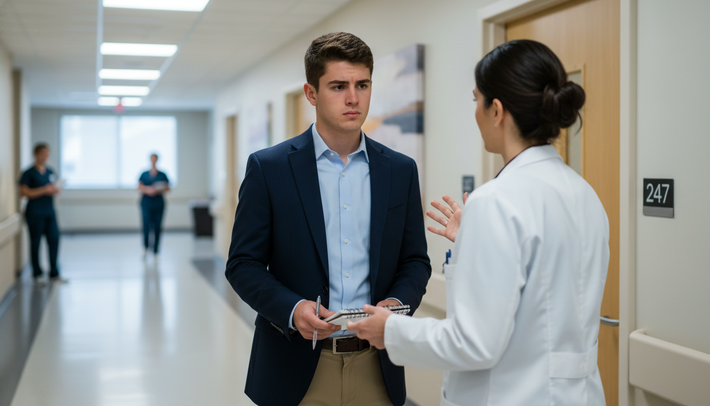
It’s June, and you’re staring at your spreadsheet labeled “Shadowing.” You’ve lined up 20 hours with a family medicine DO, 10 hours with an osteopathic orthopedic surgeon, and you’re waiting on email replies from a few MDs. Now you’re second-guessing everything:
“Do medical schools want MD shadowing only?
Does shadowing have to* be with an MD, or is DO also accepted?
Am I hurting my chances if most of my shadowing is with DOs?”
Here’s the answer you’re looking for.
Short Answer: DO Shadowing Absolutely Counts at Most Schools
No, shadowing does not need to be only with an MD.
For the vast majority of U.S. allopathic (MD) and osteopathic (DO) medical schools:
- Shadowing a DO physician is fully accepted
- Shadowing a mix of MD and DO is ideal but not required at many schools
- Only a small subset of schools have specific preferences, and those are usually:
- DO schools wanting some DO shadowing
- A few MD schools that strongly prefer shadowing in U.S.-style clinical settings (MD or DO both fine)
If your question is simply: “Is DO shadowing legitimate, meaningful, and recognized by med schools?” The answer is: yes, 100%.
Where it gets nuanced is when you ask:
“How much DO vs MD shadowing do I need or should have?”
Let’s break that down.
What Medical Schools Actually Care About With Shadowing
Most admissions committees aren’t dissecting every letter after your doctor’s name. They’re asking:
Do you understand what physicians actually do?
- Daily responsibilities
- Emotional and cognitive demands
- Lifestyle realities (good and bad)
Have you seen more than one specialty or practice type?
- E.g., primary care vs surgical vs hospital-based
Can you talk thoughtfully about what you observed?
- How it shaped your motivation
- What it revealed about the profession
(See also: What’s the Best Way to Log and Document Your Shadowing Hours? for more details.)
- Did you put in a reasonable number of hours?
- Many schools are fine with 40–60 hours total
- Some applicants have 100–200+, but quality > raw hours
From that lens:
- A well-documented 40 hours with a DO in outpatient internal medicine
is worth far more than - A rushed 8 hours with an MD where you barely paid attention.
So no, DO shadowing is not “less than.” It’s equally valid as evidence that you’ve been exposed to real clinical practice.
When DO Shadowing Is Actually Preferred (or Required)
There’s a twist: for osteopathic medical schools (DO schools), DO shadowing isn’t just “accepted” — it’s often preferred, and sometimes explicitly required.
Common patterns at DO schools
Many osteopathic schools:
- Strongly recommend shadowing a DO
- Or require a letter of recommendation from a DO physician
- Want to see that you understand:
- Osteopathic philosophy
- The DO approach to patient care
- At least basic awareness of OMM/OMT (even if you don’t see lots of it)
Examples (always verify on each school’s website):
- Some DO schools:
- “One letter of recommendation must be from a DO physician.”
- “We strongly recommend applicants have at least 8–20 hours of DO shadowing.”
Bottom line:
If you’re applying to any DO schools, you should get some DO shadowing, ideally enough to earn a strong letter from at least one DO. That’s where your DO hours become not just acceptable, but strategically important.
For MD Schools: Is DO Shadowing Enough?
For MD (allopathic) medical schools, you can think of it this way:
- DO = still “physician shadowing”
- DOs and MDs do the same residency training system, sit for similar board exams, and practice side by side in almost every setting
- From the admissions lens, DO vs MD is usually not a meaningful difference
So for most MD schools:
- A portfolio like this is perfectly fine:
- 40 hours with a DO family medicine physician
- 20 hours with a DO orthopedic surgeon
- 15 hours with an MD internist
- Or even:
- 50–80 hours with only DO physicians in mainstream settings (hospital, clinic)
What a few MD schools may care about more is:
- U.S.-based clinical environment vs very limited/low-resource foreign shadowing where you couldn’t really observe physician-level care
- Credibility of the setting: real clinic/hospital > following an uncle in an unofficial, non-clinical way
If more than 70–80% of your shadowing is with DOs and you’re only applying MD, that’s still usually fine. When you write or interview, just:
- Talk clearly about what you learned
- Emphasize physician roles, not titles
- Don’t over-apologize for not having more MDs
Ideal Mix of MD and DO Shadowing (If You Can Help It)
If you have the flexibility to shape your experiences, here’s a good decision rule:
If you’re applying MD-only:
Aim for something like:
- At least one MD: 20–40 hours
- Any additional hours: MD or DO is fine
Example mix:
- 30 hours: MD internal medicine hospitalist
- 20 hours: DO family medicine in outpatient clinic
- 10 hours: DO emergency medicine physician
If you’re applying to both MD and DO:
Try this:
- Minimum 8–20 hours with a DO (to understand osteopathic medicine and maybe get a letter)
- Total physician shadowing: ~40–100 hours, any combination MD/DO
- One of your strongest letters ideally from a DO if you’re serious about DO schools
Example mix:
- 25 hours: MD pediatrician
- 20 hours: DO internal medicine
- 10 hours: DO sports medicine with OMT exposure
- LOR from the DO internist
If you’re applying DO-only:
- Definitely get:
- 20–40+ hours with a DO
- Try to see at least a little OMM/OMT if possible
- Total hours still matter more than the MD/DO split
Example mix:
- 40 hours: DO family medicine, includes some OMT visits
- 15 hours: MD cardiology (nice but not required)
In this situation, lack of DO shadowing would be a major missed opportunity.
How to List DO Shadowing on Your Application
Whether it’s AMCAS (MD), AACOMAS (DO), or TMDSAS (Texas):
- Always list DO shadowing under physician shadowing, not volunteering
- Use accurate titles:
- “John Smith, DO – Family Medicine”
- “Jane Lee, DO – Orthopedic Surgery”
When you describe the experience:
Focus on what you observed and learned:
- “Observed management of chronic disease in underserved populations”
- “Saw integration of lifestyle counseling with medical management”
If DO-specific elements came up:
- You can mention OMT/OMM exposure
- But don’t force it if it was minimal
For MD applications:
- You don’t need to “defend” DO shadowing. Just present it neutrally as clinical exposure.
What If All Your Shadowing Is With DOs?
You’re not doomed. Here’s how to think about it:
Scenario A: You’re applying MD-only
All shadowing = DO, e.g.:
- 60 hours: DO internal medicine
- 30 hours: DO surgery
This can still be competitive if:
- The hours are meaningful
- You can articulate clearly what you learned
- You also have clinical experience where you interact with patients (e.g., MA, scribe, EMT, CNA, hospice volunteer)
If you’re still early, you could try to:
- Add 10–20 hours with at least one MD, but it’s not a hard requirement
Scenario B: You’re applying to both MD and DO
All DO shadowing is actually a plus:
- Strong DO letter supports your DO apps
- MD schools still see it as legitimate exposure to physician work
You don’t need to scramble for MD shadowing unless you want to see more diversity of practice styles.
How Many Hours of DO vs MD Shadowing Is “Enough”?
Schools rarely give a strict number, but here’s a practical framework:
- Minimum to be credible: 20–40 total hours shadowing (MD + DO combined)
- Solid range for most applicants: 40–100 hours
- Beyond that: diminishing returns unless you’re gaining new specialties or deeper mentorship
Within that:
- MD vs DO split isn’t the main metric. They want:
- More than one specialty if possible
- At least some continuity (not all 4-hour random chunks)
- Ability to talk about tradeoffs and hard parts of medicine
When You Should Prioritize MD Shadowing
There are a few specific cases where MD shadowing matters more:
You’re targeting a few highly competitive MD schools that:
- Explicitly state preferences for certain types of clinical exposure
- Emphasize relationships with particular teaching hospitals (often MD-heavy)
You already have strong DO exposure and DO letter but zero MD contact:
- Adding an MD shadowing experience can:
- Broaden your perspective
- Give you more talking points in interviews
- Adding an MD shadowing experience can:
You’re not sure if you want MD vs DO:
- Shadowing both helps you:
- Compare training philosophies
- Talk authentically about why you’re applying to each track
- Shadowing both helps you:
In those cases, reaching out for even 10–20 hours with an MD is worth doing.
Practical Steps: What You Should Do Right Now
If you’re still unsure, here’s a simple flow:
List your current or planned shadowing:
- How many hours with MDs? With DOs?
- Which specialties?
Ask:
- Am I applying DO?
- If yes → Make sure I have at least one DO and aim for a DO letter
- Am I applying MD-only?
- If yes → DO-only shadowing is okay, but I’ll try to add one MD if possible, especially in core fields (IM, FM, peds, surgery, EM)
- Am I applying DO?
Take one step today:
- Draft 3–5 short emails to MD and/or DO physicians near you asking about shadowing
- Or, if you already have DO shadowing arranged, ask that DO if they know any MD colleagues you might shadow as well
FAQ: “Does Shadowing Need to Be With an MD or Is DO Also Accepted?”
1. Do MD medical schools accept DO shadowing?
Yes. DO physicians are fully licensed physicians in the U.S., go through the same residency match, and practice in the same settings. For almost all MD schools, shadowing a DO counts exactly the same as shadowing an MD in terms of “physician exposure.”
2. Do DO schools require DO-specific shadowing?
Many DO schools either strongly recommend or explicitly require some DO exposure, often tied to a DO letter of recommendation. Check each school, but if you’re applying to DO programs, plan on at least 8–20 hours with a DO and try to secure a strong DO letter.
3. Is having only DO shadowing a problem if I’m applying MD-only?
Usually not. If you have solid total hours and meaningful reflection, MD committees rarely care that your physician happened to be a DO. If you’re early in the process, it’s reasonable (but not mandatory) to try adding a short MD experience for breadth.
4. How should I list DO shadowing on AMCAS or AACOMAS?
List it under physician shadowing/clinical experience, just as you would MD shadowing. Use the physician’s full name and credentials (e.g., “Sarah Jones, DO – Family Medicine”) and focus your description on what you observed and learned, not the degree difference itself.
5. How many hours of DO shadowing do I need for DO schools?
Many applicants have 20–40 hours with a DO, plus additional MD or DO experiences. Some DO schools specify a minimum or emphasize the need for a DO letter. A good target: enough time with one DO to build a real relationship that supports a strong letter.
6. I already have 50+ hours with a DO. Should I still chase MD shadowing?
If you’re applying to both MD and DO, that DO exposure is already a strong asset. Adding an MD can be helpful for broader perspective but isn’t strictly required. If you’re pressed for time, you’re usually better off deepening clinical work with patients (scribe, MA, CNA, etc.) rather than obsessing over MD vs DO labels.
Open your activities list (or start one) right now and write down every shadowing experience you’ve had or planned, with MD/DO noted. If you see zero DO hours and you’re applying DO, or zero physician hours total, make a quick list of 3 local practices you’ll email this week to start fixing that.