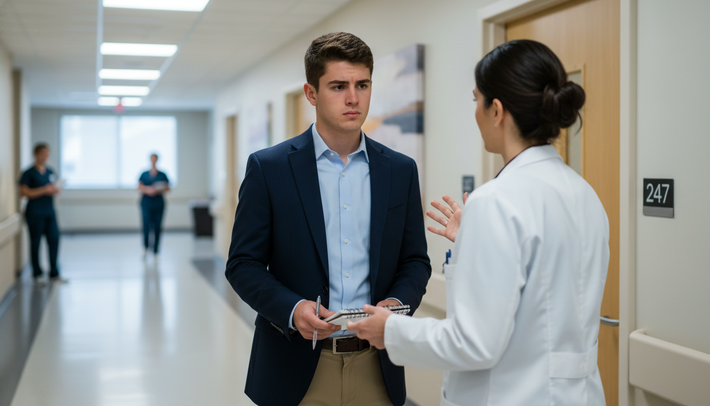
The blunt truth: high school shadowing usually won’t help you much on your medical school application—but if you handle it correctly, it can still play a small, strategic role.
Let’s walk through exactly when you can list high school shadowing, when you shouldn’t touch it, and what to do if those were your only clinical experiences.
The Short Answer: Yes, But With Limits
(See also: What’s the Best Way to Log and Document Your Shadowing Hours? for more.)
Here’s the direct answer you’re looking for:
- You generally should not list high school shadowing in the main Experiences section of your AMCAS/AACOMAS application.
- You can briefly reference it in a few specific places—if you use it correctly and don’t rely on it as core clinical experience.
- If high school shadowing is all you have, you’re not ready to apply yet. You need more recent, robust clinical exposure.
Why? Because medical schools care far more about recent, sustained engagement with medicine than about what you did as a curious teenager tagging along in an OR.
Let’s break it down.
How Med Schools Actually View High School Shadowing
Medical schools are trying to answer two big questions about your clinical exposure:
- Do you truly understand what physicians do day-to-day?
- Have you made a mature, informed decision to pursue medicine?
High school shadowing usually fails both tests.
Most high school shadowing is:
- Short (a few days or weeks)
- Passive (you’re just observing)
- Arranged by family connections
- Done before you’ve had serious academic or life experience
From an admissions committee’s perspective, a line like:
“Shadowed Dr. Smith (cardiology) – 20 hours, 11th grade”
…doesn’t prove you understand what it’s like to be a physician now, as an adult who’s closer to actually entering training.
That doesn’t make it worthless. It just means:
- It’s good for you (to spark interest and give early exposure).
- It’s weak as evidence that you’re ready for medical school.
So med schools heavily discount it, especially if it’s your “main” clinical experience.
Where You Can Use High School Shadowing (And How)
You have a few safe, strategic ways to incorporate high school shadowing.
1. Personal Statement: Careful, Minimal Use
You can mention high school shadowing briefly in your personal statement—but only in a very specific way:
Use it as an origin point, not the main plot.
Example of acceptable use:
“My first exposure to medicine came in high school, when I spent a week shadowing a family friend in pediatrics. At the time, I was fascinated by the pace of clinic but had only a superficial understanding of what the work required. In college, I sought out more substantial experiences—volunteering in a free clinic, working as a scribe, and shadowing physicians across different specialties—to truly understand the demands and rewards of patient care.”
That works because:
- High school shadowing is acknowledged but not oversold.
- The focus quickly shifts to college-level experiences and growth.
- It shows maturing understanding over time.
What doesn’t work:
“In high school, I shadowed a surgeon and that experience solidified my desire to become a doctor.”
If high school shadowing is what “solidified” your decision, committees get nervous. It sounds naïve and underdeveloped.
2. Secondaries Asking About “First Exposure”
Some secondary applications directly ask:
- “Describe your first exposure to medicine.”
- “When did you first consider a career in medicine?”
This is the best place to mention high school shadowing.
Here you can say:
- High school shadowing was your first glimpse.
- You were intrigued but didn’t fully understand medicine then.
- You then pursued college-level, hands-on experiences to deepen that interest.
That structure tells a story admissions committees like: curiosity → exposure → maturity → informed commitment.
3. Interviews (If You’re Asked Chronologically)
In an interview, you might get:
- “So when did you first think you might want to be a doctor?”
- “Tell me about how your interest in medicine developed over time.”
It’s perfectly fine to say:
- You first became interested in high school.
- You shadowed briefly then.
- That prompted you to explore medicine more seriously in college.
Again, the key is: high school shadowing is the spark, not the proof.
Where You Generally Shouldn’t List High School Shadowing
This is where most premeds make mistakes.
1. AMCAS/AACOMAS Work & Activities (Experiences Section)
The big question: “Can I list high school shadowing as an activity?”
Technically, the systems allow it. Strategically, it’s usually a bad idea.
You should avoid listing high school experiences as standalone clinical or shadowing entries unless:
- The experience continued into college under the same physician or in the same setting.
- It was unusually in-depth (e.g., a multi-year, structured program like a formal hospital internship with increasing responsibility).
- You have ample college-level experiences already, and you’re just showing longevity of interest.
If you’re going to include it, do this:
- Put the start date in high school and the end date in college.
- Make sure you actually continued consistently into college.
- Emphasize the college portion in the description.
Example description style:
“Initially began observing in this clinic during my senior year of high school (8 hours), and continued shadowing Dr. Patel regularly throughout college breaks, totaling 60 hours by my junior year. Observed outpatient management of diabetes and hypertension, family meetings, and longitudinal patient care.”
Notice:
You’re not trying to inflate your hours with high school time. You’re showing continuity.
2. As a Primary or “Most Meaningful” Clinical Experience
Don’t ever make high school shadowing:
- One of your few listed clinical experiences
- A “most meaningful” experience on AMCAS
- Your main evidence of understanding clinical work
If your experiences list is heavy on:
- High school shadowing
- One week in a clinic during a summer program in 11th grade
- A single “Doctor for a Day” experience
…you’re not just weakly competitive—you’re probably not ready to apply.
What If High School Shadowing Is All You Have?
This is where many applicants quietly panic.
You’re a junior or senior in college and realize:
- “My only clinical exposure is what I did in 11th grade.”
- “I’ve been focused on research, classes, or another major.”
- “I thought that old shadowing would be enough.”
Here’s the clear guidance:
If high school shadowing is your only clinical exposure, you should delay applying and fix that problem first.
You should aim for recent, ongoing activities like:
- Hospital volunteer work (ED, inpatient units, patient transport, etc.)
- Free clinic volunteering with patient contact
- Medical scribing (EM, outpatient clinics, urgent care)
- Hospice volunteering
- Certified roles: CNA, EMT, medical assistant, phlebotomist (if you have time to train and work)
You want at least:
- Several months of consistent involvement
- Ideally 100+ hours of direct patient-facing or clinical-adjacent experience before you apply
(Not a hard cutoff, but that’s a common threshold for credibility.)
High school shadowing can then be a footnote in your story, not the foundation.
Special Cases: When High School Shadowing Actually Helps
There are a few rare scenarios where high school shadowing can genuinely strengthen your application.
1. Longitudinal Mentorship
If you:
- Started shadowing Dr. X in 12th grade
- Continued working with them every summer or break
- Helped with small projects, QI, or patient education
- Built a real mentoring relationship
Now you’ve got something meaningful.
You might:
- List it as one long-running experience (high school → college)
- Ask that physician for a letter of recommendation
- Highlight the longitudinal nature: “I’ve seen the same physician care for some patients over 5+ years.”
2. Structured, Competitive High School Programs
Some hospitals or universities run:
- Competitive high school health pipelines
- Multi-week summer immersion with lectures + clinical observation
- Programs like SMDEP/SUMMER HEALTH programs for rising college freshmen (though many of those are technically post–high school)
If you were in a formal, structured, selective program, you can:
- Reference it in your personal narrative as the start of your path
- Potentially list it as an experience if it was substantial
(But again—do not rely on it as your main clinical exposure.)
The same rule still holds: you need robust college-level engagement too.
DOs and DON’Ts for High School Shadowing on Your Application
Let’s make it practical.
DO:
- Use high school shadowing to:
- Start your story of interest in medicine
- Show continuity when paired with later experiences
- Answer questions about “first exposure” in secondaries or interviews
- Emphasize how your understanding deepened in college.
- Be honest about timing—don’t pretend high school was college.
- Prioritize more recent experiences in all descriptions.
DON’T:
- List short, one-off high school shadowing as a key experience.
- Make high school experiences your “most meaningful” on AMCAS.
- Claim your decision to pursue medicine was fully “solidified” in high school.
- Pad your clinical hours by lumping in a few days of high school shadowing.
- Apply without real, sustained college-level clinical exposure.

How To Talk About It Without Sounding Immature
The way you frame high school shadowing matters almost as much as whether you mention it.
Here’s a simple 3-part structure you can steal for essays or interviews:
Curiosity:
“I first became curious about medicine in high school when I had the chance to shadow Dr. X for a few days.”Humility:
“At the time, I was mostly impressed by the pace and the ‘cool’ aspects of medicine, but I didn’t yet understand the emotional, ethical, and long-term responsibilities involved.”Growth:
“In college, I pursued more hands-on experiences—volunteering at [clinic/hospital], working as a [scribe/MA/EMT]—which gave me a much deeper and more realistic understanding of what it means to be a physician.”
That framing tells committees:
- You’re self-aware.
- You recognize that high school experiences are limited.
- You’ve done the real work since then.
If You’re Still in High School Right Now
If you’re reading this early—good. That means you can plan ahead.
Here’s how to make your high school experiences actually useful later:
- Do the shadowing—but treat it as exploration, not a résumé builder.
- Keep a brief reflection journal: what surprised you, what bothered you, what inspired you.
- Focus your energy on building strong study habits, solid GPA, and involvement in things you genuinely care about.
- Once in college, get real clinical experience as soon as it’s reasonable (without blowing up your grades).
Your high school shadowing will then be:
- A nice origin story
- A springboard to more serious engagement
- Not something you need to “lean on” to prove readiness
Key Takeaways
- You generally shouldn’t list high school shadowing as a main clinical experience on your medical school application; it’s weak evidence of readiness by itself.
- Use high school shadowing strategically: as an origin point in your personal statement, in secondaries about “first exposure,” or in interviews—then pivot quickly to your college-level experiences.
- If high school shadowing is all you have, you’re not ready to apply. Get substantial, recent clinical experience in college, then apply with a story that shows growth from early curiosity to mature, informed commitment.