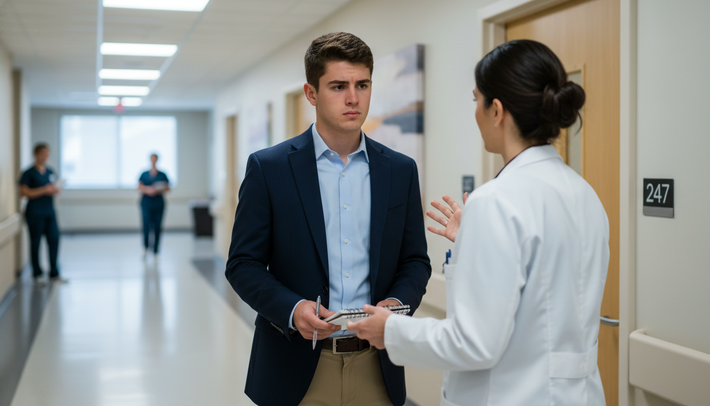
What runs through an admissions committee member’s mind when they see a $3,000 “International Clinical Shadowing Experience” on your application?
Let’s answer that directly.
The Short Answer: Should You Ever Pay for Shadowing?
(See also: What’s the Best Way to Log and Document Your Shadowing Hours? for more details.)
You can pay for shadowing programs. But:
- You almost never need to.
- It rarely gives you a real advantage.
- It can raise red flags if it looks like you bought your way into “experience.”
- Context matters: where, why, how much, and what else you’ve done.
If you remember nothing else, remember this:
Paid shadowing doesn’t fix a weak application. It only supplements a strong, authentic one.
How AdComs Actually Think About Paid Shadowing
Let’s separate fantasy from reality.
You might think: “If I do this prestigious-sounding, expensive program, med schools will be impressed.”
Here’s what experienced admissions committee members usually think instead when they see a paid shadowing program:
“Did this student have trouble finding local opportunities?”
They look for signs you actually engaged with your own community, not just flew somewhere for two weeks.“Is this just medical tourism?”
For international or short-term programs, they’re asking: Was this about learning medicine, or getting a cool photo for Instagram?“What did they actually do?”
Shadowing is passive by nature. Paid shadowing that’s still just watching doctors walk around doesn’t move the needle much.“Is there any depth here?”
A two-week paid program with no longitudinal follow-up, no physician relationship, no reflection = low value.“Could this be a privilege signal?”
They won’t penalize you just for having money, but they will wonder whether your experiences reflect real commitment or just access.
Here’s the core truth: AdComs care far more about what you learned and how you grew than about the brand name of the shadowing program. Whether it was free or paid is secondary—but it can color how they interpret it.
Types of Paid Shadowing Programs (And How They’re Viewed)
Not all paid experiences are the same. Here’s how different types typically land.
1. Domestic Structured Shadowing Programs
Examples:
- University-run summer “premed academies” with hospital shadowing
- Third-party companies arranging shadowing at local hospitals/clinics
Common features:
- You pay a program fee.
- They guarantee a certain number of shadowing hours.
- Sometimes includes lectures, workshops, maybe a certificate.
How AdComs tend to view them:
Neutral to mildly positive if:
- It’s one piece of a larger record of clinical exposure.
- You clearly articulate what you learned.
- You didn’t rely on this only because it sounded prestigious.
Weak or even negative if:
- It’s your only shadowing experience.
- You hype the program name more than the substance.
- It looks like you never tried to seek local opportunities.
Bottom line: Can be helpful if you genuinely lacked access (no local doctors, limited transportation, first-gen, rural, etc.) and you explain that context. Not necessary for most applicants.
2. International “Global Health” or “Medical Mission” Shadowing Trips
These are the classic: “Shadow physicians in rural [Country X] for 2 weeks! Only $4,000 (airfare not included)!”
Red flags AdComs often see:
- Medical tourism vibes: Students flying in briefly, watching procedures on vulnerable populations, then leaving.
- Scope-of-practice concerns: If you did anything hands-on that a premed should not be doing in the U.S. (giving injections, taking vitals independently, doing procedures), that’s a problem.
- Ethical issues: Were you helping or just using this community as a training ground?
How to think about these:
- These trips are rarely necessary.
- They are never a substitute for solid U.S.-based or home-country clinical exposure.
- They can hurt you if you describe inappropriate involvement or sound like you were there for photos and stories.
If you’ve already done one:
- Focus on ethical reflection: what troubled you, what you learned about health systems, your own limitations.
- Don’t glamorize “I got to do real procedures!” if they were outside your training and local regulations.
If you haven’t:
You’re not missing a key box. Strong applicants get in all the time with zero international experience.
3. Paid “Observation” Bundled with Test Prep or Certificates
Some companies will market:
- MCAT prep + “shadowing hours”
- Clinical skills bootcamps with certificates that sound fancy
- Weekend “doctor for a day” events
Reality check:
- Admissions committees don’t give extra weight to certificates from for-profit programs.
- They care about:
- Time in real clinical environments
- Depth of exposure
- Reflection and integration into your narrative
If a program cost you $800 for “50 shadowing hours” over Zoom or in staged simulations, it’s not equivalent to 50 hours in a real clinic. You can still list it, but it’s the weakest form of “clinical exposure.”
When Paying Might Actually Make Sense
There are scenarios where paying can be reasonable or even smart. The key is intention and context.
Paying might be justifiable if:
You’ve truly exhausted local options.
You’ve:- Emailed local physicians and clinics.
- Talked to your pre-health office.
- Reached out to family physicians, alumni, or local hospitals. And still: no one will take you.
You’re from a rural area or medically underserved region.
There may be only a handful of physicians nearby, and none can accommodate a premed.You’re non-traditional with limited scheduling flexibility.
Working full-time, with family obligations, needing something structured and predictable.The program also provides real mentoring or longitudinal connection.
Not just: “Here’s 10 days in a hospital.” But: “Ongoing mentorship, sessions on applying, letters of recommendation (earned, not guaranteed).”You keep it in proportion.
One paid experience among several organic, locally built experiences. It supports your story; it’s not your story.
When you write about it, be honest:
- Don’t pretend it was more selective or prestigious than it was.
- Don’t overplay the name.
- Focus on what you saw, what surprised you, how it shaped your goals.
When Paying is a Bad Idea (or a Waste of Money)
You should strongly reconsider paying for a shadowing program if:
- You’re hoping it’ll “impress” med schools on brand name alone.
- You haven’t yet tried:
- Volunteering in a hospital/clinic locally
- Asking primary care offices about shadowing
- Using alumni networks or family/friends’ doctors
- It would force you to take on debt or serious financial strain.
- The program:
- Guarantees “a letter of recommendation” just for attending
- Markets itself as a “backdoor” into med school
- Emphasizes tourism or travel more than learning
- It’s your only clinical exposure and it’s very short (e.g., one week).
Here’s the harsh truth: If you’re choosing between thousands of dollars for shadowing vs. saving that money for secondaries, MCAT, or living expenses during application year, don’t spend it on shadowing.
How to Present Paid Shadowing on Your Application
If you do have paid shadowing, here’s how to keep it from hurting you and maybe even help you.
Be transparent (but brief) about the structure.
In the description, you can mention:- “Participated in a structured hospital shadowing program with internal medicine, surgery, and pediatrics rotations.”
You don’t have to write “I paid $X,” but don’t obscure that it was a program.
Emphasize learning > logistics.
Focus on:- Specific patient interactions you observed
- Ethical dilemmas you witnessed
- How it changed your understanding of the physician’s role
Connect it to your broader journey.
Don’t let it stand alone. Show how:- It reinforced or redirected your interest in a specialty
- It pushed you to seek further long-term experience back home
- It ties into later activities (volunteering, research, etc.)
Avoid bragging about inappropriate clinical tasks.
If you did anything as a premed that should’ve been done only by licensed professionals, don’t center it as a highlight. It can legitimately alarm AdComs.Put more emphasis elsewhere.
Your most meaningful experiences should usually be:- Longitudinal clinical volunteering or employment
- Non-clinical service
- Research or significant leadership
Paid shadowing? Usually not a top-3 experience unless you truly had no other access and it was transformative.
Free (or Low-Cost) Alternatives That AdComs Like More
If you’re on the fence about paying, try these first:
- Hospital volunteering: Transport, ED volunteer, unit assistant—gets you into real clinical environments over months/years.
- Local outpatient clinics: Especially primary care, community health centers, FQHCs.
- Scribing: Paid, deep exposure to physician–patient interactions and documentation.
- Medical assistant/phlebotomist/EMT (with training): Takes more time up front but yields strong, respected clinical roles.
- Alumni physician networks: Many colleges have lists of alumni willing to host shadowers.
- Pre-health office programs: Some schools already have formal shadowing arrangements you don’t have to pay extra for.
These experiences are more valuable than a two-week fancy program, even if they sound less glamorous on paper, because they show consistency, commitment, and real involvement.
How AdComs Prioritize Shadowing vs Other Clinical Experience
Shadowing is just one piece. Here’s roughly how many AdComs think about clinical exposure strength:
Strongest → Weakest (generally speaking):
- Direct clinical employment (scribe, MA, EMT, CNA, patient care tech)
- Longitudinal clinical volunteering (months–years)
- Regular, locally arranged shadowing over time with sustained mentorship
- Structured, short-term shadowing programs (paid or unpaid)
- One-off, short shadow days or “doctor for a day” events
- Zoom shadowing or passive observation-heavy programs
Paid programs typically sit at #3 or #4 at best, and only if used wisely.
So…Should You Pay for Shadowing?
Ask yourself these questions:
- Do I already have or can I realistically get:
- Ongoing clinical volunteering?
- Some organic shadowing, even if limited?
- Will paying for this program:
- Give me something I genuinely can’t access otherwise?
- Fit into a coherent story about my path to medicine?
- Would the same money better support:
- MCAT prep?
- Application fees?
- Living costs while I do more local clinical work?
If you can build a solid, meaningful set of experiences without paying for shadowing, do that. That’s what most successful applicants do.
If your circumstances limit you and a structured program helps you break in, it can be defensible—as long as it’s one part of a broader, genuine engagement with medicine.
FAQ: Paid Shadowing and Medical School Admissions
1. Will paying for a shadowing program hurt my chances of getting into medical school?
Usually no, by itself it won’t hurt you. Admissions committees don’t reject people just because an experience was paid. What can hurt you is:
- Relying solely on paid, short-term programs
- Overhyping them as if they’re highly selective or prestigious
- Showing poor judgment (e.g., doing tasks above your training)
If it’s one part of a balanced application with authentic, local, sustained experience, it’s generally fine.
2. Should I list paid shadowing separately from other shadowing on my application?
Yes, each distinct experience should be listed separately if it had a different setting, supervisor, or structure. For a paid program, label it clearly (e.g., “Structured Hospital Shadowing Program”) and describe what you did and learned. You don’t need to mention the cost, but don’t misrepresent it as a job or long-term volunteering.
3. Do AdComs know which programs are paid or for-profit?
Many committee members are aware of the big-name for-profit programs and international “global health” trips, especially those that are heavily marketed to premeds. Even if they don’t know a specific program, they can often tell from the description that it was structured and short-term. That’s why honesty and context matter more than trying to disguise it.
4. Is international shadowing ever worth it from an admissions perspective?
It rarely adds unique value over strong local experience. It can be a meaningful personal experience if:
- It’s ethically run and you stay within appropriate bounds
- You’ve already built a foundation of home-country clinical exposure
- You reflect on health systems, ethics, and inequities—not just “I saw cool surgeries”
But it’s not required, and it won’t compensate for weak local clinical engagement.
5. I already paid for a program. How do I maximize its value now?
Focus on:
- Showing up fully: ask questions, seek feedback, reflect daily.
- Building at least one real mentorship relationship with a physician.
- Using what you learn to guide future, longer-term local experiences. Then, on your application, write about specific patient encounters, ethical questions, or insights you gained—not just the program name. And now, start planning your next step: identify one local clinical or volunteer opportunity you can commit to for at least 6–12 months.
Open a blank document right now and list every clinical or shadowing opportunity you already have access to locally—campus programs, community clinics, alumni doctors, hospitals. Circle one you could realistically start exploring this week, and send the first email or application today.