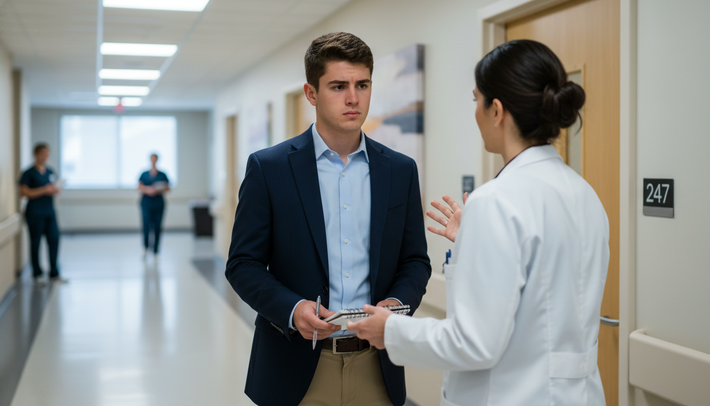
Three weeks before finals, you’re standing in your campus advising office, listening to a classmate casually mention her uncle the cardiologist who set up all her shadowing. You nod, but your stomach drops. No one in your family went to college, let alone med school. You do not have a single doctor in your contacts. And yet, every premed forum you read keeps repeating the same thing: “You must shadow physicians.”
If that’s where you are right now—first-gen, no physician network, not sure where to start—this is for you. Let’s walk through what you do today, what you do this month, and how you build something that looks like a “network” even if you’re starting from zero.
(See also: Handling Cancellations from Physicians for tips on managing your shadowing schedule.)
Step 1: Get Oriented – What You Actually Need From Shadowing
Before you start firing off emails across town, you need a clear target. Otherwise you’ll waste energy and time you probably do not have.
You’re aiming for three things:
Enough hours to be credible, not necessarily impressive
- For most MD and DO schools, 30–60 hours of real shadowing is fine.
- 100+ can look nice, but it’s not a magic number.
- Multiple short experiences (e.g., 10 hours family med, 10 hours surgery, 10 hours pediatrics) are often better than 100 hours with one doc you barely remember.
Variety across settings and specialties
Try to get:- One outpatient setting (clinic/office)
- One inpatient or hospital setting
- At least two different specialties (family med or internal medicine plus something else)
Stories, not just hours
You’re not collecting checkboxes. You’re collecting:- Moments when you saw what the day-to-day really looks like
- Times you saw hard conversations with patients
- Situations that made you think, “Do I want this life?”
Those stories are what you’ll use later in your personal statement, secondaries, and interviews.
Once you know this, the whole project shifts from “I need a magical doctor connection” to “I need 2–4 concrete, realistic experiences.”
Step 2: Inventory Your Real Starting Point (As a First-Gen Student)
Being first-gen changes some of your available levers, but it also gives you a few you might not realize you have.
Take 10 minutes and answer these questions honestly:
What campus resources do you actually have?
- Pre-health advising office?
- First-gen support center or TRIO/Upward Bound/McNair?
- Career center with alumni database or LinkedIn support?
- Health professions student orgs (MAPS, AMSA, etc.)?
What constraints do you have?
- Need to work 20+ hours/week?
- Commute? Car or no car?
- Family care responsibilities?
- Only free on weekends or evenings?
Any “hidden” connections you might be overlooking?
- A friend’s parent or sibling working in healthcare (nurse, NP, PA, MA, receptionist at a clinic)
- Campus health center (student health doctor, NP, or PA)
- Community or religious community (members who work in a hospital/clinic, even if they’re not doctors)
Write this down. Your strategy will depend heavily on these answers. For example, if you have zero car access, clinics on a bus line or your campus health service are your first targets.
Step 3: Use the “Closest Circle First” Rule
Most students without a physician parent still end up finding shadowing through people they already kind of know. They just don’t realize those pathways exist until someone points them out.
3.1 Start With On-Campus Options
You’re already paying for these indirectly with tuition, so squeeze every drop out of them.
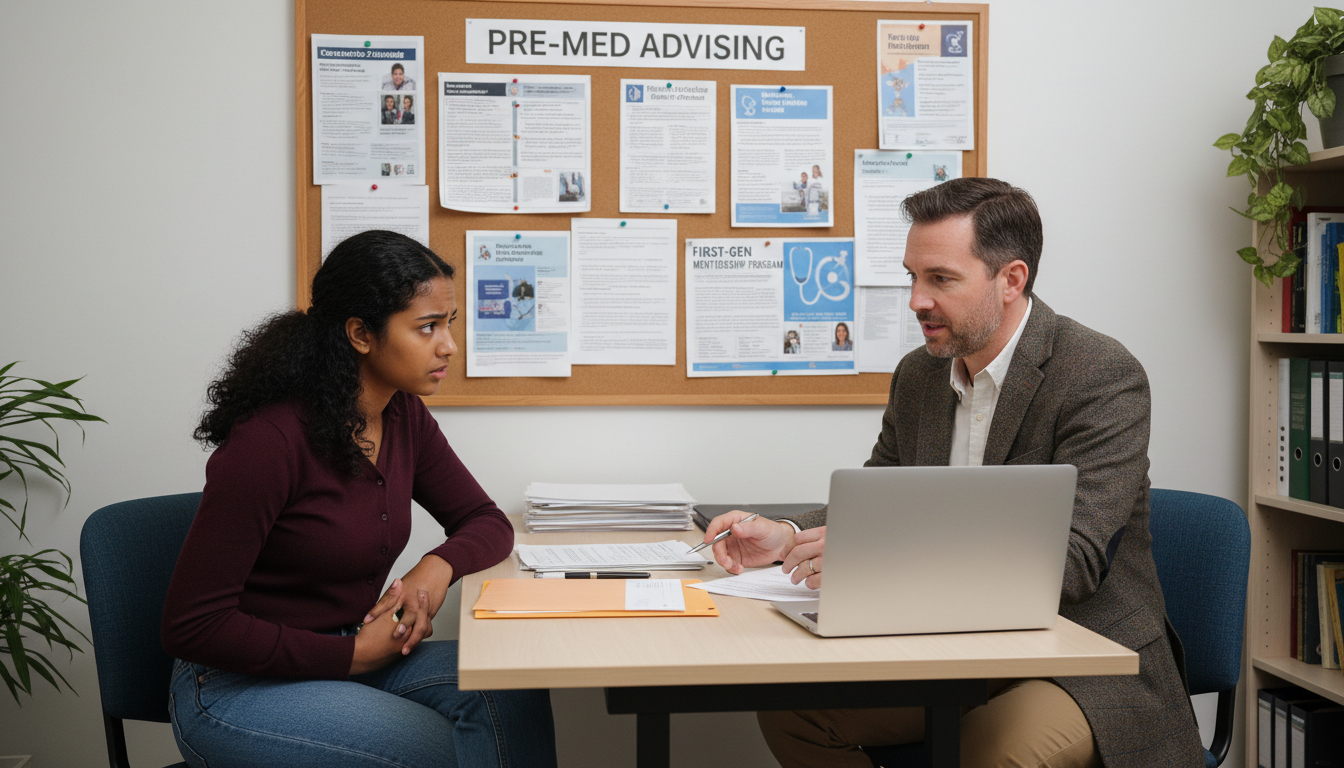
Pre-Health Advising Office
Script to send or say:I’m a first-generation college student and premed. I don’t have any family connections in medicine and I’m working part-time, so my availability is limited. Are there any local physicians, alumni, or standing shadowing arrangements the office helps students connect with?
Many advising offices have:
- Lists of local doctors who have agreed to take students
- Relationships with nearby hospitals
- Knowledge of which clinics are more open to students
First-Gen or TRIO Office
They may not know the premed world, but they do know:- Alumni who were first-gen and are now in medicine
- How to help you with outreach emails and cold calls
- Who on campus is especially supportive of first-gen students
Campus Health or Student Health Center
Email or walk in and ask the front desk staff (they’re often gatekeepers in the best way):I’m a premed student here and I’m trying to find shadowing opportunities. Is there a physician or NP here who sometimes allows students to shadow, or is there a process to request that?
Campus docs are often used to students and sometimes more flexible about letting you observe.
3.2 Tap Non-Physician Healthcare Staff You Know
If you know anyone in healthcare—even a receptionist at an urgent care center—that’s a door.
Example script (text, email, or in person):
Hi [Name], I hope you’re doing well. I’m a premed student at [College], and I’m trying to get some physician shadowing experience. I don’t have any family in medicine, so I’m building this from scratch. I know you work at [Clinic/Hospital]. Do you know if there’s a process for premed students to shadow a physician there, or someone I could contact to ask?
You’re not asking them to “get” you shadowing. You’re asking for information and process. That’s easier for them to help with.
Step 4: Cold Outreach Without Connections – How To Do It Right
If your closest circle doesn’t produce anything, or only produces one small experience, you’re going to have to do what many first-gen students end up doing: structured, respectful cold outreach.
Most people do this badly. You won’t.
4.1 Target the Right Places First
Start with:
Community clinics / FQHCs (federally qualified health centers)
Often mission-driven, more open to students, especially those from underserved backgrounds.Primary care offices
Family medicine, internal medicine, pediatrics. These are usually your best first shot.Smaller hospitals
Big academic centers often have strict formal programs and lots of competition. Smaller community hospitals or regional health systems may be easier.
What to look for on websites:
- “Volunteer services” or “Student observers”
- “Shadowing program”
- “Clinical observer program”
- “Education / Students”
If they do have a formal program, follow those instructions exactly. That often gets you in faster than random emails.
4.2 Use a Two-Layer Approach: Institution First, Individual Second
Layer 1: Institutional route
Email the hospital or clinic’s general “volunteer services” or “education” contact:
Subject: Premed Student Seeking Physician Shadowing / Observation Opportunities
Dear [Volunteer Services / Education Department],
My name is [Name], and I am a premed student at [College] and a first-generation college student. I’m hoping to gain exposure to the day-to-day work of physicians through limited observational experiences.
Do you have a process for undergraduate students to observe physicians in your hospital or affiliated clinics? I am fully vaccinated, willing to complete any required paperwork or trainings, and can be flexible with scheduling.
Thank you for your time and any guidance you can provide.
Sincerely,
[Name]
[College]
[Phone]
[Email]
Layer 2: Individual physician route
Use the clinic’s website to identify physicians. Prioritize:
- Alumni from your college (search their bios)
- Physicians with interests in education, underserved care, or diversity
- Family medicine / internal medicine / pediatrics
Example email:
Subject: Premed Student Requesting Limited Shadowing Opportunity
Dear Dr. [Last Name],
My name is [Your Name], and I am a premed student at [College]. I’m a first-generation college student without any family in medicine, and I’m currently seeking opportunities to observe physicians to better understand the realities of clinical practice.
I’m particularly interested in [family medicine/internal medicine/your specialty] because [1–2 specific, honest reasons – e.g., I’m drawn to long-term patient relationships and broad problem-solving]. I reviewed your profile on the [Clinic/Hospital] website and was especially interested in [mention something specific if possible – patient population, special interest, teaching, etc.].
If you ever allow undergraduate students to shadow for a few half-days, I’d be very grateful for the opportunity. I understand clinic time is extremely busy and I’d be respectful of your schedule and your patients’ comfort. I’m fully vaccinated and happy to complete any required paperwork or training.
If shadowing is not possible, I completely understand. If you know of a colleague or a formal process through which students at my stage typically get exposure, I’d appreciate any guidance.
Thank you for your time and for considering this request.
Sincerely,
[Your Name]
[College, Major, Year]
[Phone]
[Email]
Key points:
- Lead with who you are and that you’re first-gen (that context matters).
- Show you read at least something about them.
- Make the ask small: “a few half-days.”
- Give them an easy out while allowing them to redirect you.
4.3 Volume and Tracking
Cold outreach is a numbers game. Especially without a network.
- Plan to send 5–10 targeted emails per week for 3–4 weeks.
- Track:
- Who you emailed
- Date
- Response (if any)
- Follow-up date
Follow-up rule:
If no reply in 7–10 days, send one short follow-up:
Dear Dr. [Last Name],
I wanted to briefly follow up on my email from [date] regarding possible observation opportunities. I completely understand if your schedule does not allow for student shadowing; if that’s the case, I’d still be grateful for any recommendations you have for a premed student seeking clinical exposure without a physician network.
Thank you again for your time.
Sincerely,
[Name]
If there’s still no response, move on. You’re not being rejected; you’re just not getting a response—often because they’re swamped.
Step 5: Combine Shadowing With Other Clinical Exposure
Because you’re first-gen and likely juggling work and school, you want experiences that accomplish multiple goals at once.
5.1 Clinical Jobs That Open Doors
Certain entry-level clinical roles can become pipelines to shadowing:
- Medical assistant (MA) or scribe
- ER tech (if you have EMT or CNA)
- Patient care tech / nursing assistant
- Medical receptionist in a clinic
Why they help:
- You’re physically next to physicians regularly.
- Staff get to know you and can vouch for you.
- It becomes natural to say, “Would it be possible to shadow one of the doctors here occasionally?”
Wait until you’ve proven you’re reliable before you ask. Then something like:
I’ve really appreciated learning how the clinic works from the staff side. I’m planning to apply to medical school in a few years and I’m trying to better understand the physician role specifically. Would it be possible to arrange occasional shadowing with one of the doctors here, even for a few hours, if patients are comfortable?
5.2 Volunteering That Leads to Shadowing
Some hospitals won’t let you shadow immediately, but they’ll let volunteers in first. After you’ve been reliable for a few months, staff may help you find physicians to shadow.
Strategy:
- Volunteer in places where physicians actually are:
- ED volunteer
- Outpatient clinic volunteer
- Inpatient floor volunteer
Once staff see you often and trust you, you can ask:
I’ve really enjoyed volunteering here and I’ve learned a lot about how the team works. I’m hoping to get some physician shadowing experience eventually. Is there a process for volunteers to observe physicians, or is there someone I should talk to about that?
This “earn your way in” route is common for first-gen students who don’t come in with pre-built connections.

Step 6: If You’re in a Rural Area or Locked-Down Region
Some of you are in towns with one small hospital and three clinics. Or you hit during a time when in-person shadowing is limited.
Here’s how to adapt.
6.1 Max Out Local Options Methodically
Call every clinic within your bus/drive radius. Not just the big ones.
Ask front desk staff:
Hi, my name is [Name]. I’m a premed student at [College] trying to get some physician shadowing experience. Do any of the doctors here ever allow premed students to observe, or is there someone I can email about that?
They might say no. Many will. But occasionally you’ll get, “Let me check with Dr. X.”
6.2 Leverage Telehealth or Virtual Shadowing (As Supplement, Not Replacement)
Some doctors may let you:
- Observe telehealth visits with proper consent
- Sit in as they call patients for follow-up
- Join case discussions or teaching sessions on Zoom
There are also structured virtual shadowing or “clinical exposure” programs:
- Some premed clubs run physician speaker series where you can ask questions.
- A few organizations have formal virtual shadowing (check requirements—many are open to all).
These do not fully replace in-person shadowing, but:
- They can show initiative.
- They can help you learn enough to have intelligent questions once you do get in-person access.
- They give you something to write about if your local options are truly limited.
Step 7: Protect Your Time and Sanity While You Build This
You’re probably working, studying, and maybe translating for your family or helping with siblings. You don’t have the luxury of endless unpaid time.
Here’s how to keep this sustainable:
7.1 Batch the Work
Instead of randomly thinking about shadowing every other day:
Pick one 90-minute block per week for:
- Researching clinics/hospitals
- Drafting and sending emails
- Logging responses and planning follow-ups
Plan one regular half-day you can keep open for shadowing (e.g., Friday mornings or Monday afternoons) so when a doc says, “What works for you?” you already know.
7.2 Be Honest About Your Constraints
When something does come through:
I work part-time and have classes most weekdays, but I can be regularly available on [X mornings/afternoons] and [weekends if possible]. I’m happy to adapt within those windows.
You don’t need to overshare, but being clear prevents scheduling chaos later.
Step 8: Document Everything So It Counts Later
Future-you (writing secondaries and filling out AMCAS/AACOMAS) will thank you if you do this as you go.
For each shadowing or clinical experience, keep:
- Where: Clinic name, hospital, city
- Who: Physician’s full name, specialty, contact email
- When: Dates and approximate hours (keep a running total)
- What: 3–5 bullet points after each session:
- What you saw
- What surprised you
- One patient interaction that stuck with you (no identifying details)
- One thing that made you more or less interested in medicine
Example quick notes after a day:
- Dr. Lopez – community family med clinic
- Saw 18 patients in 4 hours, mostly diabetes and hypertension follow-ups
- Surprised how much time spent on social issues (transportation, cost of meds)
- Powerful moment: patient cried about not affording insulin; doc and MA brainstormed cheaper options and patient assistance programs
- Realized documentation and phone calls took nearly as much time as face-to-face visits
Those notes become gold later.
Step 9: Turn Shadowing Into the Start of a Real Network
You started with “no network.” That doesn’t mean you should finish that way.
After you’ve shadowed someone a few times:
Ask for advice, not favors
At a natural pause (end of session):I really appreciate you letting me observe. As someone who’s first-gen and doesn’t have family in medicine, are there things you’d recommend I focus on in the next couple of years to prepare for medical school?
Later, ask for introductions (after some rapport)
I’ve learned a lot about family medicine from you, and it’s helped me clarify my interests. I’m also curious what hospital medicine / surgery / pediatrics is like. Is there anyone you’d recommend I reach out to, or would you be comfortable introducing me briefly by email?
Keep them updated a few times a year
Two or three times a year, send a short update:
Dear Dr. [Last Name],
I wanted to thank you again for allowing me to shadow last [semester/month]. That experience helped confirm that I want to pursue medicine. Since then, I’ve [completed X courses, started volunteering at Y, joined Z program].
I’ll be applying to medical school in [year], and I just wanted to let you know how much your guidance and example have mattered to me.
Sincerely,
[Name]
This is how a first-gen, no-connections student slowly builds a real physician network: one person, one conversation, one follow-up at a time.
You might still feel behind compared with classmates whose mom can text a surgeon or whose cousin is an ER doc. That feeling is real. But it does not mean you cannot build what you need.
You now have:
- A realistic target for shadowing hours and variety
- A stepwise plan from campus resources to cold outreach
- Scripts tailored to someone who’s first-gen and starting from scratch
- Ways to convert each experience into stories and relationships
Your next move is small but specific: block off 90 minutes, make your resource inventory, and send your first three emails—to your pre-health advisor, your campus health center, and one local clinic. That’s it. Once those are out, the path to your first shadowing day is already in motion. And once you’ve seen real patients with a real physician, we can start talking about how to turn those moments into the narrative that will carry you through your applications and onto the interview trail.