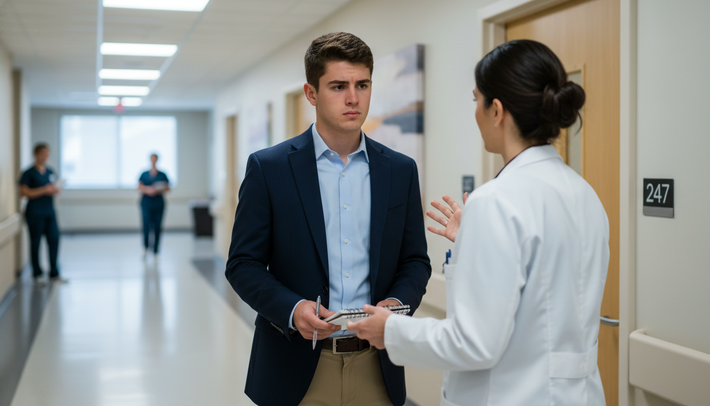
The biggest mistake premeds make with summer shadowing is drifting through random days with doctors and calling it “clinical experience.” A 4‑week block can be built to feel like a mini-clerkship—structured, progressive, and transformative—if you design it like one.
Below is a step‑by‑step, time‑anchored plan: what to do 4+ weeks before, how to structure each of the 4 weeks, and how to handle each day so that by the end you do not just “have hours,” you have a narrative and skills that resemble an early clinical rotation.
(See also: Final 6 Months Before AMCAS for essential tasks.)
4–6 Weeks Before: Build the “Clerkship” Framework
At this point you should stop thinking in days and start thinking in rotations.
1. Define your 4‑week “rotation map”
You have 4 weeks. Structure them like a simplified MS3 schedule:
- Week 1: General exposure + inpatient medicine
- Week 2: Procedural/surgical field
- Week 3: Outpatient-focused field
- Week 4: Capstone / “sub‑I style” week with your best-fit physician
Example schedule that feels like clerkship:
- Week 1 – Internal Medicine / Hospitalist
- Mix of rounding, admissions, discharge planning.
- Week 2 – General Surgery / Orthopedics / Anesthesiology
- OR days, pre‑op, post‑op.
- Week 3 – Outpatient Pediatrics / Family Medicine
- Clinic flow, continuity, preventive care.
- Week 4 – Return to the physician/setting that resonated most
- Shadow more closely, ask deeper questions, small projects (patient education handout, pre‑round reading, etc.).
You can swap specialties, but preserve the pattern:
- hospital medicine, 2) procedural, 3) clinic, 4) focused return.
2. Identify physicians and sites
At this point you should build a target list, not send generic blasts.
Aim for:
- 1–2 attendings per week
- Across:
- Academic hospital (if possible)
- Community hospital or surgery center
- Outpatient clinic
Sources:
- Your university’s pre‑health office
- Alumni networks (LinkedIn, school alumni directory)
- Family and friends in health systems
- Hospital “volunteer / shadowing” web pages
- Student organizations (AMSA, pre‑med club) with existing contacts
Create a simple spreadsheet:
- Columns: Name | Specialty | Site | Email | Phone | Days available | Status
- Color‑code: green (confirmed), yellow (pending), red (no)
You are building a mini-clerkship schedule. Treat it like registrar-level logistics.
3. Send targeted requests (4–5 weeks out)
At this point you should send concise, professional emails that communicate structure.
Email subject examples:
- “Premed student seeking 1‑week shadowing: June 3–7 (Internal Medicine)”
- “Request: 1‑week surgical shadowing experience (rising junior)”
In 5–7 sentences:
- Who you are (school, year, major)
- Why their specialty / setting
- Your proposed dates and general hours
- That you understand limits (no hands-on care unless allowed, HIPAA aware)
- Attach 1‑page resume if appropriate
Send 2–3 initial emails per “slot” (e.g., 3 for Week 1 Internal Medicine). Follow up once after 7–10 days.
4. Lock logistics and requirements (3–4 weeks out)
Once you have “Yes” responses, at this point you should confirm:
- Exact dates and expected arrival time
- Hospital requirements, such as:
- Immunization proof
- TB test
- Flu/COVID documentation
- HIPAA or OSHA modules
- Background check or drug screen (for some hospitals)
Block time immediately to complete these—many systems take 7–14 days.
1 Week Before: Turn It Into a Real Rotation
Now that your four weeks are roughly set, you convert “shadowing” into “structured learning.”
1. Draft weekly learning goals
At this point you should assign 3–5 specific objectives for each week.
Week 1 (Internal Medicine) – sample goals:
- Follow the same group on rounds each morning.
- Learn the structure of an inpatient note (H&P vs progress note).
- Be able to explain, in lay terms, what a “code status” is.
- Observe at least 1 family meeting if allowed.
Week 2 (Surgical/Procedural) – sample goals:
- Observe pre‑op counseling and consent.
- Learn basic OR etiquette (sterile vs nonsterile areas).
- Track 1–2 patients from pre‑op through post‑op clinic follow‑up if possible.
Week 3 (Outpatient) – sample goals:
- Observe chronic disease management visits (e.g., diabetes, hypertension).
- Note how the clinician handles time pressure while maintaining rapport.
- Identify at least 3 differences between inpatient and outpatient thinking.
Week 4 (Capstone) – sample goals:
- Ask for more structured teaching moments during lulls.
- Synthesize 2–3 patient “mini‑cases” per day in your notebook.
- Clarify questions about training path, lifestyle, and fit.
Write the goals at the front of your notebook or as a pinned phone note.
2. Prepare basic clinical knowledge
At this point you should do just enough prep to follow what is happening without trying to be a med student.
For each week’s specialty, spend 1–2 hours on:
- One chapter from:
- “Case Files: Internal Medicine” (for Week 1)
- “Case Files: Surgery” or “Surgical Recall” snippets (for Week 2)
- “Blueprints Family Medicine” or online primary care modules (for Week 3)
- Simple online resources:
- CDC patient pages for common conditions
- UpToDate patient info (not full physician articles)
Goal: recognize terms like “CBC,” “ASA class,” “A1c,” “EF,” “soft signs” without being lost.
3. Set up your daily tools
At this point you should pack like a junior clerk:
- Small notebook + pen (non-negotiable)
- Simple watch with seconds
- Neutral business‑casual clothes, closed‑toe shoes
- Folder with:
- Immunizations
- Hospital clearance forms
- Signed shadowing approval/letter (if given)
Decide where you will record:
- Daily patient vignettes (no names, no MRNs, de‑identified)
- Reflections on communication, systems, ethical tensions
- “Why medicine?” anecdotes that can later feed personal statement or interviews
Week 1: Internal Medicine “Ward‑Style” Shadowing
This week should feel like your first inpatient rotation.
Daily structure (Mon–Fri)
At this point you should aim for:
- Arrival: 6:45–7:15 a.m. (before rounds)
- Morning: 7:30–11:30 a.m. – rounds, admissions, bedside discussions
- Midday: 11:30 a.m.–1:30 p.m. – teaching conferences if available, checkouts, notes
- Afternoon: 1:30–4:00 p.m. – follow‑ups, consults, discharges
Check with your attending about ideal times, but mimic med student hours within reason.
On Day 1 of Week 1:
At this point you should:
- Introduce yourself to:
- Attending(s)
- Residents
- Nursing staff
- Clarify:
- Where to stand on rounds
- When you can enter rooms
- Whether you may read the chart (some hospitals allow observer access; others do not)
In your notebook on Day 1, create simple templates:
- Patient vignette page:
- Age, sex
- Chief complaint (e.g., “shortness of breath”)
- 1–2 key findings
- 1–2 questions you have
Do not write any personally identifiable info.
What each day should focus on
Day 1–2: Orientation to flow
- Track 1 patient from morning rounds through afternoon plan.
- Write down the sequence: evaluate → discuss → order → follow up.
Day 3–4: Clinical reasoning
- Ask during downtime: “For this patient with X, what were you most worried about not missing?”
- Listen for terms like “differential diagnosis,” “workup,” “management.”
Day 5: Systems and teams
- Pay attention to case managers, pharmacists, nurses.
- Ask one resident: “What do you wish you understood about hospital systems before clerkships?”
Each afternoon, spend 10 minutes answering 3 questions in your notebook:
- A moment that surprised you.
- One clinical concept you looked up.
- One behavior you want to emulate (or avoid).
Week 2: Surgery / Procedural Week – OR‑Style Shadowing
Now you pivot from long discussions to fast, technical environments.
Before the week begins
At this point you should:
- Confirm:
- OR arrival time (sometimes 6:00–6:30 a.m.)
- Dress code (scrubs vs business‑casual + changing room)
- Read 1–2 common procedures:
- For general surgery: appendectomy, cholecystectomy
- For ortho: hip fracture repair, knee replacement
- For anesthesiology: general vs regional anesthesia basics
Daily structure
Aim for:
- Arrival: 6:00–6:30 a.m. – pre‑op area, chart review (if allowed)
- Morning: 7:00 a.m.–12:00 p.m. – cases in OR
- Afternoon: Clinic or more OR until 3:00–4:00 p.m.
On Day 1 of Week 2, at this point you should focus on:
- Learning OR etiquette:
- Where you may stand
- When it is safe to ask questions (usually not during critical moments)
- Identifying each team member:
- Attending surgeon
- Resident/fellow
- Scrub nurse/tech
- Circulating nurse
- Anesthesia team
What each day should focus on
Day 1–2: Roles and workflow
- Sketch the sequence: pre‑op → positioning → sterile prep → incision → procedure steps → closure → PACU.
- Notice checklists (time‑outs, equipment counts).
Day 3–4: Patient experience
- Observe a single patient from pre‑op conversation through surgery to PACU.
- Focus on communication: how fear/anxiety are addressed.
Day 5: Decision making
- Ask: “What factors decide whether a patient has surgery vs medical management?”
- Compare work hours, lifestyle, and stress with Week 1.
Continue daily reflections, but now add:
- One technical concept you did not understand and looked up.
- One system or safety practice you noticed (e.g., surgical time‑out).
Week 3: Outpatient Clinic – Ambulatory “Rotation”
This week should feel like an ambulatory block: fast visits, continuity, preventive care.
Before the week
At this point you should:
- Confirm clinic schedule:
- Typical visit length (15 vs 30 minutes)
- Morning vs afternoon sessions
- Skim common outpatient topics specific to the specialty:
- Pediatrics: well‑child checks, vaccines, asthma
- Family medicine: hypertension, diabetes, depression, back pain
Daily structure
Aim for:
- Arrival: 8:00–8:15 a.m.
- Morning clinic: 8:30–12:00
- Lunch / debrief: 12:00–1:00 (if clinician is open to it)
- Afternoon clinic: 1:00–4:30
On Day 1 of Week 3, at this point you should:
- Ask how they prefer you observe:
- In room for all visits vs selective
- Whether you introduce yourself to patients
- Learn the EHR flow (even if you cannot touch the system):
- Where vital signs are
- How labs/imaging are reviewed
- Message/inbox system for patient questions
What each day should focus on
Day 1–2: Flow and efficiency
- Track how many patients per half‑day.
- Note strategies for staying compassionate under time pressure.
Day 3–4: Communication and counseling
- Pay attention to:
- How bad news is given.
- How non‑adherence is handled.
- How lifestyle counseling is fit into brief visits.
- Pay attention to:
Day 5: Continuity and trust
- Ask to see follow‑up visits of the same patient if possible.
- Ask: “What makes outpatient rewarding vs exhausting for you?”
Reflections this week should highlight:
- Comparison of inpatient vs outpatient:
- Acuity
- Relationship depth
- Team structure
- Pace
Week 4: Capstone – “Sub‑I Style” Shadowing Week
This is where your schedule starts to feel like a real clerkship: one site, one mentor, deeper participation (within limits).
Choosing your Week 4 site
At this point you should pick the site where:
- You felt most engaged.
- The physician seemed open to teaching.
- The environment was safe, respectful, and welcoming.
Ask them at the end of your initial week if you may return for a more focused week later in the summer. Frame it as:
“I am building a 4‑week summer schedule meant to simulate clerkships. Would you be open to me returning for a final, more focused week so I can follow patients more closely and reflect on what I have learned?”
Structuring your capstone week
Aim for 4–5 days with similar hours to your original week at that site.
On Day 1 of Week 4, at this point you should:
- Share that you have already:
- Observed internal medicine, surgery/procedural, and outpatient.
- Kept a reflection notebook.
- Ask if they would allow:
- Brief oral case summaries after seeing a patient together (e.g., “This is a 65‑year‑old man with…”).
- You to read selected parts of the chart under supervision.
- Short “teaching topics” you can prepare (e.g., 5 minutes on hypertension guidelines).
What each day should focus on
Day 1–2: Integration
- Start synthesizing: link current cases to what you saw in other weeks.
- For each patient, ask yourself:
- “If this person were inpatient vs outpatient, what would change?”
- “What are the big-picture goals of care here?”
Day 3–4: Deeper questioning
- Ask 1–2 thoughtful questions per half‑day, such as:
- “How did you decide between these two treatment options?”
- “How do you balance guidelines with patient preferences?”
- During downtime, ask about training:
- Residency length
- Fellowship options
- What surprised them about clerkships and residency
- Ask 1–2 thoughtful questions per half‑day, such as:
Day 5: Consolidation and gratitude
- Use the final day to:
- Thank your mentor explicitly.
- Ask for feedback on your professionalism and engagement.
- Ask if they are comfortable being a future reference.
- Use the final day to:
In your notebook on the final afternoon, write:
- 3 patients that shaped your understanding of medicine.
- 3 traits you want to develop as a future clinician.
- 3 realities of medicine that are harder than you expected.
After the 4 Weeks: Convert Experience Into Evidence
Shadowing that feels like clerkship only helps your trajectory if you can articulate what happened.
Within 3–5 days of finishing:
At this point you should:
Create a master log
- For each week:
- Site, specialty, mentor name
- Dates
- Approximate hours
- Typical day summary (2–3 sentences)
- This becomes the backbone of your AMCAS/AACOMAS entries.
- For each week:
Draft 1–2 “clinical stories”
- Pick:
- One inpatient encounter.
- One outpatient encounter.
- One OR/procedural moment.
- Write each in 200–300 words:
- Situation
- Your internal reaction
- What you learned about the profession or yourself.
- Pick:
Email thank‑yous
- Short, specific messages:
- Mention a specific case or teaching moment.
- Share one concrete takeaway.
- Offer to update them on your progress.
- Short, specific messages:
Link to your ongoing preparation
- Identify:
- Gaps you want to fill (e.g., more hospice, emergency medicine).
- Topics you want to read about in more depth.
- Set a reminder 6–12 months later to reconnect with at least one mentor.
- Identify:
Daily Micro‑Checklist: Making Each Day Feel Like Clerkship
To keep your days structured and intentional, use this simple daily checklist:
Morning (before leaving home):
- Review goals for the week (2 minutes).
- Skim one concept related to yesterday’s patient or case (5 minutes).
On arrival:
- Confirm plan with supervising physician or resident.
- Ask if there are any sensitive encounters where you should step out.
During the day:
- For 1–3 patients, jot:
- Age, major problem, one learning point.
- Ask exactly 1–2 respectful questions when appropriate.
- Observe one non‑medical skill: conflict resolution, time management, teamwork.
After leaving:
- 10‑minute reflection:
- What surprised you?
- What challenged your view of medicine?
- How did today differ from yesterday?
Key Takeaways
- At this point in your journey, you should treat a 4‑week summer not as disconnected “shadowing hours” but as a deliberately structured mini‑clerkship with rotations, goals, and reflection.
- Each week should have a distinct focus—hospital medicine, surgery/procedural, outpatient, and a focused capstone—so that by the end you understand not just what doctors do, but how different environments feel.
- Each day should follow a clerkship‑style rhythm: arrive early, observe the team’s flow, capture 1–3 de‑identified patient stories, ask targeted questions, and end with brief written reflection that will later power your applications and interviews.