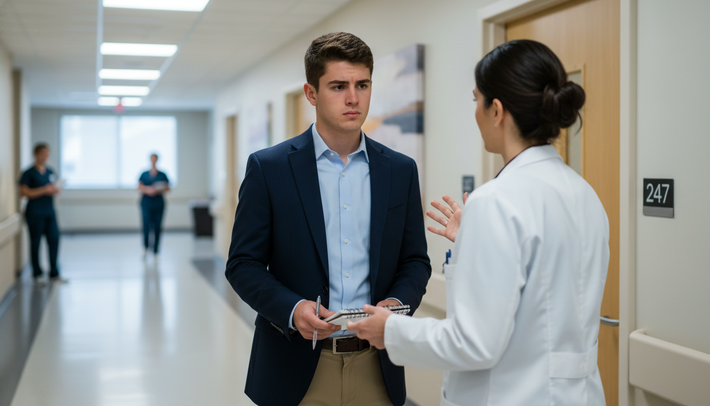
Introduction: Why Shadowing Policies Matter for Aspiring Medical Students
For aspiring medical students, shadowing healthcare professionals is often the first true glimpse into the world of medicine. It transforms abstract concepts from textbooks and lectures into real patients, real decisions, and real responsibility. Shadowing is not just a checkbox for applications—it is a powerful form of career exploration, professional development, and self-reflection.
At the same time, shadowing exists within a highly regulated environment. Hospitals and clinics must protect patients’ privacy, maintain safety, and uphold professional standards. That’s where shadowing policies come in. Understanding these rules is essential if you want to:
- Secure opportunities efficiently
- Behave professionally in clinical spaces
- Protect patient confidentiality
- Translate your experiences into strong medical school applications
This guide walks through the key elements of shadowing policies and how aspiring medical students can navigate them successfully. You’ll learn:
- Why shadowing is important in Medical Education and career exploration
- How institutional shadowing policies work and how to meet requirements
- Common limitations, expectations, and pitfalls
- How to document and reflect on your Healthcare Experience effectively
- Practical answers to frequently asked questions about shadowing
By the end, you’ll be better prepared not just to “get hours” but to build meaningful, policy-compliant experiences that genuinely support your journey to medical school.
The Value of Shadowing in Medical Education and Career Exploration
Shadowing is one of the most common early clinical experiences for premeds—and for good reason. Understanding why you are shadowing will help you approach it intentionally and with clear goals.
Key Benefits for Aspiring Medical Students
1. Real Exposure to Clinical Environments
Shadowing immerses you in the daily reality of healthcare settings:
- How physicians interact with patients and families
- How teams communicate (nurses, techs, pharmacists, social workers)
- The pace and workflow of outpatient clinics, inpatient wards, or emergency departments
These details are difficult to grasp from lectures or TV shows, but they are central to what being a physician actually feels like.
2. Understanding Roles and Team Dynamics
Modern medicine is team-based. As a student observer, you can see:
- How specialties collaborate (e.g., internal medicine with cardiology or surgery)
- How physicians rely on nurses and allied health professionals
- How residents, fellows, and attendings differ in responsibility
This insight helps you understand where a physician fits in the broader healthcare system—a key competency valued in Medical Education.
3. Career Exploration Across Specialties
Shadowing is one of the safest ways to test your assumptions about specialties:
- Think you want surgery? Shadow in the OR and in clinic to see the full picture.
- Curious about pediatrics vs. internal medicine? Spend dedicated time in each.
- Considering a non-clinical path (e.g., pathology, radiology)? Observing their workflows can clarify what day-to-day practice looks like.
Many students change their interests after real exposure. Shadowing early and broadly supports informed career decisions.
4. Professional Identity Formation and Reflection
Shadowing also helps you clarify whether the realities of medicine align with your values and personality:
- How do you react to high-stress situations or emotional conversations?
- Do you find satisfaction in long-term patient relationships or acute interventions?
- Are you comfortable with uncertainty, difficult news, and ethical dilemmas?
These reflections become powerful narratives for personal statements and interviews—and help you decide if medicine is truly the right path.
5. Networking and Mentorship Opportunities
When approached professionally, shadowing can lead to:
- Long-term mentoring relationships
- Opportunities to assist with research or quality improvement projects
- Strong, personalized letters of recommendation
However, these benefits rely on respecting institutional Shadowing Policies and demonstrating reliability, maturity, and professionalism.
Understanding Shadowing Policies and Institutional Requirements
Shadowing policies vary across hospitals, clinics, and healthcare systems. Some are very structured, with a formal application process, while others rely on individual physicians’ discretion. Regardless of format, almost all are designed around three priorities: patient safety, privacy, and institutional liability.

Institutional Requirements: What You’ll Usually Need
1. Application or Onboarding Process
Many hospitals require aspiring medical students to complete a formal application before shadowing. This may include:
- Online or paper application form
- Proof of enrollment in a high school, college, or post-bacc program
- Emergency contact information
- Dates and departments requested
Some institutions only allow shadowing through:
- A centralized volunteer or student affairs office
- Structured premed observer programs with fixed schedules
- Agreements with specific colleges or universities
Action step:
Visit the hospital’s website and search for terms like “student observer,” “shadowing program,” or “volunteer services” to find official policies and instructions.
2. Health and Immunization Compliance
To protect patients and staff, most institutions require shadowers to meet occupational health standards, which may include:
- Proof of vaccinations (e.g., MMR, Varicella, Hepatitis B, COVID-19, flu)
- Tuberculosis screening (PPD test or IGRA)
- Recent physical exam or health clearance
- Sometimes: drug screening, especially in high-risk areas
Action step:
Keep a personal Health Compliance File (digital or physical) with your immunization records, TB tests, and any occupational health forms. This will simplify future applications across different institutions.
3. Sponsorship by a Physician or Staff Member
Some hospitals require you to have a sponsoring provider—usually an attending physician, advanced practice provider, or sometimes a resident or fellow under an attending’s supervision. Sponsorship can mean:
- The provider agrees to host and supervise you during specific dates
- They confirm your purpose is observation-only
- They accept responsibility for ensuring you follow institutional policies
If your school has a premed advising office, they may have templates for professional introduction emails to physicians.
4. Background Checks and Safety Requirements
For liability reasons, some health systems require:
- Criminal background checks
- Proof of age (often 16–18+ minimum; some require college enrollment)
- Signed acknowledgment of safety rules (e.g., no entering isolation rooms)
This can take time—start early, especially for large academic medical centers.
5. Confidentiality and HIPAA Agreements
Protecting patient privacy is non-negotiable. Almost all shadowing policies require you to:
- Complete HIPAA or privacy training modules
- Sign a confidentiality agreement
- Agree not to record, photograph, or share identifiable patient information
This means you should never:
- Discuss specific patients outside the healthcare team
- Post about your day on social media with identifying details (names, ages, rare conditions, dates, locations)
- Keep notes that include any protected health information
Instead, focus your reflections on what you learned (communication, decision-making, ethical issues), not on identifiable patient stories.
Shadowing Limitations, Expectations, and Professional Conduct
Understanding your role—and your limits—is central to navigating Shadowing Policies safely and respectfully.
The Scope of Shadowing: What You Can and Cannot Do
1. Observation Only: No Hands-On Care
Shadowing is strictly observational. You are not licensed to:
- Take vitals
- Perform physical exams
- Assist with procedures
- Enter orders or document in charts
Even if a physician offers to let you “try something,” you should politely decline if it involves direct patient care. It protects you, the patient, and the provider from serious legal and ethical problems.
What you can do, within policy:
- Observe patient encounters
- Stand in the operating room or procedure area (with permission)
- Attend team rounds and discussions
- Ask questions at appropriate times
If you are unsure whether something is appropriate, ask:
“Is it okay for me to be here/observe this, given my role as a student observer?”
2. Time and Area Restrictions
Shadowing is often limited in:
- Hours: Some hospitals cap total hours per week or per month
- Settings: Certain areas may exclude observers (e.g., psychiatry units, OB deliveries, high-risk procedures, behavioral health)
- Age or education level: High school vs. college students may have different access
Be flexible: you may not be allowed into every room or conversation—and that’s normal.
3. Professional Appearance and Dress Code
First impressions matter. Common expectations:
Dress code:
- Business casual (slacks or modest skirt, closed-toe shoes, conservative top)
- Some sites allow or require clean scrubs
- White coats only if clearly labeled “Student Observer” (and only if approved)
Grooming:
- Minimal jewelry and fragrance
- Hair pulled back if long (especially in clinical or procedural areas)
Always check the institution’s policy or ask your sponsoring provider what’s appropriate.
Professional Behavior and Etiquette in Clinical Spaces
1. Respectful Interaction with Patients and Staff
- Knock and wait before entering patient rooms, even when accompanying a physician.
- Introduce yourself clearly:
“Hi, my name is [Name]. I’m a pre-med student here to observe Dr. [X] today. Is it okay if I stay and observe this visit?” - If a patient declines your presence, accept it graciously and step out immediately. That choice must always be honored.
2. Managing Questions and Curiosity
Shadowing is a learning experience—but patient care comes first. Best practices:
- Avoid asking questions during sensitive moments (breaking bad news, exams, emotional discussions).
- Jot down questions in a notebook and ask the physician later in the hallway or between visits.
- Phrase questions respectfully and with humility:
“I noticed you did X instead of Y. Could you share your reasoning when you have a moment?”
3. Confidentiality in Daily Practice
- Never mention patient details in public spaces (elevators, cafeteria, hallways).
- Avoid social media posts about your day that could reveal patient identities or details.
- If you want to share a meaningful learning moment in an application essay, remove all identifying information and focus on your insight, not the specifics of the case.
Avoiding Common Shadowing Pitfalls
Even strong aspiring medical students can stumble over shadowing policies. Being aware of typical mistakes can help you avoid them.
1. Bypassing Official Channels
Some students try to secure shadowing by:
- Walking into clinics unannounced
- Cold-calling physicians’ offices without checking institutional policy
- Asking a relative who works in healthcare to “just bring them along”
This can create legal and compliance issues for the physician and the institution.
Instead:
- Start with official programs when available.
- If contacting individual physicians, confirm with their clinic or hospital that observers are allowed and what onboarding is required.
- Show that you respect institutional processes—it reflects well on your professionalism.
2. Poor Communication and Reliability
Red flags for mentors and institutions include:
- Showing up late or unprepared
- Canceling last minute without a legitimate reason
- Ignoring emails or instructions from coordinators
Treat shadowing commitments like a job:
- Arrive early (10–15 minutes)
- Confirm start times, locations, and sign-in procedures in advance
- Communicate professionally and promptly if you are sick or face an emergency
3. Not Setting Clear Learning Goals
Without goals, shadowing can devolve into passive observation. Before you start, define:
- Clinical exposure goals: e.g., see different types of visits (chronic disease, acute complaints, preventive care).
- Professional goals: e.g., watch how the physician handles conflict or delivers bad news.
- Career exploration goals: e.g., understand the lifestyle and workload of this specialty.
Share a few of these with your mentor on day one. This helps them tailor your experience and demonstrates maturity.
4. Inadequate Documentation and Reflection
Students often realize too late that they don’t remember details of shadowing when filling out AMCAS or secondary applications.
To avoid this:
- Maintain a Shadowing Log (see next section).
- Write short reflections after each session.
- Capture both objective details (hours, specialty) and subjective insights (what you learned, what challenged you, how it shaped your view of medicine).
Documenting and Leveraging Your Shadowing Experience
Shadowing is most valuable when you can clearly articulate what you learned—to yourself, to mentors, and to admissions committees.
Building a Comprehensive Shadowing Log
Create a structured log—spreadsheet, document, or dedicated notebook—with fields such as:
- Date and time
- Physician’s name and credentials
- Specialty and setting (outpatient clinic, inpatient ward, OR, ED, etc.)
- Institution or clinic name
- Approximate hours
- Types of cases or visits observed (non-identifying)
- Key concepts learned (e.g., shared decision-making, teamwork, ethics)
This log is invaluable when you apply to medical school and need to:
- Enter accurate hours into application platforms
- Provide contact information for verification
- Recall specific experiences for essays and interviews
Reflective Practice: Turning Observation into Insight
After each shadowing day, spend 10–15 minutes on reflection. You might ask:
- What did I see today that surprised me?
- How did the physician communicate with patients and the healthcare team?
- What ethical or emotional issues came up?
- How did this experience affect my desire to pursue medicine (strengthened, questioned, clarified)?
- What would I like to better understand next time?
Reflections can help you:
- Identify patterns in what type of work and patient interactions you enjoy
- Develop stories for personal statements and secondaries that feel authentic and specific
- Demonstrate growth and self-awareness—qualities highly valued in Medical Education
Building Relationships and Requesting Letters of Recommendation
If you develop a strong rapport with a physician over multiple shadowing sessions:
Express your gratitude sincerely and specifically (e.g., “Your feedback about communication styles really helped me see…”).
Ask whether they’d be open to you returning periodically or working with them on research or a project, if appropriate.
When the time comes, you can request a letter of recommendation:
- Ask at least 2–3 months before you need it.
- Provide your CV/resume, personal statement draft, and a short note reminding them of key things you learned with them.
- Clarify deadlines and submission instructions.
A well-written letter from a physician who knows you beyond your name and major can be a powerful asset in your application.

Frequently Asked Questions (FAQs) About Shadowing Policies and Experiences
1. How do I find legitimate shadowing opportunities as an aspiring medical student?
Effective strategies include:
- University pre-health office: Many colleges have formal partnerships with nearby hospitals and clinics or maintain lists of physicians open to hosting students.
- Hospital websites: Search for “student observer program,” “premed shadowing,” or “volunteer services.” Follow listed instructions carefully.
- Networking:
- Speak with professors, academic advisors, and family friends in healthcare.
- Attend local medical society events, health fairs, or premed club meetings.
- Professional platforms:
- LinkedIn can help identify physicians in your area; reach out with concise, polite messages explaining who you are and what you’re seeking.
- Some regions also have structured premed programs through medical schools or health systems.
Always confirm that any opportunity complies with institutional Shadowing Policies and is endorsed by the facility where you’ll be observing.
2. Are there specific forms or clearances required before I can start shadowing?
Yes. Requirements vary but often include:
- Shadowing or observer application form
- Health and immunization records (TB, MMR, Varicella, Hepatitis B, flu, COVID-19, etc.)
- Confidentiality/HIPAA agreement
- Liability waiver or acknowledgment of institutional rules
- Sometimes background checks or drug screening
You should contact the hospital’s volunteer office or student affairs department to obtain their specific checklist. Start the process several weeks (or months) before you hope to begin.
3. What if I want to shadow a specialty I’m not sure I’m interested in long-term?
You should absolutely still consider it. Shadowing across different specialties is part of thoughtful career exploration in medicine. Benefits include:
- Understanding how specialties collaborate (e.g., primary care with cardiology or endocrine)
- Broadening your perspective on the healthcare system
- Discovering aspects of patient care you might not have considered (procedural vs. cognitive, acute vs. longitudinal care)
Even if you ultimately choose a different path, these varied experiences can enrich your understanding of medicine and patient care—and give you more depth to draw from in essays and interviews.
4. Can I count virtual shadowing or online clinical experiences for my application?
Since the COVID-19 pandemic, many institutions and providers have offered virtual shadowing or clinical webinars. Policies vary by medical school, but in general:
- Virtual shadowing can demonstrate initiative and interest in medicine, especially when in-person opportunities are limited.
- Some schools count these as “other healthcare-related experiences” rather than traditional in-person shadowing.
- You should still keep a log of sessions attended, providers involved, and what you learned.
If relying heavily on virtual experiences, balance them—when possible—with in-person Healthcare Experience such as volunteering, scribing, or working as a medical assistant.
5. How can I ensure my shadowing experience is both compliant and high-yield?
To make your experience both policy-compliant and educational:
Before you start:
- Review the institution’s Shadowing Policies thoroughly.
- Complete all required training and forms.
- Set clear personal learning goals.
During shadowing:
- Arrive prepared and on time; bring a small notebook.
- Introduce yourself professionally and ask patients for permission to observe.
- Protect patient privacy at all times.
- Ask thoughtful questions at appropriate moments.
Afterward:
- Log your hours and key observations.
- Reflect on how the experience influenced your view of medicine.
- Maintain contact with mentors who genuinely invested in your growth.
Approach every shadowing opportunity as part of your early Medical Education—not just something to list on an application—while staying strictly within institutional and legal boundaries.
Conclusion: Using Shadowing Policies to Strengthen Your Path to Medicine
Shadowing is one of the earliest bridges between classroom theory and the lived reality of patient care. For aspiring medical students, understanding and following shadowing policies is not a bureaucratic hurdle—it is an essential professional skill.
By:
- Respecting institutional requirements and patient privacy
- Knowing your limits as an observer
- Avoiding common pitfalls and unprofessional shortcuts
- Documenting and reflecting on your experiences thoughtfully
…you set the tone for how you will navigate future stages of training, from clinical clerkships in medical school to residency and beyond.
Shadowing done well provides more than hours. It offers clarity about your motivations, insight into the healthcare system, models of good (and sometimes imperfect) practice, and relationships with mentors who can guide your journey. Use these experiences intentionally and ethically, and they will become a powerful foundation for your future in medicine.