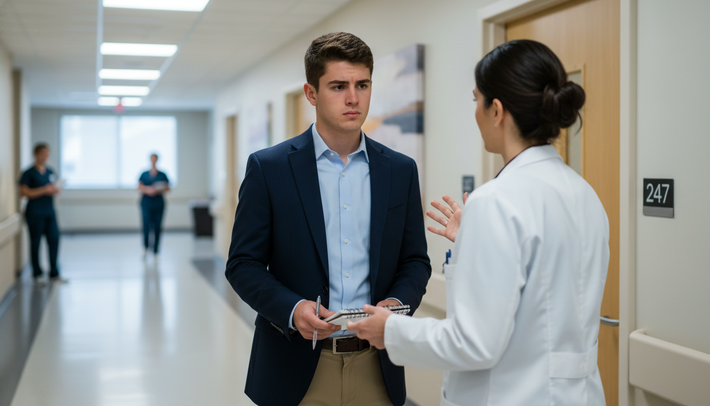
Introduction: Shadowing as a Bridge into a Medical Career for Non-Traditional Students
Pursuing a medical career later in life—or after time in another profession—can be both exciting and overwhelming. Non-Traditional Students often bring rich life experience, prior careers, and family responsibilities to the process. Yet one requirement is the same for everyone: you need meaningful Healthcare Experience to understand the realities of medicine and to demonstrate your commitment to admissions committees.
Shadowing Opportunities are one of the most direct ways to gain that exposure. By observing physicians and other healthcare professionals in real clinical environments, you can see how textbook knowledge translates into patient care, team collaboration, and decision-making under pressure.
For non-traditional applicants, shadowing can be more complicated to arrange. You may not be connected to a college pre-med advising office, you might work full-time, or you may feel uncertain about “starting over” in a new field. This guide is designed specifically for you: Non-Traditional Students seeking practical, realistic strategies to find Shadowing Opportunities and build strong Pre-Med Resources around your unique path.
We’ll cover:
- Why shadowing is uniquely important for non-traditional applicants
- Step-by-step tactics to find and secure shadowing
- Alternative forms of Healthcare Experience when traditional shadowing is hard to access
- How to prepare, behave, and reflect so you get maximum value from every hour
By the end, you’ll have a clear roadmap for building a convincing, experience-based narrative for your medical school applications.
Why Shadowing Matters So Much for Non-Traditional Students
Shadowing is important for all pre-meds, but for non-traditional applicants, it serves several additional purposes. It helps you translate your prior life and professional experiences into a coherent, future-facing medical story.
1. Real-World Exposure Beyond Assumptions
Especially if you’ve spent years in another field, it’s easy to romanticize or oversimplify a medical career. Shadowing gives you:
- Authentic day-to-day insight: You’ll see the routine aspects of practice—documentation, phone calls, coordination with other services—alongside the moments of high intensity and emotional impact.
- Exposure to healthcare systems: You’ll observe how insurance, electronic medical records, and administrative demands shape the physician’s day.
- Reality-check for lifestyle expectations: You’ll see call schedules, clinic volume, interruptions, and how physicians manage (or struggle with) work–life balance.
This grounded understanding is essential when you later explain why you’re changing paths into medicine and how you know what you’re signing up for.
2. Strengthening Your Professional Narrative
Admissions committees want to know:
- Why you are leaving your previous career
- Why medicine is the right next step
- What you understand about the profession
Shadowing gives you specific stories and observations you can use in your personal statement and interviews. Instead of saying “I want to help people,” you might say:
“After 10 years in finance, shadowing in a community clinic showed me how physicians advocate for patients facing language barriers and unstable housing. I recognized that the skill set I had developed—attention to detail, pattern recognition, and communication under pressure—could be redirected toward patient care.”
That kind of detail makes your transition credible.
3. Networking, Mentorship, and Letters of Recommendation
For Non-Traditional Students without easy access to campus-based Pre-Med Resources, shadowing is often the main gateway to:
- Physician mentors who understand your background and can advise on career planning, timelines, and specialty exploration
- Strong letters of recommendation, especially if you show reliability, curiosity, and professionalism over repeated visits
- Connections to other opportunities, such as research, clinical volunteering, or additional shadowing in related specialties
A physician who has seen your dedication repeatedly is much more likely to write a detailed, supportive letter than someone who met you once.
4. Exploring Specialties and Practice Settings
You may have ideas about what you’d like to do—emergency medicine, surgery, pediatrics—but your prior career may have biased your expectations. Shadowing helps you compare:
- Specialties: medicine vs surgery, inpatient vs outpatient, acute vs chronic care
- Practice environments: academic centers, community hospitals, private practice, community health centers, telemedicine
- Patient populations: children, older adults, underserved urban communities, rural patients
This focused exploration can guide your future specialty interests and give direction to your personal statement and secondaries (“Why this specialty?” or “Why our school?”).
5. Enhancing Applications with Meaningful Healthcare Experience
Medical schools often scrutinize non-traditional applicants closely to ensure they understand modern medicine and are committed for the long term. Documented, intentional shadowing:
- Demonstrates initiative—you went out and created your own opportunities
- Shows consistency—completing dozens of hours over time rather than a one-time visit
- Offers substance for essays and interviews—specific patients (de-identified), encounters, and ethical dilemmas you observed
When combined with other Healthcare Experience (clinical volunteering, scribing, EMT work, etc.), shadowing rounds out a compelling application.

Practical Strategies to Find Shadowing Opportunities as a Non-Traditional Student
Securing Shadowing Opportunities can feel intimidating, especially without a university’s pre-health office to guide you. The key is to approach the process thoughtfully, use your existing strengths, and cast a wide but targeted net.
1. Clarify Your Interests and Constraints
Before you start emailing physicians, take a structured look at:
Your Interests
- Are you drawn more to primary care (family medicine, internal medicine, pediatrics) or acute care (emergency medicine, surgery, critical care)?
- Do you have a personal connection to certain patient populations (geriatrics, veterans, underserved communities)?
- Are you considering fields that align with your previous experience (e.g., a former engineer exploring radiology or anesthesiology; a former teacher drawn to pediatrics or psychiatry)?
Admissions committees don’t expect you to choose a specialty now, but having a starting point makes your shadowing more purposeful.
Your Schedule and Location
Non-traditional applicants often juggle:
- Full- or part-time jobs
- Caregiving responsibilities
- Evening classes
Be honest about when you can reliably shadow: early mornings, one full weekday a month, or weekends (for inpatient or ED settings). This will help physicians assess whether they can accommodate you.
2. Leverage Your Existing Network—Even If It Feels Indirect
Many non-traditional students underestimate their current connections. Consider:
- Colleagues or clients who work in healthcare or have spouses/relatives in medicine
- Your own healthcare providers (primary care, OB/GYN, dentist, therapist)
- Friends from college or previous jobs who went into medicine, nursing, or allied health
- Religious or community organizations where you might know physicians, nurses, or administrators
You might say:
“I’m planning a career change into medicine and am seeking shadowing experience to better understand the day-to-day realities of patient care. Do you know any physicians who might be open to having a Non-Traditional Student shadow occasionally?”
A warm introduction dramatically increases your chances of a “yes.”
3. Explore Community Health Centers and Free Clinics
Community health centers and free clinics can be particularly welcoming to Non-Traditional Students because:
- They often value volunteers with prior life and work experience.
- They serve diverse, often underserved patients—excellent exposure for your future essays.
- Physicians there may be more mission-driven and open to mentoring.
Action steps:
- Search for “[your city] community health center,” “FQHC,” or “free clinic.”
- Check their websites for volunteer or student programs.
- Even if there’s no formal shadowing program, ask whether long-term volunteers can observe clinicians in certain roles once they’ve proven reliable.
Over time, being a consistent volunteer can organically lead to shadowing and strong letters.
4. Contact Local Hospitals and Large Health Systems
Many hospitals have structured observation or shadowing policies, particularly for HIPAA compliance and patient privacy. These may be called:
- Physician observation programs
- Job shadow programs
- Clinical observation internships
Steps to take:
- Visit the websites of local hospitals and health systems.
- Search for “shadowing,” “observation,” “volunteer services,” or “student opportunities.”
- If nothing is listed, call the hospital main line and ask to be transferred to Volunteer Services or Medical Education.
Be prepared with:
- A brief description of who you are (e.g., “I’m a non-traditional pre-med working full-time, hoping to transition into medical school in the next 1–2 years.”)
- Your availability
- Any documentation they might require (vaccination records, background check, HIPAA training)
Hospitals sometimes restrict shadowing to specific age groups or enrolled students, but many have pathways for adult learners and career changers—especially if you show persistence and professionalism.
5. Reach Out Directly to Physicians
Cold outreach can feel uncomfortable, but it is often effective when done well.
Finding Physicians to Contact
- Practice websites in your community
- Hospital “Find a Doctor” directories
- State or local medical society directories
- LinkedIn or professional profiles
Focus first on fields that are more open to shadowing, such as primary care, hospitalist medicine, and some outpatient specialties.
Crafting a Professional Email
Keep it concise, respectful, and clear. For example:
Subject: Prospective Non-Traditional Pre-Med Seeking Shadowing Opportunity
Dear Dr. [Last Name],
My name is [Your Name], and I am a non-traditional pre-med student with a background in [Your Field]. I am planning to apply to medical school in [year] and am seeking shadowing opportunities to better understand the daily work of physicians in [specialty].
I am particularly interested in [briefly mention a genuine interest related to their specialty, patient population, or practice setting]. I would be grateful for the chance to observe you for [a few half-days / one morning per week / occasional clinic sessions], if your schedule and institution’s policies allow.
I am fully vaccinated, HIPAA-compliant through prior training if applicable, and committed to being discreet, respectful, and punctual. I am available [list realistic times], but I am also willing to adjust within reason to fit your schedule.
Thank you for considering my request, and regardless of your availability, thank you for the work you do for patients in our community.
Sincerely,
[Your Full Name]
[Phone Number]
[LinkedIn or brief professional signature if appropriate]
Expect that many emails will go unanswered. This is normal. A response rate of even 10–20% can lead to multiple shadowing arrangements.
6. Use Social Media and Professional Platforms Strategically
Social media can expand your networking beyond geography:
LinkedIn:
- Create a polished profile highlighting your previous career, academic work, and medical aspirations.
- Join groups for pre-med, non-traditional pre-med, or healthcare professionals.
- Engage thoughtfully with posts by physicians, educators, and medical organizations.
- Once you’ve established some rapport, you can inquire about shadowing, especially if you’re local.
Specialty-specific forums and organizations (e.g., family medicine or internal medicine societies) sometimes list pre-med mentorship or observation programs.
Always remain professional—your online behavior can influence whether someone feels comfortable inviting you into a clinical space.
7. Tap into Pre-Med Organizations and Community College Resources
Even if you’re not at a large university, you may still access:
- Community college pre-med or pre-health clubs
- Post-baccalaureate programs—some allow non-degree students to participate in events
- Non-profit organizations that support underrepresented or career-changing students, sometimes offering structured shadowing or mentorship
Ask advisors or club leaders:
- “Do you have any physician partners who accept shadowing students?”
- “Are there alumni who are now physicians and open to mentoring Non-Traditional Students?”
These connections can save you significant time versus starting completely from scratch.
8. Prepare Professionally for Your Shadowing Experience
Once you secure an opportunity, make a strong first impression.
Before You Start
Research the specialty and setting:
- Learn common conditions and terminology (e.g., for cardiology, basics of heart failure, hypertension, arrhythmias).
- Review standard outpatient vs inpatient workflows if relevant.
Clarify expectations:
- Confirm dates, times, location, parking, dress code, and check-in procedures.
- Ask whether you need specific vaccines, TB testing, or HIPAA training.
Dress, Demeanor, and Conduct
Dress code:
- Business casual with closed-toe shoes is usually appropriate.
- Avoid excessive fragrance, accessories, or bright patterns.
- Some settings may provide a white coat for identification, but do not purchase and wear one unless instructed.
On-site behavior:
- Arrive 10–15 minutes early.
- Introduce yourself as a pre-med observer when meeting staff and patients.
- Never touch patients, equipment, or the computer unless explicitly instructed.
- Step out promptly if a patient declines your presence or if the physician indicates it’s necessary.
HIPAA and confidentiality:
- Do not discuss patient details with anyone outside the clinical care team.
- When journaling about your experience, de-identify all patient information.
Making the Most of the Experience
- Bring a small notebook to jot down concepts, questions, or reflections—but do not record identifying details.
- Ask the physician when they prefer you to ask questions (between patients, at lunch, or at the end of the day).
- After a complex case, you might say:
- “When you have a moment, I’d love to understand how you decided between those treatment options.”
Over time, your thoughtful curiosity and professionalism can turn a brief shadowing experience into an ongoing mentorship.
Beyond Traditional Shadowing: Creative Healthcare Experience Options for Non-Traditional Students
In some regions or institutions, shadowing may be limited due to privacy policies, space constraints, or post-pandemic restrictions. Non-Traditional Students can still build robust Healthcare Experience portfolios using alternative pathways.
1. Volunteering in Clinical and Community Healthcare Settings
Consistent volunteering can be just as impactful as shadowing, sometimes more so, because you:
- Interact directly with patients (within your role’s limits)
- See how different professionals (nurses, social workers, therapists) contribute to care
- Demonstrate long-term commitment to service
Examples include:
- Hospital volunteer programs (transport, unit support, information desks)
- Emergency department greeters or patient liaisons
- Nursing home or hospice volunteers
- Non-profit clinics serving uninsured or immigrant populations
For non-traditional applicants, your prior experience—customer service, tech, language skills, teaching—can often be leveraged into higher-responsibility volunteer roles over time.
2. Participating in Community Health Fairs and Outreach Events
Health fairs, screening events, vaccination drives, and public health campaigns can provide:
- Exposure to preventive medicine and public health
- Opportunities to interact with physicians, nurses, and community health workers
- A chance to practice communication skills with diverse patient populations
You might:
- Assist with registration and patient education materials
- Help with logistics and flow
- Shadow physicians or other clinicians between patient interactions if allowed
These experiences also highlight your commitment to population health and health equity—topics many medical schools highly value.
3. Online and Virtual Shadowing Programs
Since 2020, virtual shadowing has expanded significantly and is now recognized by many schools as a meaningful supplement (though not a complete substitute) for in-person experience.
Look for:
- Programs run by medical schools, hospitals, or reputable pre-med organizations
- Sessions that include live or recorded case discussions, Q&A with physicians, and reflection assignments
- Certificates or documentation of hours for your records
Virtual shadowing is especially helpful if you:
- Live in a rural area
- Have limited transportation
- Need flexible evening or weekend options
When listing these experiences on your application, be transparent—label them clearly as “virtual shadowing” and describe what you learned.
4. Attending Medical Conferences, Workshops, and Career Panels
Even as a pre-med, you may attend:
- Local or regional specialty conferences (some have student rates)
- Institutional grand rounds or continuing medical education (CME) sessions
- Pre-med workshops or medical school open houses
These events allow you to:
- Learn current issues and controversies in medicine
- Network with physicians and residents
- Identify potential mentors or shadowing hosts
Prepare a brief self-introduction and a couple of thoughtful questions so you can make the most of every interaction.
5. Clinical Employment and Research Roles
If you’re planning a multi-year transition, consider work that puts you directly into the healthcare environment:
- Medical scribe (ED or outpatient clinics)
- EMT or paramedic (with appropriate training)
- Medical assistant or patient care technician
- Research coordinator or assistant in clinical studies
These roles often provide robust exposure to patient care decisions, interprofessional communication, and the realities of clinical workflow. Many physicians you work with may also allow occasional or informal shadowing as part of the job.

Integrating Your Experiences: Reflection, Documentation, and Next Steps
Shadowing and other forms of Healthcare Experience matter most when you integrate them into a coherent narrative.
Reflect Thoughtfully After Each Session
Soon after shadowing, ask yourself:
- What surprised me about the physician’s day?
- How did they communicate with patients, especially in difficult situations?
- What aspects of the work energized me? What aspects made me pause or reconsider?
- How did my prior career or life experience help me understand what was happening?
Keep a running reflection journal (without identifiable patient information). This will be invaluable when you write your personal statement and secondaries.
Track Your Hours and Experiences Carefully
Create a simple log including:
- Date, location, specialty, and physician’s name
- Approximate hours
- Brief notes on types of cases or themes (e.g., chronic disease management, acute emergencies, end-of-life discussions)
Accurate records make it much easier to complete application sections and to speak confidently about your experiences in interviews.
Build and Maintain Professional Relationships
When a shadowing experience ends (whether a day or months):
- Thank the physician—ideally with a handwritten note acknowledging specific things you learned.
- Ask if you may keep in touch and update them on your progress.
- Later, when you’re nearing application season, you can respectfully request a letter of recommendation from those who know you best.
Over time, these relationships can become mentors and advocates who deeply understand your non-traditional journey.
FAQ: Shadowing and Healthcare Experience for Non-Traditional Pre-Med Students
1. How many shadowing hours do non-traditional students need for a competitive medical school application?
There is no universal minimum, but many successful applicants accumulate 40–100+ hours of in-person shadowing across one or more specialties. Non-traditional students should focus less on a specific number and more on:
- Consistency over time (e.g., a half-day per week for several months)
- Variety (at least one primary care field plus any areas of interest)
- Depth of reflection (clear insights you can articulate in essays and interviews)
If in-person access is limited, supplement with virtual shadowing and other substantial Healthcare Experience (e.g., clinical volunteering, scribing).
2. Is it “too late” to start shadowing if I’m in my 30s, 40s, or beyond?
No. Many Non-Traditional Students begin serious exploration several years after finishing their first degree or after a long career in another field. Admissions committees focus on:
- How clearly you understand the realities of medicine now
- How convincingly you can explain your motivation and preparation
- Whether your recent experiences support a well-informed decision
Starting shadowing as soon as you can is ideal, but it is absolutely possible to build a strong application in your 30s, 40s, or later, especially when you combine shadowing with meaningful clinical or volunteer roles.
3. What if my hospital or region has very strict policies and I can’t find any in-person shadowing?
This is increasingly common. In that case:
- Prioritize clinical employment or volunteering (scribe, EMT, MA, hospital volunteer, community clinic support).
- Pursue virtual shadowing through reputable organizations.
- Attend grand rounds, medical school events, or specialty webinars that highlight clinical decision-making and patient care.
When you apply, explain briefly that institutional policies limited formal shadowing and emphasize how you compensated with other direct patient care or observational experiences.
4. Can I shadow my own doctor or someone I know personally?
Often yes, and this is a common starting point for Non-Traditional Students. However:
- The physician must confirm that their clinic or hospital allows shadowing.
- You should not shadow during your own medical encounters.
- Both you and the physician must respect patient consent and privacy at all times.
If the experience goes well, this physician may be an excellent future recommender because they can speak to your professionalism and dedication.
5. How do I talk about my shadowing and Healthcare Experience in personal statements and interviews?
Focus on specific insights and growth, not just a list of hours. For example:
- Describe a challenging patient interaction you observed and what it taught you about empathy, bias, or communication.
- Reflect on differences between your previous career and medicine—what skills transfer, and what new challenges appeal to you.
- Explain how your experiences confirmed (or refined) your decision to pursue a medical career.
Use concrete examples while preserving patient confidentiality, and always center what you learned and how it shaped your goals.
For Non-Traditional Students, shadowing and related Healthcare Experience are more than application checkboxes—they are the bridge between your past and your future in medicine. By approaching Shadowing Opportunities intentionally, leveraging your unique background, and reflecting deeply on what you observe, you can build a compelling, credible path into a medical career that makes full use of who you already are.