Maximizing Long-Term Retention for USMLE Step 1: Evidence-Based Strategies for Lasting Knowledge
Passing the USMLE Step 1 is more than a one-day achievement—it’s a test of how well you can build, retain, and apply foundational medical knowledge over time. Even with the exam now pass/fail, your Step 1 preparation still heavily influences your performance on clerkships, shelf exams, and ultimately Step 2 CK and residency.
Many students pour in hours of study but struggle to remember content weeks later. The key difference between “I’ve seen this before” and “I truly know this” is knowledge retention. This article breaks down practical, research-backed techniques to help you retain Step 1 material for the long term, not just cram-and-forget.
We’ll connect principles from cognitive science with concrete study techniques, schedules, and tools that you can implement immediately in your Step 1 study plan.
Why Knowledge Retention Matters for USMLE Step 1 and Beyond
The Cost of Short-Term Cramming
USMLE Step 1 tests integration and application, not isolated facts. Cramming can sometimes carry you through a short quiz, but for Step 1—and real patients—it quickly falls apart. The classic “forgetting curve” shows that without review, you can lose up to 50–70% of newly learned information within days.
For medical education, this is especially risky:
- You revisit the same topics repeatedly, wasting time “relearning” instead of deepening understanding.
- Weak Step 1 foundations make clinical reasoning during rotations and Step 2 CK much harder.
- Poor retention can undermine your confidence during real patient care.
A smarter strategy is to build a system that actively fights the forgetting curve and turns each study session into an investment in your future clinical practice.
Retention as a Core Professional Skill
Your Step 1 content forms the backbone of:
- Diagnosing and treating common conditions
- Understanding pathophysiology during rounds
- Interpreting labs, imaging, and pharmacology
- Communicating clearly with patients and colleagues
Long-term knowledge retention is not just a test strategy—it’s a clinical skill. The same study techniques that help you for Step 1 will support you through the rest of medical school, residency, and lifelong learning.
Active Learning Strategies: Turning Studying into Memory Training
Active learning is one of the most powerful ways to improve knowledge retention. Instead of passively consuming information (reading, highlighting, watching videos), you continually interact with and retrieve what you’ve learned.
1. Spaced Repetition: Systematic Review That Fights Forgetting
Spaced repetition is an evidence-based learning technique where you review information at increasing intervals over time, right before you’re about to forget it. This transforms short-term memory into long-term, durable knowledge.
How to Use Spaced Repetition for Step 1
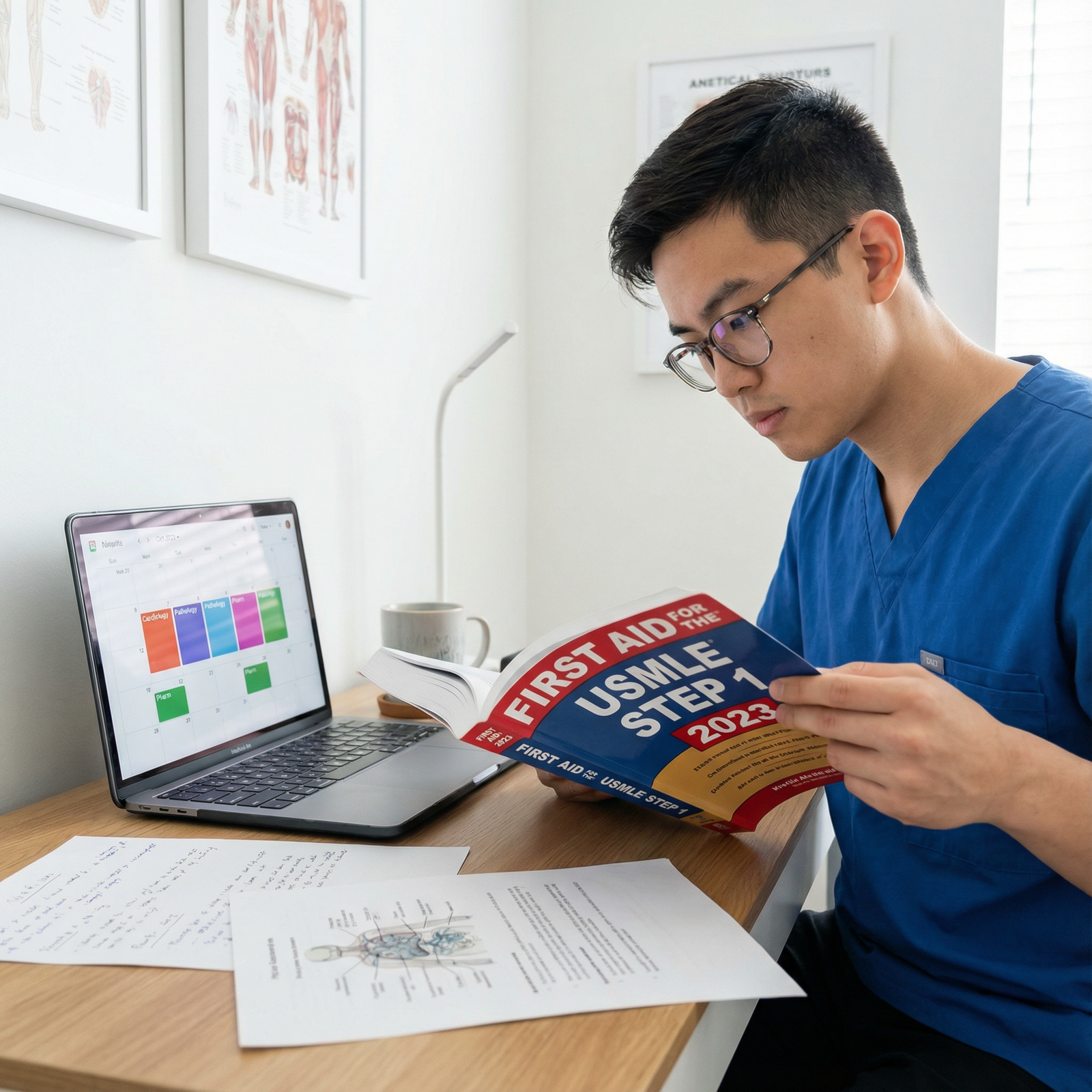
- Use Anki or another SRS (Spaced Repetition System)
- Create or use high-quality pre-made decks (e.g., AnKing, relevant Sketchy-based decks).
- Tag or suspend cards not aligned with your curriculum, so you’re not overwhelmed.
- Set a realistic daily review target
- Aim for 200–350 reviews/day during dedicated prep (adjust based on your pace).
- Do your Anki reviews first thing in your study day to maintain consistency.
- Link flashcards to your primary resources
- When a card feels vague, add a reference to First Aid, Pathoma, or a specific UWorld question ID.
- This prevents “floating facts” and reinforces conceptual understanding.
Example
You learn the mechanism and side effects of ACE inhibitors today. With spaced repetition:
- You review the card tomorrow, then in 3 days, then in 7 days, then in 2–3 weeks.
- Each successful recall makes that fact easier to retrieve under test conditions and in clinic.
2. Retrieval Practice: Testing as a Learning Tool
Retrieval practice means actively trying to recall information from memory, rather than re-reading it. This “pulling out” of information significantly strengthens memory traces.
Practical Retrieval Techniques
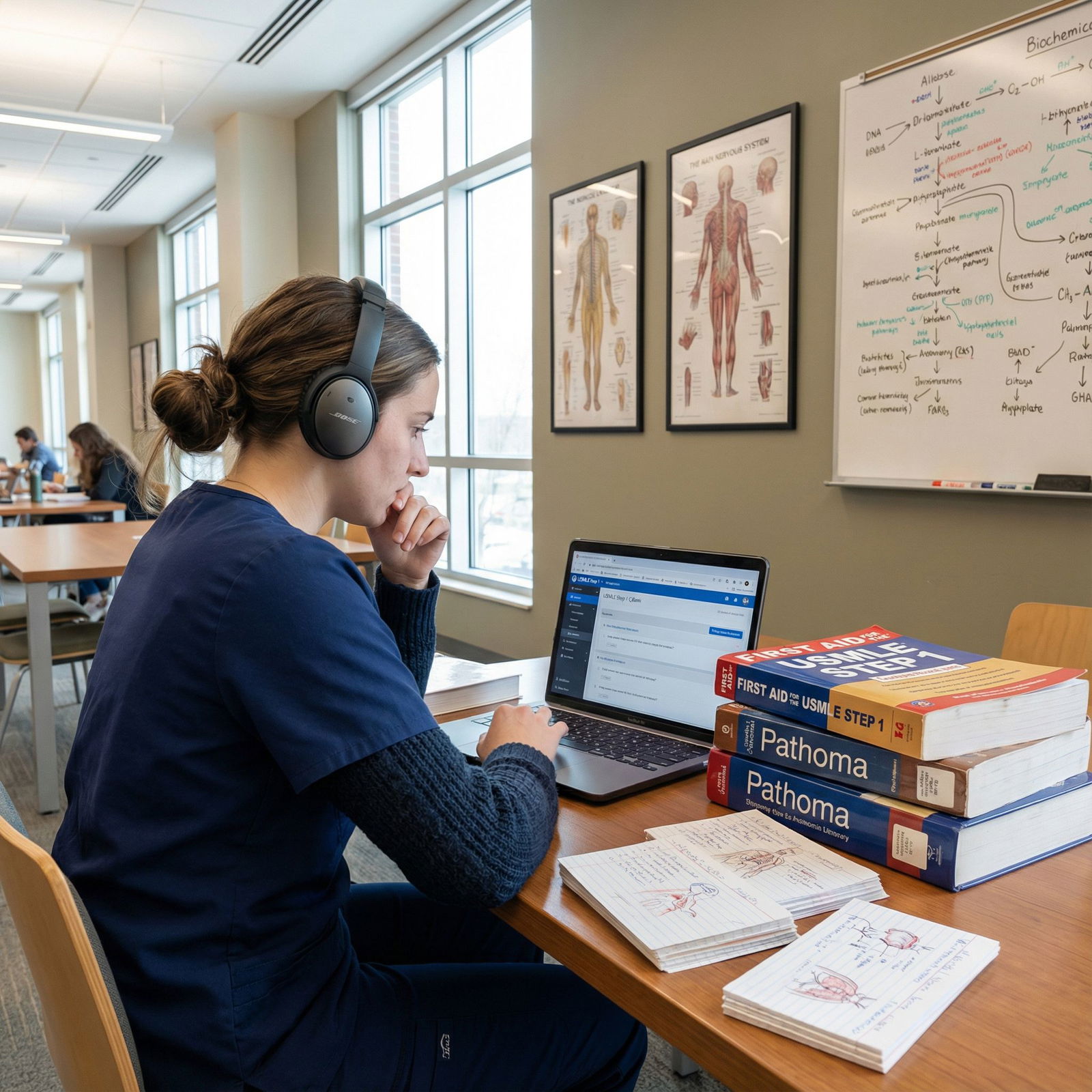
- Question Banks (e.g., UWorld, AMBOSS)
- Don’t save QBank questions “for later.” Use them early and throughout your prep as a learning tool.
- After each block:
- Review why each answer is right or wrong.
- Make flashcards for patterns you keep missing.
- Closed-Book Recalls
- After finishing a topic (e.g., nephrotic syndromes), spend 5–10 minutes:
- Listing all the key entities you remember
- Explaining mechanisms to yourself out loud or on paper
- After finishing a topic (e.g., nephrotic syndromes), spend 5–10 minutes:
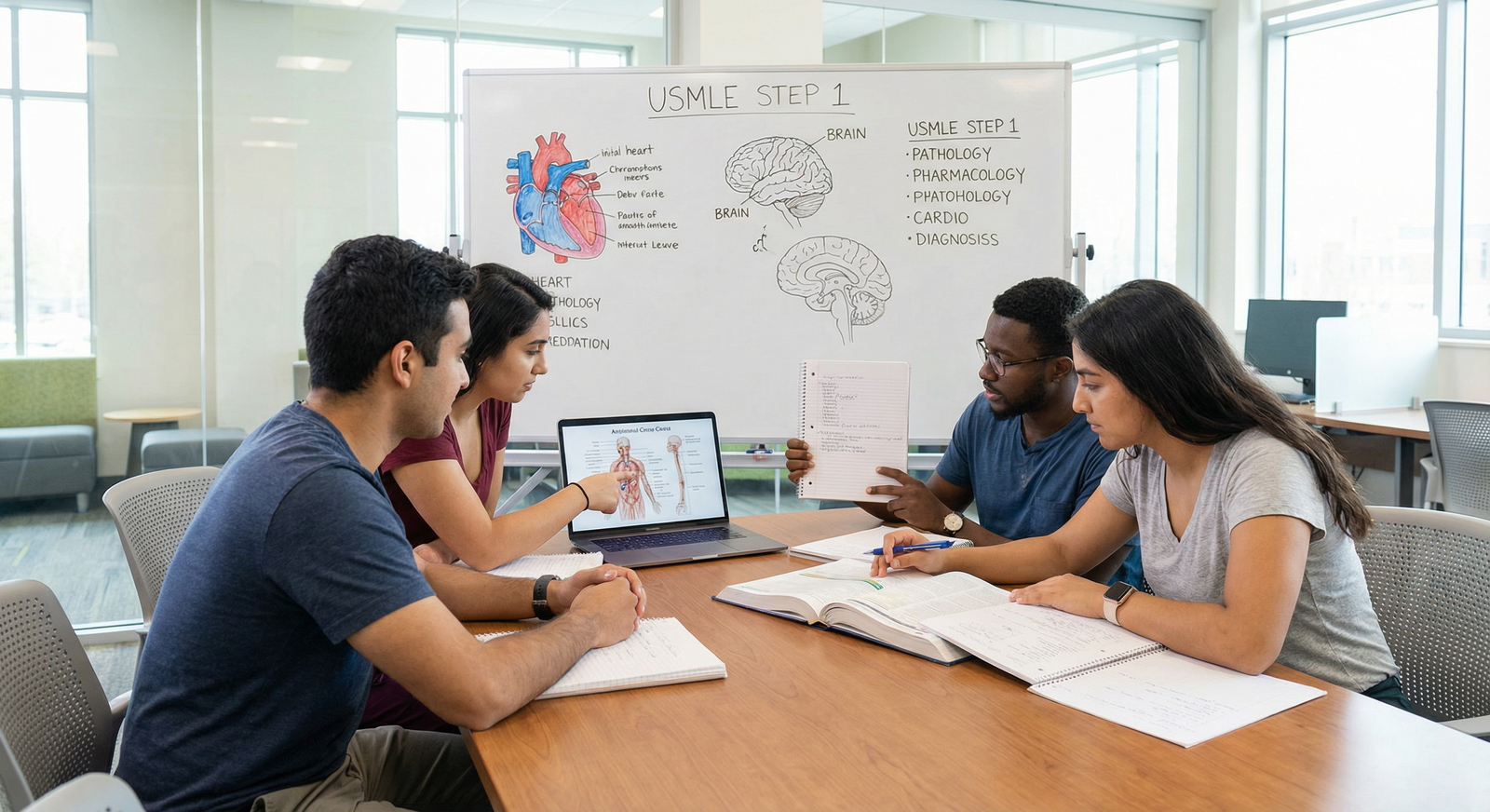
- Mini “Daily Oral Exams”
- With a study partner, take turns:
- Asking each other “teach me everything you know about…” (e.g., beta blockers, sarcoidosis).
- Pushing for mechanisms, indications, and exceptions.
- With a study partner, take turns:
3. Teaching Others: The Feynman Technique in Medical Education
Teaching forces you to organize, simplify, and clarify your understanding. If you can explain a topic clearly in plain language, you’re much more likely to remember it under pressure.
Ways to Teach for Step 1 Retention
- Explain a pathway (e.g., RAAS, coagulation cascade) to a classmate without notes.
- Record yourself explaining a concept and listen back during commutes.
- Lead a small group review session on a topic you previously struggled with—this ensures you’ve truly mastered it.

Multisensory and Conceptual Learning: Making Content “Stickier”
Different sensory channels and representation styles help your brain encode information more deeply. Blending visual, auditory, and kinesthetic approaches can significantly improve knowledge retention for USMLE Step 1 content.
1. Visual Learning: Diagrams, Sketches, and Concept Maps
Many Step 1 topics are highly visual—pathways, anatomy, micro, pharmacology. Leveraging visuals helps you build a mental map of complex systems.
Effective Visual Strategies
- Concept Maps
- For example, create a map linking:
- Types of hypersensitivity reactions
- Mechanisms
- Clinical examples
- Key lab findings
- Redraw and refine the map every few weeks to reinforce connections.
- For example, create a map linking:
- Pathway Sketching
- Regularly redraw:
- Glycolysis and TCA cycle (inputs/outputs, regulation points)
- Complement cascade
- Starling forces in edema formation
- Don’t aim for artistic quality—focus on relationships and flow.
- Regularly redraw:
- Integrate Visual Resources
- Use visual-heavy platforms (e.g., SketchyMedical for micro/pharm, Boards & Beyond or Osmosis for pathophys).
- Convert memorable scenes into flashcards describing the image (“Pirate wearing an eyepatch = linezolid optic neuropathy”).
2. Auditory Learning: Listening and Speaking to Reinforce Memory
Hearing concepts explained and verbalizing them yourself helps deepen encoding, especially for students who learn well by listening.
Auditory-Based Strategies
- Listen to recorded lectures or audio-based review while commuting or exercising.
- Summarize a topic aloud after reading (e.g., “In 60 seconds, explain nephritic vs nephrotic syndrome”).
- Use voice memos to record brief explanations of tricky topics and play them back the next day.
3. Kinesthetic and Experiential Learning
Not all Step 1 content is abstract. Tying information to real or simulated experiences creates strong contextual memory.
- In anatomy labs, mentally link structures you dissect to:
- Associated nerve lesions and physical exam findings
- Likely Step 1-style injury scenarios
- In clinical skills sessions, as you perform an exam maneuver, recall:
- The relevant anatomy
- Key pathologies that alter findings
These body-based experiences make the information feel more “real” and easier to retrieve later.
Structuring and Organizing Knowledge for Better Recall
Information is easier to retain when it’s organized logically and meaningfully, not stored as random, disconnected facts.
1. High-Yield Notes, Summaries, and Mnemonics
Smart Note-Making (Not Note-Taking)
Instead of copying your textbook or video script:
- Create 1-page summary sheets per system or topic (e.g., “Glomerular Diseases Overview”).
- Focus on:
- Big-picture organization (e.g., nephritic vs nephrotic)
- High-yield associations (e.g., minimal change disease + Hodgkin lymphoma)
- Patterns across diseases
Mnemonics That Actually Help
Mnemonics can be powerful if they’re:
- Targeted to confusing lists (e.g., Jones criteria, bacteria characteristics, cranial nerves).
- Connected to an image or story, not just letters.
- Reviewed via flashcards so they don’t remain one-time tricks.
Example: For causes of eosinophilia (NAACP) or for tetracycline side effects, pair the mnemonic with a vivid visual cue and a clinical vignette.
2. Chunking: Breaking Down Complexity
Chunking involves grouping individual bits of information into meaningful clusters. Step 1 content is naturally well-suited to this.
Examples of Chunking in Step 1 Prep
- Pharmacology:
- Group drugs by class, then by:
- Mechanism
- Primary indications
- Classic adverse effects
- Group drugs by class, then by:
- Microbiology:
- Organize by:
- Gram-positive vs gram-negative
- Cocci vs bacilli
- Aerobic vs anaerobic
- Organize by:
- Cardiology:
- Separate diseases into:
- Ischemic
- Valvular
- Arrhythmias
- Congenital
- Separate diseases into:
Chunking reduces cognitive load and makes it easier to retrieve entire clusters of information from a single cue.
Learning in Context: Linking Step 1 Knowledge to Clinical Practice
Contextual learning is one of the strongest drivers of long-term retention. When you tie abstract concepts to clinical stories, they become far more memorable and useful.
1. Using Clinical Vignettes as Your Primary Learning Format
USMLE Step 1 questions are almost all vignette-based, so your studying should mirror that format.
Strategies for Contextual Learning
- Always ask: “How would this show up in a patient?”
- For example, when studying hyperthyroidism, think:
- Typical patient demographics
- Presenting symptoms and signs
- Labs and imaging
- Treatment decision points
- For example, when studying hyperthyroidism, think:
- Use question stems as memory triggers:
- Tag or bookmark UWorld questions that represent classic presentations and revisit them later.
- Turn tricky vignettes into short written or audio summaries you can review.
2. Storytelling and “Mental Patients”
Turning information into stories leverages your brain’s natural tendency to remember narratives.
- Build a “mental patient” for key diseases:
- Age, gender, risk factors
- Chief complaint and physical exam findings
- Key lab/diagnostic clues
- Revisit these patients mentally when you review that topic:
- “This is my 65-year-old smoker with squamous cell carcinoma and hypercalcemia…”
These mental stories serve as hooks for detailed mechanistic knowledge.
Building a Sustainable Study Routine for Long-Term Retention
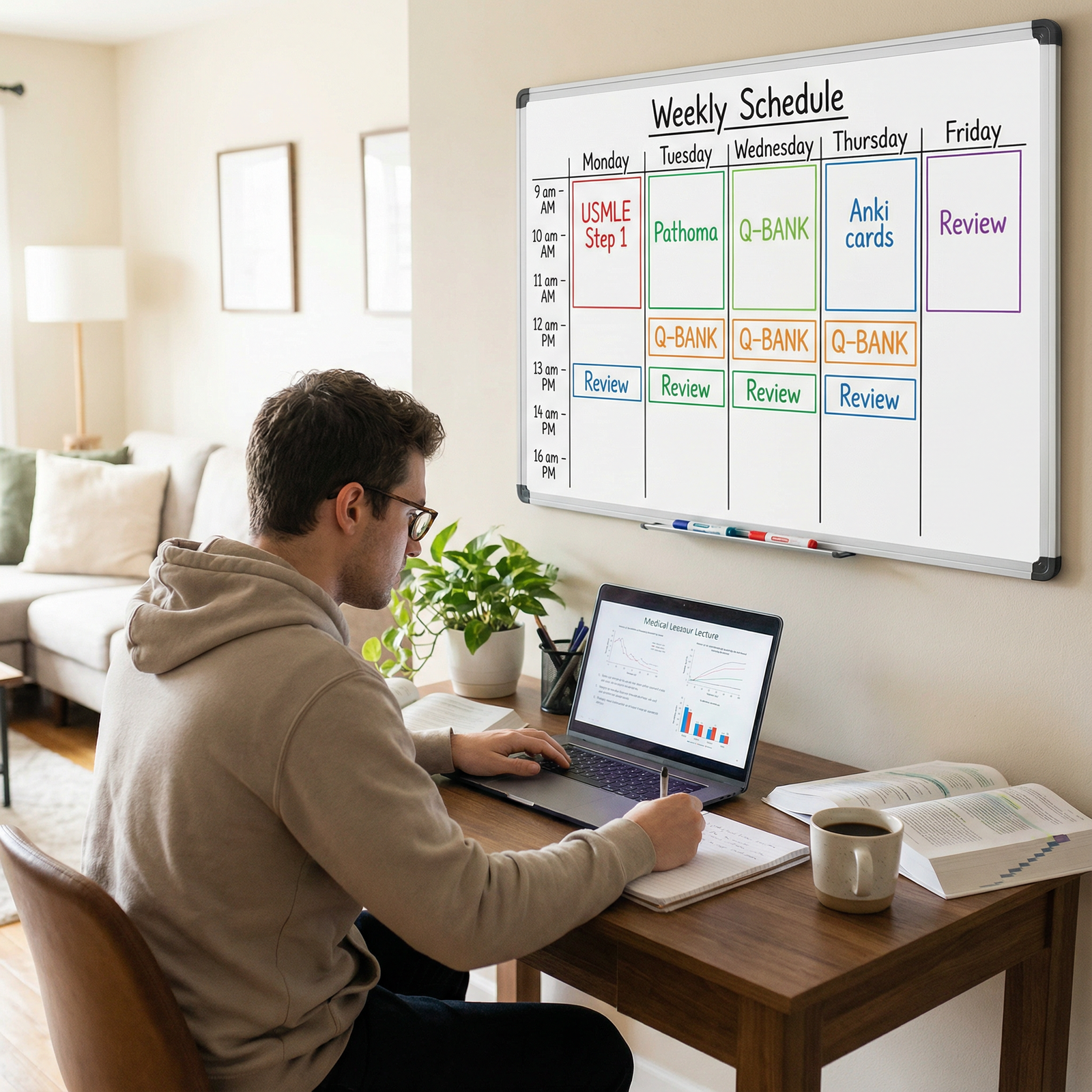
Even the best techniques fail if your routine is inconsistent or unsustainable. A structured, realistic schedule is essential for USMLE Step 1 success and long-term knowledge retention.
1. Consistency Over Intensity
Trying to “grind” 12–14 hours a day for weeks is a common trap and often leads to burnout and poor retention.
A Sample High-Yield Daily Structure (Dedicated Period)
- Morning (3–4 hours)
- Anki reviews (spaced repetition)
- 1–2 blocks of QBank (timed, random or system-based depending on phase)
- Midday (3–4 hours)
- Deep content review (e.g., organ system focus using First Aid + Pathoma/Boards & Beyond)
- Integrate with questions missed earlier
- Afternoon/Evening (2–3 hours)
- Lighter work: flashcard creation, short videos, concept maps
- Brief closed-book recall or teaching session
Aim for quality and focus, not just clocked hours.
2. Strategic Breaks and Recovery
Cognitive science shows that mental fatigue reduces the benefits of additional study.
- Use techniques like the Pomodoro method (25–50 minutes of work, 5–10 minutes break).
- During breaks:
- Move, stretch, hydrate
- Avoid scrolling on your phone or engaging in highly stimulating media.
- Plan at least one half-day off per week if possible to reset mentally.
Protecting Your Brain: Health, Wellness, and Cognitive Performance
Your brain is your primary tool for Step 1. Protecting your physical and mental health is an essential part of maximizing knowledge retention.
1. Sleep: The Engine of Memory Consolidation
Sleep is where your brain consolidates the memories you formed during the day.
- Aim for 7–9 hours per night, as consistently as possible.
- Avoid all-nighters—these often produce:
- Short-term perceived productivity
- Long-term retention decay and performance declines
- Protect a wind-down routine:
- Limit screens 30–60 minutes before bed.
- Avoid heavy studying in bed; keep that space associated with sleep.
2. Nutrition and Hydration
Your brain consumes a large amount of your daily energy.
- Prioritize balanced meals with:
- Lean proteins
- Complex carbohydrates
- Healthy fats (e.g., nuts, seeds, fatty fish)
- Colorful fruits and vegetables (antioxidants, vitamins)
- Keep water at your desk and sip regularly.
- Avoid relying heavily on energy drinks and excessive caffeine—they can fragment sleep and worsen anxiety.
3. Exercise and Stress Management
Regular physical activity improves attention, mood, and memory.
- Aim for:
- 20–30 minutes of moderate exercise most days (brisk walk, light jog, cycling, yoga).
- Integrate mindfulness or stress-reduction practices:
- 5–10 minutes of breathing exercises, meditation, or brief journaling.
- Even a short practice can reduce anxiety and make studying more effective.
If persistent anxiety, low mood, or burnout symptoms are affecting you, reach out early to your school’s wellness services, a counselor, or a physician. Mental health is foundational to learning.
Leveraging Technology and Feedback for Smarter Studying
1. High-Impact Digital Tools for Step 1
Some of the most widely used resources in modern Step 1 preparation include:
- Anki – For spaced repetition and active recall.
- UWorld / AMBOSS – For high-quality, exam-style questions and explanations.
- SketchyMedical – For visual mnemonic-based learning in micro and pharm.
- Boards & Beyond, Pathoma, Osmosis – For structured video explanations and integration with First Aid.
The key is not using every resource, but rather:
- Selecting 2–3 core resources that fit your style.
- Fully committing and cycling through them systematically.
- Using technology to track progress and weaknesses (e.g., UWorld performance by system).
2. Feedback Loops: Adjusting Your Plan as You Go
Regular feedback helps you refine your study strategy.
- Take NBME practice exams periodically (e.g., every 2–3 weeks during dedicated) to:
- Gauge your readiness
- Identify weak areas
- Practice test-day stamina
- After each exam:
- Analyze missed questions by category and mechanism.
- Adjust your upcoming weeks’ focus based on these findings.
- Keep a simple log of:
- What techniques help you remember better
- What tends to fade quickly
- Any patterns in your performance
Over time, this makes your study approach more personalized and efficient.

FAQs: Long-Term Retention and USMLE Step 1 Preparation
1. How far in advance should I start using spaced repetition for Step 1?
Ideally, start spaced repetition (e.g., Anki) during your preclinical courses, not just during dedicated study. If you’re close to your exam, begin as soon as possible and prioritize:
- High-yield decks linked to your curriculum
- Cards that correspond to weak areas revealed by practice questions
Even with a few months to go, consistent daily reviews can significantly improve knowledge retention.
2. How many practice questions should I aim to complete before Step 1?
Most students find it helpful to complete at least one full pass of a major QBank (e.g., UWorld) and, if time allows, a partial second pass or supplemental questions from another bank (e.g., AMBOSS). Instead of focusing only on total question count, prioritize:
- Timed blocks that simulate exam conditions
- Thorough review of explanations
- Creating flashcards for recurring mistakes
Quality and careful review matter more than sheer volume.
3. Is it better to focus on reading First Aid or doing more questions?
For long-term retention, active learning (questions, retrieval practice, explaining concepts) usually provides more value than passive reading alone. A strong approach is:
- Use First Aid as a structured outline/reference.
- Use video resources to understand mechanisms and big-picture connections.
- Use QBank questions and Anki to reinforce, test, and retain what you’ve learned.
Reading First Aid cover-to-cover repeatedly without active recall is typically less efficient.
4. How can I tell if I’m really retaining information and not just recognizing it?
Genuine retention means you can recall and explain information without prompts. To test this:
- Close your notes and try to write or say everything you know about a topic for 2–3 minutes.
- Teach the concept to someone else in simple language.
- Do mixed, timed QBank blocks where topics are interleaved and not labeled.
If you can perform well in these settings, you’re more likely to be ready for Step 1 and real-world application.
5. What should I do if I feel overwhelmed by the volume of material?
Feeling overwhelmed is common in medical education. To manage it:
- Break your study plan into small, daily goals (e.g., “1 QBank block, 250 Anki reviews, one system’s worth of review”).
- Focus on systems and topics that show up frequently (cardio, pulm, renal, neuro, pharm, micro).
- Accept that you won’t know every detail; aim for strong foundations and pattern recognition.
- Seek support—from classmates, advisors, or wellness services—if stress is interfering with your daily functioning.
Remember: a consistent, realistic plan plus evidence-based study techniques will serve you better than trying to memorize everything at once.
By combining active learning, spaced repetition, contextual clinical thinking, and a sustainable routine, you can dramatically improve your knowledge retention for USMLE Step 1 and beyond. The habits you build now—how you study, review, and care for your brain—will support you not only on exam day, but throughout your medical career.