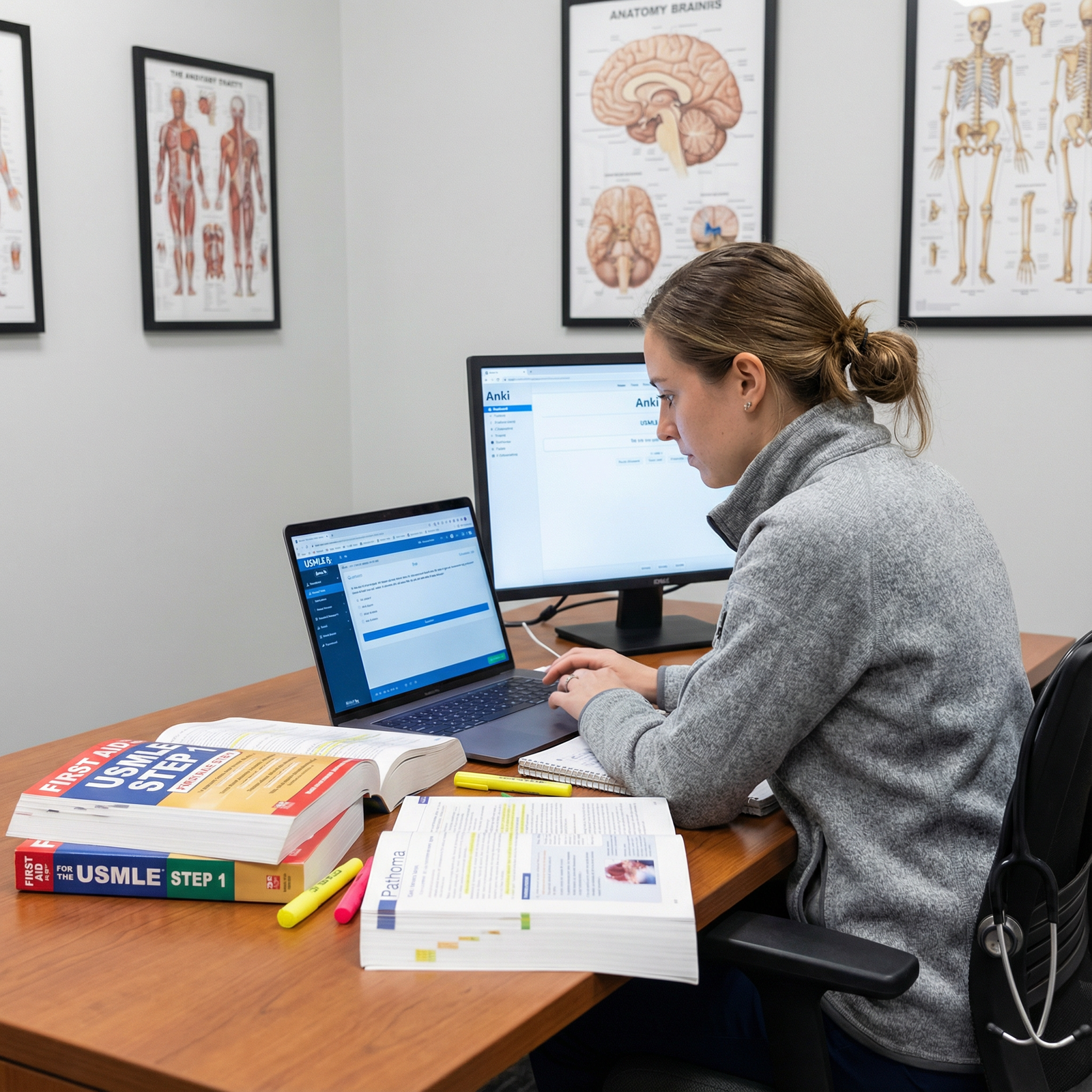
Understanding USMLE Step 1: Exam Structure and Its Impact on Your Career
Preparing for the USMLE Step 1 is one of the defining experiences of medical school. Even though Step 1 has shifted to a pass/fail scoring system, it remains a high‑stakes Medical Exam Preparation milestone that strongly influences how well you master the basic sciences, your confidence going into clinical rotations, and your eventual readiness for Step 2 CK.
USMLE Step 1 is a computer-based multiple-choice exam assessing whether you understand and can apply key concepts of basic medical sciences to clinical scenarios. Content spans:
- Anatomy
- Behavioral Sciences and Biostatistics/Epidemiology
- Biochemistry and Molecular Biology
- Microbiology and Immunology
- Pathology
- Pharmacology
- Physiology
- Cross-disciplinary areas such as nutrition, genetics, aging, and ethics
Exam Format and Timing
- Approximately 280 questions
- Divided into 7 blocks of up to 40 questions each
- Total test time: 7 hours of testing plus break time (typically 45 minutes)
- Questions are single-best-answer MCQs, often with clinically oriented vignettes
Understanding this structure early allows you to reverse-engineer your Study Strategies and simulate realistic exam conditions. Your preparation should mimic:
- Length of concentration required (7+ hours with breaks)
- Question style (vignette-based, integrative, multi-system)
- Time pressure (average of just over 1 minute per question)
This awareness is the foundation for an efficient, targeted USMLE Step 1 preparation plan.
Designing an Effective USMLE Step 1 Study Schedule
A solid, realistic schedule is the backbone of Step 1 success. It should be tailored to your baseline, your school’s curriculum, and how far you are from exam day.
Step 1 Study Phases: Pre-Dedicated vs Dedicated
Most students divide their Step 1 Medical Exam Preparation into two phases:
Pre‑Dedicated Phase (6–18 months before exam)
- Lighter, integrated with classes
- Focus on:
- Learning concepts well the first time
- Beginning Anki and question banks in “tutor mode”
- Building familiarity with high-yield resources
Dedicated Study Period (4–10 weeks)
- Full-time, intensive review
- Heavy emphasis on:
- Active recall (questions, flashcards)
- Full-length practice exams
- Rapid cycling of high-yield content
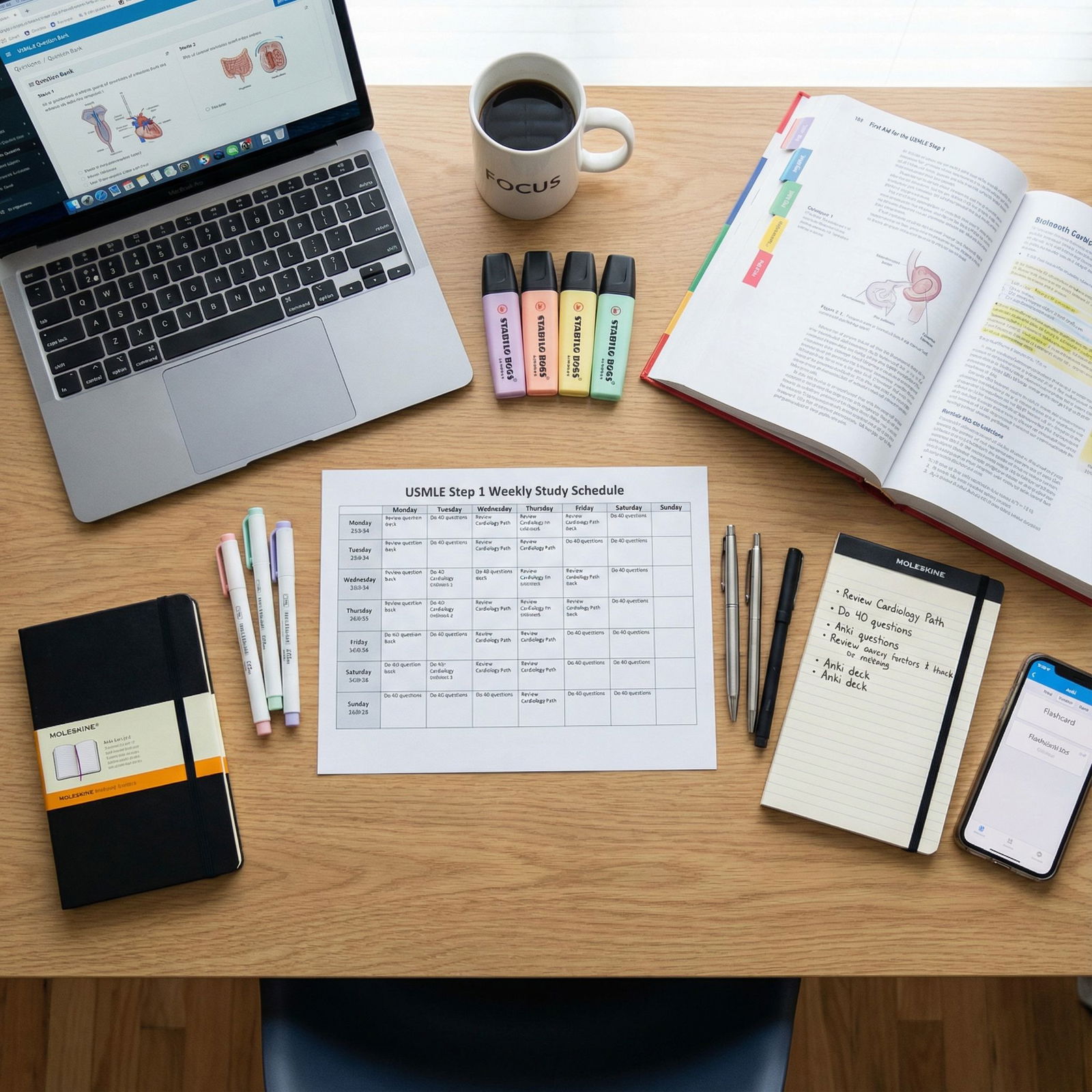
Building a Weekly Study Template
A structured daily/weekly plan helps maintain consistency and prevents last-minute cramming.
Sample Daily Schedule (Dedicated Period)
Morning (3–4 hours)
- Systems- or subject-based review (e.g., cardiovascular physiology + pathology)
- Use videos, notes, and First Aid-style summaries
Midday (3–4 hours)
- One full block of 40 timed question bank questions (e.g., UWorld)
- Immediate review of explanations
Evening (1–2 hours)
- Anki reviews (spaced repetition)
- Targeted review of missed questions and weak topics
Incorporate productivity methods such as:
- Pomodoro Technique:
- 25 minutes focused work + 5 minutes break
- After 4 cycles, take a 15–30 minute break
- Time blocking:
- Assign fixed blocks for Qbank, Anki, content review, and rest
Customizing Your Timeline
Factors that should guide your schedule:
- Baseline knowledge: Use a diagnostic NBME or school practice exam early.
- School curriculum: Integrate Step 1 prep with your current block (e.g., focus on renal Step material during your renal block).
- Learning style: Some students need more repetition; others benefit from more questions earlier.
The most important principle: Consistency beats intensity. It is better to study 4–6 productive hours daily for months than to attempt 12–14 unfocused hours for a few weeks.
Leveraging High-Yield Medical Resources the Right Way
The Step 1 world is saturated with Medical Resources, but more is not always better. Mastering a small set of high-yield tools is far superior to sampling every new app or book.
Core High-Yield Resources for Step 1
First Aid for the USMLE Step 1 (or equivalent comprehensive review book)
- Functions as a roadmap to what’s testable
- Best used to:
- Annotate with your own notes from other sources
- Quickly cross-reference topics while doing questions
- Avoid trying to “memorize First Aid cover to cover” in one pass; integrate it gradually.
UWorld Question Bank
- Widely considered the gold standard Qbank
- Strengths:
- Questions mimic USMLE style and difficulty
- Explanations are mini-lessons in pathophysiology, differential diagnosis, and test-taking skills
- Use UWorld as a learning tool, not just an assessment:
- Read explanations carefully, even for correct answers
- Study tables, diagrams, and learning points
Sketchy (Microbiology, Pharmacology, Pathology) or equivalent visual mnemonics
- Ideal for:
- Remembering long lists of organisms, drug names, and mechanisms
- Encoding details visually and associatively
- Reinforce Sketchy with:
- Regular flashcards
- Occasional rewatching of tough topics
- Ideal for:
Pathoma / Goljan-style Pathology resources
- Excellent for building pathophysiology understanding
- Use early and often, especially if pathology is a weak area
Spaced Repetition Apps (Anki)
- The backbone of long-term retention
- Great for:
- Rapid recall of facts, mechanisms, formulas
- Keeping older material fresh while you move on to new systems
Avoiding Resource Overload
Select:
- 1 primary review book
- 1 main question bank (UWorld) and possibly a secondary one later
- 1 main flashcard ecosystem (popular Step 1 decks or your own)
- 1–2 supplemental resources (e.g., Sketchy, Pathoma)
Resist the urge to constantly add new resources. Depth with a few > superficial exposure to many.
Active Learning: Question Banks, Explanations, and Reasoning
Passive reading is not enough for USMLE Step 1. The exam tests application, integration, and reasoning. Active learning is where you convert information into usable knowledge.
How to Use Question Banks Strategically
Start Early
- Begin doing questions during second year or earlier, even if in “tutor mode.”
- Early exposure:
- Teaches how questions are written
- Reveals your weak areas
Decide on Mode: Timed vs Tutor
- Early phase:
- Use tutor mode, untimed, focusing on understanding
- Later phase (dedicated):
- Shift to timed blocks of 40 questions to:
- Build endurance
- Train time management
- Mimic the real exam
- Shift to timed blocks of 40 questions to:
- Early phase:
System-Based vs Random Blocks
- System-based early on (e.g., only cardio questions after cardio block)
- Random blocks in the last 4–6 weeks to simulate the real test, which is integrated
Mastering the Review Process
After each block:
- Review every question (correct and incorrect).
- For each question, ask:
- Why is the correct answer right?
- Why are the other options wrong?
- Create quick notes or flashcards on:
- Recurrent patterns (e.g., “young woman + fatigue + malar rash = SLE”)
- Misconceptions (“I always confuse SIADH vs CSW; here’s the difference”)
- Track errors in a log:
- Content gaps (didn’t know the concept)
- Reasoning errors (misread question, jumped to conclusion)
- Test-taking errors (time pressure, changed right answer to wrong)
Over time, this approach not only boosts content knowledge but also sharpens clinical reasoning and pattern recognition.
Harnessing Anki and Spaced Repetition for Long-Term Retention
Spaced repetition is one of the most powerful, evidence-based learning strategies—especially for dense content like pharmacology and microbiology.
Best Practices for Anki in Step 1 Prep
Choose or Build a High-Quality Deck
- Options:
- Pre-made Step 1 decks (e.g., well-known community decks)
- Customized decks from your lectures and Qbank errors
- Avoid making thousands of new cards in one sitting; prioritize high-yield facts you tend to forget.
- Options:
Card Design Matters
- Use cloze deletions (fill-in-the-blank) and simple Q&A
- One fact per card (avoid long paragraphs)
- Aim for active recall, not recognition (avoid giving too many hints)
Review Daily Without Fail
- Treat Anki as a non-negotiable habit
- It’s okay to adjust the volume:
- During heavy content days, do fewer new cards
- But always clear your due reviews to keep the algorithm effective
Integrate With Other Resources
- After UWorld blocks, add cards on:
- Concepts you missed
- Subtle pathophysiology points
- After Sketchy videos, add or unsuspend related cards
- After UWorld blocks, add cards on:
Spaced repetition ensures that the information you learn in September is still accessible when you sit for Step 1 months later.
Collaborative Learning: Study Groups, Teaching, and Accountability
Studying for Step 1 can feel isolating, but you don’t have to (and shouldn’t) do it entirely alone.
Benefits of Peer Collaboration
- Deeper Understanding Through Teaching
- Explaining glycolysis, renal physiology, or the complement system to a friend clarifies your own understanding and reveals gaps.
- Exposure to New Study Techniques
- Study partners may introduce you to efficient note-taking, different question strategies, or underrated resources.
- Motivation and Accountability
- Scheduled group sessions create external deadlines and help you stick to your plan.
Structuring Effective Study Sessions
To keep group study from becoming social time:
- Set a clear agenda before each session:
- “Today we’re doing 20 cardio questions together and reviewing high-yield murmurs.”
- Limit groups to 2–4 people to stay focused.
- Use time limits (e.g., 90-minute sessions) with short breaks.
- Rotate roles:
- One person leads question reading
- One explains the correct answer
- Others clarify related concepts
If a group setting becomes distracting or stressful, it’s okay to step back. Collaborative learning should enhance—not hinder—your productivity.
Protecting Your Mental Health and Managing Stress During Step 1 Prep
USMLE Step 1 preparation is not just an academic challenge; it’s also a test of resilience. Burnout, anxiety, and self-doubt are common. Prioritizing Mental Health is not optional—it’s central to sustained performance.
Common Mental Health Challenges During Step 1 Prep
- Feeling guilty when not studying
- Comparing yourself negatively to classmates
- Fear of failing or “not being good enough” for your desired specialty
- Physical symptoms of stress:
- Insomnia
- Headaches
- GI upset
- Fatigue and irritability
Evidence-Based Stress Management Strategies
Schedule Rest Intentionally
- At least one half-day off per week
- Protected sleep (7–9 hours) nightly
- Micro-breaks during study blocks to prevent cognitive fatigue
Regular Physical Activity
- 20–30 minutes of:
- Brisk walking
- Jogging
- Home workouts
- Yoga or stretching
- Exercise improves:
- Mood
- Concentration
- Sleep quality
- 20–30 minutes of:
Mindfulness and Relaxation Techniques
- Brief daily practices (5–10 minutes):
- Deep breathing
- Guided meditation apps
- Progressive muscle relaxation
- Use these during:
- Start of day to center yourself
- Before bed to improve sleep
- Brief daily practices (5–10 minutes):
Healthy Boundaries With Social Media
- Limit time on online forums where score comparisons and panic are common.
- Curate your feeds to follow positive, evidence-based Medical Exam Preparation accounts rather than anxiety-provoking content.
Seek Professional Help When Needed
- If you’re noticing:
- Persistent low mood
- Loss of interest in activities
- Panic attacks
- Thoughts of self-harm
- Reach out to:
- School counseling services
- A therapist or psychiatrist
- Trusted mentors or advisors
- If you’re noticing:
Your well-being is more important than any exam. A balanced, healthy brain learns and performs better.
Simulating Test Conditions and Mastering Exam-Day Strategy
Content mastery alone is not enough; you must also learn how to take the exam.
Full-Length Practice Exams
Use NBME practice exams and/or UWorld self-assessments to:
- Gauge readiness and identify weak areas
- Build stamina for a 7-hour test day
- Practice pacing and break timing
How to Simulate Real Conditions
- Take the exam:
- At the same time of day as your actual test
- In a quiet environment
- With no phone and only allowed breaks
- Follow the same break schedule you plan to use on test day.
- Afterward:
- Review missed questions and borderline guesses
- Adjust your final weeks’ study plan based on patterns
Developing a Break and Nutrition Plan
Plan breaks as strategically as you plan your study schedule:
- Most students use:
- Short breaks (5 minutes) after every 1–2 blocks
- One longer break (15–20 minutes) mid-day
- Pack:
- High-protein snacks (nuts, yogurt, cheese, protein bars)
- Light carbs (fruit, whole-grain crackers)
- Plenty of water
- Avoid:
- Heavy, greasy, or very sugary foods that can cause energy crashes
Final Review Period: High-Yield, Focused, and Data-Driven
In the last 3–4 weeks before your USMLE Step 1 exam, shift into high-yield consolidation mode.
Priorities for the Final Weeks
Target Weak Areas Aggressively
- Use recent NBME and Qbank performance data:
- Identify lowest-performing systems (e.g., renal, endocrine)
- Identify weak disciplines (e.g., biostatistics, behavioral science)
- Dedicate extra blocks specifically to those topics.
- Use recent NBME and Qbank performance data:
Refine High-Yield Content
- Rapid cycles through:
- First Aid or equivalent
- Condensed pathology summaries
- High-yield tables and algorithms
- Use Anki daily to keep facts sharp.
- Rapid cycles through:
Practice Under Timed Conditions
- Continue doing full 40-question timed blocks.
- Take at least 1–2 additional full-length practice exams.
The Final Week
- Do not try to learn everything from scratch.
- Focus on:
- Light review of your highest-yield notes and flashcards
- A few well-selected question blocks per day
- Maintaining sleep, nutrition, and Mental Health
Aim to enter exam day feeling steady and prepared, not exhausted.

Exam Day Preparation: Logistics, Mindset, and Execution
The Night Before
- Do:
- Pack your bag (ID, confirmation, snacks, water, light sweater)
- Confirm your test center location and travel route
- Set 2 alarms and aim for 7–8 hours of sleep
- Avoid:
- Heavy cramming late into the night
- New, unfamiliar resources
- Excessive caffeine or energy drinks
Morning of the Exam
- Eat a balanced breakfast you know your body tolerates well
- Example: oatmeal + fruit + peanut butter, or eggs + toast + yogurt
- Dress in comfortable layers (testing centers can be cold or warm).
- Arrive at least 30–45 minutes early.
During the Exam
- Use your break strategy as practiced.
- For each question:
- Read the last line first (the actual question) to set your focus.
- Skim the stem, identify:
- Age, sex
- Key symptoms and timing
- Relevant labs/imaging
- Eliminate clearly wrong options; then choose the best remaining.
- If stuck:
- Make your best educated guess.
- Mark the question if time permits a later revisit; move on to avoid time crunch.
After the Exam: Recovery, Reflection, and Moving Forward
Once the exam is over:
Give Yourself Permission to Rest
- Take at least a few days off:
- Sleep in
- See friends/family
- Resume hobbies
- You’ve completed a huge milestone.
- Take at least a few days off:
Resist Obsessive Post-Exam Analysis
- Avoid trying to recall or discuss specific questions (this is also against exam policies).
- Avoid online forums that fuel anxiety.
Reflect Constructively (Later)
- Once your result is released, reflect on:
- What worked in your Study Strategies
- What you’d change for Step 2 CK prep
- Use this knowledge to optimize your future exam preparation, not to dwell on regret.
- Once your result is released, reflect on:
Regardless of outcome, Step 1 is only one part of your journey. Your clinical performance, Step 2 CK, letters of recommendation, research, and professionalism also heavily influence your residency prospects.
Frequently Asked Questions (FAQ)
1. How long should I study for USMLE Step 1?
Most students spend 4–6 months in earnest Medical Exam Preparation, with:
- A lighter, integrated phase while taking systems courses
- A dedicated period of about 4–10 weeks focused almost entirely on Step 1
The exact duration depends on:
- Your baseline knowledge
- How rigorous your medical school curriculum is
- Personal responsibilities and learning speed
Use an early practice test to gauge how much time you might need.
2. Is UWorld alone enough to pass USMLE Step 1?
UWorld is an outstanding resource and, for many, forms the core of USMLE Step 1 prep. However, relying on only UWorld can leave gaps. An effective strategy usually includes:
- UWorld for questions and explanations
- A comprehensive review book (e.g., First Aid or equivalent)
- Spaced repetition (Anki) for memory-heavy subjects
- Optionally, visual resources like Sketchy or Pathoma for tough areas
Think of UWorld as your main teacher, not your only one.
3. How many practice questions should I aim to complete?
Many successful students aim to:
- Complete all of UWorld once, often 2,000+ questions
- Some do a second pass, focusing on prior incorrects or weak systems
- Optionally use a second Qbank (e.g., Amboss, Kaplan) if time allows
More important than the raw number is how you review and learn from each block. It’s better to deeply learn 1,500 questions than to rush through 3,000 with shallow review.
4. What should I do if I feel burnt out or my anxiety is overwhelming?
Burnout and anxiety are common and valid experiences during Step 1 prep. Consider:
- Scaling back study hours temporarily to a sustainable level
- Scheduling regular breaks, days off, and exercise
- Incorporating brief mindfulness or relaxation practices
- Talking to:
- A trusted mentor or faculty advisor
- Counseling or mental health services at your institution
- A therapist or physician if symptoms are severe or persistent
Protecting your Mental Health is critical for both your performance and your long-term well-being as a future physician.
5. How can I focus on weak areas as the exam approaches?
Use data from:
- NBME practice exams
- UWorld performance and analytics
Steps:
- Identify lowest-performing systems and disciplines.
- Schedule focused blocks of:
- Subject-specific question sets
- Rapid review from First Aid or equivalent
- Anki cards targeting those weak topics
- Re-test those topics with new question blocks a few days later to confirm improvement.
This targeted, data-driven approach ensures that your final weeks are spent where they matter most.
By combining a realistic study schedule, strategic use of high-yield Medical Resources, active learning through question banks, and consistent attention to your Mental Health, you can approach USMLE Step 1 with confidence. This exam is challenging, but it is also a skill you can train for—step by step, question by question, day by day.