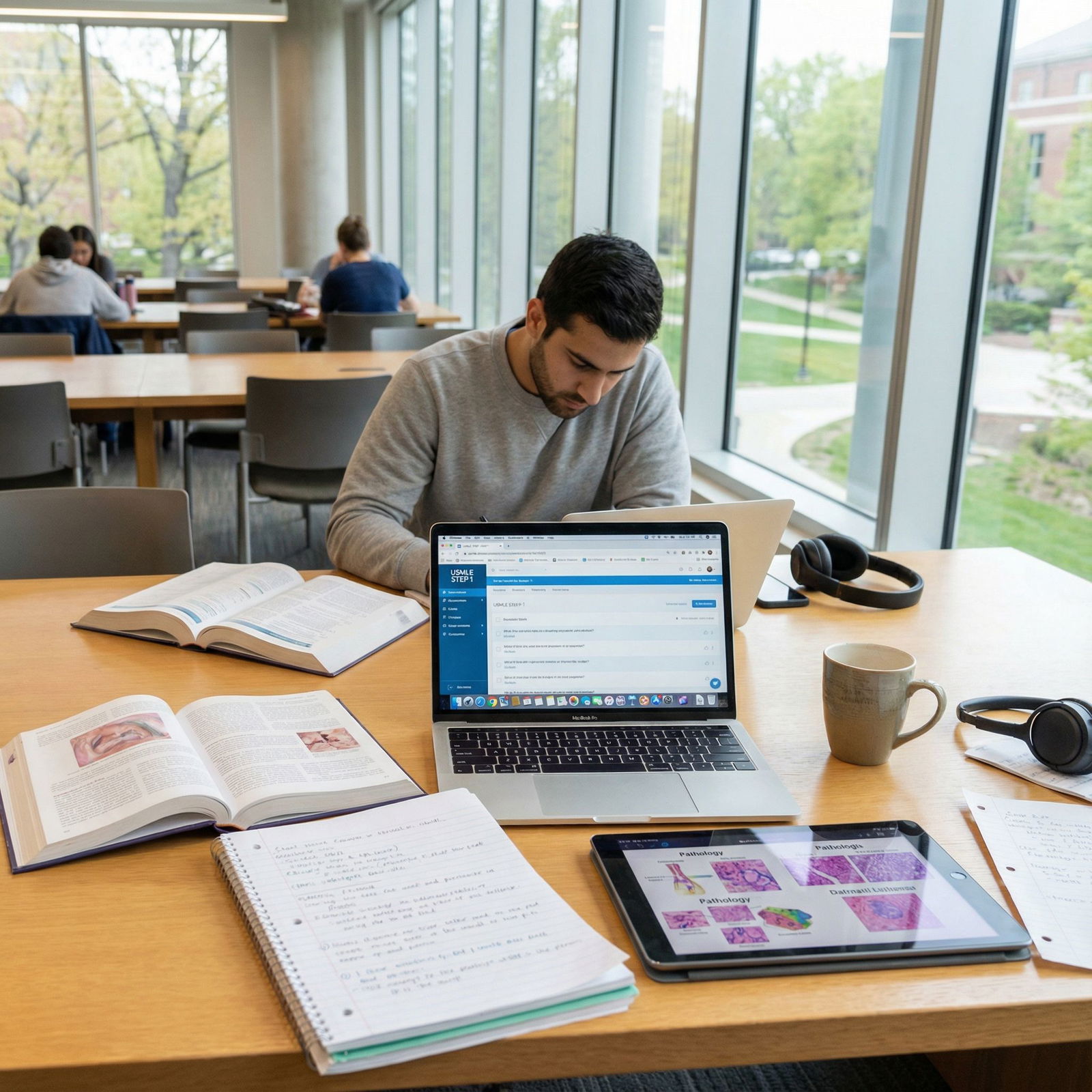
Top 10 Essential Study Resources for High‑Yield USMLE Step 1 Prep
Preparing for the USMLE Step 1 is one of the most intense and defining phases of medical education. Even with the exam now pass/fail, your performance still influences how confidently you enter clerkships, your readiness for Step 2, and ultimately your residency competitiveness. The sheer volume of content, especially in core areas like Pathology, Pharmacology, and Physiology, can be overwhelming without a focused, resource-efficient plan.
This guide walks through the top 10 USMLE Step 1 study resources you truly cannot afford to miss—plus how to use them strategically so you’re not just collecting materials, but actually learning efficiently. The emphasis is on integrating resources, building a sustainable routine, and using evidence-backed methods like spaced repetition and active recall.
1. First Aid for the USMLE Step 1: Your Central Roadmap
First Aid for the USMLE Step 1 remains the foundational text for almost every medical student’s exam preparation. Think of it as your master outline of what Step 1 expects you to know.
Why First Aid Still Matters in a Pass/Fail Era
- High-Yield Organization: Condenses vast basic science and clinical correlations into systematically arranged, exam-relevant summaries.
- Board-Style Focus: Emphasizes “testable” concepts instead of exhaustive textbook-level detail.
- Integrative Tables and Charts: Links pathology, pharmacology, and physiology to clinical vignettes in a quick-reference format.
- Consensus Resource: Almost every study schedule, lecture series, and question bank cross-references First Aid, making it easy to integrate with other materials.
How to Use First Aid Effectively
Use It as a Framework, Not a Standalone Resource
- Treat First Aid as your “table of contents” for Step 1.
- Pair each section with a primary learning tool (e.g., Boards and Beyond or Pathoma for Pathology, UWorld for application).
Annotate, Don’t Overwrite
- Add key insights from question banks (especially UWorld) or video lectures into the margins.
- Mark “weak spots” with symbols or colors (e.g., red for weak, green for strong).
Spiral Review
- Do multiple passes: first a skim during pre-clinical courses, then deeper reviews in your dedicated study period.
- In the final 2–4 weeks, aim to review all of First Aid at least once thoroughly.
2. UWorld Question Bank: The Gold Standard for Exam Practice
No modern USMLE Step 1 prep plan is complete without UWorld. It is widely regarded as the most exam-realistic question bank available and a core pillar of smart exam preparation.
Why UWorld Is Indispensable
- USMLE-Like Questions: Mirrors NBME style, wording, and difficulty, especially for multi-step reasoning.
- Exceptional Explanations: Each question comes with detailed rationales, high-yield images, and mini-tutorials—critical for deeper understanding.
- Performance Analytics: Topic-wise breakdown helps you see where you’re consistently missing questions so you can adjust your study focus.
- Teaches Test-Taking Strategy: Improves your ability to handle long stems, interpret lab values, and eliminate distractors.
Strategic UWorld Usage
Start Early—But Thoughtfully
- Begin doing blocks during your second year, even slowly (e.g., 10–20 questions/day), especially in courses like Pathology and Pharmacology.
- During dedicated, ramp up to 40–80 questions/day depending on your schedule.
Timed, Random Blocks During Dedicated
- Use timed random blocks to simulate test conditions—this builds mental stamina and adaptability.
- Aim to complete at least one full pass of the Qbank before your test.
Learn From Explanations, Not Just Scores
- For every question—right or wrong—read the full explanation, look at images, and note “learning points” into Anki or First Aid.
- Pay special attention to why other answer choices are incorrect; this mimics how Step 1 expects you to reason.
Review Strategy
- For 40-question blocks, many students spend 1.5–2x as long reviewing as they did completing the block.
- Create a system: mark key concepts as “add to Anki,” “review in Pathoma,” or “weak area—needs full review.”

3. Pathoma: High-Yield Pathology Mastery
Pathology is the backbone of the USMLE Step 1, and Pathoma by Dr. Hussain Sattar is one of the most efficient tools to master it. It bridges the gap between basic science mechanisms and clinical disease understanding.
Why Pathoma Is Essential for Pathology
- Conceptual Clarity: Explains not just what happens in disease, but why, connecting mechanism to presentation.
- Board-Relevant Emphasis: Focuses on the most commonly tested conditions and pathophysiologic principles.
- Integrated Book + Video Format: The small textbook aligns perfectly with the video series for a cohesive learning experience.
How to Integrate Pathoma into Your Study Plan
Use Early and Often
- Watch relevant sections alongside your medical school pathology course.
- Revisit the entire series once during your dedicated Step 1 prep, especially high-yield systems (e.g., cardiovascular, renal, hematology-oncology).
Active Learning While Watching
- Follow along in the book, underlining key phrases and annotating with extra details from lectures or questions.
- Pause and attempt to predict explanations or associations before Dr. Sattar states them.
Link to UWorld and Anki
- When you miss a pathology question in UWorld, identify if Pathoma has a corresponding section and re-watch it.
- Turn “Dr. Sattar’s phrases” into flashcards—his language is often easy to remember and exam-aligned.
4. Sketchy Medical: Visual Learning for Micro and Pharm
For many students, Microbiology and Pharmacology are some of the hardest domains to memorize. Sketchy Medical uses visual mnemonics and narrative scenes to make them both highly memorable.
Why Sketchy Works
- Story-Based Memory: Each pathogen or drug class becomes a detailed visual story packed with mnemonics.
- Long-Term Retention: Once embedded, Sketchy images are notoriously “sticky”—years later, you’ll still recall them in clinical rotations.
- Great for High-Memorization Disciplines: Especially powerful for bugs, drugs, and certain biochemistry topics.
Practical Tips for Using Sketchy
Pair With Traditional Resources
- Watch Sketchy Micro videos as you cover microbiology in class or during early Step prep.
- Use Sketchy Pharm similarly when going through Pharmacology sections in First Aid or Boards and Beyond.
Reinforce With Spaced Repetition
- Use pre-made Anki decks based on Sketchy images to systematically review scenes.
- When you see a micro/pharm question in UWorld, consciously recall the relevant Sketchy scene—this builds fast retrieval.
Target Your Weak Areas
- If you consistently miss fungal infections or autonomic drugs, prioritize those specific Sketchy modules and review them more frequently.
5. Anki: Spaced Repetition Engine for Long-Term Retention
Anki is not a Step 1–specific resource, but it is a learning method that dramatically amplifies your ability to memorize and retain information over time using spaced repetition and active recall.
Why Anki Is a Game-Changer
- Evidence-Based Learning: Spaced repetition aligns with well-established memory science to prevent forgetting.
- Highly Customizable: Create your own cards or use popular Step 1 decks (e.g., AnKing) adapted to First Aid, Pathoma, Sketchy, and UWorld.
- Daily Progress, Even on Busy Days: Even during heavy clinical or exam weeks, a 30–60 minute Anki session helps maintain your Step 1 foundation.
Anki Best Practices for Step 1
Start Early in Medical School
- Begin Anki during your pre-clinical courses and continue steadily through your dedicated Step 1 prep.
- Consider using a well-curated deck rather than building everything from scratch to save time.
Consistency Over Intensity
- Aim for daily reviews, even if you only do a smaller number of cards. Regularity is more important than occasional marathons.
- Set realistic maximums to prevent burnout (e.g., 200–350 reviews/day, depending on your schedule).
High-Quality Cards Only
- Make cards that require thinking, not just recognition. Use cloze deletions (fill-in-the-blank) and question-answer formats.
- Avoid adding every minor detail—focus on concepts you tend to forget or that are repeatedly tested.
Integrate With Your Other Resources
- When reviewing UWorld, add cards for pathophysiology, classic presentations, or “gotcha” distinctions, not the entire explanation.
- Link cards internally to First Aid page numbers or Pathoma sections for quick reference.
6. Goljan’s Rapid Review Pathology: Deep Dive for Serious Path Learners
Although used less universally than Pathoma today, Goljan’s Rapid Review Pathology still holds value—particularly for students who want a deeper understanding of disease mechanisms and correlations.
When Goljan Adds Value
- Bridging Mechanisms and Clinical Application: Excellent for understanding why lab values change or how pathophysiology translates into classic exam vignettes.
- Supplementing Pathoma: For students who’ve completed Pathoma and want more detail in tricky areas like renal, heme/onc, or immunology.
- Foundation for Future Exams: A strong pathology base also supports Step 2 CK and shelf exams.
Smart Ways to Use Goljan
Targeted Reading, Not Cover-to-Cover
- Use the index and your weak areas to choose which chapters to read.
- Focus on topics where you consistently miss questions (e.g., glomerulonephritides, anemias, vasculitides).
Integrate with First Aid and UWorld
- After a set of UWorld questions on a weak system, review the corresponding Goljan section for a more detailed conceptual reset.
- Add only the most high-yield details to your First Aid margins or Anki.
Use Audio if Available
- Some older audio lectures by Dr. Goljan circulate among students; these can be useful during commutes or workouts to reinforce big-picture concepts.
7. Online MedEd: Conceptual Foundations and Clinical Bridging
Online MedEd (OME) is best known for Step 2 and clerkship preparation, but it can be a strong supplemental resource for conceptual understanding, especially if you struggle with transforming basic science into clinical thinking.
Why Online MedEd Can Still Help for Step 1
- Clear Explanations: Breaks down complex topics with straightforward frameworks and clinical reasoning.
- Bridges Basic and Clinical Science: Particularly useful as you approach the end of Step 1 prep and begin thinking about clerkships.
- Free Core Content: A substantial amount of content is available at no cost.
How to Use OME Strategically
Fill Concept Gaps
- If you find a system confusing (e.g., acid–base disorders, heart failure, shock), watch OME videos for a clearer big-picture understanding.
- Then return to UWorld to re-test those concepts.
Use as a Secondary Resource
- It should not replace core Step 1–focused tools like First Aid, UWorld, or Pathoma, but can clarify difficult topics in a different teaching style.
Note-Taking and Review
- Create concise, organized notes or concept maps from OME videos.
- Review these notes alongside First Aid when doing final pass reviews.
8. Boards and Beyond: Comprehensive Video Companion to First Aid
Boards and Beyond (B&B) is one of the most popular video resources specifically designed for USMLE Step 1. Many students treat it as their primary learning tool during pre-clinical years and early dedicated.
Strengths of Boards and Beyond
- Conceptually Driven: Explains the “why” behind facts, improving understanding and recall.
- Aligned With First Aid: Makes it easy to annotate First Aid alongside the videos.
- Systematic and Thorough: Covers almost every Step 1 topic in a structured, logical manner.
Effective Strategies for B&B Usage
Use as a Course Companion
- Watch B&B videos in parallel with your school lectures for systems like cardio, renal, respiratory, and neuro.
- Immediately follow videos with associated Anki cards and/or UWorld questions.
During Dedicated Period
- Prioritize weaker systems—don’t try to rewatch the entire library if time is short.
- Use increased playback speed (1.25–1.5x) for review.
Active Engagement
- Pause frequently to answer the question, “If this were a UWorld question, how might it be asked?”
- After each topic, do a small set of related questions to cement learning.
9. COMBANK (For Osteopathic Students): COMLEX-Focused Qbank
For osteopathic students, COMBANK (now Rosh/TrueLearn COMBANK, depending on product) provides a question bank tailored to COMLEX Level 1, which has its own unique emphasis.
Why COMBANK Matters for DO Students
- COMLEX-Style Vignettes: Aligns with NBOME testing style, including emphasis on osteopathic principles and manipulative treatment (OMM).
- Holistic and OMM Coverage: Includes OPP content that is not emphasized in USMLE-focused resources.
- Performance Metrics: Similar to UWorld, it provides topic analysis and progress tracking.
How to Balance COMBANK With USMLE Resources
Use UWorld Plus COMBANK if Taking Both Exams
- Many DO students preparing for Step 1 + COMLEX Level 1 will use UWorld as the primary basic science Qbank, then COMBANK for COMLEX-specific practice.
Dedicated OMM Practice
- Set aside time to do COMBANK questions specifically in OMM categories.
- Supplement with an OMM review book if needed.
Timing Strategy
- Complete a major portion of UWorld first to solidify core sciences, then layer COMBANK for exam-style adaptation and OMM.
10. Peer Learning Networks: Leveraging Community and Accountability
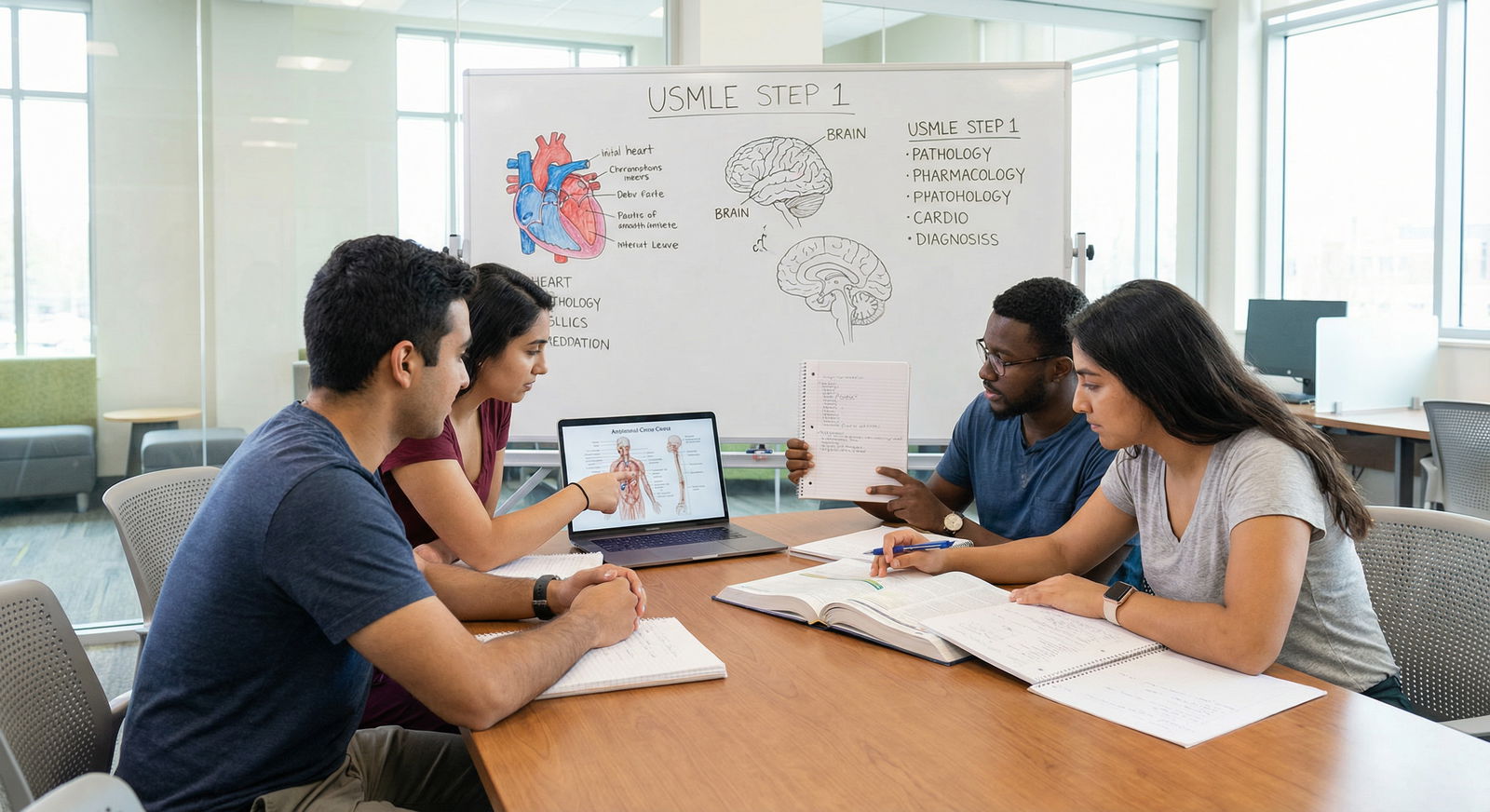
Even in a world of digital study platforms, peer learning remains a powerful tool. Study groups and online communities can provide structure, motivation, and new ways of understanding challenging concepts.
Why Peer Networks Help Step 1 Prep
- Exposure to Different Perspectives: Your peers may explain a biochemistry pathway or pathology concept in a way that finally “clicks.”
- Accountability and Routine: Scheduled group sessions help maintain consistency, especially during long dedicated periods.
- Resource Sharing and Strategy Tips: You can learn from others’ experiences with study schedules, resource combinations, or exam timing.
Ways to Use Peer Learning Effectively
Structured, Not Chaotic
- Define the purpose of your study group: questions only, content teaching, or review?
- Set specific goals for each meeting (e.g., review all cardiac pathology, quiz each other on immunology, go through 10 tough questions).
Teach to Learn
- Take turns “teaching” topics. Teaching forces you to organize and articulate information clearly—a powerful learning method.
- Use whiteboards or shared digital documents to sketch out mechanisms.
Avoid Resource Overload
- Decide as a group which core resources you’ll use, instead of each person pushing another new tool.
- Don’t let group time devolve into comparing anxiety or study schedules; keep it exam-focused.
Putting It All Together: Building a Coherent Step 1 Study Plan
Collecting resources is easy; using them in a coordinated way is the real challenge. Here is a sample way to integrate these tools across medical school and your dedicated study period.
During Pre-Clinical Years
Core Content Learning:
- Use Boards and Beyond + Pathoma alongside your school lectures.
- Annotate First Aid lightly as topics are covered.
Spaced Repetition:
- Use Anki daily for facts, mechanisms, and high-yield disease associations.
- Incorporate Sketchy for Micro and Pharm as those courses occur.
Early Question Exposure:
- Do small sets of UWorld questions in relevant systems as you complete them (untimed, tutor mode).
During Dedicated Study (6–10 Weeks Typical)
Daily Structure (Example):
- 40–80 UWorld questions (timed, random) + detailed review.
- 2–4 hours of First Aid/Pathoma/B&B review targeting weak systems.
- 30–60 minutes of Anki reviews.
- Optional: COMBANK for DO students, focused on OMM.
Weekly Structure:
- Aim to finish all of UWorld once, with marked questions for second review.
- System-based deep dives on your weakest areas (using Pathoma, Goljan, B&B).
- One or two NBME practice exams to assess readiness and identify remaining gaps.
Final 1–2 Weeks:
- High-yield review of First Aid, Pathoma highlights, and weak systems.
- Practice exams and short, focused UWorld blocks.
- Reduce cognitive load the last 48 hours—light review, rest, and sleep.
FAQ: USMLE Step 1 Study Resources and Preparation
Q1: With so many resources, how many should I realistically use for Step 1?
Most successful students rely on a core bundle rather than everything available. A commonly effective combination is:
- First Aid (roadmap),
- UWorld (primary Qbank),
- One main video resource (Boards and Beyond or Pathoma for Pathology-heavy learning),
- Anki (spaced repetition),
- Sketchy for Micro/Pharm.
Add others (Goljan, OME, COMBANK) only if they address specific needs or exam types.
Q2: When should I start using UWorld for Step 1 prep?
You can start lightly in second year, doing topic-based questions as you complete systems in school. The bulk of your UWorld usage will be during your dedicated period, where timed, random blocks are essential for exam readiness.
Q3: How many hours per day should I study during dedicated Step 1 prep?
Most students study 6–10 hours per day during dedicated, depending on their baseline and timeline. What matters more than the exact duration is:
- A structured plan (scheduled blocks and review),
- Consistency (5–7 solid study days per week),
- Preserving sleep, exercise, and breaks to maintain performance.
Q4: Is Anki necessary, or can I do well without it?
You can succeed without Anki, but for many students, especially those who struggle with memorization-heavy content (e.g., Micro, Pharm, Biochem), Anki or another spaced repetition method makes retention much more efficient. If you don’t love Anki, consider:
- Smaller, targeted decks rather than huge ones, or
- Another flashcard system that still emphasizes spaced review.
Q5: How does Step 1 being pass/fail change my resource choices?
Although Step 1 is now pass/fail, the core challenge and content remain the same. The main changes are:
- You may prioritize sustainable, concept-focused learning over chasing extremely high practice scores.
- Strong Step 1 foundations still directly support Step 2 CK and clerkships, which have major residency implications.
Your resource choices remain similar—you might simply redistribute stress and effort to ensure you’re also preparing early for clinical performance.
With a focused set of high-yield resources, a realistic schedule, and deliberate practice, you can transform Step 1 from an overwhelming hurdle into an organized, achievable milestone in your medical education. The key isn’t having every resource—it’s knowing how to use the right ones well.