
Preparing for the USMLEStep1 is one of the defining experiences of medical school. The breadth of material, the shift toward integrated, clinical reasoning questions, and the pressure of a high‑stakes exam can easily feel overwhelming. Yet, this is also an area where modern InteractiveLearning tools can give you a significant edge.
Rather than relying solely on textbooks and passive review, today’s best StudyResources for ExamPreparation use quizzes, spaced repetition, videos, and case-based learning to help you truly understand and retain what you study. This guide walks through the most effective interactive online resources for Step 1, how to integrate them into your MedicalEducation, and specific, practical strategies for getting the most out of each platform.
Why Interactive Learning Supercharges USMLE Step 1 Preparation
Interactive learning means you are actively doing something with the information—answering questions, drawing connections, recalling facts, or making clinical decisions—rather than just reading or listening.
How InteractiveLearning Improves Retention and Performance
Interactive tools support Step 1 success in several key ways:
Active recall
Questions, flashcards, and case vignettes force you to retrieve information from memory, which strengthens long-term retention far more than rereading.Spaced repetition
Algorithms that re-show you material just before you’re likely to forget it (like Anki) are ideal for the dense, detail-heavy topics tested on USMLEStep1.Contextual learning
Case-based questions (e.g., UWorld, AMBOSS) require you to use knowledge in realistic clinical scenarios, mimicking the current style of Step 1 questions and future clinical practice.Multimodal learning
Videos, images, diagrams, and audio explanations help you learn the same material through different sensory pathways. A tough renal pathology concept may finally click after you see it in a video, tackle related questions, and then review high-yield notes.Immediate feedback and error correction
Interactive platforms show you right away when you’re wrong and why. This short feedback loop helps prevent repeated errors and improves metacognition (knowing what you do and don’t know).
Benefits Specific to Step 1
Thoughtfully used, interactive resources can help you:
- Build a strong foundation in pathophysiology, pharmacology, and mechanisms—still critical despite Step 1 becoming pass/fail.
- Develop exam-style thinking and comfort with NBME-style question stems.
- Track your performance trends and identify weak systems or disciplines early.
- Maintain engagement and reduce burnout by varying your study format.
The key is not just to collect resources, but to deploy them strategically. The following sections break down the most valuable tools and how to integrate them into a high-yield, efficient Step 1 study plan.
Core Interactive Question Banks for Step 1 ExamPreparation
Well-designed question banks are the backbone of modern USMLEStep1 prep. They don’t just test you—they teach you, if used correctly.
1. UWorld: The Gold Standard Qbank
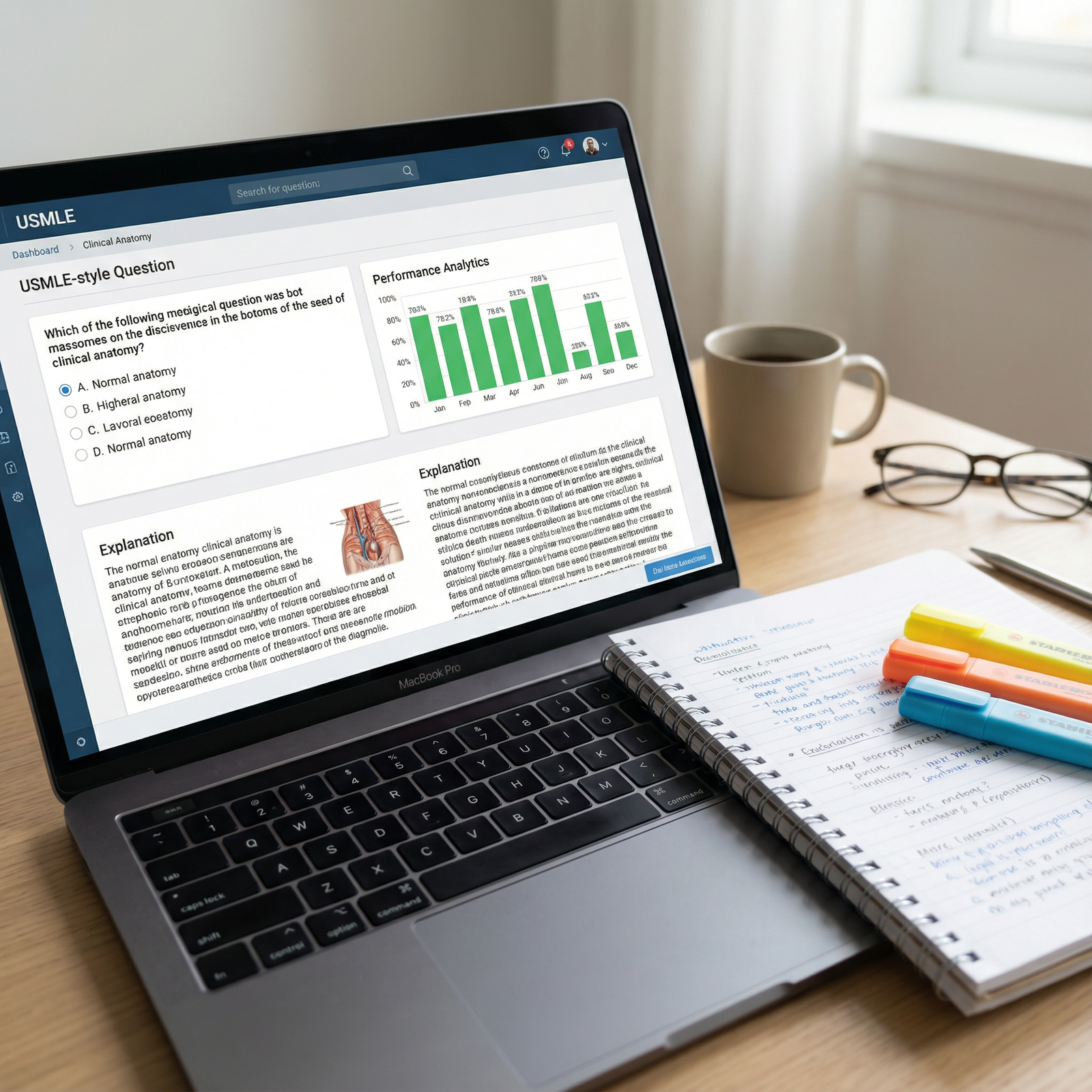
UWorld is considered the benchmark for USMLEStep1 question banks because its questions closely resemble the style, length, and complexity of the real exam.
Key Features
Extensive, exam-style question bank
Thousands of questions mirroring NBME style with integrated multi-system vignettes.High-quality explanations
Each question includes detailed rationales for every answer choice—correct and incorrect—plus helpful tables and diagrams.Performance analytics
Track performance by subject and system, monitor progress over time, and benchmark against other users.Customizable test modes
Timed vs. tutor mode, system-based vs. mixed questions, adjustable number of questions per block.
How to Use UWorld Strategically
Integration, not cramming
Start using UWorld as soon as you’ve covered core material in a system during your preclinical courses. For example, after your cardio block, do cardio-focused UWorld blocks.Tutor mode early, timed mode later
In the early phase, use tutor mode: answer, then immediately read the explanation. Closer to your dedicated period and exam, shift to timed, random blocks to simulate real testing conditions.Study explanations like mini-lessons
Don’t rush. For each question:- Understand why the right answer is right.
- Understand why each wrong option is wrong.
- Add new facts or clarifications to your notes or Anki deck.
Aim for depth, not just volume
It’s better to do one block carefully and learn from it than rush through three blocks superficially.
2. AMBOSS: Integrated Library + Qbank for MedicalEducation
AMBOSS combines a robust question bank with a fully searchable, high-yield medical library, making it particularly powerful for MedicalEducation throughout preclinical and clinical years.
Key Features
Qbank with in-depth explanations
High-yield questions with integrated library links for deeper reading.Interactive medical library
Concise but detailed articles with diagrams, tables, and flowcharts covering Step 1–relevant content.Highlighting and difficulty tools
“Attending tips” and difficulty tags help you identify what’s especially high-yield or challenging.Customizable study plans
You can create topic-based sessions (e.g., “renal pathology,” “autoimmune diseases”) tailored to your curriculum pace.
How to Use AMBOSS Efficiently
Use library integration during question review
When you miss a question or feel shaky on a concept, click through to the library article and read the relevant sections. This is particularly useful for tricky pathophys or ethics topics.Leverage it during preclinical courses
When studying cardio physiology or nephrology, supplement your class notes with AMBOSS articles and related questions to deepen understanding.Use study plans during dedicated
Create daily blocks focusing on systems you’re weakest in, then mix in random blocks as you get closer to test day.
Visual and Story-Based Resources for High-Yield Memorization
Certain Step 1 topics—especially microbiology, pharmacology, and biochemistry—are memorization heavy. Interactive visual and story-based resources can dramatically improve recall.
3. SketchyMedical: Storytelling for Micro, Pharm, and Beyond
SketchyMedical uses illustrated, story-based videos to encode information into vivid visual scenes—particularly powerful for bugs and drugs.
Key Features
Animation-based “story scenes”
Each pathogen or drug class is represented by a memorable cartoon scene with multiple visual “symbol” cues.Integrated quizzes and review tools
Short questions and review cards reinforce key associations.Organized by system and subject
Easy to align with your school’s microbiology or pharmacology sequence.
High-Yield Strategies with Sketchy
Use Sketchy before heavy memorization
For example, watch Sketchy’s gram-positive cocci videos before diving into detailed micro notes. The stories give you a framework to hang details on.Active review after videos
After watching:- Write down the main associations from memory.
- Close your eyes and try to “see” the scene and recall each symbol.
- Then check with the Sketchy review section or your notes.
Pair with First Aid and questions
When doing micro/pharm UWorld or AMBOSS questions, consciously recall the corresponding Sketchy scene. This reinforces both the resource and the exam-style application.
4. YouTube: High-Yield Free Video Lectures
YouTube remains one of the most powerful free StudyResources for ExamPreparation, if used selectively.
Recommended Channel Types
Conceptual pathophysiology and mechanisms
Channels like MedCram or Ninja Nerd often explain complex topics (e.g., heart failure, acid-base) in clear, visual ways.Visual mnemonics and drawings
Creators like Armando Hasudungan provide hand-drawn videos for anatomy, physiology, and pathology.Exam strategy and Step 1 tips
Some channels focus specifically on USMLEStep1 strategy, timing, and mindset.
How to Use YouTube Without Getting Distracted
Curate a limited, high-yield playlist
Identify 10–20 of the most helpful videos for your weaker topics and save them in a “Step 1” playlist. Avoid random browsing during study time.Use videos as a supplement, not a primary source
Watch a video to clarify what you’ve already read in First Aid or lecture notes, then reinforce with question banks.Take brief, targeted notes
Focus on exam-relevant mechanisms, buzzwords, and connections, not every detail the video mentions.
Spaced Repetition and Digital Notes for Long-Term Retention
5. Anki: Spaced Repetition Powerhouse
Anki is a free, open-source flashcard app built on spaced repetition—essential for memorizing the vast number of facts required for Step 1.
Key Features
Adaptive spaced repetition algorithm
Cards you struggle with appear more often; cards you know well are spaced out.Shared Step 1 decks
Well-known community decks (e.g., Anking, Lightyear) integrate content from First Aid, UWorld, Sketchy, and Pathoma.Multimedia support
Add images, audio, and diagrams for visual high-yield cards.
Best Practices for Anki in Step 1 Prep
Decide early: premade deck vs. personal deck
- Premade deck if you want comprehensive coverage and are short on time.
- Personal or heavily edited deck if you learn best by making your own cards.
Make cards from your misses
Every time you miss a UWorld/AMBOSS question or encounter a tricky fact, create or tag an Anki card. This keeps your deck tightly aligned with your personal weak points.Protect daily reviews
Treat your daily Anki reviews as non-negotiable—like brushing your teeth. Doing 200–400 well-designed cards daily is more valuable than cramming once a week.Use concise, focused cards
Each card should test one concept or association (e.g., “Mechanism of action of methotrexate,” not an entire pathway).
Comprehensive Courses and Integrated Learning Platforms
Video lecture platforms and structured courses can provide helpful scaffolding—especially if you prefer a guided curriculum or need to rebuild foundational understanding.
6. Kaplan Medical: Structured Comprehensive Review
Kaplan Medical offers a broad online review course, including live and on-demand lectures, Qbanks, and practice exams.
Key Features
High-yield lecture series
Expert instructors cover all major Step 1 disciplines with integrated clinical applications.Interactive practice tests and quizzes
Reinforce each lecture block with relevant questions.Structured timelines
Helpful if you benefit from a formal curriculum and fixed study schedule.
How to Use Kaplan Wisely
Use lectures to patch weak foundations
If your biochem, physiology, or immunology fundamentals are shaky, watch the relevant lecture series early in your prep.Actively engage with lectures
Take concise notes, pause to predict answers, and immediately reinforce with Qbank questions.Don’t let passive viewing replace active practice
Video time should complement, not crowd out, UWorld/AMBOSS and Anki.
7. Online MedEd: Conceptual Clarity and Clinical Framing
Online MedEd is particularly known for its clear, structured videos and clinical reasoning framework—very useful as you transition from preclinical to clinical thinking.
Key Features
Concise, concept-driven videos
Organized around “core schema” that help you see big-picture patterns.Structured notes and diagrams
Downloadable materials to reinforce key takeaways.Associated question bank
Short questions to test understanding after each video module.
Practical Use in Step 1 Prep
Use for tough conceptual systems
For example, watch Online MedEd’s renal or endocrine series to solidify the pathophys, then dive into Qbanks.Bridge between Step 1 and Step 2
Their clinical orientation makes it a good long-term resource as you progress beyond Step 1.
Clinical and Reference Tools to Deepen Understanding
While not primarily designed as Step 1 resources, clinical reference platforms can deepen understanding and provide more context for challenging topics.
8. ClinicalKey: Deep-Dive Medical Reference
ClinicalKey is a powerful search engine accessing full-text textbooks, journals, images, and videos.
Key Features
Access to major textbooks and references
Medicine, surgery, path, pharm, and more—useful when you need more detail than First Aid or a Qbank explanation.High-quality diagrams and images
Great for anatomy, pathology, and radiology correlations.Advanced search and bookmarking tools
Quickly find and save references on tricky topics.
How to Use ClinicalKey Without Getting Lost in Details
Use it for targeted deep dives
If you repeatedly miss a concept (e.g., nephritic vs. nephrotic syndromes), look up a concise textbook section to clarify.Avoid over-reading
Set a time limit (e.g., 10–15 minutes) per deep dive and then return to Qbanks and Anki.
9. Medscape: Clinical Cases and Current Topics
Medscape offers case-based quizzes, review articles, and clinical news that can indirectly boost your Step 1 understanding.
Key Features
Case challenges and quizzes
Short, interactive cases with explanations.Expert commentary
Helps contextualize disease management and guidelines.Up-to-date clinical content
Keeps you current with real-world practice.
How It Helps Your Step 1 Prep
Reinforce clinical reasoning
Work through cases to apply foundational science in a clinical framework—useful for integrated Step 1 questions.Use during lighter study periods
Reading a Medscape case on your commute can still help keep your clinical brain active without heavy Qbank work.
Skills-Based and OSCE-Oriented Resources
Although Step 1 is primarily a knowledge-based exam, clinical skills training can still support your overall medical competence and confidence.
10. OSCE Skills: Practicing Clinical Scenarios
OSCE Skills platforms (various providers) focus on Objective Structured Clinical Examination practice—history taking, physical exam maneuvers, and communication.
Key Features
Simulated patient encounters
Videos or interactive modules showing ideal clinical interactions.Procedure demonstrations
Stepwise videos of common procedures.
Why This Matters for Step 1 (Indirectly)
Strengthens your clinical mindset
Understanding how conditions present and are evaluated clinically can make Step 1 vignettes feel more intuitive.Prepares you for the bigger picture
Step 1 is just one milestone. Building strong OSCE skills sets you up for clerkships and Step 2.Use as a change of pace
When burned out from memorization, practicing clinical skills can keep you engaged while still contributing to your overall training.
Putting It All Together: A Sample Integrated Step 1 Study Strategy
To make this concrete, here’s an example of how to combine these InteractiveLearning tools in a balanced way during a 6–8 week dedicated period:
Daily Structure (Example)
Morning (3–4 hours) – Qbanks
- 2 timed blocks of 40 UWorld questions (mixed, random).
- Thorough review of explanations; create/mark Anki cards for missed or shaky concepts.
- Look up 1–2 particularly confusing topics in AMBOSS or ClinicalKey.
Afternoon (2–3 hours) – Anki + Targeted Content
- Complete your daily Anki reviews (200–400 cards).
- Watch 1–2 targeted videos (Sketchy for micro/pharm, YouTube or Online MedEd for weak systems).
Evening (1–2 hours) – Light Review
- Quick pass through First Aid sections related to your weakest systems.
- Optional: one short Medscape case or OSCE Skills scenario for variety.
Weekly Structure (Example)
1 NBME or UWorld self-assessment every 1–2 weeks
Use results to:- Identify low-performing areas.
- Adjust Qbank emphasis and video focus for the following week.
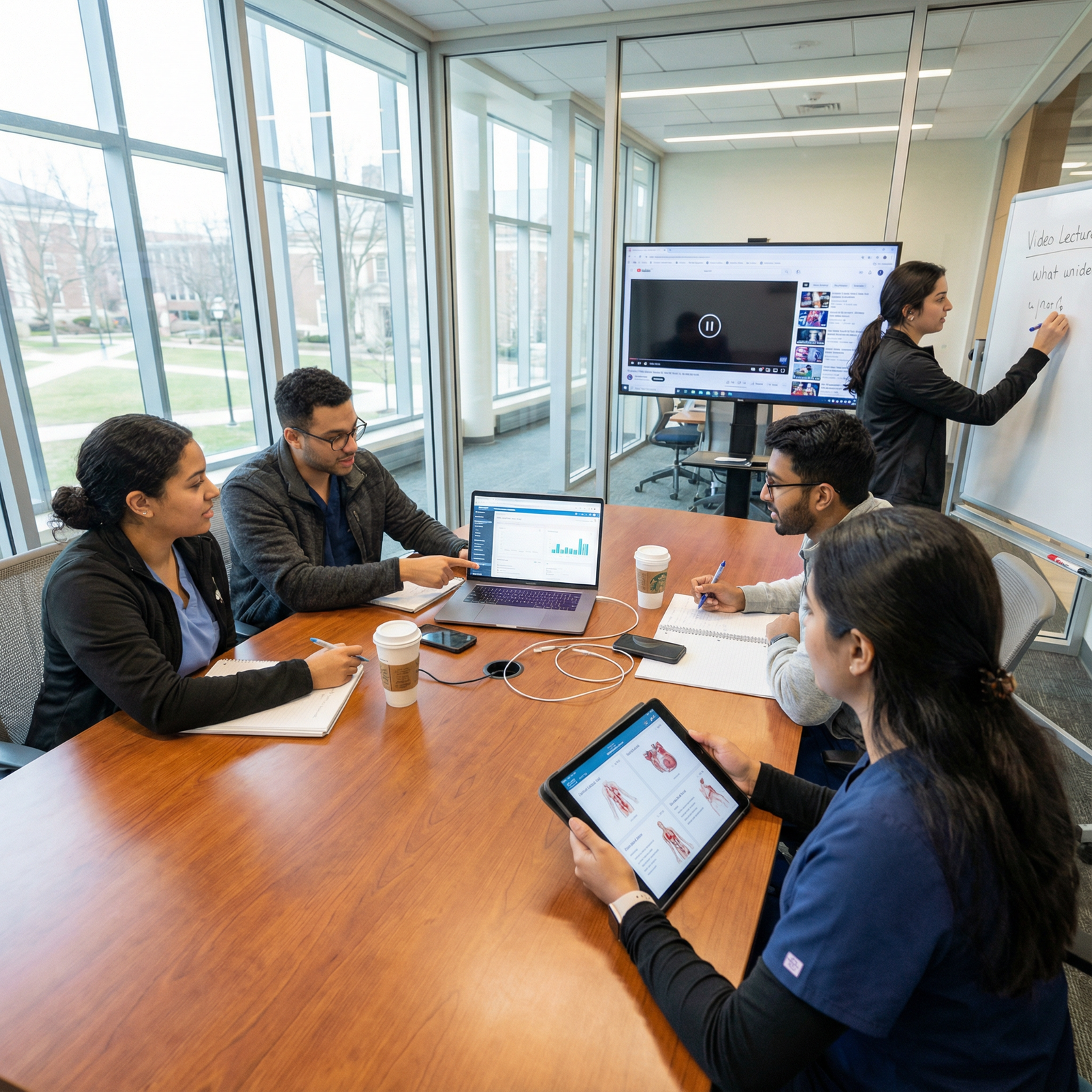
Group or partner session (1–2 hours/week)
- Discuss challenging questions or concepts.
- Teach each other micro organisms or pharm classes, referencing Sketchy scenes.
This kind of integrated plan helps you leverage each resource for what it does best, without letting any single tool dominate your time at the expense of others.
Frequently Asked Questions (FAQs) About Interactive Online Resources for Step 1
1. How should I prioritize among all these interactive resources for USMLEStep1?
Start with core essentials:
- Primary Qbank – UWorld (mandatory for most students).
- Spaced repetition – Anki (or another flashcard system).
- At least one concept resource – e.g., Sketchy, Online MedEd, or a high-yield YouTube playlist.
Once these are in place and used consistently, add AMBOSS, ClinicalKey, Medscape, or OSCE resources as needed to patch weaknesses or provide depth. If time is limited, prioritize Qbank + Anki + Sketchy (for micro/pharm) over additional platforms.
2. Are interactive online resources alone enough to pass Step 1?
They are often sufficient if:
- You have a solid baseline from preclinical courses,
- You use a comprehensive Qbank (UWorld ± AMBOSS),
- You consistently do Anki or another spaced repetition method,
- And you supplement with a concise reference like First Aid or a similar outline.
However, relying only on videos or only on flashcards without serious question practice usually isn’t enough. The strongest performance typically comes from a blend of interactive tools plus a high-yield reference text.
3. How early in medical school should I start using these Step 1 resources?
You can start early and light:
First year (M1)
- Use Anki or another SRS for core concepts from class.
- Watch Sketchy or other visual resources alongside your micro/pharm courses.
- Do a small number of subject-specific AMBOSS or UWorld questions after you’ve finished a system in school.
Second year (M2)
- Increase Qbank use as you approach dedicated time.
- Begin integrating random/mixed questions after multiple systems are covered.
- Solidify a consistent Anki habit.
By the time you enter your dedicated ExamPreparation phase, you’ll have familiarity with the tools and a stronger knowledge base.
4. How can I avoid feeling overwhelmed by too many StudyResources?
Limit your core toolkit to 3–5 primary resources
For example: UWorld, Anki, Sketchy, AMBOSS, and your chosen reference book.Be intentional
Add a new resource only when you can clearly state what gap it will fill (e.g., “I’m missing micro questions; I’ll use Sketchy + related Anki cards”).Create a written weekly plan
Decide ahead of time how many Qbank questions, how many Anki reviews, and how many video hours you’ll aim for each day. This reduces decision fatigue.Regularly reassess
Every 1–2 weeks, review what’s actually helping your scores and understanding. If a resource isn’t pulling its weight, scale it back.
5. How do I know if these tools are actually improving my Step 1 performance?
Use objective metrics:
NBME and UWorld self-assessments
Take them periodically (every 1–2 weeks in dedicated). Look for improvements in both total score and system/discipline subscores.Qbank stats
Track trends in your UWorld and AMBOSS performance over time, not just isolated blocks.Error patterns
Are you missing fewer questions from your previously weak systems? Are your mistakes shifting from “didn’t know the fact” to “careless reading or time management”? That’s still progress.Qualitative feel
Over time, question stems should feel more familiar, and you should recognize patterns and mechanisms more quickly.
If you’re not seeing improvement, adjust:
- Increase the ratio of active learning (Qbanks, Anki) vs. passive (videos).
- Spend more time analyzing your mistakes and making targeted flashcards.
Interactive online resources, when used strategically, can transform your USMLEStep1 journey from passive, anxious cramming into a structured, engaging, and effective ExamPreparation process. By pairing high-quality question banks, spaced repetition, and visual tools with consistent effort and reflection, you’ll not only be ready for Step 1—you’ll lay a strong foundation for the rest of your medical training.