Introduction: Turning Virtual Interviews into Learning Laboratories
Virtual Interviews are now a core part of the Residency Match and will likely remain so. While many applicants focus intensely on Interview Preparation—questions, technology, and talking points—fewer think strategically about what happens after the interview.
Yet that post-interview period is where some of the most powerful Medical Career Development work can happen.
Thoughtful feedback—whether from others or from your own structured reflection—can help you:
- Sharpen communication and storytelling
- Present your authentic self more clearly
- Align your message with residency program values
- Build confidence and reduce anxiety
- Continuously improve across the interview season
This article explores why feedback matters so much in virtual residency interviews, where to find it, how to interpret it, and concrete Feedback Strategies to turn every interview (even the “bad” ones) into a stepping stone toward Match success.
Why Feedback Matters in Virtual Residency Interviews
Virtual interviews are different from in-person visits. You no longer have the benefit of hallway conversations, informal body language cues, or reading the room in the same way. That makes deliberate feedback even more critical.
How Virtual Interviews Can Distort Your Self-Perception
In a virtual setting, candidates often:
- Over-focus on their own video box, becoming distracted or self-conscious
- Underestimate nonverbal signals, like eye contact, facial expressions, and posture on camera
- Misjudge timing, speaking too quickly or too slowly due to lag or discomfort
- Struggle to read interviewer engagement, making it harder to adjust in real time
Without feedback, it’s easy to walk away from a virtual interview with little idea of how you were actually perceived.
Four Core Reasons Feedback Is Essential
- Targeted Skill Development
Residency interviews test a package of skills: professionalism, clarity, clinical reasoning, teamwork, resilience, and fit with program culture. Feedback helps you identify which elements are strong and which need work:
- Are your answers structured and concise?
- Do you convey genuine interest in the program?
- Do you communicate clinical experiences clearly and at the appropriate level?
- Do you project professionalism through your background, dress, and behavior?
Once you know your specific gaps, you can design efficient, focused practice rather than guessing.
- Confidence and Anxiety Management
Uncertainty fuels anxiety. Feedback gives you data:
- What went well (so you can keep doing it)
- What needs work (so you can create a plan)
When you know you’ve worked on specific issues—such as rambling answers or fidgeting—you enter subsequent interviews more confident and composed. This self-assurance often comes across clearly to interviewers, improving performance and overall presence.
- Intentional Networking and Professional Identity Formation
Seeking feedback encourages:
- Contact with mentors and faculty who can support you beyond the Match
- Honest dialogue with residents and advisors about how you present yourself
- Early professional development in receiving and integrating constructive criticism
Those conversations build your network and help you begin forming your professional identity as a physician—someone who is coachable, reflective, and committed to growth.
- Aligning with Program Culture and Values
Every residency program values some combination of:
- Teamwork and collegiality
- Diversity, equity, and inclusion
- Patient-centered care
- Research or quality improvement
- Innovation and adaptability
Feedback—especially from mentors familiar with specific programs—can show you whether:
- Your answers highlight the qualities those particular programs care most about
- You are emphasizing the right experiences (e.g., community health vs. bench research)
- Your virtual presence reflects the level of professionalism and engagement expected
This alignment can be the difference between being a strong candidate on paper and being a memorable fit in an interview.
Types of Feedback You Can Use to Improve Your Virtual Interview Skills
Feedback doesn’t only come from formal evaluation forms. In fact, much of the most actionable input will come from informal or self-generated sources.
1. Structured Self-Assessment: Your First and Most Reliable Source
You are present for every interview and every practice session. Use that to your advantage.
Practical Self-Review Methods
Immediate Post-Interview Notes
Within 15–20 minutes of each interview, jot down:- Questions you were asked (especially ones that surprised you)
- Answers you thought went poorly or very well
- Moments where you felt connection—or disconnection—with interviewers
- Any technical or logistical issues (audio, lighting, background)
Video Practice Review
Record mock virtual interviews and review them critically:- Do you maintain eye contact with the camera?
- Are your gestures visible and natural on screen?
- Do you speak at a reasonable pace with clear articulation?
- Is your background professional and uncluttered?
Use a simple rubric (e.g., 1–5) to rate areas such as content clarity, nonverbal communication, and professionalism. Repeat over time to track progress.
2. Peer Feedback: Honest Perspectives from Those in the Same Boat
Colleagues and classmates are excellent observers of:
- Jargon-filled or confusing explanations
- Unclear storytelling
- Excessive use of filler words (“um,” “like,” “you know”)
- Tone that seems arrogant, apologetic, or detached
How to Get High-Quality Peer Feedback
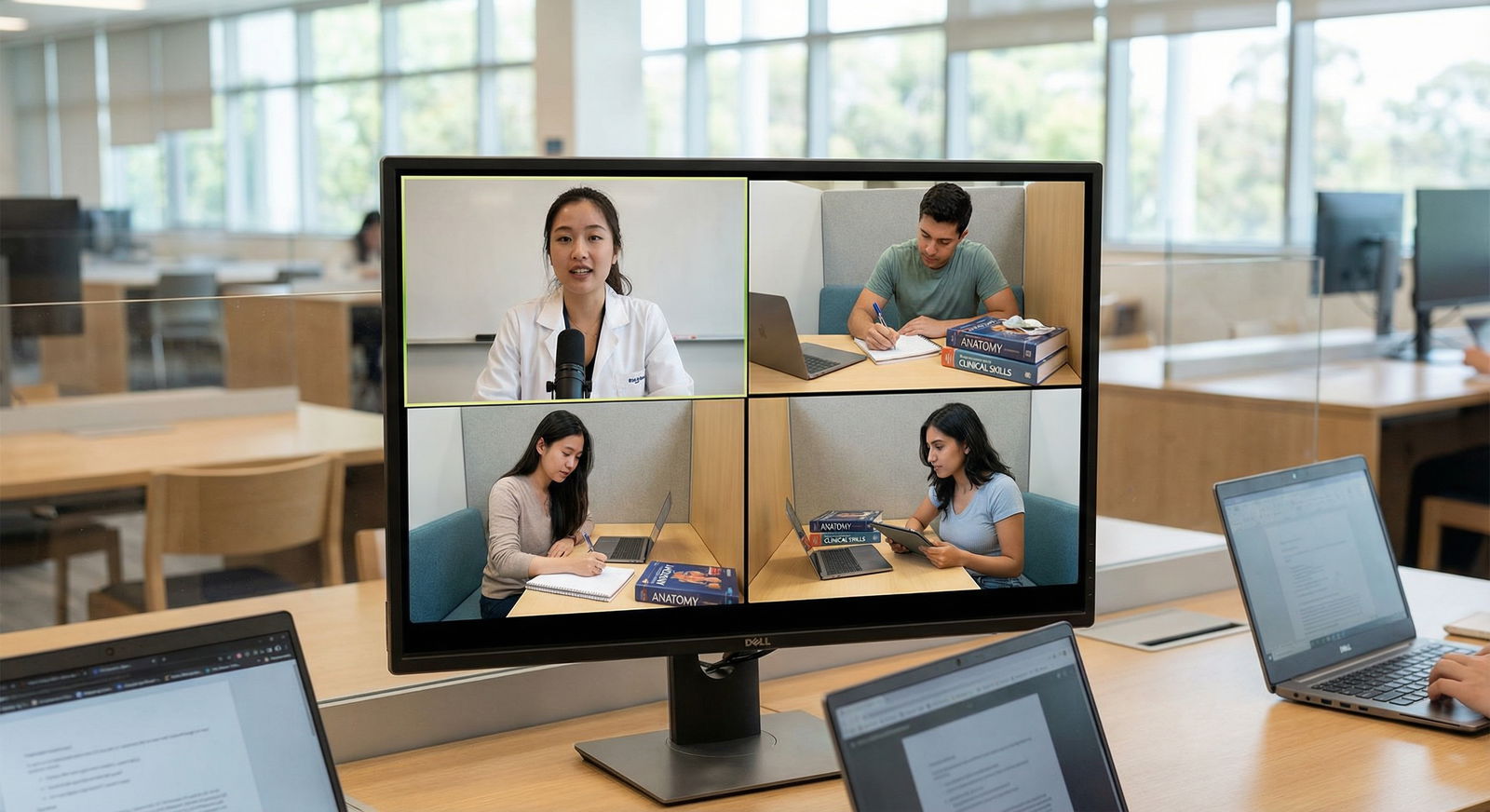
- Schedule mock interview sessions with classmates applying to different specialties to minimize competition concerns.
- Rotate roles: interviewer, interviewee, and observer.
- Use a shared feedback form with categories like:
- First impression
- Clarity and structure of answers
- Strength of closing statements
- Virtual professionalism (camera, sound, environment)
- Ask for specific examples, not just “You did fine.”
Peers can also simulate stressful situations—unexpected questions, technical glitches—to prepare you for real-world unpredictability.
3. Mentor and Faculty Feedback: Specialty-Specific Guidance
Mentors—attendings, fellows, chief residents, or faculty advisors—can help you:
- Refine how you talk about clinical cases for your level of training
- Frame challenging experiences (e.g., leaves of absence, exam failures) professionally
- Highlight experiences that match the priorities of your target specialty
- Avoid red-flag phrases or attitudes that raise concern
Strategies for Effective Mentor Feedback
- Send them your CV and personal statement ahead of time.
- Ask for a 30-minute mock virtual interview using common specialty-specific questions.
- Request feedback in defined areas:
- “How do I come across as a future colleague?”
- “Are my answers at the right level for someone entering residency?”
- “Do any of my explanations sound defensive or unclear?”
Their insider perspective on how selection committees think can be invaluable.
4. Post-Interview Program Feedback: Rare but Valuable
Some residency programs, often after rank lists are certified, may offer brief feedback to applicants who request it. While this is not universal and may be limited for legal or policy reasons, when it is provided, it can be extremely informative.
If you receive such feedback, look for:
- Patterns in what they felt was missing (e.g., leadership, insight into weaknesses, understanding of the program)
- Comments on communication style, professionalism, or perceived fit
- Suggestions about future application cycles, if relevant
Keep this feedback in perspective—one program’s response is one data point, influenced heavily by program-specific priorities.
5. Real-Time Interviewer Cues and Comments
Occasionally, interviewers will offer hints in real time:
- “Take your time with this one; it’s a tough question.”
- “Could you be a bit more specific about your role in that project?”
- “That was a strong example of teamwork.”
These are micro-feedback cues:
- If they ask you to be more specific, you may be speaking too generally.
- If they compliment a particular answer style, consider using that structure elsewhere.
- If they seem confused or ask multiple clarifying questions, your explanation may need tightening.
While you won’t always receive explicit written feedback, these moment-to-moment reactions can guide your ongoing improvement.
Real-World Application: Learning from Others’ Virtual Interview Journeys
Stories from other applicants can help normalize the learning curve and highlight effective strategies.
Case Study 1: Sarah—From Scripted to Authentic
Sarah, a fourth-year medical student applying to a competitive OB/GYN program, left her first few virtual interviews feeling flat. She had memorized several “perfect” answers but noticed that conversations felt stiff.
Feedback Sources
- Peer Review: Peers commented that:
- Her answers sounded rehearsed.
- She used similar phrases repeatedly.
- She rarely referenced specific patient encounters or meaningful moments.
Feedback Integration
Sarah decided to:
- Replace memorized scripts with bullet-point frameworks (key themes and examples).
- Integrate personal and patient-centered anecdotes into her responses.
- Practice with mock interviews that emphasized conversational tone over memorization.
Outcome
As she progressed through the interview season:
- She felt more relaxed and genuine.
- Interviewers frequently responded positively to her stories.
- By Match Day, she had secured multiple interviews at her top-tier programs and ultimately matched into a program that valued her authenticity and commitment to women’s health.
Case Study 2: Michael—Translating Knowledge into Clear Communication
Michael, an internal medicine applicant, had strong clinical evaluations and impressive research. His mentor, however, noticed something during a mock virtual interview: his explanations were dense and overly technical.
Feedback Sources
- Mentor Feedback:
- Excellent knowledge, but explanations were “too fellowship-level” and heavy on jargon.
- Needed to demonstrate the ability to communicate clearly with patients and interprofessional teams.
Feedback Integration
Michael:
- Practiced explaining complex cases at a level that a bright layperson could understand.
- Used the “SBAR” and “teach-back” frameworks—tools often used in patient communication—to structure some of his interview responses.
- Focused on clear, concise take-home points at the end of each answer.
Outcome
In later interviews, Michael noticed:
- Interviewers nodded more, asked fewer clarifying questions.
- He was able to highlight both his depth of knowledge and his ability to communicate clearly.
- He received positive comments about his “organized, thoughtful explanations” and ultimately matched at a university program that valued educators and communicators.
Strategies to Use Feedback Effectively Throughout Interview Season
Collecting feedback is only half the equation. The real power lies in what you do with it.
1. Create a Simple Post-Interview Reflection Template
Immediately after each virtual interview day, complete a short reflection. For example:
- What went well? (3 bullet points)
- What could have gone better? (3 bullet points)
- Which questions challenged me the most? Why?
- Did I present my story and “why this specialty/program” clearly?
- What is one specific thing I will do differently in my next interview?
Over multiple interviews, you’ll start seeing patterns—recurring weak spots to address and strengths to reinforce.
2. Turn Feedback into SMART Improvement Goals
Use feedback to set SMART (Specific, Measurable, Achievable, Relevant, Time-bound) goals:
- Vague: “I need to be less nervous.”
- SMART: “For the next two weeks, I will practice answering 5 common behavioral questions aloud each day, focusing on pausing before I respond to reduce rushed speech.”
Examples of SMART goals for virtual interviews:
- “By the next interview, I will adjust my lighting and camera setup and record a trial to ensure my face is well-lit and I appear centered and engaged on screen.”
- “For the next three mock interviews, I will limit each answer to 2 minutes, using a stopwatch to practice concise responses.”
3. Practice with Purpose, Not Just Repetition
Not all practice is equal. “Deliberate practice” focuses on specific skills:
- If you ramble:
- Practice structuring answers using STAR (Situation, Task, Action, Result) or PAR (Problem, Action, Result).
- If you appear disengaged on camera:
- Practice maintaining eye contact with the camera, not your own video tile.
- If you struggle with behavioral questions:
- Build a story bank of 8–10 key experiences (leadership, conflict, failure, ethical dilemma, teamwork, resilience) and practice telling them from multiple angles.
Use feedback to decide what to practice, then track your progress across sessions.
4. Seek Follow-Up Feedback to Confirm Growth
After you’ve worked to implement changes:
- Schedule another mock session with the same mentor or peer and ask:
- “Last time you mentioned that I seemed overly scripted. How does my style feel now?”
- “You noted that my answers lacked structure. Are my responses more organized today?”
This loop—feedback → targeted practice → re-assessment—mirrors how you’ll grow throughout your medical training.
5. Develop a Feedback Mindset: Growth, Not Judgment
How you emotionally interpret feedback matters.
- View feedback as data, not a verdict on your worth.
- Separate your identity from your performance in any single interview.
- Remind yourself that learning to accept and integrate feedback is a core competency in residency and beyond.
This mindset allows you to remain open, curious, and resilient—even when feedback feels uncomfortable.

Frequently Asked Questions: Feedback and Virtual Residency Interviews
1. How can I professionally request feedback after a virtual residency interview?
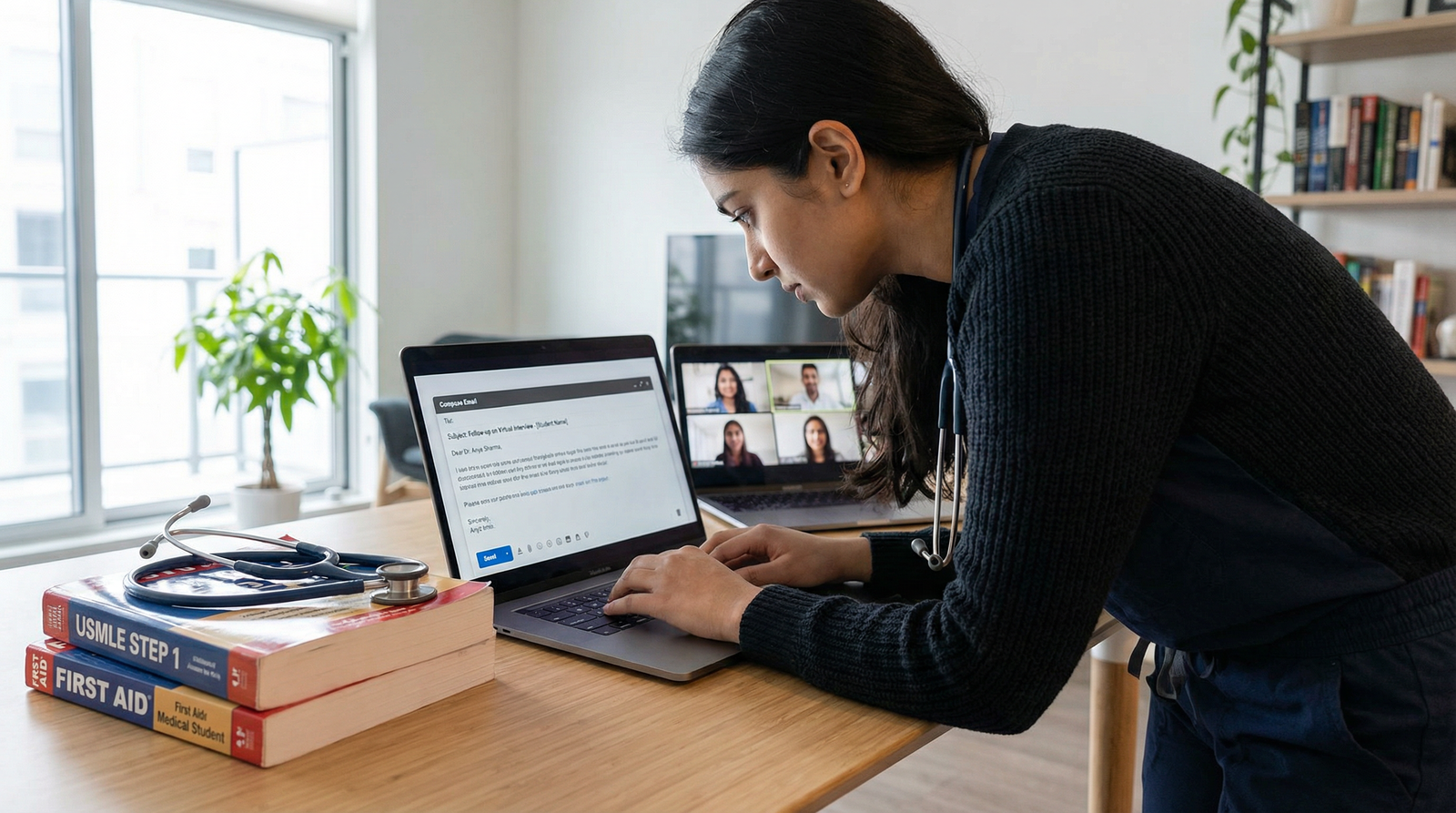
Be respectful of time and program policies. A template you might adapt:
Dear Dr. [Last Name],
Thank you again for the opportunity to interview with [Program Name] on [date]. I appreciated learning more about your program and the [specific feature you enjoyed].
I am always looking to improve my interview skills and overall professionalism. If program policy allows, I would be grateful for any brief feedback you might be able to share about my interview performance or how I presented myself as an applicant.
Thank you for your time and consideration.
Sincerely,
[Your Name], [Medical School]
Not all programs can respond, and many will decline due to policy—but when feedback is offered, it can be highly informative.
2. What if I receive no feedback from programs at all?
That’s common. Many programs avoid sharing detailed feedback for fairness and legal reasons. You still have powerful options:
- Use structured self-reflection after each interview.
- Conduct multiple mock interviews with peers and mentors.
- Watch recordings of your practice sessions to identify patterns.
- Integrate online resources, webinars, and workshops on Interview Preparation.
Your growth does not depend solely on official feedback from programs.
3. How do I systematically improve my behavioral interview answers?
Behavioral questions (“Tell me about a time when…”) respond well to structure:
- Use STAR (Situation, Task, Action, Result) or CAR (Context, Action, Result).
- Build a story bank containing:
- A time you made a mistake or failed
- A conflict with a colleague or supervisor
- A difficult patient interaction
- A leadership or teaching experience
- A situation demonstrating resilience or adaptability
Practice delivering each story in 1.5–2 minutes. Seek feedback on:
- Clarity of your role
- Insight and reflection
- Demonstrated growth
4. How do I handle negative or discouraging feedback?
First, pause before reacting. Then:
- Clarify: Ask for examples: “Could you share a specific moment that illustrates what you mean?”
- Extract the useful part: Even if the delivery feels harsh, look for actionable elements.
- Adjust your plan: Incorporate the insights into your next set of SMART goals.
- Seek a second opinion from a trusted mentor if you’re unsure whether feedback is fair or program-specific.
Remember that one person’s impression doesn’t define your entire candidacy.
5. What resources can support my virtual interview preparation and feedback process?
Consider combining:
- Institutional resources: Career offices, residency advising deans, or simulation centers often offer mock interviews and recorded sessions.
- Online platforms: Specialty societies, MedEdPORTAL resources, and webinars on Virtual Interviews and Residency Match strategies.
- Peer networks: Group practice sessions within your medical school or via national student organizations.
Use these tools not just to practice, but to gather structured, honest feedback you can act on.
By treating each virtual interview as both an assessment and a learning opportunity, you transform the Residency Match process into a powerful engine for your Medical Career Development. Feedback—formal, informal, and self-generated—is your diagnostic tool. How you respond to it becomes your treatment plan.
Embrace that process, refine your approach with intention, and you’ll not only become a stronger residency applicant—you’ll also build habits of reflection and growth that will serve you throughout your career as a physician.