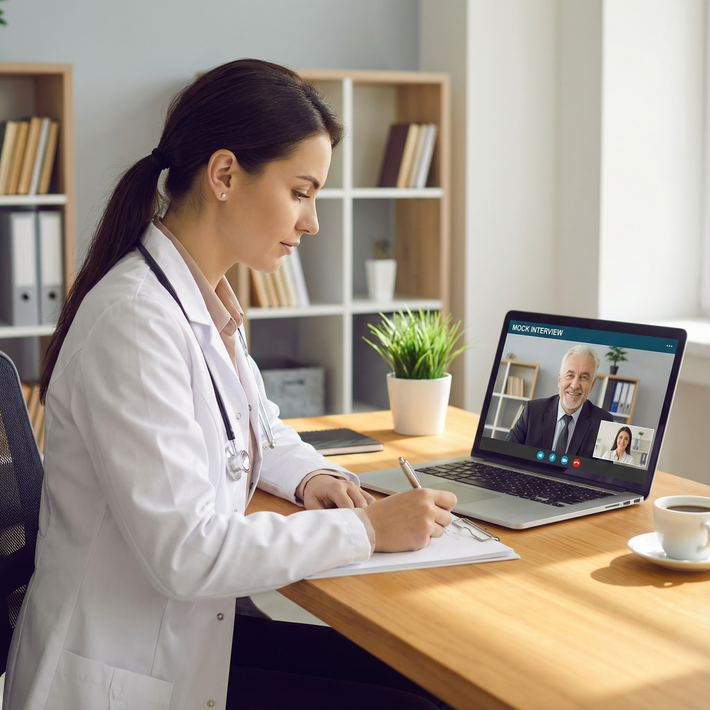
The Role of Non-Verbal Communication in Virtual Interviews for Medical Residencies
Virtual Interviews are now a central part of the residency selection process. For many programs, this is the only live interaction they have with you before ranking decisions. In that high‑stakes environment, your Non-Verbal Communication can be as influential as what you actually say.
For residency applicants, mastering non-verbal skills is not just a “nice to have” job interview tip—it is a core element of Professional Development. How you appear on screen, how you hold yourself, and how you respond visually can shape perceptions of your confidence, maturity, and “fit” for a program within seconds.
This expanded guide breaks down how non-verbal cues function in virtual residency interviews and offers practical, residency-specific strategies to help you project confidence, professionalism, and authenticity.
Foundations of Non-Verbal Communication in Virtual Interviews
Understanding the components of non-verbal behavior is the first step toward using them intentionally and effectively.
Key Elements of Non-Verbal Communication
Non-verbal communication includes all the ways you communicate without speaking. In virtual interviews, the following cues are especially important:
Facial Expressions
Your face is the primary focal point on screen. Expressions such as smiling, nodding, and showing concern or enthusiasm can reinforce what you are saying. A flat or tense expression, even with strong answers, can come across as disinterest or anxiety.Gestures
Natural, moderate hand movements can support your message and make you appear more engaged. Overly large or repetitive gestures, especially in a tight camera frame, can be distracting or look nervous.Posture and Body Orientation
Sitting upright with open shoulders communicates attentiveness and readiness. Leaning slightly forward occasionally shows engagement, while slouching, leaning far back, or rocking in your chair suggests disinterest or discomfort.Eye Contact
In a virtual setting, “eye contact” means looking at the camera rather than always at the screen. This simulates direct connection with the interviewer. Constantly looking away, down, or checking another monitor can appear unfocused or disengaged.Proximity and Framing
On video, “distance” is about how you are framed in the camera. Being too close can feel intrusive; too far makes you seem distant or uninvested. Ideally, your head and upper torso should be visible, with a bit of space above your head in the frame.Appearance and Environment
Your clothing, grooming, and background all communicate non-verbally. A neat professional outfit, well-groomed appearance, and clean, neutral background signal respect for the process and for the program.
These cues work together to shape how interviewers experience you as a future colleague. When aligned with your words, they significantly strengthen your message.
Why Non-Verbal Communication Matters So Much in Virtual Residency Interviews
Virtual Interviews collapse first impressions into a few pixels and seconds. Residency faculty are evaluating not only your answers but also your presence—how you might interact with patients, team members, and staff.
1. Shaping Powerful First Impressions
Research in social psychology shows that first impressions form within seconds and are surprisingly durable. In virtual residency interviews, your first impression is based almost entirely on what appears on the screen as soon as the session starts.
Key factors in that first impression:
- Immediate Visual Clarity
- Camera at or slightly above eye level
- Well-lit face (ideally natural light or soft front-facing light)
- Stable internet connection and clear video quality
This setup tells the interviewer you prepared thoughtfully and respect their time.
Professional and Appropriate Attire
Treat Virtual Interviews like in-person interviews: professional attire that would be suitable for hospital or clinic settings (e.g., shirt and tie, blouse, blazer, conservative dress). Solid colors often look better on camera than busy patterns.This signals seriousness, maturity, and readiness to join a professional environment.
Composed Entry
When you first appear on screen:- Offer a warm, genuine smile
- Sit upright and still
- Greet the interviewer by name if possible
Those first 10–20 seconds strongly influence how programs perceive your confidence and interpersonal skills.
2. Strengthening and Clarifying Your Verbal Responses
Even well-structured answers can fall flat if your Non-Verbal Communication sends mixed signals. Alignment between your words and your body language helps interviewers trust what you are saying.
Gestures that Support Your Message
- Use small, natural hand movements within the camera frame to emphasize key points (“There were three major factors…” with three short finger taps).
- Avoid repetitive fidgeting—pen-clicking, touching your face, spinning in your chair—which can signal anxiety or distract from your content.
Facial Expressions that Match the Story
When discussing:- Patient care: Show empathy and seriousness.
- Achievements or passions: Let your enthusiasm show with a brighter expression and more animated tone.
- Challenges or failures: Maintain a composed, reflective expression instead of appearing defeated or overly distressed.
Interviewers are subconsciously looking for congruence: Do your non-verbal cues match your narrative?
3. Conveying Confidence, Competence, and “Residency Readiness”
Residency selection committees want to know: Will you be someone they are comfortable having on the wards, interacting with vulnerable patients and collaborating with the team?
Non-verbal behaviors that convey confidence and competence include:
Posture and Stillness
Sit at the front edge or middle of your chair, back supported, shoulders relaxed. Minimize excessive swaying, chair spinning, or leg bouncing (which sometimes shows on camera as subtle shaking).Purposeful Eye Contact
- When delivering key points, glance at the camera to simulate direct connection.
- It is natural to look at the interviewer’s face on screen much of the time, but build the habit of frequently shifting your gaze to the camera, especially at the beginning and end of responses.
Controlled Pace and Pauses
Speaking slightly slower than your natural pace comes across as more self-assured. Brief pauses before answering demonstrate thoughtfulness rather than uncertainty.
Together, these signals help programs see you as poised, reflective, and ready for the responsibilities of residency.
4. Demonstrating Cultural Sensitivity and Emotional Intelligence
Residency programs are increasingly diverse and global. Non-verbal norms vary significantly across cultures, and interviewers may come from different backgrounds. Being aware of this helps you avoid missteps and display strong emotional intelligence.
Cultural Variation in Eye Contact
In some cultures, direct eye contact is expected and interpreted as confidence; in others, prolonged direct gaze can feel confrontational. In a U.S.-based medical residency context, intermittent direct “eye contact” (looking at the camera) is typically ideal—neither staring intensely nor avoiding the camera entirely.Gestures and Personal Space
Large, dramatic gestures may be normal in some cultures and less common in others. On video, smaller, more contained gestures usually read as more professional.If you are unfamiliar with norms in the region where the program is located, observe how faculty and residents communicate during program webinars, open houses, and social media content.
Respectful Listening Cues
Nodding, maintaining a receptive facial expression, and not interrupting signal respect, regardless of culture. These cues show you are attuned to the other person’s perspective.
Being culturally aware in your Non-Verbal Communication signals that you can adapt to diverse patient populations and team environments—a key attribute in Professional Development for physicians.
Practical Strategies to Improve Non-Verbal Communication in Virtual Interviews
Intentional practice transforms vague “body language tips” into reliable strengths during high-pressure scenarios like residency interviews.
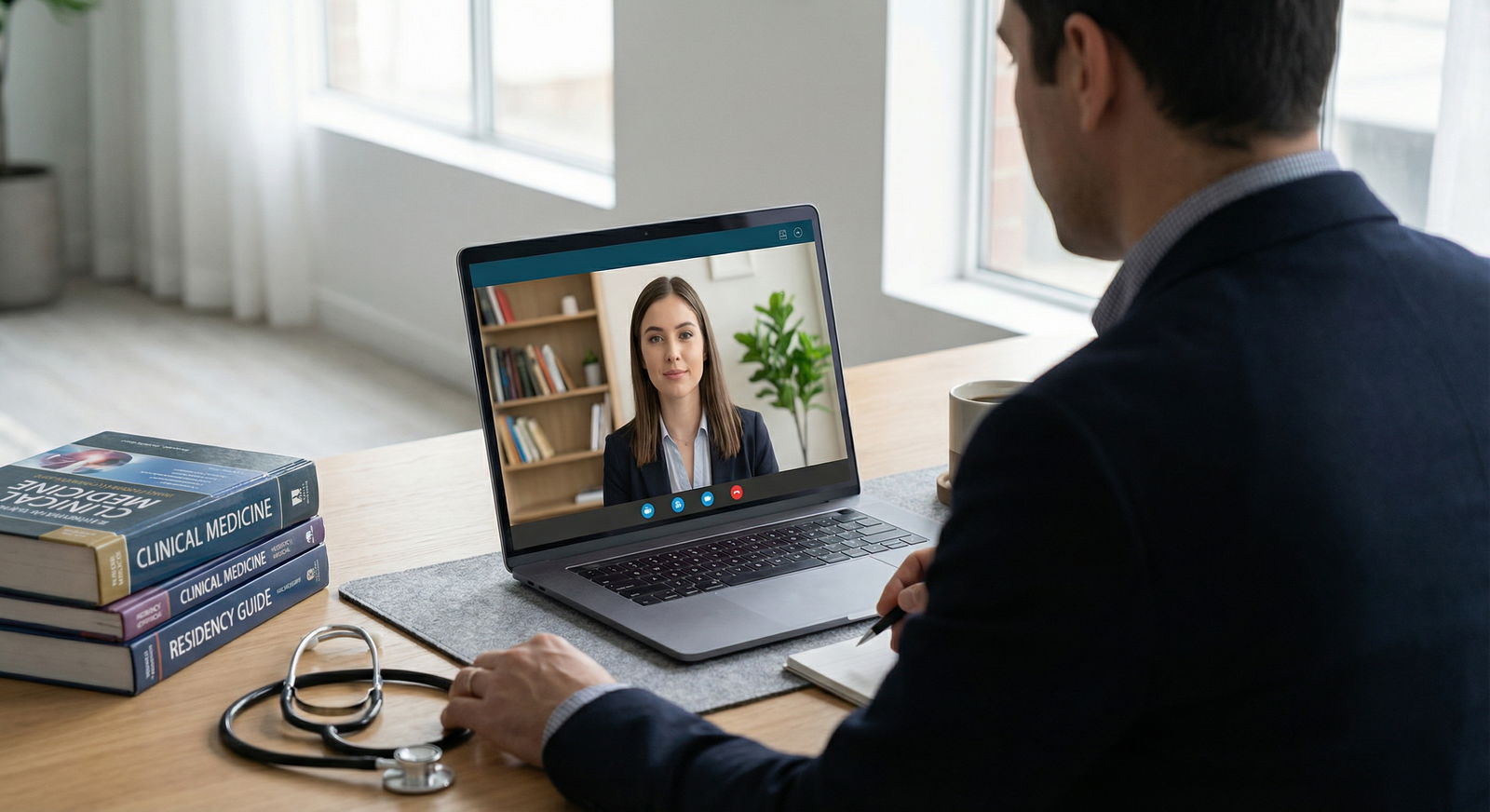
1. Preparing Your Physical and Technical Environment
Your environment is part of your Non-Verbal Communication. It silently conveys your organization, professionalism, and judgment.
Optimize Your Background
- Choose a neutral, tidy background: a plain wall, a bookshelf with neatly arranged items, or a simple office setting.
- Avoid clutter, political posters, laundry piles, or busy decor that may distract from you.
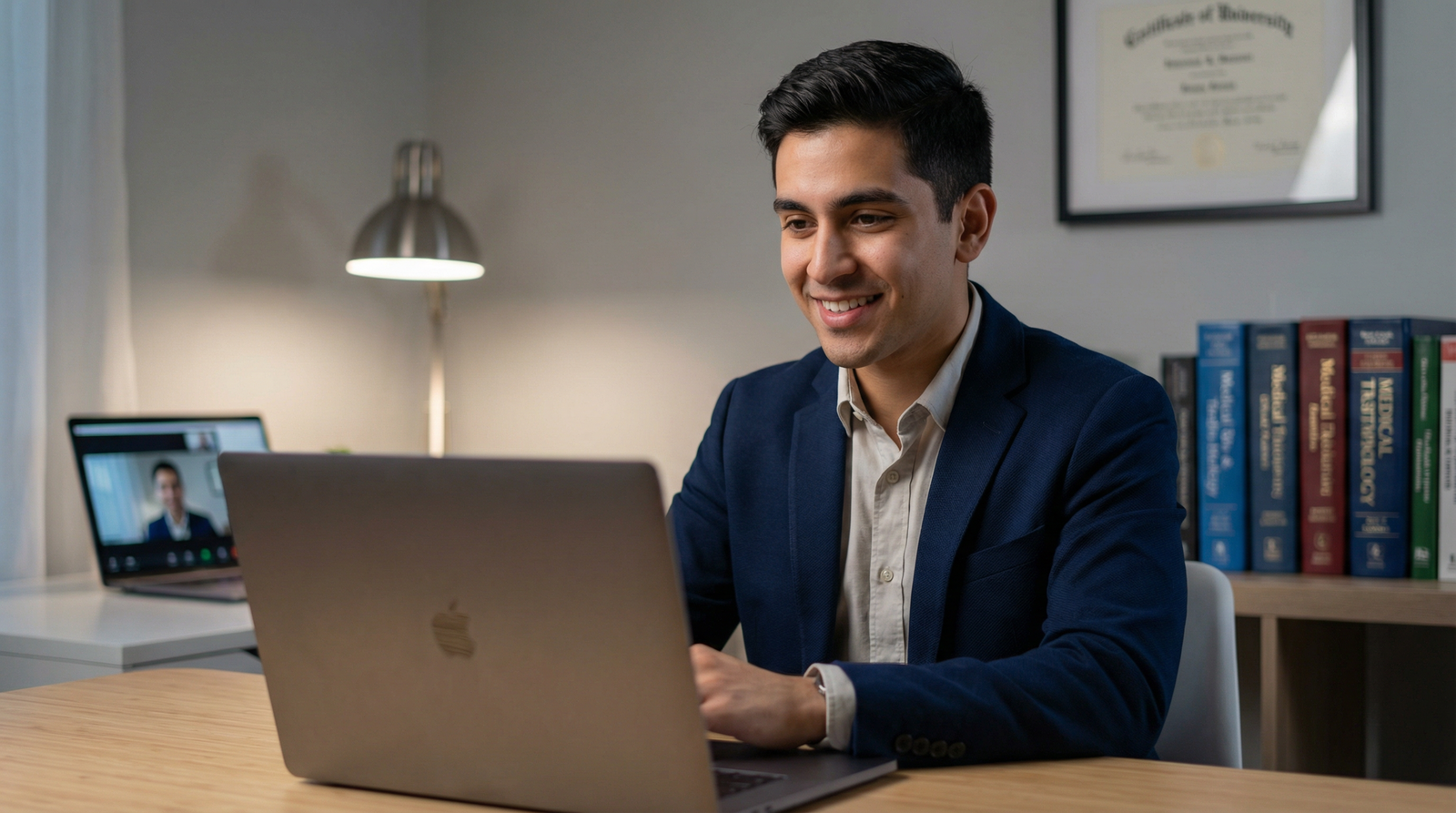
- Consider subtle professional touches: a framed diploma, neatly arranged medical textbooks, or a small plant to soften the space.
Master Your Lighting and Camera Angle
- Position your primary light source in front of you, not behind. Backlighting (e.g., a bright window behind you) creates a silhouette effect.
- Natural daylight from a window in front of you is ideal; otherwise, use a desk lamp or ring light aimed at your face.
- Raise your laptop or camera so it is at eye level or slightly above. This mimics in-person eye contact and avoids the unflattering “looking down into the camera” angle.
Test Your Tech in Advance
- Conduct a full test:
- Camera framing and lighting
- Microphone clarity and volume
- Internet connection stability
- Practice joining the actual platform (Zoom, Thalamus, Teams, etc.) used by the program. Technical smoothness reduces your cognitive load, allowing you to focus on your Non-Verbal Communication and answers.
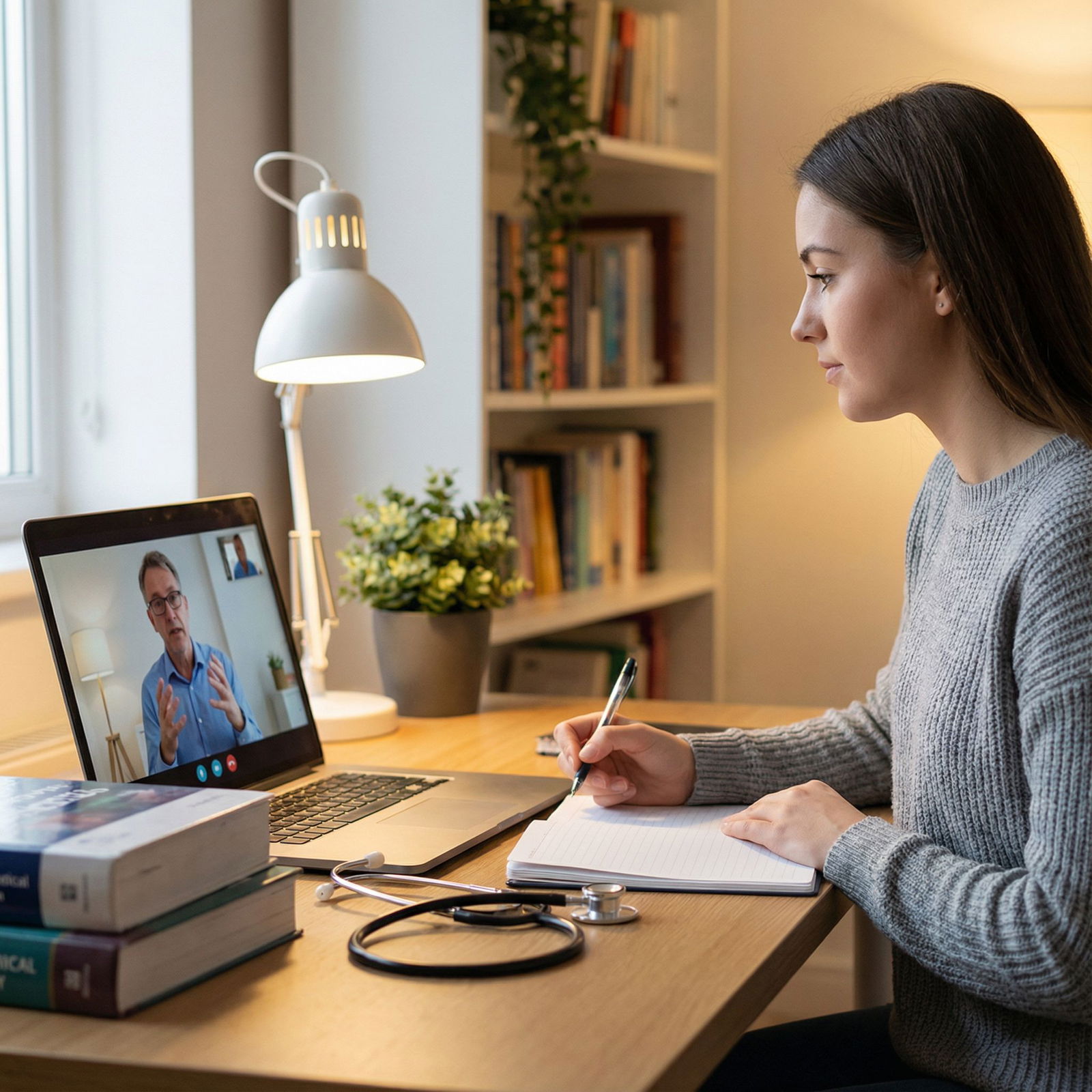
2. Practicing Non-Verbal Skills Through Mock Interviews
Deliberate practice is one of the most powerful Job Interview Tips that residency applicants underutilize.
Record Yourself on Video
- Conduct at least 2–3 full mock Virtual Interviews:
- Use realistic questions (e.g., “Tell me about yourself,” “Describe a clinical challenge you faced,” “Why our program?”).
- Record the session in the same setting you will use for real interviews.
When reviewing, focus on:
- Posture (Are you slouching or leaning too far forward?)
- Eye contact (Do you ever look into the camera? Are you frequently scanning off-screen?)
- Facial expression (Do you appear engaged and warm, or flat and tense?)
- Gestures and fidgeting (Are your hands helping or distracting?)
Make specific notes and set 1–2 concrete goals for the next practice run (e.g., “Look at the camera at the start and end of each answer,” “Keep hands resting lightly on desk when not gesturing”).
Get Feedback from Others
Ask a mentor, advisor, resident, or trusted peer to observe a mock interview:
- Invite them to comment specifically on:
- How confident and professional you appear
- Whether your non-verbal cues match your spoken content
- Any distracting habits (e.g., saying “um” repeatedly while looking away, touching your face, or swiveling)
External feedback often reveals patterns you do not notice in yourself.
3. Using Timing and Silence to Your Advantage
Non-verbal communication is not only about movement—it also includes how you use time and pauses.
Pause Before You Begin
After a question, take a brief pause (1–3 seconds) to collect your thoughts. Sitting calmly and maintaining eye contact with the camera during that pause communicates maturity and composure.Control Your Speaking Pace
Nerves often cause people to rush and lose emphasis. Consciously slow your speech by about 10–20%:- This gives you time to align your gestures and expressions with key points.
- It also makes you sound more confident and easier to understand, especially over video.
Watch for Interviewer Cues
Pay attention to:- Nodding (indicates understanding or agreement)
- Leaning forward (signals interest)
- Checking notes or appearing confused (may mean you should clarify or summarize)
Responding to these cues—by briefly summarizing, pausing, or adding an example—shows strong interpersonal awareness.
4. Strategic Use of Visual Aids and Environment (Without Overdoing It)
Props and environmental cues can support your message, but they must be subtle and purposeful.
Intentional Background Items
- A visible diploma or certificate can reinforce your academic journey.
- A small bookshelf with medical texts may underscore your commitment to learning.
- Avoid excessive branding (e.g., other hospitals or institutions that might confuse your application focus).
Avoid Overuse of Props During the Interview
In most Medical Residencies interviews, active props (e.g., slides, physical objects you show to the camera) are not necessary and may be distracting. The focus should remain on you, your answers, and your professional presence.
Integrating Non-Verbal Communication into Overall Professional Development
Non-verbal skills are not only for Virtual Interviews—they are fundamental components of your identity as a physician.
Building Habits You Can Carry into Clinical Practice
The same Non-Verbal Communication skills used in interviews help you:
- Establish trust quickly with new patients
- Collaborate effectively with nurses, consultants, and interprofessional team members
- De-escalate tense situations by projecting calm, respect, and empathy
Examples of transferable habits:
- Making eye contact with patients when delivering news
- Sitting at eye level with families rather than standing over them
- Using open posture to signal approachability during team rounds
By treating interview preparation as long-term Professional Development, you are investing in your future success as a clinician and colleague.
Adapting Non-Verbal Style Across Different Interview Formats
Residency recruitment often includes:
- One-on-one interviews
- Panel interviews (multiple interviewers)
- Group sessions with other applicants
- Social events with current residents
Each format calls for slightly different non-verbal strategies:
- One-on-One: Focus on building a personal connection—steady eye contact, responsive facial expressions, and active listening cues.
- Panel Interview: When answering, direct your initial response toward the person who asked the question, then briefly shift your gaze (and occasionally your body orientation) to include other panel members.
- Group Settings / Social Hours: Be mindful not to dominate the screen. Balance speaking with attentive listening. Use non-verbal support—like nodding when others share—to show collegiality and team orientation.
These adjustments demonstrate flexibility and social intelligence, qualities highly valued in Medical Residencies.
Frequently Asked Questions (FAQ)
1. Why is non-verbal communication so important in virtual residency interviews?
Non-verbal communication provides powerful cues about your confidence, professionalism, and interpersonal skills—qualities that are critical in residency training. In a virtual setting, interviewers have fewer data points than in person: they cannot observe how you move through a clinic or interact with staff. Instead, they rely heavily on your presence on screen.
Effective Non-Verbal Communication helps you:
- Make a strong first impression within seconds
- Reinforce the credibility of your answers
- Demonstrate emotional intelligence and cultural sensitivity
- Convey that you are someone patients and team members would feel comfortable with
2. What specific non-verbal behaviors should I focus on improving before my interviews?
Key behaviors to prioritize include:
- Posture: Sit upright with relaxed shoulders and stable positioning.
- Eye Contact: Look at the camera frequently, especially at the start and end of responses.
- Facial Expression: Maintain a warm, engaged baseline expression; allow appropriate emotional variation (e.g., concern, enthusiasm).
- Gestures: Use small, purposeful hand movements while avoiding fidgeting.
- Appearance and Environment: Dress professionally and ensure a clean, neutral background with good lighting.
Practicing these systematically in mock sessions will make them feel natural during real interviews.
3. How can I practice my non-verbal communication skills effectively?
Use a structured approach:
- Record yourself answering common interview questions in your actual setup.
- Watch the recordings with specific questions in mind:
- Do I look engaged and confident?
- Are there distracting movements or habits?
- Does my non-verbal behavior match my words?
- Seek feedback from mentors, advisors, or peers. Ask for targeted comments on your presence, not just your answers.
- Set 1–2 goals per practice session (e.g., “Reduce filler gestures,” “Improve eye contact with the camera”).
Consistent, focused practice over a few weeks can lead to noticeable improvement.
4. Do I need to adjust my non-verbal communication for cultural differences in residency interviews?
Yes, at least at a basic awareness level. While residency programs in many regions share similar expectations for professionalism, nuances vary:
- In U.S.-based programs, moderate eye contact, open posture, and a warm but not overly familiar demeanor are generally ideal.
- If you are an international medical graduate or applying to programs in a different country, observe cultural norms well in advance (through webinars, program videos, and interactions with residents).
You do not need to abandon your identity; instead, aim for a culturally respectful middle ground—attentive, polite, and professional, with neither extreme formality nor excessive informality.
5. How does my background or environment affect my non-verbal communication on screen?
Your environment is a visible extension of you and is part of what interviewers notice immediately. A cluttered or chaotic background can suggest disorganization or lack of preparation, even if untrue. Conversely, a clean, simple setting reflects intentionality and professionalism.
To optimize your background:
- Remove visible distractions, clutter, and unrelated personal items.
- Choose a neutral wall or tidy shelf with minimal, tasteful decor.
- Ensure your lighting is adequate so your face is clearly visible.
These environmental choices support, rather than compete with, your non-verbal signals of confidence and engagement.
By understanding and intentionally refining your Non-Verbal Communication, you transform Virtual Interviews from intimidating obstacles into opportunities to showcase who you are as a future physician. These skills will not only help you stand out in the residency match process, but also serve you throughout your career in medicine—every time you walk into a patient’s room, present on rounds, or lead a team.