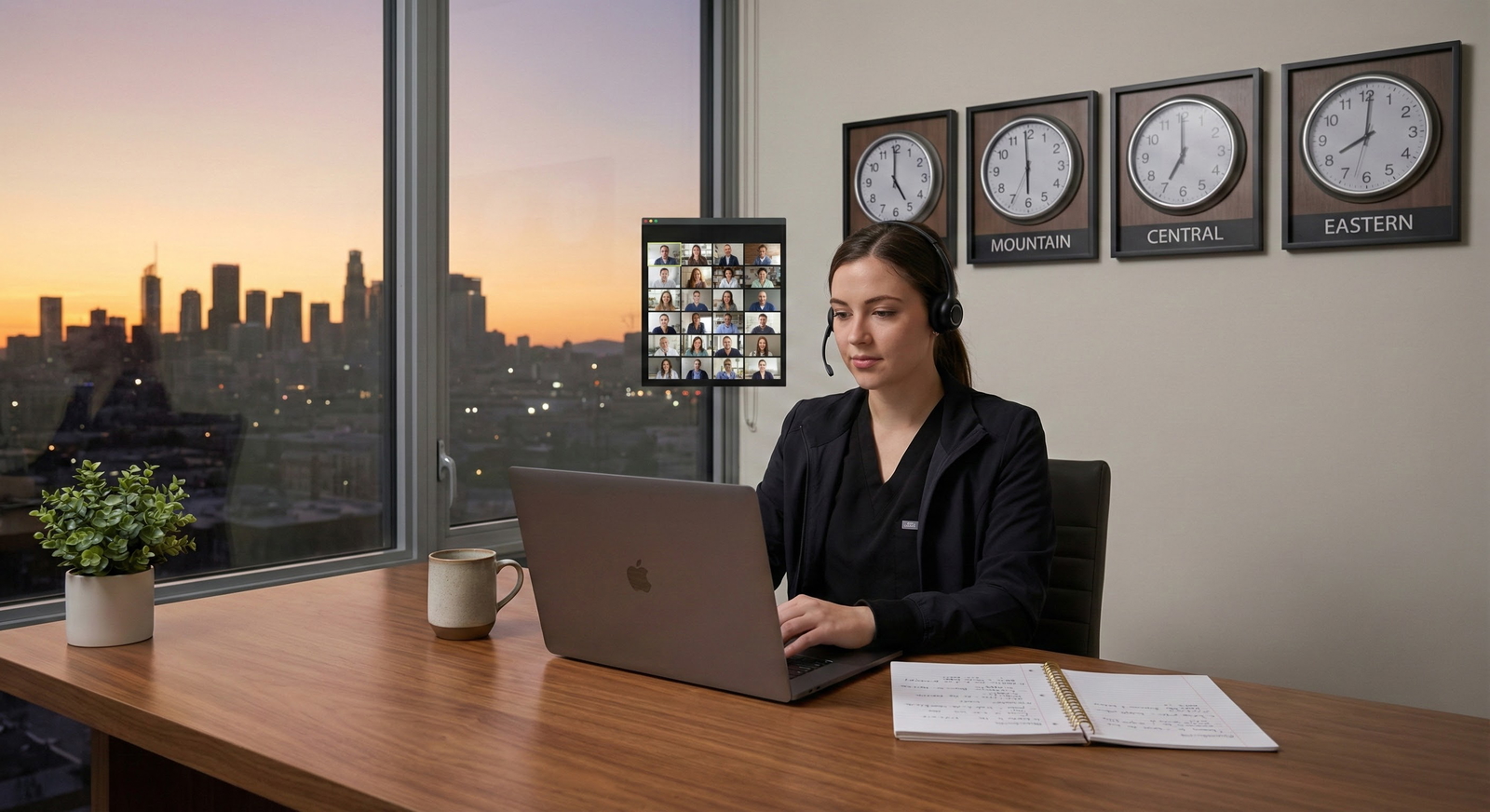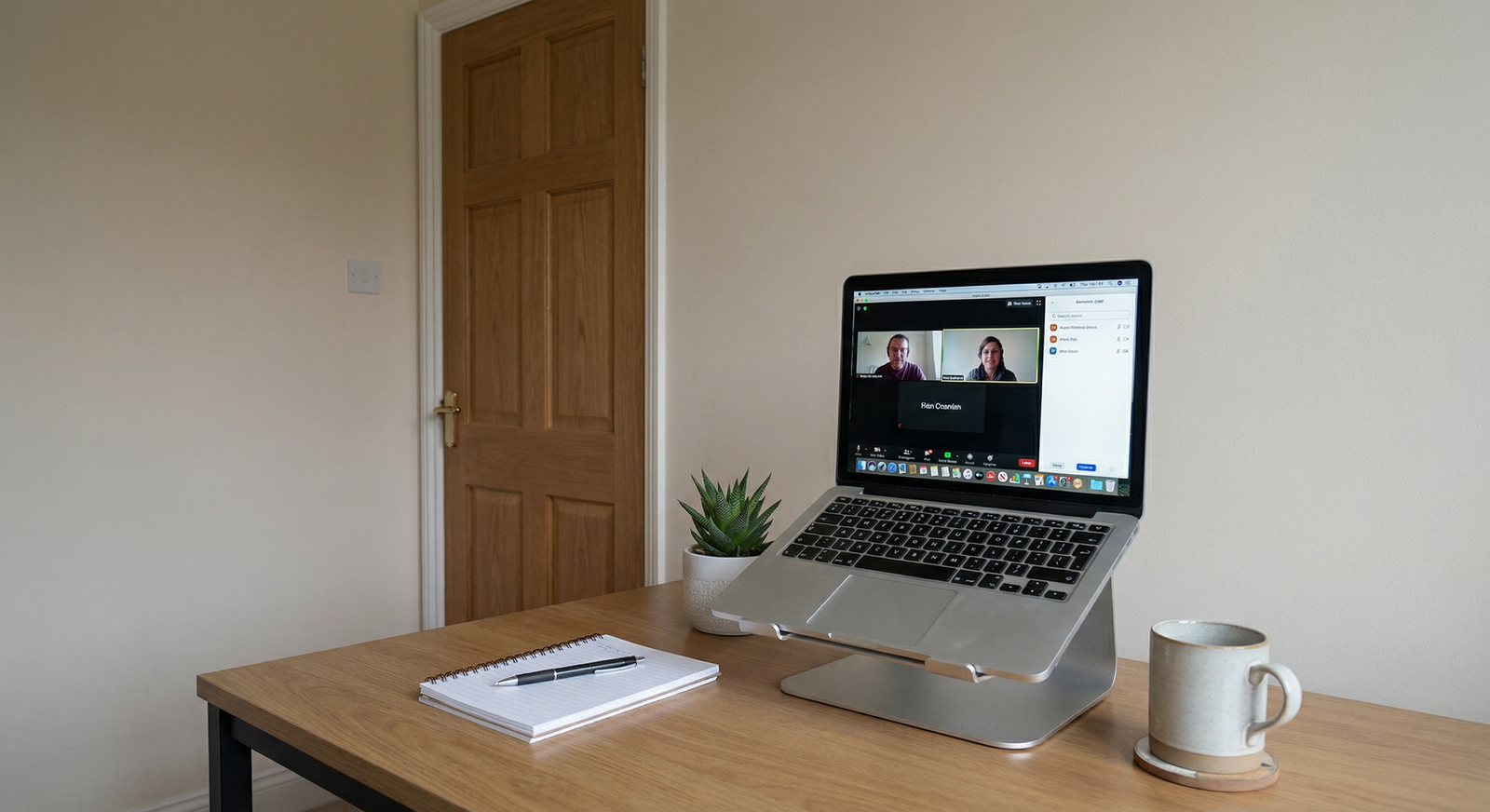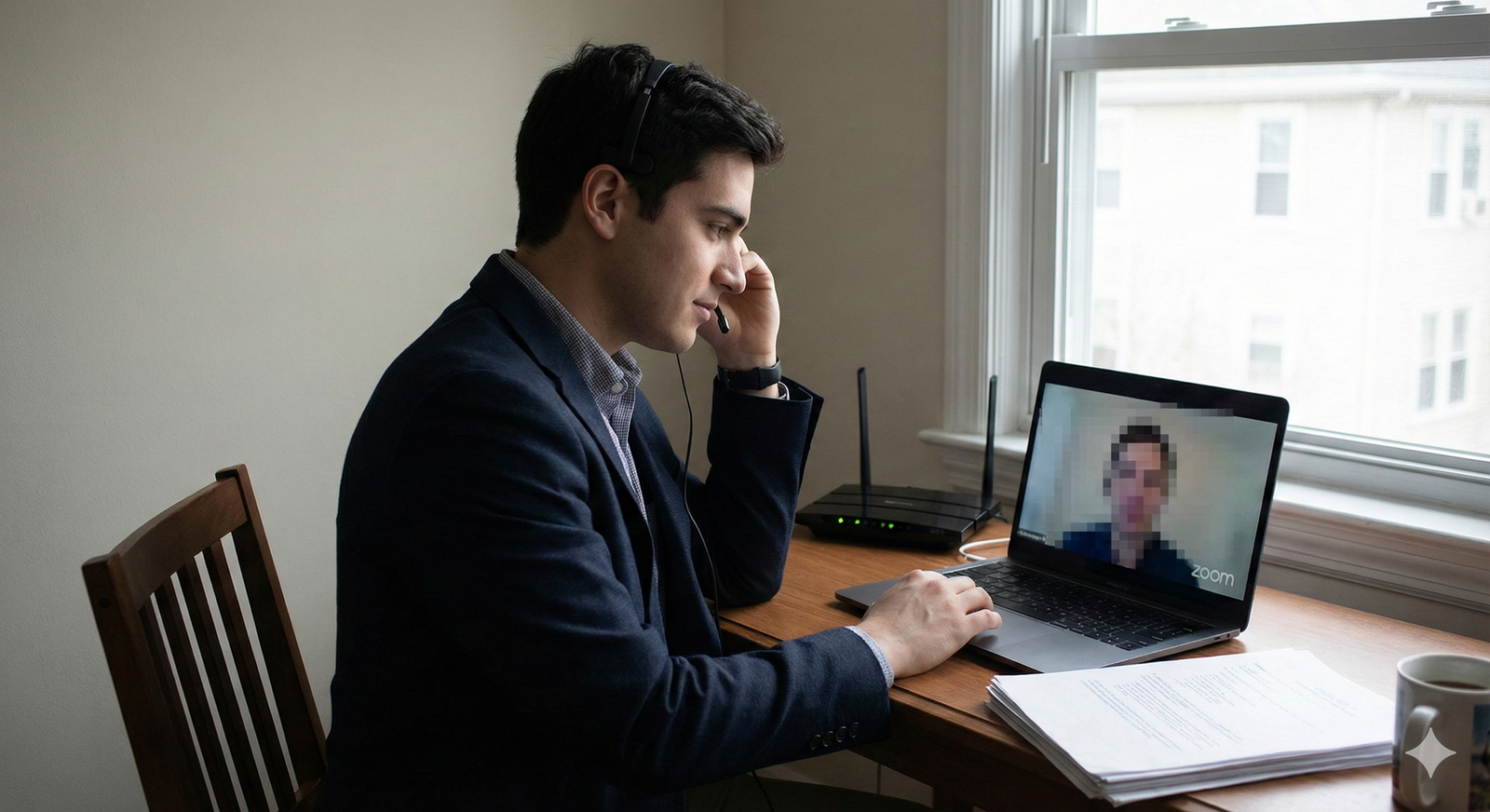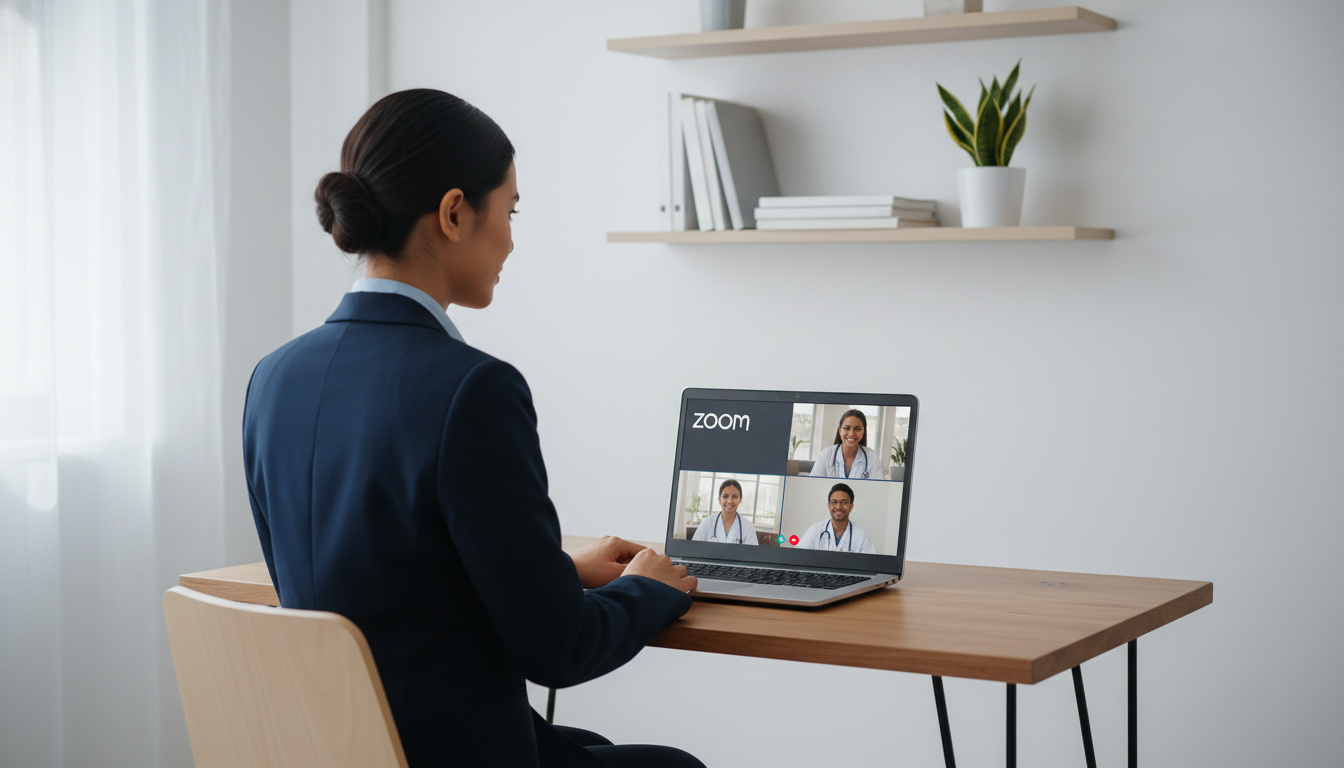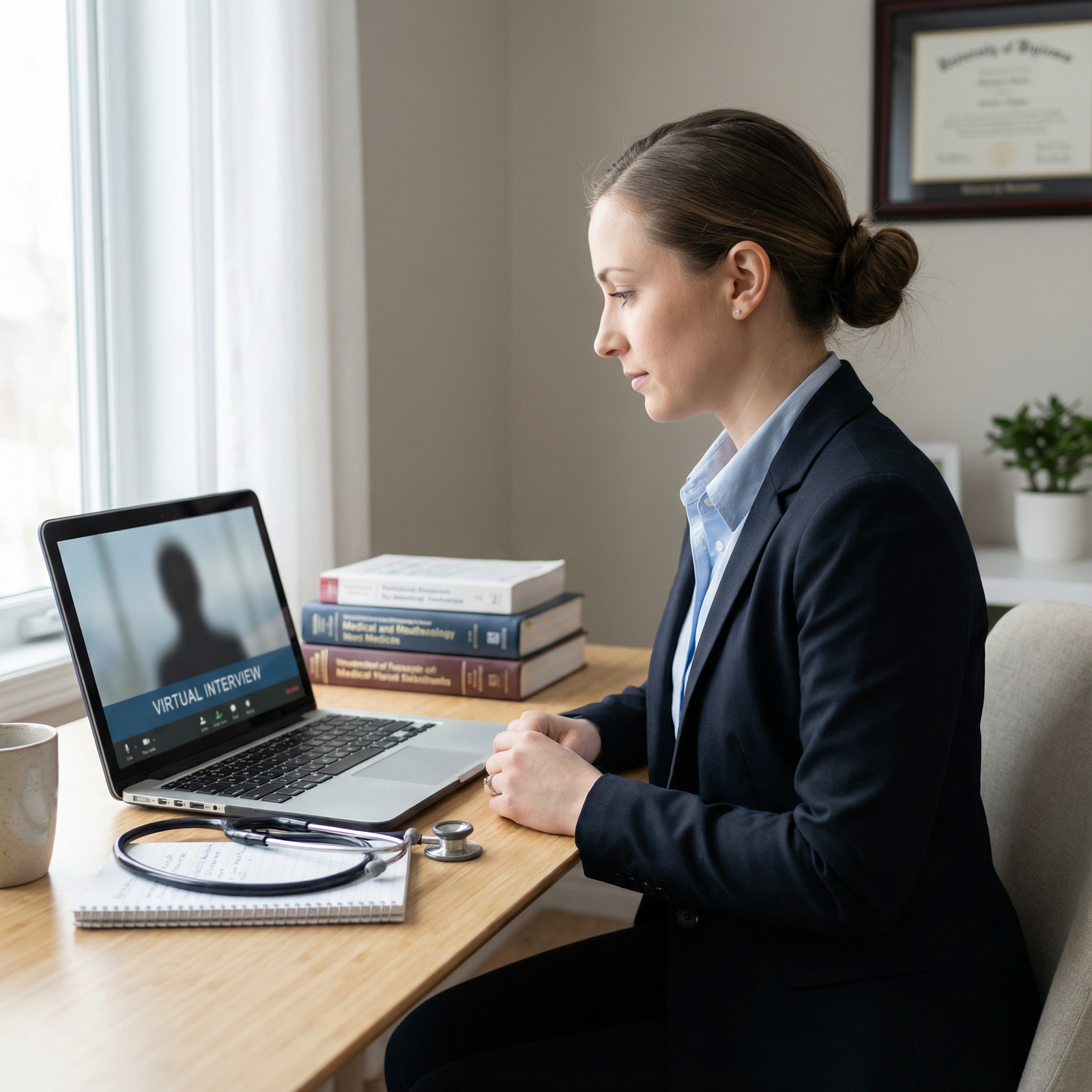
Navigating the residency match is one of the most high‑stakes stages of medical training. With most programs now relying heavily on video-based formats, Residency Interviews have evolved from traditional in-person meetings to high-pressure Virtual Interview days. That shift brings new challenges—but also new opportunities to stand out if you prepare strategically.
This guide will walk you through practical, step-by-step Virtual Interview Tips tailored specifically for Medical Residency applicants. You’ll learn how to optimize your technology and environment, refine your communication, present your best professional self, and follow up effectively—so your virtual presence reflects the same caliber as your application.
Understanding Virtual Residency Interviews in the Modern Match
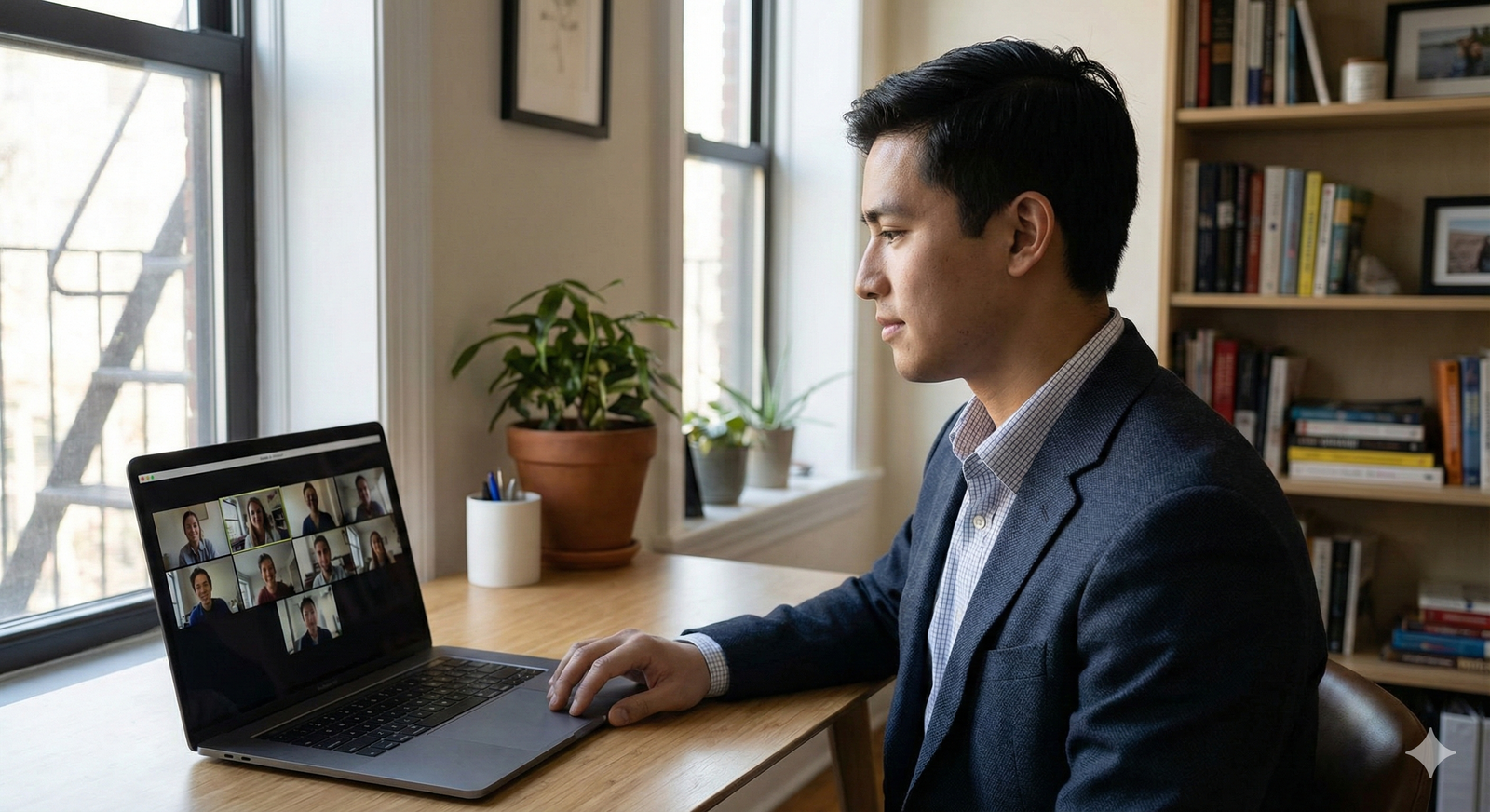
Virtual residency interviews are now a core part of the Residency Match and Applications phase. Rather than traveling to programs, you meet faculty, residents, and coordinators through video platforms such as Zoom, Thalamus, Webex, or Microsoft Teams.
What to Expect on a Typical Virtual Interview Day
Most virtual interview days share common elements:
- Interview blocks
- 20–30 minute one-on-one or panel interviews
- Multiple interviews with faculty, program leadership, or residents
- Program presentation
- Overview of curriculum, call schedules, and educational philosophy
- Discussion of wellness, diversity, and mentorship
- Virtual tours
- Recorded or live walkthroughs of wards, clinics, and facilities
- Resident Q&A sessions
- Small group “ask us anything” with current residents
- Breaks and waiting rooms
- Time in virtual lobbies or breakout rooms between sessions
The content of the questions mirrors traditional interviews (clinical experiences, strengths/weaknesses, professionalism, fit), but the medium changes how you’re perceived. Your comfort on camera, technical reliability, and ability to connect “through the screen” are now part of your Professional Development as a physician.
Mastering Technology: The Foundation of a Strong Virtual Presence
Technical issues won’t automatically ruin an interview, but smooth, distraction-free tech allows your personality, experiences, and fit to shine. Programs are evaluating whether you can function reliably in a digital clinical world—telehealth, remote conferences, and virtual communication are now standard in medicine.
Choose and Test Your Setup Early
1. Know the Platform in Advance
- Confirm the exact platform (Zoom, Thalamus, Teams, Webex, etc.) from your invitation.
- Install and update the app on your primary device and log in ahead of time.
- Test features you’re likely to use:
- Mute/unmute
- Turning video on/off
- Screen share (if needed for presentations)
- Breakout rooms
- Chat (many programs use this for logistics)
2. Do Multiple Test Runs
- Schedule at least two full practice calls:
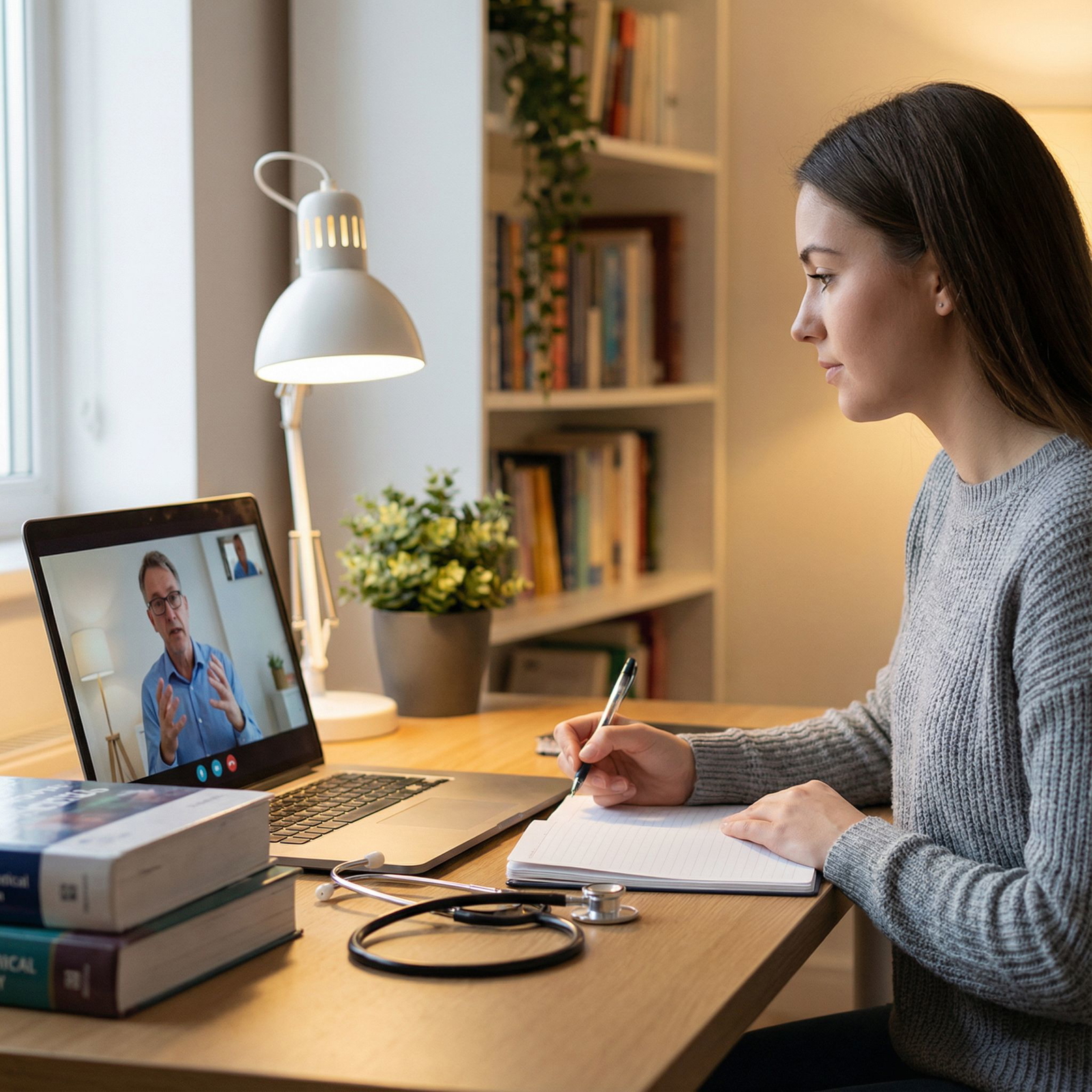
- One with a friend or classmate
- One with a mentor or advisor if possible
- Ask them to evaluate:
- Sound clarity
- Video quality and framing
- Lighting and background
- How your outfit and facial expressions appear on camera
- Conduct a mock residency interview over video, using real questions.
3. Prioritize Stable Internet
- Aim for:
- Download speed: ≥ 25 Mbps
- Upload speed: ≥ 5 Mbps
- Use a wired Ethernet connection if possible; if not:
- Sit near the router
- Ask others in your home not to stream video/games during your interview
- Test Internet speed using online tools (e.g., speedtest.net) several days before, and again the night before.
Have a Backup Plan for Technical Problems
Programs know that glitches happen, but how you respond is part of your Interview Preparation.
- Backup device
- Keep a fully charged secondary device (laptop, tablet, or smartphone) ready with the app installed and tested.
- Backup internet
- Consider using:
- A mobile hotspot on your phone
- Alternative Wi-Fi (library, study room, or a trusted friend’s place) if your home connection is unreliable.
- Consider using:
- Backup communication channels
- Save the program coordinator’s phone number and email before interview day.
- If you lose connection:
- Quickly reconnect.
- If that fails, call or email: “I lost my connection but am actively trying to rejoin. Thank you for your patience.”
- Practice your composure
- In a mock session, simulate a tech issue and rehearse staying calm and professional.
Handling a glitch smoothly can actually demonstrate poise, problem-solving, and professionalism—qualities programs value in residents.
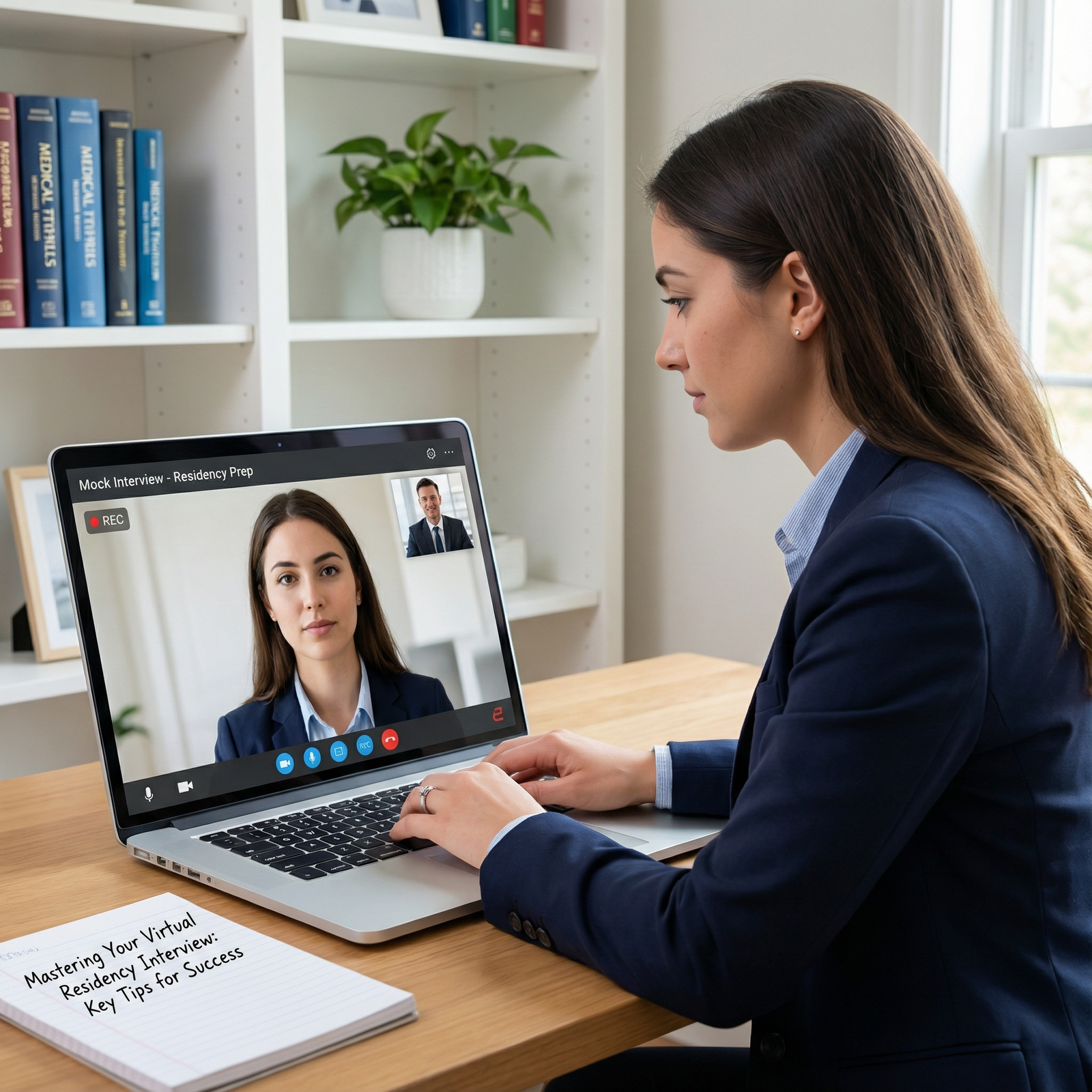
Crafting a Professional Interview Environment at Home
Your environment is part of your nonverbal communication. In virtual Residency Interviews, programs infer a great deal from what they see behind and around you.
Optimize Your Background and Framing
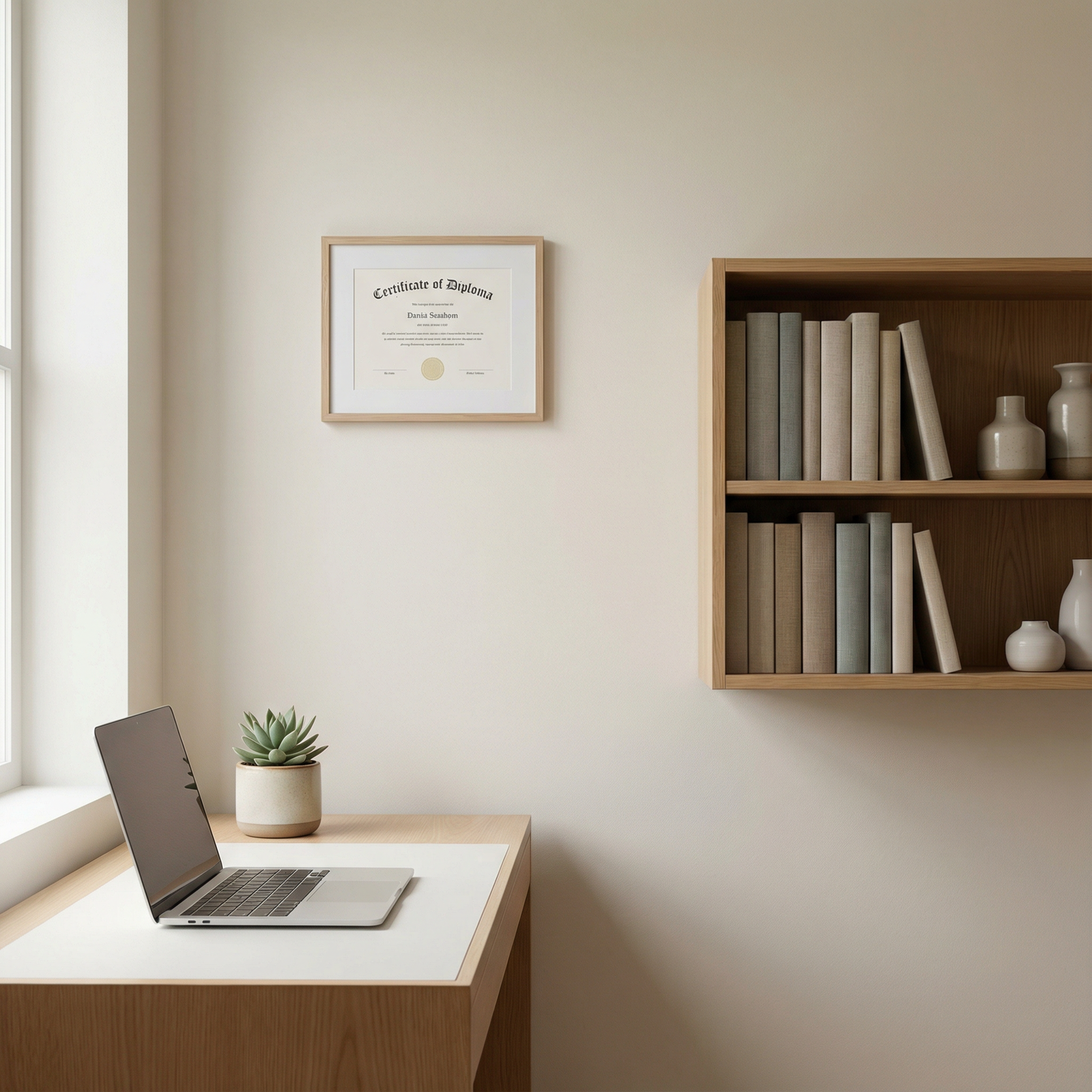
1. Keep the Background Simple and Neutral
- Ideal options:
- Plain wall
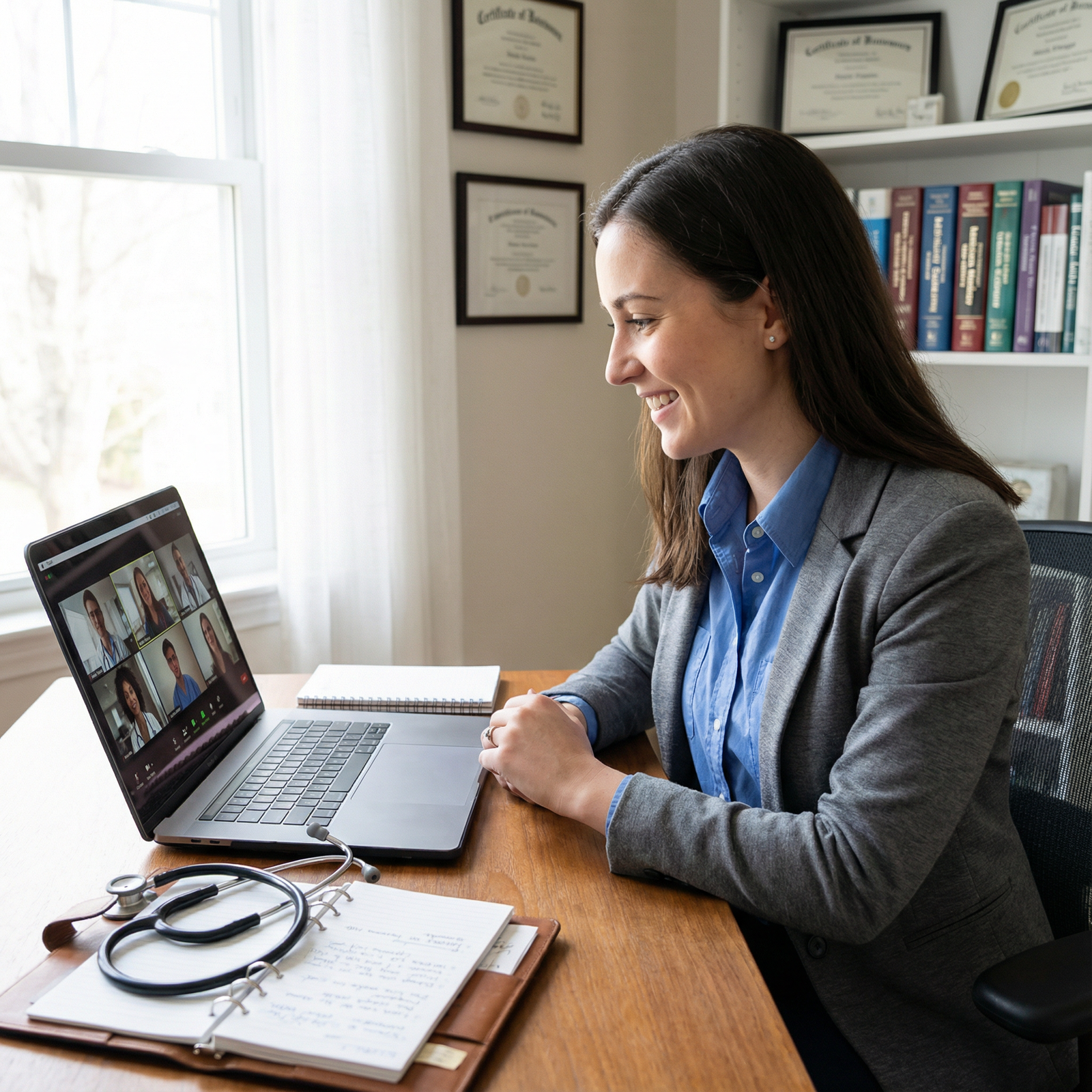
- Bookshelf with neatly arranged books
- Diploma or tasteful artwork
- Avoid:
- Visible beds, laundry, clutter, or distracting posters
- Heavy backlighting (e.g., window directly behind you)
- Virtual backgrounds that are glitchy or unprofessional
If you must use a virtual background, choose something subtle and solid (e.g., a soft gradient, academic-looking office) and test it to avoid “ghosting” around your hair or shoulders.
2. Position Yourself Correctly on Screen
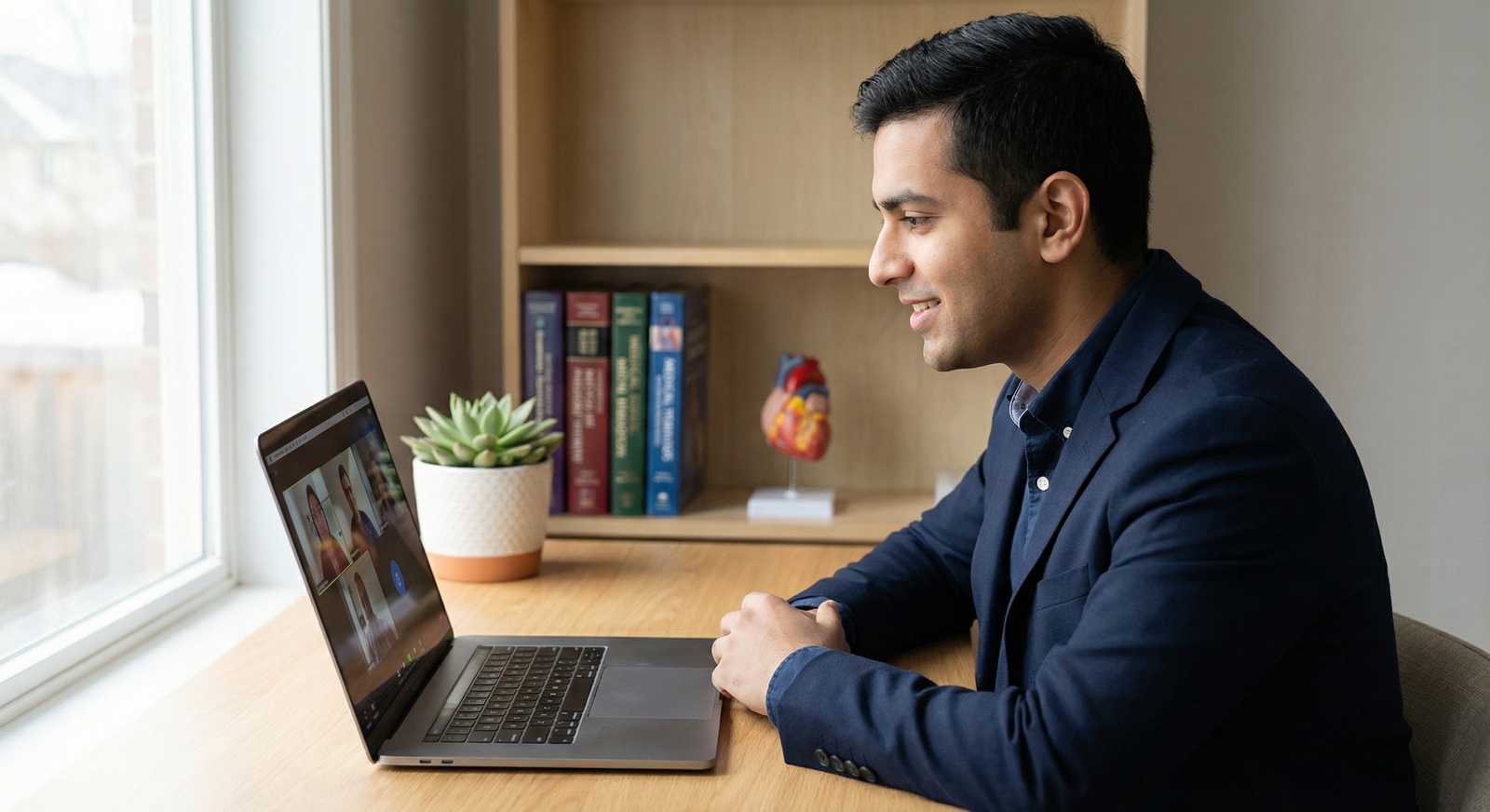
- Sit centered with your head and shoulders visible—roughly from mid-chest upward.
- Leave a little space above your head (not cut off, not too distant).
- Place the camera:
- At eye level (use books or a laptop stand if needed)
- About an arm’s length away
- Check the view in the platform’s preview window before joining.
Get Lighting and Sound Right
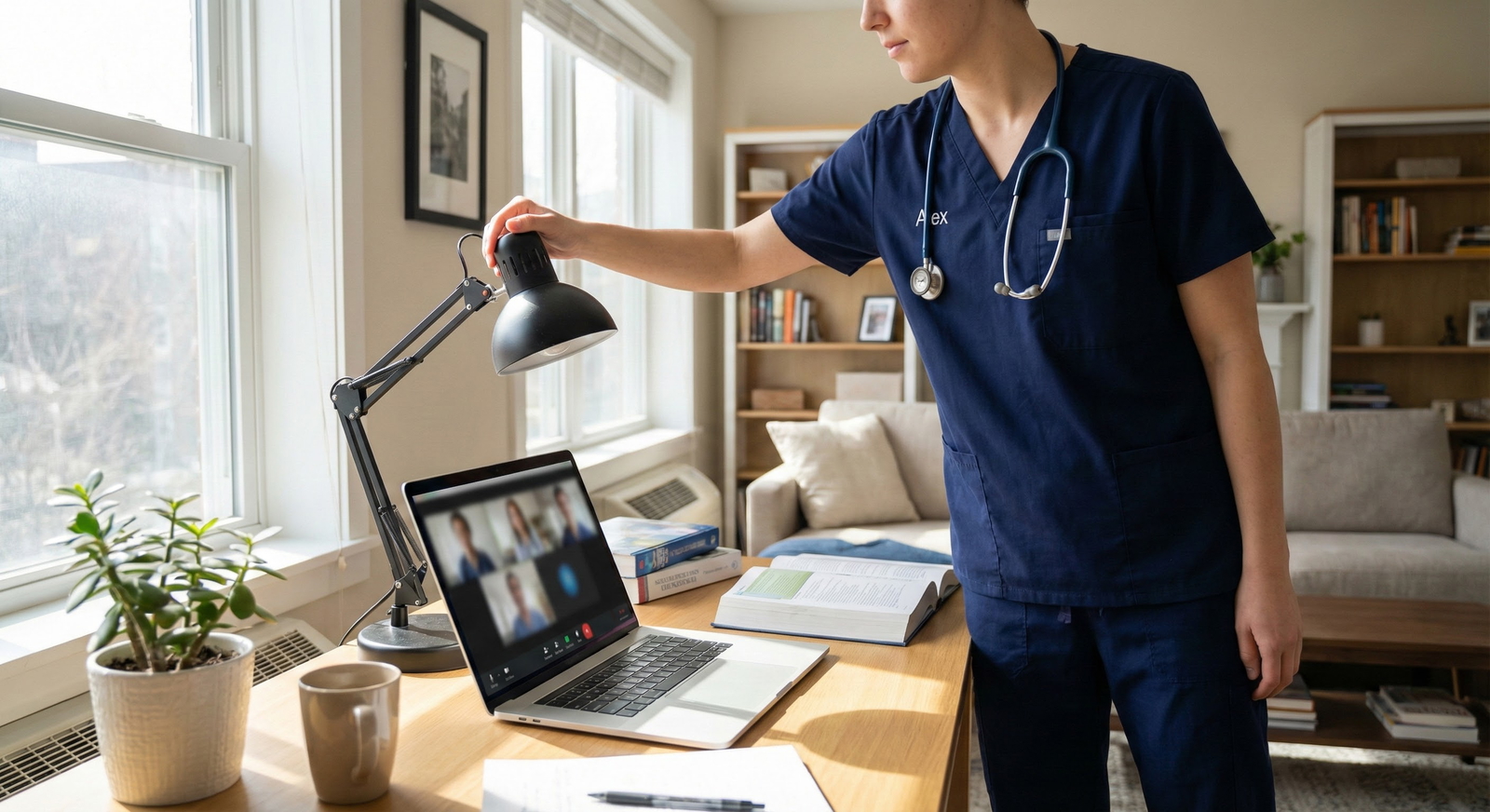
1. Lighting Tips for Virtual Interview Success
- Best: Sit facing a window with natural light illuminating your face.
- If natural light isn’t available:
- Use a soft desk lamp or ring light behind the camera.
- Avoid strong overhead lighting that causes shadows.
- Check:
- Your face is clearly visible.
- No harsh glare on glasses (adjust angle or move light position).
2. Control Noise and Audio Quality
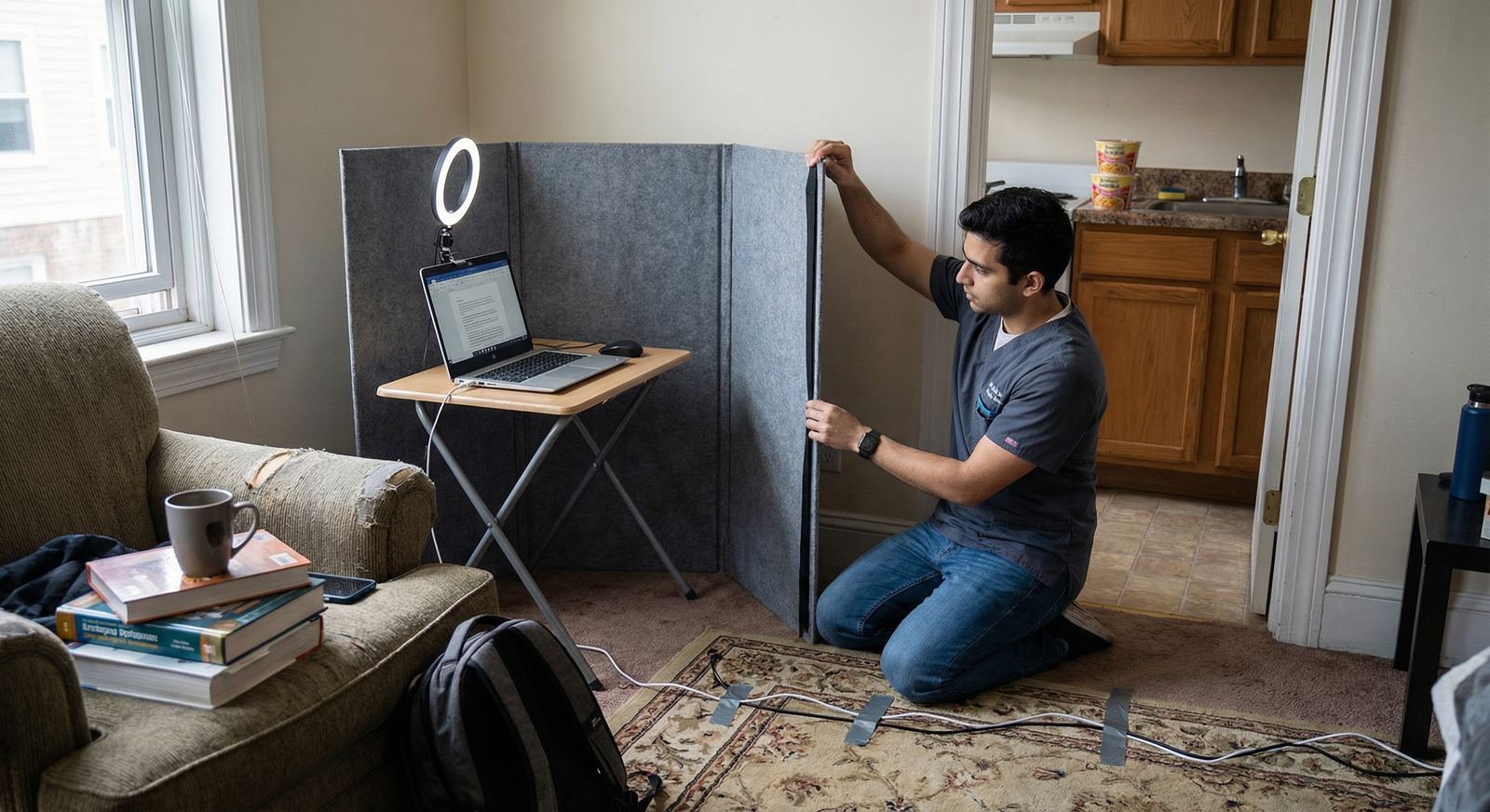
- Choose the quietest room available.
- Inform roommates, family, or neighbors of your schedule; post a note on the door.
- Silence:
- Phone notifications
- Email alerts
- Smart devices (e.g., smart speakers)
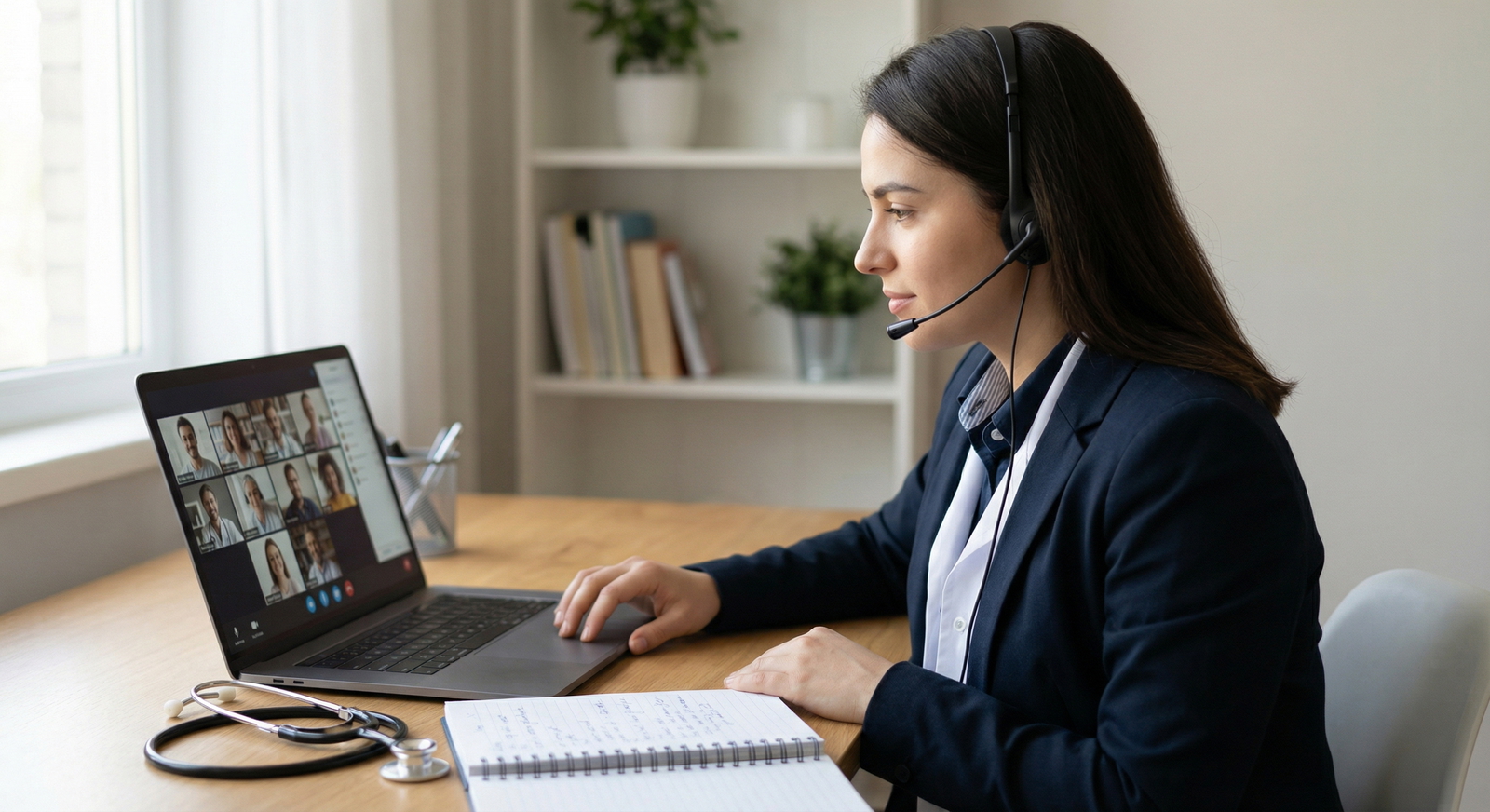
- Use wired earbuds or a headset if your laptop microphone is poor or picks up echo.
- Do a final sound check the morning of your interview day.
Minimize Distractions and Interruptions
- Close all unnecessary apps and browser tabs.
- Turn off pop-up notifications that might appear on shared screens.
- Let pets remain outside the room if they may bark, meow, or step into view.
- If you live in a noisy area, consider using noise-reducing features on your platform or a microphone with noise cancellation.
A clean, calm, and professional environment reinforces that you’re ready for residency-level responsibility.
Presenting Yourself Professionally: Attire, Grooming, and On-Screen Etiquette
What you wear and how you carry yourself still matter—virtual or not. Programs are asking: Can I see this person as my colleague on rounds? Your appearance contributes to that answer.
Dressing for Virtual Residency Interviews
- Aim for business formal or business professional
- Men/masculine attire:
- Dress shirt + tie; blazer recommended
- Neutral colors (navy, gray, black) work well
- Women/feminine attire:
- Blouse with blazer, or professional dress
- Avoid very bright neon colors or busy patterns
- Men/masculine attire:
- Choose camera-friendly colors
- Solids are best; small patterns can flicker on camera.
- Avoid pure white tops if they overpower the lighting.
- Dress fully
- Even though it’s virtual, wear professional pants or a skirt.
- It supports your mindset and avoids awkward situations if you need to stand up.
Grooming and Overall Presentation
- Keep hair neat and away from your face.
- Maintain facial hair in a well-groomed style, if applicable.
- Minimal, natural makeup if you choose to wear it—focus on looking rested and professional.
- Avoid:
- Distracting jewelry (large earrings, noisy bracelets)
- Excessive accessories that pull attention away from your face.
On-Camera Etiquette and Professionalism
- Log in 10–15 minutes early to test camera and microphone.
- Use your full name as your display name (e.g., “Alex Chen, MS4”).
- When you join a room:
- Smile, greet your interviewer: “Good morning, Dr. Smith. Thank you for meeting with me today.”
- Maintain a professional posture:
- Sit upright, feet on the floor or comfortably planted.
- Avoid spinning chairs or rocking.
- Avoid eating during the interview; keep water nearby in a plain cup or bottle.
These details collectively reinforce your image as someone who respects the process and understands professional norms.
Communicating Effectively on Camera: Verbal and Nonverbal Skills
Once your tech and environment are in place, your ability to connect through a screen becomes the differentiating factor. Programs are not just assessing knowledge; they’re evaluating communication, empathy, and collegiality.
Eye Contact, Facial Expressions, and Body Language
1. Eye Contact on Video
- Train yourself to look at the camera, not your own image, especially when making an important point.
- A good habit:
- Look at the interviewer when they speak.
- Shift your gaze to the camera when you respond.
- Place the video window as close to your camera as possible to make this easier.
2. Use Open, Engaged Body Language
- Keep shoulders relaxed but not slouched.
- Nod occasionally to show you’re listening.
- Use natural, moderate hand gestures within the frame.
- Avoid:
- Fidgeting with pens, hair, or jewelry
- Constantly swiveling or shifting in your chair
3. Facial Expression Management
- Maintain a soft, neutral smile when appropriate.
- Show authentic reactions—interest, empathy, humor—just as you would in person.
- Practice your “resting” expression on camera; you don’t want to appear bored or stern unintentionally.
Speaking Clearly and Confidently
- Pace yourself:
- Speak slightly slower than normal, especially if you tend to talk quickly when nervous.
- Project your voice:
- Use a confident, conversational tone.
- Vary your pitch and emphasis to avoid sounding monotone.
- Be concise but complete:
- Aim for structured answers (~1–2 minutes for most questions).
- Use frameworks when appropriate (e.g., Situation–Task–Action–Result for stories).
Example for a behavior question:
- Situation: “During my internal medicine rotation, our team had a complex patient with heart failure and limited social support…”
- Task: “I was responsible for coordinating the discharge plan…”
- Action: “I reached out to social work, arranged home health visits, and created a simplified med list…”
- Result: “The patient avoided readmission, and our attending highlighted this as an example of effective team-based care.”
Preparing Your Content: Stories, Fit, and Residency-Specific Questions
Your Interview Preparation should go well beyond generic answers. Strong candidates walk in with:
- A clear narrative
- A deep understanding of the program
- Concrete examples aligned with the specialty’s values
Know Your Application Inside and Out
- Review:
- ERAS application
- Personal statement(s)
- Research abstracts and publications
- Notable clerkship comments or awards
- Be ready to discuss:
- Any gap in training or unusual timeline
- Any USMLE/COMLEX challenges and what you learned
- The reasoning behind significant career decisions (e.g., specialty choice, dual degree)
Build Your Core Narrative
Reflect on and prepare to articulate:
Why this specialty?
- Choose 2–3 specific experiences that shaped your decision.
- Connect them to skills and qualities you bring (e.g., procedural interest, continuity of care, teamwork).
Why this program?
- Research:
- Program size and structure
- Unique tracks (research, global health, leadership)
- Patient population and hospital system
- Educational philosophy or mission statement
- Use details: “I was drawn to your commitment to X,” not just “You’re a strong program.”
- Research:
What makes you different?
- Clinical strengths
- Teaching experience
- Language skills
- Leadership roles
- Community engagement
Prepare for Common Residency Interview Questions
Practice aloud answers to questions such as:
- “Tell me about yourself.”
- “Why did you choose this specialty?”
- “What are your strengths and weaknesses as a clinician?”
- “Describe a conflict you faced on a team and how you handled it.”
- “Tell me about a time you made a mistake and what you learned.”
- “How do you handle stress and prevent burnout?”
- “Where do you see yourself in five to ten years?”
Avoid memorized scripts; instead, outline key bullet points you want to hit. Practice enough that you sound fluent but genuine.
Showcase Soft Skills and Professional Development
Residency programs place tremendous value on:
- Teamwork
- Leadership
- Adaptability
- Cultural humility
- Communication with diverse patients and staff
Highlight these with specific, clinical examples, such as:
- Leading a quality improvement project on your inpatient service
- Mediating a disagreement between team members
- Working with a patient from a different cultural or linguistic background
- Advocating for a patient with limited resources
Tie these stories to how you will contribute as a resident—as a colleague, educator, and advocate.
Asking Insightful Questions and Following Up Professionally
Residency Interviews are a two-way assessment. You’re also evaluating whether the program’s culture, training style, and goals align with your needs and values.
Ask Smart, Program-Specific Questions
Prepare 3–5 thoughtful questions you can rotate depending on who you’re speaking with (faculty vs. residents vs. PD/APD).
Examples for faculty or leadership:
- “How would you describe the program’s top priorities in resident Professional Development over the next few years?”
- “What qualities do you see in residents who thrive here?”
- “How does the program support residents interested in research/education/global health/advocacy?”
- “Can you describe how feedback is given to residents and how often formal evaluations occur?”
Examples for residents:
- “What do you wish you had known about the program before you started?”
- “How would you describe the program’s culture on a tough call night?”
- “What’s one thing the program does exceptionally well, and one area they’re actively working to improve?”
- “How manageable is the workload, and how is wellness supported in practice?”
Avoid questions that are easily answered on the website (e.g., “How many residents are in the program?”) unless you’re asking for clarification or recent changes.
Follow-Up Etiquette: Thank You Notes and Continued Interest
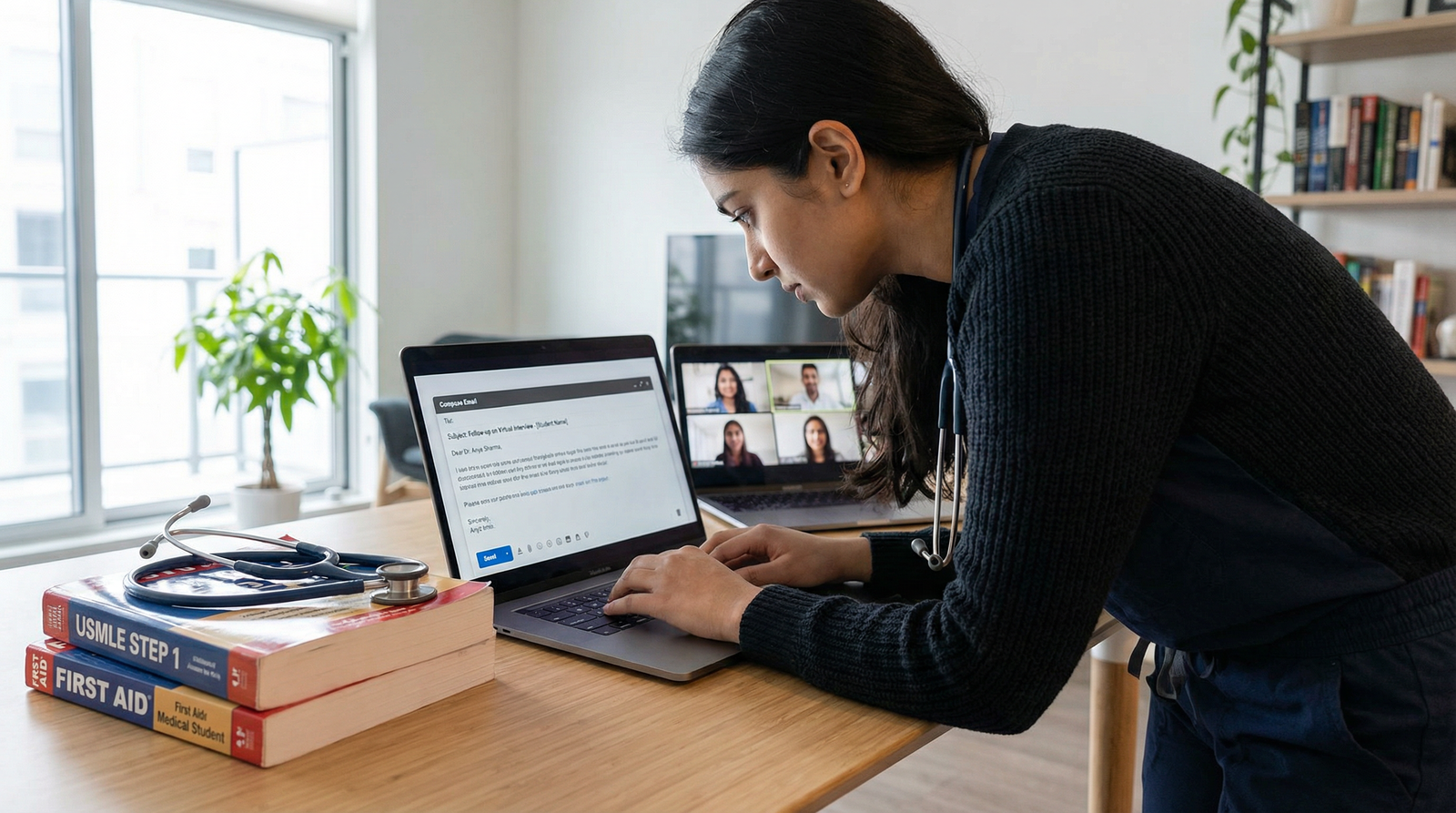
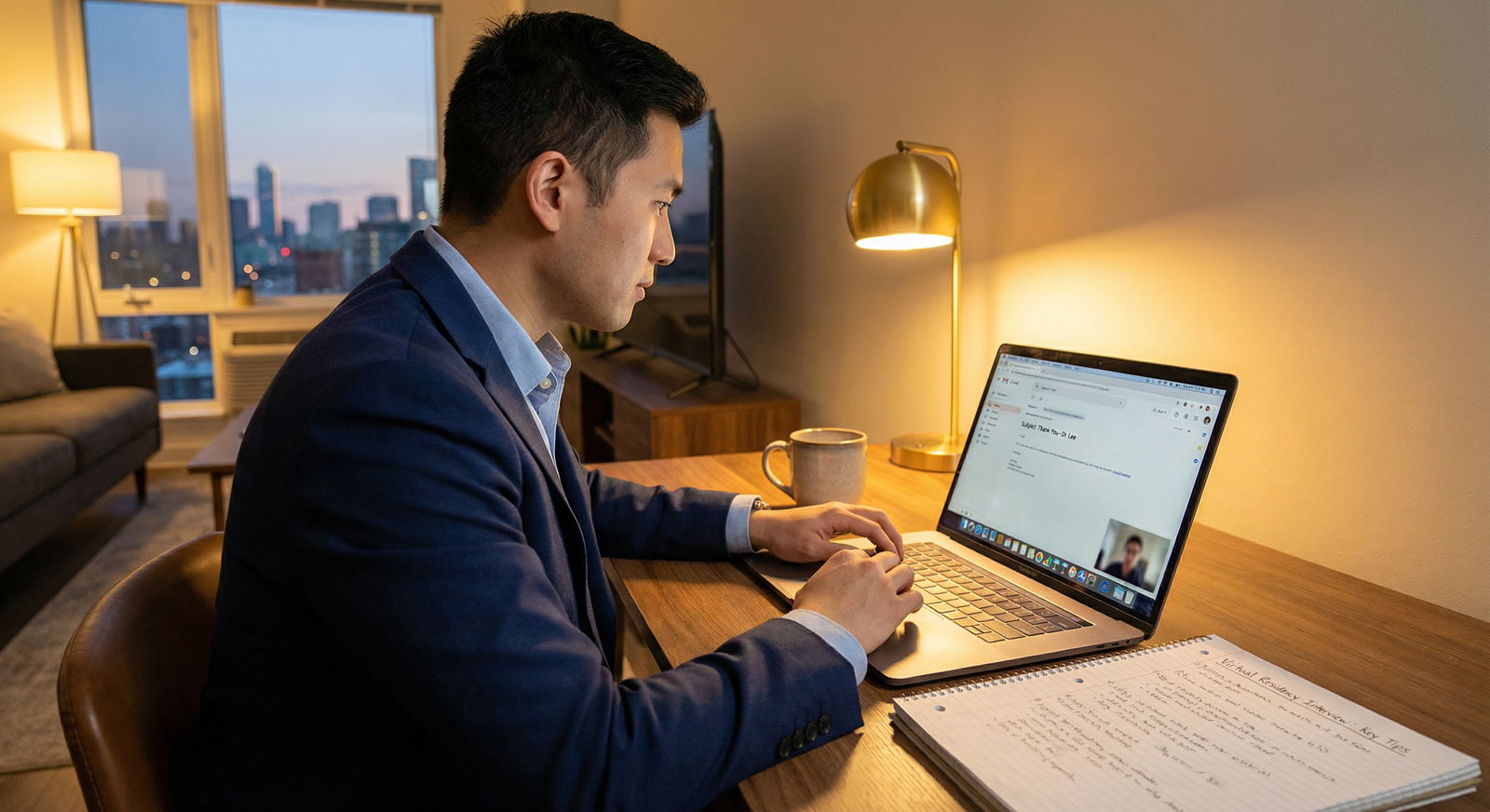
1. Send Thank You Emails Promptly
- Aim to send thank you notes within 24–48 hours.
- Keep each note:
- Concise (1–3 short paragraphs)
- Professional and warm
- Specific to your conversation
Template structure:
- Thank them for their time.
- Reference one or two specific things you discussed.
- Reaffirm your interest in the program and why it aligns with your goals.
2. Addressing Multiple Interviewers
- If you met individually with several faculty members, send separate emails.
- For residents met in a group, it’s acceptable to:
- Send one email to a chief resident or designated contact, or
- Send individual notes if you had an extended personal interaction.
3. Expressing Interest Without Overstepping
- You can say:
- “This interview reinforced my strong interest in your program.”
- “I would be very excited to train here.”
- Follow NRMP rules and program instructions about signaling or ranking; avoid asking them how they will rank you.
Thoughtful, professional follow-up can reinforce a positive impression and help you stand out among many strong applicants.
Putting It All Together: A Brief Case Example
Consider “Samantha,” a fourth-year medical student applying to internal medicine:
Before interviews
- She scheduled mock virtual interviews with her advisor, focusing on camera eye contact and concise storytelling.
- She tested her laptop, configured a wired connection, and set up a clean background with a bookshelf and diploma.
During an actual interview day, her Wi-Fi briefly dropped:
- She calmly rejoined using her phone’s hotspot within two minutes.
- She apologized briefly—“Thank you for your patience”—and smoothly resumed the conversation.
- The PD later commented that her composure under pressure was impressive.
Her communication stood out
- She answered behavioral questions with clear, specific clinical examples.
- She asked thoughtful questions about resident autonomy and mentorship.
- In resident Q&A, she engaged naturally, showing curiosity and humility.
Afterward
- Samantha sent personalized thank you emails referencing specific patients, projects, and mentorship structures discussed.
- Months later, one faculty member told her that her professionalism, preparation, and follow-up were key factors in their enthusiasm to rank her highly.
Your goal is not perfection but consistent, professional, and authentic performance across your interview days.
FAQ: Virtual Residency Interviews and How to Stand Out
Q1: What should I do if technology fails during my virtual residency interview?
If something goes wrong, prioritize composure and communication:
- Try to rejoin the meeting immediately using your primary or backup device.
- If you can’t reconnect within a couple of minutes, email or call the program coordinator or the contact provided in your invitation.
- Briefly apologize and explain the issue, then focus on moving forward.
Programs understand technical problems; how you handle them can demonstrate your maturity and resilience.
Q2: Is it acceptable to have notes during a virtual interview? How should I use them?
Yes, brief notes are acceptable and common. Use them wisely:
- Place a small index card or sticky notes near your screen with:
- Key points for “Why this specialty” and “Why this program”
- Names of interviewers (if known)
- 3–5 questions you want to ask
- Avoid reading from a script; interviewers can tell when you’re reading.
- Keep your primary focus on the camera and the conversation, using notes as subtle prompts.
Q3: How long do virtual residency interviews usually last, and how should I manage my energy?
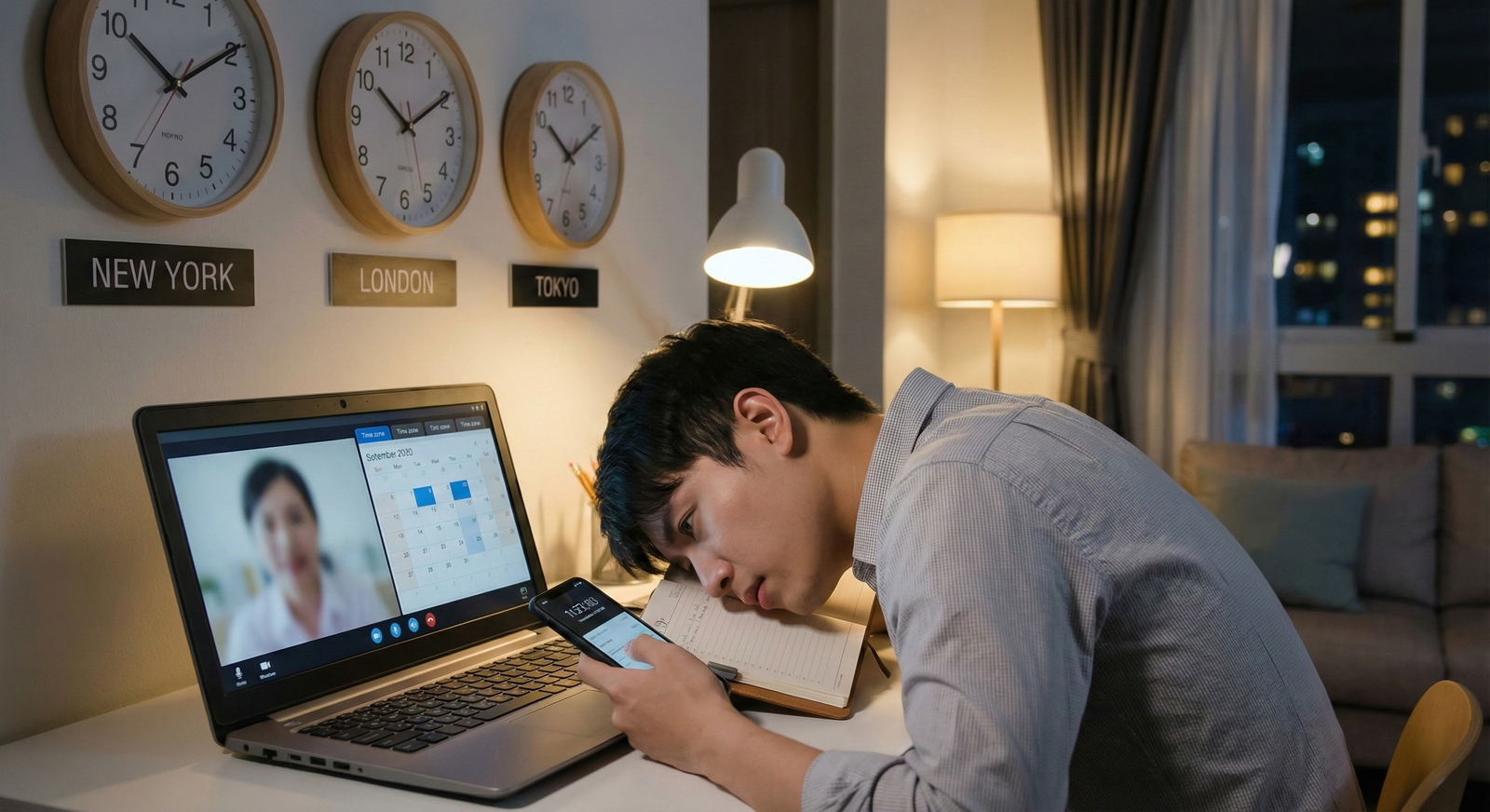
Individual interviews are typically 20–30 minutes, but full virtual interview days often span half or full days with breaks.
To manage energy:
- Eat a light, balanced meal beforehand.
- Keep water nearby and stay hydrated.
- Use scheduled breaks to:
- Stand up and stretch
- Rest your eyes from the screen
- Take a few deep breaths to reset
- If you have multiple interviews in a row, jot one or two quick notes after each to help you remember details later.
Q4: Are personal stories appropriate in residency interviews, or should I stay strictly professional?
Personal anecdotes are not only appropriate but highly effective, as long as they’re:
- Relevant to your development as a future resident physician
- Respectful and professional
- Focused on what you learned and how it shaped your values or skills
For example, sharing how a family member’s illness influenced your interest in your specialty can be powerful, especially when you tie it back to how you communicate with patients and families today.
Q5: How soon after the interview should I send thank you notes, and what if I don’t have all the email addresses?
Send thank you emails within 24–48 hours while the interaction is still fresh:
- If you don’t have all the addresses:
- Check the program’s website or any materials they sent.
- You may email the program coordinator, politely asking if they can forward your messages to specific interviewers.
- Even a short, well-written note helps reinforce your interest and leaves a professional final impression.
Virtual residency interviews are more than a technological substitute for in-person visits—they’re now a central part of how programs assess your readiness for residency and how you assess your future training home. By mastering your technology, crafting a professional environment, honing your communication skills, preparing thoughtful content, and following up strategically, you can stand out as a prepared, adaptable, and collegial future resident.