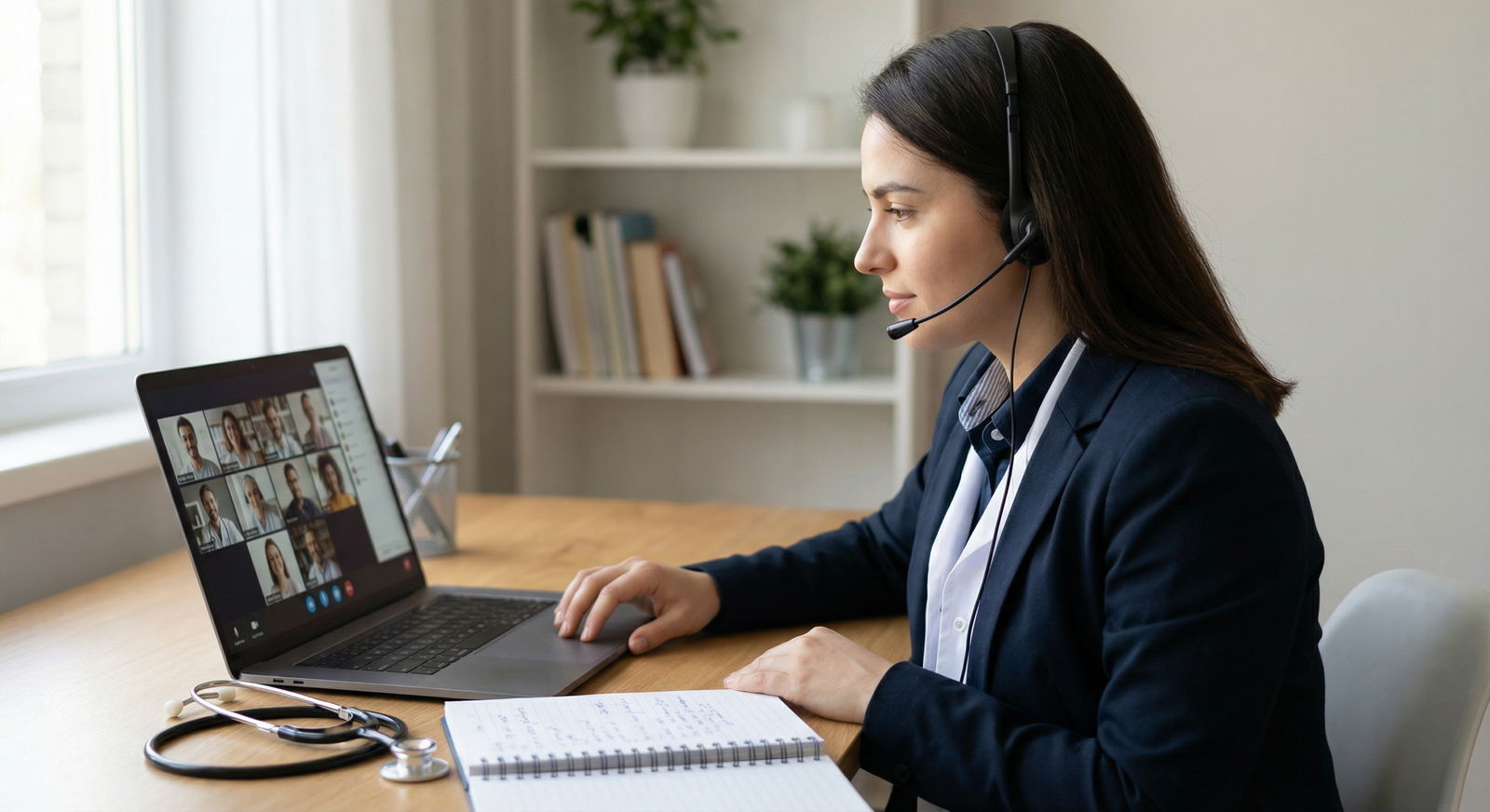
Managing Interview Anxiety in Virtual Settings for Residency Applicants
Interviews are stressful for almost everyone, and in the high-stakes world of residency recruitment, that pressure can feel intense. When those interviews move to virtual platforms, new challenges emerge—technical glitches, awkward silences, and the difficulty of connecting through a screen can all increase interview anxiety.
For residency applicants, mastering interview anxiety in virtual interviews is not just about feeling better; it’s a critical career development skill that can impact where you ultimately match. The good news: anxiety in this context is both normal and manageable. With structured preparation, environment control, and targeted anxiety management techniques, you can show interviewers your best, most authentic self.
This guide walks you through practical, evidence-informed strategies specifically tailored to virtual residency and fellowship interviews, though the job interview tips here apply broadly to other careers as well.
Understanding Virtual Interview Anxiety in Residency Recruitment
Why Virtual Interviews Feel So Stressful
While many of the stressors of in-person interviews still apply, virtual formats add new layers. Common contributors include:
Higher Stakes and Limited Chances
Residency and fellowship interviews often feel like “make-or-break” moments in your career development. You may only get one or two hours to represent years of training, which can amplify performance pressure.Technology-Related Fears
Concerns about:- Unstable internet
- Audio/video malfunctions
- Difficulty logging onto unfamiliar platforms
These worries can become a major source of interview anxiety even before you enter the virtual room.
Reduced Nonverbal Feedback
In person, you can pick up on body language, small smiles, and group dynamics. On a screen, especially with multiple interviewers or lagging video, it’s harder to “read the room,” which can make you feel less grounded and more self-conscious.Home Environment Distractions
Shared living spaces, thin walls, pets, children, traffic noise, or construction can all create ambient worry: “What if something interrupts?” That anticipatory stress alone can raise your baseline anxiety.Fatigue from Multiple Back-to-Back Virtual Interviews
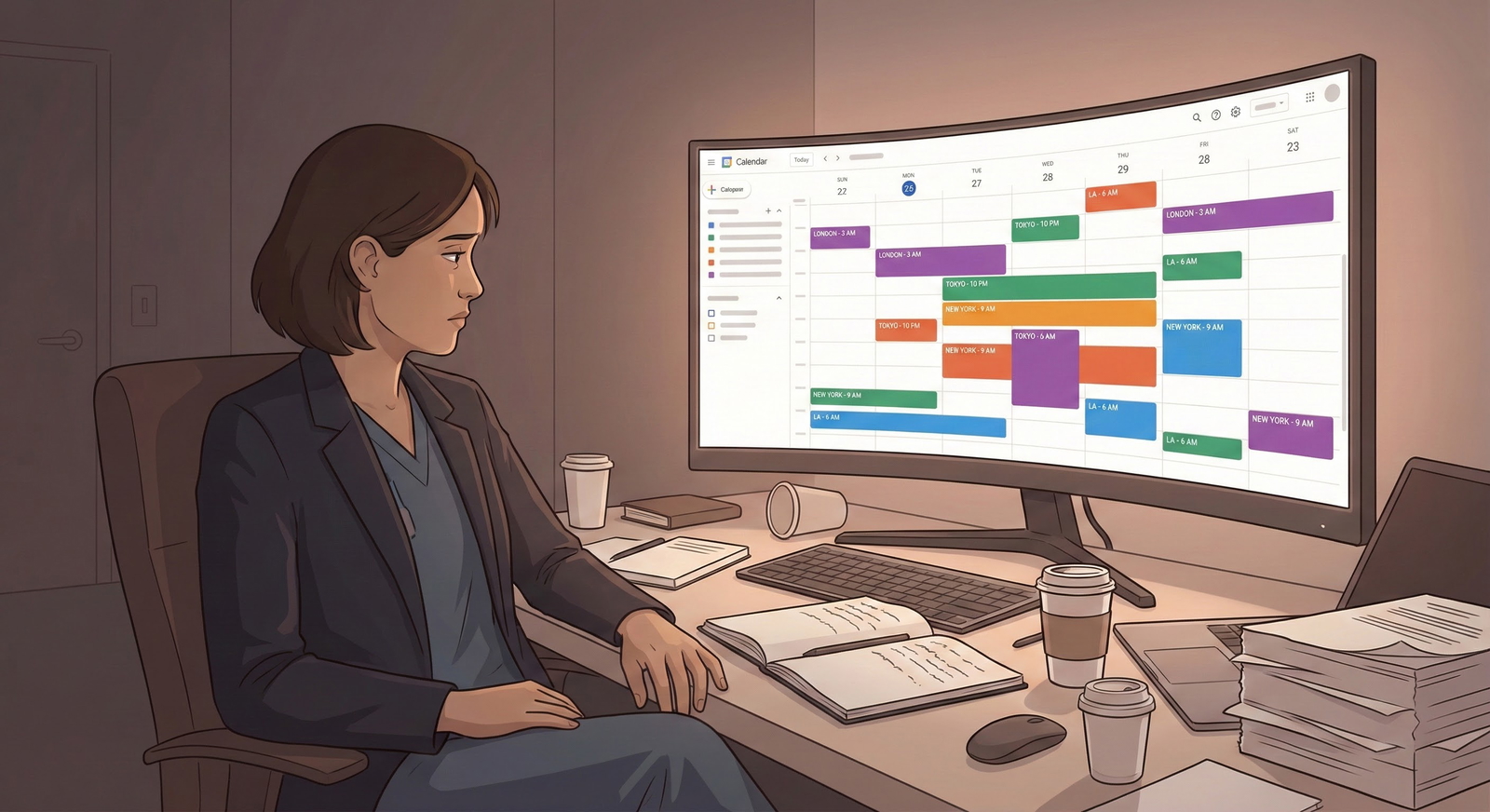
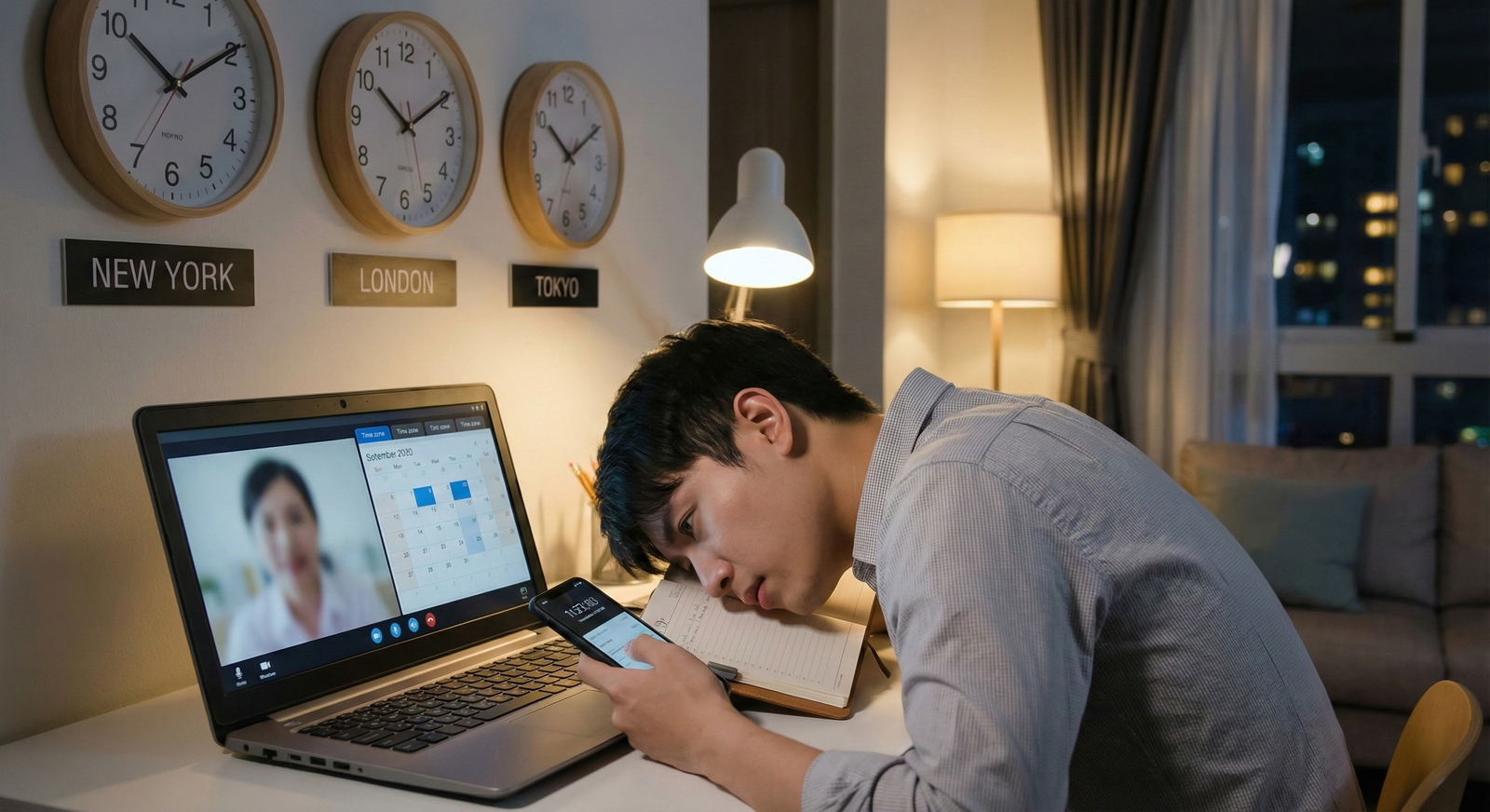
Residency interview season often involves multiple interviews in a short time. Staring at a screen, trying to be “on” for hours, and repeating your story over and over can produce both mental fatigue and emotional drain.
Normalizing Your Anxiety
Feeling anxious before or during a virtual interview does not mean you’re unprepared or unfit for residency. In fact, moderate anxiety can enhance alertness and performance. The key is to keep anxiety in the “optimal zone,” where it sharpens your focus rather than overwhelming you.
A useful perspective: interview anxiety is often a sign that you care deeply about your future and the opportunity at hand. Your goal is not to eliminate those feelings but to manage and channel them effectively.
Strategic Preparation to Reduce Virtual Interview Anxiety
Preparation is one of the most powerful forms of anxiety management. It transforms vague worry into specific, solvable tasks, increasing your sense of control.

Research the Program and Context Thoroughly
Deep program familiarity reduces uncertainty and helps you communicate more confidently.
Know the basics:
- Program size, structure, and affiliated hospitals
- Key faculty (PD, APDs, chief residents)
- Program strengths (research, community engagement, specific clinical tracks)
Align your story with their mission:
If a program emphasizes underserved care or clinical research, prepare concrete examples from your own experience that demonstrate alignment.Prepare program-specific questions:
Thoughtful questions show engagement and help you evaluate fit:- “How has your program adapted educationally to virtual or hybrid formats?”
- “How do residents here receive feedback and mentorship?”
- “What differentiates successful residents in your program?”
Having this information at your fingertips reduces last-minute scrambling and contributes to a calmer, more focused mindset.
Practice Common Residency Interview Questions
Repetition builds confidence and improves fluency under pressure. Prepare for questions in core categories:
Tell me about yourself.
Craft a 60–90 second “professional story” that:- Follows a clear arc: background → medical journey → why this specialty → current goals
- Highlights 2–3 key themes (e.g., teamwork, resilience, commitment to underserved communities)
Why this specialty? Why our program?
Focus on:- Specific experiences that led you to your specialty
- Concrete aspects of the program that attract you (curriculum, patient population, culture)
Behavioral and situational questions, such as:
- “Tell me about a time you made a mistake in clinical care.”
- “Describe a conflict with a team member and how you handled it.”
- “Tell me about a time you received difficult feedback.”
Use the STAR framework (Situation, Task, Action, Result) to structure your answers. Writing short bullet points for each story can make them easier to recall under stress.
Use Mock Interviews in Virtual Format
Practice in a setting that mirrors the real experience:
Ask a mentor, advisor, chief resident, or trusted peer to:
- Host a mock interview on Zoom, Teams, or the platform used by the program
- Record the session (with your consent) so you can review verbal and nonverbal habits
- Provide feedback on clarity, conciseness, and professionalism
Pay attention to:
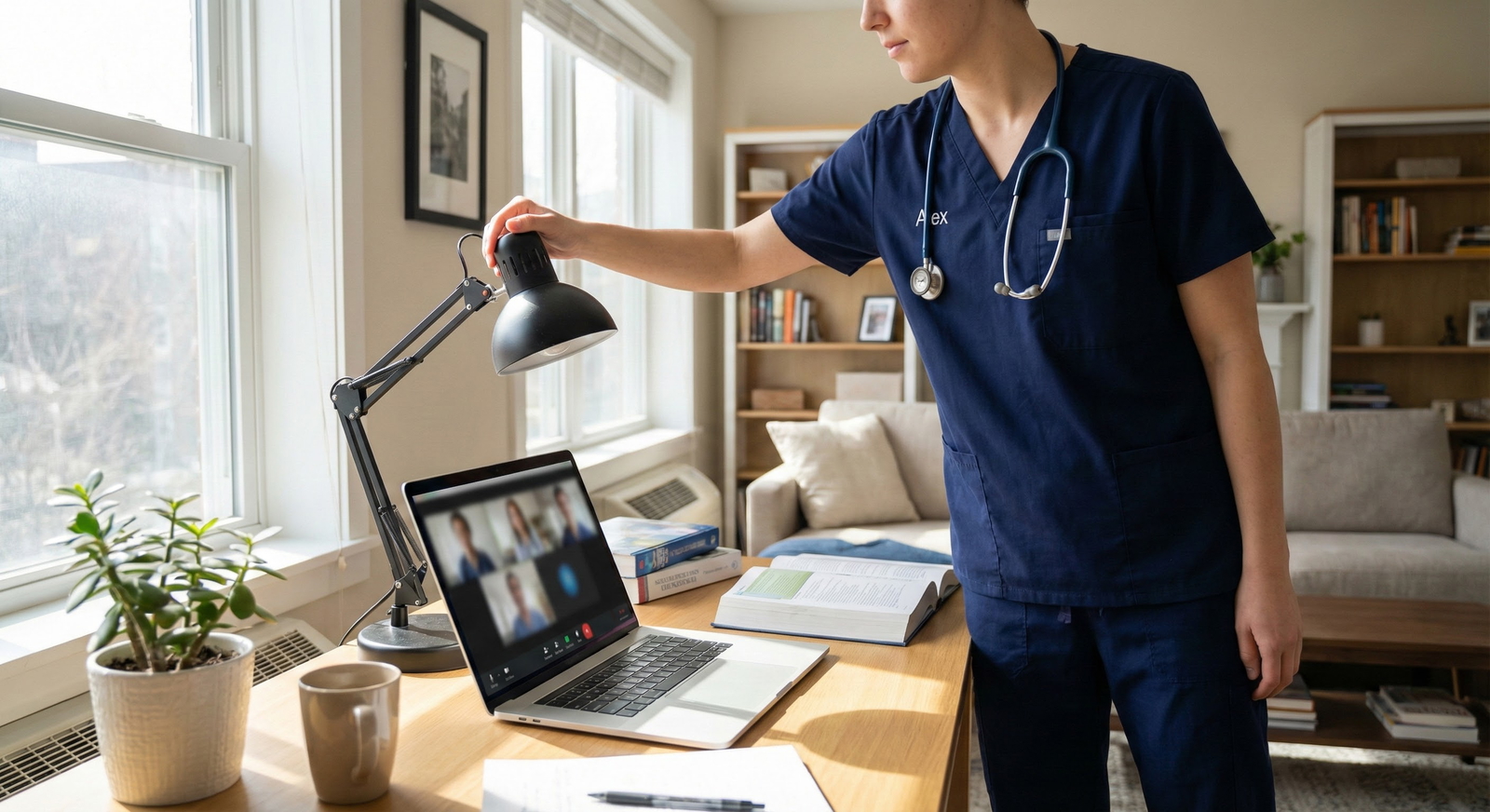
- Camera positioning and lighting
- Voice volume, pacing, and tone
- Filler words (“um,” “like,” “you know”)
- Habits like fidgeting, looking away, or multitasking
The more you rehearse in a realistic environment, the more automatic and natural your performance will feel during the real interview.
Create a Personalized Pre-Interview Checklist
A checklist offloads cognitive load and decreases last-minute panic. Include:
- Technology: platform link, login details, meeting ID
- Hardware: laptop charged, webcam and mic tested, headphones nearby
- Environment: lighting, background, room temperature
- Documents: CV, personal statement, program notes, list of questions
- Personal: water, tissues, pen and notepad, quick snack scheduled before
Reviewing this 30–60 minutes prior to each interview can significantly lower your interview anxiety.
Setting Up a Calm, Professional Virtual Interview Environment
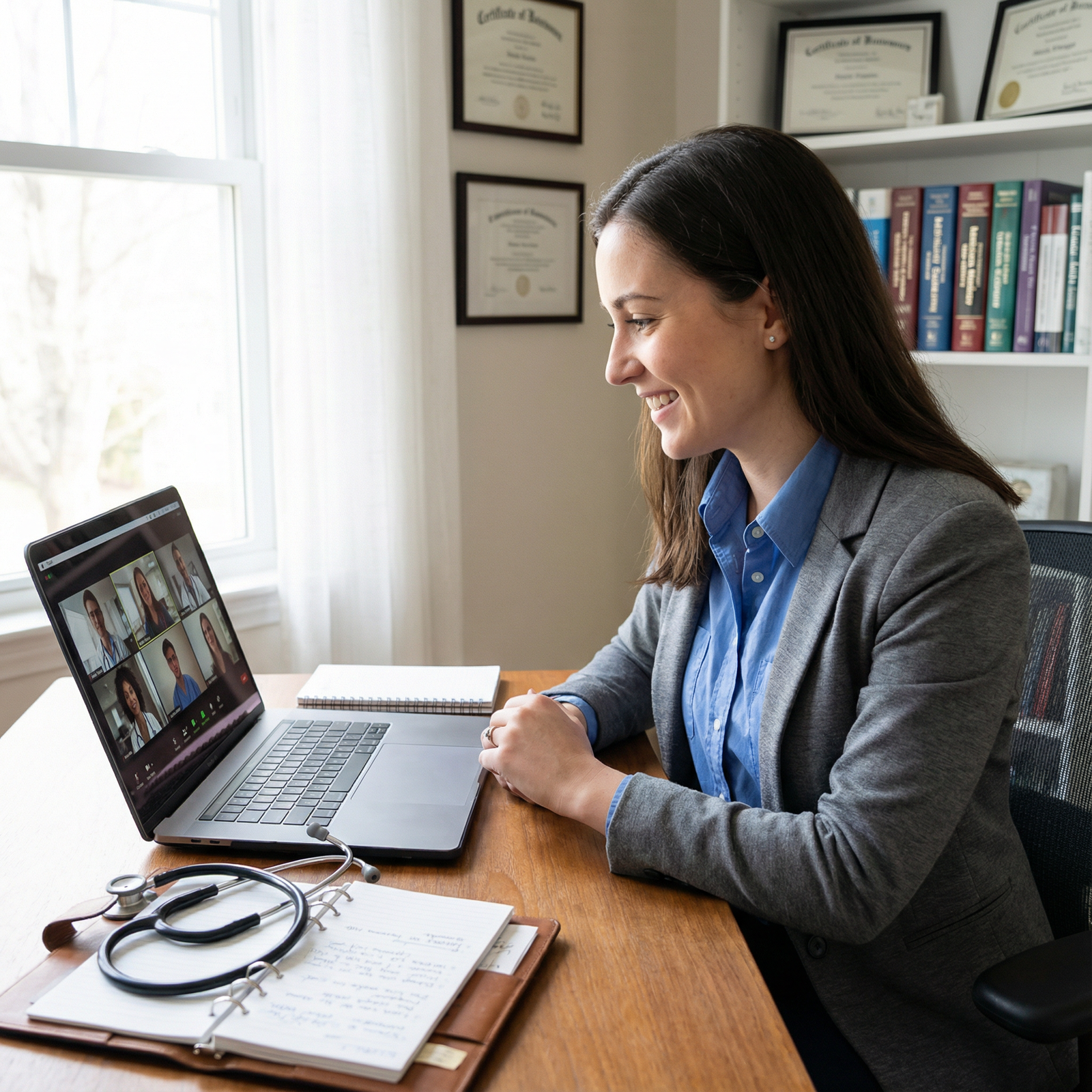
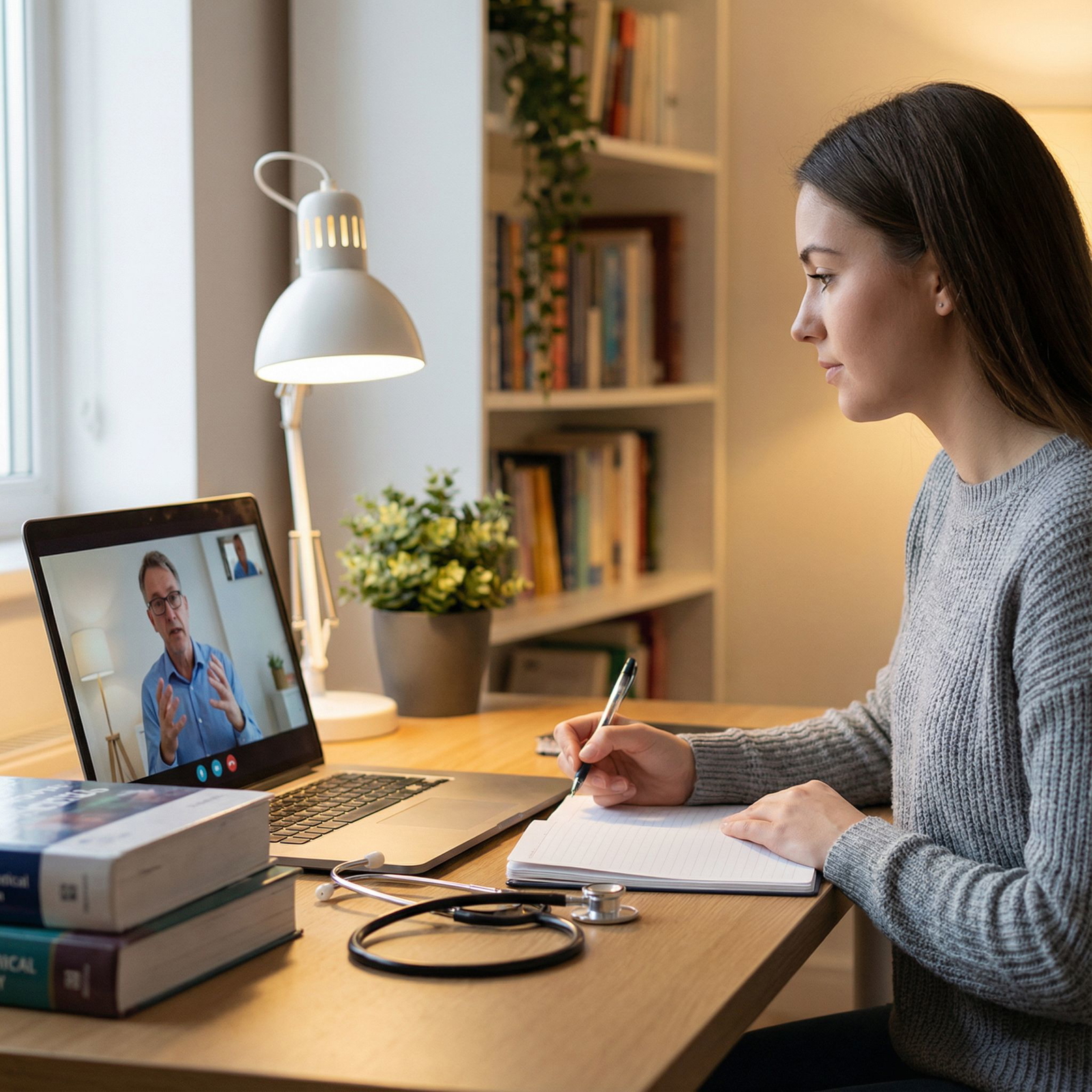
Your physical and digital environment can either fuel anxiety or support calm focus. Thoughtful setup is one of the most underrated job interview tips for virtual formats.
Choose the Best Possible Space
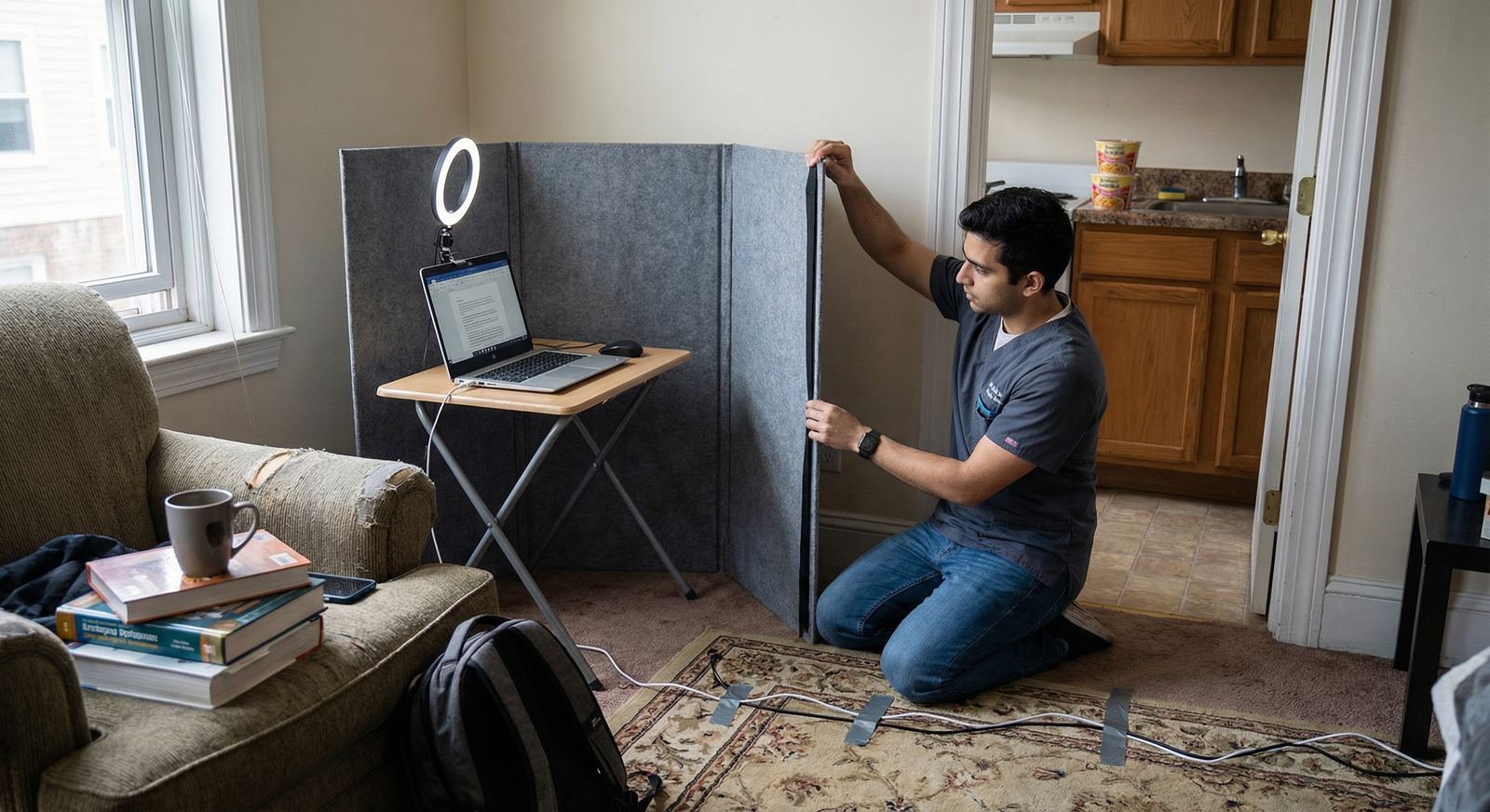
Even if you have limited options (e.g., small apartment, shared housing), you can still optimize:
Quiet and private:
- Inform roommates or family of your schedule
- Use a sign on your door during interview times
- Silence notifications on phones and smartwatches
Stable, non-distracting background:
- Neutral wall or tidy bookshelf works well
- Avoid clutter, personal laundry, or crowded spaces behind you
- Virtual backgrounds can be acceptable if professional and non-distracting, but test them in advance
Lighting and camera angle:
- Face a light source rather than having it behind you
- Position the camera at or slightly above eye level
- Frame your face and upper torso, similar to a professional headshot view
Test and Secure Your Technology
Since fear of technical failure is a major source of anxiety, reduce that risk systematically:
Internet:
- Use a wired connection if possible, or sit close to your router
- Ask others in your home to limit streaming during your interview time
Device and software:
- Update your video conferencing app the day before (to avoid forced updates at login)
- Test audio and video with a friend on the same platform
- Turn off auto-notifications that might pop up on screen
Backup plan:
- Have a secondary device ready (tablet or phone with the app installed)
- Keep the program coordinator’s email and phone number accessible
- Download any necessary virtual background or platform plugin ahead of time
Just knowing you have backups can significantly decrease anticipatory anxiety.
Dress Professionally and Comfortably
Your attire influences both how you are perceived and how you feel:
Aim for standard professional interview attire:
- Blazer or jacket, collared shirt or blouse, professional dress or top
- Solid or simple patterns tend to look better on camera
Wear full professional attire, not just from the waist up. This guards against unexpected reasons you might need to stand (e.g., adjusting your setup).
Comfort matters:
Clothes that fit well and feel comfortable will help reduce physical discomfort that can amplify anxiety.
Mind-Body Strategies: Managing Anxiety Before and During the Interview
While preparation and environment address external factors, direct anxiety management requires internal strategies.

Use Breathing Techniques to Regulate Your Nervous System
Anxiety activates your sympathetic (fight-or-flight) system. Deliberate breathing techniques help shift you toward a calmer, more focused state.
Try these simple, discreet methods:
Box breathing (4–4–4–4):
- Inhale through your nose for 4 seconds
- Hold for 4 seconds
- Exhale through your mouth for 4 seconds
- Hold for 4 seconds
Repeat 4–6 cycles in the 10 minutes before your interview or even briefly between sessions.
Extended exhale breathing:
- Inhale for 4 seconds
- Exhale slowly for 6–8 seconds
Longer exhalations help activate the parasympathetic (rest-and-digest) system.
You can practice these techniques daily in the weeks leading up to interview season to make them more effective under pressure.
Brief Mindfulness and Grounding Exercises
You don’t need a full meditation practice to benefit from mindfulness. Even 3–5 minutes can reduce physiological arousal and racing thoughts.
Simple 5-minute practice:
- Sit upright, feet on the floor
- Close your eyes or soften your gaze
- Focus your attention on the sensation of breathing
- When your mind wanders (it will), gently bring it back to the breath
5–4–3–2–1 grounding (helpful for acute spikes of anxiety):
- Name 5 things you can see
- 4 things you can feel
- 3 things you can hear
- 2 things you can smell
- 1 thing you can taste
This redirects your attention from worry to physical reality, helping you feel more anchored.
Using apps like Headspace, Calm, or Insight Timer can help you build a short daily routine during interview season.
Visualization and Cognitive Reframing
Your thoughts about interviews strongly influence your anxiety level. Intentionally reshaping them can be powerful.
Positive visualization:
- Imagine yourself logging on calmly, greeting interviewers warmly
- See yourself answering questions clearly and authentically
- Picture nodding, smiling, and engaging in genuine conversation
Doing this repeatedly builds a mental template of success.
Reframe unhelpful thoughts:
- Instead of: “If I mess up, I’ll never match.”
Try: “I may stumble on a question, but I have many strengths and experiences to offer.” - Instead of: “Everyone else is calmer than I am.”
Try: “Most applicants are nervous. My preparation is what matters most.”
- Instead of: “If I mess up, I’ll never match.”
Cognitive reframing does not deny the stakes—it focuses your attention on what you can control.
Building Connection and Presence in the Virtual Interview Room
Residency interviews are fundamentally about relationships: programs are asking, “Would I want to work with this person for years?” Even online, you can create a sense of warmth and connection.
Communicate Engagement Through Nonverbal Cues
Small behaviors go a long way:
- Look at the camera when you speak, not at your own image
- Nod when listening and occasionally paraphrase to show understanding
- Maintain a relaxed, open posture with shoulders down and back
- Use natural hand gestures within the frame if it feels comfortable
Consider placing a small sticky note with a simple reminder near your camera—e.g., “Look here” or “Breathe and listen.”
Use Your Voice Intentionally
Vocal tone is especially important when video quality is variable:
- Vary your pitch and pace—avoid a flat, monotone delivery
- Pause briefly before answering complex questions to collect your thoughts
- Don’t rush; a slightly slower pace can convey confidence and clarity
If you tend to speak quickly when anxious, practice intentionally slowing your speech in mock interviews.
Ask Thoughtful, Genuine Questions
Programs are also trying to impress you. Asking real, specific questions:
- Demonstrates curiosity and maturity
- Shifts the dynamic from interrogation to conversation
- Gives you breathing space and a chance to reset
Prepare a list in advance, then choose questions based on what has already been discussed so you don’t repeat topics.
Handling Technical Issues Calmly and Professionally
No amount of preparation can guarantee a glitch-free virtual interview, but your anxiety management strategy should include how you respond when issues occur.
Create a Simple “If–Then” Script
Reduce in-the-moment panic by deciding ahead of time what you will do if:
Your internet drops:
- Reconnect as quickly as possible
- If unsuccessful, immediately email or call the coordinator:
“I’m experiencing an unexpected connectivity issue and am working to reconnect. Thank you for your patience.”
Your audio fails:
- Use the platform’s chat to alert the interviewer
- Switch to phone audio if provided or quickly log out/in
You’re late due to a tech issue:
- Apologize briefly, state the issue, then move on:
“Thank you for your patience—I had an unexpected connection issue but I’m glad to be here now.”
- Apologize briefly, state the issue, then move on:
Most programs fully understand that technical disruptions are part of virtual life and will not penalize you for them if you remain calm and professional.
Post-Interview Reflection and Recovery: Protecting Your Energy
Interview season is a marathon, not a sprint. How you decompress and learn after each encounter affects your resilience and confidence over time.
Conduct a Brief, Structured Self-Assessment
Within an hour of each interview (while details are fresh):
- Jot down:
- Questions you were asked
- What you felt went well
- Areas you’d like to improve
- Program-specific impressions (culture, resident–faculty dynamic, educational structure)
Keep this organized in a spreadsheet or document—you’ll appreciate these notes when ranking programs.
Crucially, avoid harsh self-criticism. Treat your evaluation like constructive feedback you’d give a colleague you respect.
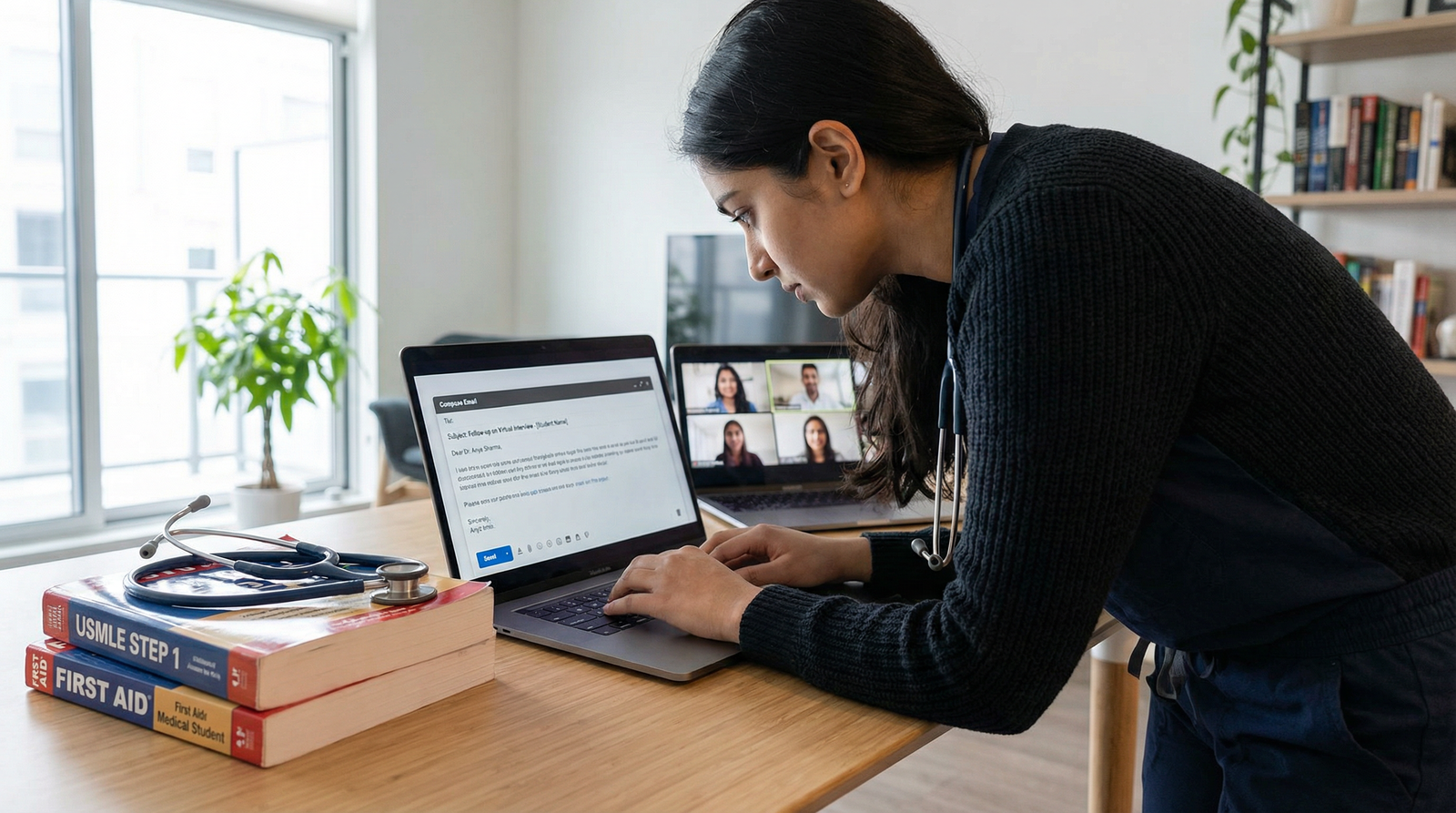
Send Professional, Personalized Thank-You Notes
Within 24–48 hours:
- Email each interviewer, if you have their contact information, or a general thank-you to the program if that’s the norm
- Reference something specific from your conversation:
- A topic you appreciated discussing
- A unique aspect of the program you learned about
- Keep it concise, sincere, and error-free
This not only signals professionalism but can also provide a sense of closure for each interview.
Build in Recovery Time
Back-to-back interviews can compound stress and burnout. When possible:
- Avoid scheduling too many full interview days consecutively
- Plan brief outdoor breaks between sessions
- Use light exercise, stretching, or a short walk to discharge residual nervous energy
- Protect sleep by avoiding late-night interview rehashing when possible
Sustaining your emotional and physical health across the season is essential for optimal performance and long-term career development.
Additional High-Yield Tips to Manage Virtual Interview Anxiety
- Normalize nervousness: Almost every resident and faculty member you meet has been in your position. Anxiety does not mean you won’t succeed.
- Limit stimulants: Consider reducing caffeine on interview days if you’re prone to jitteriness or palpitations.
- Hydrate and fuel: Drink water and eat a light, balanced meal before interviews to prevent lightheadedness and irritability.
- Set realistic expectations: No interview is perfect. Your goal is not flawless performance, but authentic, professional communication that reflects who you are as a developing physician.

FAQ: Managing Interview Anxiety in Virtual Residency and Job Interviews
1. What should I do if I feel my anxiety spike in the middle of a virtual interview?
Use subtle, in-the-moment strategies:
- Take one slow, deeper breath while the interviewer is speaking
- Place your feet flat on the floor and gently press them down to feel more grounded
- Focus on listening fully to the current question rather than replaying previous answers
If necessary, it’s acceptable to pause briefly and say, “That’s a great question—let me take a second to gather my thoughts.”
2. How should I handle a mistake or awkward moment during the interview?
Everyone misspeaks or has an off moment at some point. If it happens:
- Briefly correct yourself if needed:
“I misspoke earlier—the rotation I mentioned was actually at [institution].” - If you blank on a question, you can say:
“I’m not sure I have a perfect example, but one situation that comes to mind is…”
Then move forward without dwelling. Interviewers are generally more interested in your honesty, insight, and recovery than in perfection.
3. Are virtual interviews harder than in-person interviews?
They’re different rather than inherently harder:
- Challenges: Technology glitches, reduced nonverbal feedback, screen fatigue
- Advantages: No travel stress, ability to interview from a familiar environment, easier note-taking and schedule flexibility
The best approach is to treat virtual interviews as a distinct skill set: practice online communication, optimize your tech, and develop strategies for building rapport through a screen.
4. How far in advance should I start preparing for virtual residency interviews?
Ideally:
- 4–6 weeks before: Begin reviewing common questions, updating your CV talking points, and researching programs.
- 2–3 weeks before: Schedule mock interviews, finalize your interview attire, and refine your “Tell me about yourself” and “Why this specialty/program?” answers.
- 1 week before: Test your technology, finalize your space setup, and practice your anxiety management techniques daily.
More time allows you to spread out the work and reduce last-minute stress.
5. What are common technical issues in virtual interviews, and how can I prevent them?
Common issues include:
- Unstable internet connection
- Microphone or camera not recognized by the platform
- Echo or feedback from using speakers instead of headphones
- Difficulty accessing the meeting link or platform login
Prevention strategies:
- Test everything with a friend on the same platform
- Restart your computer an hour before the interview
- Close unnecessary programs and browser tabs
- Keep your device plugged in or fully charged
And always have a backup device and the program’s contact info ready.
By combining structured preparation, environment optimization, and practical anxiety management techniques, you can significantly reduce interview anxiety in virtual settings and present yourself as the capable, thoughtful future physician you are. These skills will serve you not only during residency interview season, but throughout your broader career development—in future job interviews, fellowship applications, and beyond.