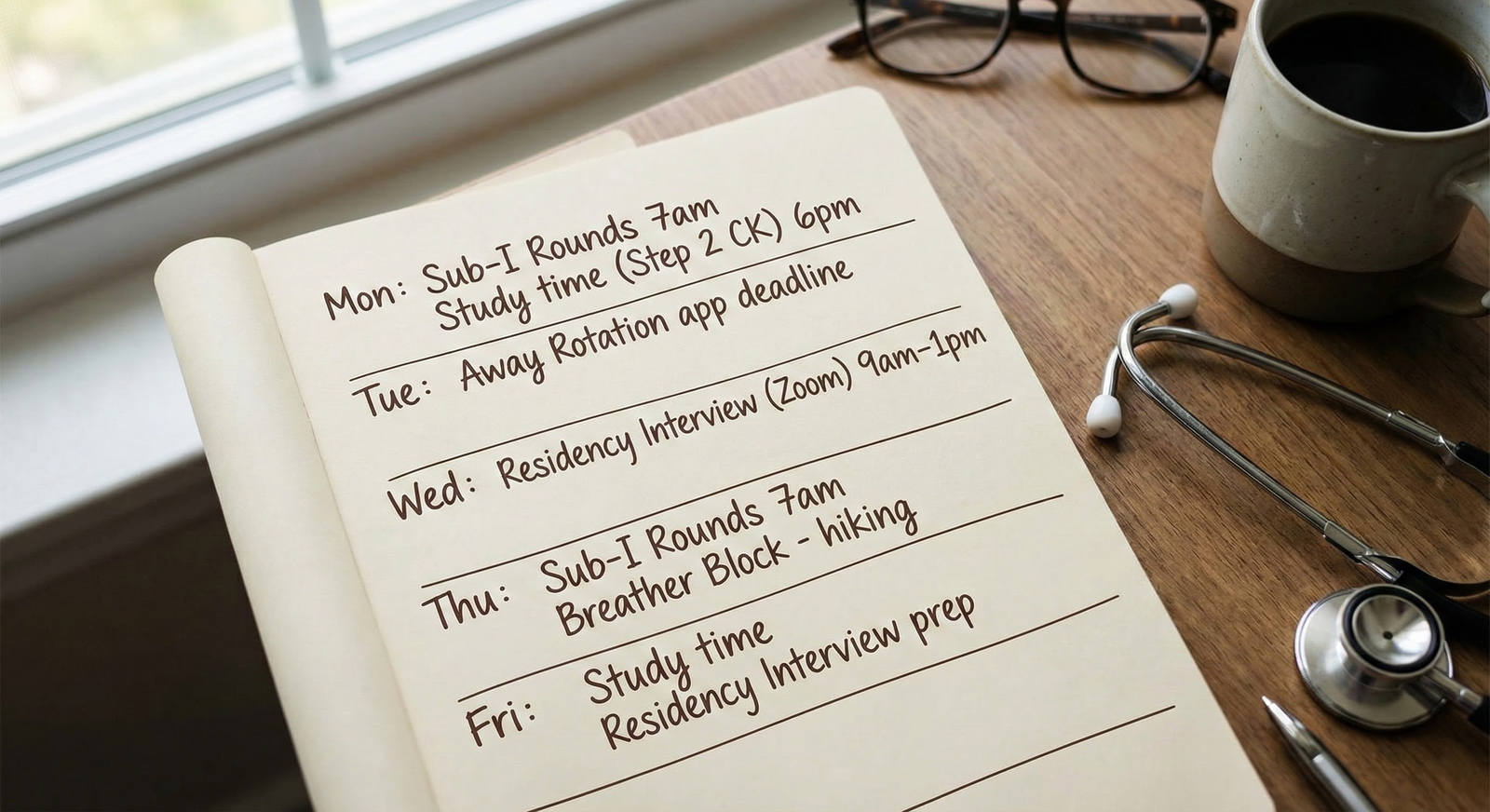
Away rotations can be a powerful tool in the osteopathic residency match—especially for a DO graduate targeting family medicine residency programs in competitive locations or specific institutions. But they’re also time‑consuming, expensive, and logistically complex. You need a clear, evidence‑informed away rotation strategy that works for you as a DO graduate in family medicine.
Below is a comprehensive guide to planning and optimizing away rotations residency experiences as a DO applicant: when to do them, how many to schedule, where to go, and how to use them to strengthen your FM match odds.
Understanding the Role of Away Rotations for DO Graduates in Family Medicine
Away rotations (also called visiting student rotations, sub-internships, or “auditions”) are 2–4 week clinical rotations at institutions other than your home school. For DO students and DO graduates targeting the osteopathic residency match or ACGME-accredited family medicine programs, they can serve several purposes:
Why Away Rotations Matter for DO Applicants
Overcoming Bias and Limited Exposure
While the single accreditation system has helped, some programs still have limited experience with DO graduates or specific osteopathic schools. Performing well on an away rotation allows faculty to:- See your clinical skills directly
- Appreciate your communication and professionalism
- Put a face and story with an application that might otherwise be overlooked
Demonstrating Serious Interest in a Program or Region
For popular locations (e.g., West Coast, major cities, or highly sought-after community programs), an away rotation can:- Signal strong, specific interest
- Show that you understand the patient population and geography
- Increase your odds of an interview and higher ranking
Obtaining Strong Letters of Recommendation (LORs)
A dedicated 4-week rotation can yield:- 1–2 robust letters from family medicine faculty
- Potentially a letter from the program director (PD)
- Direct advocacy during ranking meetings if you make a strong impression
Clarifying Program “Fit”
As a DO graduate, you may value:- Continuity of care
- Osteopathic principles and OMT integration
- Broad-spectrum training (OB, inpatient, procedures, rural or underserved care)
An away rotation lets you assess: - How DO-friendly the culture really is
- Whether OMT is truly supported or merely “tolerated”
- How residents are treated and how they practice day-to-day
Back-Up Planning and Network Building
Even if you don’t match at your away site, you benefit from:- Faculty who may advocate for you at other programs
- Connections for future jobs, fellowships, or mentorship
- A better understanding of how different family medicine residencies operate
Deciding If You Need Away Rotations (and How Many)
Not every DO graduate needs multiple away rotations in family medicine. The decision depends on your profile and goals.
Who Benefits Most from Away Rotations in Family Medicine?
You are more likely to benefit from away rotations residency experiences if:
- You’re a DO graduate from:
- A newer or lesser-known osteopathic school
- A school without a strong home family medicine department
- A regionally focused school applying out of region
- You want:
- A specific, competitive geographic area (e.g., urban coastal cities, popular metros)
- A particular institution that’s very selective
- A program with advanced features (e.g., strong OB, global health, sports medicine, full-scope rural training)
- Your application has some weaknesses:
- Lower-than-average COMLEX/USMLE scores
- Remediated coursework or a delayed graduation
- Limited home clinical evaluations or family medicine exposure
In these scenarios, a strong away rotation can serve as your audition and your chance to “outperform your paper” application.
When Away Rotations May Be Less Critical
You might not need extensive away rotations if:
- You’re an average or above-average DO applicant with:
- Solid COMLEX (and USMLE, if taken) scores
- Strong clerkship evaluations
- Good home institution support and letters
- You’re geographically flexible and open to:
- Smaller cities
- Community-based programs
- Regions with historically high DO representation
- Your main goals are broad-based training and a good learning environment, rather than a specific name-brand institution
In this situation, one well-chosen away rotation (or none) can be enough, as long as the rest of your application is strong.
How Many Away Rotations Should a DO Graduate Do?
A common question is: how many away rotations are ideal?
For DO graduates applying to family medicine:
0–1 away rotations
- Reasonable if you have strong home support and are flexible in program choice.
- Still aim for at least one family medicine sub-I (home or away).
1–2 away rotations (most common and often optimal)
- One audition at a realistic “top choice” program or region.
- One backup audition at a solid, DO-friendly program where your match odds are higher.
3 away rotations or more
- Usually not necessary in family medicine.
- Increases cost, risk of burnout, and may reduce time for research, electives, or ERAS preparation.
- Consider only if you:
- Graduated already and need extra clinical experiences
- Have significant academic concerns and want more in-person chances to impress
- Have unique geographic needs (e.g., spouse job, visa, family constraints)
For most DO graduates, 1–2 strategically selected away rotations is the sweet spot.

Choosing the Right Programs for Away Rotations in Family Medicine
Where you rotate matters as much as how many away rotations you do. A targeted, realistic strategy will serve you better than simply aiming for “big-name” programs.
Step 1: Clarify Your Priorities
Before applying to visiting student rotations, define your priorities in three categories:
Geography
- Regions where you have:
- Family or partner ties
- State residency (tuition and hiring advantages)
- Long-term plans to live and practice
- Consider:
- Urban vs. rural
- Cost of living
- Weather and lifestyle
- Regions where you have:
Training Style and Scope
- Degrees of inpatient exposure
- Emphasis on:
- Obstetrics and women’s health
- Procedural skills (e.g., joint injections, derm procedures, colposcopy)
- Behavioral health and addiction medicine
- Rural or underserved populations
- OMT integration
Program Culture and DO-Friendliness
- Percent of DO residents historically
- Presence of DO faculty
- Explicit mention of osteopathic recognition or OMT clinics
- Reputation among DO residents from your school or peer institutions
Make a simple spreadsheet with these priorities and start mapping potential programs to them.
Step 2: Research DO-Friendliness and Match Outcomes
Specifically for a DO graduate in the FM match, pay attention to:
Program websites and resident bios
- Look for current and recent DO residents.
- Check if any graduates came from your school or similar schools.
Osteopathic Recognition (OR) Programs
- ACGME-accredited family medicine programs with osteopathic recognition are often very DO-friendly.
- They may value your osteopathic background and OMT skills.
NRMP/ACGME data & specialty forums
- NRMP’s “Charting Outcomes” and program fill data.
- Specialty forums or your school’s match list trends.
If a program consistently trains DOs, it’s probably a more welcoming choice for your osteopathic residency match strategy.
Step 3: Categorize Programs by Reach, Target, and Safety
Apply basic application strategy to away rotations:
Reach/Aspiration Away
- A prestigious academic or popular urban program you’d love to match at.
- They regularly match DOs or at least do not openly discourage them.
- You understand that even with a strong performance, matching there isn’t guaranteed.
Target Away
- A strong program aligned with your goals where your stats and profile are very competitive.
- Frequently matches DO applicants.
- You would be genuinely happy to train here.
Safety/High-Likelihood Away
- A DO-friendly or osteopathic recognition program that:
- Routinely ranks DO applicants highly
- Might be in a less competitive location
- Ideal for DO graduates with academic challenges or prior application cycles.
- A DO-friendly or osteopathic recognition program that:
If doing two away rotations, a balanced sequence might be:
- 1 target/reach program
- 1 target/safety program
This gives you both ambition and security.
Applying, Scheduling, and Preparing for Visiting Student Rotations
Once you’ve chosen your target programs, you need a clear application and preparation plan.
Application Platforms and Timing
Most U.S. MD and DO schools now use:
- VSLO (Visiting Student Learning Opportunities) or other institutional systems
- Some programs have their own direct application portals
Timeline (Typical for U.S. Students)
December–February (MS3 / pre-graduation period)
- Start researching programs and requirements.
- Update immunizations, titers, and health forms.
- Secure malpractice coverage information through your school or alumni status.
February–April
- Applications open for many institutions.
- Submit visiting student applications early—slots can fill quickly.
- Clarify whether they accept DO graduates vs. only enrolled students (some hospitals may restrict DO graduates or require separate processes).
May–July
- Most away rotation offers are released.
- Confirm dates and coordinate with your school’s scheduling office (if still enrolled) or with your own availability (if graduated and arranging as an observer or extern).
July–October
- Typical time frame for away family medicine rotations.
- Aim to complete at least one away rotation before ERAS submission (usually in September) if you want letters from that site.
If you are a DO graduate rather than a current student, you may need to:
- Ask programs if they allow “post-graduate” externships or observerships.
- Clarify if those experiences qualify for performance-based letters and/or SLOEs (standardized letters).
- Provide proof of diploma, licensing exams, and malpractice coverage.
Essential Documents and Requirements
Be prepared with:
- CV (clean, updated, 1–2 pages)
- Personal statement draft (even if not final)
- COMLEX (and USMLE, if taken) score reports
- Transcript and MSPE (if already released)
- Immunization records and TB screening
- Background check and drug screen (if required)
- BLS/ACLS certifications
- Proof of COVID and influenza vaccination (most institutions require)
Organize these in digitally labeled folders for quick uploading.
Strategically Timing Your Rotations
For the family medicine residency cycle, consider:
First Away (if doing two)
- Late June–August
- Allows:
- Early performance-based letter for ERAS.
- Time to incorporate feedback and adjust your approach for the second away.
Second Away
- August–October
- Serves as:
- Another audition before interview season.
- Fresh contacts and advocates as programs build their interview lists.
If you can only do one away rotation:
- Aim for July–September so your rotation is close enough to ERAS submission that faculty remember you, and late enough that your clinical skills are polished.

Maximizing Your Performance and Impact During Away Rotations
Rotating is only half the battle; excelling is what moves the needle in the FM match.
Core Behaviors That Impress Family Medicine Faculty
Family medicine values teamwork, communication, and reliability as much as raw knowledge. Focus on:
Professionalism and Work Ethic
- Arrive early, stay engaged, and volunteer for tasks.
- Follow through on every commitment (notes, calls, orders, follow-ups).
- Treat all staff—nurses, MAs, front desk—with respect and warmth.
Patient-Centered Communication
- Sit down whenever possible when talking with patients.
- Use open-ended questions and motivational interviewing.
- Demonstrate comfort with diverse social backgrounds, ages, and cultures.
Clinical Preparedness
- Read about common outpatient and inpatient family medicine issues:
- HTN, DM2, COPD, asthma, depression, anxiety, prenatal care, well-child visits
- Use UpToDate or similar references after clinic to review cases.
- Be ready to present concisely: “One-liner → chief problem → relevant positives/negatives → assessment & plan.”
- Read about common outpatient and inpatient family medicine issues:
Osteopathic Skills and Mindset
- Offer OMT when appropriate and permitted by the attending.
- Explain osteopathic principles clearly and confidently.
- Show that your DO background enhances, not replaces, evidence-based care.
Actions That Help You Stand Out (Positively)
Ask for Mid-Rotation Feedback
- Simple script: “I’m really interested in family medicine and possibly this program. Could you share one thing I’m doing well and one thing I should improve while I’m still here?”
- Then visibly apply the feedback.
Express Genuine Interest (Without Overdoing It)
- Tell the PD or key faculty:
- Why you’re interested in family medicine.
- What you like about their program specifically.
- If it’s truly your top choice, you can mention this by the end of the rotation or in a follow-up email.
- Tell the PD or key faculty:
Seek Opportunities for a Strong Letter
- Work closely with at least one attending for several days.
- Ask near the end:
“Based on our time working together, would you feel comfortable writing a strong letter of recommendation for my family medicine residency applications?” - If they hesitate, that’s a sign to ask someone else.
Participate in Academic and Team Activities
- Attend didactics, journal clubs, and morning reports.
- Offer to present a brief topic at morning report or a noon conference.
- Show interest in quality improvement or community projects, even if short-term.
Common Pitfalls to Avoid
- Acting overly competitive with residents or other students.
- Frequently comparing this program to others in a negative way.
- Being dismissive of primary care or focusing too much on sub-specialization.
- Being “too casual” with schedule, dress, or language (“I’m just here for an away, no big deal”).
- Overusing your phone or laptop during patient care sessions.
Remember: family medicine is a relationship-driven specialty. Your attitude, empathy, and humility often carry as much weight as your knowledge.
Using Away Rotations to Strengthen Your Match Strategy
After the rotation ends, you can still leverage that experience to improve your family medicine residency application.
Converting Rotations into Strong Letters and Advocacy
Within 1–2 weeks of finishing an away rotation:
Send Thank-You Emails
- Thank the attending(s) and residents you worked closely with.
- Specifically reference what you learned and how you’ll use it.
Confirm Letter Logistics
- Politely follow up with letter writers:
- Provide your CV and personal statement.
- Clarify how to upload via ERAS.
- Gently remind them of deadlines.
- Politely follow up with letter writers:
Update ERAS and Interview Talking Points
- Add the rotation to your experiences with:
- Specific responsibilities and skills
- Unique patient populations served
- Be ready to discuss:
- A challenging case you managed
- How the rotation influenced your view of family medicine
- Add the rotation to your experiences with:
Interpreting Program Interest After an Away Rotation
Signs a program may rank you highly:
- PD or key faculty express clear interest:
- “We’d love to see you back here for residency.”
- Residents encourage you to apply and mention:
- “You fit in really well here.”
- Multiple faculty offer letters or mentorship.
If you feel a strong two-way fit, that program should be high on your rank list.
If the signal is more neutral:
- You might still be ranked, but not at the very top.
- Consider balancing it with DO-friendlier or safety programs.
Integrating Away Rotations Into Your Overall FM Match Plan
Away rotations are one component of a broader match strategy that should also include:
- Applying to a sufficient number of programs (usually 15–25+ for DO FM applicants, more if you have academic concerns or geographic limits).
- Highlighting:
- Continuity of care experiences
- Primary care passion and career goals
- Tailoring your personal statement to family medicine values:
- Longitudinal relationships
- Comprehensive care
- Osteopathic, whole-person perspective
For a DO graduate, combining 1–2 smartly chosen away rotations with a solid ERAS application, appropriate program list, and thoughtful interview prep is often enough to secure a strong family medicine residency position.
FAQs: Away Rotation Strategy for DO Graduates in Family Medicine
1. As a DO graduate, do I need away rotations to match in family medicine?
Not necessarily. Many DO applicants match into family medicine without any away rotations, especially if they have:
- Solid board scores, clinical evaluations, and letters
- A flexible geographic preference
- DO-friendly programs on their list
Away rotations are most helpful if you’re targeting a specific program or region, need strong new letters, or want to overcome concerns about school reputation or academic issues.
2. How many away rotations should I do for the FM match?
For most DO graduates, 1–2 away rotations is ideal:
- One at a realistic “top choice” or target program
- Possibly one at a safety or very DO-friendly program
More than two is usually unnecessary in family medicine and can strain finances and energy without proportional benefit.
3. What if I’ve already graduated—can I still do visiting student rotations?
It depends on the institution. Some will only accept currently enrolled students via VSLO. Others allow:
- Post-graduate “externships”
- Observerships or visitor experiences
These may or may not allow hands-on care or full evaluation. Always check:
- Whether DO graduates are eligible
- Whether attendings can write official performance-based letters for ERAS
4. Should I prioritize programs with Osteopathic Recognition for away rotations?
If you’re a DO graduate, osteopathic recognition is a strong positive signal:
- These programs intentionally incorporate osteopathic principles and OMT.
- Faculty are often more familiar with DO training and examinations.
- You may find a more natural fit and better advocacy.
However, many excellent family medicine residencies are DO-friendly without formal osteopathic recognition. Use OR as a plus, not a strict requirement.
By approaching away rotations intentionally—choosing programs wisely, performing at your best, and turning those experiences into strong letters and connections—you can significantly strengthen your position in the osteopathic residency match for family medicine. As a DO graduate, your unique training and whole-person perspective are assets; a smart away rotation strategy simply helps you showcase them to the right programs.