Why Away Rotations Matter in Internal Medicine
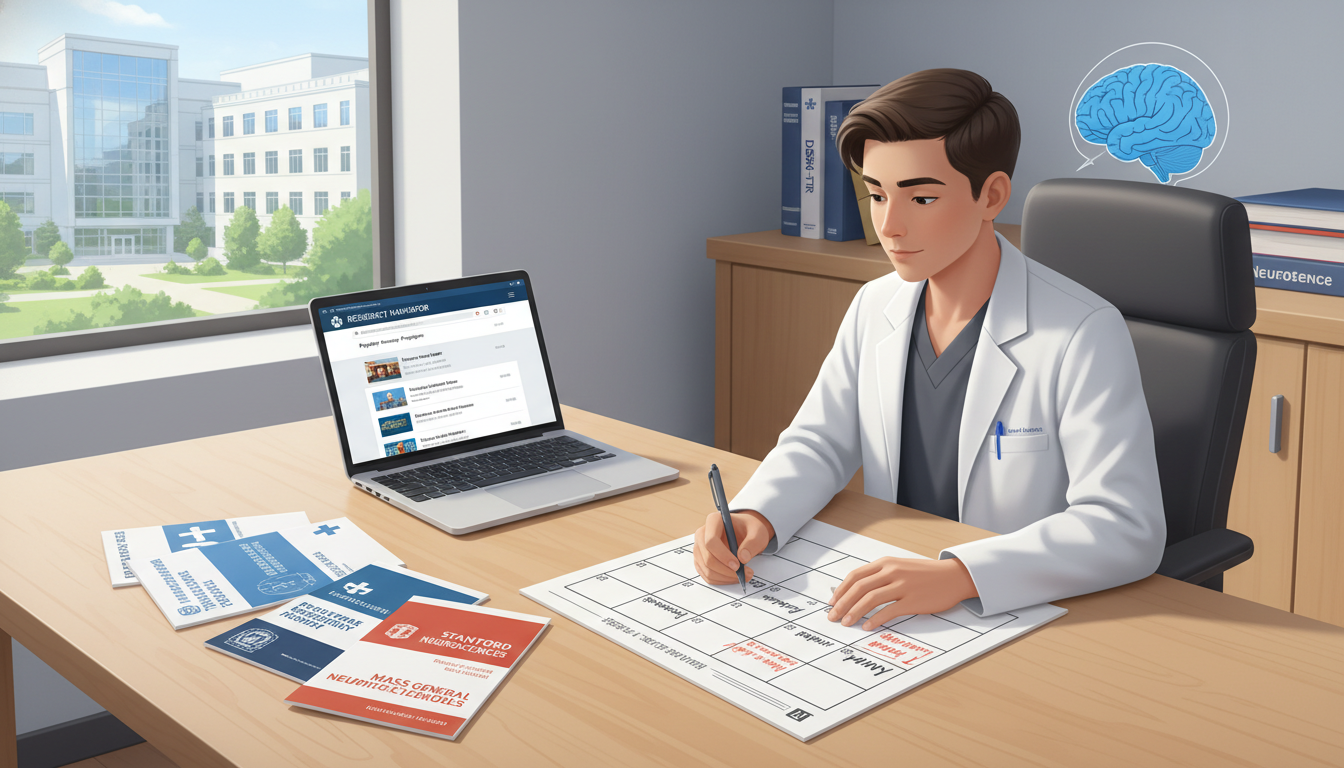
Away rotations (also called visiting student rotations or “auditions”) can be powerful tools in your internal medicine residency application strategy—but only when used thoughtfully. Unlike in some procedural fields where away rotations are nearly expected, internal medicine (IM) programs vary widely in how much weight they place on them in the IM match.
Used well, an away can:
- Put you “on the radar” at a specific program or city
- Yield strong letters of recommendation from academic internists
- Clarify your fit with certain program cultures (academic vs community, big city vs smaller city)
- Demonstrate interest in a geographic region
Used poorly, away rotations can:
- Drain time, money, and energy
- Add little to your application
- Potentially harm your chances if performance is weak or there’s a mismatch with the program’s expectations
This guide focuses on a strategic approach to away rotations in internal medicine residency—when to do them, where, how many, and how to get the most benefit from each experience.
Clarifying Your Goals: When an Away Rotation Helps (and When It Doesn’t)
Before thinking about how many away rotations or where to go, be crystal clear about why you’re considering them at all.
Common reasons to do an away rotation in internal medicine
Targeting a competitive geographic region
- Example: You’re from the Midwest but want to match in the Northeast at a large academic center.
- Away rotations in that region can:
- Signal geographic interest
- Help you understand differences in patient populations and systems
- Provide letters from local faculty known to programs in that region
Limited home internal medicine options
- No home IM program, or a small/unaccredited program
- Home program lacks subspecialty exposure or academic depth
- You need:
- Strong IM letters from academic internists
- Experience with academic teaching services and conferences
Interest in a specific program or system
- You have a short list of “top choice” programs.
- An away rotation:
- Lets you show your work ethic and interpersonal skills directly
- Allows you to assess culture, workload, support, and education
- Provides concrete data to guide your rank list
Clarifying career direction (hospitalist vs subspecialty; academic vs community)
- Rotations at academic tertiary centers vs community-based teaching hospitals can:
- Expose you to different patient mixes and case complexity
- Highlight differences in research, QI, and teaching culture
- Shape your future fellowship or practice plans
- Rotations at academic tertiary centers vs community-based teaching hospitals can:
Repairing or strengthening a profile
- You had:
- Below-average pre-clinical performance
- A weaker internal medicine clerkship evaluation
- Limited internal medicine exposure due to scheduling/COVID disruptions
- A strong away rotation can show an “upward trajectory” and current competence.
- You had:
When an away rotation may NOT be worth it in IM
You already have a strong IM story at home
- Robust home internal medicine residency
- Excellent evaluations on IM clerkship and sub-I
- Access to academic letters from known faculty
- Good fit with your target geographic region
- In this setting, multiple away rotations may add little incremental value.
You’re doing it only because “everyone else is doing aways”
- Internal medicine is not like some surgical subspecialties where multiple aways are de facto required.
- Many successful applicants match well without any away rotations.
You are severely constrained by finances or family responsibilities
- Moving for 4–8 weeks: travel, housing, and repeated VSLO application fees quickly add up.
- In that case, it may be more effective to:
- Double down on home rotations and research/QI projects
- Select just one especially strategic away rather than several
You’re in a phase of burnout or health instability
- An away rotation is often higher-stakes (you are “on audition”).
- Going into it while depleted raises the risk of underperforming and having a poor experience.
Planning Your Away Rotations: Timing, Number, and Site Selection
When to schedule internal medicine away rotations
For most US MD/DO students, the best timing is late third year to early fourth year, carefully aligned with internal medicine residency timelines.
Key principles:
Complete your core internal medicine clerkship first
- You need baseline IM competence and comfort before you “audition.”
- Ideally, complete:
- IM core clerkship
- At least one IM sub-internship (sub-I) or acting internship at your home institution before or parallel with your away.
Aim for early in 4th year, before ERAS submission
- Ideal blocks: June–September of 4th year
- This allows:
- Time to earn a letter of recommendation from the away
- Time to reflect and adjust your program list based on what you learned
- Some schools have calendar differences; adjust to your institution’s schedule.
Consider when you’ll need a letter
- Ask about letters close to the end of the rotation.
- Ensure the faculty member knows your timeline and submission deadlines.
- If your away is late (e.g., October), that letter may be used more for interview season or rank list considerations than for your initial application.
How many away rotations for internal medicine?
There is no single “correct” number, but common patterns work well for most applicants.
General guidance for internal medicine:
0 away rotations
- Reasonable if:
- Strong home academic IM program
- You plan to stay in the same geographic region
- You have multiple solid IM letters from home
- Many applicants match well in this category.
- Reasonable if:
1 away rotation
- Ideal if:
- You want to strengthen your application for a specific geographic region or style of program
- You want a focused audition at one dream program or system
- Often the best balance of benefit vs. cost.
- Ideal if:
2 away rotations
- Consider if:
- You lack a home IM program or need multiple academic letters
- You are heavily targeting a region where you have no prior ties
- You’re uncertain about academic vs community and want to compare both
- Be cautious not to overload your schedule; ensure you preserve time for sub-I, Step 2 prep, and interviews.
- Consider if:
3+ away rotations
- Rarely necessary for internal medicine.
- Could be considered in very special circumstances, but:
- High cost and fatigue risk
- Diminishing returns; programs may even wonder why you needed so many
In short: for the IM match, 0–2 away rotations is typical and usually sufficient.
Choosing where to rotate: Smart site selection
When evaluating visiting student rotations, consider:
Program type and reputation
- Academic tertiary center vs community teaching hospital vs hybrid systems
- Does this match your long-term interests (fellowship, research, hospitalist career)?
Geographic significance
- Rotate in regions:
- Where you want to live long-term
- Where you lack ties but want to match
- Example:
- You trained in the South but want to move to the West Coast → away in California or Pacific Northwest.
- Rotate in regions:
Realistic competitiveness
- Aim for a range:
- One “reach” program you’d love to join
- One program/health system where your metrics (Step scores, grades, experiences) align well
- Look at their current residents’ schools and backgrounds:
- Do they commonly take students from outside institutions?
- Do they show diversity in medical schools represented?
- Aim for a range:
Rotation structure
- Inpatient general medicine vs subspecialty (cards, heme/onc, ID, ICU)
- For away rotations that influence IM match:
- Inpatient general internal medicine or hospital-based IM sub-I is typically most impactful.
- Subspecialty aways can be helpful, but letters are sometimes perceived as narrower in scope of internal medicine performance.
Teaching and evaluation culture
- Ask:
- How many students per team?
- Are students integrated into call, admissions, and cross-cover?
- Who supervises and evaluates students (residents, chief residents, attendings)?
- Programs that clearly articulate expectations and provide feedback are ideal.
- Ask:
Logistics and cost
- Housing availability (on-campus vs short-term rentals)
- Commute and transportation
- Fees (VSLO, institution application fees, occupational health requirements, background checks)
Executing the Rotation: How to Excel on an Internal Medicine Away
Once you’re on an away rotation, you’re effectively at a month-long interview. The goal is not to be perfect; it is to demonstrate that you are a reliable, inquisitive team member who will make a strong intern and colleague.
Core performance principles
Show up early, prepared, and consistent
- Aim to arrive before your resident, especially during the first week.
- Pre-review labs, vitals, and overnight events.
- Have an organized pre-rounding workflow:
- Check vitals, intake/output, labs, notes.
- Examine patients early.
- Note interval changes and key questions for the team.
Own your patients
- Know your patients’:
- Active problems and differentials
- Overnight changes
- Current meds (including doses)
- Disposition barriers
- Present concise, structured updates with:
- A focused, problem-based assessment and plan
- Brief justification for changes you propose
- Know your patients’:
Be proactive in helping the team
- Offer to:
- Call consults (with guidance)
- Draft notes and discharge summaries
- Coordinate with case management/social work
- Update families on plans (after discussing with residents/attendings)
- Always check local norms and ask, “Is there anything else I can pick up?”
- Offer to:
Ask thoughtful, targeted questions
- Avoid:
- Asking basic questions during peak busy times that you could easily look up
- Instead:
- Jot down questions to discuss during lulls
- Frame questions in context:
- “I noticed we changed from vancomycin + pip-tazo to cefepime + flagyl. Was that due to the patient’s renal function or concern for specific organisms?”
- Avoid:
Demonstrate teachability
- When corrected, respond with:
- “Thank you, that makes sense because…”
- Then adjust your behavior.
- Follow-up:
- Show you implemented feedback the next day.
- Faculty and residents often value “coachable” learners more than those who appear rigid or defensive.
- When corrected, respond with:
Communication and professionalism
Be courteous to everyone
- Treat:
- Nurses
- Pharmacists
- Case managers
- Environmental and transport staff
with respect and appreciation.
- Negative comments about staff travel fast and can harm your evaluation.
- Treat:
Adapt to team culture
- Observe:
- How residents speak to each other
- How attendings prefer presentations (full H&P vs problem-based)
- Ask early:
- “How do you prefer I structure my notes and presentations?”
- Observe:
Email and messaging etiquette
- Use clear, concise messages to:
- Confirm schedules
- Request meetings for feedback
- Thank faculty for teaching sessions
- Avoid:
- Overly casual tone
- Late-night messages unless urgent and team culture supports it.
- Use clear, concise messages to:
Securing meaningful evaluations and letters
Identify potential letter writers early
- Look for:
- Attendings who see you consistently for ≥2 weeks
- Faculty who have seen you handle complicated patients or a large census
- Give them reasons to remember you:
- Prepare mini-presentations
- Ask for feedback and incorporate it.
- Look for:
Ask clearly and professionally
- Near the end of rotation, ask:
- “Dr. Smith, I’ve really appreciated working with you this month. Based on your observation of my work, would you feel comfortable writing a strong letter of recommendation for my internal medicine residency application?”
- If they hesitate or sound uncertain:
- Respectfully choose a different writer.
- Near the end of rotation, ask:
Provide supporting materials
- Email your:
- CV
- Personal statement draft (even if not final)
- ERAS photo (if available)
- Briefly highlight:
- What you valued about the rotation
- Particular patient cases or roles you held
- Email your:
Maximizing Strategic Value: Connecting the Rotation to Your IM Match
Doing the rotation is only half the strategy. The other half is how you leverage it for the internal medicine residency match.
Translating your experience into your application
In your personal statement
- If the rotation clarified your goals, be specific:
- “During my visiting student rotation at [Institution], caring for patients with advanced heart failure in a resource-limited urban setting reinforced my interest in academic internal medicine and QI work.”
- Mention:
- What aspects of IM you experienced there (complex multi-morbidity, teaching culture, interdisciplinary work)
- How they shaped your vision of the kind of internist you want to be.
- If the rotation clarified your goals, be specific:
In your ERAS program signaling and list construction
- If ERAS signaling is available:
- Consider signaling the away site if it’s a top choice.
- Use your experience to:
- Adjust your reach/target/safety program mix.
- Add similar programs or regions that you realized you like.
- If ERAS signaling is available:
Letters from away rotations
- Prioritize letters from:
- Attendings in general internal medicine or hospital medicine
- Subspecialists who can comment on broad IM skills (communication, reasoning, reliability)
- In your ERAS, you generally want:
- 2–3 letters from internal medicine attendings (home + away mix)
- Possibly 1 from another related field or research mentor, if strong.
- Prioritize letters from:
Networking and follow-up
Stay in touch appropriately
- Send a brief thank-you email to:
- Key attending(s)
- Program director (PD) or clerkship director if you had contact
- Express:
- Appreciation for the educational experience
- Your genuine interest in internal medicine and what you learned.
- Send a brief thank-you email to:
Before interview season
- If you are very interested in matching there:
- A short email to the PD/PC later in the season can remind them who you are (without being pushy).
- Reference specific experiences from your rotation:
- “I particularly valued the way your residents debriefed complex code situations and the focus on reflection rounds.”
- If you are very interested in matching there:
During interviews
- Use your away rotation insight to:
- Ask deeper questions about culture and training:
- “I really appreciated the structured morning report as a student. Are there similar learner-centered conferences for residents on ward months?”
- Show that you understand the program beyond the website.
- Ask deeper questions about culture and training:
- Use your away rotation insight to:

Common Pitfalls and How to Avoid Them
Even strong students can stumble on visiting student rotations if they’re not aware of the unique dynamics. Being intentional can help you avoid errors that might hurt your IM match prospects.
Overextending yourself: too many aways
- Risk:
- Fatigue, burnout, and declining performance across rotations
- Strategy:
- Choose 1–2 strategically important away rotations.
- Build in:
- One lighter month before interviews
- Time for Step 2 prep if you are still planning to take it.
Treating the away as a brief vacation or travel opportunity
- Programs can tell when a student is:
- More focused on exploring the city than engaging on the wards.
- Balance:
- Enjoy the new city on days off.
- But maintain consistent professionalism and engagement on service.
Misreading local culture and norms
- Example issues:
- Overstepping into intern-level tasks without clearance
- Being too hesitant and passive when expected to take ownership
- Solution:
- Early in week one, ask your resident or chief:
- “What do you expect from fourth-year students here in terms of note writing, orders (even if they need co-sign), and family updates?”
- Adjust your practice accordingly.
- Early in week one, ask your resident or chief:
Neglecting feedback
- Pitfall:
- Waiting until final day to ask, “How did I do overall?”
- Better approach:
- Ask mid-rotation:
- “Could we do a quick check-in about how I’m doing so far and what I can work on over the next two weeks?”
- Then:
- Implement suggestions
- Mention at the end:
- “I tried to work on X and Y as you suggested; I hope that came across.”
- Ask mid-rotation:
Underestimating evaluations from residents
- Residents often contribute heavily to narrative evaluations and can influence who is discussed at rank meetings.
- Be:
- Respectful
- Helpful
- Collegial
- Never:
- Gossip about co-residents
- Compare programs negatively
- Brag about your application metrics
FAQs: Away Rotation Strategy in Internal Medicine
1. Do I need an away rotation to match into internal medicine?
No. Many applicants successfully match internal medicine residency—into excellent programs—without any away rotations. Aways are optional tools, not requirements. They become more valuable when:
- You lack a strong home IM program
- You are targeting a new geographic region
- You want to audition at one or two specific programs
2. How many away rotations should I do for internal medicine?
For most applicants, 0–2 away rotations are sufficient:
- 0: If you have a strong home IM program, good evaluations, and reasonable geographic alignment
- 1: If you want to strengthen your candidacy in a specific region or at a particular type of program
- 2: If you lack a home program or need multiple academic letters
Doing three or more away rotations in IM usually offers diminishing returns and carries higher cost and burnout risk.
3. Should my away rotation be in general medicine or a subspecialty?
If your primary goal is to help your internal medicine residency application, an inpatient general internal medicine or hospitalist service is usually the best choice. This setting:
- Showcases broad diagnostic reasoning
- Highlights your readiness for intern-level work
- Allows faculty to comment on core IM competencies
A subspecialty rotation (e.g., cardiology, heme/onc, ID) can still be valuable, especially if:
- You’re strongly drawn to that field for fellowship
- The attending is known for strong teaching and letters
But ensure at least one of your core IM letters comes from a general medicine or ward attending, whether at home or away.
4. How can I tell if I “did well enough” on my away for it to help my IM match?
Indicators you likely performed well:
- Direct positive comments from attendings and residents about your work ethic, presentations, and teamwork
- Constructive feedback that you successfully integrated during the rotation
- A faculty member agrees to write you a strong letter of recommendation
- The program coordinator or PD knows you by name and engages with you
Even if you didn’t feel perfect every day (no one does), consistent effort, growth, and professionalism typically translate into a favorable impression.
Thoughtfully integrated into a broader application strategy, away rotations in internal medicine can be powerful—not only for your IM match prospects, but also for shaping your vision of the internist you want to become. Use them selectively, prepare thoroughly, and treat every day on service as a chance to show that you are ready to join the profession as a trusted, reliable colleague.