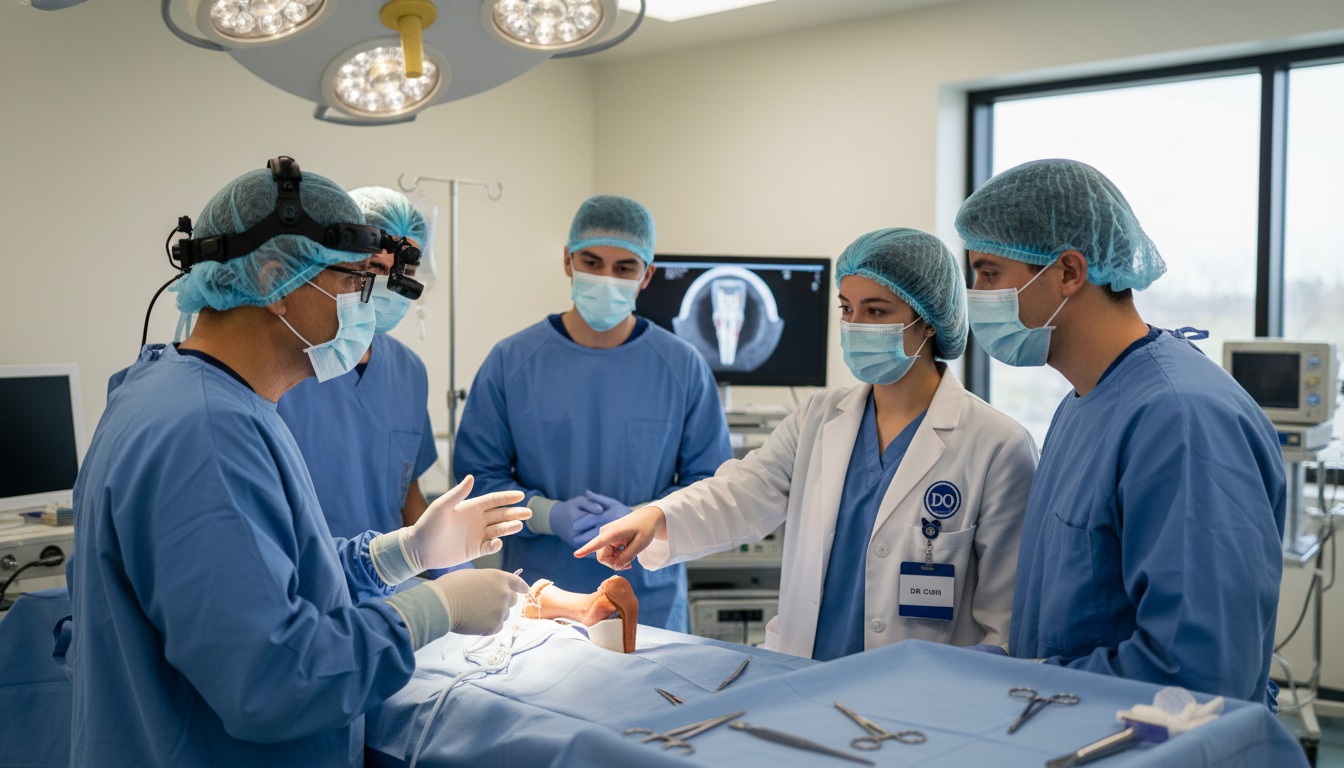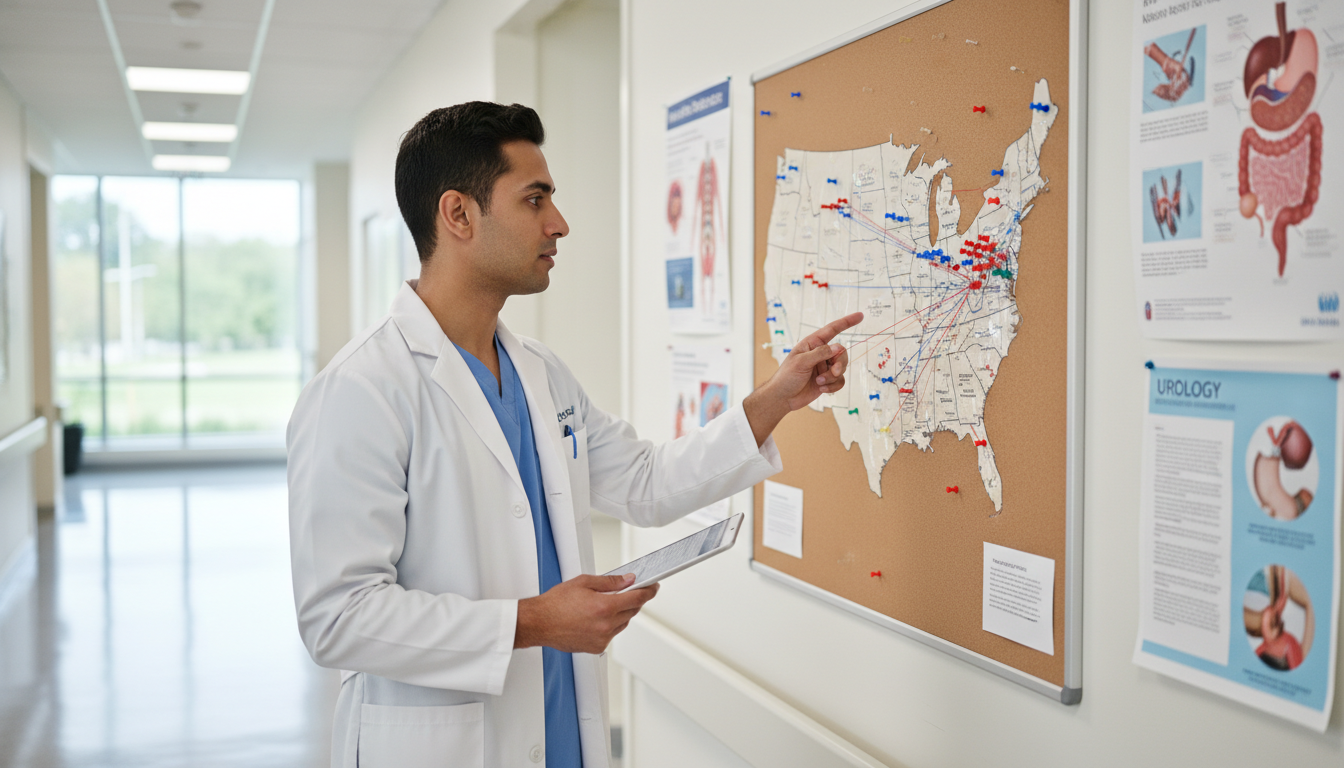
Why Away Rotations Matter So Much in Urology
Urology is one of the most competitive specialties in the allopathic medical school match. For an MD graduate interested in a urology residency, away rotations are often the single most powerful lever you control beyond your core application metrics (Step scores, clinical grades, research).
Away (or “visiting student”) rotations allow you to:
- Demonstrate how you function as a sub-intern on a urology service
- Secure high‑impact letters from urology faculty
- Show genuine interest in a program or region
- Clarify your own “fit” with various program cultures
- Compensate—at least partially—for a home institution without urology or weaker metrics
But away rotations are also logistically complex, expensive, and time‑consuming. A well‑designed away rotation strategy can dramatically improve your urology match odds; a poorly designed one can waste time and money without benefit.
This guide breaks down a practical framework for MD graduates in urology: how many away rotations to do, how to choose them, how to maximize each month, and how to integrate them into a deliberate urology match strategy.
Understanding the Role of Away Rotations in the Urology Match
The landscape: Urology and the allopathic medical school match
The urology match is separate from the NRMP main allopathic medical school match, but expectations and evaluation culture are similar:
- Programs want strong test scores, clinical performance, and research.
- But they also place huge emphasis on “known quantity” applicants—people they’ve seen on their service or who come highly recommended by trusted colleagues.
For an MD graduate residency applicant in urology, away rotations residency experiences serve several purposes:
Extended Auditions
Each away is essentially a month-long interview. Programs see:- How you work on rounds
- How you interact with residents, nurses, and staff
- How you handle call, consults, and clinic
- Your professionalism, humility, and resilience
Signal of Interest
Urology programs receive far more applications than they can meaningfully review. A visiting student rotation is a powerful signal:- “I am willing to invest a month of my life to see if we’re a fit.”
Programs are more likely to offer interviews and to rank higher those who performed well on their service.
- “I am willing to invest a month of my life to see if we’re a fit.”
Letters of Recommendation (LORs)
Urology letters—especially from well-known faculty—carry substantial weight. A strong away rotation can produce:- 1–2 powerful urology LORs
- A department chair or program director letter that directly references your performance
Insight and Fit
You learn about:- Surgical volume and case mix
- Resident happiness and culture
- Program leadership style
- Academic vs community orientation
This helps you build a targeted rank list, not just a long one.
Planning Your Away Rotation Strategy
How many away rotations should an MD graduate do for urology?
One of the most common questions is: how many away rotations are recommended?
For urology, a typical strategy for an MD graduate residency applicant is:
- 1 home urology sub‑internship (if you have a home program)
- 2 away rotations at external urology programs
- Occasionally 3 aways for applicants with:
- No home urology department
- Major red flags or lower Step scores
- Aiming to break into a very competitive geographic region or top‑tier academic centers
Doing more than 3 aways is rarely necessary and can backfire:
- You risk burnout during a critical phase of research and application preparation.
- You might spread yourself too thin across letters, relationships, and follow‑up.
- Programs may question why you rotated “everywhere” but matched “nowhere.”
General guideline:
- Strong to solid applicant → 2 total urology away rotations
- Weaker metrics/no home urology → 2–3 away rotations, targeted and strategic
Timing: When should you schedule your away rotations?
Because the urology match timeline is earlier than the standard NRMP, timing is crucial.
A typical pattern:
- Early Spring (MS3 or pre‑application year): Finish core rotations, get strong overall clinical evaluations.
- Late Spring: Apply for visiting student rotations (VSLO/VSAS or institutional portals).
- Summer – Early Fall: Do your away rotations:
- July–September are prime months.
- Some applicants do one away in June/July and another in August/September.
Key considerations:
- Letters deadline: You’ll need letters ready early in the application season. Doing an away too late (October/November) may limit letter utility.
- Step exam timing: Avoid scheduling an away right after a major exam if possible—you don’t want to arrive exhausted.
- Interviews: Urology interviews often begin in the late fall. Make sure your last away leaves enough breathing room for:
- Finalizing your application
- Interview prep
- Travel logistics

Choosing Where to Do Away Rotations
Step 1: Clarify your goals and constraints
Before you select programs, be specific about your priorities:
- Career goals
- Academic urology vs community practice
- Special interests: oncology, endourology, pediatrics, female pelvic medicine, reconstructive, andrology, etc.
- Geographic preferences
- Are you tied to a region for family or spouse reasons?
- Are you open to moving anywhere for top training?
- Applicant profile
- US MD graduate vs international
- Step scores, clerkship performance, research portfolio
- Need to “prove yourself” vs consolidate an already strong record
Your away selection should match your goals and your realistic competitiveness.
Step 2: Balance dream, target, and safety programs
Think of away rotations like a mini and extremely high-stakes version of your rank list:
Aspiration/Dream Program (1 rotation)
- A top-tier academic center or highly desired geographic location.
- Aim if:
- Your metrics are strong
- You have some research or mentorship connections
- Goal: If you impress, you can dramatically elevate your match chances.
Target Program (1 rotation)
- A program that matches your credentials and where you are realistically competitive.
- Strong residents, good operative experience, but not ultra‑elite name recognition.
- Goal: Maximize likelihood of strong evaluations and letters.
Safety/Regional Fit (optional 3rd rotation)
- Programs slightly below your metrics or in less competitive locations.
- Especially useful if:
- No home urology department
- Concern about Step scores or class rank
- You need to demonstrate you can function at a high level clinically
For most MD graduate residency applicants, one aspiration + one solid target is a robust approach.
Step 3: Strategic factors to weigh
When evaluating where to do visiting student rotations, consider:
Presence (or absence) of a home urology program
- If you have a home urology program:
- Prioritize doing a full sub‑I there first if possible.
- Then choose away sites that either:
- Mirror your home program’s strengths, or
- Complement them (e.g., if your home is strong in oncology, seek an endourology‑heavy site).
- If you do not have a home urology program:
- Your aways effectively are your “home” experiences.
- Consider 2–3 aways, including at least one medium‑sized program where you’re likely to get ample face time and responsibility.
- If you have a home urology program:
Program size and structure
- Larger, famous academic centers:
- Pros: Name recognition, high‑powered faculty, robust research.
- Cons: Many rotating students; harder to stand out; more hierarchical.
- Smaller to midsize programs:
- Pros: Closer resident interaction, more hands‑on, easier to get noticed.
- Cons: Less name recognition; narrower fellowship exposure.
- Larger, famous academic centers:
Previous matches and your school’s history
- Look where prior graduates from your MD program have matched in urology.
- Programs familiar with your medical school may more easily contextualize your performance and evaluations.
Program culture and fit
- Are you drawn to:
- Heavy operative volume and early autonomy?
- Strong research and academic productivity?
- A close-knit, family-like resident culture?
- Talk to mentors and recent grads to get candid impressions.
- Are you drawn to:
Logistics and cost
- Housing, city transportation, and cost of living.
- Rotation fees, immunization/occupational health requirements, background checks.
- Some institutions have scholarships for underrepresented or financially disadvantaged visiting students; apply early.
Maximizing Each Away Rotation: Day‑to‑Day Strategy
Being on service at your dream urology residency is not enough; you must perform strategically. Programs are looking for future colleagues, not just visiting students.
Core principles of high-yield performance
Show up early, stay engaged, and be consistent
- Arrive before the residents for rounds; know your patients.
- Volunteer for notes, discharge summaries, and consults.
- Stay attentive in the OR and clinic—even when tired.
Be teachable, not performative
- Ask thoughtful questions, but don’t crowd the OR with constant commentary.
- Accept feedback graciously—demonstrate improvement day to day.
- When you don’t know something, say, “I’m not sure, but I’ll look it up,” and actually close the loop.
Focus on the team’s needs
- Anticipate tasks: dressing changes, consent forms, imaging review.
- Offer help to interns and junior residents first; they often have the heaviest workloads and will advocate for you later.
- Be kind to nursing, techs, and ancillary staff—they frequently give informal feedback on students.
Own your patients, within your role
- Know:
- Indications for procedures
- Post‑op milestones
- Lab values and trends
- In clinic, familiarize yourself with:
- PSA trends
- Prior imaging
- Previous operative history
- Present concisely and with a clear plan, even if you need guidance.
- Know:
Be dependable on call
- If you’re taking call with residents:
- Be reachable and on time.
- Show interest in consults and emergencies.
- Help with documentation and follow‑up.
- If you’re taking call with residents:
Building relationships and advocacy
Strong letters don’t just come from working hard; they come from being known.
Identify at least 1–2 faculty champions:
- Those who see you frequently in OR/clinic or directly supervise you.
- Express genuine interest in their subspecialty or research.
Request feedback mid‑rotation:
- Ask a trusted resident or attending:
- “Is there anything I can improve in the second half of the rotation to be more helpful to the team?”
- Implement their suggestions quickly.
- Ask a trusted resident or attending:
Clarify interest in the program:
- Near the end of the month, let the program director or key faculty know, respectfully, that their program is high on your list and why:
- Be specific: operative experience, culture, mentorship, research.
- Near the end of the month, let the program director or key faculty know, respectfully, that their program is high on your list and why:
Securing letters of recommendation
By the end of a strong away rotation, you should:
- Ask 1–2 urology attendings for letters, ideally people who:
- Have directly observed your clinical work.
- Are well‑respected within the department or nationally.
Phrase your request clearly:
“I’ve really enjoyed working with you this month and learned a lot from your teaching. I’m applying for urology this cycle—would you feel comfortable writing a strong letter of recommendation based on my performance here?”
If the answer sounds hesitant, it’s often better to pivot to another faculty member.
Provide:
- Updated CV and personal statement
- Step scores, transcript summary if available
- A short “brag sheet” of specific cases or situations where you worked closely with them

Integrating Away Rotations Into Your Overall Urology Match Strategy
Away rotations are crucial but not standalone; they must sync with your entire urology match campaign.
Coordinate with research and mentorship
Before your aways:
- Solidify at least one urology‑related research or scholarly project.
- Meet with your home urology faculty (or affiliated mentors) to discuss:
- Program tier you should target
- Where your school has relationships
- Which programs value away rotation performance heavily
During aways:
- Ask about ongoing projects you can join:
- Retrospective reviews
- Case reports or small series
- Quality improvement projects
- This builds longitudinal connection beyond the month itself.
- Ask about ongoing projects you can join:
After aways:
- Follow up with faculty and residents:
- Thank‑you emails
- Updates on your application and interviews
- Continued research collaboration, when appropriate
- Follow up with faculty and residents:
Application building blocks around your aways
While you’re focusing heavily on away rotations residency experience, don’t neglect:
Personal statement:
- Reflect experiences from both home and away urology rotations.
- Mention meaningful mentors or cases (without violating patient confidentiality), especially if applying back to the same program.
Program list:
- Include:
- Programs where you rotated
- Peer programs at a similar tier
- A healthy mix of academic and high‑volume community programs, depending on your goals
- Don’t assume you’ll match at an away site just because you rotated there. Apply broadly.
- Include:
Signal your interest authentically:
- If allowed by the match process that year (e.g., signaling tokens, preference signals), consider signaling:
- Your top away rotation program
- 1–2 additional high‑interest sites
- Use secondary communications sparingly and professionally.
- If allowed by the match process that year (e.g., signaling tokens, preference signals), consider signaling:
If you have weaker metrics or red flags
For MD graduates in urology with Step score challenges, a course failure, or a gap year, visiting student rotations become even more critical.
Your strategy should emphasize:
- Programs known to value clinical performance heavily.
- Aaways where you can work closely with faculty, not just large tertiary centers with many rotating students.
- Outstanding professionalism and consistency to counterbalance prior concerns.
Be transparent with your mentors and ask them:
- Which programs may be more holistic in review
- How to address red flags in your application narrative and, if needed, interviews
A stellar away can’t erase every issue, but it can reframe your candidacy as someone who has grown and now consistently performs at a high clinical level.
Practical Logistics: Applying, Housing, and Budgeting
Applying for visiting student rotations
Most US MD graduate residency candidates will use:
- VSLO/VSAS (Visiting Student Learning Opportunities):
- Centralized platform used by many institutions.
- Opens in the spring; programs often review on a rolling basis.
Some institutions use their own portals (especially DO‑heavy or independent systems), so always check program websites.
Tips:
- Apply early—competitive urology rotations fill rapidly.
- Carefully follow each institution’s requirements:
- Immunizations, titers, drug screen
- HIPAA, OSHA, and institution‑specific modules
- Liability insurance proof from your medical school
Housing and finances
Away rotations can be expensive:
- Application and administrative fees
- Short‑term housing (Airbnb, extended stay hotels, student housing)
- Transportation (including parking or public transit)
- Food and incidental costs
Strategies to manage costs:
- Ask the program’s coordinator for:
- Lists of prior student housing options
- Connections with current residents who may know cheaper options
- Look for:
- Student sublets (through school listservs or social media groups)
- Housing near public transit lines if parking is limited or costly
- Apply for:
- Visiting student scholarships for underrepresented or economically disadvantaged students
- Regional or specialty society funds where available
Budget realistically; the goal is not to do the most aways, but to do enough well-chosen aways superbly.
Frequently Asked Questions (FAQ)
1. As an MD graduate, do I absolutely need away rotations to match into urology?
Not absolutely, but for most MD graduate residency applicants in urology, away rotations are highly advantageous, and sometimes functionally essential:
- If you have a strong home urology department, a superb home sub‑I plus robust research and letters may be sufficient at some programs.
- If you lack a home program, aways are critical to:
- Obtain urology‑specific letters
- Demonstrate specialty commitment
- Gain clinical exposure that your school cannot provide
In competitive fields like urology, at least one away rotation is strongly recommended; two is typical.
2. How many away rotations should I do if I don’t have a home urology program?
If you have no home urology residency:
- Aim for 2 away rotations, with 3 considered if:
- Your metrics or application have weaknesses
- You’re shifting regions or aiming for very competitive programs
- Make at least one rotation at a program where:
- You can work very closely with faculty
- You are likely to receive a strong, personalized letter
Do not stretch to 4–5 aways; beyond the cost and fatigue, the yield tends to drop.
3. How do I choose between a famous “name-brand” program and a smaller program for an away?
Consider:
- If your metrics are strong and you have realistic chances at a top center, one aspiration rotation at a name‑brand institution can be strategic.
- Pair that with a second rotation at a smaller/midsize program where:
- You’re more likely to stand out
- You can play a larger clinical role
- Faculty can get to know you personally
Many applicants benefit from this balanced approach: one high‑profile site + one “fit and hands-on” site.
4. What if I do an away rotation and it goes poorly? Will it hurt my urology match chances?
A truly problematic away (e.g., professionalism concerns) can be harmful, but a “neutral” or mildly underwhelming rotation is not automatically fatal.
If an away doesn’t go as hoped:
- Reflect honestly on what went wrong (preparedness, communication, burnout, fit).
- Pivot to maximizing performance elsewhere:
- Home sub‑I
- Another away (if timing allows)
- Strengthening research and letters from other mentors
- Don’t ask for a letter from that site if you sense the evaluation would be lukewarm or negative.
Programs recognize that performance can vary across environments. A mixed away plus strong performance elsewhere is still a viable path.
An intentional away rotation strategy—choosing the right programs, timing them wisely, and performing at your best—can clearly differentiate you in the competitive urology match. As an MD graduate targeting urology residency, view each visiting student rotation not only as a month-long audition but as an opportunity to confirm where you will thrive for the next five to six years of your training.