
You need fewer sub‑internships than your classmates think—but the right ones matter a lot more than the number.
Let me be blunt: doing 4–5 sub‑Is because “everyone else is” is a great way to burn yourself out, spend extra money, and not improve your match odds in any meaningful way. Most students overshoot. Programs aren’t counting your sub‑Is like baseball stats; they care about quality, fit, and who is willing to go to bat for you.
Here’s the real breakdown, by specialty competitiveness and situation.
The Short Answer: Typical Sub‑I Numbers by Situation
If you just want the quick targets, here’s where to aim. This assumes you’re doing at least one home sub‑I in your chosen specialty (or closest equivalent if no true home program).
| Applicant Type / Specialty Category | Total Specialty-Focused Sub‑Is (Home + Away) |
|---|---|
| Non-competitive specialties (FM, Psych, Peds, IM community-focused) | 1–2 |
| Moderately competitive (IM academic, OB/GYN, Anesthesia, EM, Neuro) | 2–3 |
| Highly competitive (Derm*, Ortho, ENT, Plastics, NSGY, Urology, Rad Onc) | 3–4 |
| Home program but no aways planned | 1–2 (strong home performance + other signals) |
| Career switch / late decision | 2–3 targeted sub‑Is |
*Derm is its own weird universe—sub‑Is are less central than research and letters, but still follow the “3–4 meaningful experiences” idea (often consult services + clinics instead of classic ward sub‑I).
Key point: once you’re above 3 well-chosen sub‑Is in your target field, you hit serious diminishing returns. Past that, you’re mostly trading rest and Step 2 CK study time for marginal signal.
What Programs Actually Use Sub‑Internships For
Sub‑Is aren’t a checkbox. They’re evidence. Programs use them mainly for three things:
- Can you function at near-intern level without imploding?
- Will you fit on our team?
- Who is willing to write, “I would be thrilled to have this student as our intern”?
That’s it. Nobody on a rank meeting says, “But this student only did 2 sub‑Is, and that one did 4.” What they say is:
- “We know this student from our August rotation. Great on the ward, no drama.”
- “Thesis-level letter from Dr. X—clearly saw them work at a high level.”
- Or: “Rotated here, but the team didn’t remember them. That’s not great.”
So your goal isn’t “more sub‑Is.” It’s “enough chances to be seen doing resident-level work and generate strong letters at places that matter for my list.”
How Many Sub‑Is by Specialty: A More Honest Breakdown
1. Primary Care & Less Competitive Fields
(Family Medicine, Pediatrics, Psychiatry, most Community Internal Medicine)
Most people overshoot in these fields.
Strong match strategy usually looks like:
- 1 home sub‑I in the specialty (IM, Peds, FM, Psych, etc.)
- +/− 1 away or additional sub‑I if:
- you’re trying to break into a different geographic region
- you want an academic program and your med school is heavily community-based
- you had weak early clerkship evals and need a “comeback season”
For a solid, above-average applicant in these specialties:
- 1–2 total sub‑Is in your field is typically enough.
What matters more: a couple of rock-solid letters, a clear story in your personal statement, and not tanking Step 2.
2. Moderately Competitive Fields
(Academic Internal Medicine, OB/GYN, Anesthesia, EM, Neurology, PM&R)
These specialties care a lot about how you function on a team. They also use aways to judge fit, especially if you want academic or large-name programs.
Typical strong match pattern:
- 1 home sub‑I in the specialty (or very close equivalent; e.g., IM wards for Cards dreams)
- 1 away at a realistic reach or top-choice region
- Optional 1 more sub‑I (home or away) that fills a gap:
- second away in your preferred region
- subspecialty sub‑I that backs up your interest (e.g., Neuro ICU, MFM, etc.)
- or a second block on your home service if there’s no away access
So:
- 2–3 total specialty-focused sub‑Is is usually ideal.
Below that, you may not have enough opportunities for big letters and being known. Above that, you’re pushing into “probably not needed” territory for most applicants.
3. Highly Competitive Surgical & Procedure-Heavy Fields
(Ortho, ENT, Plastics, Neurosurgery, Urology, some highly competitive Anesthesia/IR tracks)
Here’s where the arms race happens. People doing 4–6 aways, 4 consecutive months on sub‑Is, etc. You can play that game, but you don’t have to go insane.
Realistic, strong layout for most applicants:
- 1 home sub‑I (if a home program exists)
- 2 aways at programs you’d genuinely want to match at (and that might actually rank you)
- Optional 1 extra (home or away) if:
- you’re coming from a no-name/no-home program and really need exposure
- your Step scores are below average for the specialty, so you’re leaning heavily on in-person performance
- you had a rough first away and need another shot at a big letter
So the sweet spot:
- 3–4 total sub‑Is in the field (home + away).
Going to 5–6 is often a sign of panic, not strategy. Programs know that 4 months of auditioning in a row beats people down. You don’t get points for being exhausted.
4. Special Cases: EM, Derm, and No‑Home Programs
These don’t fit neatly in the standard bin.
Emergency Medicine
EM is basically built around audition rotations.
Most advisors and EM program leadership say:
- 1 home EM rotation (or an affiliated site)
- 1 away EM rotation
- Optional: second away if you have geographic goals or a unique situation
So:
- 2 EM rotations is the norm. 3 only if there’s a clear reason.
Your SLOEs (standardized letters) drive the bus. Not raw sub‑I count.
Dermatology
Classic inpatient sub‑Is matter less. Derm cares about:
- Research track record
- Who in derm will send a “this is a future academic dermatologist” letter
- How you performed on advanced electives and clinics
You may do:
- 1–2 sub‑I equivalents (inpatient consult, outpatient derm-heavy)
- maybe 1 away if you have a specific target program
But don’t copy the ortho playbook here; it’s a different game.
No‑Home Program Applicants
If your school doesn’t have your desired specialty:
- 2–3 aways is usually necessary since you’re entirely reliant on away letters.
- Try to diversify regions or program tiers:
- 1 place you’d be thrilled to match
- 1–2 realistic mid-tier programs where you can be a standout
You’ll also want to use related sub‑Is at your home institution (e.g., surgical ICU, trauma service) to show relevant skills and get backup letters from people with good reputations.
How to Decide YOUR Number: A Simple Framework
Here’s the decision tree I walk students through:

| Step | Description |
|---|---|
| Step 1 | Choose Target Specialty |
| Step 2 | Plan 1 Home Sub I |
| Step 3 | Use Closest Related Sub I |
| Step 4 | Total 1 to 2 Sub Is |
| Step 5 | Total 2 to 3 Sub Is |
| Step 6 | Total 3 to 4 Sub Is |
| Step 7 | Add 1 Away in Target Region |
| Step 8 | Focus on Letters and Step 2 |
| Step 9 | Home Program Exists |
| Step 10 | Specialty Competitiveness |
| Step 11 | Need Different Region? |
Ask yourself:
Do I have a home program?
- Yes → that’s one sub‑I slot automatically.
- No → you’ll replace “home” with a closely related service + more aways.
How competitive is my specialty choice overall and for me?
- Below-average scores, no research, weaker clerkship comments = consider the higher end of the ranges.
- Strong metrics and good early evals = lower to mid-range is probably fine.
Do I need to prove myself in a new region or at specific programs?
- If you’re dead set on matching in the Northeast but go to school in the South, an away or two up there is worth it.
What am I giving up by adding another sub‑I?
- Step 2 CK study time
- A breather before interview season
- Flexibility for personal life or research
If adding another sub‑I doesn’t clearly gain you something (target region exposure, needed letter, second chance), it’s probably bloat.
Quality vs Quantity: What Makes a Sub‑I “Count”
You don’t need 5 sub‑Is. You need 2–3 that check these boxes:
- You worked hard enough that the residents and attendings actually know your name.
- You got specific, on-the-record feedback about being at or near intern level.
- At least 1–2 of them produced letters that read like:
- “Top X% of students I’ve worked with in the last Y years”
- “I would rank this applicant to match without hesitation”
If your third sub‑I is going to be a half‑effort month where you’re exhausted, reading your phone on rounds, and forgettable…that may hurt you more than it helps. Nobody needs a “solid but unremarkable” letter from a big‑name place that barely remembers you.
Timing: When to Schedule These Sub‑Is
You not only need the right number—you need them in the right windows.
Here’s a sane pattern for most:
 (Dec-Mar)](https://cdn.residencyadvisor.com/images/articles_svg/chart-typical-timing-of-sub-internships-in-m4-9388.svg "Typical Timing of Sub-Internships in M4")
| Category | Value |
|---|---|
| Early M4 (Jun-Aug) | 2 |
| Mid M4 (Sep-Nov) | 1 |
| [Late M4](https://residencyadvisor.com/resources/best-clerkships-match/when-is-it-too-late-in-ms4-to-do-a-rotation-that-still-impacts-match) (Dec-Mar) | 0 |
- 1 sub‑I early (June–August):
- Often at home. Generates an early letter for ERAS.
- 1 away in late summer / early fall:
- Can generate a letter still in time for many programs, and more importantly, gets you known at that institution.
- Extra sub‑Is, if any:
- Spread out so you’re not doing 3 audition months in a row. You will look and feel exhausted.
Clustered aways (e.g., July, August, September consecutive) are a known burnout trap. Programs can spot the third‑rotation exhaustion.
The Tradeoffs: What Too Many Sub‑Is Cost You
Let’s be harsh for a second. Overloading on sub‑Is usually costs you:
- Step 2 CK performance
- Time to refine your personal statement and ERAS
- Bandwidth to respond thoughtfully to supplemental questions
- Any semblance of a life before interviews crush you
I’ve watched students do 4–5 aways, get middling letters on the last two because they were visibly fried, and then underperform on Step 2. They would have been better off stopping at 3, recharging, and studying.
Think of it this way:
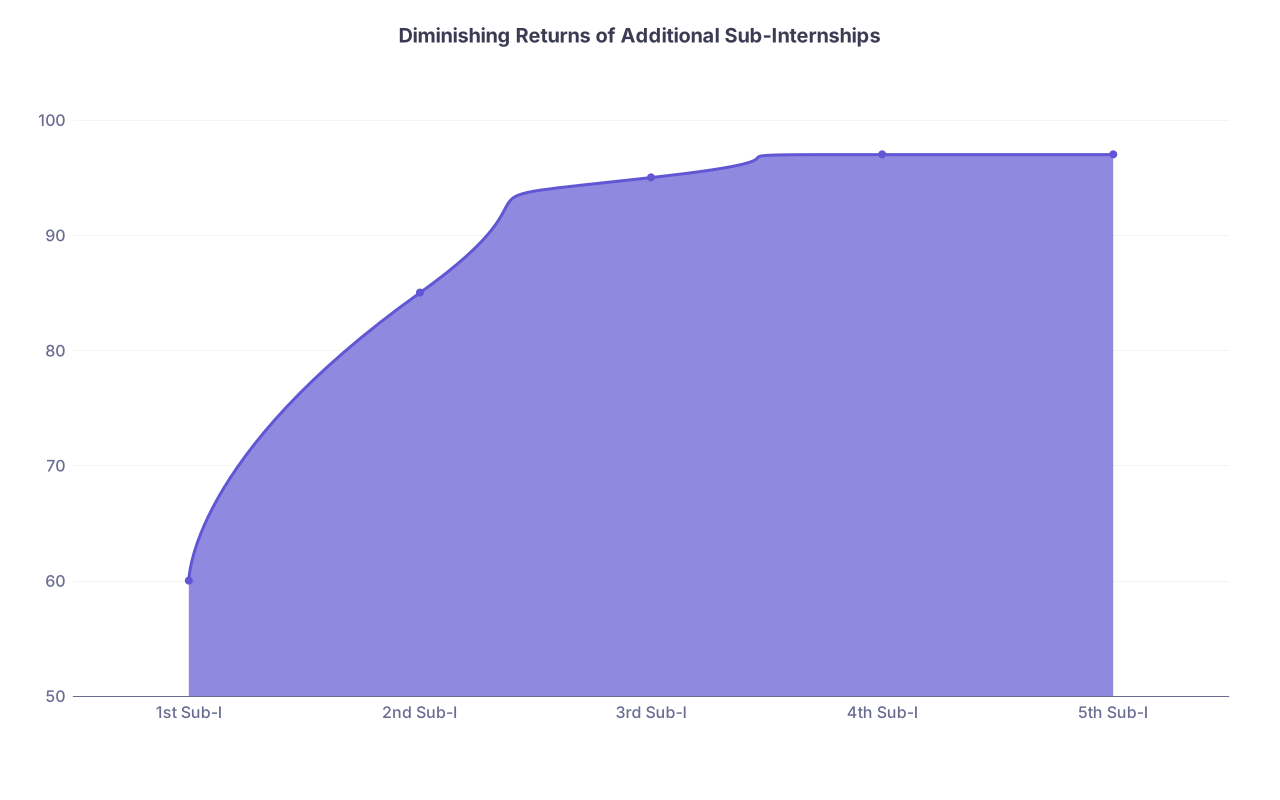
| Category | Value |
|---|---|
| 1st Sub-I | 60 |
| 2nd Sub-I | 85 |
| 3rd Sub-I | 95 |
| 4th Sub-I | 97 |
| 5th Sub-I | 97 |
- 1st sub‑I: Huge jump in readiness and evidence.
- 2nd: Big boost in letters/exposure.
- 3rd: Mostly refinement and targeted networking.
- 4th+: Marginal, unless you’re in an extreme situation.
Common Scenarios (And What You Should Do)
Scenario 1: Applying IM, top 25% of class, Step 2 around 245
What you need:
- 1 home IM sub‑I (July)
- 1 away at a regionally important or academic program (Aug/Sep)
- Optional: 1 more home or subspecialty rotation if you want an extra letter
Total: 2–3. Not 4.
Scenario 2: Applying Ortho from a no‑home program, Step 2 slightly below average
What you need:
- 3 aways at realistic‑but‑good programs where you can shine
- 1 strong related home sub‑I (trauma surgery, sports, etc.)
Total: 3–4 in-field equivalents. Any more and you’re killing your CK prep.
Scenario 3: Switching late from IM to Anesthesia in late M3
What you need:
- 1 anesthesia home sub‑I as early as you can get it
- 1 away at a program in your preferred region
- Possibly 1 more anesthesia or ICU sub‑I if schedule allows
Total: 2–3, but front‑loaded with people who can write you fast, strong letters that explain your switch.
Quick Reality Check: What PDs Care About Relative to Sub‑Is
If you had to roughly weigh what matters:
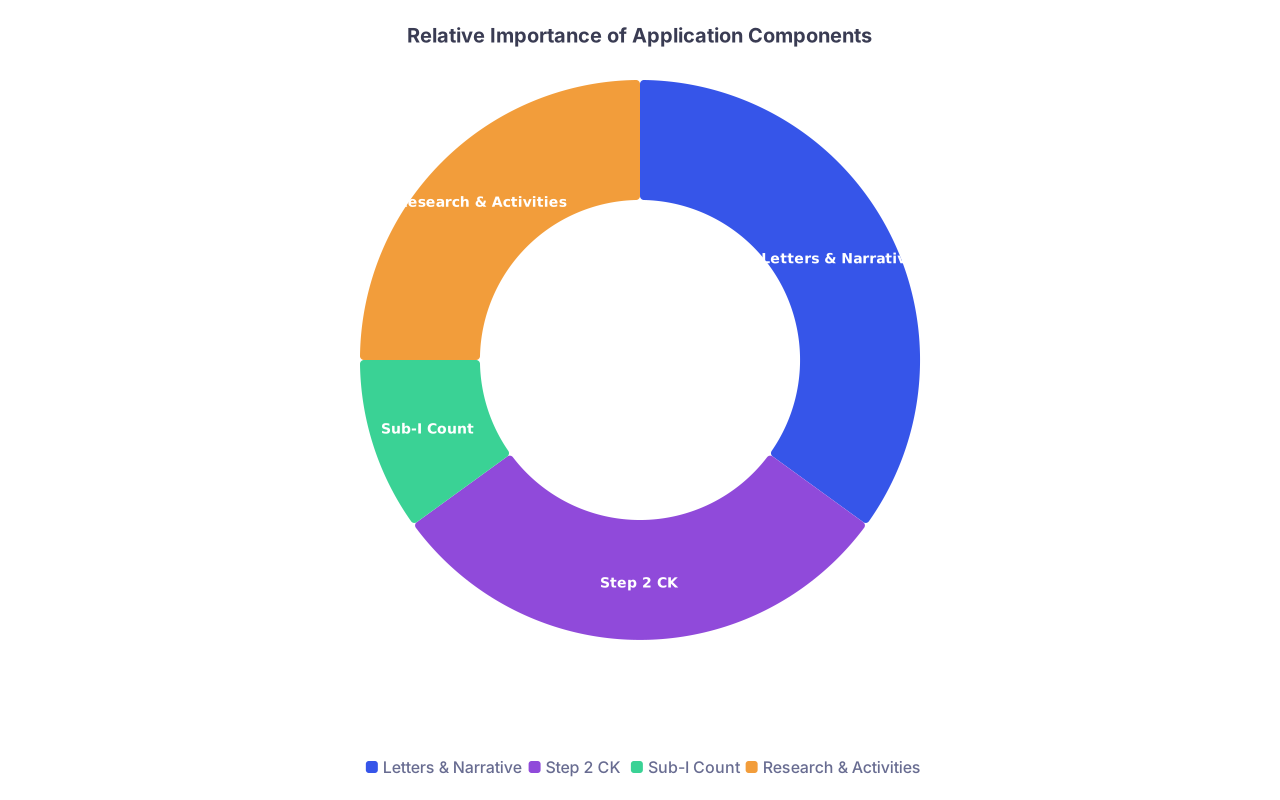
| Category | Value |
|---|---|
| Letters & Narrative | 35 |
| Step 2 CK | 30 |
| Sub-I Count | 10 |
| Research & Activities | 25 |
Sub‑Is feed letters and narrative much more than they act as a standalone metric. That should change how you think about them:
- Don’t chase raw quantity.
- Chase the conditions that generate strong letters and good stories about you as a near-intern.
FAQ: Sub‑Internships and the Match
1. Is it bad if I only have one sub‑internship in my chosen specialty?
Not necessarily. If you’re going into a less competitive field (FM, Peds, Psych, many IM paths) and that one sub‑I went really well, you can absolutely match with just that, plus strong letters from other related rotations. Where it becomes a problem is for highly competitive specialties or if your one sub‑I didn’t yield a strong letter. If that’s you, see if you can add one more targeted sub‑I or related rotation before ERAS and prioritize getting a high‑impact letter.
2. Do programs judge me for not doing an away rotation?
Some do, some don’t—but fewer than students think. If your school has a solid home program in your field and you perform very well there, that can absolutely be enough, especially for moderate or lower-competitive specialties. Where aways matter most is: you don’t have a home program, you’re targeting a new region far away from your med school, or you’re shooting for highly competitive academic programs that heavily recruit from their rotators. If none of that describes you, the “no away” path is not automatically a red flag.
3. What if one of my sub‑Is went badly—should I add another?
Maybe. If “badly” means you were sick half the month or got stuck with a disengaged team and no one can write a detailed letter, then yes, adding another sub‑I where you can be truly seen is smart. If “badly” means you were average but not a superstar, adding a fourth or fifth month won’t magically rewrite who you are. Focus on learning from the weaker month, tightening your clinical game, and making sure the next rotation you do is one where attendings actually see you take ownership and improve.
4. Does the timing of my sub‑Is (early vs late M4) affect my match chances?
Yes, but only in a practical way—programs need enough time to get your letter in. Sub‑Is before or around ERAS opening (June–September) are most valuable for letters that make it into your initial application. Later sub‑Is (Oct–Dec) can still matter a lot for places you rotated at or for mid-season letter updates, but they’re less likely to affect where you get interviews. As a rule: get at least one strong sub‑I done by late summer so you have a high-quality letter ready.
5. Can I count ICU or step‑down rotations as “sub‑Is” for my application?
Yes, if they’re senior-level, high-responsibility rotations in line with your specialty, they absolutely count in spirit—even if your school codes them differently. For example, MICU or CCU can be powerful for IM or Anesthesia applicants; NICU or PICU can help Peds; Trauma ICU for Surgery or Ortho. Just describe them clearly in ERAS and make sure the letter writers highlight your near-intern responsibilities: cross-cover, notes, presenting on rounds, independent clinical reasoning.
6. Bottom line: how many sub‑Is should I plan if I’m still uncertain?
If you’re truly unsure of specialty but aiming anywhere from IM, Peds, Psych, OB, EM, or Anesthesia, a safe generic plan is: one early “core” sub‑I (often IM wards) plus one more in a likely target field. Once you commit, aim for a total of 2–3 in or very close to that specialty unless you’re going after a very competitive surgical field from a weaker position—in which case 3–4 carefully chosen months is your upper limit. Anytime you feel pressure to go above that, stop and ask: “What exact benefit will this extra month give me that I don’t already have?”
Key takeaways:
You don’t need a wall of sub‑Is. You need 2–3 months where you perform at near-intern level, get remembered, and walk away with outstanding letters from places that matter to you. Anything past 3–4 is usually noise—especially if it steals time from Step 2 CK and your sanity.