
The reflex to chase your “dream” program for a Sub‑I is often wrong.
If your goal is to match well, not just take Instagram-worthy badge photos, you need a clearer strategy than “go where I want to be.” Let me break down when a home Sub‑I quietly wins, when an away at a dream program is actually worth it, and how to avoid the classic mistakes that tank applications.
First: What a Sub‑I Is Really For
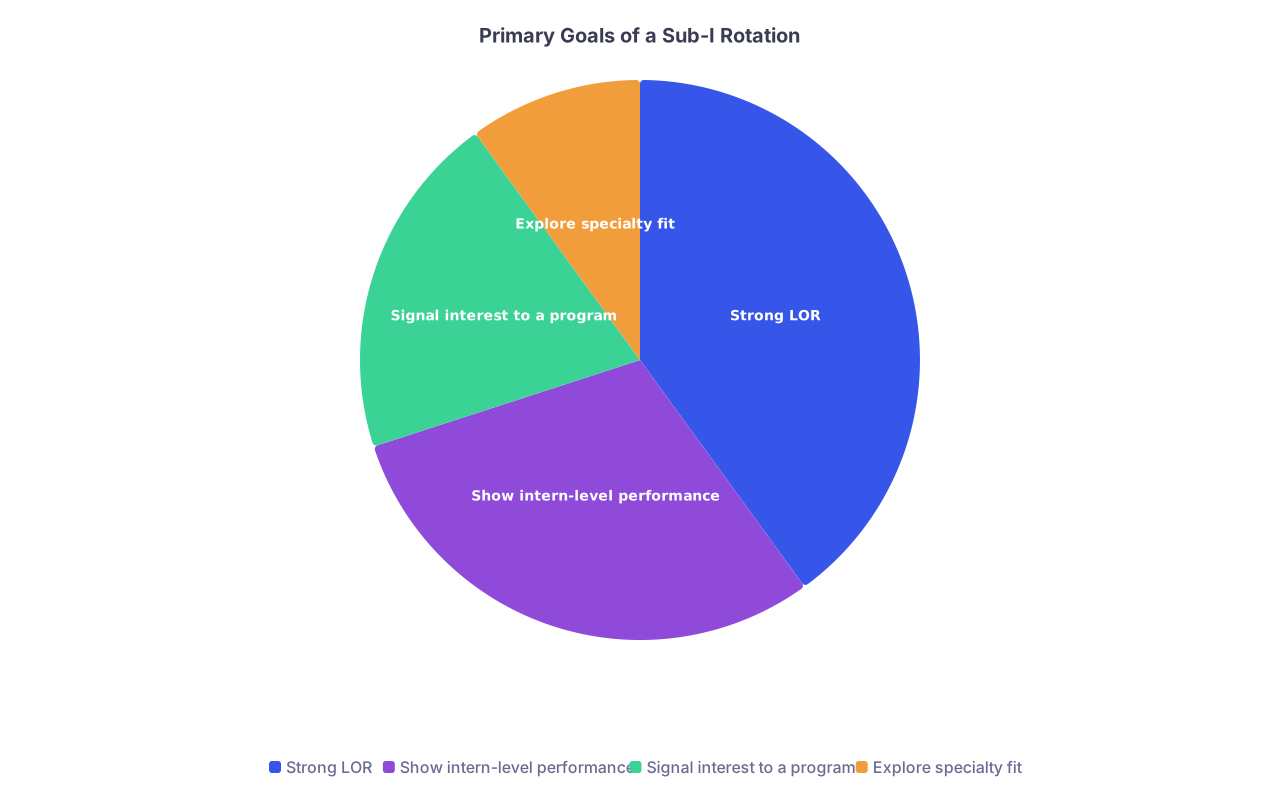
Before you decide where, you need to understand why you’re doing a Sub‑I in the first place. A Sub‑I isn’t just “harder clerkship.” It’s a weapon in residency applications if you use it correctly.
A Sub‑I should give you:
- A strong, specific, and enthusiastic letter of recommendation (LOR) from someone known in the field.
- Concrete evidence you can function like an intern: notes, orders, cross‑cover, call, sign‑outs.
- Visibility to program leadership who actually sit in the rank meeting.
- A clear signal to programs about your level of interest (or lack thereof).
Most students overestimate #4 (signal interest) and underestimate #1–3 (letters, performance data, and internal support). That’s the first mistake.
So the real question is not “home vs dream.” It’s:
Where will I perform best and get the highest-yield letter and advocates, without boxing myself into a corner?
Now let’s get concrete.
The Advantages of a Home Sub‑I
If your home institution has the specialty you want, a home Sub‑I is usually the default first move. Not because it’s easy. Because the upside is bigger and more reliable.
Why home often wins
You already know:
- The EMR
- The layout and logistics
- The culture and expectations
- The residents and maybe some attendings
That familiarity matters. I’ve watched plenty of students underperform on away Sub‑Is simply because they spent the first week figuring out where to print notes and how to page consults.
At home, you can start performing like an intern on Day 1 instead of Week 3. That often translates to:
- More responsibility earlier
- More trust from the team
- Better chances of being “the top student we’ve had this year”
- A stronger, more detailed letter
And residency programs love a strong home‑institution letter that says:
- “This student functioned at intern level and is in the top 10% of all Sub‑Is I’ve seen.”
- “I would absolutely rank this student to match at our program.”
Those lines move applications.
Strategic reasons to prioritize home
Here’s where a home Sub‑I clearly comes out ahead:
- You’re aiming to match at your home program or within that affiliated system.
- You don’t have a long-standing relationship yet with the PD or key faculty.
- Your step scores / grades are decent-to-good, and a standout letter could bump you a tier.
- You’ll get serious responsibility (cross‑cover, managing your own patients, writing orders under supervision).
If your home Sub‑I is well-structured and respected in your specialty (think: medicine, surgery, OB/GYN, etc.), it should be on your schedule early, not as an afterthought.
| Category | Value |
|---|---|
| Strong LOR | 40 |
| Show intern-level performance | 30 |
| Signal interest to a program | 20 |
| Explore specialty fit | 10 |
The Real Value (And Risk) of a “Dream” Program Away Sub‑I
Doing a Sub‑I at your dream program can help you. It can also hurt you more than you think.
Here’s the honest version.
When a dream program Sub‑I is high-yield
An away Sub‑I at a dream place makes sense when:
- The program is realistically within reach (your Step, clerkship grades, and CV are in their ballpark).
- The specialty is competitive and the program heavily favors known quantities (ortho, derm, ENT, neurosurg, some IM subspecialty pipeline programs).
- You can perform at a high level in a high-pressure, high-expectation environment.
- Your home department is weak, small, or doesn’t have a residency in that field.
In those cases, the away Sub‑I can:
- Convert you from “random ERAS applicant” to “known, vetted applicant.”
- Generate a letter from a big-name faculty member.
- Put your face and work ethic in front of the PD and APDs.
- Show that you fit their culture (and that you actually want them, not just their name).
But here’s the part people gloss over:
If you go to your dream place and are just “fine,” that can absolutely drop your chances below what they would have been if you had never gone.
Mediocre performance is worse than being an unknown.
When a dream program Sub‑I backfires
I’ve seen this scenario more times than I like:
Student with 245–250 Step 2 and solid but not perfect transcript wants a top‑5 academic program. They do an away. They’re okay. They’re not a disaster, but they’re not glowing either. They get:
- No strong letter.
- Lukewarm feedback to the PD: “Nice student, worked hard.”
- And then… no interview.
Programs do not feel obligated to interview you just because you rotated there. If you rotated and didn’t impress, they’re done. You burned the bridge.
You also lose optionality. Without the away, that same program might have given you an interview on paper alone, liked you in person, and ranked you. With an average in-person month, they’ve seen enough.
The Right Order: Home vs Dream, Chronologically
If you can, you want both a strong home Sub‑I and at least one well-chosen away at a place you’d be happy to match. The question becomes: in what order?
Rule of thumb:
- Do your first Sub‑I at home, earlier in the year.
- Do your higher‑stakes away(s) after you’ve already learned how to be a Sub‑I.
You want your first “oh, that’s how to pre‑round efficiently” and “that’s how to sign out safely” mistakes to happen where people already know and like you, not at a dream program where you’re under a microscope.
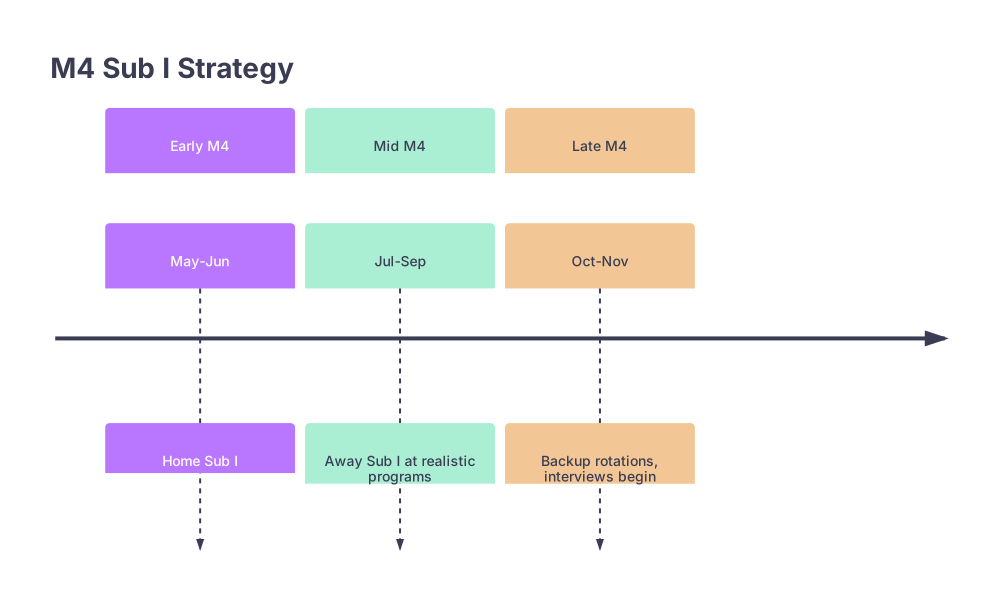
A reasonable pattern for many students:
- Early M4 (May–July): Home Sub‑I in your chosen specialty (or medicine Sub‑I if required).
- Mid M4 (Aug–Oct): One or two targeted away rotations at programs that:
- Match your competitiveness
- Sit in locations/systems you’d truly attend
- Have a track record of matching rotators
| Period | Event |
|---|---|
| Early M4 - May-Jun | Home Sub I |
| Mid M4 - Jul-Sep | Away Sub I at realistic programs |
| Late M4 - Oct-Nov | Backup rotations, interviews begin |
How to Decide: Home vs Dream, Based on Your Profile
You need to match your Sub‑I strategy to your actual application, not your fantasy version of it.
Here’s a blunt framework.
| Applicant Profile | Better First Move | Why |
|---|---|---|
| Strong, top-tier (high scores, honors) | Home, then 1–2 elite away | Build killer home letter, then take targeted shots |
| Solid but not superstar | Home, then realistic away | Maximize performance, avoid overreaching on aways |
| Borderline for the specialty | Home only or 1 very carefully chosen away | You cannot afford a mediocre month at a reach program |
| No home program in specialty | Away at realistic programs | You need both exposure and letters from that field |
If you’re a strong applicant
By strong, I mean:
- Top third of your class
- Strong clinical evals/Honors in core clerkships
- Competitive Step 2 score for your specialty
- Some research and actual commitment in the field
What you should do:
- Crush the home Sub‑I. Ask specifically for feedback mid‑rotation and adjust.
- Then choose 1–2 “dream” or high-tier realistic programs where you’d genuinely go.
- Use those away months to get face time with PDs, fellows, and key faculty.
You’re trying to move from “on the interview list” to “on the short rank list.”
If you’re middle‑of‑the‑pack
You’re not doomed. But you need to be smarter than your classmates who are chasing logos.
Play it like this:
- Prioritize a home Sub‑I where people know you as a hard worker and will go to bat for you.
- Choose aways where your stats and prior matches suggest you’re in range.
- Do not spend your only away at an ultra‑reach program where you’ll be compared to 260‑score rotators with 10 pubs.
You need programs saying: “She might have slightly lower numbers, but she was the best student we had this year.” That does happen. I’ve heard it said in rank meetings.
If your specialty is ultra‑competitive (ortho, derm, ENT, plastics, etc.)
For these, aways are often closer to mandatory. But the same logic holds:
- Your home rotation (if available) is non‑negotiable. That’s your first chance to prove you belong in the field.
- Your aways should mostly be realistic+ programs. One dream reach is fine. Three dream reaches and no mid‑tier backups is how people go unmatched.
| Category | Value |
|---|---|
| Home - strong performance | 90 |
| Away - strong performance | 80 |
| Home - average performance | 50 |
| Away - average performance | 30 |
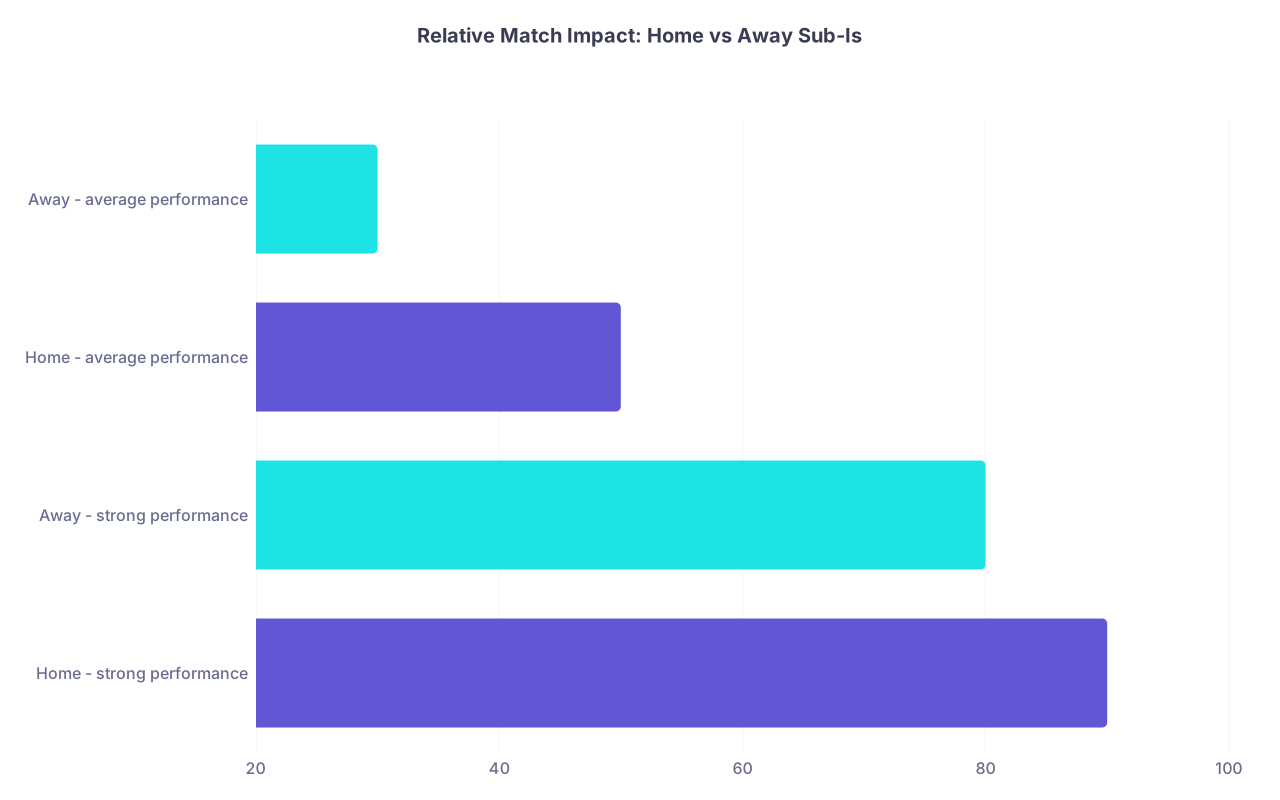
(Values are conceptual, not exact data—but you get the idea. Strong > where. Weak < everything.)
Other Factors That Actually Matter (More Than You Think)
Who will write your letter?
Forget the building. Ask: which specific person is likely to write me the best possible letter?
Sometimes that’s:
- The home PD who runs the Sub‑I.
- A known clinician educator who loves writing detailed letters.
- A subspecialist with national reputation who actually supervises you.
If the “dream” program is staffed mostly by fellows and hospitalists on the rotator month, and you never get near the big names, the letter from that month may be worse than a home letter.
How much autonomy will you actually get?
Some “famous” places run glorified observational months for visiting students. You pre‑round, follow notes, and present for 3 minutes while the senior runs the show.
That’s lousy for:
- Demonstrating intern‑level functioning
- Getting specific narrative comments
- Convincing anyone to advocate for you
Meanwhile, a smaller, less flashy home program might give you four patients, sign‑out duty, and overnight call. That’s how you build trust and stories for your letter.
Where do you actually want to live?
Here’s the unsexy truth: most people don’t end up at their theoretical “dream” name‑brand program. They match at:
- Their home program
- A regional academic or community program in cities they can accept
- A place where they had a good away and clear mutual fit
So your away should be at places where, if you match, you’ll sign that contract and move there without regret.
I’ve seen students do aways in cities they hate purely for prestige. They crush the month, get ranked, and on Match Day they’re… not thrilled. That’s a bad outcome disguised as success.

Tactical Mistakes to Avoid
Let me just call out the patterns that reliably cause trouble.
Doing your first Sub‑I at a dream program.
You’re still figuring out basic things (time management, when to call senior, note structure). Make those mistakes at home, not at Harvard.Overloading on aways and neglecting home.
Matching at your home program is often your single highest-probability outcome. Do not underperform or skip that Sub‑I.Choosing a dream away that doesn’t match your profile at all.
A 230 applying ortho probably shouldn’t burn their only away at the most competitive program in the country. You need interviews, not stories.Ignoring feedback.
If mid‑rotation at home you’re told you need to tighten presentations or follow‑through, fix that before you go anywhere fancy.Not communicating your goals.
On both home and away Sub‑Is, you need to clearly tell residents and attendings: “I’m applying to this specialty and am hoping for a strong letter if I earn it.” Silent students get generic letters.

| Step | Description |
|---|---|
| Step 1 | Want to match in this specialty |
| Step 2 | Schedule home Sub I early |
| Step 3 | Plan away at realistic programs |
| Step 4 | Add 1-2 targeted away Sub Is |
| Step 5 | Choose mid tier realistic aways |
| Step 6 | Focus on strong performance and letters |
| Step 7 | Have home program |
| Step 8 | Competitive for dream program |
Money, Bandwidth, and Sanity
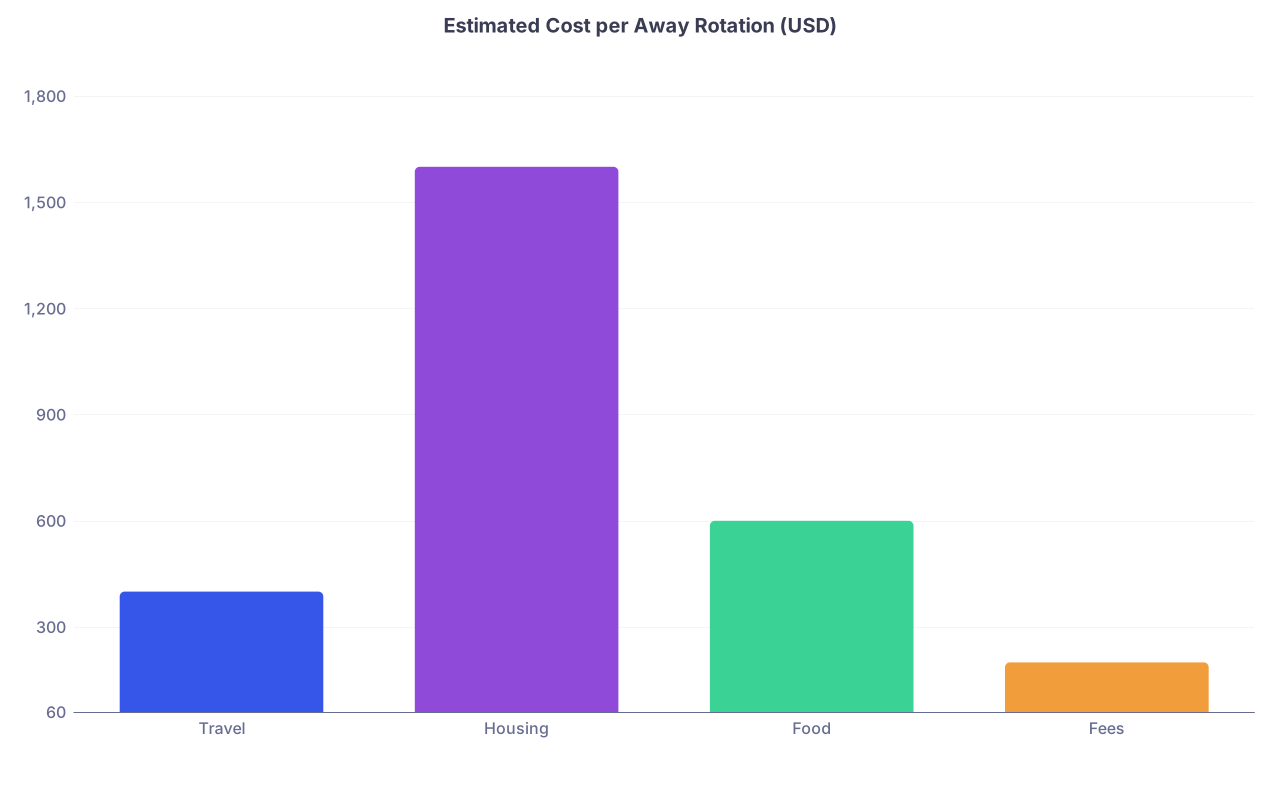
Quick reality check: aways are expensive and draining. You’re paying for:
- Travel
- Short‑term housing
- Duplicative onboarding and EMR training
- Being away from your support system
If you try to do three aways “just in case,” you’ll burn time, money, and energy that might be better spent:
- Doing one high‑impact away
- Plus research or a home elective with a letter writer
- Plus Step 2 prep (for those who still need a score lift)
One strong away + one strong home Sub‑I beats three scattered, average away months almost every time.
| Category | Value |
|---|---|
| Travel | 400 |
| Housing | 1600 |
| Food | 600 |
| Fees | 200 |
So, Is It Better to Do Your Sub‑I at Home or at a Dream Program?
Here’s the honest answer you’re looking for:
- If you have to pick one, and your home program is solid in your specialty, do the home Sub‑I. Performance and letters beat prestige.
- If you can do both, do home first, then a “dream” or high‑value away where you’re realistically competitive and would actually live.
- If your home doesn’t have the specialty, then your “home” equivalent is a realistic away at a program that trains people like you, not just the flashiest name you can think of.
Your real “dream” program is the one that will train you well, support you, and actually rank you high enough to match. A Sub‑I should move you closer to that outcome, not just give you bragging rights.
Key points to remember:
- A strong, detailed letter and clear intern‑level performance matter more than where you rotated.
- Home Sub‑Is are usually the safest and highest‑yield first step; aways are for targeted, realistic shots—not wishful thinking.
- Never use your first Sub‑I attempt on your dream program. Practice at home, then step onto the bigger stage when you’re ready.