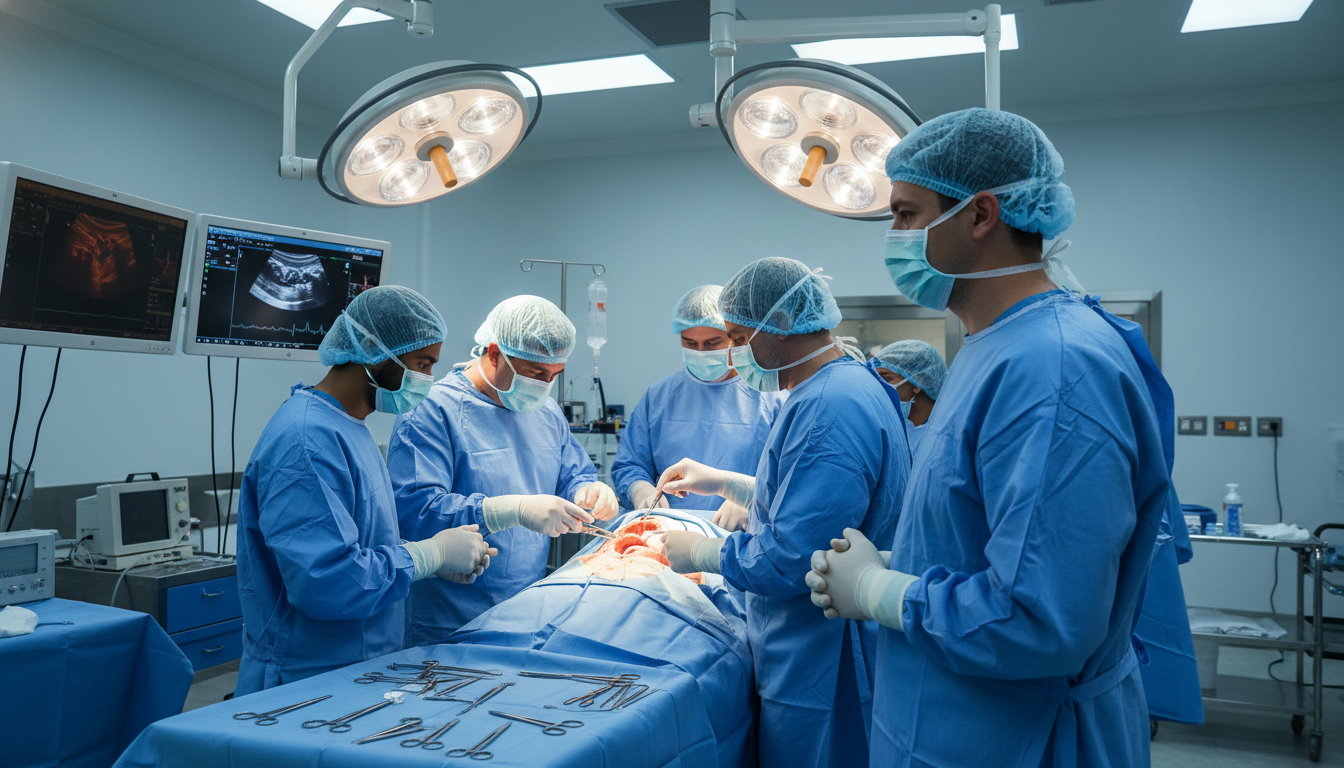
Understanding Away Rotations for Caribbean IMGs in Internal Medicine
For Caribbean medical students aiming for a strong internal medicine residency match in the United States, away rotations (also called visiting student rotations or “audition rotations”) can be one of the most powerful parts of your application strategy. This is particularly true if your home institution is outside the mainland U.S. or doesn’t have its own internal medicine residency programs with strong match pipelines.
Away rotations residency strategy is not just about “doing more” rotations. It’s about picking the right programs, timing them strategically, knowing how many away rotations you really need, and then performing in a way that converts 4 weeks of work into letters, interviews, and ultimately a successful IM match.
In this guide, you’ll learn how to build a focused away rotation strategy as a Caribbean IMG (including students from SGU, AUC, Ross, Saba, and other Caribbean medical schools), with specific tips tailored to internal medicine.
Why Away Rotations Matter So Much for Caribbean IMGs
Away rotations are especially critical for Caribbean medical school residency applicants because they can help level the playing field in several key ways:
1. Demonstrating You Can Thrive in a U.S. Academic Environment
Programs that routinely train U.S. MD/DO students may be less familiar with Caribbean curricula or grading systems. A strong month as a visiting student proves:
- You understand U.S. hospital systems and documentation
- You can function at or above the level of U.S. seniors
- Your clinical reasoning and communication are strong
- You’re reliable and easy to work with
For IMGs, this first-hand data point is often more persuasive than transcripts or test scores alone.
2. Building Relationships and Securing High-Impact Letters
Internal medicine residency programs rely heavily on letters of recommendation (LoRs) from U.S. academic internal medicine faculty. A superb letter from an away rotation can:
- Validate your clinical skills from a U.S. context
- Provide program-specific insights (“This student would excel in a busy, academic IM program like ours.”)
- Serve as a powerful signal during file review and rank list creation
For many Caribbean IMG applicants, one or two strong LoRs from away rotations change their entire application profile.
3. Creating Your Own “SGU Residency Match”–Style Pipeline
Big Caribbean schools like SGU have established relationships and track records with many internal medicine residency programs. If you’re from SGU, Ross, AUC, etc., that can help—but it’s rarely enough by itself.
Away rotations let you:
- Insert yourself directly into the programs and regions where you want to match
- Become a “known quantity” rather than just a name on a spreadsheet
- Show you’re more than your school name or USMLE score
Think of away rotations as your chance to create a personal pipeline to specific programs—especially mid-tier or community programs that may be IMG-friendly but selective.
4. Strengthening Your Story for the IM Match
Residency program directors in internal medicine often ask:
- Why internal medicine?
- Why this geographic region?
- Why this type of program (community vs academic, large vs small)?
Thoughtfully chosen away rotations give you real experiences to reference in your personal statement, interviews, and future correspondence (e.g., letters of interest). Instead of saying, “I’m interested in internal medicine,” you can say, “During my internal medicine sub-I at XYZ Medical Center, I found that managing complex multi-morbidity cases in a high-volume teaching setting is exactly what I want for residency.”

Strategic Planning: Timing, Number, and Types of Rotations
When to Do Away Rotations as a Caribbean IMG
For most students, the ideal timing for away rotations is during the final year of medical school, typically:
- U.S. MD/DO equivalent: MS4 year
- Caribbean students: Clinical year 4, often after completing core IM clerkship and Step exams
Key timing points:
- Before ERAS submission (September):
- Best for obtaining letters in time for your application
- Ideal months: May–August (but competitive and fill early)
- After ERAS but before interview season:
- Can still yield late letters or updates
- May convert into interviews at that program
- During peak interview season (Nov–Jan):
- Logistically challenging
- Less impact on current year’s cycle but may help if reapplying
For most Caribbean IMGs aiming for an internal medicine residency, doing at least one away rotation between May and August of your application year is highly recommended.
How Many Away Rotations Do You Really Need?
The “how many away rotations” question is critical, especially if you’re managing travel, visas, and financial constraints.
As a Caribbean IMG targeting internal medicine:
- Minimum:
- 1 strong internal medicine away rotation at a program where you’d genuinely like to match
- Ideal range:
- 2–3 total away rotations, at least 2 in internal medicine or closely related inpatient adult medicine
- Upper limit:
- More than 3–4 away rotations often leads to burnout and may not add proportional benefit
A practical structure for many Caribbean IMGs:
- Core IM Clerkship:
- Done at an affiliated teaching hospital (often not your home country)
- Sub-internship (Sub-I) / Acting internship in Internal Medicine (Away #1):
- Preferably at a program that takes IMGs and is within your desired geographic area
- Second IM away rotation or hospitalist-focused IM elective (Away #2):
- Either at another target program or in the same region
- Optional third rotation:
- Can be in a subspecialty within IM (e.g., cardiology, nephrology) at a program you’re targeting for categorical internal medicine
If time and budget limit you to one visiting student rotation, choose a true internal medicine sub-internship in an inpatient setting at a program with a history of accepting Caribbean IMGs.
Core vs Elective vs Sub-I: Which Rotations Help Most?
For internal medicine residency applications, programs tend to value:
- Sub-internships (sub-I / acting intern):
- You function almost like an intern (within supervision)
- Often on general medicine wards or step-down units
- Extremely valuable for IM letters and performance assessments
- Inpatient general internal medicine electives:
- Still strong, especially if you get daily attending contact
- Subspecialty IM electives (cardiology, GI, etc.):
- Helpful, but ideally secondary to a general medicine sub-I
- Better if the subspecialty team is integrated closely with the IM residency program
Try to ensure at least one sub-I in general internal medicine among your away rotations. That is often the highest-yield for IM match outcomes.
Choosing the Right Programs for Away Rotations
Not every hospital that offers visiting student rotations will help your residency application equally. As a Caribbean IMG, you need to be deliberate.
Target Programs Where Caribbean IMGs Have Matched Before
Look at internal medicine residency program websites and:
- Check current and recent residents’ medical schools
- Look specifically for Caribbean medical school residency representation:
- SGU, Ross, AUC, Saba, MUA, Trinity, etc.
- Scan program class lists or resident bios for multiple IMGs and Caribbean grads
Programs that have several Caribbean graduates in their internal medicine residency are:
- More likely to accept your application for visiting student rotations
- More open-minded about IMGs if you perform well
- More likely to interview and rank you if you impress them on rotation
Consider Geography and Your Long-Term Goals
Geography matters more than many applicants realize. Consider:
- Preferred region to live long-term:
- Northeast vs Midwest vs South vs West
- State-specific IMG friendliness:
- Some states consistently have more IMGs in IM residencies (e.g., NY, NJ, MI)
- Licensing and visa issues:
- Some states and hospitals have stricter credentialling rules for visiting students from international schools
If you know you want to settle in a certain region, prioritize away rotations there; many programs prefer candidates with local ties or demonstrated regional interest.
Match Between Your Profile and the Program’s Competitiveness
Being realistic and strategic is critical:
- Highly competitive university IM programs:
- Often favor high USMLE scores, U.S. MD/DOs, and research-heavy CVs
- Some will not consider IMGs for visiting positions at all
- University-affiliated community programs:
- Often a sweet spot for Caribbean IMGs
- Good teaching, academic affiliations, and historically more IMG-friendly
- Large community programs:
- Typically have significant IMGs in their housestaff
- May be very welcoming if you perform well on rotation
Use online tools (FREIDA, program websites, NRMP data) and speak to upperclassmen and alumni from your Caribbean school. Ask:
- Which programs accepted students for away rotations?
- Where did students get interviews after rotating?
- Which programs were actually IMG-friendly in practice?
Application Logistics and Requirements
Different institutions use different systems for visiting student rotations:
- VSLO/VSAS (AAMC Visiting Student Learning Opportunities)
- Institution-specific applications on program or hospital websites
- Direct email to coordinators for IMG requests
Common requirements for Caribbean IMGs:
- Proof of malpractice insurance (from your school or personal policy)
- Health clearance and immunizations
- USMLE Step 1 (and sometimes Step 2 CK) scores
- Transcript and dean’s letter
- Proof of English proficiency (occasionally)
- Visa/travel documentation if needed
Start planning 6–9 months before your desired rotation date, especially for May–August slots, which fill quickly.

Maximizing Your Impact During the Rotation
Securing an away rotation is just the beginning. The real value comes from how you perform and what you leave behind in people’s minds.
Understand Expectations on an Internal Medicine Service
On an IM sub-I or elective, typical expectations:
- Pre-round on your patients and know them in detail
- Present clearly and concisely on rounds
- Write daily notes (subject to institutional policies for students)
- Help with admission H&Ps and discharge summaries
- Look up evidence and guidelines for management plans
- Communicate effectively with nurses, consultants, and families
As a Caribbean IMG, you may feel additional pressure to “prove yourself.” Channel that into:
- Being prepared and reliable
- Showing enthusiasm for learning
- Adapting quickly to local workflows and EMR systems
Clinical Performance: What Program Directors Notice
Faculty and residents are informally evaluating you along several dimensions:
Clinical reasoning
- Can you form a coherent differential?
- Do you prioritize common and dangerous causes?
- Do you integrate labs, imaging, and exam findings logically?
Work ethic and reliability
- Do you show up early consistently?
- Are your notes, tasks, and follow-ups completed?
- Do residents trust you to handle what you’re assigned?
Teachability and humility
- Do you receive feedback without defensiveness?
- Do you correct mistakes promptly?
Teamwork and communication
- Are you kind and respectful to nurses and other staff?
- Do you keep your resident updated without being overwhelming?
Professionalism
- Punctuality, appearance, honesty, and boundaries
A Caribbean IMG who is consistently outstanding in these areas often outshines even U.S. seniors and leaves a lasting impression.
Actively Work Toward a Strong Letter of Recommendation
Don’t passively hope for a good letter. Plan for it.
Identify potential letter writers early
- Ideal: an internal medicine attending who sees you daily for at least 2 weeks
- Bonus: someone involved in the residency program (PD, APD, core faculty)
Signal interest and request feedback mid-rotation
- Around week 2, ask:
- “I’m very interested in internal medicine and in applying to programs like this one. Could you share any feedback on how I’m doing and how I can improve over the rest of the rotation?”
- This invites honest coaching and shows maturity.
- Around week 2, ask:
Ask for the letter before the rotation ends
- If feedback has been positive, say something like:
- “I’m applying to internal medicine this fall. If you feel you know my work well enough, I’d be very grateful if you could write a strong letter of recommendation for my application.”
- If feedback has been positive, say something like:
Provide a concise “letter packet”
- CV
- Personal statement draft (even if early)
- USMLE scores
- Brief reminder of interesting cases you handled
- ERAS letter request form and deadlines
This makes it easy for the attending to write you a detailed, supportive letter.
Build Genuine Relationships, Not Just Networking
Residency selection is ultimately human. During your away rotation:
- Get to know residents: ask about their paths, the program culture, and expectations
- Attend conferences, noon reports, and journal clubs
- Show interest in the hospital and local community
- If appropriate, offer to help with small research/QI projects (but only if you can realistically follow through)
When programs later review your application, the phrase, “We know this student—they rotated here and were fantastic,” carries enormous weight, especially for a Caribbean IMG.
Integrating Away Rotations into Your Overall IM Match Strategy
Away rotations are powerful, but they are only one part of a broader internal medicine residency strategy. You need to integrate them with your exam performance, application targeting, and overall narrative.
Align Rotations with Your Application Story
Think about what your away rotations “say” about you:
- If you rotate at several academic IM programs with large underserved populations:
- Your application should highlight interest in academic medicine and caring for diverse, complex patients.
- If your visiting student rotations are in community-based IM:
- Emphasize continuity of care, hands-on experience, and strong interest in community practice.
Make sure your personal statement and interview answers connect your away rotation experiences to your motivation for internal medicine and the kind of physician you aim to be.
Using Rotations to Inform Your Rank List
Away rotations give you realistic insight into:
- Program culture and resident morale
- Workload and support (night float, caps, ancillary staff)
- Quality of teaching
- How IMGs are treated within the program
Be honest with yourself afterward:
- Did residents seem happy or exhausted?
- Were IMGs well-integrated or marginalized?
- Can you see yourself thriving there for three years?
It can be tempting to rank any program where you rotated highly just because you invested time there. Instead, evaluate each based on your real experience.
What If You Don’t Get an Interview After an Away Rotation?
Sometimes, despite strong performance, an away rotation does not lead to an interview at that program. Reasons may include:
- Program-wide policies (e.g., strict score cutoffs or visa limitations)
- Very competitive applicant pool that year
- Institutional caps on Caribbean or international graduates
Even then, the rotation often still helps:
- The letter of recommendation can boost your application elsewhere
- The experience refines your clinical skills and confidence
- Your story and profile become more competitive for other internal medicine residency programs
If you’re especially interested in that program, you may consider:
- Sending a concise, professional letter of interest
- Highlighting your rotation and any updates (Step 2 scores, new research, etc.)
- Having your letter writer advocate on your behalf if they’re willing
Frequently Asked Questions (FAQ)
1. As a Caribbean IMG, how many away rotations in internal medicine should I aim for?
For most Caribbean IMGs targeting an internal medicine residency, 2 away rotations in internal medicine (or closely related inpatient adult medicine) is a strong goal. One should ideally be a sub-internship in general internal medicine. If your time or finances are limited, 1 excellent, well-chosen away rotation at a program that regularly takes Caribbean IMGs and offers strong letters can still make a meaningful impact.
2. Should I prioritize an SGU residency match–type program or a higher-tier university hospital?
If you’re at SGU or a similar Caribbean medical school, rotating at a program with a proven track record of SGU residency match (or matches from your specific school) is often more strategic than chasing the most prestigious name. Programs that already know and trust Caribbean graduates are more likely to:
- Accept you for a visiting student rotation
- Offer interviews
- Rank you favorably after a strong performance
That said, if you have very strong scores and a robust CV, a selective academic IM program can still be worth pursuing—but be realistic about their historical IMG patterns.
3. Do visiting student rotations really improve my chances of an IM match as a Caribbean IMG?
For Caribbean IMGs, away rotations residency experiences can significantly improve your chances, especially when:
- You perform at a high level clinically and professionally
- You obtain strong internal medicine letters of recommendation
- You rotate at programs that are genuinely IMG-friendly
- You integrate those experiences into a coherent application narrative
They are not a guarantee, but for many IMGs they are a key differentiator in a competitive internal medicine residency market.
4. What if I can’t secure any away rotations in internal medicine?
If you’re unable to arrange visiting student rotations (due to timing, visas, finances, or limited spots), you can still strengthen your IM match application by:
- Maximizing performance on your core IM clerkship and any affiliated electives
- Securing the best possible IM letters from your existing clinical sites
- Excelling on USMLE Step 2 CK
- Targeting programs known to be IMG-friendly
- Engaging in QI, research, or scholarly work related to internal medicine
If possible, consider at least one domestic U.S. clinical experience (even if not labeled an “away rotation”), such as a sub-I at a hospital with an IM program that accepts IMGs.
A thoughtful away rotation strategy—carefully choosing programs, timing your rotations, and performing at your best—can transform your internal medicine residency prospects as a Caribbean IMG. Focus on quality over quantity, align your choices with your long-term goals, and use each rotation to show programs exactly who you are as a future internist.