
The biggest mistake visa‑needing physicians make is chasing “dream jobs” before confirming one thing: who will actually sponsor your visa and how solid is that sponsorship.
If you need a visa, you are not just choosing between academic and community jobs. You are choosing between places that can keep you in the country and places that will quietly say “we don’t do visas” three emails into the process.
Let’s walk through this like I would with a PGY-3 sitting in my office in March of their final year, panicking because interview offers are coming in and nothing says H‑1B or J‑1 waiver clearly.
First: Get Brutally Clear On Your Own Visa Situation
Before you even think “academic vs community,” you need to know exactly what category you’re in and what that means. Not generically. For you.
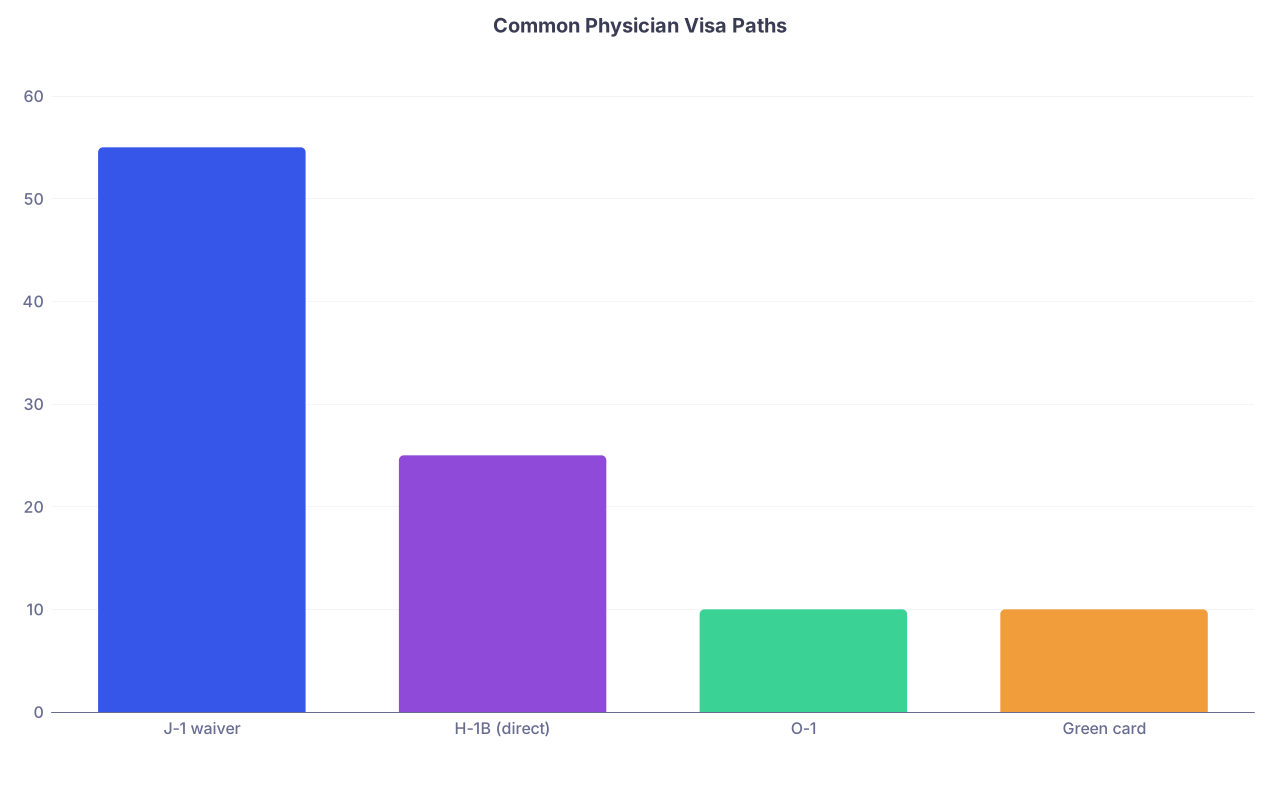
| Category | Value |
|---|---|
| J-1 waiver | 55 |
| H-1B (direct) | 25 |
| O-1 | 10 |
| Green card | 10 |
Those percentages are rough, but they reflect what I’ve actually seen among international grads landing first jobs.
Step 1: Identify your starting point
Which of these are you?
- Current J‑1 clinical visa holder in residency/fellowship
- Current H‑1B in training
- On OPT/another status and need H‑1B or O‑1 for first job
- Already have green card / US citizenship (if this is you, click away, this article isn’t for you)
Your constraints are different:
J‑1 clinical visa
You almost certainly need a J‑1 waiver job first (Conrad 30, VA, HHS, etc.). That means:- Full‑time, in a shortage area or underserved population
- Service obligation (usually 3 years)
- Tight timelines after training ends
H‑1B in training
You need:- Cap‑exempt vs cap‑subject analysis (were you sponsored by a university/affiliated hospital?)
- Continuity of status (no gaps between jobs)
- An employer willing to file a transfer early
OPT / other
You almost certainly need an H‑1B sponsor for your first attending job. Those are not “default” for many community shops.
Write down your current status, when it expires, and the earliest and latest realistic start dates you can have. Not in your head. On paper.
How Academic vs Community Jobs Actually Differ On Visa Sponsorship
People love to say “academics are better for visas.” That’s only half true and often misunderstood.
Here’s the real pattern I’ve seen again and again.
| Setting Type | J-1 Waiver Jobs | H-1B Familiarity | In-house Immigration | Green Card Willingness |
|---|---|---|---|---|
| Big University Hospital | Rare for first job | High | Yes | Strong |
| University-Affiliated Community Hospital | Sometimes | High | Often | Good |
| Large Private Community Group | Variable | Medium | No | Variable |
| Rural / Underserved Hospital | Very common | Low-Medium | Rare | Mixed |
| Corporate Hospital System | Common | Medium-High | Sometimes | Good |
Now let’s translate that into “what you actually face when you’re the one needing sponsorship.”
Academic Jobs: Pros and Cons For Visa Holders
Where they shine:
- They almost always have an immigration lawyer or firm already on retainer.
- H‑1B and green card processes are familiar.
- Cap‑exempt H‑1B options through universities can be a huge safety net.
- They tend to follow rules and timelines more tightly (less cowboy behavior, fewer “we forgot to file your extension” disasters).
Where they fall short:
- True J‑1 waiver positions in central academic hospitals are rare outside some primary care and psychiatry roles.
- Many academic departments quietly avoid J‑1 waivers entirely. You’ll hear: “We don’t do waivers, sorry.”
- Salary may be lower, and some won’t start green card processes quickly (“after promotion,” “after your first contract term,” etc.).
If you’re J‑1 and need a waiver, a pure ivory‑tower academic hospital in a big city is usually a dead end for your first job.
Community Jobs: Pros and Cons For Visa Holders
Where they shine:
- Tons of J‑1 waiver opportunities in rural and underserved areas (especially FM, IM, psych, peds).
- Some systems are desperate enough to learn whatever they need to about visas if they really want you.
- Salary can be significantly higher than academics.
- Less bureaucracy to change terms, negotiate buyouts, etc.
Where they’re weak:
- They may have no idea how visas actually work. “We’ve never sponsored before, but our HR can look into it” is a red flag, not a comfort.
- You may be the test case. That means delays, mistakes, and you chasing them constantly.
- Green card policy might be nonexistent or vague (“We’ll see after you start”).
If you’re on a J‑1, community or hybrid hospital systems are where most waiver jobs live. But you need to separate the serious sponsors from the clueless ones quickly.
If You’re J‑1: How To Choose Between Academic‑Adjacent vs Deep Community
This is the most common, high‑stakes scenario, so let’s zoom in.

| Step | Description |
|---|---|
| Step 1 | J-1 in final year |
| Step 2 | Search waiver eligible positions |
| Step 3 | Check H-1B and GC policy |
| Step 4 | Check waiver experience |
| Step 5 | Proceed with interviews |
| Step 6 | Do not waste time |
| Step 7 | Need waiver job? |
| Step 8 | Academic affiliated or pure community? |
| Step 9 | Clear visa support? |
Academic‑Adjacent: The Sweet Spot For Many J‑1s
I’m talking about:
- University‑affiliated community hospitals
- Teaching hospitals in mid‑size cities
- Safety‑net hospitals with residency programs
These are gold when:
- They’re in a shortage area or qualify for state Conrad 30 slots
- They’ve sponsored waivers before
- They have a university lawyer or large hospital system backing them
This combo means:
- More stable immigration process
- Better long‑term prospects for green card
- Still eligible as a waiver fulfillment site
In conversations, ask very specific questions:
- “Have you sponsored J‑1 waivers for physicians in the last 3 years?”
- “What types of visas do your current international attendings have?”
- “Who handles your immigration work—an in‑house attorney or outside firm?”
If they stumble, hesitate, or say, “We’re open to it,” but give no concrete past examples, that’s a yellow light.
Deep Community / Rural: High Opportunity, High Risk
These are the classic waiver jobs in the middle of nowhere. They can be fantastic or absolutely miserable.
They make sense when:
- You need any waiver job and are running out of time
- They show a clear track record of hiring J‑1 waiver physicians
- You’re okay with 3 years in a place that might not be your long‑term home
They’re dangerous when:
- You’re their first waiver attempt
- They don’t start talking to an immigration lawyer until after you sign
- They resist putting visa/green card commitments into the contract
If the CEO is saying, “We’ve been trying to fill this for three years, we’re so happy we found you,” but they won’t engage a lawyer or answer basic waiver questions, you’re a stopgap. Not a priority.
If You’re On H‑1B: Academic vs Community Is A Different Game
Your main problem is continuity and cap status, not waivers.
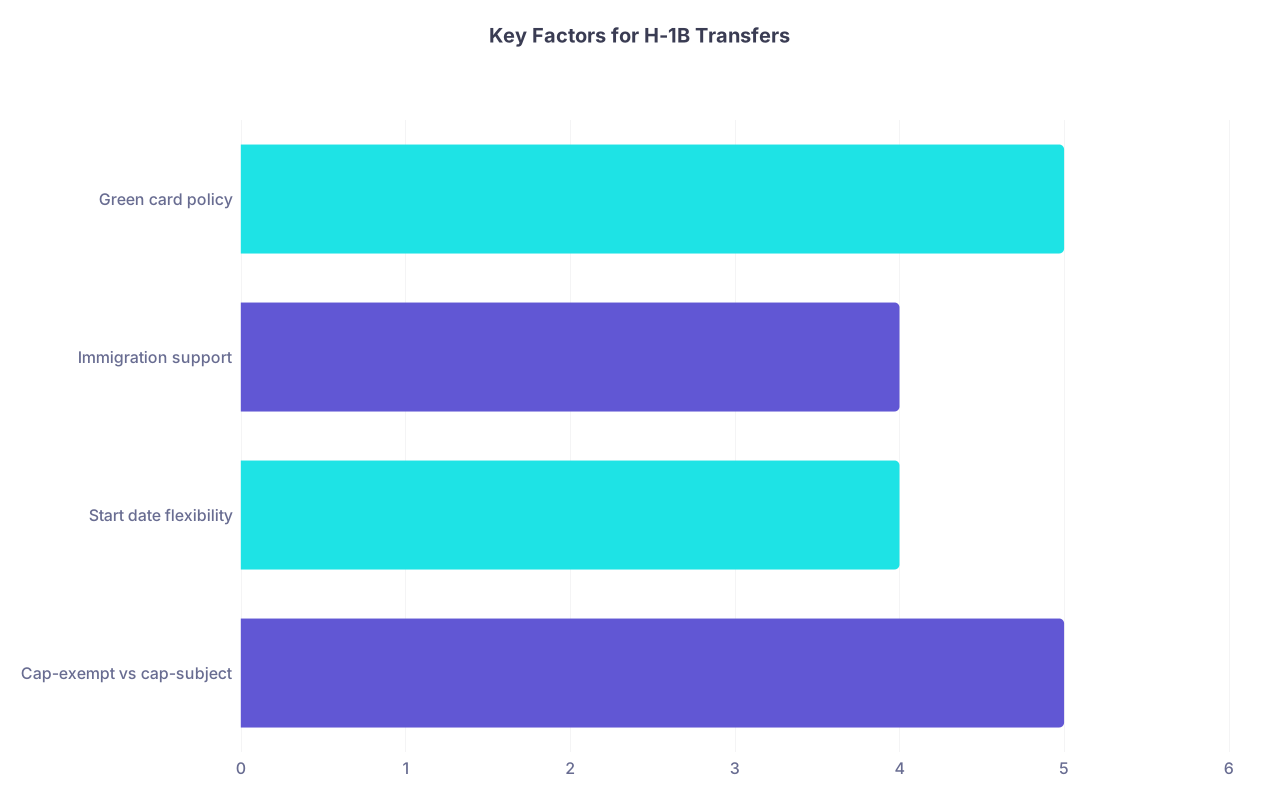
| Category | Value |
|---|---|
| Cap-exempt vs cap-subject | 5 |
| Start date flexibility | 4 |
| Immigration support | 4 |
| Green card policy | 5 |
Step 1: Clarify Your Cap Status
If your current H‑1B was sponsored by:
- A university
- A university‑affiliated nonprofit hospital
- Certain nonprofit research institutions
…you’re likely cap‑exempt right now.
If your new job is:
Also at a cap‑exempt employer (often academic or teaching hospitals)
→ Transfers are usually more straightforward.At a pure private community group or for‑profit hospital
→ That job will likely be cap‑subject. That means lottery, timing, and risk.
This is where academic jobs are often safer: staying in the cap‑exempt world smooths things out. Leaving it complicates everything.
Step 2: Ask Both Types of Employers These Concrete Questions
You should ask, word‑for‑word if needed:
- “Will you file my H‑1B transfer at least 4–6 months before my current status expires?”
- “Have you handled H‑1B transfers from cap‑exempt to cap‑subject employers before?” (for community jobs)
- “When do you typically start green card sponsorship for physicians, and what category do you use?”
Academic centers often answer:
- “We start green card in your first year,” or
- “We sponsor PERM and I‑140 routinely; our attorney will guide timelines.”
Community places vary wildly:
- Good ones: “We file H‑1B immediately upon signing and start green card within 3–6 months.”
- Bad ones: “Let’s see how it goes for the first contract term, then revisit.” Translation: we don’t really want to commit.
How To Screen Job Listings Fast When You Need A Visa
You don’t have time to “see how things go” with 30 different HR departments.
You need a ruthless filter.
Step 1: Read the Posting Like A Lawyer, Not A Resident
Red flags in job ads:
- “Must be eligible to work in the U.S. without employer sponsorship.” → Hard no.
- “No visa sponsorship available.” → Believe them.
- Silence on visa but located in a high‑desirability metro academic center for a competitive specialty → 80% chance no waiver, often no H‑1B.
Green-ish flags:
- Mentions “J‑1/H‑1B visa sponsorship available”
- Listed through known J‑1 waiver job boards
- Comes from rural / underserved areas in your specialty
Step 2: Your First Email Should Not Be Shy
When you reach out, include one short, direct paragraph:
“I am currently a [J‑1 / H‑1B] visa holder completing [specialty] residency/fellowship at [institution], graduating [month, year]. I will require [J‑1 waiver / H‑1B transfer] sponsorship for my first attending position. Does your institution currently sponsor this type of visa for physicians?”
If they ignore that part of your email, respond again and repeat the question. If they dodge twice, walk away.
Comparing Long‑Term Safety: Academic vs Community For Green Card
Short version: academics tend to have more predictable green card processes; some community jobs are excellent, some are disaster zones.
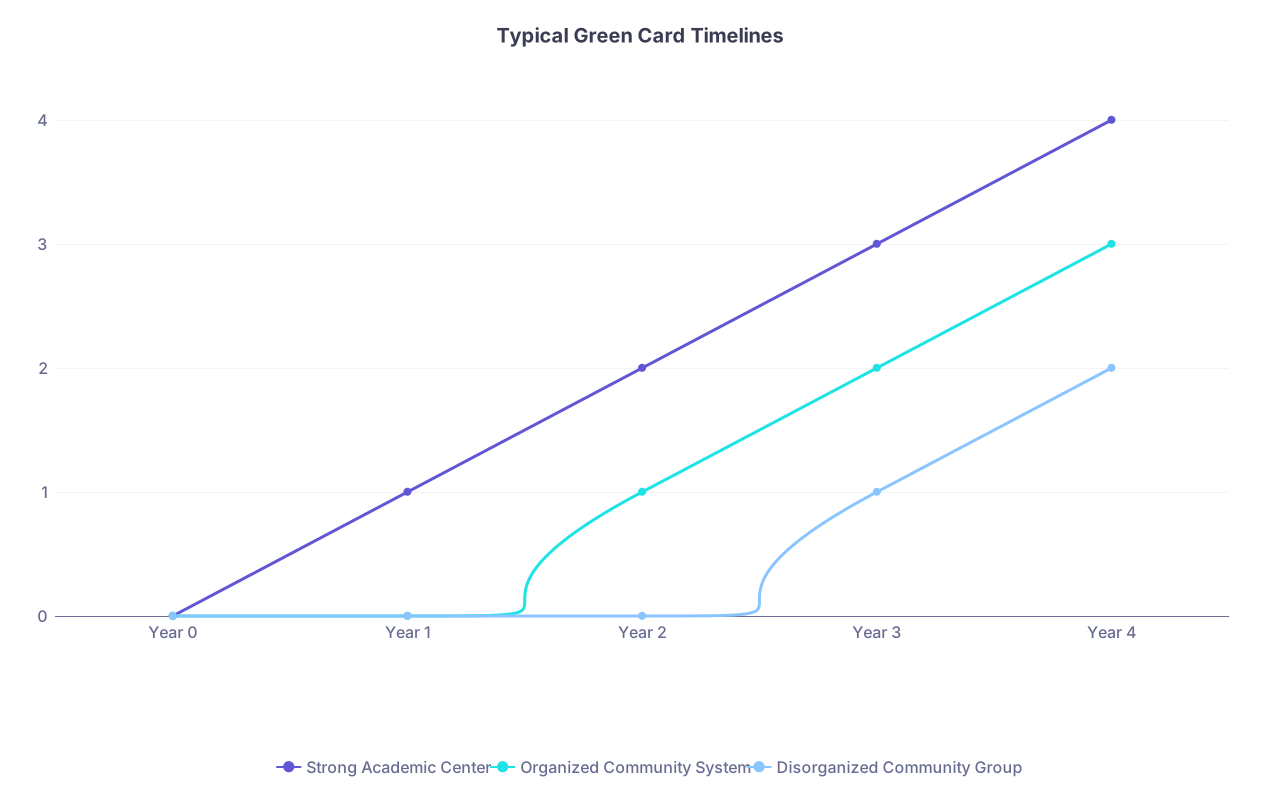
| Category | Strong Academic Center | Organized Community System | Disorganized Community Group |
|---|---|---|---|
| Year 0 | 0 | 0 | 0 |
| Year 1 | 1 | 0 | 0 |
| Year 2 | 2 | 1 | 0 |
| Year 3 | 3 | 2 | 1 |
| Year 4 | 4 | 3 | 2 |
Those numbers aren’t months; they’re just a rough “progress” index. The point is: some places start early, some drag forever.
Academic Pros:
- Often start green card within the first year.
- Familiar with EB‑2 / PERM, some can do EB‑1 for researchers.
- Less likely to tie green card explicitly to punitive non‑compete clauses (although read everything).
Academic Cons:
- Some will delay green card “until after tenure‑track decision” or similar games.
- Salary may stay lower, even after your immigration becomes secure.
Community Pros:
- If they’re serious, they can move fast on green card, sometimes even faster than big academic bureaucracies.
- They may use green card as a recruitment incentive: sign‑on bonus + immediate PERM.
Community Cons:
- Completely inconsistent. Some never follow through.
- Immigration costs may come out of your pocket or be clawed back if you leave “too early.”
- If ownership changes (buyout by a big system), all the immigration promises can get murky.
Non‑negotiable: whatever they promise you about green card must be in writing. Offer letter or contract. Verbal = fiction.
How To Decide: Concrete Scenarios
Let’s go through a few real‑world situations.
Scenario 1: J‑1 IM Resident, Wants Hospitalist Job, Two Offers
Offer A: University‑affiliated community hospital in a mid‑size city
- Has sponsored J‑1 waiver hospitalists before
- In‑house immigration support through university
- Slightly lower salary
- Clear statement: “We sponsor J‑1 waivers and start green card within first contract year”
Offer B: Private community group at a nice suburban hospital
- First time thinking about visas
- Higher salary
- “Our HR is looking into J‑1 waiver options; we think it should be fine”
You pick Offer A. Every time. Salary difference is meaningless if the waiver or green card blows up.
Scenario 2: H‑1B Subspecialty Fellow At Academic Center, Wants To Stay In City
Offer A: Same university hospital, academic job
- Cap‑exempt to cap‑exempt transfer or extension
- They’ve already sponsored your H‑1B
- Green card can start in year 1
Offer B: Private specialty group in the city, hospital‑based
- Cap‑subject H‑1B, must go through lottery
- They’ve “done a few H‑1Bs before”
- Vague green card timeline
Unless Offer B is life‑changing and you’re okay risking lottery + delay, Offer A is safer. Especially if your partner, kids, mortgage, etc. rely on stability.
Scenario 3: J‑1 Psychiatry Resident, Multiple Rural Job Offers
All are waiver‑eligible. Here’s how you choose:
- Rank first: places that have 3+ current or previous J‑1 waiver docs, plus clear green card plans.
- Rank middle: places that have done at least 1–2 waivers with a real immigration lawyer.
- Avoid: places where you are their first waiver attempt and all immigration talk is “we’ll figure it out.”
You’re not just choosing a job. You’re choosing how likely it is that you’ll still be legally in the U.S. two years from now.
Practical Checklist: What To Ask, What To Get In Writing
Here’s the minimum I want you to pin to your wall while you interview.
Ask Every Employer (Academic or Community):
- “What types of visas do you currently sponsor for physicians?”
- “How many J‑1 waiver or H‑1B physicians are on staff right now?”
- “Do you work with an immigration attorney or firm? Who initiates that process?”
- “When do you typically start green card sponsorship for international physicians?”
- “Will your support for my visa and green card be included in the written offer/contract?”
If they’re annoyed by those questions, that alone tells you something.
In Your Contract / Offer Letter, You Want:
- The specific visa type they will sponsor (J‑1 waiver/H‑1B/O‑1).
- A statement that they’ll use “best efforts” to obtain the waiver/H‑1B and keep you in status.
- Who pays what immigration costs (employer vs you).
- A timeline for when green card sponsorship will start (e.g., “within first 6 months of employment”).
- Any repayment obligations if you leave before a certain time (these are common; just know exactly what you’re signing).
You’re not being “difficult.” You’re asking the only questions that matter if you want to actually be allowed to work there.
How To Use Experts Without Letting Them Run The Show
Last piece: do not rely solely on hospital HR or “our lawyer” to protect your interests. They work for the employer.
When you’re dealing with anything beyond a simple, standard transfer, it’s worth getting your own counsel:
- Independent immigration attorney to review your situation and the contract language.
- Someone who does physician visas specifically, not a generic business immigration shop.
You don’t need them on every email thread. But spend a few hundred dollars to have them:
- Confirm the plan (waiver type, H‑1B timing, cap issues).
- Flag insane contract terms (clawbacks, impossible non‑competes, vague visa language).
- Tell you plainly: “Yes, if they do what they’re saying, you’re safe” or “No, this timeline is fantasy.”
You’re about to tie your legal right to live in the U.S. to a specific employer. That deserves more than blind trust.
Open your top two or three job leads right now and write down, in a single sentence for each: “They will sponsor X visa, have Y experience doing it, and plan to start my green card in Z timeframe.” If you can’t fill in that sentence for a job, you don’t actually have a viable offer yet—just a conversation.